
Reviewed · 2-DAY EXPERIENCES
2 Day Massai Village Experience (all-incl.)
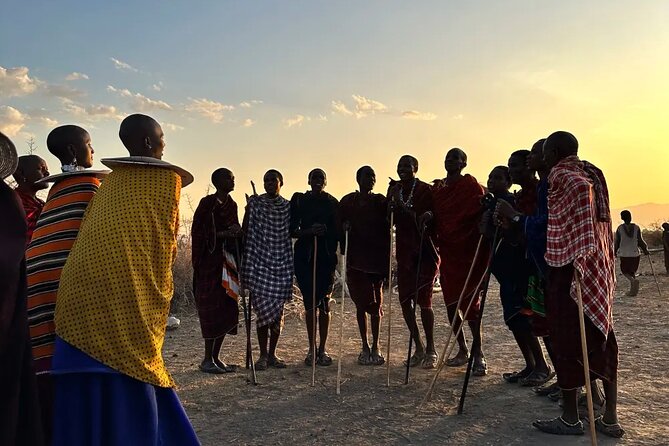
Meet Maasai life up close. This two-day stay near Lake Manyara gives you time with a traditional community rather than a quick photo stop. You can help with everyday tasks, sleep in a traditional hut, share food with a local family, and learn how the community connects culture, children’s education, clean water, and wildlife protection. I especially like the direct community benefit and the personal welcome from Kipe Laizer, a Maasai warrior and wildlife conservationist. I also like that dinner, breakfast, private transport, and the conservation fee are included.
The main point to consider is comfort. This is not a polished lodge stay. You need a moderate level of fitness, and the night in a traditional hut may feel basic. Also, transport from the village to the main road costs an extra $20 if you decide to leave during your visit.
In This Review
- Key points before you book
- Why this two-day stay feels different
- Meeting the community near Lake Manyara
- Sleeping in a traditional Maasai hut
- Sunrise, school time, and the waterhole
- What the $468.65 price includes
- How active and social is the experience?
- Who should book this Maasai village stay?
- My verdict on this Oltukai experience
- FAQ
- Where does the experience start?
- Where does the experience end?
- How long does the experience last?
- Is pickup offered?
- Is the conservation fee included?
- Are meals included?
- Where does the overnight stay take place?
- What activities can I do in the village?
- What can I do on the second day?
- How far in advance can I cancel for a full refund?
Key points before you book
- One night in a traditional Maasai hut: You sleep within the village rather than returning to a hotel after a short cultural visit.
- A personal link to Oltukai: Kipe Laizer comes from the local area and welcomes visitors into his community and family life.
- Practical community support: Kipe Adventure gives 20 percent of its profit to vulnerable children and orphans in Oltukai.
- Hands-on village activities: You may milk cows, herd goats, make traditional crafts, and learn about Maasai customs.
- A second day with a choice of focus: Spend time at a local school or visit a waterhole that supports daily life in the area.
- Small-group format: The maximum group size is 15, which should feel more personal than a large cultural excursion.
Why this two-day stay feels different
Many cultural stops give you an hour, a staged performance, and a return to the safari vehicle. This experience gives you a full night and a second morning. That extra time matters because village life is easier to understand when you are not watching the clock.
The setting is near Lake Manyara National Park, one of northern Tanzania’s well-known safari areas. The village offers views toward the African savannah and a chance to understand the role Maasai communities play in conservation. You are not simply looking at wildlife from a vehicle. You are learning about the people who live alongside it.
Kipe Laizer, also known as Kipe Olesisian, is a Maasai warrior and wildlife conservationist from the Lake Manyara region. His connection to Oltukai gives the visit a local foundation. The most personal part of the stay may be sharing tea and dinner in his mother’s hut, a detail that gives you a better sense of the family welcome than a standard village presentation can provide.
The community work also gives the $468.65 price more meaning. Twenty percent of Kipe Adventure’s profit supports vulnerable children and orphans in Oltukai. The stated goals include helping with clean water, food, and education. You should not treat the visit as a donation alone, since you are paying for transportation, meals, hosting, and a guided cultural program, but the social purpose is a useful part of the value.
Other trips worth a look in Tanzania:
- Serengeti Balloon Safari and authentic bush breakfast
★ 5.0 · 2,480 reviews - Balloon Safari & Bush Breakfast in Serengeti – Miracle Experience
★ 5.0 · 1,646 reviews - From Zanzibar: Mikumi Safari Day Trip with Flights and Meal
★ 4.7 · 1,470 reviews
Meeting the community near Lake Manyara
Your meeting point is the TotalEnergies Makuyuni Service Station at the junction of the A104, the Karatu road, and Dodoma Road in Makuyuni. Private transportation is included, so this point functions as the start and finish of the experience.
The first day is planned as a long village visit, about 12 hours. That sounds like a lot, but it includes the arrival, activities, meals, conversation, and time to settle into the slower rhythm of the community. You should arrive ready to take part, not simply observe from the edge.
You may help milk cows and herd goats. These are small tasks, but they show how work, food, and family life connect. You may also make traditional Maasai crafts. The value is in asking questions and paying attention to how the activity is explained, not in producing a perfect souvenir.
You will also hear about customs, beliefs, and daily practices. Some parts may feel unfamiliar, which is exactly why a local host matters. Kipe’s role as a Maasai warrior and conservationist can help connect cultural traditions with the modern pressures facing communities near a major safari destination.
The surroundings add another layer. The village is near Lake Manyara National Park, with open savannah views and the possibility of seeing wildlife in the broader area. This is not presented as a separate game drive, so you should not book it expecting a full safari. The wildlife connection here is mainly cultural and environmental.
Sleeping in a traditional Maasai hut
The overnight stay is the heart of the experience. You sleep in a traditional Maasai hut, making this a genuine homestay-style visit rather than a cultural stop followed by a comfortable hotel room.
The available information does not describe the hut’s bedding, bathroom arrangements, or other facilities. Plan for simple conditions and ask the provider about current arrangements before departure if those details matter to you. The moderate fitness requirement is another clue that this experience is practical and active rather than designed around resort comfort.
A family stay can make the night feel more meaningful. One parent and a nine-year-old child were welcomed by Kipe as if they had always been part of the family. They shared tea and dinner in his mother’s hut and felt comfortable and safe. That is especially useful information for parents considering the trip, although every family’s needs are different.
Dinner is included, as is breakfast the following morning. Those meals are not just line items in the price. Sharing food creates time for conversation and gives you a clearer look at family routines. You should approach the meal with respect and a willingness to accept the local pace.
The stay has a strong personal quality, but it may not suit someone who needs predictable hotel facilities. If you want air-conditioning, private rooms, and a fixed menu, choose a lodge-based cultural visit instead. If you want to see how hospitality works in a local home, this is the better fit.
Sunrise, school time, and the waterhole
Day two begins with sunrise over Lake Manyara. The early light is one of the quieter rewards of staying overnight. You are already near the community, so the morning can begin with the village rather than with a long transfer from a distant hotel.
The day then offers two possible directions. You may spend time at a local school, where the focus is on children, learning, and shared time. The visit is described as involving laughter, learning, and connection, but you should keep your role modest and respectful. You are there to support a community setting, not to turn the children into a sightseeing display.
The school visit may appeal especially to families and to people interested in how tourism can support education. The stated community aims include helping children with education, food, and clean water, so this part of the program connects directly with the social purpose behind the experience.
The alternative is a visit to a waterhole. Water is a basic need, and the stop gives you a closer look at how people and animals depend on limited resources. It can be a more reflective choice than the school visit, with an emphasis on survival, adaptation, and the practical challenges of daily life.
The program information does not explain how the choice is made or how long each option lasts. Ask when booking if you have a strong preference. Both choices offer more than a photo opportunity, but they suit different interests. The school emphasizes people and education. The waterhole emphasizes resources and the demands of the local environment.
A different kind of day out entirely:
- Zanzibar: Quad Bike Adventure departing from Kendwa or Nungwi
★ 4.9 · 1,233 reviews - Zanzibar: Stone Town, Spice Tour, Prison Island with Lunch
★ 4.4 · 1,219 reviews - Tanzania Classic – 7 Days
★ 5.0 · 1,151 reviews - 4 Days Group Camping Safari
★ 5.0 · 1,101 reviews
What the $468.65 price includes
At $468.65 per person, this is not a budget add-on to a safari. The price needs to be judged as a two-day private-transport experience with a community stay and meals.
Included items are:
- Dinner
- Breakfast
- Private transportation
- Conservation fee
The conservation fee is already covered, so you do not need to pay it separately. Private transportation also removes one common worry, especially when the meeting point is outside the main tourist centers.
The 20 percent community contribution is important when comparing this experience with cheaper cultural visits. A lower price may not offer the same direct support or overnight connection. Still, you should ask what is currently included in the transport arrangement, since the listed start and end point is the Makuyuni service station.
There is one clear extra cost. If you want to leave the Maasai village during your visit, transport to the main road costs $20. That charge is easy to overlook, so plan ahead and carry enough money if you want the option to leave independently.
The experience is generally booked about 15 days in advance. That is a useful planning guide, not a rule, but it suggests you should reserve it before your Tanzania trip is fully packed. Confirmation is immediate in most cases. Bookings made within four days of travel may take up to 48 hours to confirm, subject to availability.
How active and social is the experience?
The activity requires a moderate level of physical fitness. You may be walking around the village, helping with animals, taking part in craft work, and spending a long day outside. The exact walking distances are not given, so anyone with mobility concerns should ask the provider for current details before paying.
The group can include up to 15 people. That is small enough for a more direct conversation than a large coach group, though it is not a private family visit unless your booking says otherwise. The presence of a small group may also affect how much time you have with Kipe or individual family members.
You should also be ready for a social experience. This is not a tour where you can remain anonymous. You will interact with local people, share meals, and take part in activities. That is the attraction, but it also means you need patience, courtesy, and flexibility.
The strongest praise centers on the welcome. The family-style reception, the feeling of safety, the food shared in Kipe’s mother’s hut, and the sense of being far from mass tourism all point to an experience built around personal contact. The comments also describe the surroundings as breathtaking and the stay as a once-in-a-lifetime experience. Those are strong endorsements of the atmosphere, but they should not be mistaken for a promise of luxury.
Who should book this Maasai village stay?
I would recommend it to you if you want cultural contact to be a major part of your Tanzania trip. It suits people who prefer a local homestay to a formal attraction, families willing to accept basic conditions, and visitors who want their spending to support a community project.
It also makes sense for anyone already traveling near Lake Manyara, since the location fits naturally with a northern Tanzania safari route. The village setting can add human context to a trip otherwise focused on parks and wildlife.
You may want to skip it if your schedule allows no flexibility, if you need detailed accommodation standards in advance, or if you are uncomfortable with village-based tourism. The program is designed around participation and openness. It is not the right choice for someone seeking a passive, highly controlled excursion.
The experience provider is Small World Social Travel. The strong points are the local connection, the overnight stay, the included conservation fee, and the stated contribution to Oltukai children and orphans. The main questions to clarify before booking are current hut facilities, the exact transport plan, and whether the school or waterhole visit will be available on your date.
My verdict on this Oltukai experience
Book this two-day stay if you want to slow down and meet people, not just collect another stop on a safari itinerary. The overnight hut, shared meals, village work, and school or waterhole visit give the program real substance.
At $468.65, the cost is high for a short trip, but the inclusion of private transport, meals, conservation fees, and community support makes it easier to understand. I would see it as a social and cultural experience with a safari-region setting, not as a cheap excursion.
Go with realistic expectations. You may sleep simply, walk more than expected, and need to adjust to local timing. In return, you get a rare chance to spend enough time with a Maasai community for the visit to feel personal rather than staged.
FAQ
Where does the experience start?
It starts at the TotalEnergies Makuyuni Service Station, A104, Junction to Karatu, Dodoma Road, Makuyuni 00000, Tanzania.
Where does the experience end?
The activity ends back at the meeting point.
How long does the experience last?
It lasts approximately two days, with about 12 hours scheduled for each day.
Is pickup offered?
Pickup is offered, and private transportation is included in the experience.
Is the conservation fee included?
Yes. The conservation fee is included and does not need to be paid separately.
Are meals included?
Dinner and breakfast are included.
Where does the overnight stay take place?
You spend the night in a traditional Maasai hut at the Oltukai Maasai Village.
What activities can I do in the village?
You may milk cows, herd goats, make traditional Maasai crafts, and learn about local customs, beliefs, and daily practices.
What can I do on the second day?
The second day includes sunrise views over Lake Manyara and a choice between spending time at a local school or visiting a waterhole.
How far in advance can I cancel for a full refund?
You must cancel at least three full days before the experience start time for a full refund. Cancellations made less than three full days in advance are not refunded.
Just added in Tanzania
- ZANZIBAR:Stone Town,Prison island and Jozani forest★ 5.0 · 2 reviews
- Zanzibar:Sunset Dhow Cruise nungwi★ 5.0 · 1 review
- ZANZIBAR:Jozani Forest,Visit turtles sanctuary,mtende beach★ 5.0 · 1 review
- Zanzibar:Ngoma local culture workshop,The Knowledge of Ngoma★ 5.0 · 1 review
- ZANZIBAR:Mnemba island, Baraka aquarium and Kendwa beach★ 5.0 · 1 review
- ZANZIBAR:Jozani Forest, Swahili cave and mtende beach★ 5.0 · 2 reviews
- ZANZIBAR:Mnemba island, Spice farm and Jozani Forest★ 5.0 · 1 review
- Zanzibar:Jozani forest, Spice farm with Swahili Cuisine clas★ 4.2 · 3 reviews
2-Day Experiences, compared.
2 Day Serengeti Safari Experience from Mwanza
Read our review →
2 Days Tarangire and Ngorongoro Group Camping Safari
Read our review →
2 Days 1 Night Mikumi National Park from Dar es salaam
Read our review →
2 Day Safari To Mikumi National Park + transfers from Dar Es Salam
Read our review →
2-Day Private Mikumi National Park Tour with Pickup
Read our review →
2 Days Group Joining Camping Safari Tarangire Park and Ngorongoro Crater
Read our review →Browse the lists this tour appears in