
Reviewed · NYERERE & SELOUS SAFARIS
3-Day Selous Reserve mid-Range Safari
Wild Africa begins beyond Dar es Salaam. This three-day private safari takes you into the remote Selous area for a Rufiji River boat safari and game drives among elephants, hippos, crocodiles, lions, buffaloes, and wild dogs. I like the mix of water and land viewing, and I like that transport, accommodation, meals, bottled water, and a private guide are included.
The main caution is the amount of road time. You travel from Dar es Salaam to the reserve and back within three days, so this is a compact safari rather than a slow, extended stay. The accommodation details are also general, and the stated reserve size is inconsistent in the tour information, so I would confirm the exact camp and route before paying.
In This Review
- Key points to know before booking
- Why Selous offers a different safari experience
- Day one: the road from Dar es Salaam to the Rufiji River
- Day two: the main wildlife day in Selous
- Day three: returning to Dar es Salaam
- What the $2,066.67 price really covers
- Who will enjoy this private safari most
- Practical details that affect your decision
- Should you book the Selous three-day safari?
- FAQ
- Where does the safari start and finish?
- How long is the safari?
- Is this a private tour?
- How many people are required to book?
- What animals might I see?
- What is included in the price?
- Are alcoholic drinks included?
- What is the cancellation policy?
Key points to know before booking
- The Rufiji River is the first major wildlife setting, with hippos, crocodiles, elephants, and many bird species viewed from a boat.
- This is a private safari, so only your own group participates, with transport in a private vehicle.
- Guide quality matters here, and Laban and James receive especially warm praise for care, timing, animal respect, and personal service.
- The trip includes both morning and afternoon game viewing on the second day, giving you the fullest wildlife day of the program.
- The $2,066.67 price covers a lot, including accommodation, meals, transfers, guiding, water, and private transport, but the short duration makes value depend on your tolerance for long road transfers.
- You need at least two people to book, and children must be accompanied by an adult.
Why Selous offers a different safari experience
Selous is presented as one of Africa’s largest game reserves and one of Tanzania’s least visited protected areas. The supplied information gives two very different size figures, 5,000 square kilometers in the overview and 54,600 square kilometers in the day-two description. I would ask the operator which area you will actually visit, but either figure points to a very large, remote setting.
That remoteness is the main appeal. Northern Tanzania is famous for its well-known safari circuit, but this southern route offers a quieter sense of distance. The animals here were historically exposed to hunting, and the tour notes that they can be more cautious than wildlife in the northern parks. You may need patience, sharp eyes, and a good guide rather than expecting one animal sighting after another.
The reserve is named for Frederick Courtney Selous, a hunter and explorer who was killed in the area during World War I. That detail is part of the place’s complicated past. The area is known for abundant wildlife, but its history also explains why some animals may keep their distance from vehicles.
For me, the attraction is not only the species list. It is the change of setting during the same safari. You begin with a long road transfer, reach a camp, then trade the vehicle for a boat on the Rufiji River. The next day shifts back to open-country game viewing. That contrast gives a short trip more variety than a program built around game drives alone.
More Nyerere and Selous safaris:
- 3 Days Selous (Nyerere National Park)
★ 5.0 · 43 reviews - 3 Days Safari – Selous Game Reserve
★ 5.0 · 21 reviews - 3 Days Nyerere NP [Selous GR] Game, Walking and Boat
★ 5.0 · 19 reviews
Day one: the road from Dar es Salaam to the Rufiji River
The safari begins with pickup in Dar es Salaam. Your driver-guide takes you toward Selous in a private vehicle, and a picnic lunch is served on the way. No exact driving time is provided, so you should be prepared for a substantial transfer and ask for the expected departure time before setting out.
This is the least glamorous part of the experience, but it matters. A three-day safari from the coast has to spend part of its first day reaching the reserve. If you want a long, unhurried wildlife program, the road transfer may feel costly in time. If you want to add a safari to a Dar es Salaam stay without arranging a longer expedition, the compact format makes sense.
You arrive at the camp in the early afternoon, settle in, and then head to the Rufiji River. The listed boat activity lasts about five hours and includes admission. This is a substantial outing, not a quick ride squeezed between meals.
The Rufiji is formed by the meeting of the Kilombero and Luwegu rivers and runs for about 600 kilometers. On the water, the viewing style changes. You are not looking down a road for movement in the grass. Instead, you watch riverbanks, sandbars, and water channels for hippos, crocodiles, elephants, and birds.
Hippos are a major draw. They may be partly submerged, so you need to watch for ears, eyes, and broad backs rather than expecting every animal to be fully visible. Crocodiles can be harder to spot when they lie still along the bank, which makes the guide’s experience particularly useful.
Elephants are also drawn to the river, and the area is noted for large herds. Seeing them near water can offer a different view from a vehicle sighting. You might see them drinking, crossing, or standing along the river edge, though exact sightings are never guaranteed.
The birdlife is another reason to take the boat. The reserve is said to support about 350 bird species. Even if you are primarily coming for large mammals, bring your attention to the smaller movement in the trees and reeds. A river trip rewards patience.
The boat safari is also the most distinctive part of the program. Game drives are available in many African parks. A long river outing gives this short safari its own character. I would ask whether binoculars and any specific boat equipment are supplied, since those details are not stated.
Day two: the main wildlife day in Selous
After breakfast, you spend the second day on morning and afternoon game drives. The activity is listed at about five hours, although the wording combines both drives, so confirm how the time is divided between morning and afternoon.
This is the day when your guide’s skill can make the greatest difference. Selous animals are described as more shy than those in northern parks. That means a guide who understands animal behavior, reads tracks, and communicates well can help you get more from a quiet sighting.
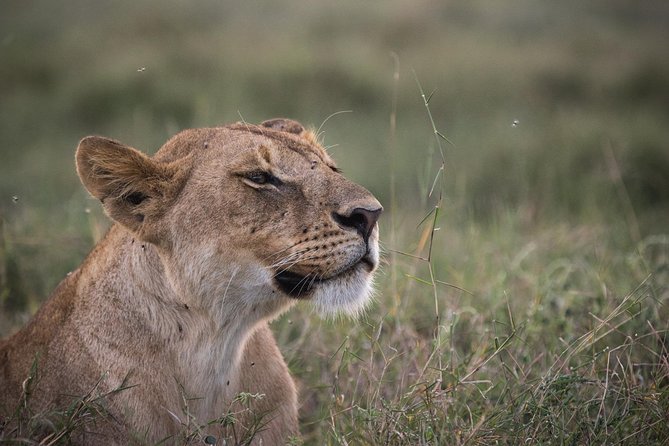
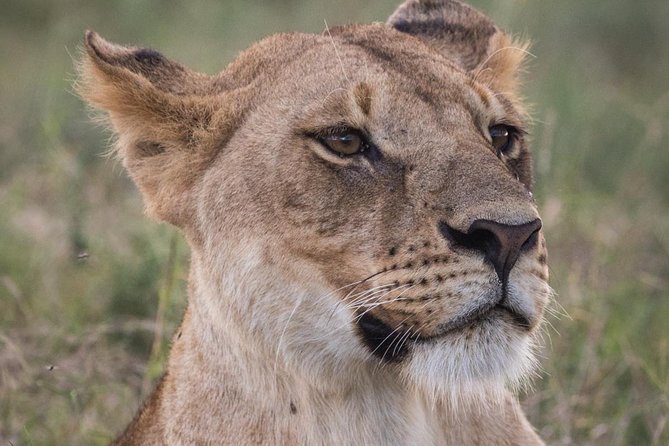
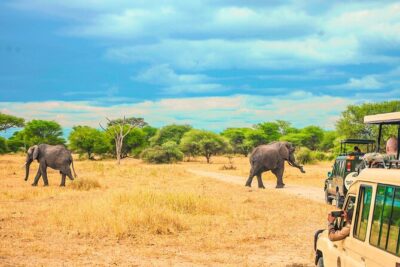
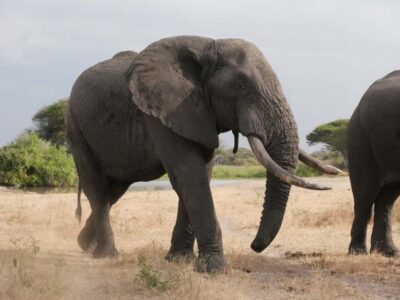
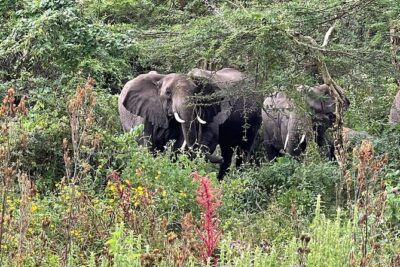
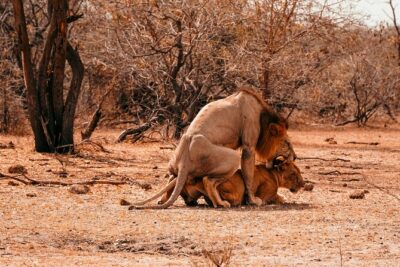
Elephants are the reserve’s best-known animal. You may also look for lions, African wild dogs, buffaloes, bushbuck, impalas, elands, baboons, zebras, and greater kudus. This is a broad range, from large predators to antelope and primates.
Wild dogs are a particularly important possibility. The tour includes them among the species commonly seen, but no wildlife encounter is promised. Their presence is one reason the reserve appeals to people who want more than the standard safari checklist.
The animal list also tells you what kind of safari this is. You are not visiting only for the Big Five. You are entering a broad habitat where quieter species such as bushbuck and greater kudu matter too. I would encourage you to judge the day by the quality of the sightings and the setting, not by counting how many species you can tick off.
Morning and afternoon outings give you two chances to see the reserve at different times of day. The supplied details do not give exact start times, distances, or the length of the midday break. Ask those questions if you prefer a tightly planned schedule.
Guide service has been one of the strongest parts of the experience. Laban is praised for professional care, good timing, respect for animals, and a warm manner. One especially memorable detail is his preparation of a cocktail in the middle of nowhere. That small gesture suggests a guide who pays attention to the feel of the trip, not only the driving route.
James is also praised for warm, attentive service and a family-style approach. You should not assume which guide will lead your departure, but you can ask whether Laban or James is available. The praise directed at both guides is useful because private safari quality often depends on the person behind the wheel and the binoculars.
Day three: returning to Dar es Salaam
After breakfast, you drive back to Dar es Salaam with a picnic lunch on the way. The safari ends at the original meeting point, and hotel pickup and drop-off are included.
The return drive makes day three more of a transfer day than a final wildlife day. If you want one last game drive before leaving the reserve, ask about that in advance. It is not included in the supplied schedule.
The picnic lunch is practical for a long road day. It avoids a separate restaurant stop and keeps the return moving, but the tour does not provide a menu or explain dietary options. You are asked to provide dietary requirements at booking, so do that early and in clear terms.
A few more options to weigh up in Dar es Salaam
- Dar es Salaam: City Tour
★ 4.7 · 159 reviews - Dar es Salaam City Center: Walking Tour
★ 4.8 · 102 reviews - Dar es Salaam City Tour – Everyday
★ 5.0 · 64 reviews - MIKUMI NATIONAL PARK – 3 Days
★ 4.5 · 63 reviews
What the $2,066.67 price really covers
At $2,066.67 per person, this is not a budget safari. The price needs to be judged against what is included and the fact that the tour is private.
You receive accommodation, meals listed for the program, hotel pickup and drop-off, private vehicle transport, bottled water, and a driver-guide. The package also includes the boat safari admission and the game reserve admission. Alcoholic drinks are extra.
For two people, a private vehicle and dedicated guide can make the price more reasonable than it first appears. You are not sharing the vehicle with an unknown group, and the schedule can be handled around your own party. The private format is also useful for families or friends who prefer to discuss sightings, photography, and rest stops among themselves.
The value is less convincing if your priority is maximum time inside the reserve. You pay for a three-day package, but the first and third days include the long approach and return journeys. The second day is your main game-viewing day, while the first offers the boat experience.
Accommodation is described only as camp accommodation according to the program. The term mid-range does not tell you enough about room type, bathroom arrangements, electricity, location, or meal style. Ask for the camp name and room details. That is one of the most important unanswered questions before booking.
The meal information also needs clarification. The package lists breakfast, lunch, and dinner, including two breakfasts, three lunches, and three dinners, while the daily schedule clearly identifies breakfast on days two and three and picnic lunches on the first and third days. Ask the operator to confirm exactly which meals are served and where.
Bottled water is included, which is a welcome practical touch during long drives and warm wildlife outings. Since no amount is specified, bring a reusable bottle and confirm how much water is supplied each day.
Who will enjoy this private safari most
I would recommend this trip to someone already in Dar es Salaam who wants a short wildlife escape without building a much longer Tanzania route. The mix of river and vehicle viewing is a strong fit if you want variety within three days.
It also suits couples, families with older children, and friends who value privacy. The minimum booking is two people, children must be accompanied by an adult, and a moderate level of physical fitness is required.
You should think twice if you dislike long road transfers or want a relaxed camp-based holiday. The program is active and compact. You spend one day reaching the reserve, one full day on game drives, and one day returning.
This safari is also best for people who accept uncertainty. Selous is described as remote, and its animals may be more cautious than those in better-known northern parks. If you need guaranteed close sightings, this is not the right promise to chase. If you enjoy the possibility of a rarer, quieter encounter, the setting has real appeal.
Practical details that affect your decision
Pickup is offered in Dar es Salaam, and the activity ends back at the meeting point. Confirmation is provided at booking, and the tour is private for your group.
A minimum of two people is required. If that minimum is not met and the operator cancels, you are offered another date or experience, or a full refund.
For cancellations, a full refund requires cancellation at least six full days before the local start time. Cancelling two to six full days ahead allows a 50 percent refund, while cancelling less than two full days ahead brings no refund. Changes inside those same cutoffs are not accepted, so check your schedule carefully.
The tour allows dietary requirements to be supplied at booking. Alcohol is available for purchase but is not included. Since no detailed accessibility information is provided, ask the operator directly if you have mobility or other access needs.
Should you book the Selous three-day safari?
I would book this safari if you want a private southern Tanzania experience with a memorable river outing, a full game-viewing day, and a guide-led approach rather than a large group tour. The Rufiji boat safari gives the trip its strongest identity, while the praise for Laban and James suggests that personal service can be a real strength.
I would not book without first confirming the camp, driving times, meal count, exact reserve area, and the division of game-drive hours. Those details affect whether $2,066.67 feels fair.
Choose it for remoteness, variety, and the chance to see a less visited side of Tanzania. Skip it if you want several full days of game drives or a very slow pace. For the right kind of safari guest, this is a compact and promising introduction to Selous.
FAQ
Where does the safari start and finish?
It starts in Dar es Salaam, Tanzania, with pickup offered. The activity ends back at the meeting point in Dar es Salaam.
How long is the safari?
The safari lasts approximately three days.
Is this a private tour?
Yes. Only your own group participates, and transport is provided by private vehicle.
How many people are required to book?
A minimum of two people per booking is required.
What animals might I see?
The reserve is known for elephants, and you might also see lions, wild dogs, buffaloes, bushbuck, impalas, elands, baboons, zebras, greater kudus, hippos, crocodiles, and many bird species.
What is included in the price?
Accommodation, listed meals, hotel pickup and drop-off, private vehicle transport, bottled water, a driver-guide, and reserve or activity admission are included.
Are alcoholic drinks included?
No. Alcoholic drinks are available to purchase separately.
What is the cancellation policy?
You can receive a full refund by cancelling at least six full days before the local start time. Cancelling two to six full days ahead allows a 50 percent refund, while cancelling less than two full days ahead is nonrefundable.
Just added in Dar es Salaam
- Zanzibar: 3 Days to Mikumi and Chizua Waterfalls★ 3.5 · 5 reviews
- 3 Days and 2 Nights Mikumi Private Safari Adventure★ 5.0 · 2 reviews
- UDZUNGWA NATIONAL PARK AND WATERFALLS – 3 Days★ 4.5 · 2 reviews
- Explore Dar es Salaam: Full-Day Private City Tour★ 5.0 · 18 reviews
- Stone Town & Spice Tour★ 4.5 · 2 reviews
- Trip to the old City of Bagamoyo★ 5.0 · 1 review
- 2 Day Wildlife Experience and Masai Culture Mikumi Park★ 5.0 · 5 reviews
- Sunrise Beach Walk with Picnic Breakfast Activity★ 5.0 · 3 reviews
Nyerere & Selous Safaris, compared.
Day Safari tour to Selous Game Reserve from Zanzibar
Read our review →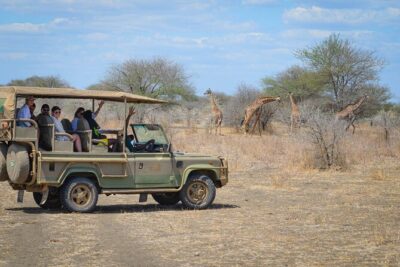
1-Day Selous (Nyerere National Park) Fly-In Safari from Zanzibar
Read our review →
Browse the lists this tour appears in