
Reviewed · SERENGETI & NGORONGORO SAFARIS
4 days Tanzania group safari to Serengeti, Crater and Tarangire
Wild Africa begins with a baobab. This four-day Tanzania group safari packs Tarangire, the Serengeti, and Ngorongoro Crater into one busy, rewarding trip, with camping nights, meals, park game drives, and pickup in Arusha included. I especially like the small group limit of six and the chance to sleep at campsites near the parks, where the night sounds are part of the experience.
I also like the strong attention given to guides such as Philbert, Ayubu, and Faraja, who are praised for patient explanations, animal spotting, and good organization. The main caution is the pace: long drives, early starts, and basic camping may not suit you if you want a soft bed and slow mornings.
In This Review
- Key points to know before booking
- Three famous parks in four demanding days
- Tarangire: elephants, baobabs, and a gentle first day
- The road to Serengeti is part of the experience
- A sunrise game drive brings out the Serengeti
- Ngorongoro Crater delivers a compact wildlife day
- What the $950 price covers
- The guide can make or break a safari
- Camping, meals, and the daily rhythm
- Who should book this four-day route?
- Should you book MyTrip2Tanzania?
- FAQ
- Where does the safari start?
- How long is the experience?
- How many people can join the group?
- Which national parks are included?
- Is camping included?
- Are meals included?
- Are flights, insurance, and a Tanzania visa included?
- Can I cancel for a full refund?
Key points to know before booking
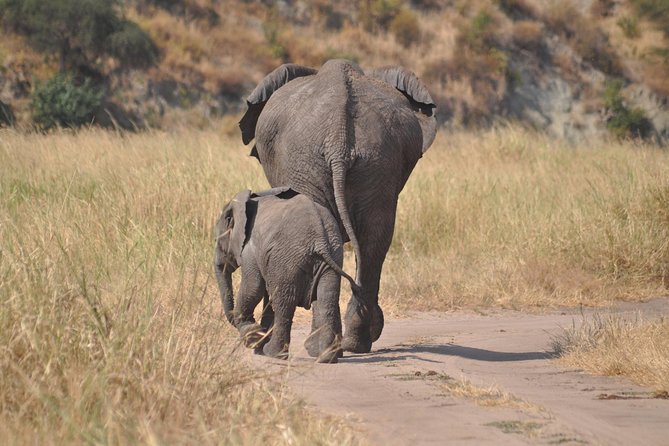
- Tarangire opens the trip with elephants and baobabs, plus a full-day game drive.
- The Serengeti gets two game-drive periods, including an early start and a late-afternoon drive.
- Ngorongoro Crater offers one of Tanzania’s best rhino chances, along with hippos and flamingos.
- Camping is part of the appeal, with nights at Twiga campsite outside Tarangire and Simba public campsite.
- The group is capped at six people, a useful size for sharing a safari vehicle without creating a crowd.
- The $950 price includes meals and park activities, but not flights, insurance, or a Tanzania visa.
Three famous parks in four demanding days
This is a classic northern Tanzania route, but it is not a restful holiday. You cover a lot of ground in a short time, moving from the elephant country of Tarangire to the wide plains of the Serengeti, then down into Ngorongoro Crater.
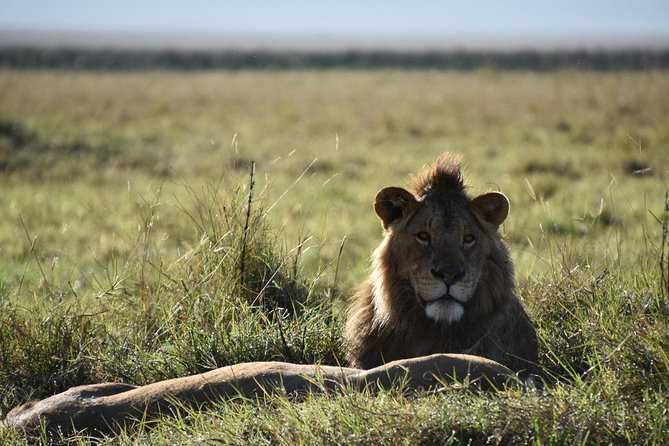
That variety is the chief reason to consider it. Each park has a different mood. Tarangire is known for its huge baobabs and strong elephant presence. The Serengeti offers open scenery, large groups of lions, big cat sightings, kopjes, and seasonal migration. Ngorongoro brings you into a contained wildlife area with a particularly good chance of seeing rhinos.
The tour begins in Arusha, with pickup from your hotel, lodge, or hostel. The maximum group size is six, which matters on a safari. You have a better chance of hearing the guide clearly, asking questions, and getting a useful position for viewing animals than you would in a large convoy.
The schedule is also built around wildlife activity. Day 1 begins at about 8 a.m., while the Serengeti and crater days start around 6 a.m. Those early hours can be valuable for animal viewing, but you should be ready for tired mornings and long stretches in the vehicle.
More Serengeti and Ngorongoro safaris:
- Serengeti Balloon Safari and authentic bush breakfast
★ 5.0 · 2,480 reviews - Balloon Safari & Bush Breakfast in Serengeti – Miracle Experience
★ 5.0 · 1,646 reviews - 3 Days Serengeti & Ngorongoro Group Camping Safari
★ 5.0 · 574 reviews
Tarangire: elephants, baobabs, and a gentle first day
Your first pickup is planned for around 8 a.m. after breakfast in Arusha. From there, the drive to Tarangire National Park takes about two hours, placing you at the gate at roughly 10 a.m.
The game drive begins as soon as you enter. You are scheduled to spend about six hours in the park, giving you a proper first look rather than a quick pass through. Tarangire is especially appealing if elephants are high on your wish list. The park is described as having one of the largest elephant concentrations in the world, and the combination of elephants and giant baobab trees gives the day a strong sense of place.
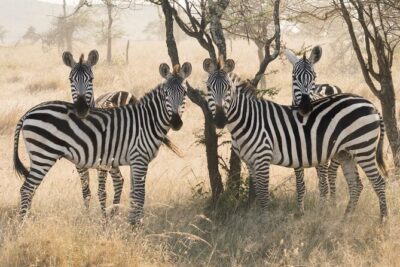
You may also see monkeys, leopards, lions, cheetahs, zebras, giraffes, and many bird species. I would not treat any individual sighting as guaranteed, since wildlife is unpredictable, but the range of animals listed makes this a well-chosen opening park.
Tarangire also works well as an introduction to safari etiquette. You get used to watching quietly, scanning the trees, and allowing the guide to read the area. The guide’s role is important here. Several people who took this trip praised the guides for explaining animal behavior and finding good viewing spots, rather than simply driving past a sighting.
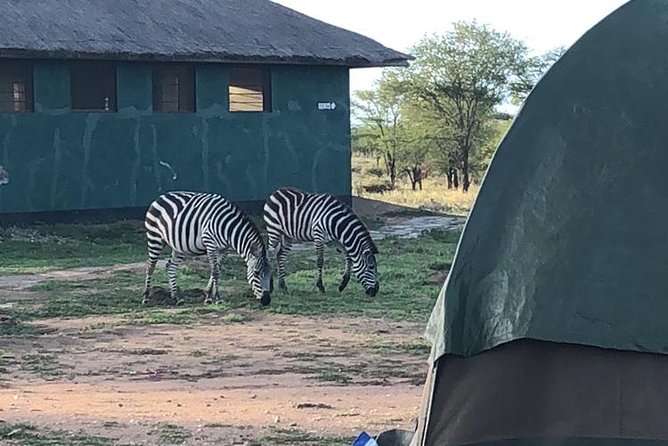
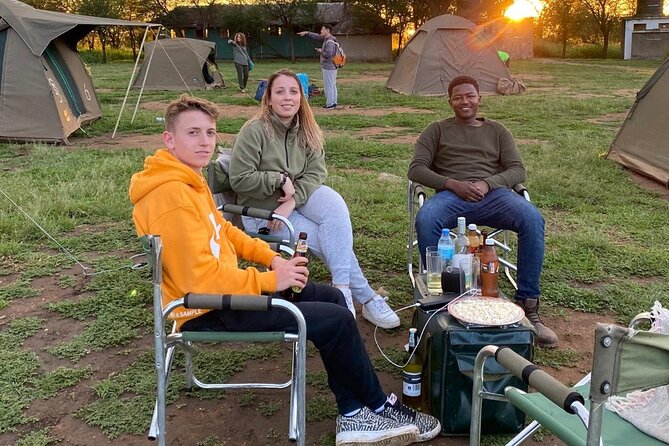
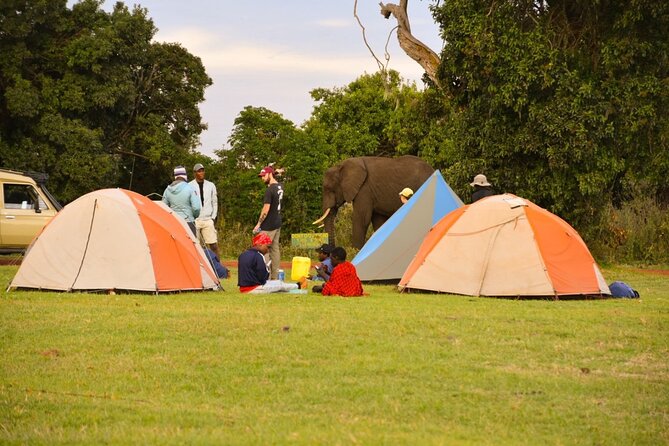
Dinner and overnight accommodation are listed at Twiga campsite outside the park. That location means you do not sleep inside Tarangire, but it also marks the beginning of the camping side of the trip. If you have never camped on safari, keep your expectations practical. This is about being close to the parks and hearing the natural night sounds, not about a private luxury tent.
The road to Serengeti is part of the experience
Day 2 is the longest-feeling transfer day. After breakfast, you leave at about 8 a.m. for the Serengeti. The stated drive time is around three hours, though the overall day includes stops, the park gate, lunch, and a half-day game drive.
The route passes colorful towns and villages, giving you a look at the settled areas between the parks. You also stop at the Ngorongoro gate and viewpoint. The break may offer views of baboons, a chance to hear about the crater’s history, and your first broad look at the dramatic crater setting.
You are expected to reach the Serengeti gate in time for lunch at about 1 p.m. After eating, there is a short walking break, then the afternoon game drive begins. The break is welcome because safari vehicles can feel cramped after a long road section.
The Serengeti is the emotional center of this route. Its open spaces make it easier to understand why the park is associated with enormous herds and large predators. The itinerary highlights lions, other cats, migration, kopjes, and more than 500 bird species. Migration sightings depend on the season, so you should not book this trip on the promise of seeing a particular herd in a particular place.
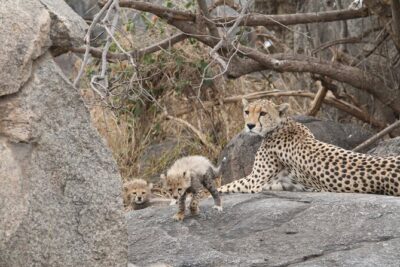
Kopjes are another special feature. These rocky outcrops rise from the plains and provide lookout points for wildlife. They are also recognizable from the film The Lion King, though the real value is not the movie connection. From a kopje, you can see how animals use small changes in elevation across a vast plain.
The afternoon drive ends at about 6 p.m., followed by a campsite night. You get a useful first look at the Serengeti, but the schedule is tight. If you want long, unhurried hours in one area, a longer Serengeti itinerary would give you more freedom.
A sunrise game drive brings out the Serengeti
Day 3 begins at about 6 a.m. for sunrise. The plan calls for roughly two hours of early game viewing before returning to the lodge or camp area for breakfast and luggage collection. You then continue with another game drive while gradually heading toward the Ngorongoro area.
The schedule supplied for this day uses mixed wording, referring to both a lodge and Simba public campsite. The practical point is clear: you get an early Serengeti drive, breakfast, another wildlife drive, and a night at Simba public campsite near Ngorongoro. Confirm the exact sleeping arrangement before you pay if the difference between a public campsite and lodge matters to you.
The early start is worth taking seriously. Sunrise is one of the most attractive times to be out in the park, and the two-hour morning drive gives you a chance to see the Serengeti before the day’s heat builds. You will then have another drive after breakfast, so this is not simply a transfer day.
The tradeoff is fatigue. You have already had a full Tarangire day and a long Serengeti approach. Add a 6 a.m. departure and camping, and this becomes a trip for people who value wildlife more than comfort.
The food is one of the most praised parts of the experience. Meals are included, and several accounts describe fresh cooking, varied dishes, and food that was surprisingly good for a camping safari. That matters after a dusty game drive. You are not expected to organize every meal yourself, which keeps the trip simple.
More Tarangire safaris:
- 5-Day Highlights mid-Range Crater, Serengeti, Tarangire
★ 5.0 · 296 reviews - Private 6-Day Tarangire Manyara Crater and Serengeti with Mid-Range Lodges
★ 5.0 · 238 reviews - 5 Days Camping Tarangire, Serengeti & Ngorongoro crater & Visiting Maasai
★ 5.0 · 229 reviews - 4 Days Join Group tour Tarangire Serengeti and Ngorongoro crater
★ 5.0 · 219 reviews
Ngorongoro Crater delivers a compact wildlife day
Day 4 starts at around 6 a.m. with the drive into Ngorongoro Crater. The half-day game drive lasts until about 11 a.m., followed by brunch, packing, and the transfer back toward Arusha.
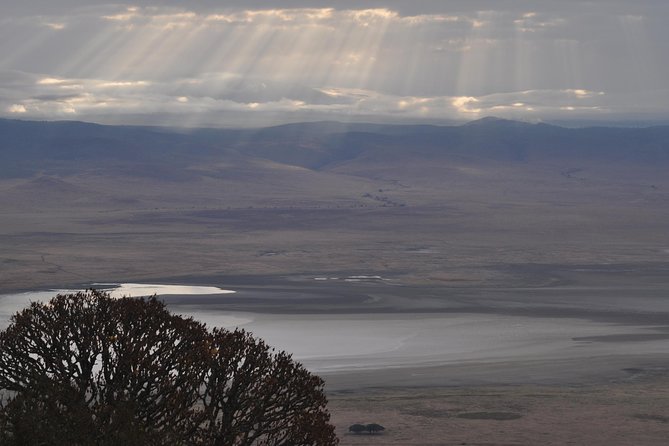
Ngorongoro is a different kind of safari setting. It is the world’s largest intact, inactive, unfilled volcanic caldera, and its enclosed geography can make wildlife viewing feel concentrated. The itinerary calls it one of the best places on this route to look for rhinos.
You may also see hippos at the lake and flamingos in the crater environment. The lake stop provides a short break, which is welcome on the final morning. The crater is also a UNESCO World Heritage Site and is often described as the eighth wonder of the world. Those labels are easy to repeat, but the real appeal is simpler: you look down into a vast natural bowl and then spend the morning among animals below.
The crater drive is only a half day, so do not expect the same amount of time as a full-day park visit. Still, it is a strong finish because the scenery changes again and the rhino possibility adds something not emphasized as strongly at Tarangire or the Serengeti.
After brunch, you pack and transfer to Arusha. Extra accommodation can be arranged for an additional cost, which is useful if your return flight or onward plans are not on the same day.
What the $950 price covers
At $950 per person, the trip offers reasonable value if you want the major northern circuit highlights without arranging every part yourself. You receive pickup in Arusha, game drives in three major parks, camping accommodation, breakfast for three mornings, lunch for four days, and dinner for three nights.
The price also includes admission for the listed park activities, with Tarangire described as having a free admission ticket in the schedule and Serengeti and Ngorongoro marked as included. You should still read the final booking terms carefully so you understand exactly what is covered.
The value is strongest for a first-time safari visitor. You do not need to piece together separate park visits, camps, meals, and transfers. The guide handles the route and animal spotting, while the small group keeps the experience more personal.
The price does not include domestic or international flights, health insurance, or a Tanzania entry visa. Those costs can change your overall budget considerably. I would price your flights, insurance, visa, and any extra Arusha night before deciding that $950 is your final trip cost.
The camping format also keeps the price below many lodge-based safaris, but it asks more from you. If you sleep poorly in tents or want private facilities every night, this may not feel like a bargain.
The guide can make or break a safari
The most consistent praise goes to the guides. Philbert is repeatedly described as friendly, patient, professional, and good at finding animals, including the Big Five. Ayubu is also singled out as an excellent guide, and Faraja is named as part of a well-regarded guide team.
That feedback points to the most important practical issue on safari: you are not just paying for transport into a park. You are paying for judgment. A good guide explains what you are seeing, answers questions, watches animal behavior, and knows when a sighting is worth waiting for.
One useful detail is that Philbert is reported to guide in English and German. If language affects your comfort, ask about the guide assigned to your departure rather than assuming a particular person will lead every trip.
The Big Five are frequently mentioned in the praise for this company, but you should keep expectations sensible. Lions, leopards, elephants, buffalo, and rhinos do not appear on command. The guide can improve your chances, not control nature.
Camping, meals, and the daily rhythm
This safari suits you if you like a practical outdoor trip. You camp near the parks and hear the sounds of the night, an experience that gives the safari a stronger sense of place than sleeping in a city hotel.
The camping nights are at Twiga campsite outside Tarangire and Simba public campsite near Ngorongoro. The wording around Day 3 suggests that accommodation details may vary between a lodge and public campsite, so ask for the exact plan before booking.
Meals are included throughout the four days: three breakfasts, four lunches, and three dinners. The food receives unusually strong praise, with fresh cooking and good flavor mentioned several times. That is a real advantage when your days begin early and end after long drives.
You should also prepare for dust, changing weather, and time spent sitting in a safari vehicle. The tour says most people can participate, but it does not promise special accessibility arrangements. If you have mobility or medical concerns, contact the operator before booking.
Pickup is offered from a hotel, lodge, or hostel in Arusha, and the meeting point is Arusha, Tanzania. Public transportation is nearby, though the safari itself depends on the company pickup and vehicle rather than ordinary local transit.
Who should book this four-day route?
I would choose this trip if you want three famous parks in one compact package, care more about wildlife than luxury, and like meeting a small group. It suits first-time safari visitors, couples who are happy to camp, solo visitors who want a group setting, and people working with a limited number of days.
It is also a good fit if you want variety. Tarangire gives you elephants and baobabs, the Serengeti gives you open plains and predators, and Ngorongoro gives you a concentrated crater drive with a strong rhino possibility.
I would hesitate if you dislike early mornings, long transfers, or basic campsites. The schedule is full, and the itinerary description itself contains some mixed details about Day 2 and Day 3 accommodation and routing. Ask the operator to confirm the final day-by-day plan, campsite names, and exact sleeping setup.
The experience has a published five-star score from 22 ratings, with 100 percent recommending it. The most praised features are the guides, fresh food, organization, close animal sightings, and the chance to see the Big Five. Those are meaningful strengths, especially at this price point.
Should you book MyTrip2Tanzania?
Book it if you want an active, small-group safari that covers Tarangire, Serengeti, and Ngorongoro Crater for $950, with meals and camping included. The route gives you a lot of Tanzania in four days and places real weight on guide quality, which is exactly where a safari earns its value.
Before booking, confirm the Day 3 accommodation, the final transfer timing, and what kind of camping setup you will receive. If you are comfortable with early starts and a little dust, I would consider this a strong-value introduction to Tanzania’s northern parks. If you want spacious lodges and slower days, spend more time and money on a lodge-based itinerary instead.
FAQ
Where does the safari start?
The safari starts in Arusha, Tanzania. Pickup is offered from a hotel, lodge, or hostel in Arusha.
How long is the experience?
The safari lasts approximately four days.
How many people can join the group?
The tour has a maximum of six travelers.
Which national parks are included?
The route includes Tarangire National Park, Serengeti National Park, and Ngorongoro Crater.
Is camping included?
Yes. The experience is described as a camping safari, with nights listed at Twiga campsite outside Tarangire and Simba public campsite near Ngorongoro.
Are meals included?
Yes. The package includes four lunches, three breakfasts, and three dinners.
Are flights, insurance, and a Tanzania visa included?
No. Domestic and international flights, health insurance, and the Tanzania entry visa are not included.
Can I cancel for a full refund?
Yes, if you cancel at least 24 hours before the experience start time. Cancellations made less than 24 hours in advance are not refunded, and changes within that period are not accepted.
Just added in Tanzania
- ZANZIBAR:Stone Town,Prison island and Jozani forest★ 5.0 · 2 reviews
- Zanzibar:Sunset Dhow Cruise nungwi★ 5.0 · 1 review
- ZANZIBAR:Jozani Forest,Visit turtles sanctuary,mtende beach★ 5.0 · 1 review
- Zanzibar:Ngoma local culture workshop,The Knowledge of Ngoma★ 5.0 · 1 review
- ZANZIBAR:Mnemba island, Baraka aquarium and Kendwa beach★ 5.0 · 1 review
- ZANZIBAR:Jozani Forest, Swahili cave and mtende beach★ 5.0 · 2 reviews
- ZANZIBAR:Mnemba island, Spice farm and Jozani Forest★ 5.0 · 1 review
- Zanzibar:Jozani forest, Spice farm with Swahili Cuisine clas★ 4.2 · 3 reviews
Serengeti & Ngorongoro Safaris, compared.
Serengeti Balloon Safari and authentic bush breakfast
Read our review →
Balloon Safari & Bush Breakfast in Serengeti – Miracle Experience
Read our review →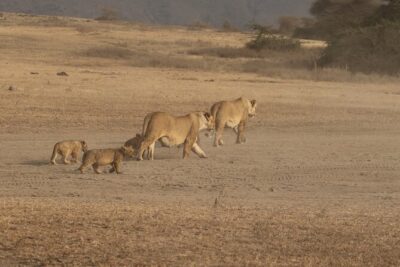
3 Days Serengeti & Ngorongoro Group Camping Safari
Read our review →
5-Day Highlights mid-Range Crater, Serengeti, Tarangire
Read our review →
Private 6-Day Tarangire Manyara Crater and Serengeti with Mid-Range Lodges
Read our review →
5 Days Camping Tarangire, Serengeti & Ngorongoro crater & Visiting Maasai
Read our review →Browse the lists this tour appears in