
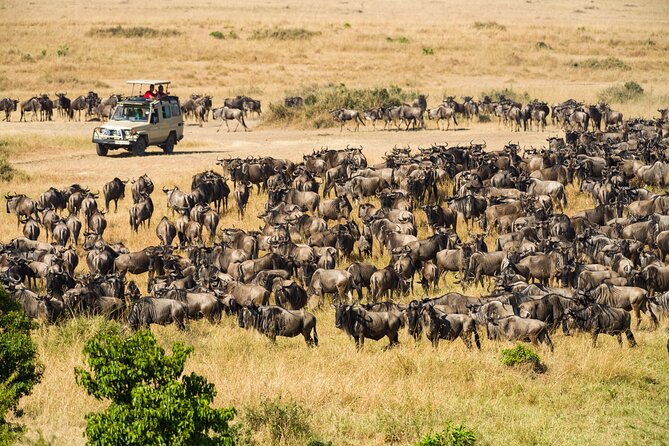
Reviewed · WILDLIFE
7 Days Cultural and Wildlife Safari
The best safari days keep changing the scenery. This private seven-day journey links Tanzania’s famous northern parks with less common cultural and nature stops, from flamingoes at Lake Natron to Hadzabe hunting near Lake Eyasi. I especially like the wide range of wildlife habitats and the chance to see more than animals from a vehicle. You also get forests, soda lakes, waterfalls, volcanic terrain, and Maasai, Hadzabe, and Datoga encounters.
I like that the trip includes Serengeti and Ngorongoro, the two headline stops most visitors hope to see, while still making room for Tarangire and Lake Manyara. The package also covers meals, bottled water, park fees, and Flying Doctor emergency evacuation. The main caution is the pace: seven days cover a lot of ground, and several mornings begin early with long drives between parks.
In This Review
- Key points to know
- A seven-day route with more variety than a standard safari
- Day one: waterfalls and flamingoes at Lake Natron
- Day two: Lake Natron’s southern shore and the road to Manyara
- Day three: hunting with the Hadzabe at Lake Eyasi
- Day four: Olduvai Gorge and the endless Serengeti
- Day five: a full day in the Serengeti
- Day six: descending into the Ngorongoro Crater
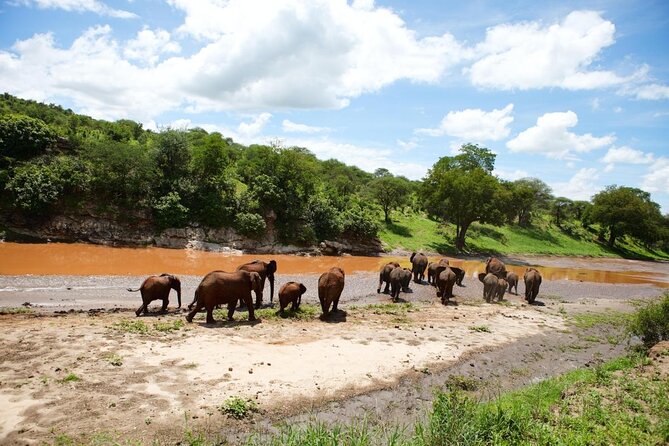
- Day seven: elephants and baobabs in Tarangire
- What the price covers, and what it does not
- Who should book this safari?
- Should you book it?
- FAQ
- Where does the safari start?
- Where does the activity end?
- Is this a private tour?
- How long is the safari?
- Is bottled water included?
- Are meals included?
- Are park fees and taxes included?
- Is emergency evacuation included?
- Is a guide tip included?
Key points to know
- Lake Natron adds a rare cultural and walking element: Hike along the Engaresero River to waterfalls, visit flamingo breeding areas, and meet local Maasai guides.
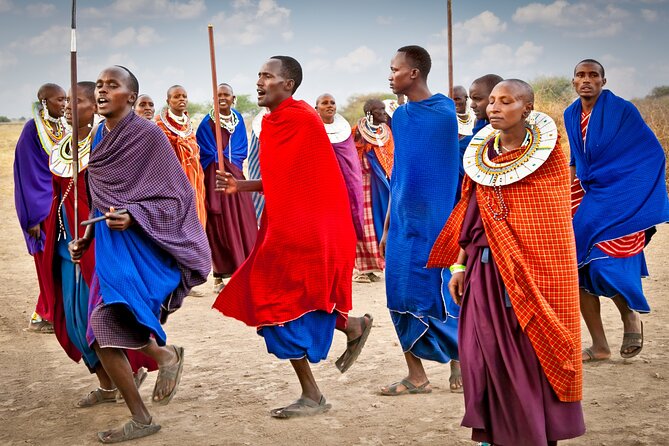
- Lake Eyasi offers a direct cultural encounter: Spend time hunting with the Hadzabe and meeting the Datoga rather than simply viewing wildlife.
- Serengeti is given a full game-drive day: The Seronera area can produce excellent resident wildlife even outside peak migration dates.
- Ngorongoro packs animals into a volcanic crater: Descend more than 600 metres for a full-day visit with a chance to see black rhino.
- Tarangire is worth keeping on the route: Its baobabs and elephant herds give the final day a different feel from the Serengeti.
- The tour is private, not a shared departure: Only your group participates, which gives you more control over the pace and questions.
A seven-day route with more variety than a standard safari
This is not the simplest park-to-park safari. A classic northern circuit often focuses on Manyara, Ngorongoro, Serengeti, and Tarangire. This trip adds Lake Natron and Lake Eyasi, so you get a stronger mix of wildlife, geology, local culture, and walking.
That variety is the trip’s biggest strength. You are not looking at the same type of scenery all week. One day brings a river hike, another brings a volcanic crater, and another puts you among baobabs and elephants. The tradeoff is time in the vehicle. The route is ambitious, and you should choose it because you want breadth, not because you want a slow stay at one lodge.
The advertised price is $3,748 per person. That is a serious sum, but the value depends on what you would otherwise arrange separately. The price includes seven breakfasts, seven lunches, six dinners, unlimited bottled mineral water, park fees and taxes, and Flying Doctor emergency evacuation. It also includes a private tour, airport pickup, and the listed cultural and nature activities.
Tips for the guide are not included. Put that cost into your planning from the start. Group discounts may also be available, but the exact reduction is not stated, so ask before booking.
More wildlife trips in Kilimanjaro:
- Tanzania Wildlife Encounters – 6 Days
★ 5.0 · 1 review - Tanzania Wildlife Encounters – 6 Days
★ 5.0 · 277 reviews - Zanzibar: Jozani nature walk and wildlife tour
★ 4.5 · 89 reviews
Day one: waterfalls and flamingoes at Lake Natron
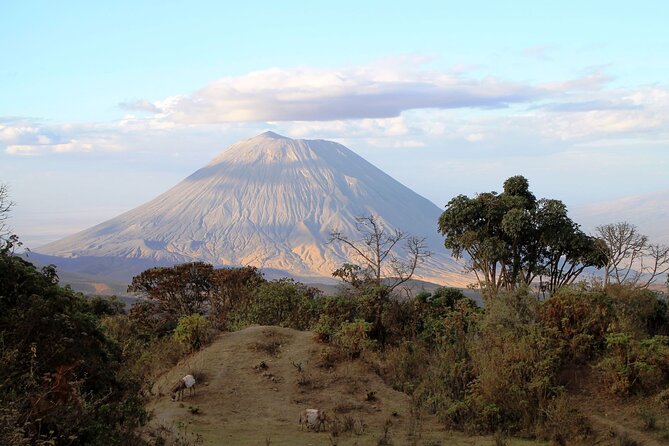
Your safari begins at Kilimanjaro International Airport. A Gilmag Safaris representative meets you there, handles the first welcome, and gives you a briefing before the drive toward Lake Natron, about 136 kilometres west of Arusha.
The first activity is a guided walk with a local Maasai guide. After passing through three gates, you reach the start of the Engaresero River route. The round hike takes about two to three hours and follows the riverbed toward a series of waterfalls.
This is a refreshing change from the usual first safari activity. You are on foot, moving through a river valley, with the chance to cool off at the falls. The tour description says you can refresh in many of the waterfalls, but conditions may affect exactly what is possible. Wear footwear suitable for uneven, wet ground and expect a physical walk rather than a simple roadside stop.
Lake Natron itself is known for its salty water and flamingo breeding areas. The scale is one of the memorable details here: as many as two million flamingoes migrate to the lake each year to nest during the dry season. You may not see that full number on your visit, but the setting gives you a chance to witness a major bird-breeding site rather than just a few birds beside a game-drive track.
The Maasai guide adds context to an area where semi-nomadic communities live around the lake. This part of the route is valuable because the cultural contact is linked to the place, not added as a quick performance for a busload of people.
Day two: Lake Natron’s southern shore and the road to Manyara
Day two starts early with a guided walk from the lodge toward the southern part of Lake Natron. The focus is ecological variety, flamingo breeding sites, and the lake’s dry-season salt surface.
The route also includes a visit to ancient hominin footprints said to date back nearly 120,000 years. That detail gives the stop a human connection, linking the northern Rift Valley to the long story of early human life in East Africa. It is a small site within a large day, but it adds meaning to the route.
After the lake visit, you leave through the three gates and drive toward Lake Manyara National Park for game viewing. The supplied schedule is clearest about the Natron walk and the onward drive, but it does not specify the exact length of the Manyara game drive or the overnight location. Ask Gilmag for the day’s driving hours and accommodation details before paying, especially if you care about time inside the park.
Lake Manyara is a useful contrast to the open Serengeti. The northern circuit is known for wooded areas, lake edges, and varied animal habitats. The park can also be busy because it is accessible from the main safari route, so your experience will depend on timing and the day’s conditions.
Day three: hunting with the Hadzabe at Lake Eyasi
Lake Eyasi brings the strongest cultural focus of the trip. You leave the lodge with a packed lunch to spend time with the Hadzabe, one of East Africa’s remaining hunter-gatherer communities.
The activity is described as a hunt. The Hadzabe use strong bows, arrows treated with poison made from Desert Rose, and bowstrings made from giraffe tendons. They also gather wild fruits and berries. Their language has similarities to the click languages spoken by some Southern African peoples.
This is a powerful opportunity, but it deserves a respectful attitude. You are not simply watching a staged wildlife display. You are entering a community’s daily world, and your guide should help explain when to observe, when to ask questions, and how to follow local expectations. The tour also includes time with the Datoga tribe, giving you a second cultural perspective in the Lake Eyasi area.
The day may appeal most to people who want human stories alongside wildlife. If you only want maximum game-drive time, this is one of the days you may find less appealing. If you want to understand how people have adapted to this part of Tanzania, it may be one of the most memorable stops.
A few more options to weigh up in Kilimanjaro
- 7 Days Kilimanjaro via Machame route affordable price
★ 5.0 · 110 reviews - Great Migration Safari In Tanzania
★ 5.0 · 71 reviews - Kilimanjaro Airport taxi to/from Moshi town/Arusha town
★ 5.0 · 60 reviews - 6 Days Tanzania Classic Safari
★ 5.0 · 52 reviews
Day four: Olduvai Gorge and the endless Serengeti
After Lake Eyasi, the route heads toward the Serengeti through the Ngorongoro Conservation Area. You stop at the Ngorongoro rim for a dramatic view into the crater before continuing toward Olduvai Gorge.
Olduvai Gorge is tied to the Leakey family’s fossil work and to discoveries dating back nearly two million years. Fossilized bones and stone tools found in the area helped establish Africa’s central place in the study of human evolution.
The stop is more than a scenic overlook. It gives you a reason to pay attention to the ground beneath the safari route. The animals are the immediate attraction, but Olduvai explains why this part of East Africa matters to the story of humanity.
From there, the road continues toward the Serengeti. The name means endless plain, and the first broad view can make that description feel exact. The park covers about 6,900 square miles, so you should expect long distances and a huge sense of space.
This is also a long transfer day. You will see a great deal from the vehicle, but you will not have unlimited time at each stop. Pack patience, water, sun protection, and a camera that is easy to use from a moving vehicle.
Day five: a full day in the Serengeti
The Serengeti receives the trip’s clearest wildlife priority: a full-day game drive with a packed lunch. You cover as much ground as practical in the Seronera area, returning to camp in the evening for dinner.
The timing of the wildebeest migration matters. The route information identifies April, May, and November as normal migration periods through the area, but animal movement is never a precise appointment. The important point is that Seronera has strong resident wildlife throughout the year.
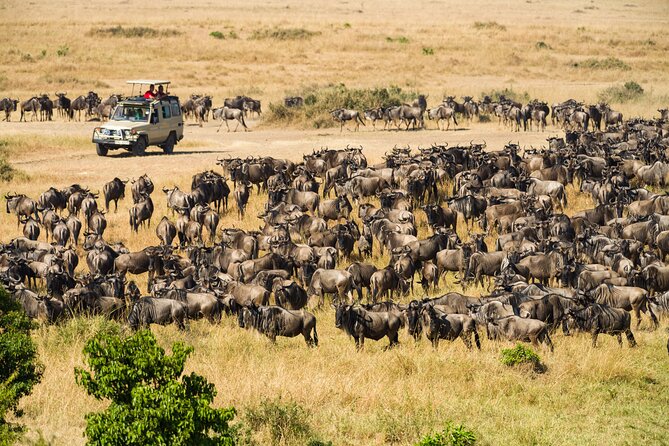
You may see elephants, buffalo, gazelles, zebra, lions, and other predators and herbivores. The area includes swamps, woodland, soda lakes, and short-grass plains. That variety improves your chances of seeing different species without reducing the day to a single famous crossing or seasonal event.
The full day is a real advantage. A shorter drive can leave you feeling that you only sampled the park. Here, your guide has more time to follow animal activity and adjust the route. One strong piece of practical feedback about Gilmag is the repeated praise for guide Eric, especially his ability to locate important animals. Guide quality matters enormously in the Serengeti, so if Eric is assigned to your departure, his animal-finding reputation is worth noting.
Still, no guide can guarantee a lion, leopard, cheetah, or rhino. The tour promises access to excellent habitats, not a fixed list of sightings. That distinction is important when you compare safari prices.
Day six: descending into the Ngorongoro Crater
You leave camp after an early breakfast and drive toward the Ngorongoro Conservation Area. The route descends more than 600 metres into the crater for a full-day crater tour, with a packed lunch eaten near the hippo pool.
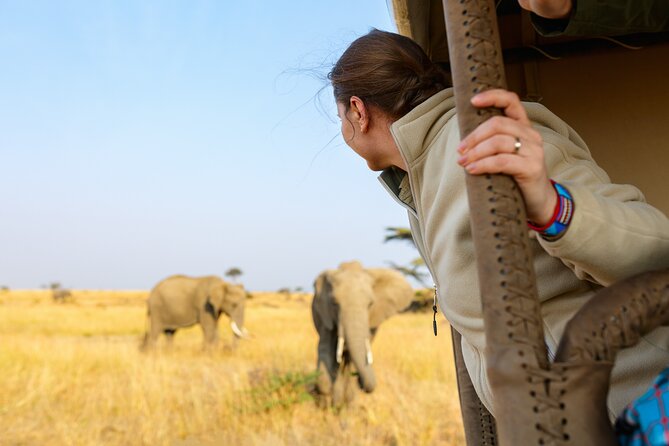
Ngorongoro feels different from the Serengeti because the crater walls create a contained setting. A permanent water supply and available grazing support large numbers of animals, including wildebeest, zebra, buffalo, eland, warthogs, hippos, and giant African elephants.
Lake Magadi, a large shallow alkaline lake in the crater’s southwest, is one of the main features. It can also attract wildlife and birds, adding another habitat to the day. The crater is one of the better places on this route to look for the endangered black rhino, though a sighting is never certain.
The crater’s compact shape can make animal viewing feel productive, but it can also bring many vehicles into the same area. Your experience will depend partly on the time of day and your guide’s choices. Even with that limitation, the combination of crater walls, open grassland, lake, and concentrated wildlife makes this a major highlight.
This is another early and full day. The pace may be tiring by now, especially after the Serengeti game drive and several long transfers. The reward is a very different setting, not simply another version of the plains.
Day seven: elephants and baobabs in Tarangire
The final day takes you to Tarangire National Park. After breakfast, you make a short drive to the park, enjoy a game drive, eat a packed lunch overlooking the Tarangire River, and continue with an afternoon drive.
Tarangire is famous here for its thousands of baobabs and large elephant population. Its scenery is immediately different from the Serengeti and Ngorongoro. The river gives animals a reason to gather, while the trees create striking viewing points and photographs.
You may also see leopards, ostriches, lions, warthogs, zebra, and cheetahs. African wild dogs are possible but endangered and uncommon, so treat that as a lucky bonus rather than an expected sighting.
The park is slightly off the main route, and the itinerary presents that as an advantage because many people leave it out. I agree with the basic logic. Tarangire gives you a fresh final chapter, particularly if elephants and baobabs are high on your list.
The day lasts about 12 hours, according to the stated schedule. That is a long finish. Confirm where you will sleep or how you will transfer after the game drive, since the published information says the activity ends back at the meeting point but does not spell out the final airport or hotel arrangement.
What the price covers, and what it does not
At $3,748 per person, this is not a budget safari. The price becomes easier to judge when you count the private format, multiple national parks, cultural activities, meals, water, taxes, and emergency evacuation cover.
The private setup is especially important. Your group is the only group on the activity, so you are not automatically tied to strangers’ preferred pace. You can ask more questions, and the guide can respond to your group’s interests. The size of your own party is not stated, so ask how the vehicle and room arrangements work for your booking.
The included meals are useful because several days involve early starts and packed lunches. Unlimited bottled mineral water also removes one small but constant safari worry. Tips are excluded, so plan to reward the guide and other staff separately if the service meets your expectations.
Communication is another positive sign. Mary is praised for patient planning, personal attention, and working around budgets and changing schedules. That matters here because the route contains several moving parts. Ask specific questions about accommodation, drive times, and the final transfer before you commit.
Who should book this safari?
I would recommend it to you if you want a broad introduction to Tanzania’s northern circuit and do not mind early mornings, long road sections, and a busy schedule. It suits people who want wildlife but also care about archaeology, local communities, walking, and unusual scenery.
Families and private groups may appreciate the private format, although the supplied information does not give an age policy or specific child arrangements. Most people can participate, but the Engaresero River walk requires enough fitness for a two to three-hour hike on a river route.
You should think twice if you want a relaxed lodge holiday or a trip built around one park. The route is ambitious, and Lake Natron plus Lake Eyasi add travel time. You are paying for variety and access, not a slow week beside one waterhole.
The experience is non-refundable and cannot be changed after booking, so confirm your dates, airport plans, accommodation details, and guide arrangements first. Pickup is offered at Kilimanjaro International Airport, and the listed activity ends back at the meeting point.
Should you book it?
Book this safari if your ideal Tanzania trip includes the big three of Serengeti, Ngorongoro, and Tarangire, plus flamingoes, waterfalls, Olduvai Gorge, and direct contact with Maasai, Hadzabe, and Datoga communities. The strongest reasons to choose it are the private format, full Serengeti day, broad park selection, and the practical inclusions.
Skip it if you dislike long transfers or want firm detail on every lodge and transfer before booking. For the right person, this is an energetic and rewarding route, with enough wildlife headline stops to satisfy a first safari and enough cultural material to give the week a human shape.
FAQ
Where does the safari start?
The safari starts with pickup at Kilimanjaro International Airport in Tanzania.
Where does the activity end?
The activity ends back at the meeting point. The supplied details do not specify a separate final airport transfer.
Is this a private tour?
Yes. Only your group participates in the activity.
How long is the safari?
The safari lasts approximately seven days.
Is bottled water included?
Yes. Unlimited bottled mineral water is included.
Are meals included?
Yes. The package includes seven breakfasts, seven lunches, and six dinners.
Are park fees and taxes included?
Yes. All fees and taxes are included.
Is emergency evacuation included?
Yes. Flying Doctor emergency evacuation is included.
Is a guide tip included?
No. Tips for the guide are not included in the price.
Just added in Kilimanjaro
- Tanzania Wildlife Encounters – 6 Days★ 5.0 · 1 review
- Day Trip To Tarangire National Park★ 4.5 · 2 reviews
- Mount Kilimanjaro 7 Days – Machame Route★ 5.0 · 5 reviews
- 5 days Serengeti Wildebeest Migration Safari★ 5.0 · 3 reviews
- Mount Kilimanjaro 6 days – Machame route★ 4.0 · 5 reviews
- Marangu Cultural tour.★ 5.0 · 1 review
- Lemosho Route★ 5.0 · 21 reviews
- Airport Transfers at Kilimanjaro International Airport – JRO★ 5.0 · 2 reviews
Wildlife, compared.

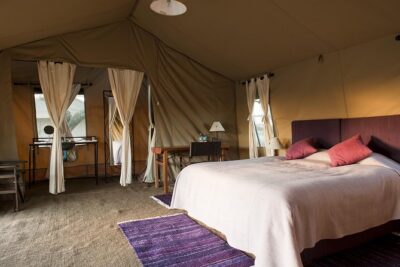
5 Days 4 Nights Tarangire, Serengeti , Ngorongoro & Manyara Wildlife Safari
Read our review →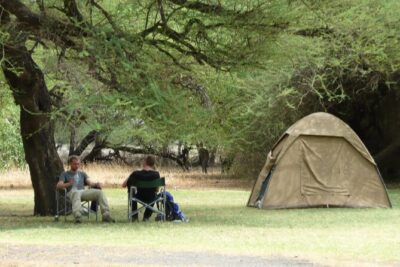
4 Days Wildlife Safari and Cultural Experience in Tanzania
Read our review →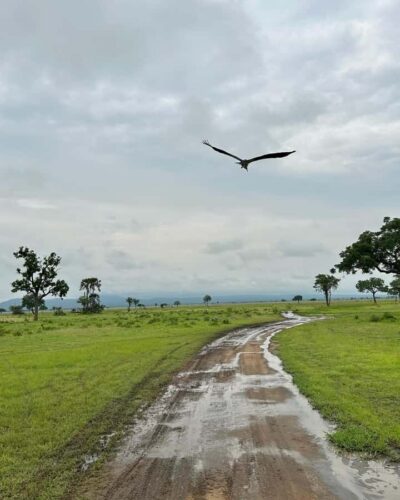
SAFARI WILDLIFE 3 DAYS 2 NIGHT FROM ZANZIBAR TO MIKUMI
Read our review →
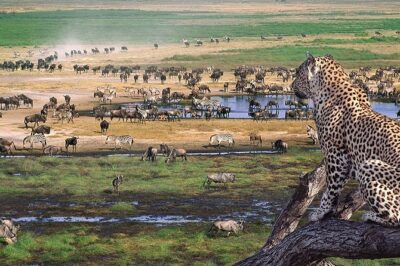
8 Days 7 Nights Tanzania Wildlife & Culture Lodge Safari
Read our review →Browse the lists this tour appears in