
Reviewed · MACHAME ROUTE CLIMBS
Mount Kilimanjaro 6 days – Machame route
Kilimanjaro saves its hardest test for midnight. This six-day Machame climb earns its appeal through varied scenery, from rainforest to high volcanic slopes, and through a serious acclimatization day near Lava Tower. I also like that the $2,220 price includes airport transfers, two hotel nights, meals, camping equipment, and a full mountain crew. The main catch is the schedule: summit day can last about 14 hours, and the six-day plan gives you less acclimatization time than longer routes.
This is a private climb with your own group, supported by a qualified guide, assistant guides, porters, and a cook. The company has received strong praise for organization, camp setup, food, and crew effort, with guides and staff such as Emmanuel, Isaya, Jumanne, Ngwasuma, and Yahya singled out in personal accounts. Still, communication about route changes deserves care before you pay, especially if you are joining alone or expect to share a group.
In This Review
- Key points to know before choosing Machame
- Why the Machame Route earns its reputation
- Day one: Machame Gate to 3,050 meters
- Day two: Forest edge to Shira Camp
- Day three: Lava Tower and the Barranco acclimatization day
- Day four: Barranco to Barafu Camp
- Day five: The midnight climb to Uhuru Peak
- Day six: Mweka descent and return to Moshi
- What the $2,220 price really covers
- Food, camping, and the mountain crew
- Fitness, equipment, and preparation
- Communication and booking caution
- Who should book this climb?
- FAQ
- How long is the Machame Route?
- How high is Uhuru Peak?
- Where does the climb begin?
- Where does the climb end?
- Is airport transportation included?
- Are hotel nights included?
- Are meals included on the mountain?
- Is a portable toilet included?
- Should you book the six-day Machame climb?
Key points to know before choosing Machame
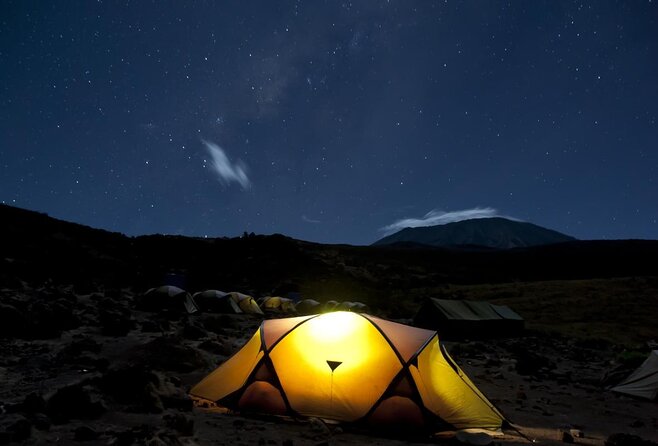
- The summit attempt begins around midnight: You climb through scree in darkness toward Stella Point, then continue to Uhuru Peak at 5,895 meters.
- Day three is the acclimatization backbone: You climb to about 4,650 meters near Lava Tower, then sleep lower at Barranco Camp.
- The route covers about 62 kilometers: That distance is measured from gate to gate, not counting every transfer or possible extra walk.
- The price includes the expensive essentials: Airport transfers, hotel nights, park fees, guides, porters, cook, tents, meals, and daily washing water are included.
- The six-day plan is physically demanding: It suits fit hikers with some walking experience, though first-time trekkers do complete it.
- A portable toilet costs extra: It is optional, but highly recommended for a more private camp routine.
Why the Machame Route earns its reputation
Machame is often called the Whisky Route, a nickname that hints at its tougher character compared with easier options. The route gains height steadily, crosses several distinct mountain zones, and gives you broad views of Kilimanjaro from the southern circuit.
I like the route because it does not simply point uphill every day. On day three, you climb high toward Lava Tower and then descend to Barranco Camp. That climb-high, sleep-lower pattern helps your body adjust to thinner air. It cannot remove the risk of altitude sickness, but it gives the itinerary a useful acclimatization feature.
The route is not a casual six-day walk. You spend five nights camping, carry on through steep and rocky sections, and face a long summit day followed by a major descent. The mountain crew handles the camp loads and cooking, but you still need to manage your own pace, clothing, water, and energy.
The private format is helpful if you want your group to move at its own rhythm. It also means your experience may depend heavily on the guide assigned to your party. The personal accounts connected with this operator praise Emmanuel and other crew members for effort, service, and morale. That is encouraging, but I would still ask for the planned route, group arrangements, and guide details in writing before departure.
More Kilimanjaro climbs:
- 6 Days Climbing Mount Kilimanjaro Machame Route
★ 5.0 · 40 reviews - Kilimanjaro Climbing 5 days Marangu route
★ 5.0 · 22 reviews - Mountain Kilimanjaro Climbing 8 Days Lemosho Route
★ 5.0 · 10 reviews
Day one: Machame Gate to 3,050 meters
Your climb begins with a drive from Moshi to the Mount Kilimanjaro National Park entrance, a trip of about 45 minutes. The road passes through Machame village on the lower slopes before you start walking at Machame Gate.
The first 11 kilometers take about five to six hours. You climb from 1,830 meters to Machame Camp at roughly 3,050 meters, following a winding trail through rainforest. This is a good opening day because the walking time is substantial but not yet punishing.
Expect mud and slippery ground at lower elevations. Gaiters and trekking poles are practical here, not decorative extras. The trail rises along a ridge, and the forest section gives you a gradual introduction to the mountain’s pace.
Machame Camp is your first night under canvas. Camping equipment, tents, camp chairs, tables, and a sleeping mattress are included. Water for washing up is also supplied each day, which makes the basic camp routine easier.
The price includes dinner and breakfast at the hotel before and after the climb, plus five mountain dinners, six lunches, and five breakfasts. Snacks are not included, so I would bring compact, familiar food that you know you can eat when tired.
Day two: Forest edge to Shira Camp
After breakfast, you leave the rainforest behind and climb toward the Shira Plateau. The day is shorter at about five kilometers and four to five hours, but the trail becomes more exposed and rocky.
The route crosses a valley along a steep ridge before turning west toward a river gorge. You finish at Shira Camp, around 3,850 meters. The jump in elevation is noticeable, so the value of a slow pace becomes clear here.
This is not a day to race. You may feel perfectly fine at the start and notice the altitude later. I would keep your breathing steady, drink according to your guide’s instructions, and avoid using the short distance as an excuse to hurry.
The Shira area gives you a different feel from day one. The heavy forest has given way to open high ground, and the mountain begins to feel less like a woodland hike and more like a high-altitude expedition.
Day three: Lava Tower and the Barranco acclimatization day
Day three is one of the most important parts of the route. You walk about 10 kilometers in five to six hours, beginning at 3,850 meters and ending at Barranco Camp near 4,000 meters.
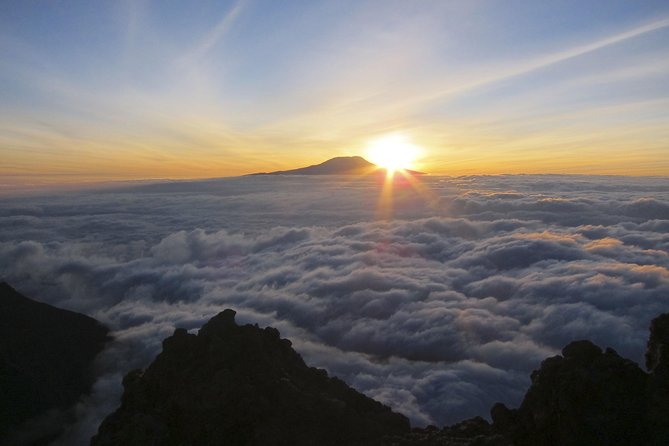
The route heads east across the Shira Plateau, passing a junction for Kibo before turning southeast toward Lava Tower. The tower is also called Shark’s Tooth and reaches about 4,650 meters. A second junction leads toward Arrow Glacier, but your route continues down to Barranco.
This day may feel strange because you climb high and finish close to your starting elevation. That is intentional. Your body gets time at a higher altitude, followed by a descent for sleep. I value this part of the plan because it teaches you how the mountain feels before summit day.
Barranco Camp is reached after the descent from Lava Tower. The day’s mileage is moderate, but the altitude makes it more demanding than the numbers suggest. Keep your expectations sensible. The point is not to feel heroic. The point is to arrive ready for the next stage.
More Machame Route climbs:
- 7 Days Kilimanjaro via Machame route affordable price
★ 5.0 · 110 reviews - 7-Day Machame Route Kilimajaro
★ 5.0 · 28 reviews - 6 Days Machame Route Kilimanjaro Trekking
★ 5.0 · 13 reviews - Mount Kilimanjaro 7 Days – Machame Route
★ 5.0 · 5 reviews
Day four: Barranco to Barafu Camp
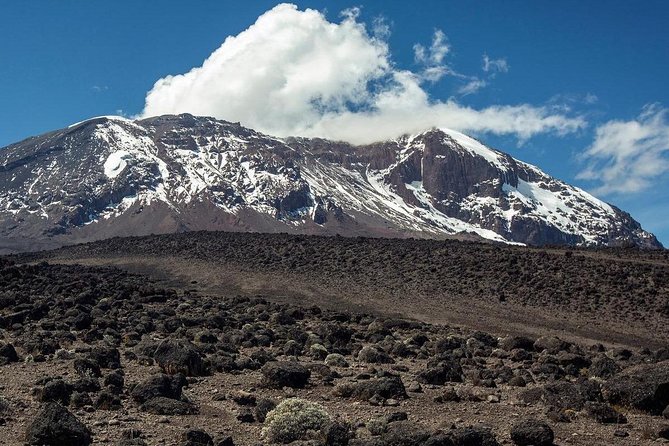
The fourth day covers about nine kilometers and takes roughly seven hours. You climb from about 4,050 meters to Barafu Camp at around 4,700 meters.
The route completes the South Circuit, which gives you views of the summit from different angles. That variety is one of Machame’s rewards. You see the upper mountain repeatedly, but from changing positions, so the summit never feels like a single flat target.
Barafu is the high camp before your summit attempt. You eat dinner, rest, and organize your clothing and gear for a midnight or early morning start. This is where small packing mistakes become expensive. Put your headlamp, warm layers, gloves, water, snacks, and personal medicine where you can reach them without emptying your bag.
The altitude can make even simple camp tasks feel slow. I would use this afternoon for quiet rest rather than extra wandering. The next day is the true test.
Day five: The midnight climb to Uhuru Peak
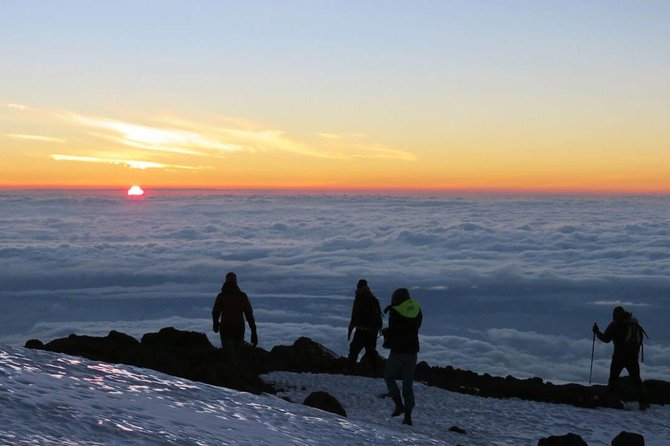
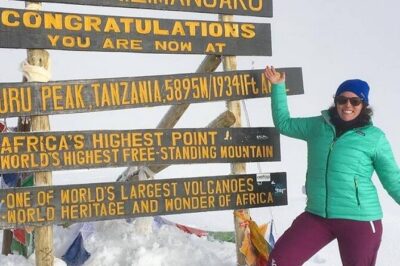
Summit day begins between midnight and 2 a.m. The schedule is rough, but it allows you to reach Stella Point near sunrise and, with luck and strength, continue toward Uhuru Peak.
You climb from about 4,700 meters to the summit at 5,895 meters. The upward section is about five kilometers, but it takes roughly six to eight hours depending on pace and conditions. The route heads toward the area between the Rebmann and Ratzel glaciers, then climbs through heavy scree toward Stella Point on the crater rim.
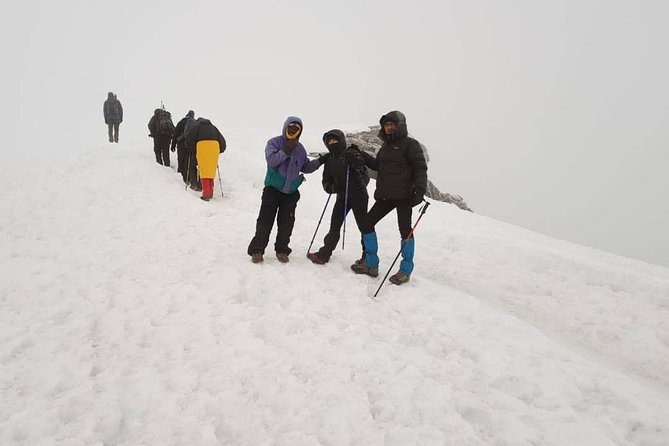
This is the most mentally and physically demanding part of the trip. Scree shifts underfoot, the air is thin, and progress can feel painfully slow. Your guide’s pacing matters here. A steady, deliberate rhythm is usually more useful than bursts of speed.
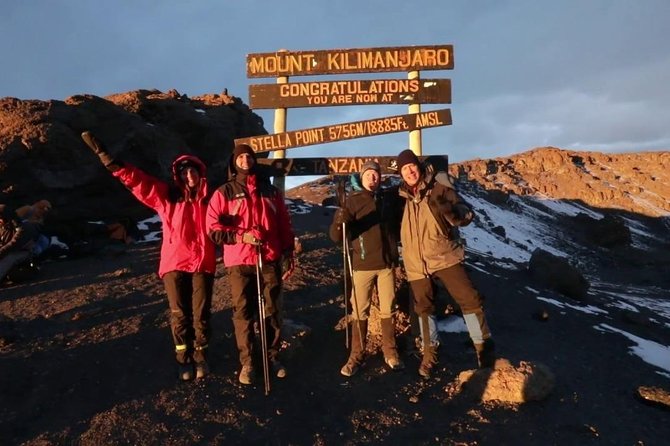
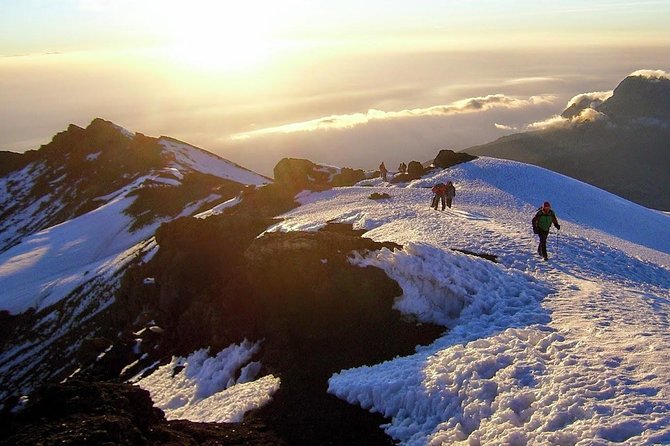
At Stella Point, you get a short rest and, for many climbers, a sunrise worth the effort. Faster hikers may see sunrise from the summit itself. From Stella Point, the route can hold snow, and the final hour to Uhuru Peak may feel surprisingly long.
The summit elevation is 5,895 meters. Emergency oxygen is carried for emergencies only, not as a way to assist ordinary summit progress. A basic first aid kit is also included for emergency use. Those provisions are reassuring, but they are not substitutes for acclimatization, fitness, or honest communication with your guide.
After the summit, you descend to about 3,090 meters, covering another 13 kilometers. The full day can last about 14 hours. That combination of night walking, summit effort, and long descent is the biggest reason I would not describe this as an easy six-day holiday.
The descent is hard on tired legs and knees. Trekking poles can help, and you should keep warmer clothing handy even as you lose altitude. Dinner and sleep at the lower camp will likely feel well earned.
Day six: Mweka descent and return to Moshi
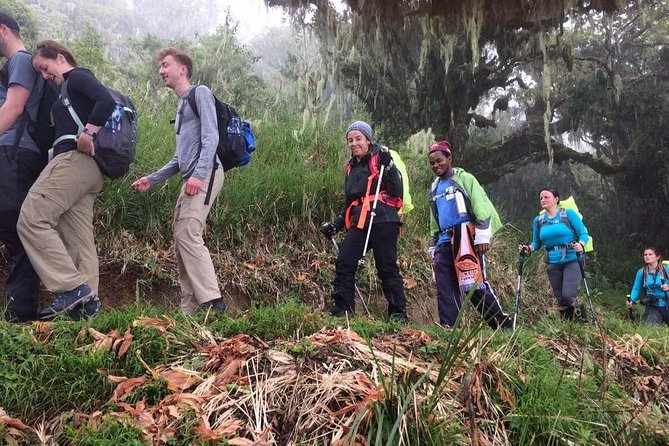
The final walking day follows the Mweka Trail from about 3,090 meters to 1,680 meters. You cover around 10 kilometers in three to four hours, then continue for another hour to Mweka Village.
At lower elevations, the trail can turn wet and muddy again. Gaiters and trekking poles return to the useful list. Shorts and a T-shirt may be comfortable lower down, but keep rain gear and a warmer layer within reach because mountain weather can change.
At Mweka Gate, you receive your summit certificates. From Mweka Village, a vehicle takes you back to your Moshi hotel, a drive of about 30 minutes.
The final descent is not just a formality. After summit day, your feet may be sore and your concentration low. Take the downhill slowly. The return to a hotel, a proper bed, dinner, and breakfast is part of the package and adds real value after five nights of camping.
What the $2,220 price really covers
At $2,220 per person, this is a major purchase, but the price includes more than the walking itself. You receive return transfers between Kilimanjaro Airport and Moshi, a hotel night before the climb, and another hotel night afterward. Dinner and breakfast are included at both hotel stays.
On the mountain, the package includes:
- Park and other listed fees and taxes
- A qualified mountain guide and assistant guides
- Porters and a cook
- Crew salaries set according to Kilimanjaro National Park guidelines
- Tents, camp chairs, tables, and sleeping mattresses
- Daily washing water
- Five dinners, six lunches, and five breakfasts
- Emergency oxygen and a basic first aid kit
That arrangement can be good value because the crew, permits, food, transfers, and accommodation add up quickly on a Kilimanjaro climb. The inclusion of crew salaries according to park guidelines is also important. Ask how tipping is handled, since no tipping amount is listed in the supplied details.
You still need to pay for flights, visas, insurance, personal gear, drinks, snacks, medicine, and water-purifying tablets. Alcoholic and nonalcoholic beverages are also excluded. A portable toilet is optional but highly recommended, and it costs extra.
The word recommended matters here. Shared camp toilets may be enough for some people, but a portable toilet can make nights at high camp more comfortable. If privacy and convenience matter to you, budget for it before you arrive.
Food, camping, and the mountain crew
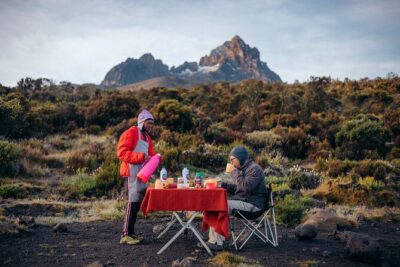
Food is one of the stronger parts of the package. Personal accounts praise the meals, with one climber saying the food exceeded expectations given the difficult setting. You should still bring snacks because your favorite energy food may not be available, and the package specifically excludes them.
The camping setup includes more than a basic tent. Tables and camp chairs give you a place to eat and organize yourself, while a sleeping mattress is supplied. Daily washing water is useful after long walking days, though you should not expect hotel-style facilities on the mountain.
The crew can make or break a climb. Emmanuel is named as a successful lead guide in one account, while Isaya, Jumanne, Ngwasuma, the cook, porters, and Yahya received strong personal praise in another. Those names suggest that the operator has a mountain team with considerable practical experience, but guide assignments can vary.
I would ask three questions before booking:
- Who is likely to lead my group?
- How many people will be in the group?
- What is the plan if someone needs to change route or descend?
The activity is private, meaning only your group participates. That can provide flexibility, but the supplied information does not give a maximum group size. If you are booking alone, clarify whether you will climb entirely alone with the crew or be placed with other paying climbers.
Fitness, equipment, and preparation
The stated standard is moderate physical fitness, with the route designed for fit people who have some hiking experience. First-time trekkers do complete Machame, but you should not confuse that with an easy introduction to hiking.
Your preparation should include long walks, steady uphill work, and practice with trekking poles if you plan to use them. The itinerary gives you several days of sustained walking before the summit, so comfort over many hours matters more than short bursts of speed.
The supplied information specifically points to:
- Gaiters for muddy sections
- Trekking poles for slippery ground and the long descent
- Rain gear
- Warm clothing for high camp and the summit
- Snacks
- Personal medicine
- Water-purifying tablets
Individual trekking gear is not included. The package supplies a sleeping mattress and camping equipment, but you should confirm exactly which personal items you must bring. The description does not list every item of clothing, footwear, or sleeping gear.
Altitude is the central challenge. Day three helps, but this remains a six-day climb with a demanding summit schedule. Tell your guide promptly if you feel unwell. Emergency oxygen and first aid are carried for emergencies, not to make an unsafe summit attempt possible.
Communication and booking caution
Most of the available feedback is positive, with a 4.2 rating from five published ratings. The strongest praise focuses on organization, camp quality, food, motivated staff, and successful summit support.
There is also a serious communication concern in one account involving the owner, Wence, and a solo climber who was comparing operators and hoping to join a group. The company response says a group of 13 changed from Machame to Rongai at extra cost, and that the company could not force them to keep the original route.
The practical lesson is simple: get your route, price, group arrangement, and any proposed change confirmed in writing. Do not assume a route change is included or free. This matters most if you are traveling alone, joining a larger party, or booking close to your departure date.
Free cancellation is available if you cancel at least 24 hours before the local start time. Changes or cancellations made less than 24 hours before the start are not accepted for a refund.
Who should book this climb?
I would choose this route if you want the classic southern approach, varied walking conditions, a strong support crew, and a private group arrangement. It is also a sensible choice if you value having hotel nights and airport transfers included rather than arranging every piece yourself.
I would hesitate if you want a relaxed mountain holiday, dislike night hiking, or have little experience with long uphill days. The 14-hour summit day is not a minor detail. The six-day schedule also gives you less time to adjust than a longer Kilimanjaro route.
FAQ
How long is the Machame Route?
The route is approximately 62 kilometers, or 37 miles, from park gate to park gate.
How high is Uhuru Peak?
Uhuru Peak reaches 5,895 meters.
Where does the climb begin?
The walking portion begins at Machame Gate in Mount Kilimanjaro National Park.
Where does the climb end?
The descent finishes at Mweka Gate, followed by an additional walk to Mweka Village. A vehicle then takes you back to your Moshi hotel.
Is airport transportation included?
Yes. Return transfers between Kilimanjaro Airport and Moshi are included.
Are hotel nights included?
Yes. One hotel night before the climb and one night after the climb are included, with dinner and breakfast.
Are meals included on the mountain?
Yes. The package includes five dinners, six lunches, and five breakfasts.
Is a portable toilet included?
No. It is optional, costs extra, and is highly recommended.
Should you book the six-day Machame climb?
Book it if you want a well-supported Kilimanjaro attempt with a proven route, included transfers, hotel nights, meals, and mountain crew. The strongest case for this trip is the combination of varied scenery, the Lava Tower acclimatization day, and the practical support praised for staff such as Emmanuel, Isaya, Jumanne, Ngwasuma, and Yahya.
Before paying, confirm the route in writing, ask about the group arrangement, and budget for personal gear, snacks, insurance, and possibly a portable toilet. If you are fit, prepared for a midnight summit push, and comfortable with a demanding six-day schedule, this is a solid way to approach Kilimanjaro. If you can afford more time, a longer route may offer a gentler altitude schedule, but this Machame plan gives you a serious, organized attempt at the mountain for its stated price.
Just added in Kilimanjaro
- Tanzania Wildlife Encounters – 6 Days★ 5.0 · 1 review
- Day Trip To Tarangire National Park★ 4.5 · 2 reviews
- Mount Kilimanjaro 7 Days – Machame Route★ 5.0 · 5 reviews
- 5 days Serengeti Wildebeest Migration Safari★ 5.0 · 3 reviews
- Marangu Cultural tour.★ 5.0 · 1 review
- Lemosho Route★ 5.0 · 21 reviews
- Airport Transfers at Kilimanjaro International Airport – JRO★ 5.0 · 2 reviews
- Tanzania Safari and Kilimanjaro Climb Multi-Day Experience★ 5.0 · 3 reviews
Machame Route Climbs, compared.

Climbing Kilimanjaro through 7 days Machame Route
Read our review →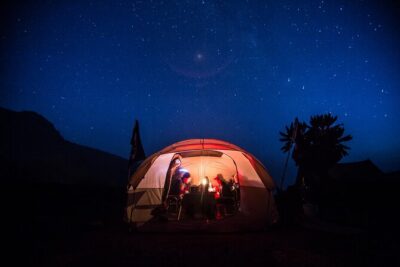
7-Day Machame Kilimanjaro Summit Tour from Arusha
Read our review →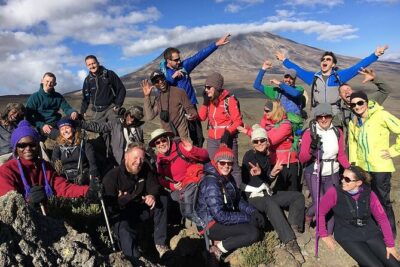
7 Days Kilimanjaro via Machame route affordable price
Read our review →
#1. Best Kilimanjaro Day hike Tour-Machame Route-ISMANI
Read our review →
The Best of Machame Route in 6 Days: Your World’s Summit Guide
Read our review →Browse the lists this tour appears in