
Reviewed · WILDEBEEST MIGRATION SAFARIS
Great Migration Safari In Tanzania
The wild heart of Tanzania is on the road. This seven-day private safari links Tarangire, northern Serengeti, central Serengeti, and Ngorongoro, giving you a strong mix of elephants, predators, open plains, and possible wildebeest migration scenes. I especially like the private 4×4 setup, which gives your group more control over stops, and the guide-led search for the migration in the Lobo, Bologonya, and Mara areas. The main consideration is the pace: several days run for 8 to 10 hours, and the migration is seasonal rather than guaranteed.
I also like the human scale of the trip. You travel in your own group with a professional guide, rather than being placed on a large coach with strangers. Past praise has singled out guides including Thomas, Ismail, Jackson, Evarest, Samwel, and Kisamo for their animal knowledge, patience, and care, though you should confirm your assigned guide before departure. At $3,900 per person, this is a serious investment, but the private vehicle and four major safari areas make it a potentially strong value for couples, families, and small groups who want a focused route.
In This Review
- Key points before you book
- Why this seven-day route works
- Day 1: Kilimanjaro Airport to Karatu
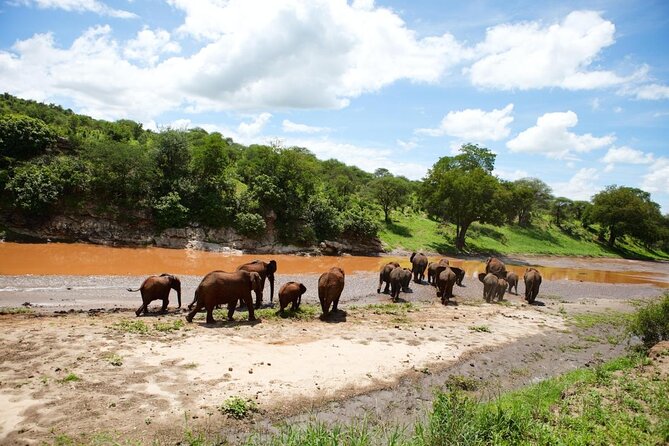
- Day 2: Tarangire and its elephant country
- Day 3: Crossing Ngorongoro toward northern Serengeti
- Day 4: A full day in northern Serengeti
- Day 5: Northern to central Serengeti
- Day 6: Ngorongoro Crater
- Day 7: Karatu to Arusha or Kilimanjaro
- What $3,900 per person really buys
- The guide can make or break the safari
- The Manyara question you should settle first
- Who will enjoy this safari most?
- Should you book it?
- FAQ
- Where does the safari start?
- Where does the safari end?
- Is this a private safari?
- Which parks and regions are included?
- When is the best time to look for the Great Migration?
- Can the safari be canceled or changed?
Key points before you book
- The migration focus is northern Serengeti: Two long game-drive days target Lobo, Bologonya, and the Mara regions, where wildebeest may gather from July through October.
- A private 4×4 changes the feel: Your group uses a Jeep 4×4 Land Rover or Toyota Land Cruiser, with a professional guide and a tailor-made plan.
- Tarangire gives you a different kind of safari: Expect big elephant herds, baobab trees, and good chances of seeing predators.
- Ngorongoro is the compact wildlife finale: A crater game drive puts you among a high concentration of animals in one remarkable setting.
- The schedule is active: Full days last up to 10 hours, with transfers between parks and several long stretches on the road.
- Check one route detail before paying: The overview names Manyara, but the daily plan visits Tarangire instead and does not include a Manyara stop.
Why this seven-day route works
Tanzania rewards a varied itinerary. Tarangire feels different from the Serengeti, the Serengeti changes character as you move north to south, and Ngorongoro offers a concentrated wildlife day rather than endless open plains. This route gives you all three experiences in one week.
The private format is important. You are not simply following a fixed bus schedule. The plan is described as 100 percent tailor-made, so you can discuss interests such as migration, big cats, elephants, family pacing, or extra time at a market. The actual degree of flexibility will depend on park rules, driving distances, and your guide, but the structure is much more personal than a standard group departure.
The timing also matters. The stated start is 7:00 a.m. at Kilimanjaro Airport, with pickup offered. Most people can participate, but this is not a restful holiday with a few sightseeing hours each day. Game drives can be long, roads can take time, and the best animal sightings often require patience.
More migration safaris:
- 6 Days Tanzania Budget Camping Safari with Migration
★ 5.0 · 31 reviews - 8 Days Great Wildebeest Migration – Mara River Crossing
★ 5.0 · 28 reviews - Tanzania Safari – The Great Migration in the North of the Serengeti and Lake Natron
★ 5.0 · 25 reviews
Day 1: Kilimanjaro Airport to Karatu
Your first day is mainly a transfer. The plan allows about two hours by private car from Kilimanjaro Airport to Karatu, where you spend the night at a lodge.
If your arrival schedule leaves time, you can stop at a local market on the way. That small option is worth considering because it gives you an early look at daily life beyond the park gates. If you arrive tired, go straight to the lodge, eat, and rest. Safari days begin early, and saving energy here is sensible.
Karatu is a practical base for the northern circuit. The first night also breaks up the journey before Tarangire and the longer run toward Serengeti. One point needs clarification: the supplied route describes the airport transfer as about two hours, while the final day allows two to three hours from Karatu to Arusha or Kilimanjaro. Ask the operator to confirm your exact airport, arrival time, and road plan before booking flights.
Day 2: Tarangire and its elephant country
After breakfast, you drive about an hour from Karatu to Tarangire National Park. The plan gives you roughly seven hours for a game drive, with a picnic lunch.
Tarangire is an excellent early safari stop because it has its own look and feel. Large elephant herds are a major draw, and the huge baobab trees give the park a memorable shape. The park is also noted for a high number of predators, so your guide will likely be watching the edges of the herds, the river area, and places where animals gather.
I like the contrast this creates before Serengeti. You are not seeing the same type of plain for seven straight days. You get elephants and baobabs first, then the broad grassland setting of Serengeti later.
The drawback is the picnic format. Seven hours in a safari vehicle can feel long, especially for children, and there is little room to change the day once you are inside the park. Bring water, sun protection, and patience. The private vehicle helps here because your group can discuss the pace and how long to spend at a sighting.
Day 3: Crossing Ngorongoro toward northern Serengeti
Day three is a major travel day. After breakfast, you leave Karatu, pass through the Ngorongoro Conservation Area, and continue toward Serengeti, heading for the Lobo, Bologonya, and Mara regions. The plan allows about three hours for the transfer portion and around eight hours overall, including the game drive.
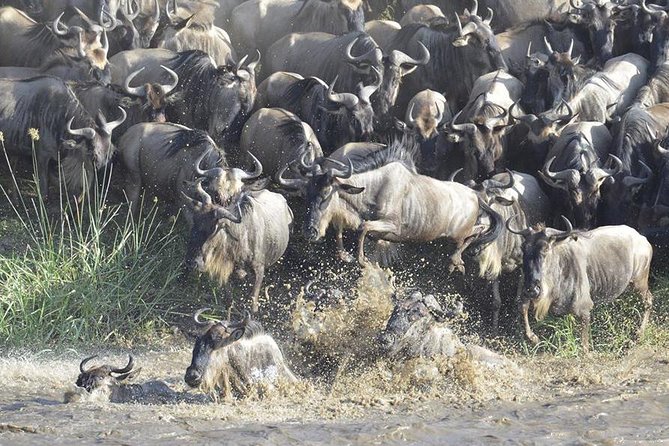
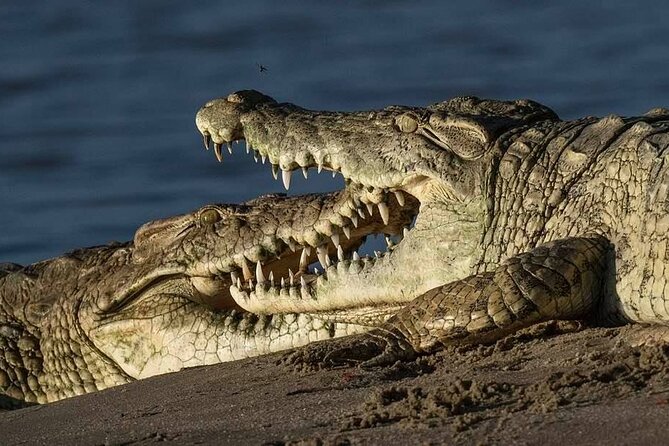
This is where the trip begins to focus on the Great Migration. From July through October, wildebeest may move north and gather before attempting to cross the Mara River. The river contains large crocodiles, and the crossing itself is never something you can schedule like a train. Animals may wait, turn back, or cross away from your vehicle.
That uncertainty is part of the experience, but it is also the main booking risk. The tour gives you a strong chance to search in the right broad region during the usual northern season. It cannot promise a crossing, a particular animal, or a specific day.
The route also asks you to cover a lot of ground. You should expect time in the vehicle, not just action at a riverbank. The reward is access to some of northern Serengeti’s most important migration areas, with the chance to see other wildlife along the way.
A few more options to weigh up in Moshi
- Kilimanjaro climb by Lemosho Route (7-day)
★ 5.0 · 651 reviews - Safari Serengeti And Ngorongoro
★ 5.0 · 288 reviews - Kilimanjaro climb, Machame Route (7-day)
★ 5.0 · 262 reviews - Kilimanjaro Climbing Lemosho Route 8 Days.
★ 5.0 · 186 reviews
Day 4: A full day in northern Serengeti
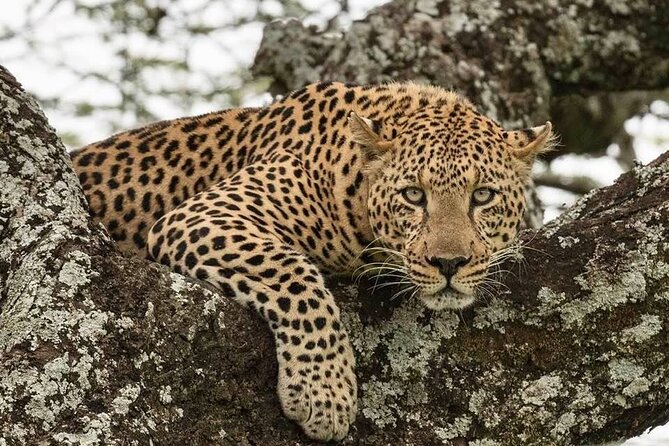
Day four is the trip’s clearest migration day. After breakfast, you spend up to 10 hours on a full game drive through northern Serengeti.
This long day is useful because wildlife does not follow a timetable. You may spend part of the morning looking for herds, pause for a picnic, and then continue toward the Mara region or another sighting. A skilled guide makes a real difference here. Samwel Mangulai has been praised for finding wildebeest during a short safari, while guides such as Jackson, Ismail, and Thomas have also received strong praise for animal spotting and route decisions.
Confirm who will guide your departure, since names associated with previous trips do not guarantee your assigned guide. It is also worth asking how the company handles migration positioning, radio communication between vehicles, and time spent at crowded sightings. Those details affect the quality of a river-crossing search.
A 10-hour day can be tiring. If you are traveling with a child or anyone who dislikes long drives, discuss breaks and expectations in advance. For serious wildlife fans, though, this is the day that justifies the route.
Day 5: Northern to central Serengeti
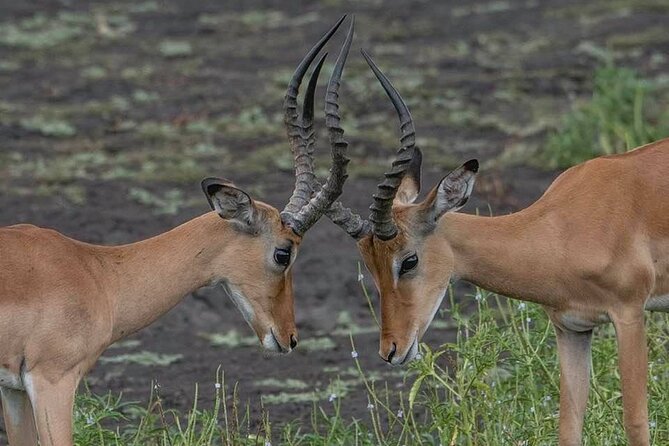
After breakfast, you leave the northern area and travel toward central Serengeti, with about three hours of transfer time and up to 10 hours overall for driving and game viewing.
Central Serengeti is often valued for predator sightings, and the plan presents it as one of the best places in Tanzania to search for big cats and other predators. The region also gives you a fresh view of the park as the migration moves in search of pasture and water.
The drive is not dead time. A good safari vehicle turns the journey itself into a game drive, with stops possible when something interesting appears. Still, you should not expect every hour to produce a dramatic sighting. The central section works best if you enjoy watching animal behavior, changing habitats, and the steady search as much as the famous moments.
The route description calls Serengeti the most beautiful park in Africa, but your own experience will depend on weather, animal movement, road conditions, and the guide’s choices. The view near Naabi Gate, where the plains open out, is a memorable introduction to the park’s scale.
Day 6: Ngorongoro Crater
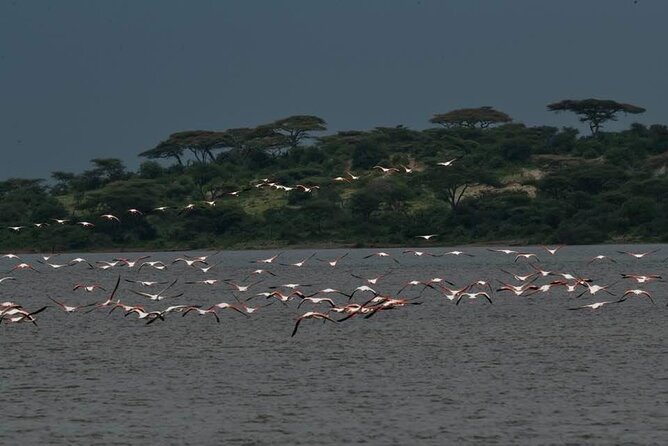
Day six takes you from Serengeti toward the Ngorongoro Conservation Area, with around two hours of transfer time before a crater game drive and picnic lunch. The day lasts about seven hours.
Ngorongoro Crater is a strong finish because wildlife is concentrated within a dramatic natural bowl. Instead of searching across huge open distances, you have a better chance of seeing several kinds of animals in a relatively compact area. The crater is also part of a wider conservation area where Maasai communities and their livestock live alongside wild animals.
That human element matters. This is not only a photo stop. The conservation area reflects the ongoing challenge of protecting wildlife while supporting people who have long used the land for grazing.
The crater day is shorter than the two 10-hour Serengeti drives, which is welcome near the end of a busy week. It is still an early, active day with a picnic rather than a leisurely lodge outing. If you want more cultural time with Maasai communities, ask if that can be added, since the stated plan only describes the conservation setting and crater game drive.
Day 7: Karatu to Arusha or Kilimanjaro
The final morning is deliberately light. You can relax at the lodge or shop if time allows, then transfer toward Arusha or Kilimanjaro Airport. The stated drive time is two to three hours.
This is useful if your flight leaves later in the day, but you should not assume you have a full shopping morning. The timing depends on your departure and road conditions. Give yourself a wide buffer before an international flight, and confirm whether your end point is Arusha or Kilimanjaro Airport.
The tour ends back at the meeting point area. Since pickup and drop-off details can affect flight planning, get the final transfer arrangement in writing.
What $3,900 per person really buys
At $3,900 per person, the tour is not a budget safari. Its value comes from the combination of a private vehicle, a professional guide, park access across several major areas, and a route aimed at northern Serengeti migration country.
The private setup is especially useful for a couple or family. You are paying for control, privacy, and the ability to shape the day around your group. If you are sharing a vehicle with people who want different things, that flexibility can be worth a great deal.
The price is harder to judge without a full list of inclusions. The supplied details do not specify every lodge, meal, park fee, airport transfer condition, or optional activity included in the $3,900. Before you pay, request a written breakdown. Ask about accommodation categories, picnic lunches, bottled water, conservation fees, guide costs, and transfers.
The accommodation feedback is encouraging. People have described lodges, hotels, and tented camps as comfortable, pleasant, and well-run. Still, accommodation names are not provided here, so you should ask for the exact properties. A private safari can be excellent value if the lodging and park fees are included, but the number alone does not tell you enough.
The guide can make or break the safari
Your guide will shape almost every hour. The strongest praise connected to this company centers on guides who spot animals, explain what you are seeing, respond to questions, and put safety and comfort first.
Thomas has been praised for warmth, patience, and expert route choices. Ismail has been credited with finding the Big Five and migration activity. Jackson has guided family trips and has been praised for both game knowledge and language ability, including Italian. Evarest has been described as a star guide, while Samwel Mangulai has impressed with migration sightings. Kisamo has also been praised as friendly and experienced.
These names give you useful questions to ask, not a promise about who will sit behind the wheel. Ask which guide is available for your dates, what languages are spoken, and how the company handles changes in animal movement. If you are arranging a honeymoon, family trip, or first safari, say so clearly when discussing the plan.
The Manyara question you should settle first
The overview names Manyara among the destinations, but the seven-day schedule gives day two to Tarangire and does not include Lake Manyara National Park.
That is not a tiny wording issue. Manyara would change the route, driving time, and wildlife mix. If Manyara matters to you, ask if it replaces Tarangire, can be added, or was included by mistake. Do not assume you will visit both parks because only Tarangire appears in the daily schedule.
Who will enjoy this safari most?
I would recommend this trip to people who want a private, wildlife-first week and accept long days in a 4×4. It suits couples, honeymooners, small families, and friends who want one vehicle and one guide.
It also suits anyone visiting during July through October who wants to search for the northern migration. The route puts you in the right general area, with two full days devoted to northern Serengeti.
I would be more cautious if you want slow mornings, luxury resort downtime, or guaranteed river crossings. The schedule is active, the drives are substantial, and nature does not take reservations.
The tour is listed as suitable for most people, and it is a private activity for your group only. Even so, ask about road conditions and daily driving distances if you have mobility concerns or are traveling with young children.
Should you book it?
Book this safari if you want a well-rounded northern Tanzania route with private guiding, Tarangire elephants, two northern Serengeti search days, central Serengeti predator country, and Ngorongoro’s dense wildlife. The reported 99 percent recommendation rate and 4.9 rating from 71 ratings support the impression of a dependable operator, especially around guides and organization.
Before committing, confirm three things: the exact accommodation, what the $3,900 includes, and whether Manyara is part of your final route. Also remember that the booking is non-refundable and cannot be changed for any reason. With those details settled, this looks like a strong choice for a focused, full safari week rather than a loose collection of park visits.
FAQ
Where does the safari start?
The safari starts at Kilimanjaro Airport in Kilimanjaro National Park, Tanzania. The stated start time is 7:00 a.m.
Where does the safari end?
The activity ends back at the meeting point area. On the final day, the plan allows a transfer to Arusha or Kilimanjaro Airport.
Is this a private safari?
Yes. Only your group participates in the private tour or activity.
Which parks and regions are included?
The daily plan includes Tarangire National Park, northern Serengeti, central Serengeti, Ngorongoro Conservation Area, and Ngorongoro Crater. Karatu is used for overnight stays and transfers.
When is the best time to look for the Great Migration?
The northern Serengeti migration search is described for July through October. The herds may gather near the Mara River before crossing, but a crossing is not guaranteed.
Can the safari be canceled or changed?
No. The experience is non-refundable and cannot be changed for any reason. If you cancel or request an amendment, the amount paid will not be refunded.
Just added in Moshi
- THE BEST 2 DAYS ON TREK – MARANGU ROUTE TOUR ADVENTURES★ 5.0 · 1 review
- Mount Kilimanjaro National Park Day Trip★ 5.0 · 7 reviews
- Mount Kilimanjaro Climbing in Tanzania Full-Day Trip★ 5.0 · 1 review
- Mount Kilimanjaro Day Hike – All-Inclusive, No Hidden Fees★ 4.0 · 7 reviews
- Mount Kilimanjaro Trekking Tour – Climb with Local Guides★ 5.0 · 1 review
- Mount Kilimanjaro: 7 Days Hike Lemosho Route★ 5.0 · 1 review
- Moshi:Chemka Hot Springs, Materuni Waterfalls & Coffee Tour★ 5.0 · 1 review
- Moshi/Arusha kikuletwa Hot Springs Tour★ 5.0 · 1 review
Wildebeest Migration Safaris, compared.
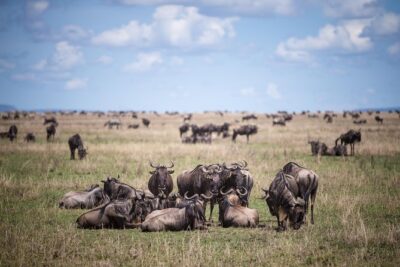
8 Days Great Wildebeest Calving Migration Safari from Arusha
Read our review →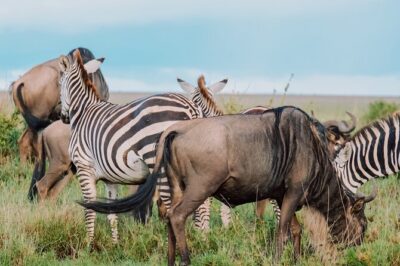
10-Day Serengeti Wildebeest Migration Safari from Arusha
Read our review →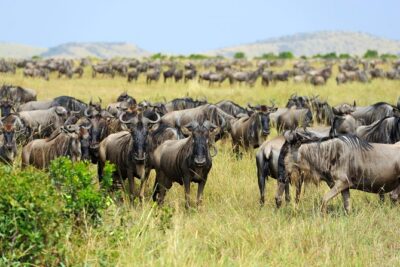
8 Day Spectacular Migration Serengeti mid -Range Tanzania Safari
Read our review →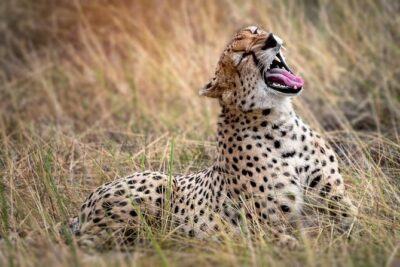
9-Day Serengeti Migration Footsteps Tanzania Safari
Read our review →
Private 6-Day Great Migration Ndutu Serengeti Safari Tour
Read our review →
4 Day Great Migration Safari Serengeti & Ngorongoro Crater
Read our review →
6 Days Tanzania Budget Camping Safari with Migration
Read our review →Browse the lists this tour appears in