

Reviewed · ZANZIBAR TOURS
Jambiani Village Women at work and play
Jambiani turns daily work into a cultural lesson. This private village walk brings you to local women making coconut rope, doormats, palm-leaf goods, and kofia caps, with a guide from the village to explain what you are seeing. I like the personal local guide and the chance to learn by trying the crafts yourself. I also like that the visit includes the beach, where women collect and cultivate seaweed.
The main point to check is timing. The experience is sold as roughly two to three hours, but one account describes only about 1.5 hours of village touring, with transport taking a large share of the day. Lunch costs extra, and Stone Town pickup starts at $45, so the final price can rise quickly.
In This Review
- Key points to know before booking
- Meeting Jambiani through the women who live there
- From coconut husk to rope and doormats
- Kofia sewing, henna, and the traditional kanga
- Walking to the beach for seaweed work
- A village lunch, if you plan 48 hours ahead
- What the $32.65 price really covers
- The timing issue you should take seriously
- Who will enjoy this village visit most
- How to prepare for a better visit
- Should you book Jambiani Village Women at Work and Play?
- FAQ
- Where does the Jambiani Village Women at Work and Play tour take place?
- How long does the tour last?
- What is included in the price?
- How much does the tour cost?
- Is hotel pickup available?
- Can I arrange lunch during the tour?
- Can special dietary requirements be accommodated?
- What activities are included?
- Is this a private tour?
- Is the tour suitable for people with limited mobility?
- What happens if bad weather cancels the experience?
Key points to know before booking
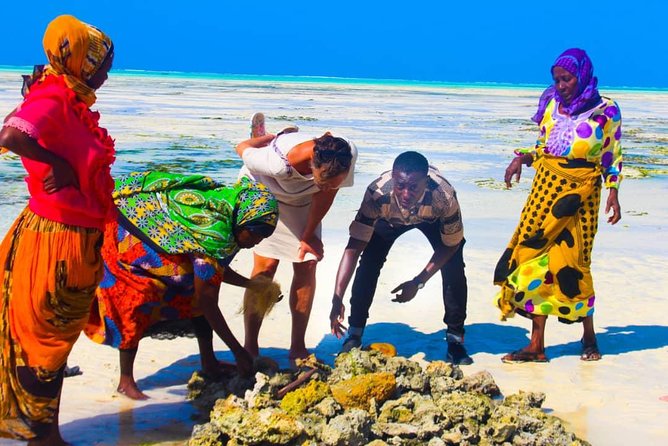
- Coconut husks become useful household goods: You can watch women turn beach-collected husks into rope and doormats.
- The beach visit adds real context: Seaweed collection and cultivation show an important part of women’s daily work.
- A local guide shapes the experience: Your guide comes from Jambiani and can explain village life from personal knowledge.
- You can take part, not just watch: The visit may include trying palm weaving, mat-making, kanga dressing, and henna painting.
- Lunch needs planning: A meal in one of the women’s homes can be arranged with at least 48 hours’ notice.
- The tour suits small private groups: Only your own party participates, allowing more flexibility and direct attention.
Meeting Jambiani through the women who live there
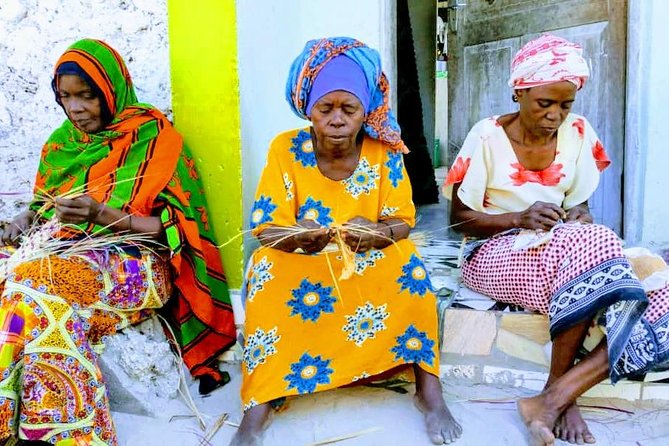
Jambiani is best understood on foot, at a human pace. This experience takes you beyond the beach resorts and into village homes and workspaces, where the focus is on what women make and how those activities fit into daily life.
You visit several women’s homes rather than stopping at one formal workshop. That matters because the craft work is presented as part of ordinary village life, not as a staged production line. You may see women sewing, weaving, preparing coconut fiber, or working with palm leaves while your guide explains the process.
I like this format for visitors who want more than a quick photo stop. You are not simply shown a finished souvenir. You get to see the material, the tools, and the handwork behind it. The setting also gives you a better sense of how homes function as places for both family life and income-generating work.
The private format helps here. Your group can ask questions without competing with a coachload of people, and the guide can spend more time on the craft that interests you most. It also gives the visit a more relaxed feel, though the quality of the experience will depend partly on how actively your guide explains and organizes each stop.
A guide named Ameir is associated with this experience. If he leads your visit, you can expect a young local guide who presents the work of women in the community and explains how the tour supports local people. If another guide is assigned, confirm at the start that you will be visiting several homes and the beach, since the advertised program includes both.
A few more options to weigh up in Zanzibar
- From Zanzibar: Mikumi Safari Day Trip with Flights and Meal
★ 4.7 · 1,470 reviews - Zanzibar: Quad Bike Adventure departing from Kendwa or Nungwi
★ 4.9 · 1,233 reviews - Zanzibar: Stone Town, Spice Tour, Prison Island with Lunch
★ 4.4 · 1,219 reviews
From coconut husk to rope and doormats
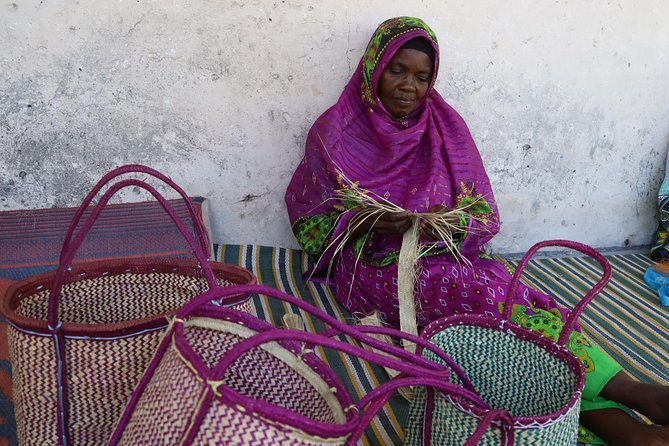
The coconut rope demonstration is one of the most memorable parts of the visit. Women collect coconut husks from the beach and work the fibers into rope, which can then be used to make doormats and other practical items.
This is a useful reminder that a coconut is not just a drink or food source. Its discarded husk can become something that earns money and serves a purpose in the home. The work is simple to describe but harder to do neatly, so you may gain new respect for the patience involved when you try it yourself.
You can also have a go at weaving a coconut-fiber doormat. Do not expect to produce a finished piece during a short visit. The value is in feeling how the fibers behave and seeing how repeated hand movements create a sturdy surface.
Some visitors may find the craft demonstrations more interesting than the sightseeing. If you prefer an active cultural visit, this is a strong reason to book. If you mainly want dramatic scenery, the beach portion may appeal more than the indoor craft stops.
The tour also includes palm-leaf and makuti weaving. Makuti refers to woven palm material commonly used for practical items and roofing. The description does not promise that every group will make a complete object, so think of this as a demonstration with opportunities to try the technique, not a full craft class.
Kofia sewing, henna, and the traditional kanga
The craft stops cover more than coconut work. You can watch traditional handmade kofia sewing, which adds a clothing and design element to the visit. The kofia is a cap associated with East African dress, and seeing it made by hand gives the item more meaning than buying one from a shop.
You will also receive a demonstration of how to wear a kanga. A kanga is a colorful rectangular cloth worn in different ways across East Africa. The demonstration is a small detail, but it can be one of the most useful parts of the tour because it connects clothing with everyday customs.
You may be invited to try wearing the garment yourself. Women in the group may especially enjoy taking part in the demonstrations, though the tour is open to all. Ask your guide before taking photographs, particularly inside homes or during personal activities.
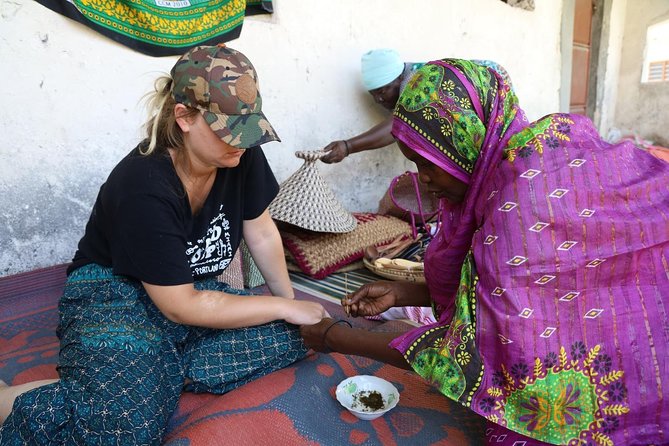
Henna painting is another hands-on feature. It adds a lighter, social moment after the more technical craft demonstrations. The description does not specify the design, duration, or body area, so treat it as an optional cultural activity rather than a guaranteed extended henna session.
The combination of sewing, weaving, clothing, and body decoration gives the visit a broad focus. You get a look at useful household crafts, personal dress, and artistic traditions in one short outing. That variety also helps if one particular craft does not hold your attention.
Walking to the beach for seaweed work
The beach visit changes the mood of the tour. Instead of watching materials being transformed indoors, you see women collecting seaweed and learn about its cultivation.
This stop gives useful context to the village economy. Seaweed work is physical and tied closely to the water and tides. You will not only be looking at a beautiful Zanzibar shoreline. You will be seeing a working shore, where the sea provides materials and income.
The tour description does not give a fixed tide schedule or a guarantee about exactly what you will see on the day. Seaweed activity can vary with weather, timing, and local conditions. Still, including the beach makes the experience more than a collection of craft demonstrations.
Wear footwear you can walk in comfortably. The full walk may cover up to about 2 kilometers, and the experience is not recommended for anyone unable to walk that distance. Since the tour takes place outdoors as well as inside homes, bring the usual sun protection and be ready for warm conditions, though those specific items are not supplied.
Weather matters. If poor weather causes cancellation, you should be offered another date or a full refund. A cloudy or wet day may also affect the beach portion, so keep some flexibility in your Zanzibar schedule.
A different kind of day out entirely:
- From Zanzibar: Day Selous Game Reserve Safari with Flights
★ 4.7 · 1,025 reviews - Zanzibar: Prison Island and Nakupenda Boat Trip with Lunch
★ 4.1 · 882 reviews - Skydive Zanzibar | Tandem Skydive
★ 5.0 · 877 reviews - Quad Adventures in Zanzibar: Nungwi / Kendwa
★ 4.9 · 640 reviews
A village lunch, if you plan 48 hours ahead
You can arrange lunch in one of the women’s homes, but it is not included in the $32.65 tour price. You need to request it at least 48 hours in advance so the meal can be prepared.
This option can add a more personal dimension to the visit. Eating in a local home changes the rhythm from demonstration to hospitality, and it gives you more time to talk with the women and your guide. It is also a direct way to spend additional money within the community.
Tell the operator about dietary requirements when you book. Special diets can be accommodated if the request is made in advance, but the information provided does not list specific menus or guarantee particular dishes.
Do not assume lunch will be available if you decide at the last minute. The advance notice is part of the planning, not a minor request. If you want the meal, make it clear when booking and confirm that it has been arranged.
What the $32.65 price really covers
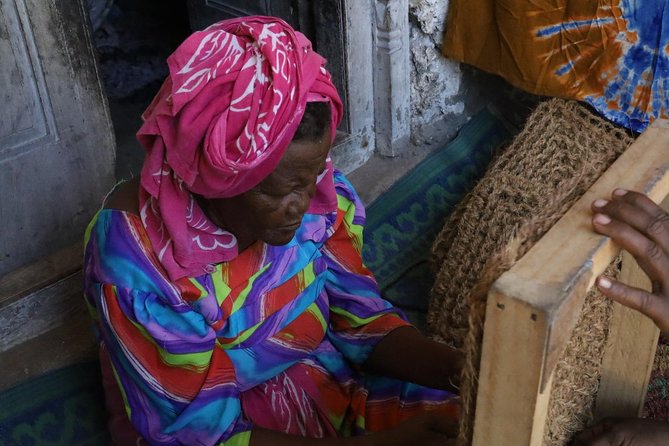
At $32.65 per person, the price is fair for a private village experience if your group values direct contact and hands-on activities. You are paying for a local guide, several village stops, the beach visit, and demonstrations rather than for transport, a large attraction ticket, or an elaborate meal.
The value improves for a small group. A private tour gives your party the guide’s attention and avoids being folded into a large scheduled group. Group discounts may also be available, so ask about the total price if you are traveling with several people.
The extra charges deserve careful attention. Pickup from a Stone Town hotel is available from $45, and that is separate from the per-person tour cost. Depending on your accommodation and group size, arranging your own way to Jambiani may change the calculation, but the provided details do not specify transport alternatives or local fares.
Lunch is also extra. Add that cost before comparing this experience with a longer excursion that includes food or transfers. The core tour remains reasonably priced, but the final bill may be much higher than the headline amount if you need Stone Town pickup and a prepared meal.
The timing issue you should take seriously
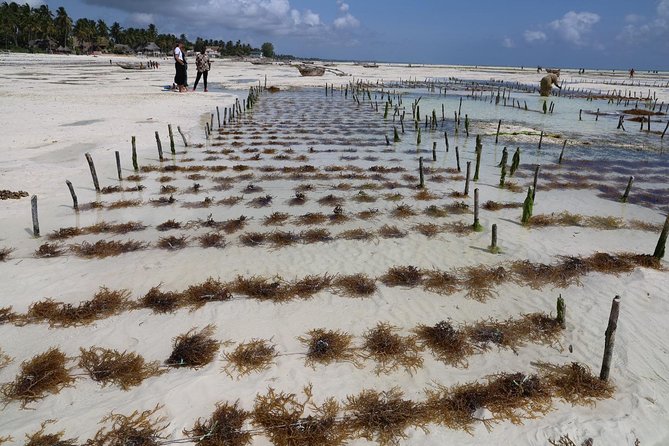
The planned visit is described as lasting about two to three hours, with the main itinerary allowing three hours. That is enough time for a village walk, several craft visits, the beach, and demonstrations if the stops are well coordinated.
However, one account places the actual village portion at about 1.5 hours and says the drive to and from Jambiani took longer than the tour itself. This is the most important practical warning in the available information. If you are booking from Stone Town, the total outing can take much longer than the advertised walking portion.
Ask for a clear meeting plan and expected start time. Confirm whether the stated duration includes transport or only the activity in Jambiani. You should also ask whether all stops, including the beach and henna demonstration, are planned for your date.
The tour is private, so there may be more flexibility than with a fixed group schedule. That can work in your favor if you want more time at a craft stop. It can also mean the actual pace varies. Plan it as a half-day commitment if you are traveling from Stone Town, rather than trying to fit it into a tightly timed morning.
Who will enjoy this village visit most
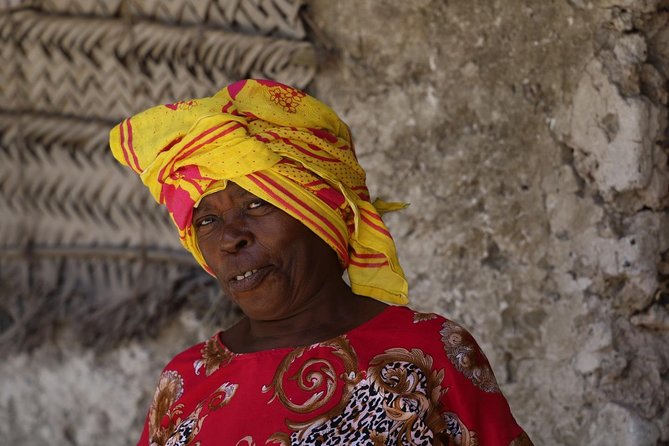
I would choose this experience if you want to meet local people, learn how everyday goods are made, and support a small community activity. It is especially suitable for people who enjoy making things with their hands and asking questions about work, dress, and family life.
It is also a good choice for a private group with different interests. One person can focus on weaving, another on clothing, and another on the beach and seaweed work without the fixed feel of a large bus tour.
Families may find the craft work engaging, but adults should guide children toward respectful behavior in private homes. Children may be present around the village, and the visit is not a free-for-all photo opportunity. Ask before photographing people, homes, or finished work.
The tour is less suitable if you have limited mobility. You may walk around 2 kilometers, and the route includes homes and the beach. It is also not the best choice if you want a polished museum-style presentation, a guaranteed three-hour program, or a major sightseeing landmark.
Service animals are allowed, and most people can participate. The experience is private, so only your group takes part, which can make the visit easier to manage for your own needs.
How to prepare for a better visit
Contact the operator with your essential questions before the day. Confirm the meeting point, the expected activity length, whether Stone Town pickup is included in your arrangement, and whether lunch has been approved.
If you want lunch, give at least 48 hours’ notice and state every dietary requirement. Do not wait until arrival. The meal needs preparation in a private home, so last-minute requests may not work.
Wear comfortable walking shoes and clothing suitable for visiting local homes. You may be trying crafts, handling natural fibers, wearing a kanga, or receiving henna, so clothes that allow movement are more practical than formal resort wear.
Bring water and sun protection for the walk to the beach. These are sensible preparations for Zanzibar, but they are not listed as included services. Keep your schedule loose enough to absorb delays, especially if you are coming from Stone Town.
The tour has free cancellation up to 24 hours before the local start time. Cancellations or changes made less than 24 hours ahead are not refundable or accepted. Weather-related cancellations should result in a new date or a full refund.
Should you book Jambiani Village Women at Work and Play?
Book it if you want a small-scale, people-focused experience rather than another sightseeing stop. The best parts are the local guide, the visits to several women’s homes, the coconut-rope and mat-making demonstrations, and the chance to see seaweed work at the beach.
I would be more cautious if your schedule depends on a strict three-hour duration. The actual village time may be shorter, and transport from Stone Town can take longer than the activity. Confirm the schedule before paying for extra transfers.
At $32.65 per person, the core visit offers good value for a private cultural outing. Add the $45 starting pickup charge and the cost of lunch before deciding. For visitors who value conversation, practical crafts, and a direct look at village work, this is one of the more grounded ways to spend part of a Zanzibar day.
FAQ
Where does the Jambiani Village Women at Work and Play tour take place?
The tour takes place in Jambiani Village on Zanzibar, Tanzania. It includes visits to several women’s homes and a walk to the beach.
How long does the tour last?
The experience is described as lasting about two to three hours, with a three-hour itinerary. Actual village touring may be shorter, so confirm whether transport time is included in your schedule.
What is included in the price?
The price includes a private local guide from Jambiani. Lunch and pickup from a Stone Town hotel are not included.
How much does the tour cost?
The listed price is $32.65 per person. Group discounts may be available.
Is hotel pickup available?
Pickup from a Stone Town hotel is available for an additional charge starting at $45. Confirm the exact arrangement when booking.
Can I arrange lunch during the tour?
Yes. Lunch can be arranged in one of the women’s homes for an additional fee, but you must provide at least 48 hours’ notice.
Can special dietary requirements be accommodated?
Yes, special dietary requirements can be considered if you provide the information in advance when arranging lunch.
What activities are included?
The visit can include coconut-rope and doormat making, palm-leaf and makuti weaving, handmade kofia sewing, a kanga-wearing demonstration, and henna painting.
Is this a private tour?
Yes. Only your group participates, which allows more personal attention and some flexibility during the visit.
Is the tour suitable for people with limited mobility?
The tour is not recommended for people who cannot walk more than 2 kilometers. Most travelers can participate, and service animals are allowed.
What happens if bad weather cancels the experience?
If poor weather causes cancellation, you should be offered a different date or a full refund. Free cancellation is also available when you cancel at least 24 hours before the local start time.
Just added in Zanzibar
- Best of Zanzibar: Spice Tour & Stone Town Visit★ 4.4 · 5 reviews
- THE GREEN TOUR: Jozani Forest & Mangrove Kayaking Experience★ 4.7 · 6 reviews
- Stone Town: Private Walking Tour in the Heart of Zanzibar.★ 5.0 · 1 review
- The rock restaurant and blue Lagoon★ 5.0 · 1 review
- Tea House, Zanzibar Coffee House, Spice Tour with Lunch★ 5.0 · 1 review
- Swimming with sea turtles in salaam cave★ 5.0 · 1 review
- Swim with Turtles at The Lagoons Zanzibar & Stone Town Tour★ 4.8 · 4 reviews
- Stonetown & Prison island Cultural Tour★ 5.0 · 2 reviews
Zanzibar Tours, compared.

Mikumi Safari Day Trip with Flights and Meal
Read our review →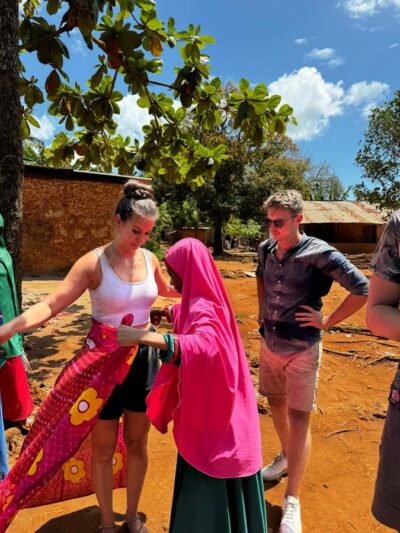
Quad Bike Adventure departing from Kendwa or Nungwi
Read our review →
Stone Town, Spice Tour, Prison Island with Lunch
Read our review →
Prison Island and Nakupenda Boat Trip with Lunch
Read our review →


Mnemba Island: Dolphin Swim & Snorkeling with Optional Lunch
Read our review →Browse the lists this tour appears in