
Reviewed · SPICE FARM TOURS
Zanzibar: Walking Spice Farm with Local Cooking Class
Spices tell Zanzibar’s story one scent at a time. This six-hour outing combines a walk through Tangawizi Spice Farm with a Swahili cooking session, giving you a useful look at how cloves, cinnamon, coconut, fruit, and herbs move from shamba to plate. I especially like the chance to smell and taste plants where they grow, and the meal afterward is praised for its excellent Swahili flavors. The main point to know is that the cooking portion may be more of a demonstration than a hands-on class, and the advertised four courses may arrive as a buffet with fruit served later.
You’ll travel by included hotel pickup from Stone Town or Zanzibar’s Unguja North Region, then return after the farm visit and meal. The private-group format, English, German, and French guide options, and careful support for a guest with mobility problems all add value. Still, bring water, sun protection, and small cash if you want to buy spices, soaps, creams, or leave an extra tip.
In This Review
- Key points before you book
- Why Zanzibar’s spice farms matter
- The Tangawizi Spice Farm walk
- What the cooking session is really like
- The Swahili dishes you can expect
- A closer look at the six-hour schedule
- Private groups, languages, and pace
- What the experience does especially well
- What could be better
- Is $50 a fair price?
- Who should book this experience?
- Should you book it?
- FAQ
- How long does the Zanzibar spice farm and cooking experience last?
- Where does hotel pickup take place?
- Which languages are available?
- What plants and spices can I see?
- Is lunch included?
- Can I cancel the booking?
Key points before you book
- The farm walk is the heart of the outing: See and smell cloves, lemongrass, nutmeg, cinnamon, turmeric, vanilla, coconut, papaya, chili, black pepper, jackfruit, cardamom, cassava, oranges, and other plants.
- The cooking class may be a cooking demonstration: You can watch local cooks prepare Swahili dishes, with the level of hands-on participation depending on the group and setup.
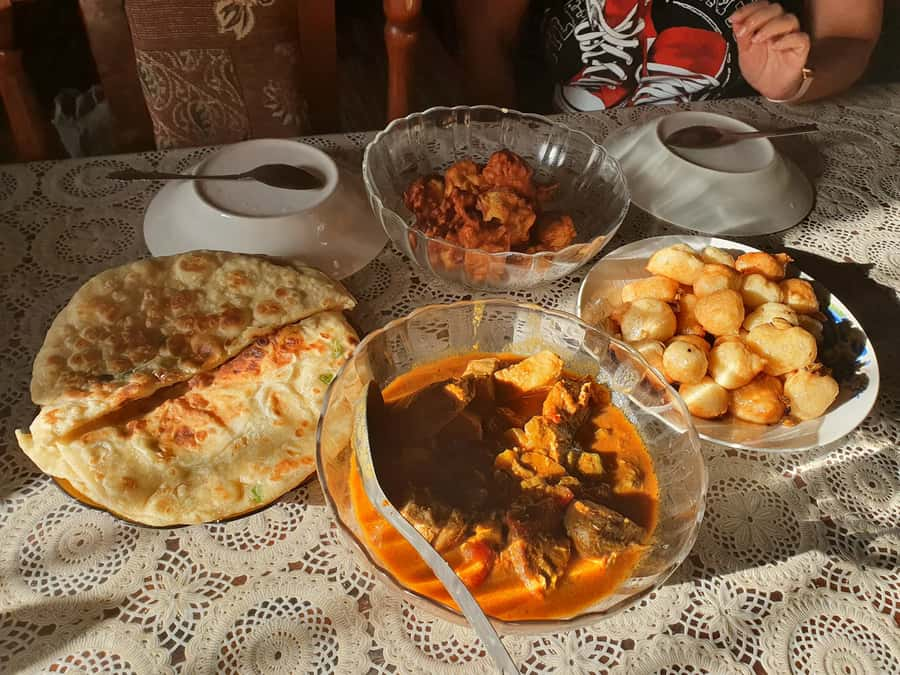
- The food earns the strongest praise: Expect dishes such as pilau rice, fish, spinach, plantain, sauces, and tropical fruit, often prepared with coconut and freshly ground spices.
- Transport is included: Pickup and drop-off are available from Stone Town and the Unguja North Region, which makes the six-hour plan easier to manage.
- It is a private-group experience: This suits couples, families, and small groups that want a more personal pace than a large bus excursion.
- Budget extra cash for the farm stall: The final stop sells packaged spices, soaps, and creams, and purchases are cash only.
Why Zanzibar’s spice farms matter
Zanzibar is widely known as Spice Island for good reason. Cloves, nutmeg, cinnamon, and other crops played a major part in the island’s trade, and the farm visit turns that broad idea into something you can see, smell, and touch.
A spice aisle in a supermarket tells you very little. A walking farm tour shows you the plant behind the bottle or packet. You might see how a spice grows on a tree, vine, bush, or root, then taste or smell it before it reaches the cooking hut. That change in scale is useful. Cinnamon is no longer just a powder, and turmeric is no longer only a bright ingredient in a jar.
The farm is described as organic and offers plants throughout the year. That does not mean every crop will be at its peak on every date, but it does make the visit worthwhile outside a single harvest season. The guide leads you from plant to plant and tests your ability to identify smells and spices. It is a light, playful way to learn, especially if you enjoy food but do not know much about where ingredients begin.
More Cooking Classes in Zanzibar
- Zanzibar Cooking Class & Spice Tour
★ 4.5 · 77 reviews - Zanzibar: Spice Farm Tour with Traditional Cooking Lesson
★ 4.8 · 77 reviews - Half-Day Kuza Cave Swimming Adventure and Cooking Class
★ 4.5 · 44 reviews
The Tangawizi Spice Farm walk
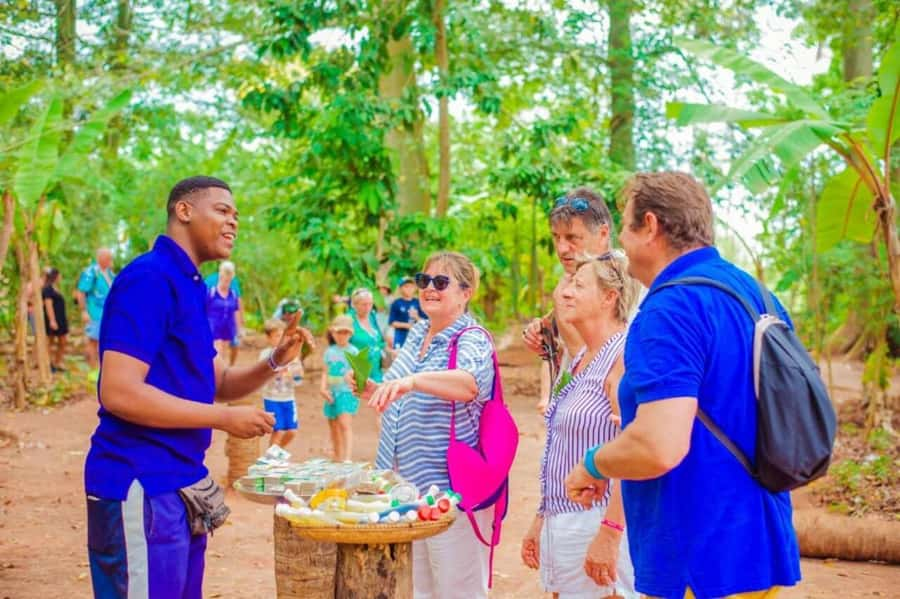
The main visit takes place at Tangawizi Spice Farm in Zanzibar’s Unguja South Region. You walk through the shamba with a guide, stopping to examine spices, herbs, and tropical fruit.
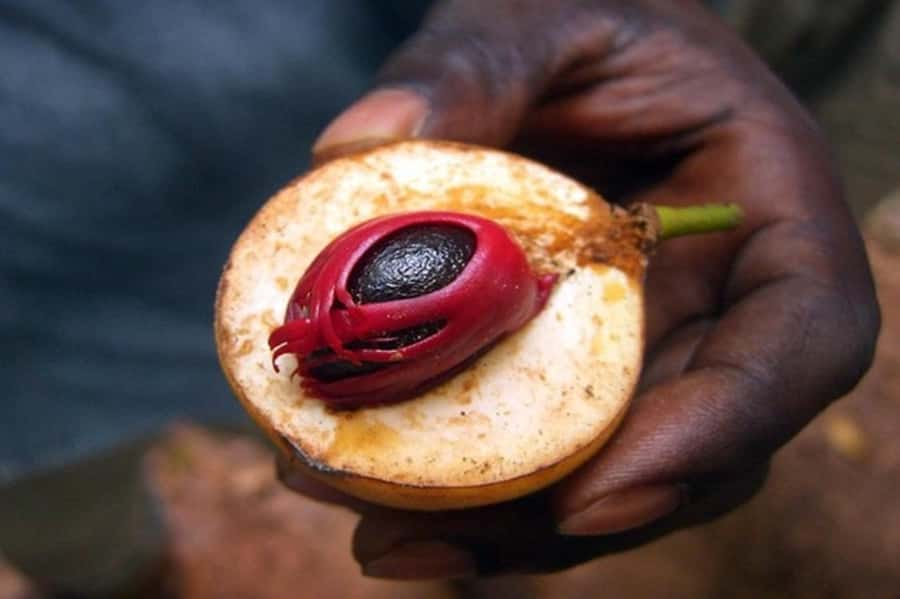
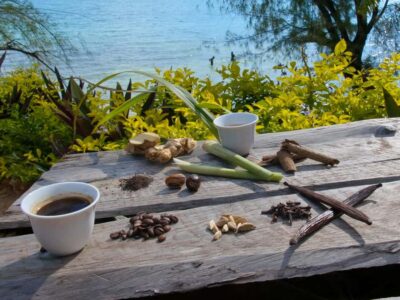
The list of plants is long: clove, lemongrass, nutmeg, cinnamon, turmeric, vanilla, coconut, papaya, chili, black pepper, jackfruit, cardamom, cassava, and oranges. The appeal is not simply the number of plants. It is the contrast between familiar cooking ingredients and the living plants that produce them.
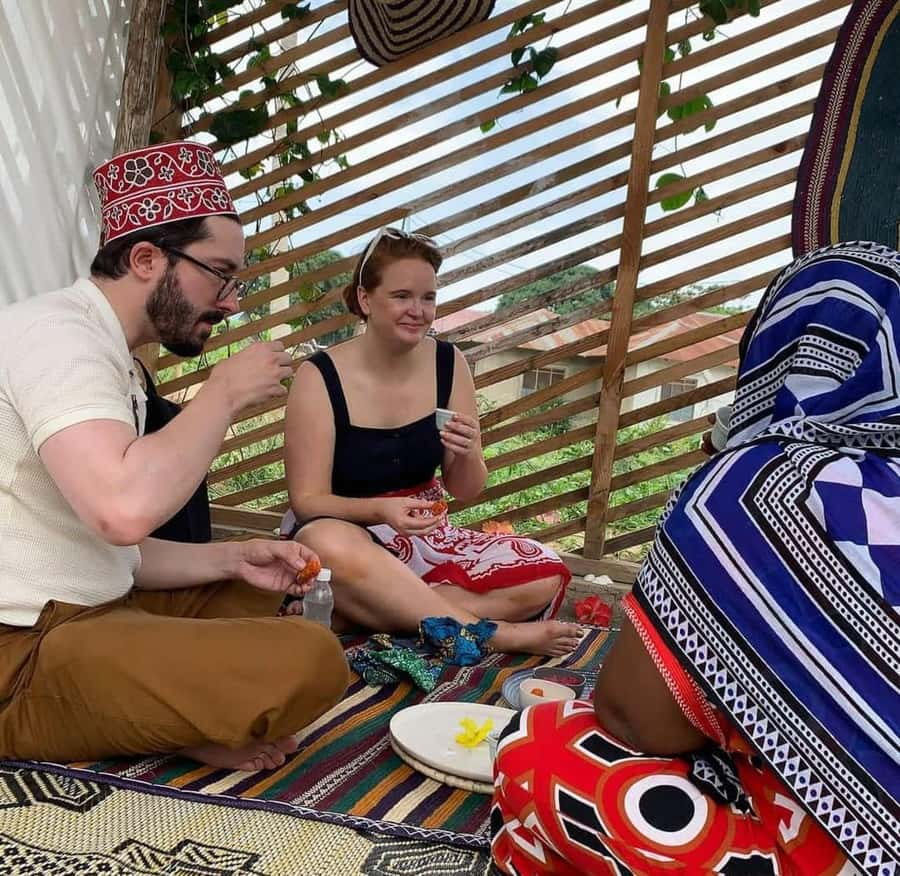
Clove is a particularly important stop because Zanzibar was once one of the world’s leading producers. You can smell and taste it as part of the farm experience, rather than treating it as an anonymous dried bud. Cinnamon, vanilla, cardamom, and black pepper also make the walk feel connected to the dishes you will later eat.
Tropical fruit adds another layer. The program includes tasting fruit such as coconut, papaya, jackfruit, and oranges. Some visitors will find the fruit tasting more memorable than the spice stops, especially if you have not encountered jackfruit or fresh coconut in this setting before.
The walk is not presented as a strenuous hike, but it is still a walking tour on a farm. One guest with disabilities found the guide attentive and willing to choose safer paths. That is encouraging, though you should still explain your mobility needs in advance. The guide can adjust routes, but the information does not promise fully accessible paths or a specific accessibility service.
What the cooking session is really like
After the farm visit, you return to the cooking area for the practical food portion. The setting can be simple. One account describes an open-sided cooking hut with a corrugated-metal structure, coconut-frond roofing, a wood fire, and two charcoal burners. This is not a polished culinary studio, and that is part of the point.
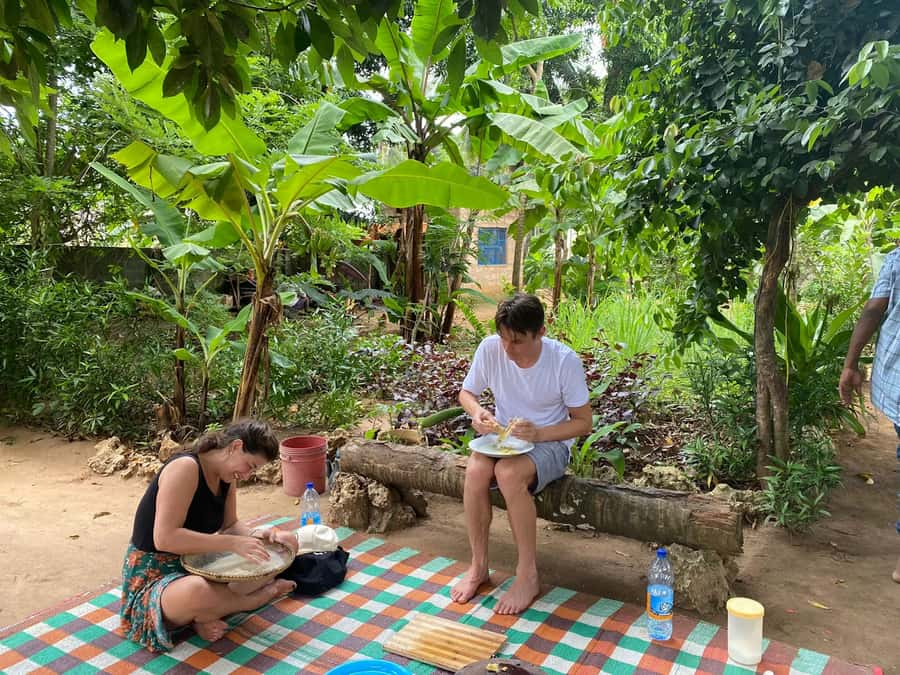
Local cooks use basic tools and traditional methods. One especially interesting detail is the preparation of coconut milk. The cooks scrape the coconut meat from the shell, then squeeze out the milk for use in the dishes. That small step shows how much work can sit behind a dish that looks simple on the plate.
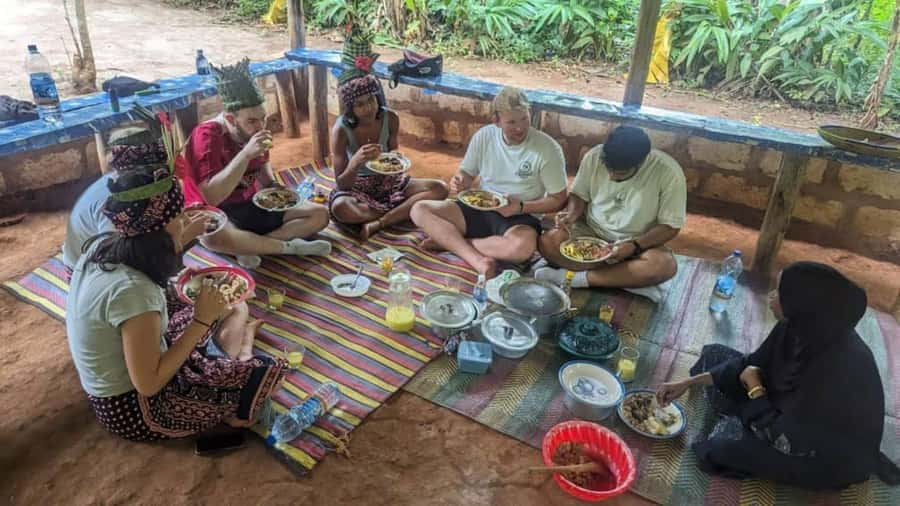
The advertised format says you help prepare three meals and a dessert, then sit down to eat four courses together. In practice, you should set your expectations carefully. The cooking may be presented mainly as a demonstration, particularly when the group is small. The meal may also arrive as one buffet-style serving, followed by fruit later, rather than four clearly separated courses.
That difference matters if you are booking specifically to learn techniques by doing them yourself. If your priority is tasting local food and seeing how it is made, the format works better. I would think of this as a local cooking experience with participation available, not a formal lesson with each student preparing a separate dish.
The Swahili dishes you can expect
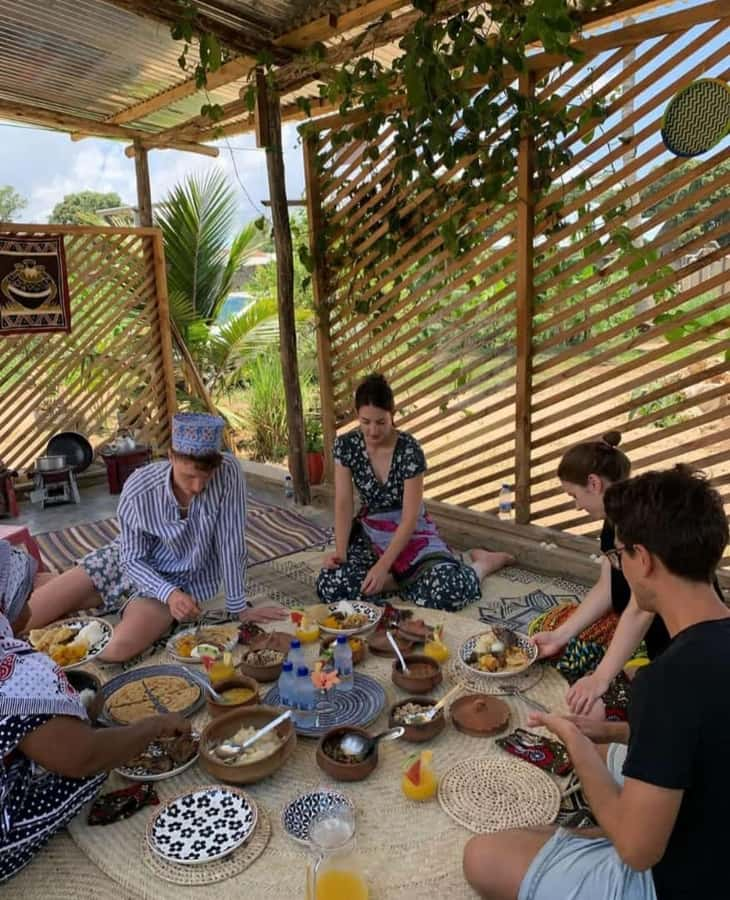
The food is the strongest reason to reserve this outing. The dishes described include pilau rice, a tomato and onion sauce, spinach, fish, plantain, and tropical fruit. The exact menu can vary, but the meal gives you a useful sample of familiar Zanzibar flavors.
Pilau rice receives particular praise. It combines several spices, with one preparation using five or six. This is where the farm walk pays off. You smell spices among the plants, then taste how those spices shape a finished dish.
The fish is marinated with lime and salt before being fried. That simple preparation lets the fish and seasoning do the work. Plantain brings a different texture and gentle sweetness, while spinach and tomato-based sauces round out the plate.
Coconut appears in the cooking process as fresh milk rather than a packaged ingredient. You may not learn a precise recipe you can copy at home, but you will see how local cooks build flavor with coconut, spice, fire, and fresh produce.
The meal is included in the $50 price, which makes the value fairly strong if you want both the farm visit and a substantial local lunch. A separate spice tour would give you the plant experience, but this package adds a full food stop and hotel transport. The value is less convincing if you want a detailed, instructor-led cooking course with printed recipes and lots of individual practice.
More Walking Tours in Zanzibar
- Stone Town Private Walking Tour
★ 5.0 · 371 reviews - Zanzibar: 3 Hours Private Stone Town walking Tour with Guide
★ 4.6 · 301 reviews - Zanzibar: Stone Town Historical Cultural Walking Guided Tour
★ 4.5 · 179 reviews - Stonetown: Food Markets and Street Food Walking Tour
★ 4.7 · 151 reviews
A closer look at the six-hour schedule
The day begins with hotel pickup. Available pickup areas include Stone Town and Zanzibar’s Unguja North Region. You are asked to wait at your hotel reception ten minutes before the scheduled time, a sensible precaution since road travel and pickup timing can vary.
The drive takes you to the farm, where the guide leads the walking tour. You smell and taste the plants, learn how they grow, and see how spices, herbs, and fruit are cultivated. The guide also uses questions and scent tests to keep the walk active rather than turning it into a long lecture.
The cooking session follows the farm visit. You watch or help prepare the local dishes, then eat together after the practical portion. The entire experience takes about five to six hours, with the activity listed as six hours.
At the end, you stop at a spice stall. You can buy fresh packaged spices, along with soaps and creams. The stall is cash only, so do not depend on a card or mobile payment unless you have confirmed otherwise. Farm-worker tips are already included in the tour price, so you do not need to feel pressured to calculate a separate gratuity for that part. Small bills are still useful for personal purchases or any extra tipping you choose to offer.
Your driver then returns you to Stone Town or the Unguja North Region. Included transport is an important part of the package because it removes the need to arrange separate taxis for a rural farm visit.
Private groups, languages, and pace
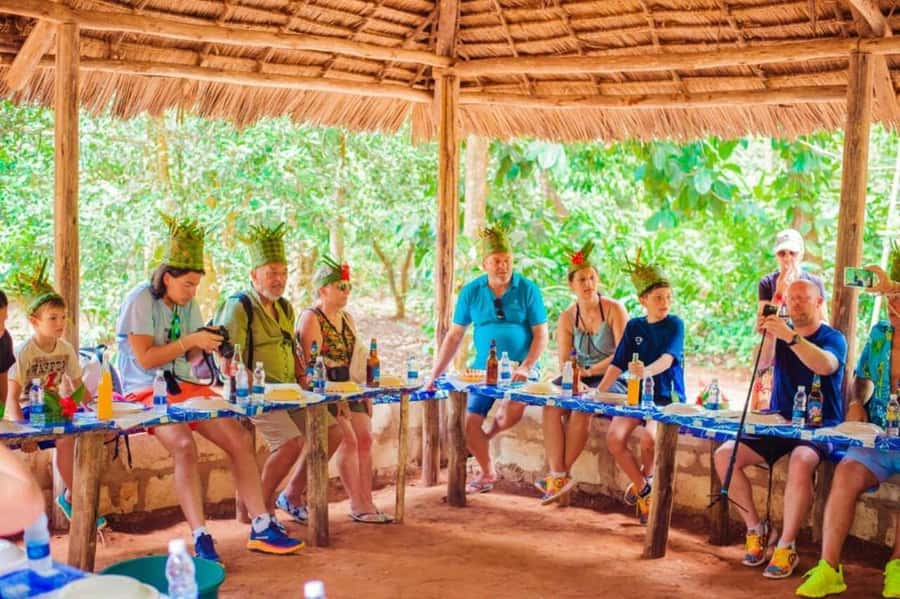
The activity is offered as a private group, which gives you more control than a large shared excursion. A private booking is especially useful for families, couples, and groups with different walking speeds. It also gives you a better chance to ask questions about individual plants or request extra care on uneven paths.
The tour is available with live guiding in English, German, or French. Check language availability when choosing your time, since the language you need may affect which guide is assigned.
The outing welcomes people of all ages and operates throughout the year. That makes it easy to fit into different Zanzibar itineraries. Still, the walk takes place outdoors, and the cooking area can be basic and open-sided. You should dress for heat, wear sensible footwear, and carry water. The supplied details do not specify a dress code, so practical clothing is the safest choice.
What the experience does especially well
The best part is the connection between farm and table. You do not simply visit a spice stall and buy a packet. You see the plants, smell the ingredients, watch local cooking methods, and eat food built around those same flavors.
The people you meet also add warmth to the outing. During one visit, a man sang while climbing a coconut tree, and another person made simple crowns and ties during the walk. These touches are not listed as guaranteed activities, so you should not book expecting a performance or craft demonstration. They show, however, how the day can become more personal than a standard crop tour.
The staff also appear willing to make the experience comfortable. The driver was described as punctual and safe, while the guide took extra care with a guest who found walking difficult. That kind of attention matters more than a polished brochure, especially when you are spending half a day away from your hotel.
What could be better
The biggest weakness is the wording around the cooking class. If you expect to chop, season, cook, and plate every dish yourself, you may be disappointed. The experience can function more like a demonstration, with the local cooks doing most of the preparation.
The four-course promise also deserves a practical explanation. You may receive a buffet of several dishes and fruit afterward rather than a formal sequence of four plated courses. The amount of direct participation and the meal format may depend on the group size and the day’s setup.
The cooking hut may feel rustic rather than comfortable. Open-air cooking, wood fire, charcoal burners, and basic tools provide an honest look at local methods, but they are not suited to anyone expecting a modern kitchen. For many people, this is an asset. For others, it may feel less like a class and more like watching a family meal being prepared.
The final spice stall is another small consideration. It can be a useful place to buy gifts, but it is a sales stop, and cash is required. Set a budget before you arrive so the aromas do not empty your wallet.
Is $50 a fair price?
At $50 per person, the package includes hotel pickup and drop-off, a guided farm visit, the cooking experience, and lunch. For a six-hour private outing, that is reasonable value, particularly if you are staying in Stone Town or the Unguja North Region and would otherwise need to arrange transport separately.
I would judge the price by your main goal. If you want a relaxed introduction to Zanzibar’s spices, a good meal, and a local setting, the cost is easy to justify. If you want a technical cooking course, the value drops because the actual session may involve more watching than doing.
The included farm-worker tips also simplify the day. You do not need to worry about a required payment at each stop, though small cash remains handy for the stall and any extra gratuity.
Who should book this experience?
I would recommend it to food-focused visitors, first-time Zanzibar visitors, families, and anyone curious about the island beyond beaches and Stone Town streets. It is also a good fit if you want a private day with transport included and a gentle mix of walking, tasting, learning, and lunch.
People with mobility concerns may find the private format helpful, especially if they explain their needs before pickup. The route is still a farm walk, so ask for clarification if you require fully accessible facilities.
I would be more cautious if you are seeking a serious chef-training session, a strict four-course meal, or a highly polished venue. In that case, the description may set expectations too high.
Should you book it?
Book this tour if you want the full food story: plants in the soil, spices in your hand, local cooking by the fire, and a generous Swahili meal afterward. The farm walk and food receive the strongest praise, and the private transport makes the day simple.
Go in expecting a cooking demonstration with some participation, not a classroom where you prepare every course. With that adjustment, this is a friendly and worthwhile way to spend six hours in Zanzibar, especially for $50.
FAQ
How long does the Zanzibar spice farm and cooking experience last?
The activity lasts about six hours, with availability depending on the starting time you select.
Where does hotel pickup take place?
Pickup is available from Stone Town and Zanzibar’s Unguja North Region. You should wait at your hotel reception ten minutes before the scheduled pickup time.
Which languages are available?
Live guiding is available in English, German, and French.
What plants and spices can I see?
The farm includes plants such as clove, lemongrass, nutmeg, cinnamon, turmeric, vanilla, coconut, papaya, chili, black pepper, jackfruit, cardamom, cassava, and oranges.
Is lunch included?
Yes. Lunch is included, and the cooking session may include pilau rice, fish, spinach, plantain, sauces, and tropical fruit.
Can I cancel the booking?
You can cancel up to 24 hours in advance for a full refund. The activity also allows you to reserve now and pay later.
More Farms in Zanzibar
- Zanzibar: Stone Town & Spice Farm Tour with Lunch
★ 4.5 · 97 reviews - Zanzibar:Stone Town & Spice Farm Private Tour Lunch Included
★ 4.2 · 94 reviews - Zanzibar full day Jozani forest + Spice farm and stone town
★ 4.7 · 90 reviews - A Private Full Day Tour To Stone Town & Spice Farm
★ 5.0 · 53 reviews
More Spice Farm Tours in Zanzibar
- Zanzibar: Stone Town, Spice Tour, Prison Island with Lunch
★ 4.4 · 1,219 reviews - Zanzibar: Prison Island, Stone Town, & Spice Farm Tour
★ 4.5 · 579 reviews - Zanzibar: Stone Town, Spice tour & Prison Island with Lunch
★ 4.6 · 453 reviews - Full-Day Private Stone Town +Spice Farm and Prison Island Tour
★ 4.5 · 216 reviews
Just added in Zanzibar
- Zanzibar:Ngoma local culture workshop,The Knowledge of Ngoma★ 5.0 · 1 review
- ZANZIBAR:Mnemba island, Spice farm and Jozani Forest★ 5.0 · 1 review
- Zanzibar: Zipline Adventure At Masingini Forest★ 4.6 · 2 reviews
- Zanzibar Walking Tour: Unveiling the Secrets of Stonetown★ 4.8 · 11 reviews
- Zanzibar: Walking Tour★ 4.0 · 1 review
- Zanzibar: Uzi Island Mangrove Kayak Tour with Guide★ 5.0 · 1 review
- Zanzibar: Unique Guided Mangrove Tour by SUP or Kayak★ 5.0 · 1 review
- Zanzibar: Village Tour with local life★ 3.0 · 1 review
Spice Farm Tours, compared.

Stone Town, Spice Tour, Prison Island with Lunch
Read our review →

Stone Town, Spice tour & Prison Island with Lunch
Read our review →
Full-Day Private Stone Town +Spice Farm and Prison Island Tour
Read our review →

The Swahili Spice Experience – Spice Tour + Culinary Journey
Read our review →Browse the lists this tour appears in