Reviewed · ZANZIBAR TOURS
Special for Holland America Line Guests to Zanzibar
Stone Town rewards slow looking. This five-hour outing pairs a guided Stone Town walk with Zanzibar’s spice story, giving you a useful first look at the island’s Arab, Indian, Persian, European, and African influences. I like the strong mix of major landmarks and everyday city spaces, especially the carved doors, narrow streets, market, old fort, and waterfront gardens.
I also like that the price includes admission and pickup is offered, a practical benefit for a Holland America Line shore visit. The main drawback is time: Stone Town has a long list of stops, so the schedule may feel brisk, and the available information does not give a detailed hour-by-hour plan or a guide’s name.
In This Review
- Key points to know before booking
- Why Zanzibar makes a memorable port stop
- Starting with the spice side of Zanzibar
- Walking into Stone Town’s narrow streets
- The Town Market and the city’s daily rhythm
- Confronting Zanzibar’s difficult past
- Consulates, courts, and colonial-era buildings
- Old Fort and Forodhani Gardens
- Orphanage Home and the human side of the route
- Is $130 per person a fair price?
- Practical details for a smoother visit
- Who should choose this Stone Town and spice combination?
- Should you book this Zanzibar tour?
- FAQ
- Where does this tour take place?
- How long does the experience last?
- What is included in the price?
- What places are included in the Stone Town tour?
- Is the tour suitable for most people?
- What is the cancellation policy?
Key points to know before booking

- Two Zanzibar experiences in one outing: The package combines a Stone Town tour with a spice-focused visit.
- Five hours is enough for an introduction: You can see many major landmarks, but this is not a slow, in-depth exploration.
- Admission is included: The listed price is $130 per person, with entry costs built into the tour.
- A strong cultural mix: Zanzibar’s buildings and neighborhoods reflect African, Arab, Indian, Persian, and European connections.
- Historic sights share space with daily life: The town market, orphanage home, courtyards, old consulates, and waterfront gardens give the visit a broader feel than a monument-only tour.
- Best suited to cruise passengers: Pickup, mobile tickets, and the Holland America connection make this easy to consider as a shore excursion.
Why Zanzibar makes a memorable port stop
Zanzibar is an archipelago off the coast of Tanzania. Its main island is Ungunja, and Zanzibar City is its capital. Stone Town, the old center of Zanzibar City, is recognized as a World Heritage Site.
That status makes sense once you look closely. The town is shaped by trade and migration, with Arab, Indian, Persian, European, and local African traditions visible in its buildings, streets, and public spaces. You are not simply moving from one isolated monument to another. The setting itself is the main lesson.
Zanzibar is also known for spices. Nutmeg, black pepper, cloves, and cinnamon are among the products associated with the islands. Along with nearby Mafia Island, Zanzibar is sometimes called part of the Spice Islands.
That background gives the combined tour a sensible structure. Stone Town shows you the people, buildings, and political past of the island, while the spice portion connects those stories to the crops that helped make Zanzibar important. I prefer this kind of pairing to a tour that offers only a quick drive-by view of old buildings.
A few more options to weigh up in Zanzibar
- From Zanzibar: Mikumi Safari Day Trip with Flights and Meal
★ 4.7 · 1,470 reviews - Zanzibar: Quad Bike Adventure departing from Kendwa or Nungwi
★ 4.9 · 1,233 reviews - Zanzibar: Stone Town, Spice Tour, Prison Island with Lunch
★ 4.4 · 1,219 reviews
Starting with the spice side of Zanzibar
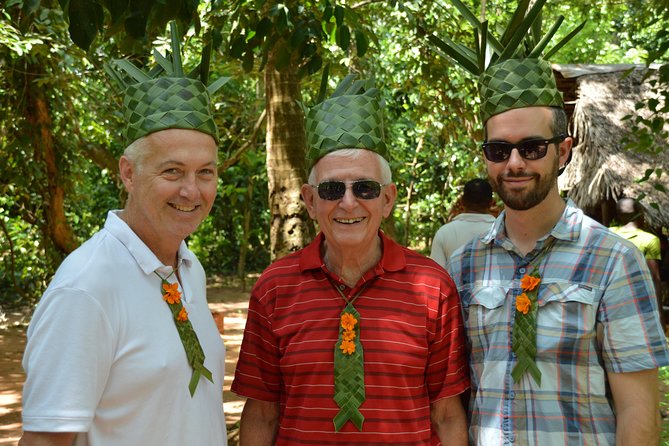
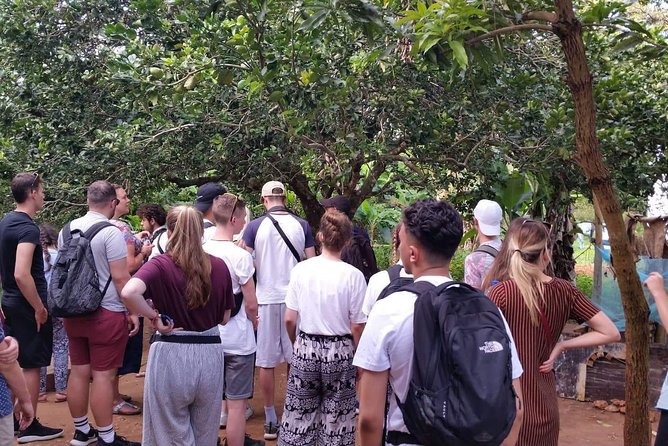
The experience is described as a combination of two tours, with the spice visit paired with the Stone Town portion. The supplied details do not specify the exact spice-farm location, the length of that stop, or the plants you will see in person, so you should treat it as a general introduction to Zanzibar’s spice economy rather than expect a detailed farm program.
Still, the subject matters. Nutmeg, black pepper, cloves, and cinnamon are not just names on a souvenir label. They help explain why Zanzibar has drawn outside powers and traders over the centuries. A spice-focused stop can give you a physical connection to that story, especially if you can see or smell the products associated with the islands.
The value here depends on how the time is divided. If you want a broad first impression, the combination works well. If your main goal is an extended spice-farm visit, five hours shared between two themes may feel short.
I would pay attention to the guide’s explanation rather than treating this stop as a shopping opportunity. The strongest version of the experience will connect the crops to Zanzibar’s place in Indian Ocean trade and then let Stone Town provide the architectural evidence.
Walking into Stone Town’s narrow streets
The Stone Town tour is presented as an introductory guided visit. That wording is useful. You should expect an overview of the old city rather than a long, specialized study of architecture, colonial administration, religion, or the slave trade.
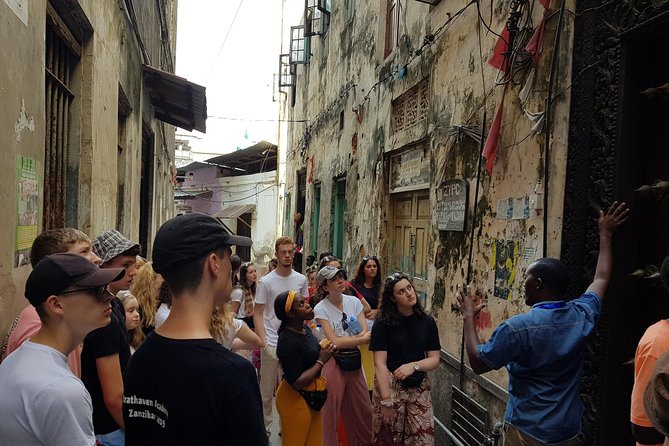
The physical setting should be one of the pleasures. Narrow, winding streets lead past buildings with carved wooden doors, balconies, loggias, and verandas. These details reward close attention. I would look above eye level as well as straight ahead, since the upper floors and shaded exterior spaces help explain how the town was built for both commerce and hot weather.
A guide is especially helpful here because the streets can feel confusing. Names such as Kelele Square, the former English Club at Africa House, Tip-Tip House, and the old consulates mean more when someone explains their place in the city’s past. Without context, you might see handsome facades but miss the links between trade, government, and local life.
The walking portion also asks you to accept some uncertainty. The information does not state how much time is spent at every site or whether all listed locations receive a full stop. A long list of landmarks in a five-hour visit usually means some are viewed from outside or covered briefly.
The Town Market and the city’s daily rhythm

The Town Market is an important inclusion because it shifts the focus from grand buildings to ordinary commerce. You can expect a setting where Zanzibar’s food and trading culture matter more than formal displays.
The available details do not promise a particular market section, tasting, or shopping arrangement. I would therefore go with open eyes but without expecting a planned culinary workshop. The market is valuable simply because it places the old city in its working context.
This is also where the tour may feel less polished than a museum visit. Markets are active public spaces, not staged attractions. The benefit is a more direct look at city life. The trade-off is that noise, crowds, and movement may make it harder to listen to every word of a guide.
For a cruise passenger, the market can be one of the best uses of limited time. You get a sense of how Stone Town functions today, not only how it appeared in a past era.
A different kind of day out entirely:
- From Zanzibar: Day Selous Game Reserve Safari with Flights
★ 4.7 · 1,025 reviews - Zanzibar: Prison Island and Nakupenda Boat Trip with Lunch
★ 4.1 · 882 reviews - Skydive Zanzibar | Tandem Skydive
★ 5.0 · 877 reviews - Quad Adventures in Zanzibar: Nungwi / Kendwa
★ 4.9 · 640 reviews
Confronting Zanzibar’s difficult past
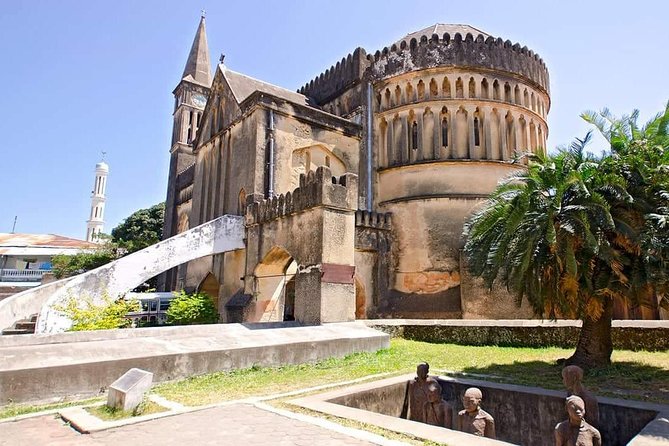
Several stops deal with slavery and colonial rule, including the Slave Market, Slave Chambers, and the National Museum of Zanzibar. These places add weight to the tour and prevent Stone Town from becoming a pretty walk through old doors and shaded balconies.
The subject can be difficult, but it is central to understanding Zanzibar. The listed sites suggest that the tour does not avoid the island’s painful past. You should expect a serious section rather than a light sightseeing stop.
The National Museum can help place individual sites in a wider setting, though the supplied information does not specify which galleries are visited or how long you have inside. The Slave Market and Slave Chambers are also listed separately, but the exact order is not given.
I would allow yourself time to listen and reflect. A five-hour package combining many locations cannot provide a complete account of slavery, trade, and colonial power. It can, however, point you toward the main places where those subjects are remembered.
Consulates, courts, and colonial-era buildings
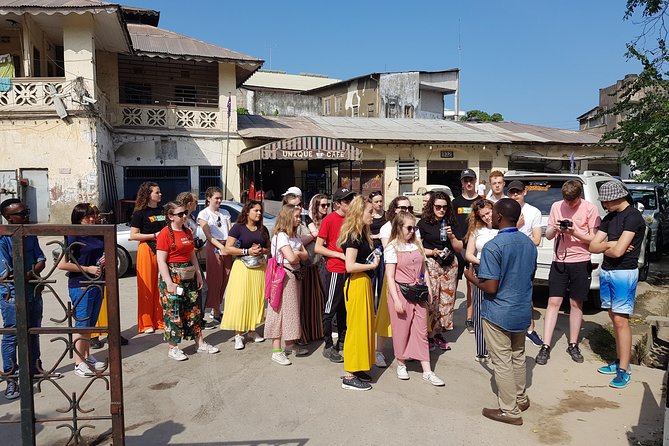
The route includes the High Court Building, Old German Consulate, Old British Consulate, and Africa House, formerly the English Club. These stops show how several foreign powers left their mark on Stone Town.
They also help you read the city as a port. Administrative buildings and clubs were not built by accident. Their presence reflects the outside interests that shaped Zanzibar’s government and commerce.
Tip-Tip House adds another named landmark to the route. The information does not explain its interior or its full role, so I would listen for the guide’s specific account rather than arrive with fixed expectations.
The benefit of this part of the outing is variety. You are not seeing only religious or residential buildings. Courts, consulates, clubs, and private houses show different sides of the old city.
The limit is again the pace. With so many named stops, you may spend more time learning the outline of each place than examining one building in detail. That is a fair exchange for a port day, but it matters if you prefer a specialist tour focused on architecture.
Old Fort and Forodhani Gardens
The Old Fort is one of the clearest visual anchors on the tour. Its solid walls contrast with the carved doors and delicate balconies found elsewhere in Stone Town. The fort also gives the route a strong public landmark rather than another street-side building.
Forodhani Gardens adds a waterfront setting. The two locations together can help you understand how Stone Town is organized, from defensive and civic spaces to open areas used by the public.
The listing also names House, but the supplied information cuts off before providing the full name or description. That means you should not plan around a particular house visit unless the operator confirms it.
Forodhani Gardens may be a pleasant change after narrow streets, but the exact activities included there are not stated. I would see it as part of the city tour, not assume a meal, food tasting, or extended free time.
Orphanage Home and the human side of the route

The inclusion of an orphanage home makes this route different from a standard architecture circuit. The information does not explain whether the visit is observational, charitable, or part of a formal program, so you should ask the provider what the stop involves before booking if this matters to you.
That question is worth asking for practical and ethical reasons. A responsible visit should make clear what you are seeing, how the institution operates, and what behavior is expected from visitors.
Even without further detail, the stop suggests an effort to connect the city’s past and buildings with present-day social life. It also means the outing may not feel like a conventional sightseeing loop. Some people will appreciate that broader focus. Others may prefer a route centered only on museums and monuments.
Is $130 per person a fair price?
The cost is $130 per person for about five hours. Admission is included, pickup is offered, and the ticket is mobile, so the price covers more than a self-guided walk through Stone Town.
I see the value mainly in convenience and coverage. You get a guide, a combined format, entry to included attractions, and a planned way to see many important places during a cruise stop. For someone who wants a structured introduction without arranging separate transportation and admissions, that is a reasonable case for the fee.
The value is weaker if you want lots of free time. The route includes the market, museum, slavery-related sites, several historic buildings, Old Fort, Forodhani Gardens, and the spice portion. That is a full plate for five hours. You are paying for range, not a slow, detailed visit to one or two places.
The stated maximum group size is 800 people. That is a very large possible capacity, even if the actual group on a given day is smaller. I would ask how groups are divided and whether a smaller walking group is used. Group size affects how easily you can hear the guide, move through narrow streets, and enter attractions.
The only supplied cruise-related praise focuses on Holland America Line’s general service, with special appreciation for the line’s attention to guests and its policy of avoiding constant small extra charges. That is not a specific comment about this Zanzibar outing, so I would not use it as proof of the tour’s quality. It does suggest that Holland America passengers who value organized shore arrangements may find the format appealing.
Practical details for a smoother visit
Confirmation is provided at booking, and the ticket is mobile. Pickup is offered, which is useful when your time in port is limited, though the exact pickup point and schedule are not stated here.
I would confirm the meeting instructions, return timing, and group size before departure. That is especially important for a ship-based outing, where a late return can cause needless stress.
Service animals are allowed, and the activity is described as suitable for most people. It is also near public transportation. Those facts make the experience broadly accessible in planning terms, but they do not describe the walking surface, stair access, restroom availability, or vehicle arrangements.
Because much of the Stone Town portion involves streets and buildings, ask the operator about the walking demands if you have mobility concerns. The phrase most travelers can participate in is helpful but general, not a detailed accessibility guarantee.
Free cancellation is available if you cancel at least 24 hours before the local start time. Inside that 24-hour window, the payment is not refunded, and changes are not accepted. For a cruise day, I would make the decision early enough to protect that refund option.
Who should choose this Stone Town and spice combination?
I think this outing fits you best if you want a clear first look at Zanzibar and prefer a guide to handle the route. It suits cruise passengers who value pickup, included admission, and a fixed five-hour plan.
It is also a good match if you want several themes in one morning or afternoon: architecture, trade, spices, slavery, colonial administration, public spaces, and present-day city life.
You may want another option if you prefer independent wandering, long museum visits, or a tightly focused food and spice experience. The broad route is its strength, but breadth can bring a faster pace.
Families and mixed-age groups may appreciate the range of stops, though the operator only says most people can participate and does not provide child-specific details. Anyone who finds difficult history upsetting should know that the Slave Market and Slave Chambers are part of the program.
Should you book this Zanzibar tour?
I would book it if this is your first visit to Zanzibar and you want a well-rounded port-day introduction at a fixed price. The combination makes sense: spices explain the island’s wider identity, while Stone Town gives you carved doors, old consulates, markets, museums, forts, gardens, and a serious look at the past.
Before paying, I would confirm the pickup point, how the five hours are divided, and the likely group size. If the operator can explain those details clearly, $130 is a reasonable price for a guided overview with admission included.
Skip it if you want a slow, personal exploration or a detailed specialist tour. Choose it if you want to see a lot, learn the basic story of Zanzibar, and return to your ship with the old city properly introduced.
FAQ
Where does this tour take place?
The experience takes place in Zanzibar, Tanzania, with the Stone Town portion in Zanzibar City on the main island of Ungunja.
How long does the experience last?
The tour lasts approximately five hours.
What is included in the price?
The price is $130 per person, and admission tickets are included. Pickup is offered, and the experience uses a mobile ticket.
What places are included in the Stone Town tour?
The listed stops include the Town Market, Slave Market, National Museum of Zanzibar, High Court Building, Slave Chambers, Old German Consulate, Africa House, Tip-Tip House, Kelele Square, Old British Consulate, Orphanage Home, Old Fort, and Forodhani Gardens.
Is the tour suitable for most people?
The activity states that most people can participate. Service animals are allowed, and the experience is near public transportation.
What is the cancellation policy?
You can receive a full refund if you cancel at least 24 hours before the experience start time. Cancellations or changes made within 24 hours are not accepted and are not refunded.
Just added in Zanzibar
- Zanzibar:Ngoma local culture workshop,The Knowledge of Ngoma★ 5.0 · 1 review
- ZANZIBAR:Mnemba island, Spice farm and Jozani Forest★ 5.0 · 1 review
- Zanzibar: Zipline Adventure At Masingini Forest★ 4.6 · 2 reviews
- Zanzibar Walking Tour: Unveiling the Secrets of Stonetown★ 4.8 · 11 reviews
- Zanzibar: Walking Spice Farm with Local Cooking Class★ 4.4 · 9 reviews
- Zanzibar: Walking Tour★ 4.0 · 1 review
- Zanzibar: Uzi Island Mangrove Kayak Tour with Guide★ 5.0 · 1 review
- Zanzibar: Unique Guided Mangrove Tour by SUP or Kayak★ 5.0 · 1 review
Zanzibar Tours, compared.

Mikumi Safari Day Trip with Flights and Meal
Read our review →
Quad Bike Adventure departing from Kendwa or Nungwi
Read our review →
Stone Town, Spice Tour, Prison Island with Lunch
Read our review →
Prison Island and Nakupenda Boat Trip with Lunch
Read our review →