Reviewed · ZANZIBAR TOURS
Village Tour With Witch Doctor Visit
Step beyond Zanzibar’s beach resorts. This six-hour private outing takes you into Jambiani village life, with stops at a women’s handicraft group, seaweed farms, a school, a hospital, and a traditional healer. I like the personal format and the chance to see how local work and community services fit together. I also like that lunch, bottled water, and air-conditioned transport are included.
The main consideration is the long transfer if you are staying far from Jambiani. A previous booking described about 90 minutes from the port to the village, so the day includes substantial road time. The tour also touches working community spaces, so you should arrive with respect and patience rather than expecting a polished attraction.
In This Review
- Key points to know before booking
- Why this six-hour Jambiani visit feels different
- The road from Zanzibar City to village life
- Meeting the women’s handicraft collective
- Seaweed farming and Zanzibar’s coastal economy
- Visiting a local school and hospital
- Making rope from coconut husk fibers
- Meeting the traditional healer
- Lunch, water, and the practical value of $96
- Guide quality and the private format
- Who should book this Zanzibar experience?
- Booking, cancellation, and final advice
- Should you book it?
- FAQ
- How long does the village tour last?
- What time does the tour start?
- Where does the tour take place?
- Is pickup available?
- Is this a private tour?
- What is included in the price?
- What places and activities are included?
- How much does the tour cost?
- Can I cancel for a full refund?
Key points to know before booking

- Jambiani is the focus: The tour gives you a look at village life on Zanzibar’s southeastern coast, away from the hotel strip.
- The visit is private: Your own group travels with a guide, allowing more room for questions and a flexible pace.
- The local guide matters: Abdul, who lives in the village, has guided some bookings. Driver Achmec and guides Abdulkarim and Abdul have also been named by past customers.
- Seaweed farming is part of daily work: You see an important local activity rather than a staged cultural show.
- Lunch and water are included: A home-cooked meal and bottled water add useful value to a six-hour outing.
- Traditional medicine is handled locally: You meet a working healer who uses older natural remedies, but medical claims should be treated carefully.
Why this six-hour Jambiani visit feels different
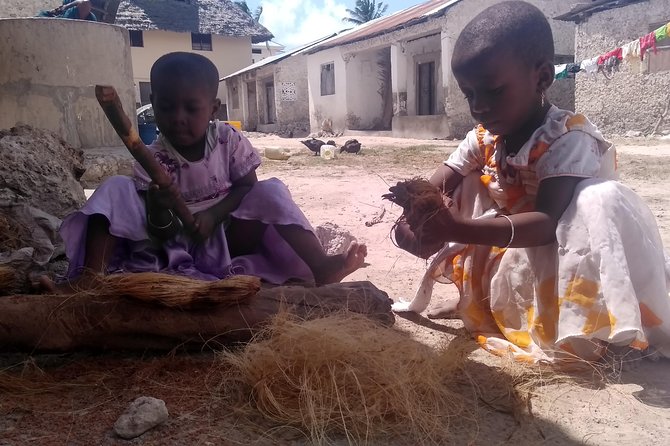
Many Zanzibar outings stay close to the coast, the spice farms, or major historic sights. This one aims at ordinary life. That is its main strength. You spend time looking at work, education, health care, craft production, and traditional healing, all within a local village setting.
I like the range of stops. You are not limited to one demonstration or one photo opportunity. The women’s handicraft collective shows how local skill can become a source of income. Seaweed farming points to the coastal economy. The school and hospital offer a look at community institutions. Coconut rope-making connects a common local material with a useful household product.
The tour is private, which changes the feel of the day. You can ask questions without holding up a large group, and your guide can spend more time on the subjects that interest you. That makes a difference when the topic is personal, such as family life, health care, or work.
The day is not designed as a luxury sightseeing trip. Some stops may feel simple, and the rhythm of the village may be slower than a tightly scheduled city tour. That is part of the point, but it also means you should not expect elaborate displays, formal interpretation, or a guaranteed set of performances.
A few more options to weigh up in Zanzibar
- From Zanzibar: Mikumi Safari Day Trip with Flights and Meal
★ 4.7 · 1,470 reviews - Zanzibar: Quad Bike Adventure departing from Kendwa or Nungwi
★ 4.9 · 1,233 reviews - Zanzibar: Stone Town, Spice Tour, Prison Island with Lunch
★ 4.4 · 1,219 reviews
The road from Zanzibar City to village life
Pickup is offered, and the stated start time is 8:00 am. One previous booking described meeting the driver at the port and riding about 90 minutes in a comfortable minivan with air conditioning. Exact transfer time depends on your pickup point and road conditions, so confirm the meeting arrangement when booking.
The drive matters because Jambiani is not next door to Zanzibar City. You will spend part of the six hours in transit, but the air-conditioned vehicle makes the journey easier in the island’s heat. Free bottled water is also provided, which is practical in a place where walking between stops can quickly become tiring.
A private vehicle gives you more comfort than a large shared bus. It also means you are not making repeated pickups for strangers. If you are visiting from a cruise ship, provide your port details clearly. If you are staying at a hotel, make sure the pickup point and return plan are understood before the morning begins.
Meeting the women’s handicraft collective

The women’s handicraft group is a useful first look at local enterprise. Rather than treating village life as a backdrop, this stop shows how people turn practical skills into goods that can support households and community projects.
You may see handmade items and learn how the group operates, but the supplied information does not specify exactly what products are available or whether purchases are expected. Bring small cash only if you want to buy something, and ask permission before photographing people or their work.
I like this stop because it gives context to souvenir buying. A handmade object means more when you understand who made it and why the work matters. It also gives you a chance to support local production directly, though you should never treat buying as an obligation.
The visit may be less interesting if you want a formal shopping stop with a large selection and fixed retail displays. It is better suited to someone who wants to meet local makers and understand the work behind village crafts.
Seaweed farming and Zanzibar’s coastal economy
Seaweed farming is one of the tour’s most distinctive subjects. You get a view of a livelihood tied closely to the ocean, tides, weather, and shoreline conditions. The stop helps explain that Zanzibar’s coast is not only a place for swimming and hotel dining. It is also a workplace.
Your guide can help connect what you see with everyday life in Jambiani. Ask how seaweed is gathered, how it is handled, and how the work fits into household income. The available tour details do not promise a hands-on harvest, so think of this as an observation and explanation stop rather than a practical farming lesson.
Conditions may affect what you see. Seaweed work is connected to the tide, and the tour does not state that every stage of farming will be active at the exact time of your visit. Still, the stop adds real local context that a standard beach day cannot provide.
This is one place where a private guide is especially useful. You can pause for questions and ask for explanations in plain language. If your interest is photography, ask before taking pictures of workers or private areas.
A different kind of day out entirely:
- From Zanzibar: Day Selous Game Reserve Safari with Flights
★ 4.7 · 1,025 reviews - Zanzibar: Prison Island and Nakupenda Boat Trip with Lunch
★ 4.1 · 882 reviews - Skydive Zanzibar | Tandem Skydive
★ 5.0 · 877 reviews - Quad Adventures in Zanzibar: Nungwi / Kendwa
★ 4.9 · 640 reviews
Visiting a local school and hospital

The school and hospital stops bring the tour into sensitive territory. They can help you understand how village services function, but they are not attractions in the usual sense. You may find the experience moving, especially if you are interested in education, health, or the practical challenges of community life.
Your guide will lead you through the visit, but the supplied information does not state whether you enter classrooms, meet staff, or tour treatment rooms. Do not assume that every area will be open. Schools and hospitals need privacy and quiet, so follow local instructions and avoid photographing children, patients, or staff without clear permission.
I appreciate that these stops widen the story beyond crafts and scenery. They show the village as a living place with institutions, needs, and responsibilities. At the same time, some people may find this part of the tour uncomfortable if it feels too observational. A respectful attitude is essential.
If you bring gifts or supplies, do not assume they can be handed over directly. No donation program is listed, so ask your guide first. The best contribution may simply be listening, behaving well, and supporting local services through responsible tourism.
Making rope from coconut husk fibers
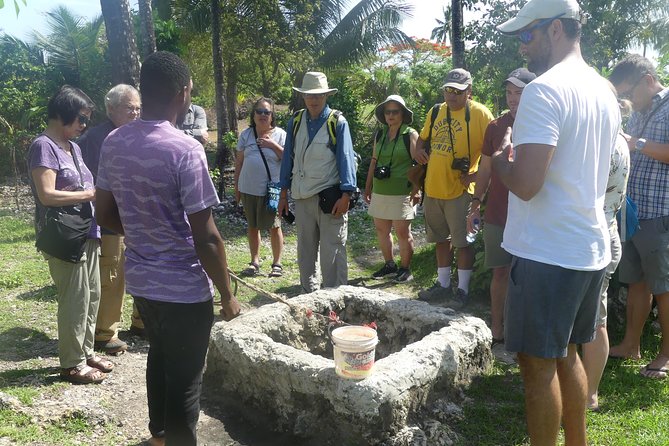
The coconut rope demonstration is one of the most specific activities on the schedule. A local woman shows how rope is made from coconut husk fibers, turning a familiar island material into something useful.
This stop works because it is practical. You are not only hearing about coconut use in Zanzibar. You are watching a process that connects natural materials, manual skill, and household work. The demonstration may also help you notice how much labor sits behind simple everyday objects.
The information provided does not say that you will make the rope yourself. Ask your guide if you want to try, but do not handle materials or tools without permission. The demonstration is likely to be most rewarding when you watch closely and let the person leading it set the pace.
This is also a good moment to ask about other uses for coconut husks and fibers. Keep questions respectful, especially about income and working conditions. The point is not to compare the process with factory production. It is to understand why local skills remain useful.
Meeting the traditional healer
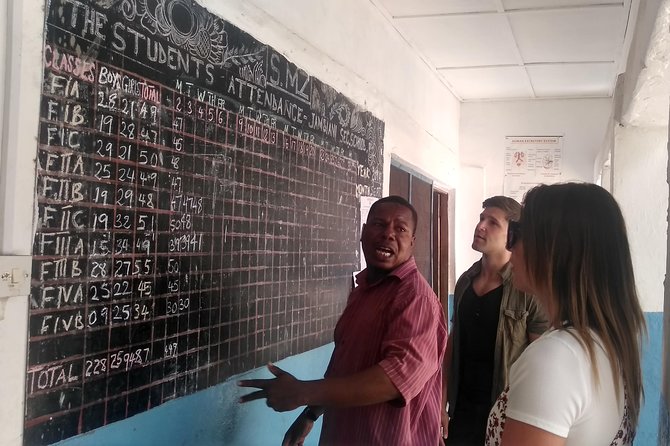
The final major stop is a visit to a traditional healer described in the tour details as a local witch doctor who uses older natural medicine and continues to help people. The phrasing may sound dramatic, but the visit is best understood as a meeting with a community practitioner whose work is part of local tradition.
This can be the most memorable stop for some people. One past customer described receiving an herbal treatment for a chronic headache and feeling that it helped. That is a personal account, not medical proof, so keep your expectations sensible. Natural remedies can have risks, interactions, or uncertain ingredients.
Do not stop prescribed treatment or use an unfamiliar remedy without advice from a qualified medical professional. You can listen, ask about the plants and practices, and treat the encounter as cultural education rather than a replacement for modern medical care.
The visit may also raise questions about how traditional and formal health systems exist side by side. That is a worthwhile subject, but avoid turning the healer into a novelty. Ask before taking photos, listen carefully, and remember that this is someone’s working practice and community role.
Lunch, water, and the practical value of $96
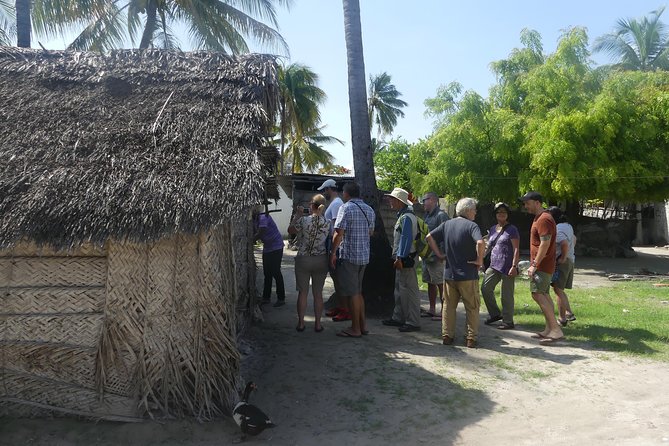
The price is $96 per person. For a six-hour private tour, that includes pickup, air-conditioned transport, a guide, bottled water, and lunch at no extra charge. Those inclusions make the cost easier to justify, especially if you value a private vehicle and a local guide rather than a large group outing.
A home-cooked lunch is a real advantage. It gives the day a personal break and lets you eat in a setting connected to the community rather than simply stopping at a generic restaurant. The exact menu is not specified, so tell the provider about dietary needs before the tour.
The price will feel less attractive if you are mainly seeking beaches, ruins, or a short sightseeing trip. The transfer to Jambiani takes time, and the focus is on conversation and observation. You are paying for access to local settings, transport, guiding, and a private format, not for a long list of major monuments.
Group discounts are available, though no discount levels are provided. A small private group can make the per-person value better while keeping the experience personal. The tour is also likely to suit families or friends who want control over the pace, provided everyone is comfortable visiting working community spaces.
Guide quality and the private format
A local guide can make or break this kind of day. Abdul has been identified as a guide who lives in the village, which is useful because local residence can bring a more grounded connection to the people and places you visit. Other names associated with bookings include driver Achmec, guide Abdulkarim, and guide Zahran.
You should not assume you will receive a specific person unless the provider confirms it. Still, these names give you useful points of contact when clarifying your booking. Previous customers particularly appreciated careful explanations, prompt pickup, and help with questions throughout the day.
The private format gives you a better chance to shape the conversation. Ask about village work, seaweed, schooling, health care, natural remedies, and how the guide’s own life connects to Jambiani. Good questions will make the day stronger than simply moving from one stop to the next.
This is not the right choice if you prefer to stay anonymous in a large group or move quickly through a fixed sightseeing program. It is a people-focused outing, and your attitude will affect what you take from it.
Who should book this Zanzibar experience?
I would recommend this tour to you if you want to see more than hotels and beaches. It suits curious visitors who care about local work, community life, traditional practices, and small-scale cultural contact.
It is also a good fit if you value comfort but do not want an isolated resort experience. The air-conditioned vehicle, lunch, bottled water, and private guide soften the physical demands of a full morning and afternoon out.
Families may appreciate the variety, though parents should prepare children to behave politely at the school, hospital, and healer’s workplace. Anyone with mobility concerns should ask the provider for more detail, since the tour includes village visits and walking, but the available information does not describe the walking distance or surface conditions.
You may want to skip it if you only have a few hours in Zanzibar, dislike long transfers, or prefer museums and formal cultural sites. You should also reconsider if traditional medicine or visits to community institutions feel outside your comfort zone.
Booking, cancellation, and final advice
Confirmation is provided at booking. Service animals are allowed, public transportation is nearby, and most people can participate. The activity is private, so only your group takes part.
Free cancellation is available up to 24 hours before the 8:00 am start time for a full refund. Changes or cancellations made less than 24 hours before the start are not accepted for a refund, and the cutoff uses local time.
Should you book it?
Book this tour if you want a grounded look at Jambiani and are willing to trade polished sightseeing for real community settings. The strongest parts are the private format, the local guide connection, the seaweed farming, the coconut rope-making, and the chance to discuss traditional medicine with a working healer.
At $96, the package offers fair value when you use the transport, lunch, water, and private guiding. Just allow for the road time, keep your expectations flexible, and approach the school, hospital, and healer with respect. If that sounds like your kind of Zanzibar day, this is a thoughtful way to get beyond the resort gates.
FAQ
How long does the village tour last?
The tour lasts approximately six hours.
What time does the tour start?
The stated start time is 8:00 am.
Where does the tour take place?
The main destination is Jambiani village in Zanzibar, Tanzania.
Is pickup available?
Yes, pickup is offered. One booking described pickup from the port, but you should confirm your exact meeting point when booking.
Is this a private tour?
Yes. Only your group participates in the activity.
What is included in the price?
The experience includes lunch, bottled water, air-conditioned vehicle transport, and a private guide.
What places and activities are included?
The tour includes a women’s handicraft group, seaweed farming, a local school, a hospital, coconut husk rope-making, and a visit to a traditional healer.
How much does the tour cost?
The listed price is $96 per person. Group discounts are available, though the discount amount is not specified.
Can I cancel for a full refund?
Yes, if you cancel at least 24 hours before the experience start time. Cancellations or changes made less than 24 hours before the start are not accepted for a refund.
Just added in Zanzibar
- Zanzibar:Ngoma local culture workshop,The Knowledge of Ngoma★ 5.0 · 1 review
- ZANZIBAR:Mnemba island, Spice farm and Jozani Forest★ 5.0 · 1 review
- Zanzibar Walking Tour: Unveiling the Secrets of Stonetown★ 4.8 · 11 reviews
- Zanzibar: Zipline Adventure At Masingini Forest★ 4.6 · 2 reviews
- Zanzibar: Walking Spice Farm with Local Cooking Class★ 4.4 · 9 reviews
- Zanzibar: Walking Tour★ 4.0 · 1 review
- Zanzibar: Uzi Island Mangrove Kayak Tour with Guide★ 5.0 · 1 review
- Zanzibar: Unique Guided Mangrove Tour by SUP or Kayak★ 5.0 · 1 review
Zanzibar Tours, compared.
Mikumi Safari Day Trip with Flights and Meal
Read our review →
Quad Bike Adventure departing from Kendwa or Nungwi
Read our review →
Stone Town, Spice Tour, Prison Island with Lunch
Read our review →
Prison Island and Nakupenda Boat Trip with Lunch
Read our review →