
Reviewed · SERENGETI & NGORONGORO SAFARIS
4 Days Tanzania Luxury Safari Serengeti and Ngorongoro Crater
The animals are the schedule. This four-day safari gives you three nights in Tanzania’s best-known wildlife areas, with extended game drives in the Serengeti and a final descent into Ngorongoro Crater. I like the chance to spend a full day around Seronera, where lions and leopards are often the main attraction, and I like that the route ends with a concentrated crater safari rather than rushing straight back to Arusha.
I also like the private format, since only your group takes part. Guides including Okuli, Moses, and Hillary have been praised for safe driving, clear explanations, good communication, and strong animal-spotting skills. The main point to weigh is the wording luxury safari: the package includes three nights of camping, so comfort depends heavily on the tent camp and on how you feel about long, bumpy road journeys.
In This Review
- Key points to know before booking
- What $1,900 buys you in Tanzania
- Day 1: The long road from Arusha to Serengeti
- Day 2: Six hours in central Serengeti
- Day 3: From Serengeti plains to the Ngorongoro rim
- Day 4: Early descent into Ngorongoro Crater
- Guides make or break the safari
- Camping, meals, and the real comfort level
- Roads, timing, and physical demands
- Who should book this four-day route?
- Should you book it?
- FAQ
- Where does the safari begin?
- How long is the safari?
- Which parks and protected areas are included?
- How much does the safari cost?
- Is accommodation included?
- Are meals included?
- Are park fees and taxes included?
- Is this a private tour?
- Can vegetarian meals be provided?
- Can I cancel for a full refund?
Key points to know before booking
- Three nights in camping accommodation: You sleep close to the bush rather than in a conventional hotel or lodge.
- Serengeti receives the most time: Day 1 includes the approach and a game drive, while Day 2 is devoted to central Serengeti.
- Seronera is the wildlife focus: This central area is known for lions, leopards, and varied animal sightings.
- Ngorongoro ends the trip strongly: The final morning includes an early descent and about five hours on the crater floor.
- Private group format: Your own group participates, which gives you more control than a shared safari.
- The price covers key basics: At $1,900 per person, the package includes accommodation, meals, park-related fees, and a professional guide.
What $1,900 buys you in Tanzania
At $1,900 per person, this is not a budget minibus outing, but the price covers the main costs that make a northern Tanzania safari expensive. You receive three nights of camping, all fees and taxes, a professional guide, three breakfasts, three dinners, and four lunches. Pickup is offered, and the activity uses a mobile ticket.
The value comes from time in the parks. You are not simply driving to one wildlife area, taking a short drive, and leaving. The schedule gives you a long first day in the Serengeti, a full central Serengeti day, a morning drive before moving toward Ngorongoro, and a substantial crater drive on the final day.
Still, you should read luxury carefully. The supplied details describe camping accommodation, not three nights in high-end lodges. One account describes a tent camp that felt close to nature while still offering a proper bathroom, which sounds comfortable in a practical safari sense. If you expect hotel-style rooms, private facilities, or a polished lodge at every stop, ask for the exact camp details before paying.
The package also excludes tips. The stated guidance is to tip no more than $50, so add that amount to your personal budget if you feel the guide and camp crew have earned it. Drinks, personal purchases, and any other unlisted costs should also be confirmed before departure.
More Serengeti and Ngorongoro safaris:
- 5 Days Private Tarangire, Serengeti, Ngorongoro, Manyara Safaris
★ 5.0 · 17 reviews - 4 Days Tanzania Private Safari | Serengeti , Ngorongoro & Tarangire Safari
★ 5.0 · 16 reviews - 6 Days 5 Nights lodge safari Tarangire, Manyara, Serengeti & Ngorongoro Crater
★ 4.5 · 10 reviews
Day 1: The long road from Arusha to Serengeti
Pickup begins at about 8:00 AM from your hotel in Arusha. The drive to Serengeti National Park is listed as 240 kilometers and roughly six hours, with the total day taking about seven hours.
That sounds manageable on paper, but road time in Tanzania can feel longer than the clock suggests. You will spend much of the day seated in a safari vehicle, and the route ends with a game drive rather than a simple transfer to camp. For me, that is both the charm and the challenge: your first wildlife sightings can begin before you reach your bed, but the day is demanding.
Lunch is a picnic eaten during the game drive. This saves time and keeps you out among the animals, though it is less restful than stopping at a dining room. Pack water, sun protection, and a small bag that can stay within easy reach inside the vehicle.
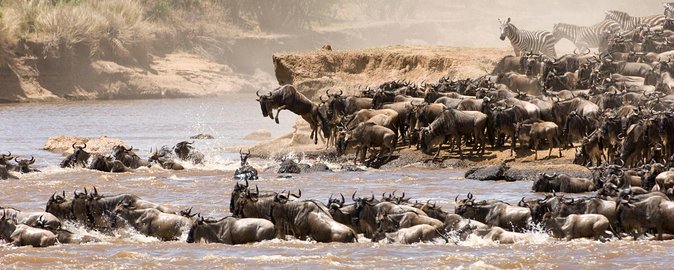
The Serengeti is famous for huge open plains and the annual movement of wildebeest and zebra. The timing and location of the migration vary, so you should not book on the assumption that a particular herd will be nearby. Even outside the main migration period, the park is the heart of this trip and gives you the best chance to spend serious time watching wildlife.
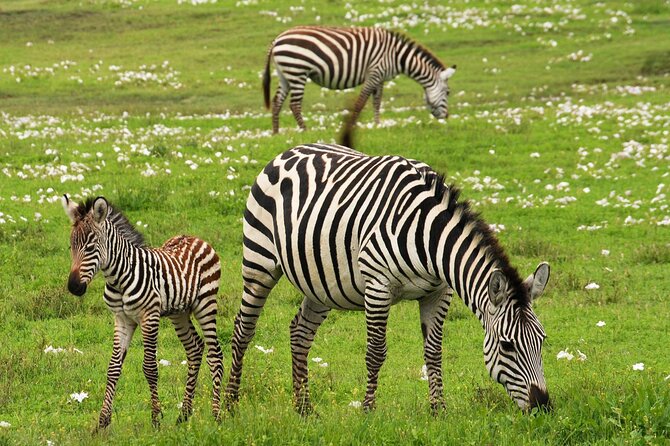
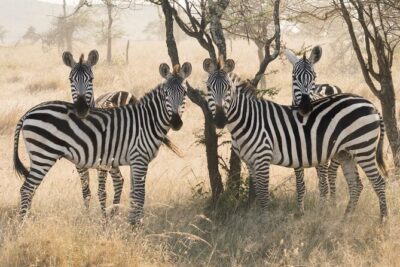
Dinner and overnight accommodation follow the day’s drive. Since the stay is camping, bring a flexible attitude. A tent camp can give you a closer sense of the park, but it will not feel like a city hotel. One useful detail from the available accounts is that zebras were seen grazing near the camp area, a reminder that the setting itself can be part of the experience.
Day 2: Six hours in central Serengeti
Day 2 is the safari’s main wildlife day. You explore the central Serengeti, especially the Seronera area, a section known for a high concentration of wildlife and for sightings of lions and leopards.
You have two timing choices. The relaxed option starts around 9:00 AM after breakfast, continues through a full day of game drives with a packed lunch, and returns around 6:00 PM. The early option begins at 6:00 AM, returns to camp for breakfast and a short rest, then heads out again in the afternoon with lunch packed for the vehicle.
I prefer the early option if wildlife is your priority. It gives you a chance to be out during the cooler part of the morning, then provides a break before another afternoon drive. The later start is kinder to your sleep and may suit you better if you have just completed the long approach from Arusha.
The schedule says about six hours, but safari hours are not like museum hours. A drive may seem quiet for a while, then a guide can stop suddenly because of movement in the grass or a distant animal. Guides such as Okuli were praised for animal explanations, driving, and directional skills, which matter greatly in a large park where finding the right track is part of the work.
Several accounts describe seeing the Big Five, including the more elusive leopard. That is encouraging, but no responsible safari can promise every species. Your guide can improve your chances through experience and local awareness, yet wildlife remains unpredictable. Take the sightings you receive rather than measuring the day against a checklist.
Day 3: From Serengeti plains to the Ngorongoro rim
After breakfast, you take a morning game drive in Serengeti before leaving for the Ngorongoro Conservation Area. A picnic lunch is included during the transfer.
This day gives you a useful change of setting. Serengeti is open and expansive, with wildlife spread across a large area. Ngorongoro feels more enclosed because the crater walls hold a broad floor surrounded by extinct volcanic peaks. The contrast makes the two parks work well together in a short safari.
The crater is described as a vast collapsed volcanic caldera, with a floor of about 260 square kilometers and a depth of more than 2,000 feet. Watering holes support a dense collection of animals, and the area is associated with elephants, buffalo, hippos, hyenas, cheetahs, lions, and black rhinos.
You do not enter the crater until the following morning, so Day 3 is mainly a transfer and positioning day after the morning Serengeti drive. That is important when setting expectations. You will not get a full crater safari on this day, but staying nearby allows you to make an early descent on Day 4.
The day ends with dinner and another night in camping accommodation. After several hours on rough roads, the simple rhythm of food, sleep, and an early start may be welcome. If you need a great deal of downtime, this itinerary may feel packed. If you want to use four days for two major wildlife areas, the pace is sensible.
A few more options to weigh up in Kilimanjaro
- 7 Days Kilimanjaro via Machame route affordable price
★ 5.0 · 110 reviews - Great Migration Safari In Tanzania
★ 5.0 · 71 reviews - Kilimanjaro Airport taxi to/from Moshi town/Arusha town
★ 5.0 · 60 reviews - 6 Days Tanzania Classic Safari
★ 5.0 · 52 reviews
Day 4: Early descent into Ngorongoro Crater
The final morning starts early, with a quick breakfast and an approximate 6:30 AM descent to the crater floor. This early departure is a smart part of the plan because it gives you about five hours for the crater game drive before climbing out.
Ngorongoro offers a compact wildlife experience. Instead of searching across a huge park, you spend the morning on a broad crater floor with watering holes and varied animal habitats. The setting itself is remarkable, with the crater walls rising around you and extinct volcanoes forming a natural boundary.
You may see African elephants, buffalo, black rhinos, hippos, hyenas, cheetahs, and lions. The advice to keep your camera ready is practical, but do not let the camera turn the morning into a hunt for proof. Watch the animals, listen to the guide, and remember that the best sightings can appear without warning.
Lunch is a picnic near the Hippo Pool. This is a memorable setting, but you should follow your guide’s instructions closely around water and wildlife. After lunch, the vehicle begins the steep climb toward the crater exit.
The crater drive is the final major activity, and its five-hour length gives you a fair amount of time for stops and animal watching. The day is listed at about six hours, but the early start and ascent mean you should still expect a full, active morning rather than a relaxed checkout day.
Guides make or break the safari
On a safari, your guide is not just a driver. You rely on that person to handle rough roads, read animal behavior, choose useful routes, explain what you are seeing, and keep the day moving when the group is tired.
Okuli receives the strongest praise in the available comments. He is described as an experienced guide, a strong driver, a good explainer, and someone with excellent direction skills. He is also credited with helping a group see the Big Five, including a leopard, although sightings always depend on conditions and luck.
Moses is described as friendly, informative, punctual, and fun, while Hillary is praised for making the trip run smoothly. Ibrahim, the owner, is noted for careful communication and for listening to individual needs when planning a safari.
That range of praise points to a useful strength: the company appears to place real value on communication and guiding. Still, you should confirm who will lead your specific departure. A positive experience with one guide does not guarantee that every departure uses the same person.
Camping, meals, and the real comfort level
The package includes three breakfasts, three dinners, and four lunches. The lunches are often picnics or packed meals connected to the day’s game drives, so you can spend more time in the parks instead of returning to camp for every meal.
Vegetarian food is available, but you need to request it at booking. That is a small step worth taking early, especially because the itinerary includes several meals away from the accommodation.
The accommodation is camping for all three nights. One account describes a tent camp with zebras grazing nearby and a decent bathroom, which suggests a practical camp rather than a rough survival setup. However, the provided information does not specify tent size, private bathrooms, bedding, electricity, or shower arrangements.
For that reason, I would ask direct questions before booking:
- Is the tent private or shared?
- Is the bathroom inside the tent or communal?
- Are beds, mattresses, and bedding provided?
- Is there electricity for camera and phone charging?
- Which camp is used on each night?
These details matter more than the word luxury. A well-run tent camp can be a wonderful part of a Serengeti trip, especially if you enjoy hearing and seeing nature close by. It can also disappoint you if you expect a lodge room with full hotel services.
Roads, timing, and physical demands
The itinerary includes long drives, early mornings, picnic lunches, and a steep crater ascent. The road sections can be bumpy, and one account specifically refers to rough roads while praising the driver’s safe handling.
You should pack light and keep essential items close: sunscreen, a hat, a refillable water bottle, medication, a light jacket, and camera batteries. Dress for changing conditions because the safari operates in all weather.
Most people can participate, and children must be accompanied by an adult. A child rate applies only when sharing with two paying adults. The private format may be especially useful for families because your group does not have to match the pace of strangers, but the early starts and long drives still require patience.
Pickup is offered from a hotel in Arusha according to the schedule. The meeting hours shown for the experience run every day from midnight to 11:30 PM, but the actual safari pickup is around 8:00 AM on Day 1. Confirm your hotel location and pickup time in advance.
Who should book this four-day route?
I would choose this safari if you want the best-known northern Tanzania highlights in a short period. You get substantial Serengeti time, the chance to focus on Seronera, and a final morning in Ngorongoro Crater.
It also suits you if you value a private group and a guide who can adapt the pace. Families with older children, couples, and small groups of friends can all find the format appealing.
I would hesitate if your idea of luxury means a high-end lodge, private plunge pool, or short transfers. This is an active safari with camping, long road days, and early mornings. It is also not ideal if you want a leisurely holiday with plenty of time at the accommodation.
The route is strongest for wildlife-focused visitors who accept that animals are wild and sightings are never guaranteed. It gives you good opportunities for lions, leopards, elephants, buffalo, hippos, hyenas, cheetahs, and possibly black rhinos, but nature keeps the final word.
Should you book it?
Book this tour if you want a private, tightly planned safari that places Serengeti and Ngorongoro at the center of four busy days. The strongest reasons are the full central Serengeti day, the early crater descent, included meals and park fees, and the company’s praised communication and guiding.
Before you commit, confirm the exact camp, vehicle setup, guide, pickup point, and what luxury means in practical terms. At $1,900 per person, the package can offer solid value for the amount of park time included, but it is best understood as a comfortable camping safari rather than a lodge-based luxury escape.
Free cancellation is available if you cancel at least 24 hours before the experience starts. Changes or cancellations made inside that 24-hour window are not accepted for a refund.
FAQ
Where does the safari begin?
Pickup begins from your hotel in Arusha at about 8:00 AM on the first day.
How long is the safari?
The experience lasts approximately four days and includes three nights of accommodation.
Which parks and protected areas are included?
The route includes Serengeti National Park and the Ngorongoro Conservation Area, including a game drive inside Ngorongoro Crater.
How much does the safari cost?
The listed price is $1,900 per person.
Is accommodation included?
Yes. The package includes three nights of camping accommodation.
Are meals included?
Yes. The package includes three breakfasts, three dinners, and four lunches.
Are park fees and taxes included?
All fees and taxes are included in the stated package.
Is this a private tour?
Yes. Only your group participates in the activity.
Can vegetarian meals be provided?
Yes. A vegetarian option is available, but you need to advise the provider when booking.
Can I cancel for a full refund?
Yes, if you cancel at least 24 hours before the experience begins. Cancellations made less than 24 hours before the start time are not refunded.
Just added in Kilimanjaro
- Tanzania Wildlife Encounters – 6 Days★ 5.0 · 1 review
- Day Trip To Tarangire National Park★ 4.5 · 2 reviews
- Mount Kilimanjaro 6 days – Machame route★ 4.0 · 5 reviews
- Mount Kilimanjaro 7 Days – Machame Route★ 5.0 · 5 reviews
- 5 days Serengeti Wildebeest Migration Safari★ 5.0 · 3 reviews
- Marangu Cultural tour.★ 5.0 · 1 review
- Lemosho Route★ 5.0 · 21 reviews
- Airport Transfers at Kilimanjaro International Airport – JRO★ 5.0 · 2 reviews
Serengeti & Ngorongoro Safaris, compared.
Serengeti Balloon Safari and authentic bush breakfast
Read our review →
Balloon Safari & Bush Breakfast in Serengeti – Miracle Experience
Read our review →
3 Days Serengeti & Ngorongoro Group Camping Safari
Read our review →
5-Day Highlights mid-Range Crater, Serengeti, Tarangire
Read our review →
Private 6-Day Tarangire Manyara Crater and Serengeti with Mid-Range Lodges
Read our review →
5 Days Camping Tarangire, Serengeti & Ngorongoro crater & Visiting Maasai
Read our review →Browse the lists this tour appears in