
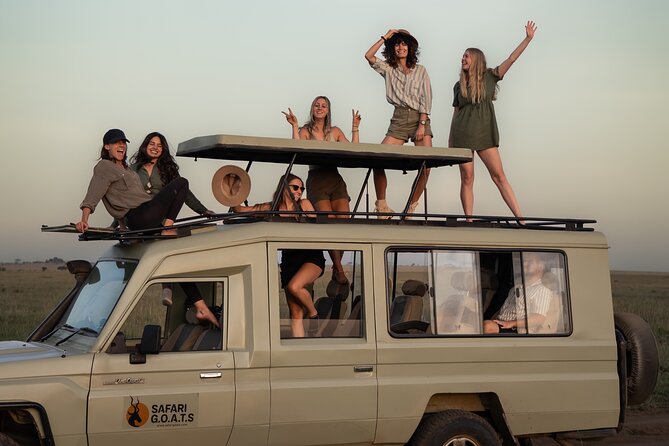
Reviewed · SERENGETI & NGORONGORO SAFARIS
4 Days Tarangire, Serengeti & Ngorongoro Crater Joining Group
Wildlife begins with a wall of elephants. This four-day safari packs three of Tanzania’s biggest names into a short trip, with Tarangire’s baobabs, the Serengeti’s open plains, and Ngorongoro Crater’s crowded wildlife basin. I like the small group size of up to seven and the fact that park fees, meals, camping equipment, and Arusha hotel pickup are included. The main drawback is the pace: long drives and early starts leave little room for rest.
I also like the practical route. You move from Tarangire to the Serengeti, then finish at Ngorongoro, rather than wasting time retracing your route. The praise for guide Eddy is especially strong, with repeated mention of his effort, care, and skill in finding the Big Five. Still, this is a compact safari, so you should book it for concentrated wildlife viewing, not a slow, luxurious bush holiday.
In This Review
- Key points to know before booking
- What this four-day safari is really offering
- Day 1: Tarangire’s elephants and baobab country
- Day 2: The long road into the Serengeti
- Day 3: A sunrise drive and the climb toward Ngorongoro
- Day 4: Down into the crater, then back to Arusha
- Meals, camping equipment, and what to clarify
- What the praise for Safari G.O.A.T.S. tells you
- Price, pace, and who should book
- Should you book this four-day Tanzania safari?
- FAQ
- Where does the safari start?
- How long is the safari?
- Which parks and protected areas are included?
- How many people can join the group?
- Are park entrance fees included?
- Which meals are included?
- Is the return time to Arusha fixed?
Key points to know before booking
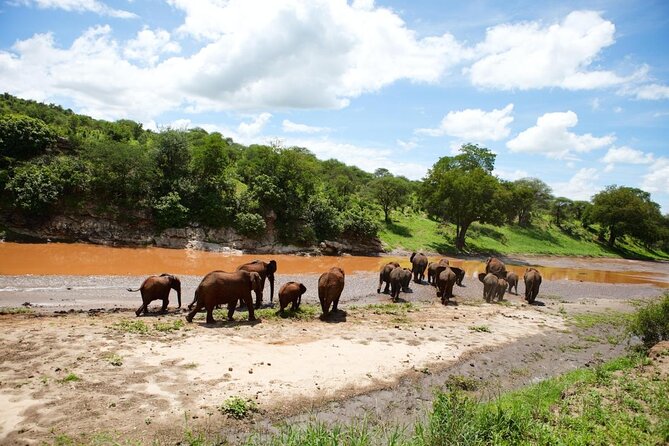
- Tarangire opens the trip with elephants and baobabs: Six hours here gives you a strong first taste of northern Tanzania’s wildlife.
- The Serengeti receives two game-drive windows: You get an afternoon drive on arrival and an early morning drive the next day.
- Ngorongoro Crater is the dramatic finale: The crater floor brings together grassland, wetlands, a river, hippos, and a chance to spot black rhino.
- The group is limited to seven people: That is small enough to make vehicle time more manageable, though the exact vehicle layout is not specified.
- Meals and park costs are covered: The package includes four breakfasts, four lunches, three dinners, camping equipment, and park entrance fees.
- The return to Arusha is planned for around 5 p.m.: The operator says the timing can be adjusted for a flight or another pressing need.
What this four-day safari is really offering
At $1,030 per person, this is not a bargain-basement park visit. But it includes several costly pieces of a Tanzania safari: national park fees, transport from Arusha, camping equipment, and most meals. You are also covering three famous wildlife areas in only four days, which gives the trip strong value if your time in Tanzania is limited.
The trade-off is simple. You pay with long road hours and a tight schedule. You will not have much time to linger at camp, sleep late, or take an unplanned afternoon off. The reward is a fast-moving route through some of East Africa’s most important wildlife country.
The group limit is seven people. That matters because game drives are spent in the safari vehicle, where every seat affects your view and comfort. A smaller group usually makes it easier to share sightings and keep the vehicle from feeling crowded, though the provided details do not specify the vehicle type or seating arrangement.
Pickup is offered from your hotel in Arusha, with a listed start time of 7:30 a.m. Confirmation is provided when you book. The tour is described as suitable for most people and located near public transportation, but the daily schedule still calls for long drives, rough park roads, and early mornings. You should be comfortable with those basics before committing.
More Serengeti and Ngorongoro safaris:
- Balloon Safari & Bush Breakfast in Serengeti – Miracle Experience
★ 5.0 · 1,646 reviews - 3 Days Serengeti & Ngorongoro Group Camping Safari
★ 5.0 · 574 reviews - 5-Day Highlights mid-Range Crater, Serengeti, Tarangire
★ 5.0 · 296 reviews
Day 1: Tarangire’s elephants and baobab country
Tarangire is a smart first stop. It gives you a full wildlife day without beginning with the longest transfer to the Serengeti. The park is known for its high concentration of elephants and its striking baobab trees, two sights that give the opening day a clear sense of place.
The planned visit lasts about six hours. That is enough time for a proper game drive rather than a quick pass through the park. You might see elephants moving in family groups, along with giraffes, zebras, buffalo, and lions. Tarangire is also listed as a place where all four of the traditional Big Four can be found: lion, leopard, elephant, and buffalo.
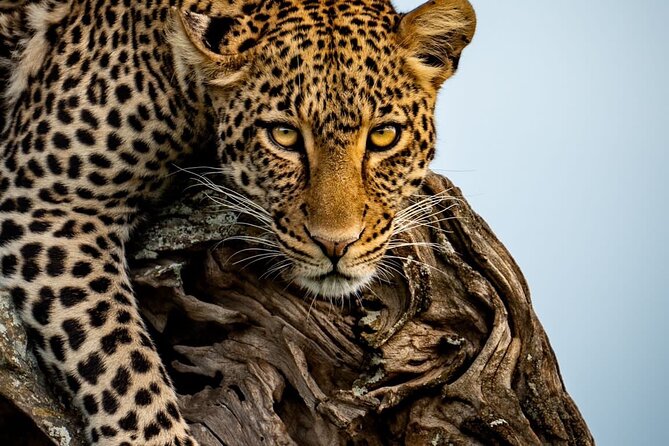
The leopard is never something you should treat as guaranteed. That is an important distinction with any safari. The tour description names the Big Four as present in the park, but sightings depend on timing, animal movement, weather, and the guide’s ability to locate them.
The baobabs are part of the attraction even when animals are not close by. Their thick trunks and unusual shapes make the park feel very different from the Serengeti’s open grasslands. I like beginning here because you get a varied first day, with large mammals and memorable scenery before the route moves toward the famous plains.
Tarangire also gives you a gentler introduction to safari rhythm. You will spend much of the day seated in a vehicle, watching carefully and waiting for movement. That waiting is part of the experience. A zebra herd can look ordinary at first, then a lion appears nearby and changes the whole mood.
Day 2: The long road into the Serengeti
Day two begins after an early breakfast with the drive from Mto wa Mbu toward Serengeti National Park. The transfer is long, but the route itself is presented as part of the experience. For a first visit, the gradual change toward the Serengeti’s open country can be memorable.
The name Serengeti refers to endless plains, and the scale explains why. The park covers about 6,900 square miles, or 18,000 square kilometers. You may look toward the horizon and misjudge distance because the land seems to keep going without interruption.
That openness is not empty. The Serengeti supports the Great Migration, with roughly two million wildebeests, hundreds of thousands of zebras, and many kinds of antelope. The tour also highlights the park’s large cats and other major wildlife. You should think of the Serengeti less as one guaranteed animal show and more as a huge area where the guide searches for changing concentrations of wildlife.
The planned game-drive portion is about six hours. Since the day includes the journey from Mto wa Mbu, your time in the vehicle may feel especially substantial. Bring patience, protect yourself from the sun, and accept that the road between wildlife areas is part of the price of seeing more than one park.
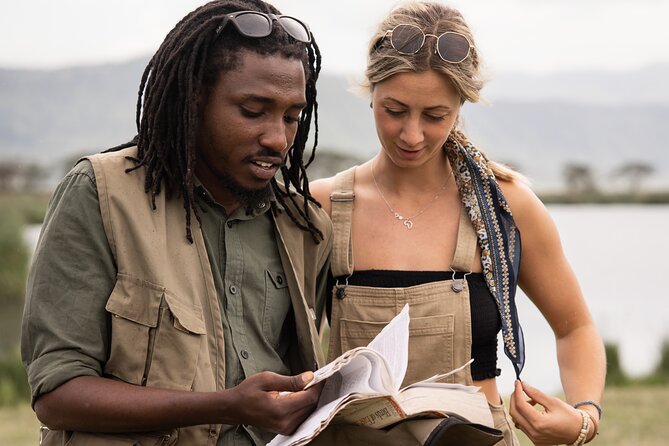
The strongest praise for Safari G.O.A.T.S. centers on personal service. Eddy is repeatedly singled out for his guidance, communication, and effort to make the safari comfortable. One particularly useful expectation is that he works hard to find the Big Five, but you should still treat wildlife sightings as luck assisted by skill, not a promise.
The Serengeti is the point in the trip where the scale may impress you most. Tarangire gives you elephants and baobabs. The Serengeti gives you distance, movement, and the possibility of seeing predator-prey behavior across a much larger setting.
Day 3: A sunrise drive and the climb toward Ngorongoro

The third day starts very early, and that is one of the best choices in the schedule. Animals are often more active in the morning, and the plan includes a sunrise game drive before returning to camp for brunch.
An early departure can be tiring, especially after the previous day’s long drive. Still, this is the time of day when the Serengeti can feel most alive. You may see animals beginning to move, predators finishing a night hunt, or herds spreading across the plains. The exact sightings cannot be promised, but the timing gives you a better chance of catching active behavior than a late start.
After the drive, you return to camp for a substantial brunch, then continue toward Ngorongoro Crater. The change is striking. The Serengeti is famous for its broad open spaces, while Ngorongoro is defined by its enclosed volcanic setting and high crater walls.
The crater covers about 102 square miles, with walls around 2,000 feet high. It is often described as a natural enclosure because so many species live within or pass through the crater. You may find grassland, a river, swamps, and a hippo lake, all in one compact area.
Ngorongoro is also one of the rare places in Tanzania where you might see the endangered black rhino. The word might matters. The tour identifies the chance, not a certainty. Rhino sightings are special precisely because they are not routine.
The day includes another roughly six hours of activity, though the transfer and game viewing make it feel different from a single park day. You should expect the schedule to remain active rather than picturing a leisurely afternoon at camp. This is a good day for keeping your camera ready, but it is also a good day to put the camera down occasionally and watch the setting itself.
More Tarangire safaris:
- Private 6-Day Tarangire Manyara Crater and Serengeti with Mid-Range Lodges
★ 5.0 · 238 reviews - 5 Days Camping Tarangire, Serengeti & Ngorongoro crater & Visiting Maasai
★ 5.0 · 229 reviews - 4 Days Join Group tour Tarangire Serengeti and Ngorongoro crater
★ 5.0 · 219 reviews - 4-Day Safari from Arusha: Tarangire, Serengeti and Ngorongoro
★ 5.0 · 173 reviews
Day 4: Down into the crater, then back to Arusha
The final morning begins early with a descent to the crater floor. This is the trip’s most concentrated wildlife session, since the crater’s enclosed setting can place many species within a relatively compact area.
The morning drive is followed by a picnic lunch near a scenic hippo lake. That location gives the midday break a clear purpose: you eat near one of the crater’s key wildlife features instead of treating lunch as an interruption. Afterward, there is time for a short additional game drive before ascending and leaving the Ngorongoro Conservation Area.
You should not assume the crater is easy simply because it is compact. The early start, descent, game drive, picnic, and return road make for a full morning and afternoon. The final drive to Arusha is expected to bring you back around 5 p.m., although the operator says the timing is flexible if you have a flight or another situation to manage.
That flexibility is useful, but it should not replace careful planning. If you have an important flight, confirm the timing before booking and allow a safety margin. A safari road schedule can change because of animal sightings, park conditions, or delays.
The final day works well as a closing chapter. You begin among crater wildlife and end back in Arusha, with the three major destinations connected in a sensible north Tanzania route.
Meals, camping equipment, and what to clarify
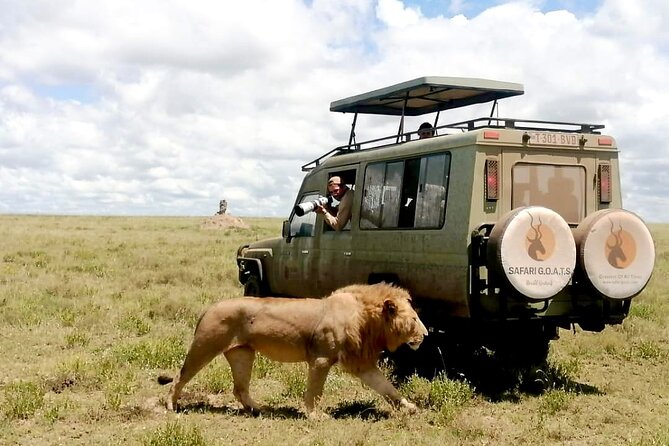
The package includes four breakfasts, four lunches, and three dinners. That covers the basic food needs for the four-day schedule and means you do not have to budget separately for ordinary safari meals.
Camping equipment is also included. The supplied details do not explain the exact camping setup, sleeping arrangements, bedding, shower facilities, or whether accommodation is in public or private camps. Ask for those specifics before paying, especially if comfort at night matters as much to you as wildlife by day.
The same applies to the vehicle. A group of seven is a useful limit, but you should ask how many people will share the vehicle on your departure and what kind of seating is provided. Those details can affect your comfort during the long transfer to the Serengeti and the daily game drives.
Park entrance fees are included, which is a major part of the value. You are not being asked to pay those charges separately at each gate. Visas and tips are not included, so keep both outside the advertised price when setting your total budget.
The tour offers mobile tickets and hotel pickup in Arusha. The pickup detail is especially practical if you are staying in town and do not want to arrange a separate transfer to a meeting point.
What the praise for Safari G.O.A.T.S. tells you
The most consistent positive theme is service from the operator and guide. Eddy is praised for his guidance, responsiveness, and attention to comfort. That suggests a good fit for you if you want help with planning rather than a bare transport-and-park-fee arrangement.
The comments also point to strong pre-trip communication. Safari G.O.A.T.S. handled requests for safari and accommodation needs for one group of four friends, which is useful if you are not booking as a solo participant or a couple.
The repeated emphasis on a once-in-a-lifetime experience should be read with some balance. The parks themselves provide the raw material, but the guide helps determine how well you use your time. Eddy’s effort to locate the Big Five is encouraging, yet no responsible safari operator can control animal behavior.
There are only five ratings attached to this experience, all at the top score. That is a positive signal, but it is still a small sample. I would place more weight on the specific praise for communication and guide care than on the perfect number alone.
Price, pace, and who should book
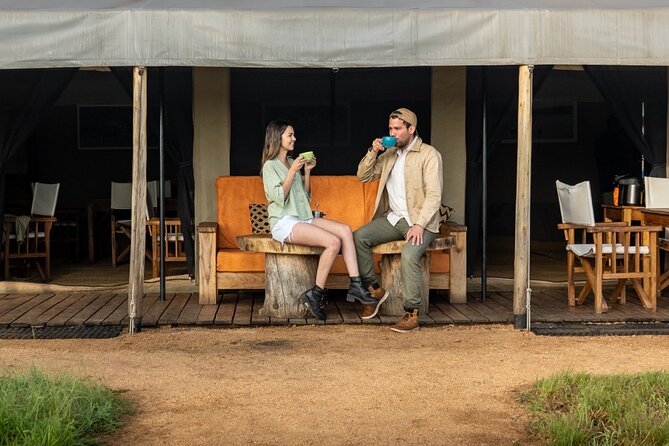
At $1,030 per person, the value is strongest for a first-time visitor with only four days. You receive access to Tarangire, Serengeti, and Ngorongoro, along with park fees, transport from Arusha, camping equipment, and most meals. Booking an equivalent route independently could require separate arrangements for transport, entries, food, and guiding.
The price is less attractive if you want comfort, privacy, or a relaxed schedule. The group can reach seven people, the tour involves long road transfers, and camping details are not fully described. A private or longer safari may suit you better if you want more control over departure times and accommodation.
This trip suits you best if:
- You have limited time in northern Tanzania.
- You want the major parks in one compact route.
- You are comfortable with early starts and long drives.
- You value a small group rather than a large coach.
- You want park fees and basic meals bundled into one price.
- You are happy with camping equipment instead of assuming a high-end lodge stay.
It may not suit you if you need a slow pace, guaranteed private space, or clearly specified luxury accommodation. Four days can deliver a lot, but it cannot give each park the same depth as a longer safari.
Should you book this four-day Tanzania safari?
I would book this tour if your main goal is to see the headline wildlife areas quickly and keep the planning fairly simple. The route is efficient, the group limit is sensible, and the strongest praise points to attentive service from Eddy and Safari G.O.A.T.S.
Before booking, ask three direct questions: what camping accommodation is provided, how many people will be in your vehicle, and how the final-day return can be adjusted around your flight. If those answers suit you, the $1,030 price offers a solid way to reach Tarangire, Serengeti, and Ngorongoro without building the whole safari yourself.
Free cancellation is available if you cancel at least 24 hours before the local start time. Cancellations or changes made later are not accepted for a refund.
FAQ
Where does the safari start?
The safari starts in Arusha, Tanzania, with pickup from your hotel. The listed start time is 7:30 a.m.
How long is the safari?
The experience lasts approximately four days.
Which parks and protected areas are included?
The route includes Tarangire National Park, Serengeti National Park, and the Ngorongoro Conservation Area, including Ngorongoro Crater.
How many people can join the group?
The maximum group size is seven people.
Are park entrance fees included?
Yes. Park fees and entrance charges are included in the tour price.
Which meals are included?
The package includes four breakfasts, four lunches, and three dinners.
Is the return time to Arusha fixed?
The planned return is around 5 p.m. on day four, but the operator says the timing is flexible for a flight or another situation.
Just added in Arusha
- Safari “Kifaru” – 5 days in the most famous Parks in the world★ 5.0 · 4 reviews
- Saadani Day Trip★ 5.0 · 13 reviews
- 3 Days Tanzania Short and Spicy★ 5.0 · 6 reviews
- 5 Day Tanzania Safari Camping Adventure Private Tour★ 5.0 · 2 reviews
- Day Trip to Ngorongoro Crater from Arusha★ 5.0 · 1 review
- SERENGETI NATIONAL PARK Tour★ 4.5 · 5 reviews
- 3 Days Serengeti Park & Ngorongoro Crater Adventure Safari★ 5.0 · 8 reviews
- 6 Days Tanzania Bush Experience Safari★ 5.0 · 6 reviews
Serengeti & Ngorongoro Safaris, compared.
Serengeti Balloon Safari and authentic bush breakfast
Read our review →
Balloon Safari & Bush Breakfast in Serengeti – Miracle Experience
Read our review →
3 Days Serengeti & Ngorongoro Group Camping Safari
Read our review →
5-Day Highlights mid-Range Crater, Serengeti, Tarangire
Read our review →
Private 6-Day Tarangire Manyara Crater and Serengeti with Mid-Range Lodges
Read our review →
5 Days Camping Tarangire, Serengeti & Ngorongoro crater & Visiting Maasai
Read our review →Browse the lists this tour appears in