
Reviewed · COFFEE FARM TOURS
Arusha: Traditional Coffee Preparation(coffee tour)
Coffee tastes better when you make it. This three-hour Arusha experience takes you from a smallholder arabica coffee farm to a cup you prepare by hand. I like the honest farm setting and the full bean-to-cup process, especially pounding the beans, roasting them in a clay pot, and brewing the finished coffee yourself.
I also like the organic single-origin coffee and the relaxed private-garden setting, where the work becomes as social as it is educational. The main consideration is time: three hours gives you a satisfying introduction, but not a long coffee-farming study. If you want a broad agricultural tour, this may feel brief.
In This Review
- What makes this coffee experience worth your morning
- From Arusha road to smallholder coffee farm
- Pounding dried beans with a wooden mortar
- Roasting coffee in a clay pot over charcoal
- Grinding the roasted beans by hand
- Brewing and tasting your own single-origin cup
- Three hours that stay focused
- What the $30 price really includes
- Who will enjoy this most
- Practical advice before you go
- Should you book the Arusha coffee tour?
- FAQ
- How long does the traditional coffee preparation experience last?
- Where does the experience begin and end?
- What coffee preparation steps will I do?
- Is the coffee organic and single-origin?
- What language is the guided experience offered in?
- Can I cancel if my plans change?
What makes this coffee experience worth your morning
- You visit a real smallholder farm: See how arabica coffee is grown by a local family rather than learning only from a tasting counter.
- Every step is manual: Husk, roast, grind, and brew the beans yourself with handmade tools.
- The clay-pot roasting matters: Charcoal heat gives the beans a rustic flavor that differs from a polished café roast.
- The setting stays personal: After the farm walk, the preparation takes place in a private garden.
- You drink what you make: The final cup is organic, single-origin Tanzanian coffee prepared by your own hands.
- Guides add a friendly touch: Johnson and Derik have been praised for being kind, motivated, and attentive.
From Arusha road to smallholder coffee farm
The experience begins with Naturalland Expeditions in the Arusha region. Your guide waits at the main road wearing a gray or chocolate-colored company T-shirt, a useful detail when you are trying to identify the right person.
The meeting arrangement is simple, but you should pay attention to it. Since the guide waits at the main road, have the company name and meeting details ready on your phone. The supplied information does not specify hotel pickup or private transport, so do not assume that a vehicle will collect you from your accommodation.
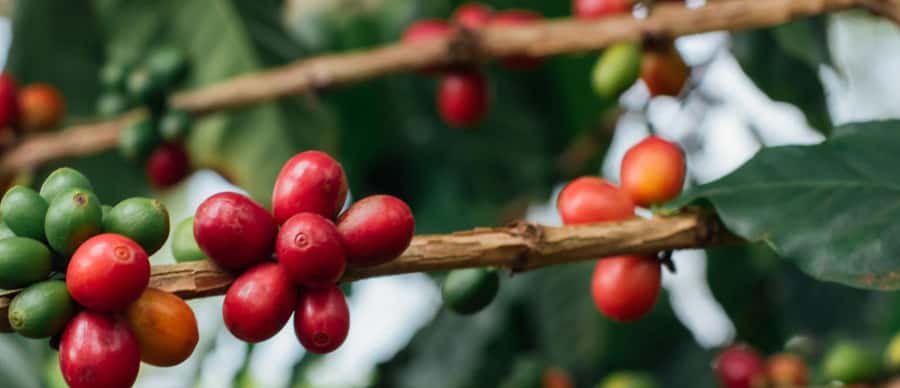
From there, you take a guided walk through a small coffee farm. This first section gives the hands-on work some context. You are not simply handed roasted beans and asked to grind them. You see the agricultural side first, including the cultivation of arabica coffee, one of Tanzania’s important export products.
That connection is valuable. Coffee often reaches your cup after passing through many commercial steps, and it is easy to forget that the process starts with a farm and a crop. Here, you begin close to the source and then follow the beans through their changes.
The farm is smallholder rather than a large commercial estate. That makes the visit feel more local and family-based. One particularly appealing detail is the description of a family-run farm where three generations live together. You should not expect a grand plantation or a museum-style attraction. The appeal is the ordinary working farm and the chance to see coffee production at a human scale.
The walk is described as both a guided tour and a hike. You should be comfortable walking outdoors for part of the three hours, though the information does not give a precise distance or difficulty level. Ask ahead if you need a detailed mobility assessment.
More Coffee Farm Tours in Arusha
- Materuni Waterfalls, coffee tour & Kikuletwa Hot Springs
★ 5.0 · 643 reviews - Materuni waterfalls coffee tour & Chemka hot springs Day trip
★ 5.0 · 131 reviews - Materuni Waterfalls & Coffee Tour from Moshi
★ 5.0 · 92 reviews
Pounding dried beans with a wooden mortar
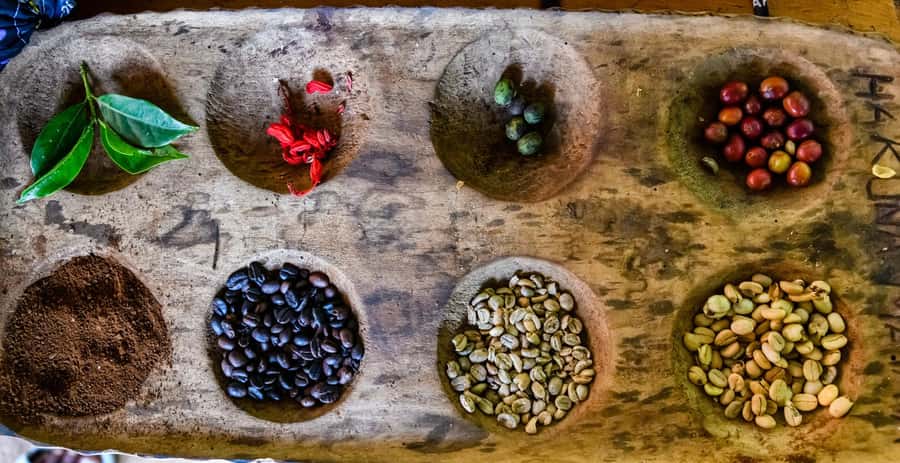
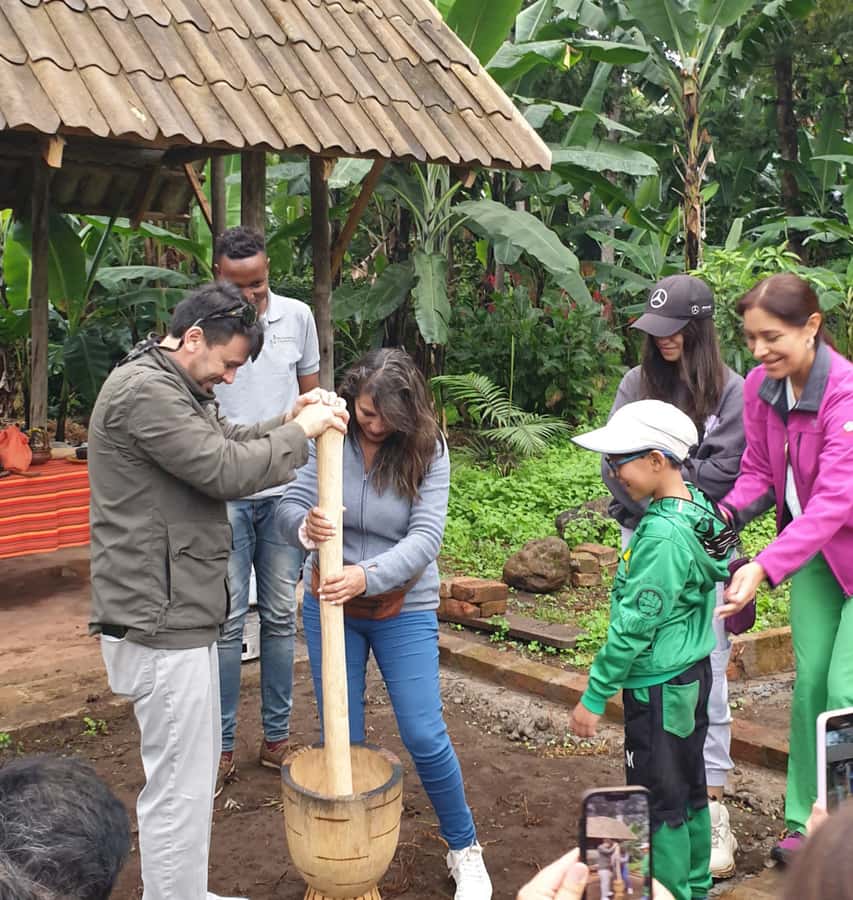
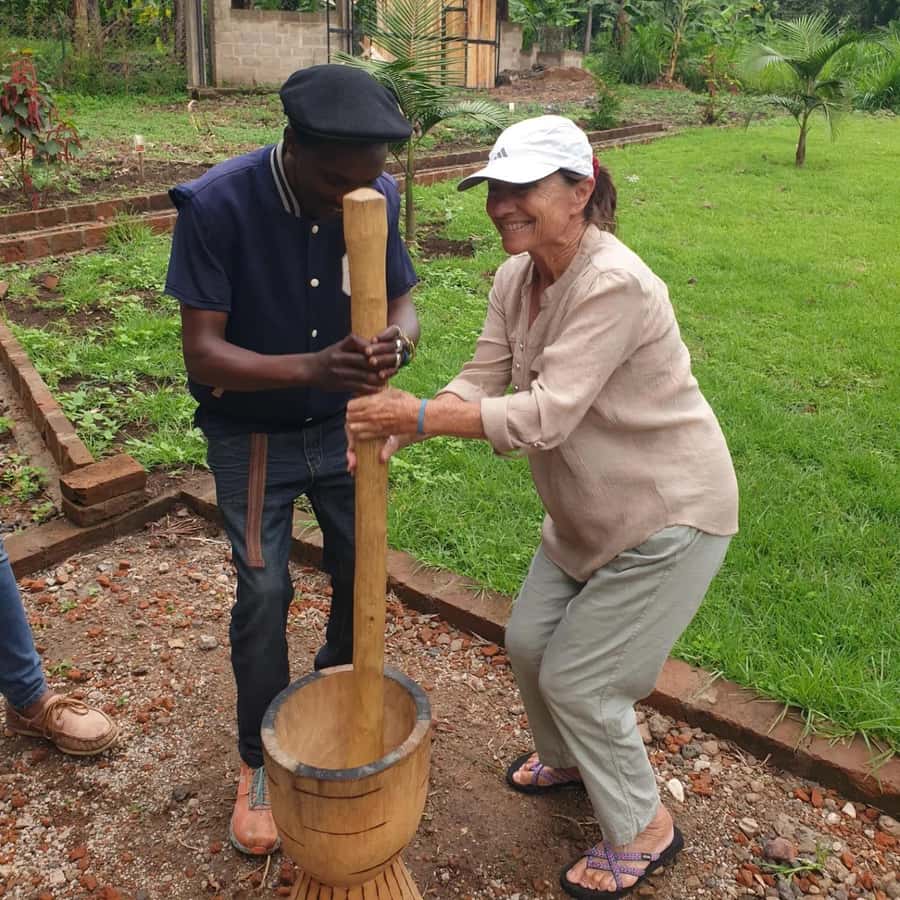
The most unusual part begins after the farm visit, when you move to a private garden for the preparation session. Forget the quick push of a modern grinder. The first job is to remove the outer husk from dried coffee beans by pounding them in a large wooden mortar with a pestle.
This is physical work, but it is also the part that makes the experience memorable. You feel the change in the beans rather than watching a machine do everything in seconds. The wooden mortar and pestle are traditional handmade utensils, so the process has a direct, practical quality.
Your guide gives step-by-step instructions. That matters because the method is unfamiliar to many people, and you will want help with the rhythm and pressure needed to separate the husk. The activity is not just a demonstration. You take part in the work.
I would treat this stage as a shared activity rather than a race. The point is not to produce a perfect batch as quickly as possible. It is to understand the labor behind the drink and see how much effort sits between a dried bean and a morning cup.
The preparation also gives you a better sense of why coffee has traditionally been a social food and drink. The work invites conversation. If you are traveling with family or friends, this is the stage where everyone can take a turn.
Roasting coffee in a clay pot over charcoal
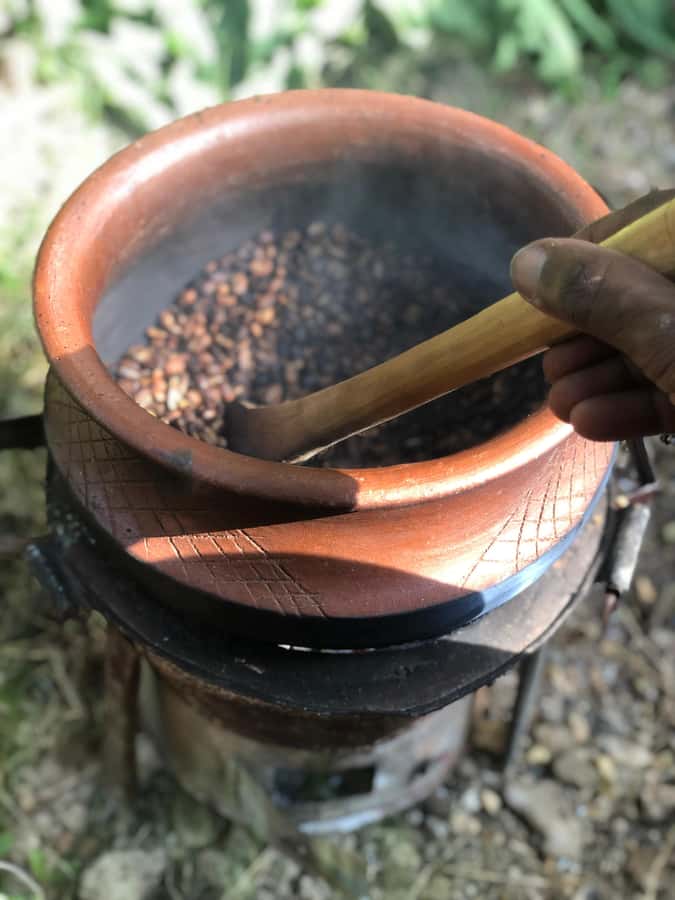
Once the beans are husked, you roast them in a clay pot over a charcoal fire. This is the most distinctive flavor step in the experience. The charcoal and clay pot give the beans a rustic character, different from coffee roasted in a controlled commercial machine.
Your guide leads you through the process, but you should expect some variation from cup to cup. Traditional roasting is not designed to produce identical batches with laboratory precision. Heat, timing, and personal technique all affect the final result.
That is not a flaw. It is part of the reason to book this activity. You are seeing a traditional method rather than a polished imitation of one. The coffee becomes tied to the place, the tools, and the people guiding you.
The roasting stage may also be the most aromatic. The beans change color and release their smell as they heat. The provided details do not state how much of the process you control, but the experience is presented as interactive, with step-by-step participation throughout.
If you prefer very light or very dark coffee, keep in mind that you are not ordering from a menu. You are learning a local preparation method. The finished flavor may be more rustic than what you usually drink at a specialty café.
Grinding the roasted beans by hand
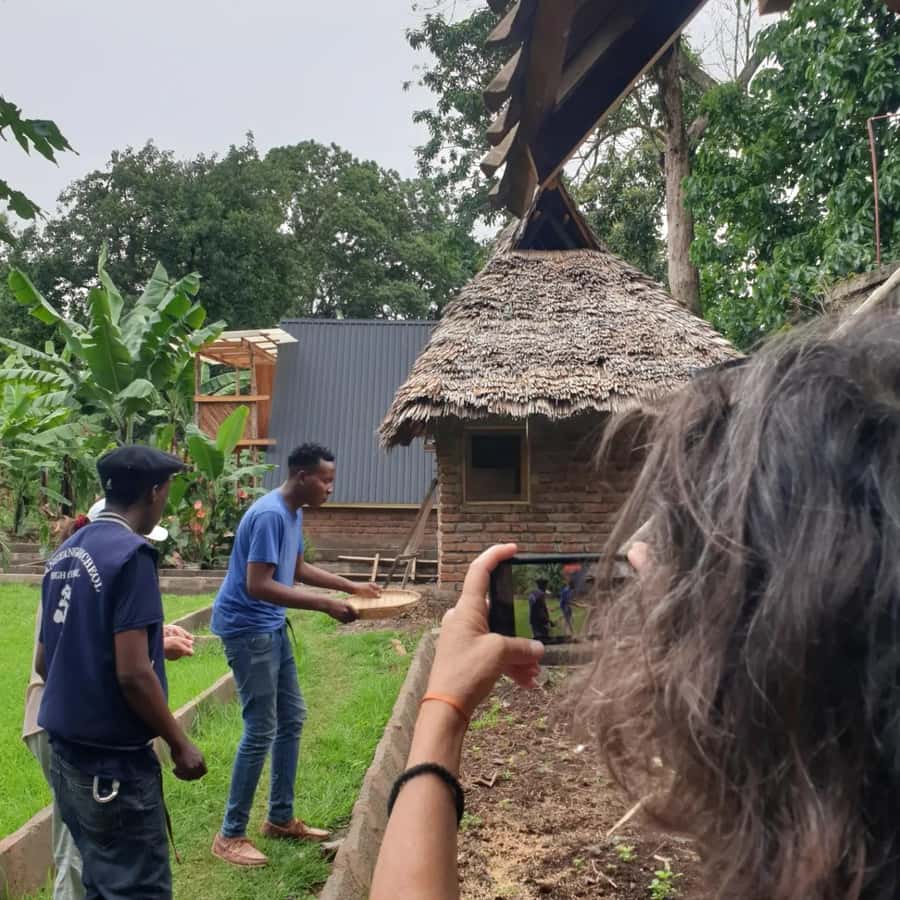
After roasting, the beans return to the mortar. You pound them again until they become a fine powder. This second round gives the coffee process a clear rhythm: husk, roast, pound, brew.
It also shows you why coffee preparation was once a task requiring time and cooperation. Today, grinding is usually the quickest part of making coffee. Here, it becomes a central activity.
The guide’s role is important at this point. A good explanation helps you understand the difference between removing the husk and reducing the roasted beans to powder. English is the stated tour language, and the experience includes a live guide.
Johnson and Derik are names worth noting. They have been described as friendly, motivated, and attentive during the activity. You may not have either guide on your date, but the comments give you a useful sense of the intended tone: personal, encouraging, and involved rather than formal or rushed.
The hand grinding can be tiring, especially if you are not used to using a large pestle. That is worth considering if you want a completely passive tasting. This tour is better suited to someone who enjoys doing the work and getting a little dust on their hands.
A different kind of day out entirely:
- Balloon Safari & Bush Breakfast in Serengeti – Miracle Experience
★ 5.0 · 1,646 reviews - Tanzania Classic – 7 Days
★ 5.0 · 1,151 reviews - 4 Days Group Camping Safari
★ 5.0 · 1,101 reviews - 5 Days Group Camping Safari
★ 5.0 · 730 reviews
Brewing and tasting your own single-origin cup
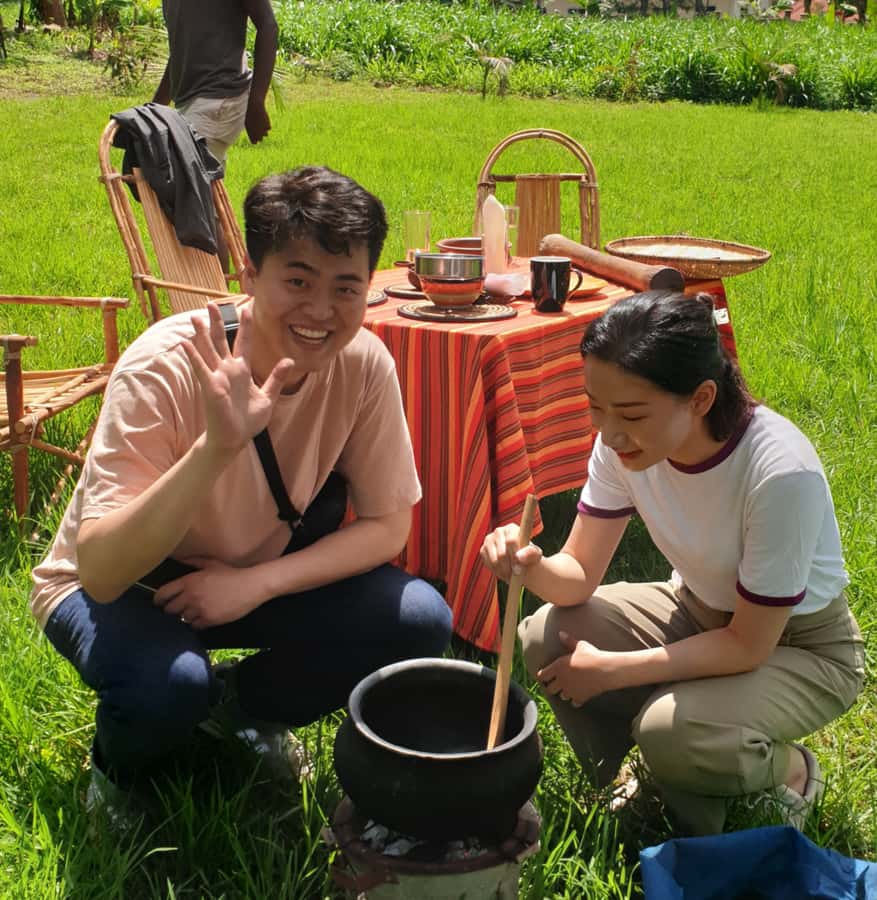
The last stage is brewing. Once the beans have been reduced to a fine powder, you prepare and drink the coffee in the garden.
This is where the earlier work pays off. The final cup is not simply included as a free drink. You have followed its path from cultivated arabica beans to husked, roasted, ground, and brewed coffee. That makes the tasting more meaningful.
The coffee is described as organic and single-origin. In practical terms, that means the cup is connected to one source rather than blended from unrelated origins. The information does not provide a specific farm altitude, roast profile, tasting notes, or brewing recipe, so do not book this expecting a detailed specialty-coffee class.
Instead, expect a traditional preparation and a clear sense of place. The rustic roast and handmade tools are the heart of the tasting. You may find the coffee tastes different from the smooth, standardized cup served in a modern café.
A small sweet addition is also worth noting. One account praised the coconut rolls served with the coffee. They are not listed as a formal inclusion, so I would treat them as a pleasant possibility rather than a guaranteed part of the package.
Three hours that stay focused
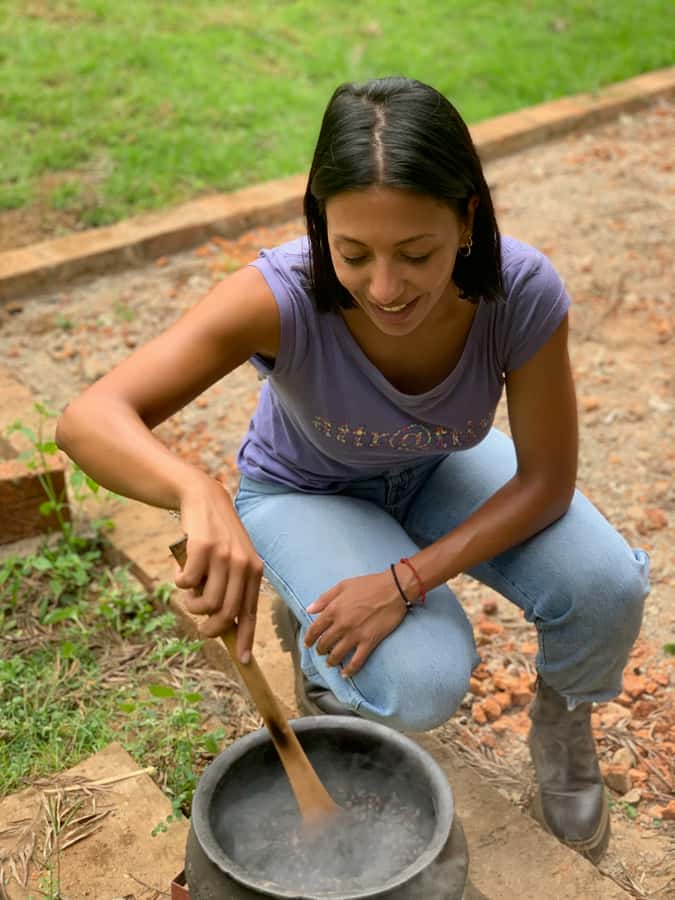
The schedule is compact. You spend about three hours visiting the farm, walking through the area, preparing the beans, tasting the coffee, and returning to Naturalland Expeditions.
That length works well if you have a busy Arusha schedule. It can fit around other plans without taking a full day. You still get more than a quick tasting because the activity covers the complete process from dried bean to finished drink.
The tradeoff is depth. You will not have unlimited time for a long farm study, extended roasting experiments, or a detailed lesson in Tanzanian coffee production. The experience is best understood as a focused introduction.
The supplied comments describe it as short and sweet, which is a fair expectation. You should leave with a practical understanding of traditional preparation, not a professional barista qualification.
The group size is not specified. That matters because the feel of a hands-on activity can change with numbers. A small group should make it easier to take turns with the mortar, ask questions, and spend time with the guide. If group size is important to you, ask Naturalland Expeditions before booking.
What the $30 price really includes
At $30 per person, the value comes from participation rather than volume. You are paying for a guide, a coffee farm visit, drinks, the use of traditional tools, and access to a full preparation session.
A cheaper café tasting might give you a cup of coffee, but it would not give you the farm walk or the manual steps behind the drink. A longer agricultural tour might offer more time in the countryside, but could cost more and provide less direct participation.
I think the price is fair for people who want a local activity with a clear beginning and end. The best value comes when you take part fully. If you only watch the guide work, the cost feels less attractive. If you pound the beans, help roast them, grind the coffee, and brew your cup, the experience earns its price.
The package includes drinks, but the information does not list food as an inclusion. The coconut rolls praised in one account may be available, but you should not count on them as a guaranteed meal or snack. Eat beforehand if you need something substantial.
Who will enjoy this most
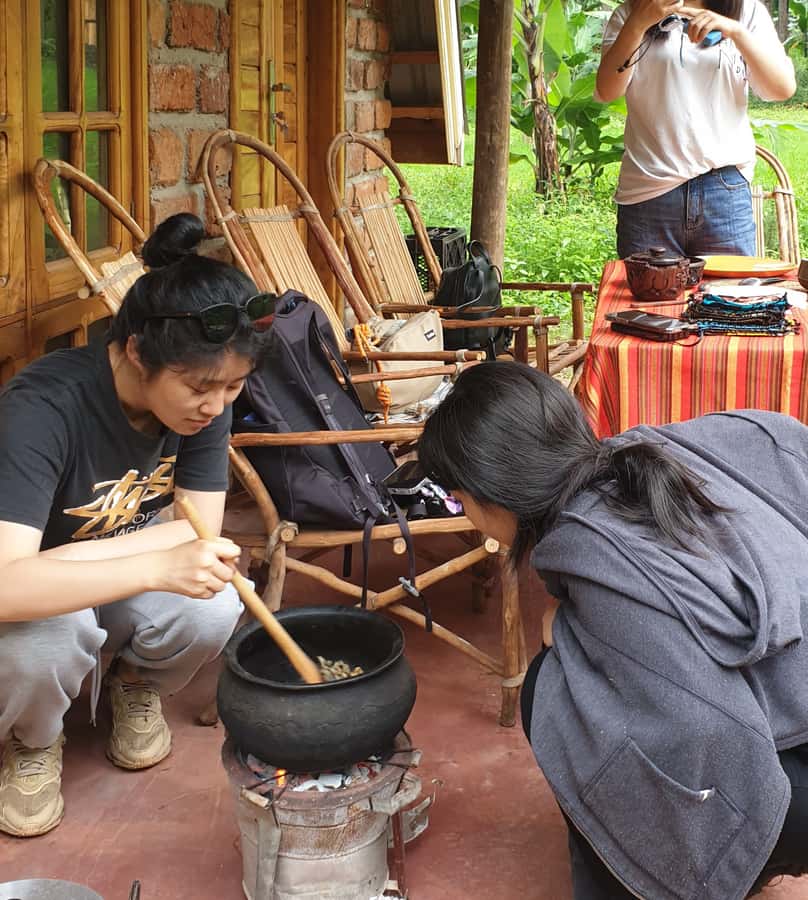
I would recommend this activity to coffee drinkers, curious cooks, families, couples, and anyone who prefers a local experience over a standard city attraction. You do not need advanced coffee knowledge. The guide explains the process as you go.
It is also a good choice if you have already visited Arusha’s major sights and want something slower and more personal. The farm and garden settings offer a change from shops, vehicles, and formal sightseeing.
Families should like the clear physical steps. Children can see that coffee does not begin as a powder in a packet, although adults should judge whether the walking and pounding suit their group.
This may not be the right pick if you want a highly technical coffee course. The available information does not promise lessons in espresso extraction, latte art, cupping scores, brewing ratios, or advanced tasting vocabulary.
It may also disappoint you if you expect a large estate, a long plantation drive, or a full-day rural excursion. This is a smallholder farm visit paired with a three-hour preparation experience.
Practical advice before you go
Wear clothing and shoes suitable for a guided walk and hands-on outdoor work. The experience includes hiking and charcoal roasting, so I would avoid clothing you need to keep spotless.
Keep the meeting point in mind. Your guide waits at the main road in a gray or chocolate company shirt. If you are unsure where to stand, contact the operator before the start time rather than hoping you will recognize the guide.
English is the stated language. The guide fee is included, along with the farm visit and drinks. Starting times vary, so check the available time when reserving.
The cancellation policy is flexible: you can cancel up to 24 hours ahead for a full refund. You can also reserve and pay later, which helps if your Arusha plans are still changing.
The overall rating is 4.8 from 11 reviews, with praise focused on care, organization, the local farm, the enjoyable preparation, and the quality of the coffee. The strongest practical signal is consistency: the experience is repeatedly described as friendly and well run, while the one lower score still called it a worthwhile, short activity.
Should you book the Arusha coffee tour?
Book it if you want to understand coffee by handling it. The smallholder farm, wooden mortar, clay-pot roasting, charcoal fire, and final cup create a clear story in only three hours.
I especially recommend it if you have a free morning or afternoon in Arusha and want something more personal than a simple tasting. Just keep your expectations in line: this is a concise, traditional coffee workshop, not a full agricultural course or professional barista class.
At $30, it offers good value for an authentic farm visit and a drink you prepare yourself. If Johnson or Derik is guiding your session, you may also get the warm, encouraging style that has made this experience so well regarded. For coffee lovers who enjoy a little work before the first sip, this is an easy choice.
FAQ
How long does the traditional coffee preparation experience last?
The experience lasts three hours, including the farm visit, guided walk, coffee preparation, and tasting.
Where does the experience begin and end?
It begins at Naturalland Expeditions in the Arusha region and returns to Naturalland Expeditions at the end.
What coffee preparation steps will I do?
You learn to husk the dried beans, roast them in a clay pot over charcoal, pound the roasted beans into a fine powder, brew the coffee, and enjoy the finished cup.
Is the coffee organic and single-origin?
Yes. The coffee served during the experience is described as organic, single-origin coffee.
What language is the guided experience offered in?
The live guided experience is offered in English.
Can I cancel if my plans change?
Yes. You can cancel up to 24 hours in advance for a full refund. You can also reserve now and pay later.
More Coffee Experiences in Arusha
- Maasai village visit, Materuni waterfalls & coffee experience
★ 4.5 · 95 reviews - Arusha: Materuni Waterfalls, Coffee, and Hotsprings Tour
★ 4.8 · 78 reviews - Coffee tour and Buffet Lunch with Kingstone Asilia (Arusha)
★ 5.0 · 74 reviews - Materuni waterfalls,coffee tour & Kikuletwa(Chemka)Hot Springs
★ 5.0 · 49 reviews
Just added in Arusha
- Safari “Kifaru” – 5 days in the most famous Parks in the world★ 5.0 · 4 reviews
- 5 Day Tanzania Safari Camping Adventure Private Tour★ 5.0 · 2 reviews
- Saadani Day Trip★ 5.0 · 13 reviews
- 3 Days Tanzania Short and Spicy★ 5.0 · 6 reviews
- Day Trip to Ngorongoro Crater from Arusha★ 5.0 · 1 review
- SERENGETI NATIONAL PARK Tour★ 4.5 · 5 reviews
- 3 Days Serengeti Park & Ngorongoro Crater Adventure Safari★ 5.0 · 8 reviews
- 6 Days Tanzania Bush Experience Safari★ 5.0 · 6 reviews
Coffee Farm Tours, compared.
Materuni Waterfalls, coffee tour & Kikuletwa Hot Springs
Read our review →
Materuni waterfalls coffee tour & Chemka hot springs Day trip
Read our review →
Materuni Waterfall, Coffee Tour and Picnic Hot Lunch
Read our review →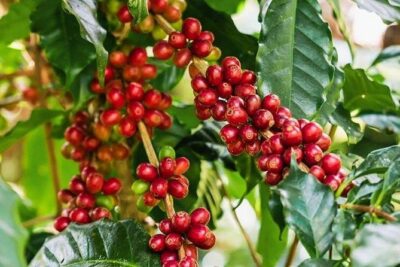
Arusha or Moshi : Hot Spring, Waterfall & Coffee Farm Tour
Read our review →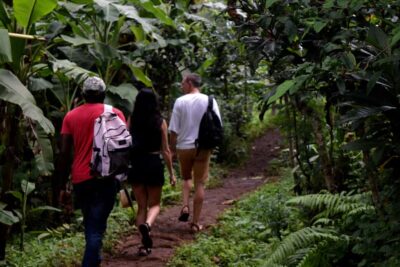
Materuni Waterfalls, Chemka Hot Springs, &/Or Coffee Tour
Read our review →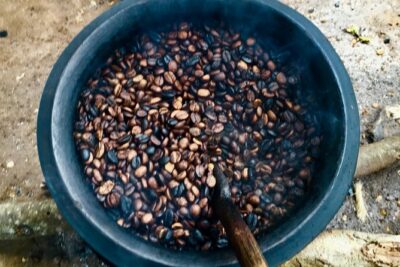
Coffee tour and Buffet Lunch with Kingstone Asilia (Arusha)
Read our review →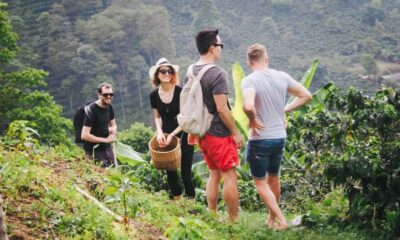
Kilimanjaro: Village Walk, Coffee Tour, Waterfall, and Lunch
Read our review →Browse the lists this tour appears in