

Reviewed · SPICE FARM TOURS
Spice Tour by the door tours
Smell the island before you see it. This four-hour Zanzibar spice tour takes you onto an organic farm where clove, cinnamon, nutmeg, and vanilla grow among tropical fruits and herbs. I like the hands-on format, and I like that the guide explains not only what each plant is, but also how its bark, roots, leaves, or fruit can be used.
I also appreciate the private setup, air-conditioned transport, bottled water, and pickup option. The main drawback is the strict non-refundable policy: if you cancel for any reason, you lose the amount paid. Poor weather or too few bookings can cancel the tour, but in those cases you are offered another date or a full refund.
In This Review
- Key points at a glance
- Why Zanzibar’s spice farms matter
- Beginning at 2:00 pm with a private pickup
- Walking through the shamba
- Clove, cinnamon, nutmeg, and turmeric up close
- Tropical fruit changes the pace
- The tree-climbing demonstration
- A private tour with room for questions
- Is $71.80 good value?
- Who will enjoy this most?
- Practical advice before you book
- Should you book the Zanzibar Spice Tour?
- FAQ
- Where does the Spice Tour take place?
- How long does the tour last?
- What time does the tour start?
- Is pickup available?
- Is this a private tour?
- What is included in the price?
- What plants and foods can you see or taste?
- Are meals included?
- Can the tour be canceled because of weather?
Key points at a glance
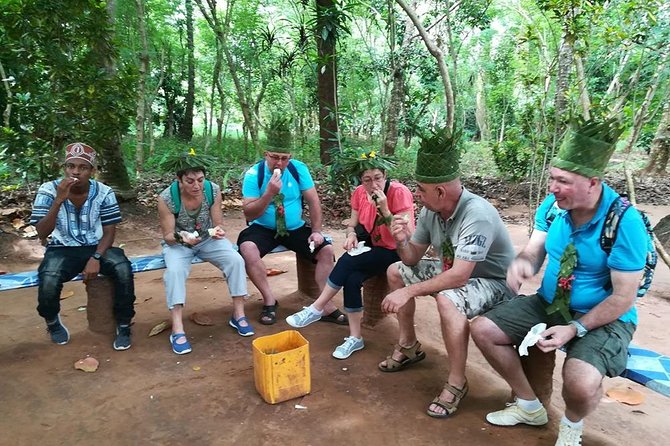
- A working farm, not just a spice display: You walk through a shamba and see crops growing in the ground, on bushes, in trees, and beneath the soil.
- Your senses do the work: You smell, touch, and taste clove, lemongrass, turmeric, vanilla, black pepper, tropical fruit, and more.
- Tree-climbing adds a bit of theater: The guide’s assistant climbs trees to cut fresh samples, giving the tour a memorable visual moment.
- A strong private-tour format: Only your group takes part, so the pace and questions can stay focused on your interests.
- Four hours and 20 minutes is a useful half-day: A 2:00 pm start leaves the morning open for Stone Town, the beach, or a slower breakfast.
- The price reflects more than farm entry: At $71.80 per person, you are paying for transport, guiding, admission costs, and a private experience.
Why Zanzibar’s spice farms matter

Zanzibar earned its nickname, the Spice Island, for good reason. Clove, nutmeg, cinnamon, and other crops became central to the island’s trade, and the farm visit gives you a simple way to understand that story through living plants.
Spices were introduced to Zanzibar by Portuguese traders in the 16th century. They came from Portuguese colonies in South America and India, so the crops in this tour connect Zanzibar to a much wider trading network.
You do not need a long history lecture to appreciate the setting. It is enough to see cinnamon as bark, turmeric as a root, vanilla as a pod, and clove as the dried flower bud that most people know only from a spice jar.
That practical connection is the real value. You leave with a better sense of how food grows, how spices are processed, and why Zanzibar became so important to the spice trade.
More Spice Farm Tours in Zanzibar:
- Zanzibar: Stone Town, Spice Tour, Prison Island with Lunch
★ 4.4 · 1,219 reviews - Zanzibar: Prison Island, Stone Town, & Spice Farm Tour
★ 4.5 · 579 reviews - Zanzibar: Stone Town, Spice tour & Prison Island with Lunch
★ 4.6 · 453 reviews
Beginning at 2:00 pm with a private pickup
The tour starts at 2:00 pm and lasts about four hours and 20 minutes. Pickup is offered, and the vehicle is air-conditioned, a useful feature in Zanzibar’s heat after time spent walking outdoors.
Because this is a private activity, only your group participates. That changes the feel of the outing. You can ask about a plant that interests you, spend more time tasting fruit, or move on when you have seen enough without waiting for a large group.
The timing works well as a half-day plan. You can use the morning for another activity, then meet the vehicle in the afternoon. The exact pickup point should be confirmed when you book, since the available information gives a start time and pickup option but does not list every collection location.
Bottled water is included. Breakfast and dinner are not, so plan to eat separately. This is worth noting because the experience covers the afternoon rather than a full day.
Walking through the shamba

The main part of the experience is a walking tour through an organic farm, known locally as a shamba. You see crops where they grow instead of meeting them only as dried spices in small containers.
The guide explains how the plants are cultivated and what parts are useful. You might see bark, roots, leaves, pods, fruit, or seeds used in cooking, medicine, or household products. The information provided does not promise a fixed farm route, so the exact plants and order can vary, but the tour is built around a broad mix of crops.
Wear practical shoes. The experience is a walking tour on a farm, not a vehicle-only sightseeing trip. You may move between different plants and spend time standing outdoors while the guide demonstrates each one.
The farm setting also gives you a better view of scale. A tiny piece of cinnamon bark in a market looks very different from a tree that produces it. A vanilla pod feels less mysterious once you understand that it grows on a plant rather than appearing as a ready-made flavoring.
Clove, cinnamon, nutmeg, and turmeric up close

The classic Zanzibar spices form the heart of the visit. Clove is especially important to the island’s identity, and seeing the plant helps explain why the spice has such a strong smell and flavor.
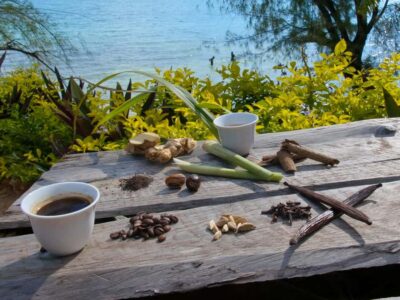
Cinnamon offers another useful lesson because the spice comes from bark. You can connect the rolled sticks sold in shops with the living tree in front of you. Nutmeg gives you a chance to learn about a spice that comes from a fruit seed, while turmeric shows how a bright yellow powder begins as a root.
The guide also covers lemongrass, vanilla, chili, black pepper, cardamom, and other herbs. Each plant gives you a different sensory clue. Some are sharp, some sweet, some earthy, and some familiar only after they are dried or cooked.
I like this part because it replaces passive sightseeing with small discoveries. You are not simply told that Zanzibar grows spices. You are asked to smell and handle them, which makes the information easier to remember.
A few more options to weigh up in Zanzibar
- From Zanzibar: Mikumi Safari Day Trip with Flights and Meal
★ 4.7 · 1,470 reviews - Zanzibar: Quad Bike Adventure departing from Kendwa or Nungwi
★ 4.9 · 1,233 reviews - From Zanzibar: Day Selous Game Reserve Safari with Flights
★ 4.7 · 1,025 reviews - Zanzibar: Prison Island and Nakupenda Boat Trip with Lunch
★ 4.1 · 882 reviews
Tropical fruit changes the pace
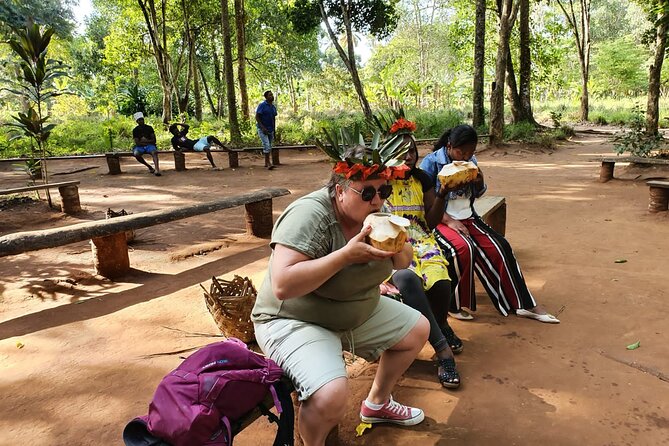
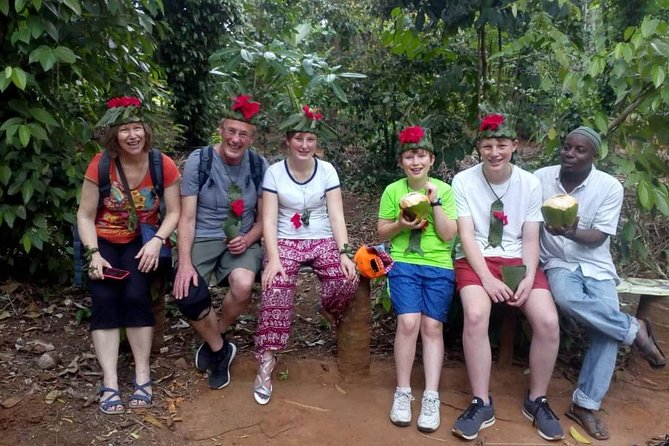
The tour is not limited to spice plants. Depending on what is ready on the farm, you may see or taste papaya, coconut, jackfruit, cassava, and oranges.
These crops help broaden the experience. Zanzibar’s farms are not spice cabinets arranged in rows. They are places where food plants, fruit trees, herbs, and useful roots share the same growing environment.
Coconut is especially engaging because so many parts of the plant can be used, though the supplied details do not specify every demonstration. Papaya and oranges add familiar fruit to the tasting, while jackfruit gives you something more unusual in size and texture.
Cassava is another useful inclusion. It reminds you that the farm produces more than flavorings for export or tourist souvenirs. Some plants are everyday food crops, and the guide can explain how they are cultivated and used.
Tasting is a highlight, but the exact selection depends on what the farm has available. Do not expect every listed fruit to be served in the same way on every date.
The tree-climbing demonstration
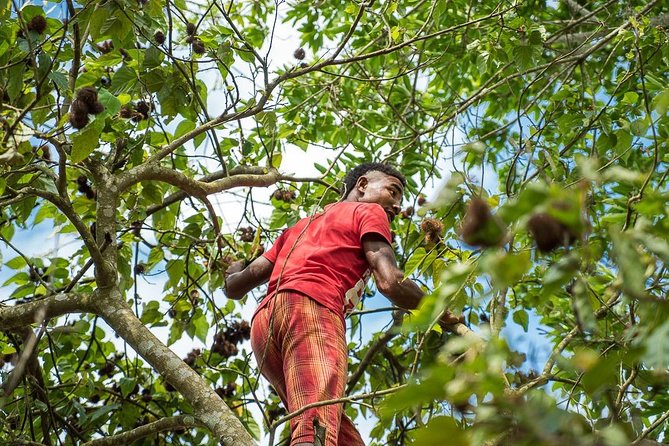
One detail makes this tour more memorable than a standard farm walk: the guide’s assistant climbs trees to cut fresh samples.
That moment gives the visit a little energy. Instead of receiving a prepared tray, you may watch the sample being collected from the plant itself. It also shows that the farm is a working place, where reaching the crop can be part of the job.
The available account praises the guide’s command of the plants, trees, bushes, bark, and roots. That is important here because a spice farm can be confusing without clear explanations. The value comes from connecting each smell or taste to its source.
The assistant’s tree climbing may not be repeated for every single plant, and the tour details do not promise a particular demonstration at a particular time. Still, it is one of the distinctive features to look forward to.
A private tour with room for questions
A private tour suits you if you want a more personal explanation of the farm. Only your group participates, so the guide does not have to address a crowd with one broad speech.
You can ask practical questions such as how a spice is harvested, which part of the plant is used, or how a fresh crop differs from the dried product. If you are interested in cooking, farming, or local trade, the private format gives you room to follow those subjects.
It can also work well for families or small groups with different interests. One person may care about fruit, another about spices, and another about photography. The guide can respond to those interests more easily than on a large scheduled outing.
There is one tradeoff. Private tours often cost more per person than shared departures. At $71.80 per person, this is not the cheapest way to spend an afternoon, especially for a solo visitor. The price makes more sense if your group values dedicated transport and a guide focused only on you.
Is $71.80 good value?

The listed price is $71.80 per person. That includes bottled water, an air-conditioned vehicle, all fees and taxes, and the private tour format.
I would judge the value by what you want from a Zanzibar excursion. If you only want to walk through a farm briefly, the price may feel high. If you want transportation, a dedicated guide, explanations of many plants, tastings, and a half-day outing without sharing the group, the package is easier to justify.
The tour also saves you from arranging farm transport separately. In a hot climate, an air-conditioned vehicle matters, especially before and after the outdoor walk.
No breakfast or dinner is included, and scuba equipment has no role in this experience. Those exclusions are not surprising, but they make clear that this is a focused farm visit rather than a full-day package with meals or water activities.
For a couple or small private group, I see the price as reasonable if personal attention matters. For a solo visitor on a tight budget, compare it with shared tours before booking.
Who will enjoy this most?
I recommend this experience to you if you like learning through food and plants. It is a good match for anyone curious about where familiar flavors come from, especially clove, cinnamon, vanilla, turmeric, and black pepper.
It also suits photographers and families because the farm offers varied subjects: tall trees, roots, bark, fruit, colorful spices, and the tree-climbing demonstration. You do not need specialist farming knowledge to enjoy it.
The walking format matters. If you prefer a fully seated sightseeing trip, this may not be the right choice. You will be outside on a farm, moving between plants and tasting samples.
The private arrangement is useful for couples, families, and small groups who want to ask questions freely. The four-hour schedule also works for people who want a substantial afternoon activity without giving up the entire day.
Practical advice before you book
Wear comfortable shoes and clothing suitable for warm outdoor conditions. The tour includes walking, standing, touching plants, and tasting food, so dress for a farm rather than a formal city outing.
Bring your curiosity. The best part is not simply seeing a row of spices. It is asking how a plant grows, which part is used, and how it becomes something you recognize in a kitchen.
Confirm your pickup details and the 2:00 pm start before the day of the tour. Your booking confirmation is received at the time of reservation, and the tour is offered as a private activity.
The cancellation rule deserves careful attention. This experience is non-refundable and cannot be changed for any reason. If you cancel or request an amendment, the payment is not returned.
Weather and minimum group size are exceptions. If poor weather cancels the tour, you are offered another date or a full refund. If the minimum number of participants is not reached, you are offered another date or experience, or a full refund.
Should you book the Zanzibar Spice Tour?
Book it if you want a hands-on look at Zanzibar’s farming traditions, prefer a private guide, and value transport included in the price. The strongest parts are the wide mix of crops, the tasting and smelling, and the chance to see samples collected from trees rather than only displayed on a table.
I would skip it if you want a low-cost, highly flexible outing or if a strict non-refundable policy makes you uneasy. I would also think twice if walking on a farm in the afternoon does not appeal to you.
For the right audience, this is a thoughtful half-day introduction to the Spice Island. You will leave with more than a bag of souvenirs. You will understand how clove, cinnamon, nutmeg, turmeric, vanilla, fruit, and roots begin as living plants.
FAQ
Where does the Spice Tour take place?
The tour takes place in Zanzibar City, Tanzania, at an organic spice farm, also called a shamba.
How long does the tour last?
The experience lasts approximately four hours and 20 minutes.
What time does the tour start?
The stated start time is 2:00 pm.
Is pickup available?
Yes. Pickup is offered, and the tour includes an air-conditioned vehicle.
Is this a private tour?
Yes. Only your group participates in the activity.
What is included in the price?
The price includes bottled water, an air-conditioned vehicle, and all fees and taxes.
What plants and foods can you see or taste?
The tour can include clove, lemongrass, nutmeg, cinnamon, turmeric, vanilla, coconut, papaya, chili, black pepper, jackfruit, cardamom, cassava, and oranges.
Are meals included?
No. Breakfast and dinner are not included.
Can the tour be canceled because of weather?
Yes. If poor weather causes cancellation, you are offered a different date or a full refund. The tour can also be canceled if its minimum number of participants is not met, with a different date, another experience, or a full refund offered.
Just added in Zanzibar
- Zanzibar:Ngoma local culture workshop,The Knowledge of Ngoma★ 5.0 · 1 review
- ZANZIBAR:Mnemba island, Spice farm and Jozani Forest★ 5.0 · 1 review
- Zanzibar: Zipline Adventure At Masingini Forest★ 4.6 · 2 reviews
- Zanzibar Walking Tour: Unveiling the Secrets of Stonetown★ 4.8 · 11 reviews
- Zanzibar: Walking Tour★ 4.0 · 1 review
- Zanzibar: Walking Spice Farm with Local Cooking Class★ 4.4 · 9 reviews
- Zanzibar: Uzi Island Mangrove Kayak Tour with Guide★ 5.0 · 1 review
- Zanzibar: Unique Guided Mangrove Tour by SUP or Kayak★ 5.0 · 1 review
Spice Farm Tours, compared.

Stone Town, Spice Tour, Prison Island with Lunch
Read our review →

Stone Town, Spice tour & Prison Island with Lunch
Read our review →
Full-Day Private Stone Town +Spice Farm and Prison Island Tour
Read our review →

The Swahili Spice Experience – Spice Tour + Culinary Journey
Read our review →Browse the lists this tour appears in