Reviewed · ARUSHA TOURS
3-Days climb Mountain Meru
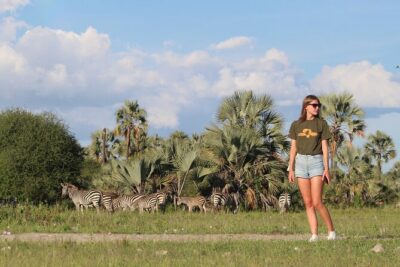
Africa begins below the summit. This three-day Mount Meru climb pairs a serious high-altitude hike with a safari-like first day in Arusha National Park. I like the chance to see giraffes, zebras, buffalo, antelope, and possibly elephants before the trail turns sharply upward. I also like that trained guides, porters, a cook, and an armed park ranger support the climb.
The main caution is the schedule. You reach the top after a midnight start, then continue down the mountain on the same day. Hut-only sleeping also means this is not the trip for anyone expecting a private tent or a soft mountain lodge.
- Wildlife starts on day one: The route can feel like a walking safari before it becomes a mountain climb.
- A ranger joins the group: An armed park ranger accompanies the party toward Saddle Hut Camp because of the wildlife and park safety rules.
- The summit reaches 4,562 meters: The route passes Rhino Point and Cobra Point before the final push to Meru Peak.
- Little Meru offers extra acclimatization: You can add the 3,820-meter side hike with your guide before dinner.
- All nights are in huts: Mount Meru does not offer the tented route options found on many Kilimanjaro climbs.
- The price covers the working team: At $900 per person, the package includes park fees, food, guide services, porters, and a cook.
In This Review
- Why Mount Meru is worth three demanding days
- Day one: wildlife, waterfalls, and the first hut
- Day two: the saddle and Little Meru at 3,820 meters
- Day three: Rhino Point, Cobra Point, and Meru Peak
- A professional crew and a required ranger
- Is $900 a fair price?
- Who should choose this climb?
- Booking, cancellation, and practical planning
- Should you book the Mount Meru climb?
- FAQ
- How long is the Mount Meru climb?
- What is the highest point of the climb?
- Where do you sleep on Mount Meru?
- Is an armed ranger included?
- What meals are included?
- Can you cancel for a full refund?
Why Mount Meru is worth three demanding days
Mount Meru is often treated as a warm-up for Kilimanjaro, but that undersells it. This is a serious mountain with a high summit, steep sections, a midnight climb, and a narrow ridge near the crater rim. The reward is a more varied outing than a simple uphill march.
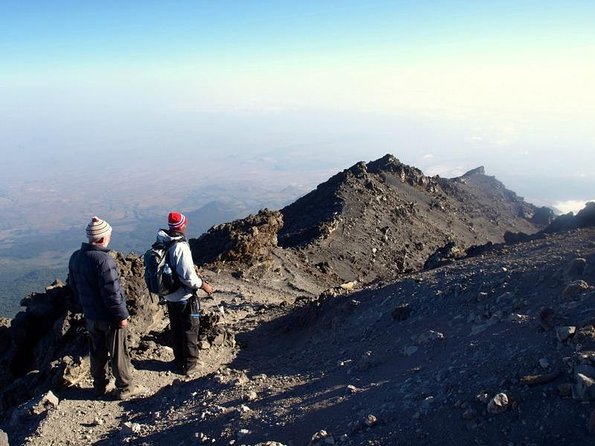
You begin in Arusha National Park, where the lower trail can bring you close to large animals. Later, the setting changes to volcanic slopes, crater views, ash, rock, and high ridges. On a clear morning, Kilimanjaro appears across the clouds.
I like this mix of environments. You are not spending three days looking at the same kind of trail. The route gives you a strong sense of how the mountain changes as you gain height.
The private format is another plus. Only your group participates, so the pace and small decisions can be handled around your needs. That matters on a mountain where some people want to push on, while others need short, regular breaks.
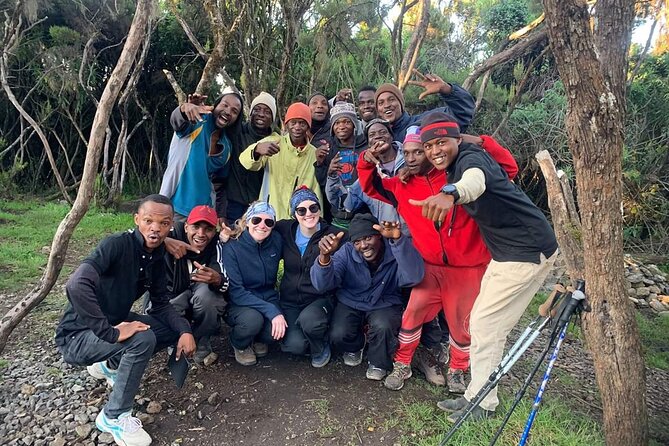
The available feedback also points to a practical strength: Issa and the Destiny Explorers team are praised for climbing experience and for adjusting the hike to suit the group. One climber over 50 described the climb as a long-held goal that also caused some worry, then singled out the choice to book with Issa as a good one. That is useful context if you are fit but not a young speed hiker.
Day one: wildlife, waterfalls, and the first hut
The day begins with an early hotel pickup in Arusha and a transfer to Momella Gate. The stated start time is 7:00 a.m., but you should confirm the precise pickup hour with the operator, since the description also calls for an early morning departure.
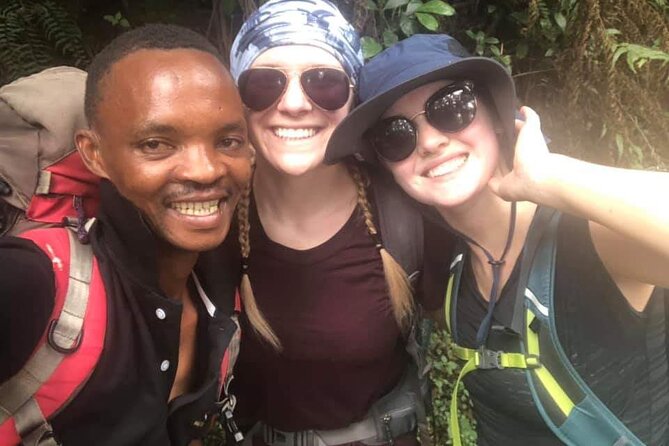
At the gate, your guide handles registration with Tanzania National Parks while the porters organize and pack the equipment. This is a useful division of labor. You can focus on water, clothing, and personal gear instead of trying to manage the full load before walking.
The opening hike is the most unusual part of the trip. Rather than heading straight into a silent mountain forest, you may see giraffes, zebras, antelope, buffalo, and possibly elephants near the trail. An armed ranger is required because of the wildlife, and the ranger stays with the group as you proceed toward the upper camp.
That changes the feeling of the day. You need to pay attention to the guide and ranger instead of wandering off for a photo. Keep your group together, follow instructions, and treat animal sightings as part of a national park visit, not a personal encounter arranged for a close-up picture.
The route crosses the Ngarenanyuki River and passes a waterfall. These details give the first day some variety before the higher, steeper work begins. The full day is listed at about seven hours, so you should expect a substantial walk even though the most difficult altitude work comes later.
Your overnight accommodation is a mountain hut. The information provided does not specify the hut layout or sleeping arrangements, so ask the operator what bedding you need to bring. The important point is clear: Mount Meru uses huts only. If you have climbed Kilimanjaro on a camping route, do not assume the same sleeping setup applies here.
A few more options to weigh up in Arusha
- Balloon Safari & Bush Breakfast in Serengeti – Miracle Experience
★ 5.0 · 1,646 reviews - Tanzania Classic – 7 Days
★ 5.0 · 1,151 reviews - 4 Days Group Camping Safari
★ 5.0 · 1,101 reviews
Day two: the saddle and Little Meru at 3,820 meters
After breakfast, the trail rises along the ridge of the saddle. The day covers about five kilometers and takes roughly three to four hours of hiking, with an overall listed duration of six hours. The elevation changes from about 2,500 meters to 3,550 meters.
The distance looks modest on paper, but the gain in height is what makes the day count. Short mileage does not mean an easy outing. Walk slowly, keep drinking, and tell your guide early if you develop a headache, unusual tiredness, or other symptoms connected with altitude.
The route gives you views into Meru Crater and toward the Ash Cone. You may also see more wildlife along the way. The combination of crater walls, volcanic rock, and open views makes this a rewarding day even before the summit attempt begins.
At camp, you have the option of hiking Little Meru with your guide. The peak reaches 3,820 meters and works as an extra acclimatization outing. I like this option for fit hikers who still have energy, but it should remain optional. If you are already struggling with the main ascent, rest is the smarter choice.
Dinner is served early. That is not an ordinary sightseeing schedule, but it serves a clear purpose. You need to eat, organize your clothing and headlamp, and sleep before waking around midnight for the summit climb.
This is also the point where hut life matters most. A hut is practical, but it does not remove the physical demands of the climb. Pack with the expectation that you will need to rest in a basic mountain shelter and then get up again only a few hours later.
Day three: Rhino Point, Cobra Point, and Meru Peak
Summit day starts at about midnight. The first section is a steep one-hour climb to Rhino Point at 3,800 meters. From there, the trail follows a ridge of ash and rock toward Cobra Point at 4,350 meters.
Cobra Point is an important marker because the route remains serious even after you have gained much of the height. The final climb to Meru Peak takes about another hour on a steep path. The summit reaches 4,562 meters, so you should expect cold, darkness, thin air, and a demanding pace.
Sunrise may come at Cobra Point or at the summit, depending on how quickly your group moves. That flexibility is sensible. A guide should place safety and group condition ahead of forcing everyone to reach one exact viewpoint at one exact minute.
The views are the reason to keep going. From the ridge and summit area, you can see the cliffs of the crater rim, the Ash Cone rising from the crater floor, the Rift Valley, and Kilimanjaro above the morning clouds. The view toward Kilimanjaro is especially memorable because Meru gives you a dramatic volcanic setting from which to see its famous neighbor.
The ridge back to Rhino Point is one of the route’s most striking sections. You walk between the sloping outer wall of the crater and the cliffs of the inner wall. In morning light, the ash and rock should look very different from the same trail during the night.
The listed day takes about eight hours. That figure includes the summit effort and the return portion described, so you need enough energy for the descent. Reaching the top is only half of the day’s work. Keep snacks and water accessible, and resist the temptation to spend too long taking pictures if the guide is ready to move.
The available details do not spell out every final section after the return toward Rhino Point, so confirm the exact descent endpoint and transfer plan before departure.
A professional crew and a required ranger
The operator places strong emphasis on its mountain crew, and that is appropriate. Guides hold Wilderness First Responder or Wilderness First Aid certifications, giving the team formal training for emergencies in a remote setting.
That does not make the mountain risk-free. It does mean you have support from people who are expected to recognize problems and respond appropriately. Be honest about your condition. A guide cannot help with an issue you hide.
The crew includes a guide, cook, and porters. Meals provided are three lunches, two dinners, and two breakfasts. Since the summit starts around midnight, ask how the food plan handles the hours before departure and whether you should carry extra personal snacks.
The armed ranger is not a decorative addition. Wildlife can be present on the lower route, and the ranger accompanies the group toward Saddle Hut Camp. Follow the ranger’s instructions, stay with the party, and do not treat animal sightings as a reason to approach or separate from the group.
Tips for the crew are not included. Set aside cash for gratuities and ask the operator about its preferred tipping practice before the climb. Personal expenses are also outside the price.
A different kind of day out entirely:
- 5 Days Group Camping Safari
★ 5.0 · 730 reviews - Materuni Waterfalls, coffee tour & Kikuletwa Hot Springs
★ 5.0 · 643 reviews - 3 Days Serengeti & Ngorongoro Group Camping Safari
★ 5.0 · 574 reviews - 7-Day Premium Luxury Tanzania Safari All-Inclusive
★ 5.0 · 426 reviews
Is $900 a fair price?
At $900 per person, this is not a bargain day hike. It is a three-day private mountain service with park fees, food, a cook, porters, a guide, and ranger support built into the arrangement.
That package makes the price easier to understand. You are paying for more than access to a trail. You are paying for logistics at the gate, a working mountain crew, meals, hut-based nights, and support during a summit attempt that takes place in darkness.
The private format adds value if you want the group to remain focused on your pace. It may be less important if you are mainly searching for the lowest possible price and do not need a private arrangement.
The package has clear extra costs. Crew tips and personal expenses are excluded. You should also clarify any equipment requirements and the exact hut arrangements, since those details are not specified here.
For someone who wants a guided, supported climb and values wildlife on the lower trail, $900 is a reasonable package to consider. For a person who already owns all equipment, prefers to travel very independently, and wants the cheapest route, the value may feel less convincing.
Who should choose this climb?
This experience suits you if you have a moderate level of physical fitness and can handle long, steep hiking days. The operator does not present this as a casual nature walk. Day two gains more than 1,000 meters, and day three combines a midnight start with the summit and descent.
It is also a good fit if you want a private outing rather than a mixed group. The team can customize the hike around your requirements, according to the supplied information, though you should discuss your pace and goals before booking.
I would be careful about booking if you dislike hut accommodation, struggle with sleep before an early start, or want a relaxed schedule. The midnight summit attempt leaves little room for a normal night’s rest.
Age alone should not decide the issue. The useful question is how you manage steep walking, altitude, and a full summit day. The example of a climber over 50 completing the route with Issa shows that older age does not automatically rule it out, but you still need a realistic fitness assessment.
The tour is also a strong choice if you are considering Kilimanjaro later. It can give you experience with altitude, mountain routines, a high summit effort, and the rhythm of guided climbing. Still, you should not treat Mount Meru as an effortless practice walk.
Booking, cancellation, and practical planning
Confirmation is provided when you book, and mobile tickets are accepted. Pickup is offered from Arusha, with the meeting time listed as 7:00 a.m. Confirm the hotel pickup details in advance so your first morning is not spent guessing where to wait.
Free cancellation applies when you cancel at least 24 hours before the local start time. A cancellation within 24 hours is not refunded, and late changes are not accepted. That policy is worth noting because mountain plans can depend on your wider Tanzania schedule.
Before you pay, ask Destiny Explorers to confirm four practical points:
- The exact hotel pickup time
- What the huts provide and what you need to carry
- The food plan for the midnight summit start
- The final descent and transfer arrangements on day three
These questions do not change the appeal of the route. They simply remove the small uncertainties that matter on a short, demanding climb.
Should you book the Mount Meru climb?
Book this experience if you want a private, well-supported ascent with wildlife on day one, crater views on day two, and a serious summit morning at 4,562 meters. The trained crew, cook, porters, and armed ranger give the trip a useful level of support, while Issa’s reported ability to adjust the hike may help if you need a measured pace.
Skip it if you want tent camping, an easy three-day walk, or a late start each morning. Mount Meru asks for fitness, patience, and comfort with basic huts.
For the right person, this is a compact and varied mountain trip. You get a safari-flavored approach, volcanic scenery, a private crew, and one memorable summit view toward Kilimanjaro, all within three demanding days.
FAQ
How long is the Mount Meru climb?
The experience lasts approximately three days. Day one is listed at about seven hours, day two at about six hours, and day three at about eight hours.
What is the highest point of the climb?
Meru Peak reaches 4,562 meters. The summit route also passes Rhino Point at 3,800 meters and Cobra Point at 4,350 meters.
Where do you sleep on Mount Meru?
Overnight stays are in huts only. Tented camping is not offered for this Mount Meru route.
Is an armed ranger included?
An armed park ranger accompanies the group toward Saddle Hut Camp because wildlife may be present along the route and park safety rules require ranger support.
What meals are included?
The package includes three lunches, two dinners, and two breakfasts. Tips and personal expenses are not included.
Can you cancel for a full refund?
Yes. You can receive a full refund if you cancel at least 24 hours before the experience start time. Cancellations within 24 hours are not refunded, and late changes are not accepted.
Just added in Arusha
- Safari “Kifaru” – 5 days in the most famous Parks in the world★ 5.0 · 4 reviews
- Saadani Day Trip★ 5.0 · 13 reviews
- 3 Days Tanzania Short and Spicy★ 5.0 · 6 reviews
- 5 Day Tanzania Safari Camping Adventure Private Tour★ 5.0 · 2 reviews
- Day Trip to Ngorongoro Crater from Arusha★ 5.0 · 1 review
- SERENGETI NATIONAL PARK Tour★ 4.5 · 5 reviews
- 3 Days Serengeti Park & Ngorongoro Crater Adventure Safari★ 5.0 · 8 reviews
- 6 Days Tanzania Bush Experience Safari★ 5.0 · 6 reviews
Arusha Tours, compared.
Balloon Safari & Bush Breakfast in Serengeti – Miracle Experience
Read our review →
Materuni Waterfalls, coffee tour & Kikuletwa Hot Springs
Read our review →
3 Days Serengeti & Ngorongoro Group Camping Safari
Read our review →
7-Day Premium Luxury Tanzania Safari All-Inclusive
Read our review →