
Reviewed · HIKING & TREKKING
3 days hiking adventure on Mount Meru
Wildlife comes before the summit push. This three-day Mount Meru hike combines a walking safari with steep mountain trails, hut nights, crater views, and a sunrise summit at 4,566 meters. I like the armed ranger escort on the opening walk and the chance to see giraffes, buffaloes, baboons, antelope, zebras, monkeys, and sometimes elephants on the way to Miriakamba Hut. I also like the small group limit of five, which should make the long summit day easier to manage.
The main drawback is the final day: an early start around 1:30 a.m., a summit climb, and a descent that can total 12 to 14 hours. This is not a gentle mountain holiday. Guide quality matters, and the company has used guides named Antipas and William, while Patrick handled planning and communication for one four-day version of the trek.
In This Review
- Key Points Before You Book
- Why Mount Meru Makes a Strong Three-Day Trek
- Day One: Momela Gate and the Forest Walk
- Day Two: Miriakamba to Saddle Hut
- Day Three: Rhino Point, Cobra Point, and the Summit
- The Views, Habitats, and Changing Pace
- How Hard Is the Hike?
- Guides, Group Size, and Service
- Is $903.47 Good Value?
- Timing, Cancellation, and Practical Checks
- Who Should Choose This Mount Meru Hike?
- Should You Book It?
- FAQ
- How long is the Mount Meru hiking experience?
- Where does the hike begin?
- Is a ranger included?
- Where do you sleep during the trek?
- How high is the Mount Meru summit?
- What time does the summit hike begin?
- Can you see Kilimanjaro from the summit?
- What is the cancellation policy?
Key Points Before You Book
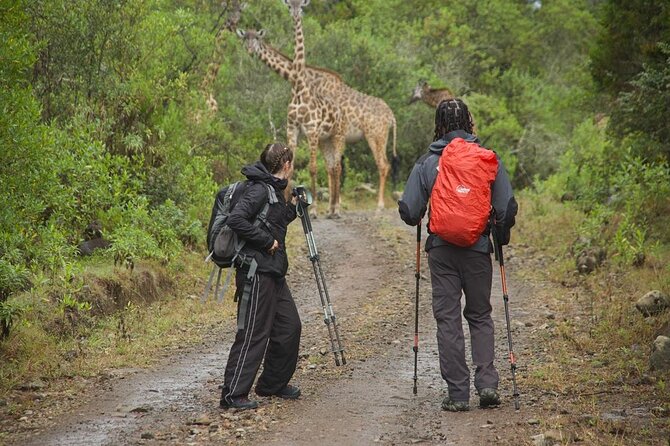
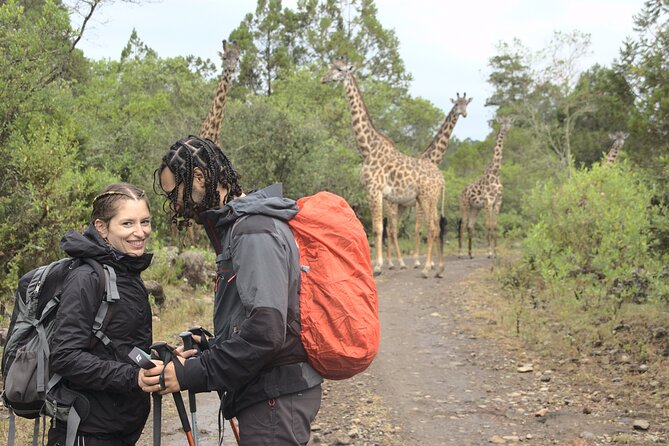
- Walking safari on day one: You hike through Mount Meru’s lower forest with an armed ranger, where large animals may appear near the route.
- Three days and two hut nights: You sleep at Miriakamba Hut and Saddle Hut rather than camping in tents.
- 4,566-meter summit: The high point comes after a 1:30 a.m. start, with sunrise views toward Kilimanjaro when skies are clear.
- Short but steep second day: The route from Miriakamba to Saddle Hut gains height quickly and includes the optional Little Meru summit at 3,820 meters.
- A useful Kilimanjaro warm-up: The hike is often used for acclimatization, but it is a serious mountain trip in its own right.
- Good value for an organized trek: At $903.47 per person, the cost makes the most sense if your package includes the listed transfers, ranger support, park access, guiding, meals, and hut arrangements.
Why Mount Meru Makes a Strong Three-Day Trek
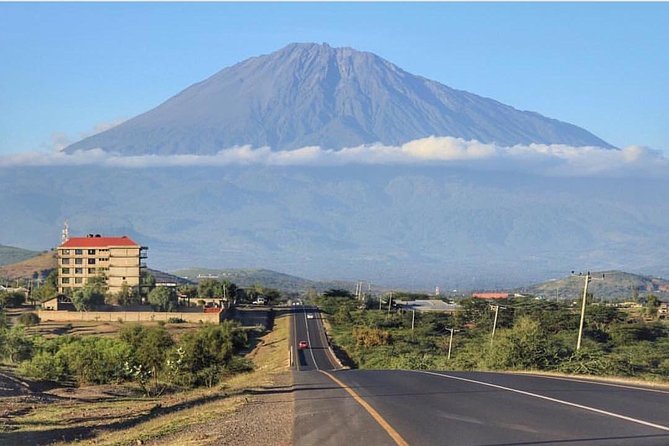
Mount Meru gives you a different opening chapter from Kilimanjaro. Instead of starting on a quiet mountain track, you begin in an area where wildlife can be part of the walk. That changes the pace and the mood. You are not simply counting kilometers toward a summit. You are moving through animal country before entering forest, moorland, alpine desert, and the crater zone.
The mountain reaches 4,566 meters, high enough to test your breathing and pacing, yet the route is short enough to fit into three days. That compact schedule is useful if you have limited time in northern Tanzania or want a physical introduction before a longer Kilimanjaro climb.
I would not treat Mount Meru as a simple practice stroll. The altitude is real, the trail becomes steep, and summit day asks a lot from your legs. Still, the route offers a strong mix of wildlife, mountain scenery, and crater views without requiring a week on the trail.
More treks in Arusha:
- 8-Day Small-group Lemosho Kilimanjaro Summit Trekking
★ 5.0 · 186 reviews - Mountain Kilimanjaro Day Hike
★ 5.0 · 102 reviews - Private Full Day Hiking Experience to Marangu Route
★ 5.0 · 61 reviews
Day One: Momela Gate and the Forest Walk
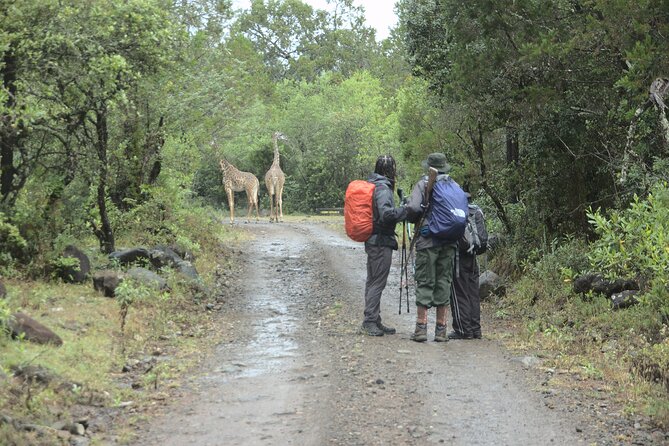
The trip begins with a drive from Arusha to Momela Gate. After registration, you start walking with a fully armed ranger escort. This is one of the most distinctive parts of the experience. The ranger is there because the lower section passes through an area where buffaloes, elephants, giraffes, zebras, antelope, baboons, and other monkeys may be seen.
That wildlife possibility also means the first day is not a casual independent walk. You need to follow the ranger’s instructions and stay with the group. The animals are part of the setting, but they are not a staged attraction. You are walking through their territory, and the route can feel more like a safari on foot than a standard mountain approach.
The day covers about 10 kilometers and takes roughly four to six hours. The habitat is montane forest, so the route should feel very different from the exposed upper mountain. The provided elevation figures for this day are inconsistent, listing a low point of 1,387 meters and a high point of 1,500 meters, while also giving contradictory feet figures. I would ask the operator to confirm the exact elevation gain before departure, especially if altitude planning matters to you.
Your first night is at Miriakamba Hut. Hut accommodation is a practical advantage for hikers who prefer not to carry or sleep in a tent. It also gives the trek a simple mountain rhythm: walk, eat, rest, and prepare for the next climb. The tradeoff is that a hut is shared mountain lodging, not a private hotel room. The supplied information does not specify room layout or facilities, so ask about sleeping arrangements before you pay.
Day Two: Miriakamba to Saddle Hut
Day two is shorter in distance but steeper in effort. You walk from Miriakamba Hut toward the saddle below Little Meru, gaining height from about 2,514 meters to 3,570 meters. The stated distance is 8 kilometers, with three to five hours of hiking.
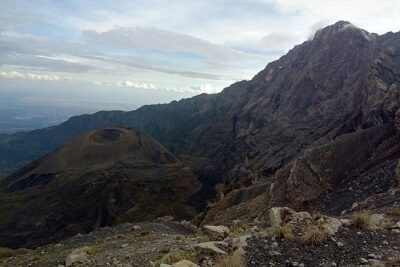
This is where the trek changes character. The lower forest gives way to forest and moorland, and the ridge opens views toward Meru Crater and the Ash Cone. These features give you a better sense of the mountain’s shape. You are not only climbing a high point. You are walking along the edge of a volcanic formation.
A hot lunch is planned at Saddle Hut, followed by a short climb to Little Meru at 3,820 meters. The Little Meru outing is optional in the sense that it is described as a short extra climb, but it is a useful test of how your body is handling the altitude. If you feel strong, the summit offers broad views before sunset. If you are tired, saving energy for the next morning may be the wiser choice.
Saddle Hut is your second overnight stop. This is the key staging point for the summit attempt. The climb from here starts in darkness, so the afternoon should be used for food, water, and rest rather than unnecessary exertion. I would pay attention to how your guide organizes the evening, since a calm schedule matters when you need to wake around 1:30 a.m.
Day Three: Rhino Point, Cobra Point, and the Summit
Summit day is the heart of the trip and its biggest challenge. You leave at about 1:30 a.m. and climb steeply toward Rhino Point at 3,800 meters. From there, the route continues to Cobra Point at 4,350 meters before reaching the 4,566-meter summit.
The early departure has a clear purpose. It lets you reach the top around sunrise, when the light is best and the air may be clearer. On a good morning, you may see Kilimanjaro rising above the clouds. That view is not guaranteed, so you should come for the Mount Meru experience first and treat Kilimanjaro as a welcome bonus.
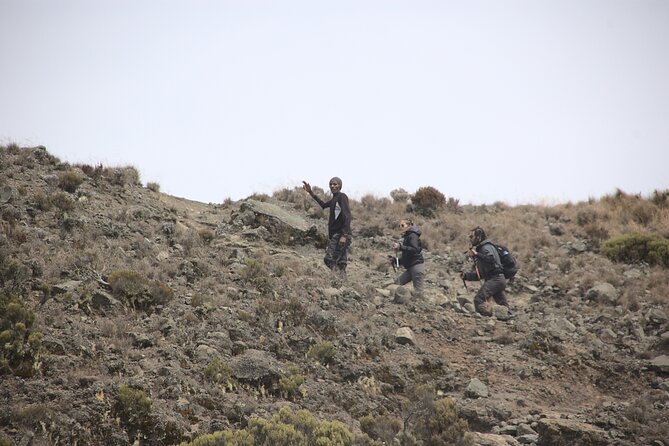
The final ridge is especially dramatic. You walk along a narrow crest between the steep inner cliffs of the crater and the sloping outer wall. This section is likely to feel exposed and demanding, particularly in the dark or when you are tired. The route description gives no technical climbing requirements, but it does make clear that the climb is steep and strenuous. You should be comfortable with long uphill walks and a full day on your feet.
After the summit, you return to Saddle Hut for a short rest and brunch. Then comes the long descent to Momella Gate, listed as 13 kilometers downhill after about 5 kilometers of ascent. The total hiking time is roughly 12 to 14 hours. Downhill can sound easy on paper, but tired knees and legs can make it the hardest part of the day.
A vehicle waits at Momella Gate for the transfer back to your hotel in Arusha or Moshi. That final ride matters. After a summit day of this length, you will appreciate not having to arrange your own transport from the park entrance.
A few more options to weigh up in Arusha
- Balloon Safari & Bush Breakfast in Serengeti – Miracle Experience
★ 5.0 · 1,646 reviews - Tanzania Classic – 7 Days
★ 5.0 · 1,151 reviews - 4 Days Group Camping Safari
★ 5.0 · 1,101 reviews - 5 Days Group Camping Safari
★ 5.0 · 730 reviews
The Views, Habitats, and Changing Pace
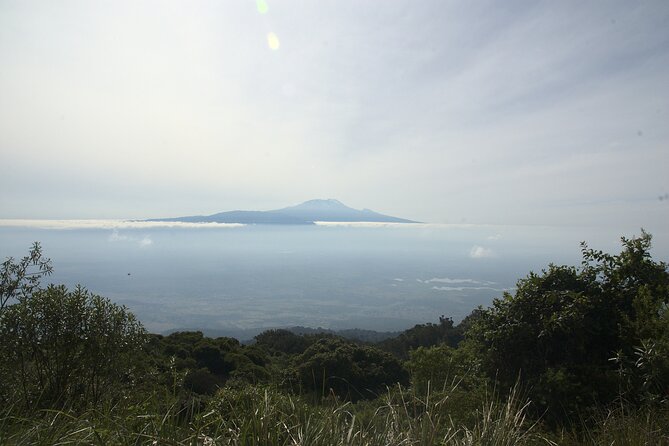
Mount Meru rewards you with variety. The first day passes through montane forest and may include wildlife. The second day brings moorland, the crater, and the Ash Cone. The third day moves through moorland and alpine desert before reaching the narrow summit ridge.
This constant change keeps the trek interesting, but it also means you need to adjust your pace. A fast start on day one can leave you tired before the altitude work begins. On day two, the short distance may tempt you to rush. I would walk slowly and steadily, especially before Little Meru and the next morning’s summit attempt.
The crater views are a major reason to choose Meru instead of treating it only as Kilimanjaro training. You get a mountain with its own character, not just a rehearsal route. The possibility of seeing wildlife at the start adds another layer that a standard high-altitude trek often lacks.
How Hard Is the Hike?
The route is best for people who already handle long uphill walks and are prepared for a demanding summit day. Most people can participate according to the supplied booking information, but that broad statement should not be mistaken for a low fitness requirement.
The most demanding points are clear:
- The trail becomes steep on day two.
- The summit climb begins in the middle of the night.
- The route reaches 4,566 meters.
- Day three can last 12 to 14 hours.
- The descent covers about 13 kilometers after the summit.
The main acclimatization benefit comes from sleeping at altitude before summit morning. You spend the second night at about 3,570 meters, then climb higher the next day. That progression is one reason Mount Meru can help prepare you for Kilimanjaro.
Still, acclimatization is not a guarantee against altitude problems. I would discuss the itinerary with your guide as you go, slow down when needed, and avoid treating Little Meru as compulsory if you are already struggling.
Guides, Group Size, and Service
The group maximum is five people. That is a useful limit on a steep, demanding trek. A small group can make it easier to keep a shared pace and communicate during the dark summit walk. It can also make the experience feel less crowded at the huts and on the ridge.
Guide service appears to be one of the stronger parts of the operation. Patrick handled planning and communication for one longer version of the trek, while Antipas and William were named as guides. William was also praised for his work on the hike, food, and service. One package included airport pickup and a drop-off at the end, showing that the company can handle more than the trail itself.
You should still confirm exactly what your $903.47 covers. The supplied details confirm pickup is offered, group discounts are available, and admission tickets are included. They do not spell out every meal, transfer, park fee, porter arrangement, or accommodation detail. Ask for a written list so you can compare the price fairly with other Mount Meru operators.
Is $903.47 Good Value?
At $903.47 per person, this is not a budget day trip. It is a multi-day, guided mountain trek with park access, ranger support, two hut nights, a summit attempt, and transport back to Arusha or Moshi. Those services can make the price reasonable, especially if meals and transfers are included as expected in the organized package.
The value improves if you want a simple arrangement rather than coordinating separate park entry, guiding, ranger support, huts, and transport. The small group cap is another positive. You are paying for structure and support during a route where the logistics matter.
The price is less attractive if the package excludes important extras. Before booking, confirm food, drinking water, transfers, hut fees, guide and ranger costs, and any required equipment. Also ask if the advertised three-day program includes a separate briefing or airport service, since one longer arrangement involved a briefing day and four total days.
Timing, Cancellation, and Practical Checks
You receive confirmation at booking, and the activity offers free cancellation up to 24 hours before the local start time. Changes or cancellations inside that 24-hour window are not accepted for a refund.
The hike depends on good weather. If poor weather causes cancellation, you can choose another date or receive a full refund. That policy is helpful for a mountain route where conditions can affect safety and summit visibility.
Because the elevation details contain errors, I would make one practical check before departure: ask the operator to confirm the correct day-by-day elevations and distances. This does not necessarily suggest a problem with the trail, but accurate figures matter when you are planning fitness, timing, and altitude expectations.
Who Should Choose This Mount Meru Hike?
I would recommend it to you if you want:
- A short but serious high-altitude trek near Arusha
- A walking safari element at the start
- Hut accommodation instead of tent camping
- A small group capped at five people
- A possible Kilimanjaro warm-up
- Strong crater and summit views
- An organized transfer back to Arusha or Moshi
I would think twice if you want a relaxed three-day escape, dislike very early starts, or are not ready for a 12 to 14-hour summit day. The route is also a poor fit if you expect guaranteed Kilimanjaro views or guaranteed animal sightings. Both depend on conditions and luck.
Should You Book It?
I would book this Mount Meru hike if you want a compact mountain challenge with more variety than a simple summit route. The walking safari, armed ranger, crater ridge, Little Meru option, and possible Kilimanjaro view give the three days real range.
The decision comes down to your expectations. You need to accept steep climbing, basic hut nights, a 1:30 a.m. start, and a very long descent. Confirm the package inclusions and correct elevation figures first. If those details match your needs, the small group and strong guide feedback make this a promising choice at $903.47.
FAQ
How long is the Mount Meru hiking experience?
The experience lasts approximately three days, including the approach, two hut nights, the summit attempt, and the return to Momella Gate.
Where does the hike begin?
The trek begins at Momela Gate after a drive from Arusha. Registration takes place at the gate before the walking safari and mountain hike start.
Is a ranger included?
Yes. The first day includes a fully armed ranger escort because the route can pass areas with buffaloes, elephants, giraffes, zebras, monkeys, antelope, and baboons.
Where do you sleep during the trek?
You spend the first night at Miriakamba Hut and the second night at Saddle Hut.
How high is the Mount Meru summit?
The summit reaches approximately 4,566 meters.
What time does the summit hike begin?
The summit walk starts at around 1:30 a.m. on the third day, with arrival at the summit planned for sunrise.
Can you see Kilimanjaro from the summit?
There is a possibility of seeing Kilimanjaro Peak above the clouds from the Mount Meru summit. Visibility depends on the weather.
What is the cancellation policy?
You can cancel up to 24 hours before the experience start time for a full refund. If poor weather causes cancellation, you will be offered another date or a full refund.
Just added in Arusha
- Safari “Kifaru” – 5 days in the most famous Parks in the world★ 5.0 · 4 reviews
- Saadani Day Trip★ 5.0 · 13 reviews
- 3 Days Tanzania Short and Spicy★ 5.0 · 6 reviews
- 5 Day Tanzania Safari Camping Adventure Private Tour★ 5.0 · 2 reviews
- Day Trip to Ngorongoro Crater from Arusha★ 5.0 · 1 review
- SERENGETI NATIONAL PARK Tour★ 4.5 · 5 reviews
- 3 Days Serengeti Park & Ngorongoro Crater Adventure Safari★ 5.0 · 8 reviews
- 6 Days Tanzania Bush Experience Safari★ 5.0 · 6 reviews
Hiking & Trekking, compared.
8-Day Small-group Lemosho Kilimanjaro Summit Trekking
Read our review →
Private Full Day Hiking Experience to Marangu Route
Read our review →
From Arusha/Moshi: Kilimanjaro Hike Marangu Route Day Trip
Read our review →
4 days Best experience Kilimanjaro Hike, Serengeti &Ngorongoro
Read our review →
Best Kilimanjaro hiking day trip tour with Kilinge Adventures
Read our review →Browse the lists this tour appears in