
Reviewed · LEMOSHO ROUTE CLIMBS
Private Kilimanjaro Hike 7 Day Lemosho Route
Africa’s highest peak rewards patience.
This seven-day climb with Nafika Tours follows the scenic western approach to Kilimanjaro, then crosses rainforest, moorland, alpine desert, and glacier country before reaching Uhuru Peak at 5,895 meters. I like the quiet, scenic Lemosho route and the practical inclusion of hotels, meals, camping equipment, treated water, guides, porters, and airport transfers. I also like the strong attention to safety, with emergency oxygen, a first aid kit, and a pulse oximeter included.
The main consideration is physical strain. This is not a casual walk, and Day 2 runs for up to 10 hours before the summit push even begins. The seven-day schedule is attractive in price and length, but you should understand that a longer Kilimanjaro itinerary usually gives you more time to adjust to altitude.
In This Review
- Key points to know before you book
- Why the Lemosho Route earns its reputation
- Day 1: Lemosho Gate to Big Tree Camp
- Day 2: Crossing the Shira Plateau
- Day 3: Lava Tower and Barranco Camp
- Day 4: Climbing the Barranco Wall
- Day 5: Karanga to Barafu Camp
- Day 6: Stella Point, Uhuru Peak, and the long descent
- Day 7: Forest descent to Mweka Gate
- The guides, porters, and camp support
- What the $2,450 price really covers
- Who should choose this climb?
- Cancellation and weather details
- Should you book the 7-day Lemosho climb?
- FAQ
- How long is the Kilimanjaro Lemosho hike?
- Where does the climb begin?
- What is the highest point reached?
- Is transportation included?
- Are hotels included?
- Are meals included?
- Is camping equipment provided?
- What is the cancellation policy?
Key points to know before you book
- Lemosho begins on Kilimanjaro’s western side, where the trail passes through rainforest before reaching the high Shira Plateau.
- The route covers several habitats, from montane forest to heather, moorland, alpine desert, and the rocky summit zone.
- Day 6 is the hard day, with a midnight start, Stella Point at 5,756 meters, Uhuru Peak at 5,895 meters, and a long descent.
- The price includes two hotel nights in Moshi, private transportation, park fees, camping gear, meals, water, guides, porters, and safety equipment.
- Food and organization receive especially strong praise, with repeated positive comments about communication, camp logistics, and the quality of meals.
- The advertised experience is private, so confirm the exact group arrangement if you are booking as a solo climber or small party.
Why the Lemosho Route earns its reputation
Lemosho is a good choice if you care about scenery as much as the summit certificate. You start at Lemosho Gate, about 2,360 meters above sea level, on the western side of the mountain. From there, the trail circles south and gradually brings you into Kilimanjaro’s higher zones.
The route is prized for its broad views and relatively low crowd levels compared with some of the more direct approaches. I like the way the first days give you a changing mountain story. You do not simply march uphill through one type of scenery. You begin among forest and wildlife habitat, cross open grassy country, then enter the stark alpine desert before the summit.
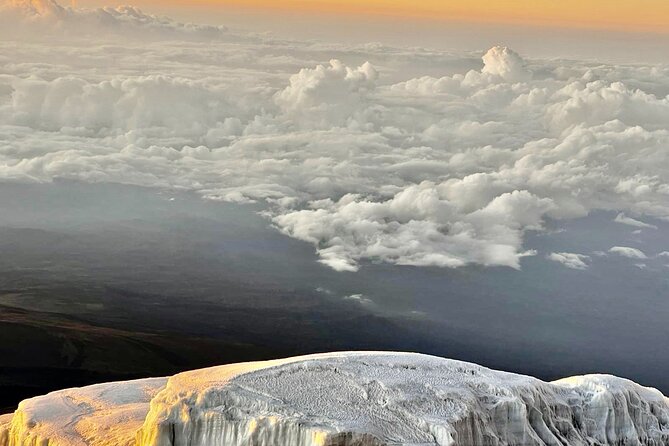
Lemosho also uses the Shira Plateau, which gives you an early chance to see Kibo, Kilimanjaro’s highest cone, from a distance. On a clear day, the mountain appears to float above the clouds. That moment helps you understand the scale of the climb ahead.
The route is scenic, but scenic does not mean easy. The long second day and the rapid height gain on the summit night demand steady pacing. Your guide will likely repeat the familiar Kilimanjaro advice to walk slowly. Take it seriously. A patient pace is more useful than proving how strong you are at the start.
More Lemosho Route climbs:
- Kilimanjaro climb by Lemosho Route (7-day)
★ 5.0 · 651 reviews - Kilimanjaro Climbing Lemosho Route 8 Days.
★ 5.0 · 186 reviews - Kilimanjaro climb, Lemosho Route (8-day)
★ 5.0 · 148 reviews
Day 1: Lemosho Gate to Big Tree Camp
Your pickup is scheduled for around 8:00 am after breakfast in Moshi. The transfer takes you to Lemosho Gate, where the tour team handles the entry and pre-hike formalities before you begin walking.
The first hike covers about 7 kilometers and takes roughly four hours. You walk through the forest of the Lemosho glades toward Big Tree Camp, your first overnight stop.
This is a sensible opening day. The distance is moderate, and the forest gives you a gentle introduction to the mountain. The lower slopes are also home to distinctive wildlife, though the exact animals you see are not guaranteed. Keep your eyes open, but do not expect a wildlife safari on the trail.
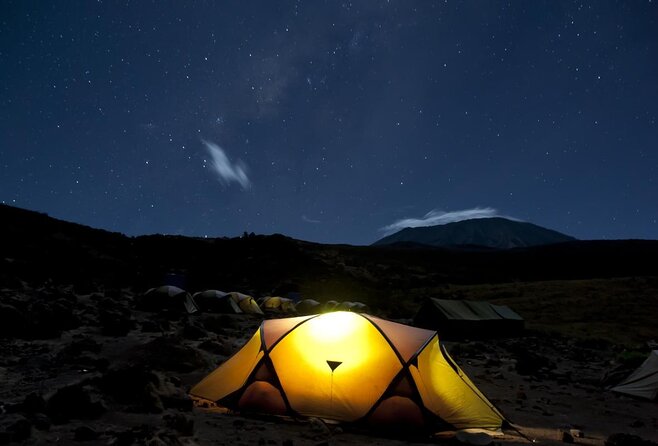
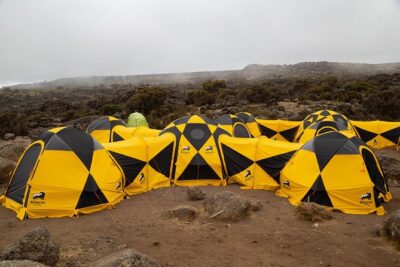
The first night is spent in a tent rather than a lodge. That change matters. You are beginning a week in which your comfort depends on good camping equipment, warm clothing, dry gear, and a reliable support crew. Nafika provides tents, sleeping pads, sleeping bags, chairs, and tables, which removes a large amount of logistical work from your shoulders.
Day 2: Crossing the Shira Plateau
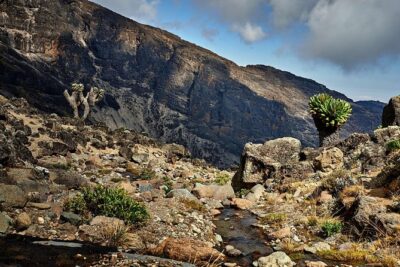
Day 2 is the longest regular trekking day, covering about 16.5 kilometers in nine to ten hours. You cross grassy moorland and heather, with volcanic rock formations scattered across the plateau.
The climb is not described as technically difficult, but parts of the trail are steep. The real challenge is the combination of distance, altitude, and time on your feet. Start the day with a conservative pace and use your breaks well. You may feel strong at breakfast and tired by late afternoon.
At Shira 1 Camp, you can look toward Kibo Peak above the clouds. After a short break, the route continues toward Shira 2 Camp, with views toward the Northern Icefields. The open plateau is one of Lemosho’s great rewards because it gives you wide mountain views instead of a narrow forest trail.
This day also helps your body begin adjusting to altitude. You gain height steadily while crossing the plateau rather than rushing directly toward the summit. Still, a 10-hour day is a serious effort. If you prefer a gentler acclimatization schedule, ask Nafika if a longer Lemosho version is available.
Day 3: Lava Tower and Barranco Camp
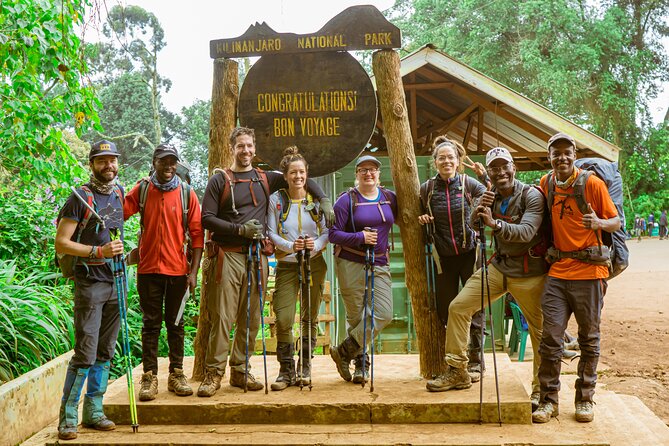
Day 3 follows the classic high-and-low acclimatization pattern. You climb to Lava Tower at about 4,600 meters, then descend to Barranco Camp at roughly 3,900 meters.
The hike covers about 10 kilometers and takes around six hours. The setting changes to alpine desert, with much less vegetation and a more exposed, rocky feel. The climb to Lava Tower may test your breathing, but the descent gives your body a chance to sleep at a lower elevation.
This is one of the most useful days on the route. You reach a higher point during the day without spending the night there. Pay attention to how you feel, and tell your guide about headaches, nausea, dizziness, or unusual fatigue. The included pulse oximeter can help the crew monitor your condition, but it is not a substitute for honest communication.
Barranco Camp sits below the Barranco Wall. The campsite offers memorable views of the wall and the Western Breach, especially around sunset. After dinner, you will want a warm drink, dry clothes, and sleep. The air is colder here, and the simple pleasures of camp become very important.
More treks in Moshi:
- Best Kilimanjaro hiking day trip tour with Kilinge Adventures
★ 4.5 · 54 reviews - #1. Best Kilimanjaro Day hike Tour-Machame Route-ISMANI
★ 4.2 · 47 reviews - Best Kilimanjaro Adventure 7 days Machame route Trekking
★ 5.0 · 42 reviews - Kilimanjaro 7 Day Private Trekking Experience
★ 5.0 · 40 reviews
Day 4: Climbing the Barranco Wall
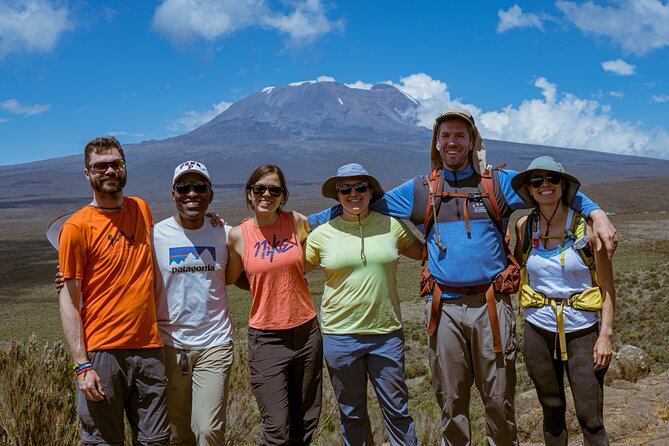
Day 4 begins with one of the route’s most recognizable sections, the Barranco Wall. From camp, you climb a steep ridge toward the wall and make your way up the rocky obstacle.
The wall looks more intimidating than the route description suggests. You should still expect a hands-on, uneven climb, but it is presented as manageable with a careful pace and guide support. This is not a technical climbing expedition, yet you should be comfortable with steep ground and careful foot placement.
The trail then passes beneath the Heim and Kersten glaciers before continuing toward the Karanga Valley. Mawenzi Peak appears to the east, while the Kibo glaciers rise above the route. These views are a major reason to choose Lemosho. You are not just ticking off distance. You are watching Kilimanjaro’s volcanic peaks and ice fields change position as you circle the mountain.
The day takes about four hours, followed by a hot lunch at camp. The afternoon is intended for rest, with an optional acclimatization walk for anyone feeling strong. I would treat the rest period as valuable, not as wasted time. Your summit attempt begins soon, and saving energy is part of the plan.
Day 5: Karanga to Barafu Camp
Day 5 is short in distance but important in mood. You hike about 4 kilometers to Barafu Camp at approximately 4,640 meters, with around four hours of walking.
The route provides views of both Kibo and Mawenzi. Once you reach camp, lunch is served, followed by a quiet afternoon. Your main task is to rest and prepare for the midnight wake-up.
Barafu means ice in Swahili, and the camp’s high, exposed position signals that the ordinary trekking days are over. Dinner is early, then you return to your tent to sleep if you can. The late-night start creates an awkward schedule, so do not be surprised if your rest feels broken or shallow.
The supplied camping gear, sleeping bag, and camp furniture matter most here. At this height, small comfort problems can feel much bigger. Pack your headlamp, warm layers, water, and summit snacks where you can reach them easily.
Day 6: Stella Point, Uhuru Peak, and the long descent
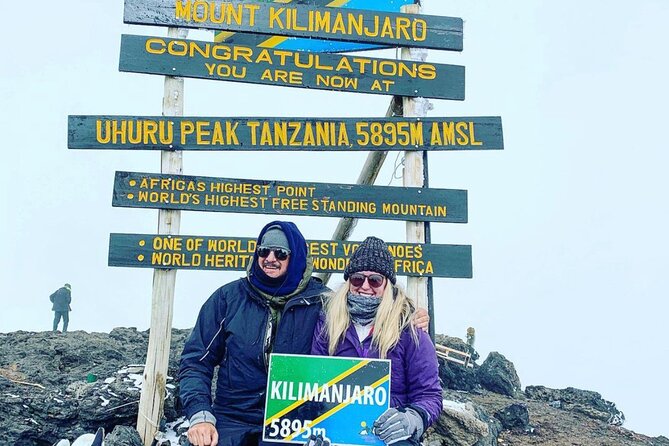
Day 6 is the summit day, and it is the reason you need to prepare carefully for every earlier stage. You wake around midnight for tea and breakfast, then begin a four to five-hour climb toward the crater rim.
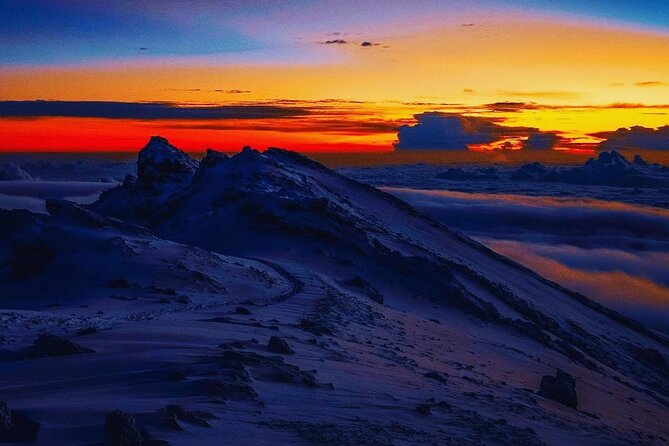
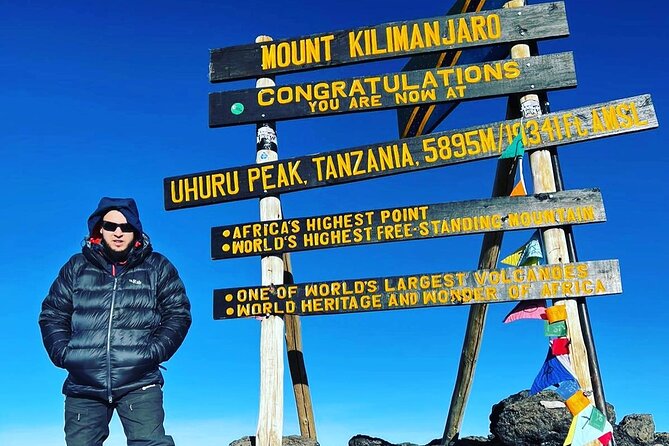
The route gains a remarkable amount of height over a short distance. You aim to reach Stella Point at 5,756 meters around sunrise, when the first light spreads across the crater rim. From Stella Point, it is about one hour to Uhuru Peak at 5,895 meters.
Reaching Uhuru Peak is a major physical achievement. The final section may feel slow, cold, and exhausting. Stop when you need to, breathe steadily, and stay close to your guide’s instructions. The views at the top depend on weather, and the summit can be windy, cloudy, or bitterly cold.
After photographs and a brief celebration, you descend to Barafu Camp for lunch and rest. The day is not finished there. The route continues down toward Millennium Campsite, making this a very long day of roughly 12 hours.
That descent is easy to underestimate. Many climbers focus so completely on reaching Uhuru Peak that they forget they still have hours of downhill walking afterward. Protect your knees, use trekking poles if you have them, and keep drinking. Emergency oxygen and a first aid kit are included, but the best safety tool is still a slow pace and clear communication with your guides.
Day 7: Forest descent to Mweka Gate
The final day begins with breakfast and a descent through montane forest. From Millennium Campsite, the walk to Mweka Gate covers about 14 kilometers and takes roughly five hours.
After several days above the tree line, the forest feels warmer and more familiar. The trail may still be tiring, especially after summit day, but the direction is finally downhill and the finish is close.
At Mweka Gate, you collect your certificates and say goodbye to the mountain crew. A private vehicle then returns you to your Moshi hotel, where a hot shower and a cold drink will feel well earned.
The return to a hotel is an important part of the package. You receive one Moshi hotel night before the hike and another after it, giving you a proper place to recover instead of having to arrange everything separately.
The guides, porters, and camp support
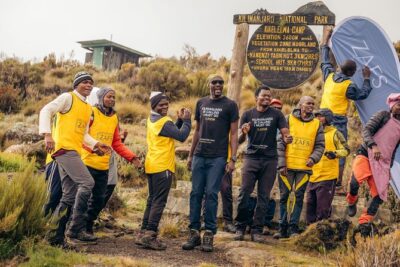
The strongest praise for Nafika centers on the crew. Specific guides named in customer accounts include Elias, Eli, Benson, Frank, and Sebastian. The comments repeatedly point to good organization, encouragement, communication, and attention to safety.
One account describes a group of five climbers supported by three guides and 20 porters. Another mentions a crew of 16 people, including porters, helping porters, a cook, and guides. The exact staffing level will depend on your group, but you should expect a substantial support team behind the climb.
The company states that guides and porters receive fair wages. That is worth considering when comparing prices, because responsible staffing costs money. A large crew also allows the camp to be prepared while you hike, rather than leaving you to carry and arrange every item yourself.
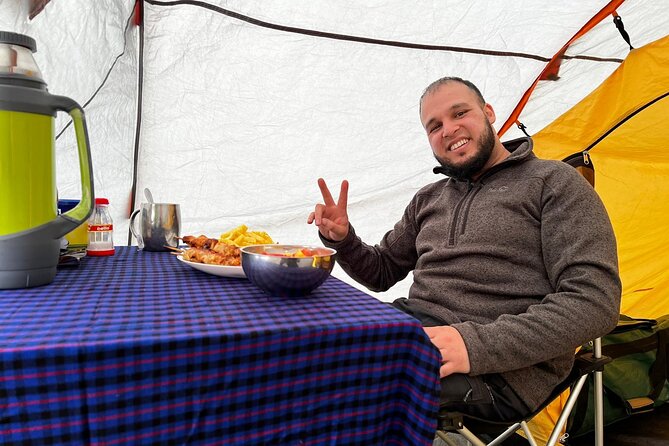
Food receives repeated praise, including comments about the quality of meals and the care shown by the team. Breakfast, lunch, and dinner are included on the first six days, while Day 7 includes breakfast and lunch. Treated water is supplied throughout the trek.
What the $2,450 price really covers
The cost is $2,450 per person. That is not a small amount, but it covers far more than a guide and a park entrance.
Included services are:
- Private transportation
- Park fees and taxes
- Camping tents and equipment
- Sleeping pads and sleeping bags
- Chairs and tables
- Guides and porters
- Fair wages for the mountain crew
- Emergency oxygen
- First aid kit and pulse oximeter
- Treated drinking water
- Two hotel nights in Moshi
- Seven breakfasts
- Seven lunches
- Six dinners
The package has strong value if you need a full-service climb. You avoid arranging airport transfers, hotel nights, camping supplies, meals, and mountain transport one by one. The inclusion of safety equipment and treated water is also useful.
A Tanzanian visa is not included and is listed at $50. You should also clarify any personal gear requirements, tipping expectations, and the exact airport pickup arrangement before paying. The advertised meeting point is Kilimanjaro Airport, with pickup offered, but the listed operating hours show an early window from midnight to 5:30 am. Confirm your arrival time and transfer plan directly with Nafika.
Who should choose this climb?
I would recommend this route to a fit adult who wants scenery, full logistical support, and a private mountain experience. You need a moderate level of physical fitness at minimum, and you should be ready for long walking days, cold nights, steep sections, and a demanding summit night.
This climb may suit first-time high-altitude hikers because the guides and support crew handle much of the practical work. Still, you should not mistake a guided trip for an easy trip. The mountain remains physically demanding, and no operator can guarantee a summit.
The seven-day schedule is best for people who want a balance between cost and acclimatization. If altitude concerns you, ask about an eight-day option before booking. The extra day may provide a more comfortable adjustment schedule, though it could raise the price.
The experience is advertised as private, with only your group participating. Some customer accounts describe solo climbers joining a small group, so if privacy is important to you, confirm this point in writing. It is a simple question that can prevent disappointment.
Cancellation and weather details
You can cancel for a full refund up to 24 hours before the local start time. Cancellations made less than 24 hours before departure are not refunded, and late changes are not accepted.
The climb depends on suitable weather. If poor weather causes cancellation, you are offered another date or a full refund. That policy is sensible for a high mountain, where conditions can affect safety and summit visibility.
Should you book the 7-day Lemosho climb?
I would book this experience if you want a scenic route with strong logistical support and you value an experienced local crew. Nafika’s best qualities appear to be organization, communication, food, guide support, and attention to safety. The route itself gives you some of Kilimanjaro’s finest scenery, from forest and Shira Plateau views to Barranco Wall, glaciers, and the summit rim.
I would pause if you are not prepared for the long second day and the 12-hour summit day. You should also confirm the private-group arrangement, visa details, tipping, personal equipment, and whether a longer itinerary is available.
At $2,450, the package is a serious but defensible investment. You are paying for the mountain permits, a full support crew, camping infrastructure, meals, water, hotels, transport, and a safety setup. If you arrive fit, pace yourself, and listen closely to the guides, this seven-day Lemosho climb offers a well-supported route to one of Africa’s great high points.
FAQ
How long is the Kilimanjaro Lemosho hike?
The experience lasts approximately seven days, including the climb, summit attempt, descent, transportation, and hotel arrangements.
Where does the climb begin?
The hike begins at Lemosho Gate on the western side of Kilimanjaro, at an altitude of about 2,360 meters.
What is the highest point reached?
The summit is Uhuru Peak, which is approximately 5,895 meters above sea level. The route also reaches Stella Point at about 5,756 meters.
Is transportation included?
Yes. Private transportation is included, including pickup and the return drive to your Moshi hotel after the mountain descent.
Are hotels included?
Yes. The package includes two hotel nights in Moshi, one on arrival and one after the hike.
Are meals included?
Breakfast is included for seven days, lunch for seven days, and dinner for six days. Treated water is also provided during the trek.
Is camping equipment provided?
Yes. The package includes tents, sleeping pads, sleeping bags, chairs, and tables.
What is the cancellation policy?
You can cancel at least 24 hours before the experience begins for a full refund. Cancellations or changes made less than 24 hours before the local start time are not accepted for a refund.
Just added in Moshi
- THE BEST 2 DAYS ON TREK – MARANGU ROUTE TOUR ADVENTURES★ 5.0 · 1 review
- Mount Kilimanjaro National Park Day Trip★ 5.0 · 7 reviews
- Mount Kilimanjaro Climbing in Tanzania Full-Day Trip★ 5.0 · 1 review
- Mount Kilimanjaro Day Hike – All-Inclusive, No Hidden Fees★ 4.0 · 7 reviews
- Mount Kilimanjaro Trekking Tour – Climb with Local Guides★ 5.0 · 1 review
- Mount Kilimanjaro: 7 Days Hike Lemosho Route★ 5.0 · 1 review
- Moshi:Chemka Hot Springs, Materuni Waterfalls & Coffee Tour★ 5.0 · 1 review
- Moshi Town: Walking Tour: Theme Urban lifestyle★ 3.1 · 4 reviews
Lemosho Route Climbs, compared.
8-Day Small-group Lemosho Kilimanjaro Summit Trekking
Read our review →
Climbing Kilimanjaro through 8 days Lemosho Route
Read our review →
Browse the lists this tour appears in