
Reviewed · HIKING & TREKKING
4 Days best Mount meru trekking
Wildlife appears before the summit. This four-day Mount Meru trek combines a walking safari in Arusha National Park with a serious high-altitude climb to Tanzania’s 4,566-meter peak. I especially like the armed ranger escort, which adds safety and lets you watch for buffaloes, zebras, giraffes, antelopes, and black and white colobus monkeys along the lower trail. I also like the four-day pace, since the extra time improves acclimatization compared with trying to finish in three days. The main consideration is the summit night: you wake around 12:30 a.m. and face a long, steep day at altitude.
From Arusha, you drive about 20 kilometers to the park, then continue to Momella Gate. The price is $1,189 per group of up to 15, with park fees, staff wages, meals, transfers, drinking water, and rescue fees included. That can be good value for a full mountain package, but you must bring or rent your own boots, sleeping bag, warm clothing, and other personal trekking gear.
In This Review
- Key points to know before you book
- Why Mount Meru makes a strong four-day trek
- Arusha to Momella Gate: the trek begins with wildlife
- Day two: forest paths, crater views, and Saddle Hut
- Summit night: Rhino Point to the 4,566-meter peak
- Day four: down through the forest to Momella Gate
- What the $1,189 group price really covers
- Guides, communication, and group size
- Who will enjoy this Mount Meru trip most
- Booking details and cancellation
- Should you book the four-day Mount Meru trek?
- FAQ
- How high is Mount Meru?
- How long is the trek?
- Is an armed ranger included?
- Is food included?
- Is personal trekking equipment included?
- How many people can join the group?
Key points to know before you book
- Mount Meru reaches 4,566 meters, making it Tanzania’s second-highest mountain.
- The first day feels like a safari, with possible views of buffaloes, zebras, giraffes, antelopes, and monkeys.
- An armed park ranger accompanies the group, since the route passes through Arusha National Park.
- Day three is the test, with a midnight start, a rocky ridge, and roughly 10 to 12 hours of hiking.
- Little Meru is an optional acclimatization climb from Saddle Hut at about 3,820 meters.
- The group price covers up to 15 people, but personal mountain equipment is not included.
Why Mount Meru makes a strong four-day trek
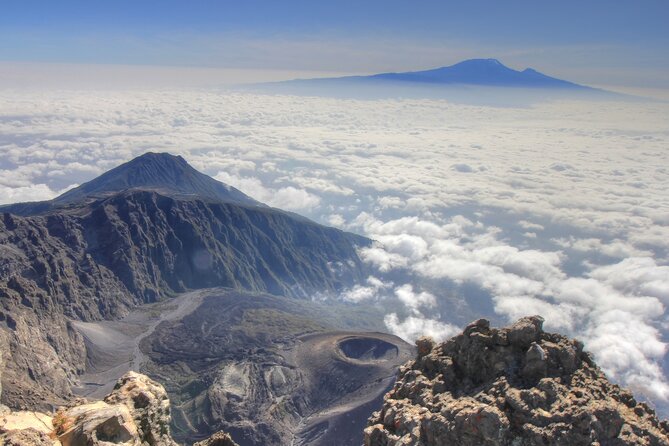
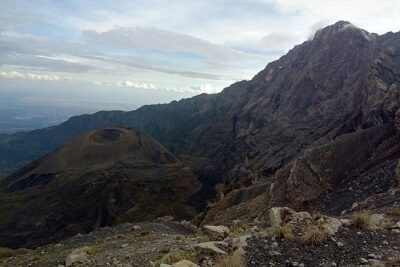
Mount Meru sits inside Arusha National Park, east of Arusha town. At 4,566 meters, it is lower than Kilimanjaro but still high enough to demand respect. The mountain is a volcanic peak with a large crater, inner cliffs, and a narrow rocky ridge leading toward the summit.
I like Meru because it gives you two different trips in one. The lower section has the feel of a guided wildlife walk, while the upper days turn into a proper alpine climb. You are not simply walking through forest for four days. You move through several vegetation zones and watch the setting change from wildlife country to forest, then alpine desert and exposed volcanic rock.
Mount Meru has one main route to the top. It can be attempted in three days, but this program uses four. That slower schedule matters. Day two gives you time to reach Saddle Hut, rest, and optionally climb Little Meru. The extra night also gives your body more time to adjust before the summit attempt.
Many climbers use Mount Meru to prepare for Kilimanjaro. That does not make it an easy warm-up. The final summit day is long, steep, and conducted partly in darkness. I would treat the trip as a serious climb in its own right, not merely a practice walk.
More treks in Arusha:
- 8-Day Small-group Lemosho Kilimanjaro Summit Trekking
★ 5.0 · 186 reviews - Mountain Kilimanjaro Day Hike
★ 5.0 · 102 reviews - Private Full Day Hiking Experience to Marangu Route
★ 5.0 · 61 reviews
Arusha to Momella Gate: the trek begins with wildlife
Your first morning starts with breakfast at your Arusha hotel or lodge. The drive to Arusha National Park includes the first gate formalities, followed by registration and the journey to Momella Gate, where the hike begins.
At the park office, the guide completes the required procedures while the porters and cook organize, pack, and weigh the equipment. You may eat a packed lunch at the gate before setting off. This start can feel administrative, but it is useful. The staff need to prepare food and supplies, and the ranger escort must be arranged before you enter the park trail.
The first day takes about five to seven hours of hiking. It is the gentlest introduction to the mountain, though you should not confuse gentle with effortless. The path passes through an area where wildlife may be visible, including giraffes, zebras, antelopes, buffaloes, and black and white colobus monkeys.
The ranger is an important part of this stage. Mount Meru’s route passes through a national park, so you are escorted by an armed ranger as you walk among wildlife. The ranger is not decorative. Buffaloes in particular deserve space and caution, and the presence of trained park staff helps the group move responsibly.
The exact wildlife sightings cannot be promised. Animals are free to move, and the trail conditions vary. Still, the possibility of seeing large mammals before you even reach the forest gives this climb a memorable opening.
Day two: forest paths, crater views, and Saddle Hut
After breakfast, the trail becomes steeper as you enter the forest zone. The second day usually involves three to five hours of hiking, followed by arrival at Saddle Hut around lunchtime.
This is a shorter walking day than summit day, but it is not throwaway time. The climb through the forest helps you gain height without spending all day on your feet. Along the way, you may still see wildlife, and the route offers views toward the Mount Meru Crater and the Ash Tray.
Saddle Hut sits at about 3,500 meters in the alpine desert zone. The change in surroundings is important. Trees become less dominant, the air feels thinner, and the ground takes on a harsher volcanic character. Lunch at the hut gives you time to eat and rest before the optional afternoon outing.
You can climb Little Meru with your guide to about 3,820 meters. This short extra climb is useful for acclimatization and offers wide views around Mount Meru. It also gives you a chance to test how your body reacts at altitude before the main summit attempt.
I would not treat Little Meru as compulsory. If you feel well and your guide agrees, it can be a smart addition. If you have a headache, nausea, unusual fatigue, or trouble breathing, resting is the better choice. The summit is still ahead, and overconfidence at altitude can spoil the hardest day.
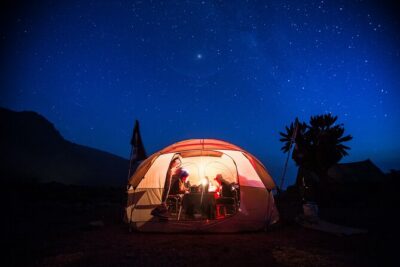
Dinner is served early, and the planned sleep time is around 7:00 p.m. This is practical rather than luxurious. You need to rest before the 12:30 a.m. wake-up call, when tea and biscuits are served before the climb.
Summit night: Rhino Point to the 4,566-meter peak
The third day is the heart of the trip. You start around 1:30 a.m., climbing steeply toward Rhino Point at about 3,800 meters. From there, the route continues to Cobra Point at approximately 4,350 meters.
This section is rocky and demanding. You will be moving in the dark, likely relying on your guide and headlamp, though the supplied information does not specify that a headlamp is included. Bring your own if it is part of your personal equipment.
From Cobra Point, the trail follows a rocky ridge between the crater and the mountain’s inner cliffs. This is the most distinctive part of Mount Meru. You are not simply walking up a broad slope. The route takes you along a narrow, exposed volcanic crest with the crater falling away nearby.
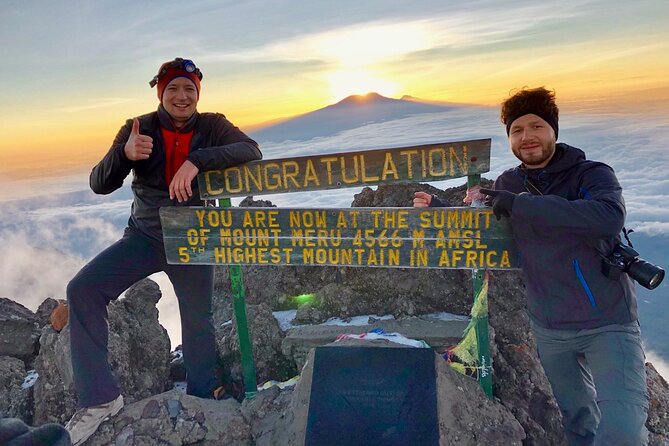
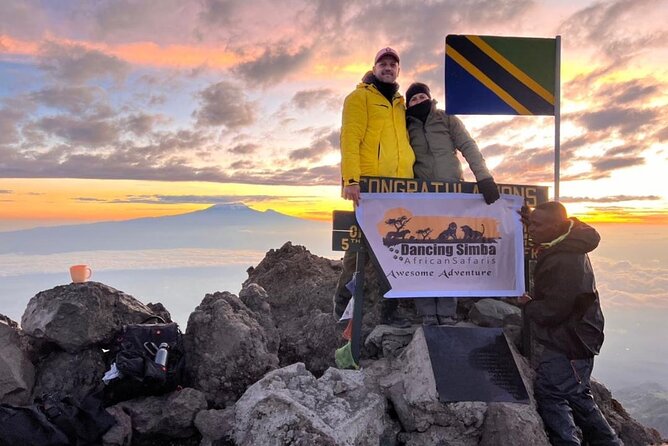
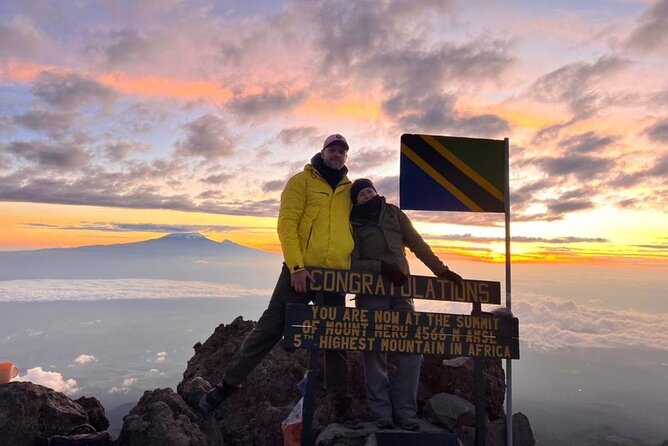
The summit is at 4,566 meters. Reaching it in the early morning lets you see sunrise from the east. On a clear day, Kilimanjaro is usually visible in the distance. You also look down toward the steep crater walls, which drop nearly 1,000 feet or more in places.
This is where the value of the four-day plan becomes clear. You have already spent two nights moving upward, and the optional Little Meru climb can help your body prepare. Still, acclimatization is personal. No itinerary can remove the effects of altitude.
The summit portion takes roughly 10 to 12 hours of hiking in the published schedule, although one timing estimate lists nine hours. Plan for a full day. The duration depends on pace, weather, rest stops, and how long you spend at the summit.
After reaching the top, you return toward Saddle Hut for rest and food before continuing or settling in according to the guide’s plan. The descent is easier on the lungs but hard on tired legs. Rocky ground also becomes more awkward after a sleepless night, so trekking poles can be useful if you own them.
A few more options to weigh up in Arusha
- Balloon Safari & Bush Breakfast in Serengeti – Miracle Experience
★ 5.0 · 1,646 reviews - Tanzania Classic – 7 Days
★ 5.0 · 1,151 reviews - 4 Days Group Camping Safari
★ 5.0 · 1,101 reviews - 5 Days Group Camping Safari
★ 5.0 · 730 reviews
Day four: down through the forest to Momella Gate
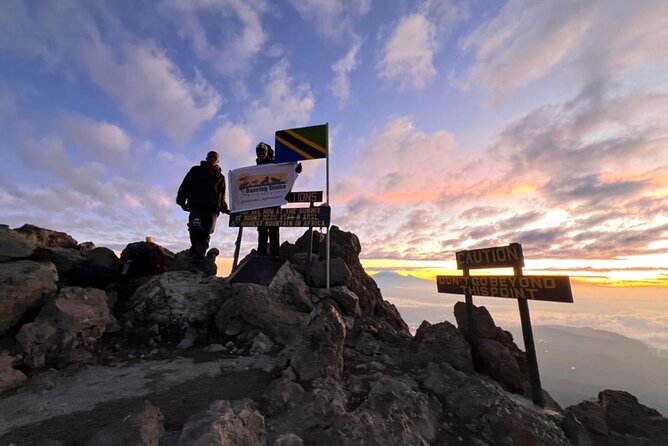
The final morning begins after rest and a relaxed breakfast. You descend for about two to three hours through the forest toward Momella Gate, where your driver waits.
The lower trail gives you one more chance to see animals. If the longer route was used on the first day, the descent may pass by Tululunsi Waterfalls. That detail is worth confirming with the operator before departure, since the description connects the waterfall route to the path selected on day one.
At the gate, you say goodbye to your guide, porters, and cook, handle tipping, and drive back to your Arusha hotel. The final day is short compared with the summit push, but do not plan an ambitious activity immediately afterward unless you know you recover quickly from long mountain descents.
What the $1,189 group price really covers
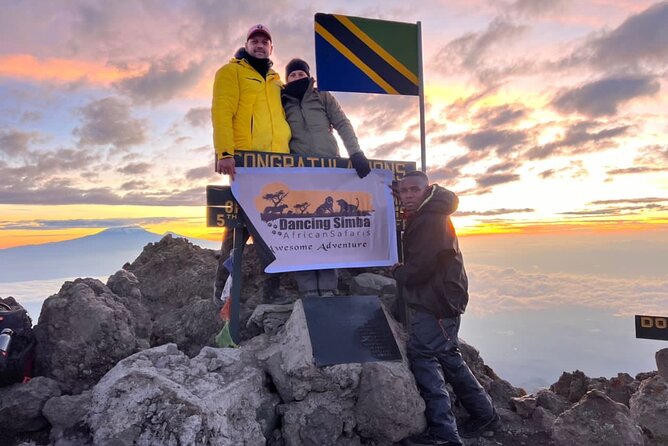
The advertised cost is $1,189 per group of up to 15 people. That structure can work well for families, clubs, or a group of friends. If you fill the group, the per-person cost becomes much lower. If you are alone or traveling with only one companion, ask how the group arrangement affects the final amount before paying.
The inclusions are substantial:
- Transfers to the mountain and back to your Arusha hotel
- Professional mountain guides
- Porters and a cook
- Guide, porter, and cook salaries
- Park fees and government VAT
- Rescue fees included within park fees
- Drinking water
- Breakfast on three mornings
- Lunch on four days
- Dinner on three nights
- An emergency oxygen cylinder
- Binoculars
The emergency oxygen cylinder and rescue fees are reassuring inclusions, although they should not be mistaken for a substitute for proper acclimatization or medical advice. Park rules and staff costs make up a large part of the price, so the package is more than a simple guided walk.
You still need to budget for tips, souvenirs, flights, and gratuities. Personal trekking equipment is also excluded. That includes sleeping bags, hiking boots, clothing, and similar items. Before booking, check your equipment carefully. A warm night layer, suitable boots, and clothing for a cold summit morning matter far more than small travel extras.
Guides, communication, and group size
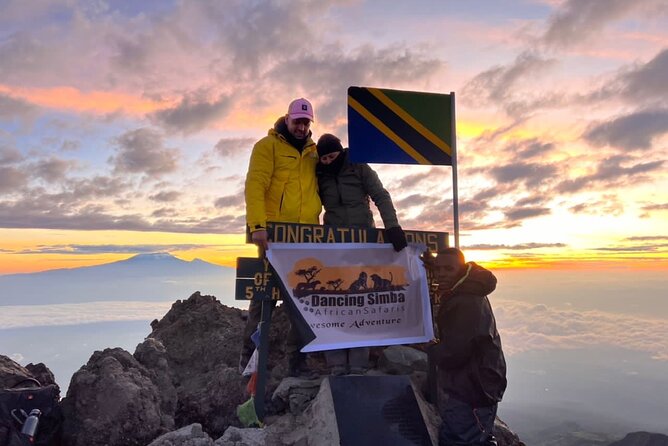
The experience allows up to 15 participants. A group that size can make the price attractive, but it may also create a wider spread of walking speeds. Ask how the guide handles different paces, especially on summit night.
The provider is Dancing Simba Safaris. Booking communication is an area to pay attention to. David has been praised for quick WhatsApp replies and helpful planning on the company’s safari arrangements. That is useful if you need clear answers about pickup time, equipment, group size, or the exact route.
Guide names associated with the company include Greyson and Dickson on other safari services. That does not confirm who will lead your Mount Meru climb, so ask for the trek guide’s name before departure. The mountain guide’s experience matters most on the rocky ridge, during wildlife encounters, and when deciding if someone should continue upward or rest.
A cook and porters are included. This is a major practical benefit on a four-day climb. You are not expected to carry all food and camp supplies yourself, and meals are built into the schedule. Even so, bring small personal snacks if you rely on specific foods, since only tea and biscuits are specifically noted before the summit attempt.
Who will enjoy this Mount Meru trip most
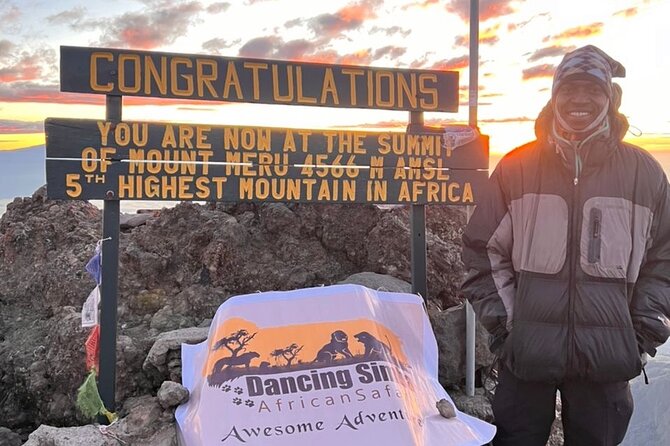
I would recommend this climb to a reasonably fit person who wants a shorter alternative to Kilimanjaro and values wildlife as much as the summit. It suits you if you like early starts, simple mountain huts, and a structured itinerary with professional support.
It is also a good choice for someone preparing for a longer Tanzanian climb. The route gives you experience with altitude, a pre-dawn summit push, steep trails, and changing conditions.
I would be cautious if you dislike sleeping in huts, struggle with long uphill walks, or need a late and comfortable morning. The third day is not gentle. You wake shortly after midnight, climb for hours, and may spend much of the day moving between high points and the gate or hut.
The information says most people can participate, but you should still judge your own fitness honestly. If you have a medical condition or concerns about altitude, seek medical advice before booking. The tour includes emergency oxygen and rescue fees, but those are safety provisions, not guarantees against altitude problems.
Booking details and cancellation
Pickup is offered, and the tour uses a mobile ticket. Confirmation is received at booking, which is helpful for coordinating your Arusha hotel transfer.
Free cancellation is available if you cancel at least 24 hours before the experience start time. Cancellations made less than 24 hours before the start are not refunded, and changes inside that period are not accepted. The cut-off follows local time in Tanzania.
Should you book the four-day Mount Meru trek?
I would book this trip if you want a serious but compact mountain experience with wildlife, crater views, and a guided summit attempt. The four-day schedule is the sensible choice over three days, and the included ranger, staff, meals, transfers, park fees, and rescue fees give the group price real substance.
Before paying, confirm the guide’s name, pickup time, group size, equipment requirements, and whether your descent will include Tululunsi Waterfalls. If you already own suitable boots, warm clothing, and a sleeping bag, the package looks stronger. If you need to rent every major item, add those costs first.
Mount Meru is not a soft introduction to high altitude. It is a demanding climb with a memorable wildlife approach and one of Tanzania’s finest crater ridges. For a fit walker who accepts the midnight start, it offers a rewarding four days without the longer commitment of Kilimanjaro.
FAQ
How high is Mount Meru?
Mount Meru reaches 4,566 meters above sea level and is Tanzania’s second-highest mountain.
How long is the trek?
The experience lasts four days, with approximately five to seven hours of hiking on day one, three to five hours on day two, about 10 to 12 hours on summit day, and two to three hours on the final descent.
Is an armed ranger included?
Yes. An armed ranger escorts the group because the route passes through Arusha National Park, where wildlife may be present.
Is food included?
Yes. The package includes three breakfasts, four lunches, and three dinners. Tea and biscuits are served before the early morning summit departure.
Is personal trekking equipment included?
No. Sleeping bags, hiking boots, clothing, and other personal trekking equipment are not included.
How many people can join the group?
The maximum group size is 15 people, and the listed price of $1,189 applies per group of up to 15 participants.
Just added in Arusha
- Safari “Kifaru” – 5 days in the most famous Parks in the world★ 5.0 · 4 reviews
- 3 Days Tanzania Short and Spicy★ 5.0 · 6 reviews
- 5 Day Tanzania Safari Camping Adventure Private Tour★ 5.0 · 2 reviews
- Saadani Day Trip★ 5.0 · 13 reviews
- Day Trip to Ngorongoro Crater from Arusha★ 5.0 · 1 review
- SERENGETI NATIONAL PARK Tour★ 4.5 · 5 reviews
- 3 Days Serengeti Park & Ngorongoro Crater Adventure Safari★ 5.0 · 8 reviews
- 6 Days Tanzania Bush Experience Safari★ 5.0 · 6 reviews
Hiking & Trekking, compared.
8-Day Small-group Lemosho Kilimanjaro Summit Trekking
Read our review →
Private Full Day Hiking Experience to Marangu Route
Read our review →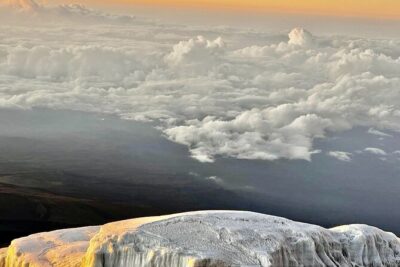
From Arusha/Moshi: Kilimanjaro Hike Marangu Route Day Trip
Read our review →
4 days Best experience Kilimanjaro Hike, Serengeti &Ngorongoro
Read our review →
Best Kilimanjaro hiking day trip tour with Kilinge Adventures
Read our review →Browse the lists this tour appears in