
Reviewed · HIKING & TREKKING
7 Days Kilimanjaro Mountain Hiking with Professional Guide
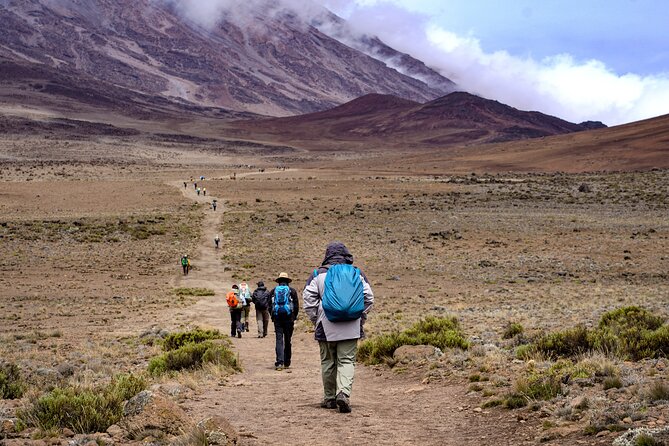
Africa’s highest peak demands more than strong legs. This seven-day climb follows the Machame Route, moving from rainforest to alpine desert before the midnight push toward Uhuru Peak. A professional English-speaking guide, cook, porters, camping equipment, park fees, and meals are part of the package, which keeps the practical work off your shoulders.
I like the route’s changing scenery, from colobus monkey country to the stark heights around Lava Tower and Barafu Camp. I also like the planned altitude pattern, including a high point at 4,600 meters before sleeping lower at Shira Camp. The main consideration is the price, $4,550 per person, and the demanding schedule, especially the long summit day.
The clearest praise for Aglow Safaris is its attentive mountain crew. One account describes a group of more than 10 crew members helping make the climb memorable. That is encouraging, but I would still ask for the exact guide-to-climber ratio and a clear day-by-day camp plan before paying.
In This Review
- Key points to know before booking
- From Kilimanjaro Airport to the trailhead
- Day 1: Machame Gate and the rainforest
- Day 2: From Machame Camp to Shira Camp
- Day 3: Lava Tower at 4,600 meters
- Day 4: Barranco Wall to Karanga Camp
- Day 5: Karanga Camp to Barafu Camp
- Day 6: The midnight push to Uhuru Peak
- Day 7: Mweka Camp to Mweka Gate
- What the $4,550 price covers
- The mountain crew and the human side of the climb
- Who should choose this Kilimanjaro climb?
- Booking, cancellation, and practical checks
- Should you book this seven-day climb?
- FAQ
- How long is the Kilimanjaro hiking experience?
- Which route does the climb use?
- Where does the experience start?
- Where does the experience end?
- Is a professional guide included?
- Are porters and a cook included?
- Is camping equipment provided?
- Are national park fees included?
- What is not included in the price?
Key points to know before booking
- Machame Route scenery: You move through rainforest, heath, moorland, alpine desert, and the high summit zone in one week.
- A 4,600-meter acclimatization day: The Lava Tower section takes you high, then returns you to Shira Camp to help your body adjust.
- Midnight summit start: Day 6 begins in darkness and aims for Uhuru Peak around sunrise.
- Crew and camping included: A cook, porters, tents, sleeping mats, tables, and chairs are supplied.
- Small enough to ask questions: The maximum group size is 20, though the crew may be much larger than the climbing group.
- Important itinerary checks: The written schedule has a few unclear camp transitions, so ask Aglow Safaris to confirm the exact route before departure.
From Kilimanjaro Airport to the trailhead
The listed meeting point is Kilimanjaro International Airport, on Kilimanjaro Airport Road. The activity ends back at the meeting point, with a transfer to Arusha or Moshi after the descent.
The tour is advertised for seven days, with each listed hiking day taking about eight hours. That timing is a rough guide, not a promise. Mountain pace depends on terrain, altitude, weather, rest stops, and the condition of the group. You should arrive ready for a slow, steady week rather than a race to the top.
The maximum group size is 20 people. That is a useful limit for a mountain climb because a guide can keep better track of the group than on a large commercial departure. Still, the crew may include many porters and cooking staff. One account describes more than 10 crew members on a group climb, which is not unusual for a supported Kilimanjaro trip.
Before you leave the airport, confirm where the first night is spent and how airport transport connects with any hotel stay. The package includes overnight stays in hotels and mountain tents, but the supplied schedule does not identify the hotel or say which night is in a hotel. That is a detail worth settling early.
More treks in Arusha:
- 8-Day Small-group Lemosho Kilimanjaro Summit Trekking
★ 5.0 · 186 reviews - Mountain Kilimanjaro Day Hike
★ 5.0 · 102 reviews - Private Full Day Hiking Experience to Marangu Route
★ 5.0 · 61 reviews
Day 1: Machame Gate and the rainforest
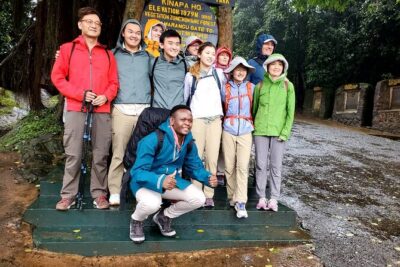
The climb begins at Machame Gate inside Kilimanjaro National Park. From there, the trail enters rainforest, with thick foliage, old trees, and the possibility of seeing colobus monkeys.
This is a fine opening day because the forest gives you shade and a softer introduction to the mountain. The path still requires effort, and eight hours on foot can feel long if you arrive underprepared. Your guide should set a measured pace from the start. A slow first day is not wasted time. It helps conserve energy for the harder upper sections.
You finish at Machame Camp for the night. The camping setup includes tents, sleeping mats, chairs, and tables, plus a cook and porters. That service matters after a full day on your feet. You are not expected to carry the entire camp or prepare dinner, though you should confirm the exact meal plan because breakfast, lunch, and dinner are marked as optional in the supplied details.
Day 2: From Machame Camp to Shira Camp
Day 2 carries you out of the rainforest and into heath and moorland. The change happens gradually, and that shift is one of the route’s pleasures. Trees thin out, the views open, and the vegetation becomes more suited to higher ground.
You finish at Shira Camp, where broad views give you a better sense of the mountain ahead. The route description again allows about eight hours, so you need comfortable footwear, layers, water, and a willingness to walk slowly.
Shira is important for more than its scenery. It is your first night in a higher zone, and the body begins adjusting to reduced oxygen. You may feel fine at camp, or you may notice a headache, tiredness, or a change in appetite. Tell the guide early if you feel unwell. A professional guide is most useful when you give clear information rather than trying to hide discomfort.
Day 3: Lava Tower at 4,600 meters
The third day is the key acclimatization section. You climb from Shira Camp toward Lava Tower, passing through heath and moorland and reaching about 4,600 meters.
That high point gives you dramatic views and a real taste of the altitude near the summit zone. The schedule then describes a descent back to Shira Camp. Walking high and sleeping lower is a sensible pattern for acclimatization, and it makes this day valuable even though it may feel like you are giving back some of your hard-earned height.
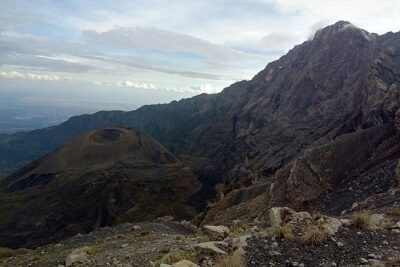
Lava Tower is also where the trip becomes less forgiving. The air is thinner, the terrain more exposed, and the rocky ground can slow your pace. An eight-hour day at this height is serious work. You should keep your daypack light and rely on the porters for the main camping load.
There is an itinerary point to clarify here. The following day is described as starting from the Barranco Wall area and ending at Karanga Camp, but the schedule does not clearly explain the transfer or trail connection from Shira Camp. Ask Aglow Safaris for the exact night-to-night route. A clear plan helps you understand both the physical demands and the camp locations.
A few more options to weigh up in Arusha
- Balloon Safari & Bush Breakfast in Serengeti – Miracle Experience
★ 5.0 · 1,646 reviews - Tanzania Classic – 7 Days
★ 5.0 · 1,151 reviews - 4 Days Group Camping Safari
★ 5.0 · 1,101 reviews - 5 Days Group Camping Safari
★ 5.0 · 730 reviews
Day 4: Barranco Wall to Karanga Camp
Day 4 features the Barranco Wall, one of the best-known challenges on this route. The path crosses alpine desert terrain before reaching Karanga Camp at about 4,035 meters.
The wall sounds intimidating, but the important point for you is that this is a hands-on mountain section, not a simple walk along a level trail. Your guide will control the pace and help the group manage the rocky route. You should expect a demanding day with striking views, exposed ground, and a strong sense that the summit is getting closer.
Karanga Camp sits beneath the high glaciers and provides another chance to adjust before the final climb. The schedule describes about eight hours of hiking. That makes the evening at camp valuable. Eat what you can, drink regularly, organize your clothing, and protect your sleep time.
The word acclimatization appears often in Kilimanjaro planning, but here it has a practical meaning. You are not trying to become completely comfortable at altitude. You are giving your body repeated, controlled exposure while watching for warning signs.
Day 5: Karanga Camp to Barafu Camp
You climb from Karanga Camp at 4,035 meters to Barafu Camp at 4,640 meters. The terrain is rocky, the surroundings are alpine desert, and there is little softness in the day’s scenery or footing.
Barafu is the staging camp for the summit attempt. You arrive, rest, and prepare to leave around midnight. This day is not only about reaching camp. It is about keeping enough energy for the night ahead.
The schedule allows about eight hours, but your actual pace may be slower. At this height, small tasks take more effort. Pack your summit essentials before dinner rather than waiting until you are exhausted. Keep warm layers, gloves, a head covering, water, and any personal medication close at hand. The supplied information does not specify a personal equipment list, so ask the operator what you must bring yourself.
The camping equipment and crew support are particularly valuable here. A tent, sleeping mat, chairs, and tables mean you have a place to rest without carrying the entire setup. The porters and cook also allow you to focus on food, hydration, and sleep.
Day 6: The midnight push to Uhuru Peak
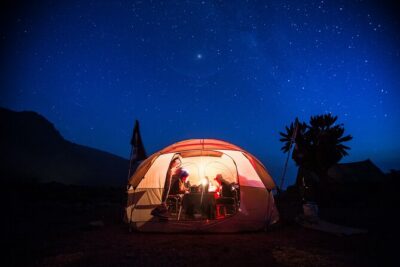
The summit day starts around midnight. You climb steep, rocky ground under the stars, with the goal of reaching Uhuru Peak as dawn arrives.
This is the hardest part of the trip. You have already spent several days walking, and you now face altitude, cold, darkness, and a long return. The schedule lists eight hours, but that figure should not be treated as the full amount of effort for the day. The ascent and descent together are demanding, and the exact timing can vary.
The reward is the summit at Uhuru Peak, the highest point on Mount Kilimanjaro. Reaching it near sunrise gives you a powerful moment, but the mountain does not become easy once you take photographs. You still need to descend safely, follow the guide’s instructions, and conserve energy.
I like that the program presents the summit as a team effort supported by a professional guide and mountain crew. You are not handling route finding, camp work, and cooking alone. At the same time, no guide can remove the effects of altitude. Your willingness to turn around if necessary remains part of responsible climbing.
The schedule does not clearly state where you sleep after reaching the summit. Day 7 begins at Mweka Camp at 3,080 meters, so ask Aglow Safaris to confirm whether the descent to Mweka takes place on Day 6 and how long that section usually lasts.
Day 7: Mweka Camp to Mweka Gate
The final day descends through rainforest from Mweka Camp at about 3,080 meters to Mweka Gate. After the stark upper mountain, the return to thick forest feels like a change of world.
Downhill walking can be harder on knees and toes than expected. Take short steps and use trekking poles if you bring them. You may feel relief, tiredness, or both. At the gate, the program includes collecting certificates and celebrating the achievement before transfer back toward Arusha or Moshi.
The listed finish is the original meeting point at Kilimanjaro International Airport, but the day description specifically mentions transfer to Arusha or Moshi. Confirm the final drop-off location, especially if you have a later flight or another safari booked.
What the $4,550 price covers
At $4,550 per person, this is a high-cost mountain holiday. The value depends on how much support you want and how clearly the operator handles the practical side.
The package includes national park fees, a professional English-speaking guide, cook, porters, camping equipment, hotel and mountain-tent accommodation, and coffee or tea. Those inclusions cover major expenses that can otherwise appear as add-ons. Park fees alone are a significant part of a Kilimanjaro budget, and a staffed camp is far easier than carrying and preparing everything yourself.
Meals are listed as breakfast, lunch, and dinner, but each is marked optional in the supplied information. Do not assume that every meal is included without asking. Get the answer in writing, along with the hotel nights, airport transfers, porter arrangements, and any equipment that is not supplied.
You must budget separately for alcoholic and soft drinks, tips, travel insurance, and visa fees. Tips are a normal part of the overall cost for a supported climb, but no amount is provided here. Ask Aglow Safaris how the crew tip is handled so you can plan fairly and avoid confusion at the end.
The mountain crew and the human side of the climb
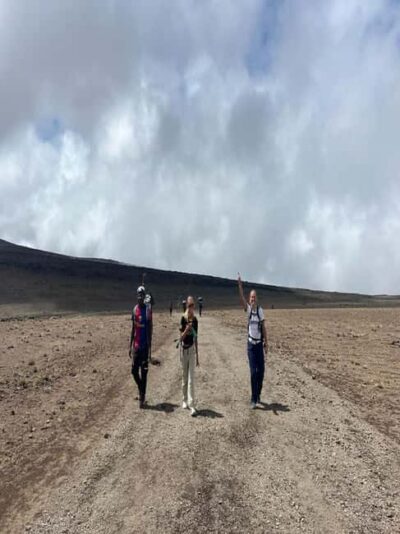
The strongest praise attached to this experience concerns the crew’s role in making the trip memorable. A group account describes more than 10 crew members supporting the climb, which suggests that Aglow Safaris can provide a substantial support team.
That can mean a cook preparing hot food, porters moving camping supplies, and a guide concentrating on route management and safety. It also means you should ask respectful, practical questions about porter welfare, luggage weight, sleeping arrangements, and how tips are divided.
The maximum group size of 20 gives the experience a more manageable feel than a mass departure. Still, 20 climbers is enough for different speeds and fitness levels. Ask how the guide handles a split in pace and whether extra guides are assigned as the group grows.
The tour currently has only a small amount of public feedback, so I would not treat the perfect rating as a complete record of performance. The positive account is useful, especially its praise for the crew and the memorable group experience, but the limited sample makes direct questions important.
Who should choose this Kilimanjaro climb?
This trip suits you if you want a supported camping climb with a fixed seven-day plan and a professional English-speaking guide. It is also a good fit if you value changing scenery, a large support crew, and park fees and camping equipment bundled into one price.
You need to be comfortable with long hiking days, basic mountain camping, a midnight start, and high altitude. The listing says most people can participate, but that should not be confused with an easy holiday. You should assess your own fitness and obtain suitable travel insurance before departure.
This may not suit you if you need a relaxed schedule, guaranteed hotel comfort every night, or a detailed itinerary with no unclear transitions. The route is physically demanding, and the final summit attempt depends on conditions, health, and the guide’s judgment.
Booking, cancellation, and practical checks
Confirmation is received at booking, and the activity operates Monday through Sunday from 8:00 a.m. to 5:00 p.m. The booking is offered with a mobile ticket, which is convenient at the meeting point.
Free cancellation is available if you cancel at least 24 hours before the experience start time. Cancellations or changes within 24 hours are not accepted for a refund. The cut-off follows local time.
Before booking, I would ask Aglow Safaris these questions:
- Which nights are in a hotel, and which are in tents?
- Are breakfast, lunch, and dinner included in the $4,550 price?
- What is the exact route from Shira Camp to Barranco?
- Where do you sleep after the summit attempt?
- How many guides accompany a group of 20?
- What personal equipment must you bring?
- How are porter tips organized?
Those questions are not fussing over small print. They help you compare this climb fairly with other Kilimanjaro programs.
Should you book this seven-day climb?
I would consider booking this tour if you want the Machame Route with strong logistical support and you value having a cook, porters, park fees, tents, and an English-speaking guide handled in one package. The changing terrain and Lava Tower acclimatization day give the week a sound shape, while the crew support can make a major difference at high camp.
I would pause before paying the full amount until Aglow Safaris clarifies the Shira to Barranco transition, the post-summit sleeping arrangement, and the meaning of the optional meal entries. If those details are confirmed and the price fits your budget, this looks like a serious, well-supported attempt on Kilimanjaro rather than a bare-bones trek.
FAQ
How long is the Kilimanjaro hiking experience?
The experience lasts approximately seven days, with about eight hours of activity listed for each day.
Which route does the climb use?
The climb is described as using the Machame Route.
Where does the experience start?
The listed meeting point is Kilimanjaro International Airport on Kilimanjaro Airport Road, Tanzania.
Where does the experience end?
The activity ends back at the meeting point. The final day also describes a transfer toward Arusha or Moshi, so confirm the exact drop-off location with Aglow Safaris.
Is a professional guide included?
Yes. The package includes a professional English-speaking guide.
Are porters and a cook included?
Yes. The mountain crew includes a cook and porters.
Is camping equipment provided?
Yes. The included equipment is listed as tents, sleeping mats, chairs, tables, and related camping equipment.
Are national park fees included?
Yes. All national park fees are included.
What is not included in the price?
Alcoholic and soft drinks, tips, travel insurance, and visa fees are not included. Breakfast, lunch, and dinner are listed as optional, so confirm the meal arrangements before booking.
Just added in Arusha
- Safari “Kifaru” – 5 days in the most famous Parks in the world★ 5.0 · 4 reviews
- Saadani Day Trip★ 5.0 · 13 reviews
- 3 Days Tanzania Short and Spicy★ 5.0 · 6 reviews
- 5 Day Tanzania Safari Camping Adventure Private Tour★ 5.0 · 2 reviews
- Day Trip to Ngorongoro Crater from Arusha★ 5.0 · 1 review
- SERENGETI NATIONAL PARK Tour★ 4.5 · 5 reviews
- 3 Days Serengeti Park & Ngorongoro Crater Adventure Safari★ 5.0 · 8 reviews
- 6 Days Tanzania Bush Experience Safari★ 5.0 · 6 reviews
Hiking & Trekking, compared.
8-Day Small-group Lemosho Kilimanjaro Summit Trekking
Read our review →
Private Full Day Hiking Experience to Marangu Route
Read our review →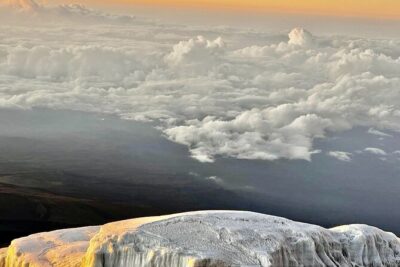
From Arusha/Moshi: Kilimanjaro Hike Marangu Route Day Trip
Read our review →
4 days Best experience Kilimanjaro Hike, Serengeti &Ngorongoro
Read our review →
Best Kilimanjaro hiking day trip tour with Kilinge Adventures
Read our review →Browse the lists this tour appears in