Reviewed · SERENGETI & NGORONGORO SAFARIS
Camping to Serengeti & Ngorongoro Premium Parks
The wild gets real fast. This three-day safari links the Serengeti with Ngorongoro Crater, combining long game drives, open-roof 4WD transport, and camping close to Tanzania’s best-known animals. I like that meals, water, park fees, camping gear, guides, and transport are included, and I also like the chance to see the Big Five in two very different settings. The main drawback is the pace: reaching the Serengeti from Arusha takes much of the first day, so you should expect long hours on the road.
A private vehicle gives your group more say over stops and viewing time. Guides such as Simba, Steve, Nasr, and Chedy have been praised for sharp animal spotting, clear explanations, and friendly service. Still, wildlife is unpredictable, and three days leaves little spare time if roads, weather, or animal movements slow the schedule.
In This Review
- Key points to know before booking
- Why this three-day route works
- Leaving Arusha at 6:30 a.m.
- Day One: the long road to Serengeti National Park
- Day Two: cats, herds, and the road to the crater rim
- Day Three: seven hours inside Ngorongoro Crater
- Camping comfort, food, and what the price covers
- The guides make the difference
- The Big Five question
- Who should book this safari?
- Should you book the $815 safari?
- FAQ
- Where does the safari start?
- What time does the tour start?
- Is hotel pickup available?
- Where does the tour end?
- How long is the safari?
- Is this a private tour?
- What languages are offered?
- Are meals included?
- Is camping equipment provided?
- Are park fees and transport included?
- Is tipping included?
- Can I cancel for a full refund?
Key points to know before booking
- The first day is a long transfer: You leave Arusha at 6:30 a.m. and head toward the Serengeti in an open-roof 4WD.
- Ngorongoro offers compact wildlife viewing: The crater can place lions, elephants, buffalo, and possibly rhinos within a single game drive.
- Camping equipment is included: Tents, mattresses, and sleeping bags are supplied, along with meals and mineral water.
- The private format matters: Only your group takes part, giving you more flexibility than a large shared safari.
- Big Five sightings are possible, not promised: Lions and buffalo are common, while rhinos and leopards require sharper luck and timing.
- The price covers the main costs: At $815 per person, park fees, transport, guides, food, camping, and accommodation are bundled together.
Why this three-day route works
This safari packs two of northern Tanzania’s biggest names into a short trip. The Serengeti gives you scale: broad open plains, long drives, scattered herds, and the feeling that the horizon has no end. Ngorongoro gives you concentration. Inside the crater, wildlife gathers in a contained natural bowl, making sightings feel more frequent.
I like the contrast. The Serengeti is about searching and patience. You may drive for a while with little to see, then come upon lions feeding, a cheetah on the plains, or a leopard resting in a tree. Ngorongoro is more like a wildlife theater, with grassland, acacia woodland, and water areas supporting a large mix of animals in a relatively compact area.
The route is also practical for someone based in Arusha who wants a classic safari without committing to a week-long itinerary. You receive private transportation, a professional guide, game drives, food, drinking water, and camping equipment in one price.
The compromise is clear. Three days is enough for a powerful introduction, but it is not a leisurely safari. The first day includes a major transfer to the Serengeti, and the final day includes an early crater drive followed by the return to Arusha. If you want slower mornings or several full days in the Serengeti, choose a longer trip.
More Serengeti and Ngorongoro safaris:
- Balloon Safari & Bush Breakfast in Serengeti – Miracle Experience
★ 5.0 · 1,646 reviews - 3 Days Serengeti & Ngorongoro Group Camping Safari
★ 5.0 · 574 reviews - 5-Day Highlights mid-Range Crater, Serengeti, Tarangire
★ 5.0 · 296 reviews
Leaving Arusha at 6:30 a.m.
The meeting point is the Arusha Clock Tower, and pickup from an Arusha hotel is available. Airport pickup and return are also included in the package information, although you should confirm the exact arrangement before departure if your flight schedule is tight.
The early start is useful. You gain more daylight for the drive and reach the Serengeti with time for an afternoon arrival. An open-roof 4WD is a good match for a safari because you can look out across the plains and raise the roof for animal viewing, but the ride can be dusty and tiring on long stretches.
Bring a light layer for the morning, sun protection for the middle of the day, and something to cover your mouth and nose if dust bothers you. The tour includes mineral water, but it is still sensible to carry a small day bag with personal items, medication, and camera supplies.
Because this is a private activity, your group is not combined with other passengers. That can make a real difference when you want to spend extra time watching a pride of lions or move on quickly from a common animal. It also means the final cost depends on the number of people sharing the vehicle, so ask about group discounts before paying.
Day One: the long road to Serengeti National Park
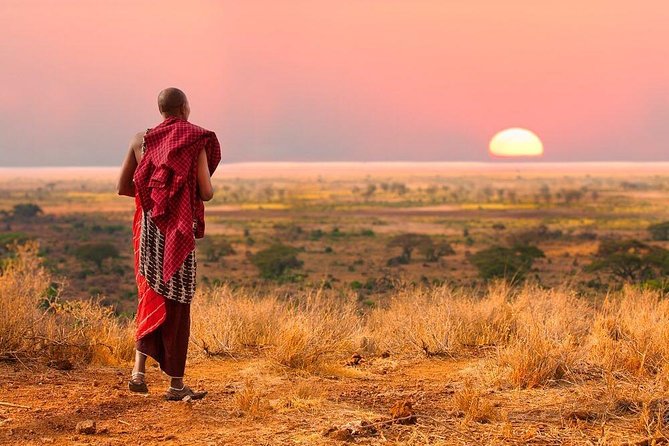
The first day is built around the journey from Arusha to the Serengeti. The park is famous for its open plains and large animal populations, and the name Serengeti is associated with the idea of endless plains. That sense of space is part of the attraction, but it also explains why getting there takes time.
The drive is not simply a boring transfer. The scenery changes as you move toward one of East Africa’s best-known wildlife areas, and the open-roof vehicle gives you a broad view along the way. Still, do not expect a full day of game viewing on Day One. The schedule says you arrive at the destination in the afternoon, followed by dinner and an overnight stay at the recommended campsite.
Camping here is the heart of the experience. Tents, mattresses, and sleeping bags are included, so you do not need to bring a full camping kit. The word premium in the tour name should not make you expect a luxury tented camp every time, however. Accommodation is described as camping according to the itinerary, while some bookings have included a lodge or the Serengeti Serena Lodge. Confirm the exact accommodation category for your dates.
That distinction matters. A campsite gives you a closer, simpler connection with the park and can make the night feel like part of the safari rather than a break from it. A lodge offers more structure and comfort. The package wording leaves room for variation, so ask where you will sleep before booking.
Day Two: cats, herds, and the road to the crater rim
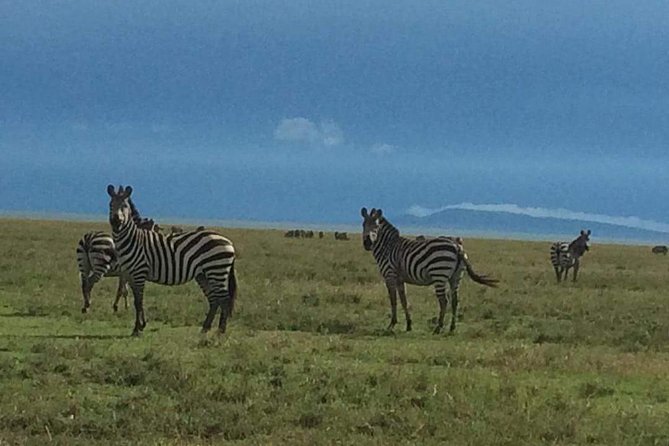
Day Two begins with a morning game drive in the Serengeti. This is one of the strongest parts of the plan because early hours are well suited to wildlife viewing, and the itinerary focuses on the park’s large cats.
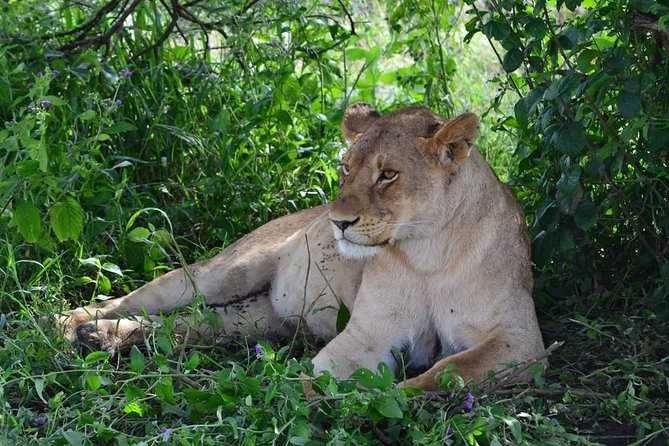
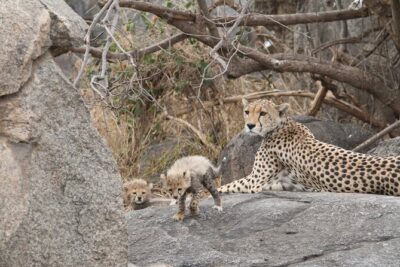
Lions are described as common, and you might see them resting, hunting, or feeding. Cheetahs are especially associated with the southeastern plains. Leopards may be found near the Seronera River, often resting in large trees. Those sightings are never guaranteed, but the guide’s ability to read the terrain is important here.
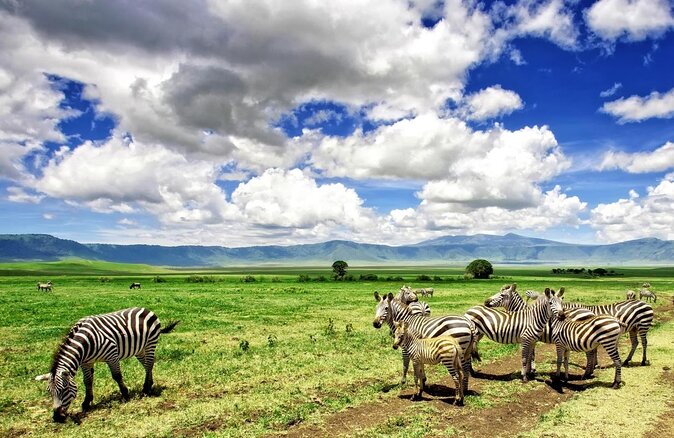
The Serengeti also supports buffalo, elephants, giraffes, eland, topi, kongoni, impala, and Grant’s gazelles. You may see zebra and wildebeest as well, with the timing of migration affecting where the largest gatherings appear. One especially memorable possibility is a mixed herd of wildebeest and zebra moving across the plains.
The park is enormous, so patience is part of the deal. You may drive for a long stretch without a major sighting. That is not necessarily poor planning. In a park this large, animals are spread out, and the best moments often come after a quiet period. A good guide can help by explaining what to watch for and adjusting the route to your interests.
After lunch, the group drives toward Ngorongoro. The schedule then brings you to the crater edge, where the first view is a major scenic moment. From above, the crater’s enclosed form makes an immediate impression. Dinner and another overnight stay follow at a recommended campsite.
This is a busy day, but the order makes sense. You receive a substantial Serengeti game drive before moving to the next park, then arrive at Ngorongoro in time to appreciate the crater from above. You should not expect a long, relaxed afternoon at camp.
A few more options to weigh up in Arusha
- Tanzania Classic – 7 Days
★ 5.0 · 1,151 reviews - 4 Days Group Camping Safari
★ 5.0 · 1,101 reviews - 5 Days Group Camping Safari
★ 5.0 · 730 reviews - Materuni Waterfalls, coffee tour & Kikuletwa Hot Springs
★ 5.0 · 643 reviews
Day Three: seven hours inside Ngorongoro Crater
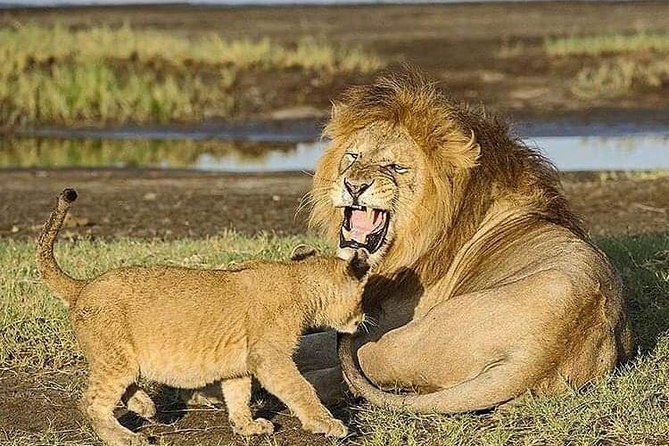
The final day starts early, with breakfast at daybreak before the vehicle descends into the crater. The crater is a large unbroken caldera with grassland and acacia woodland, and its contained geography supports a wide range of East African animals.
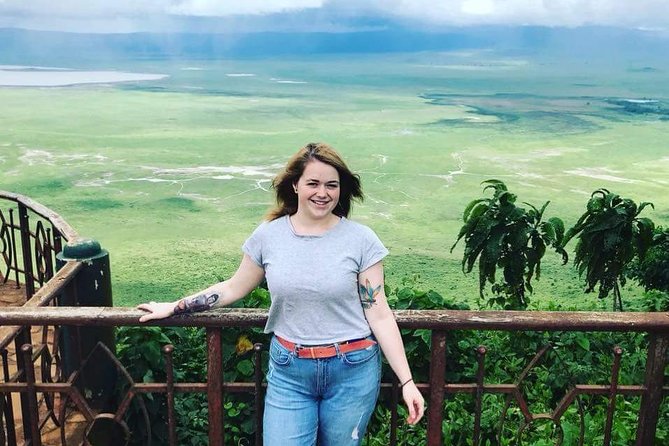
This is the best part of the itinerary for people who want to maximize the chance of seeing several major species in a short time. Lions, elephants, buffalo, and possibly rhinos can all appear during the same day. Leopards are also present, though they are harder to find. The itinerary notes that topi, Masai giraffes, and impalas are exceptions to the usual species mix here, so do not assume every Serengeti animal will appear inside the crater.
The game drive lasts about seven hours. That is long enough to cover a good amount of ground, but it also means you should prepare for dust, sun, and extended time in the vehicle. The reward is the range of habitats and the possibility of repeated sightings without the same long searches required in the Serengeti.
Ngorongoro has been a favorite stop for many people on this route, and it is easy to understand why. The crater gives you dramatic views before the drive begins, then delivers a concentrated wildlife experience below. A rhino sighting is possible, but you should treat it as a bonus rather than a promise. The Big Five are a goal, not a guarantee.
After the crater drive, you return to Arusha for a hotel overnight. The schedule says a flight home may be possible that night or on the second day. Do not book a close connection without confirming the actual return time with the operator. Safari roads and animal viewing do not always follow a strict clock.
Camping comfort, food, and what the price covers
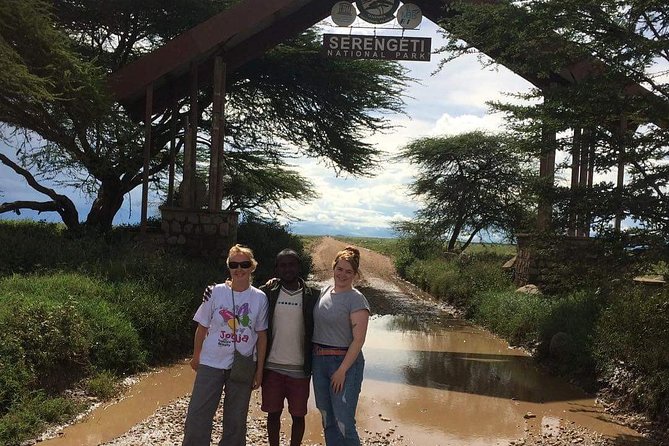
The listed price is $815 per person. That is not a bargain-basement day trip, but it includes the expensive parts of a northern Tanzania safari: park fees and taxes, private transport, professional guides, game drives, accommodation, camping equipment, mineral water, and meals.
The food allowance includes three lunches, two dinners, and three breakfasts. The package also lists three breakfasts even though the main itinerary describes two nights, so confirm the meal plan and the accommodation sequence when you book. Food has been a strong point in the experience, with particular praise for the camp cooking and the meals served in the Serengeti.
Tips are not included. Set aside money for the guide, driver, and cook if you feel the service deserves it. The exact tipping amount is not specified here, so ask for local guidance during the pre-safari briefing.
Accommodation can vary between camping and lodge-style stays. One booking included the Serengeti Serena Lodge, with comfortable rooms, good food, and a swimming pool. Other accounts describe a wild camp, an overnight stay where the sunrise and nearby wildebeest made the setting especially memorable.
That variation is worth clarifying. If your priority is authentic camping, ask for a campsite and details about the tent, mattress, and sleeping bag. If you need more hotel comfort, ask if a lodge upgrade is available and what it costs.
The guides make the difference
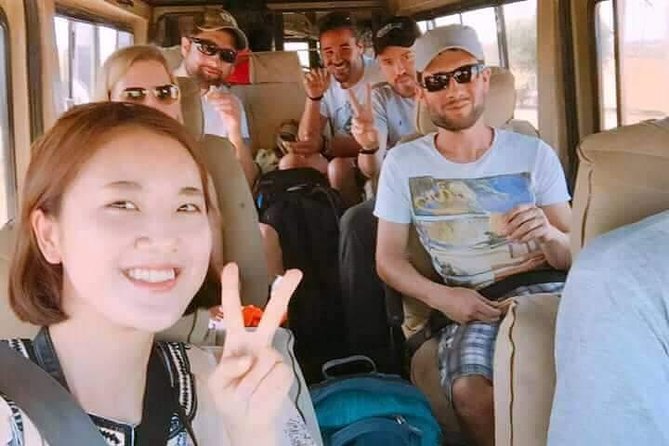
A safari vehicle is only as useful as the person driving it. The strongest praise here goes to the guides’ animal spotting, timing, communication, and willingness to listen.
Simba is singled out for helping groups find the Big Five, while Steve is praised for strong area knowledge and for shaping the day around what the group wanted to see. Nasr appears to handle arrangements and customer care, including airport pickup and pre-safari communication. Chedy is also described as friendly and funny, with the cooking adding to the family-style atmosphere.
The language options are English, German, Italian, French, and Spanish. Ask for your preferred language when booking rather than assuming it will be available on every departure.
A good guide does more than point at animals. You want someone who explains behavior, gives you time to watch, and respects the animals’ space. The best moments described from this safari include lions with cubs, large lion groups, cheetahs, elephants, giraffes, buffalo, hippos, crocodiles, zebra, wildebeest, gazelles, and a leopard. Those sightings show the route’s range, but they do not turn wildlife into a scheduled performance.
The Big Five question
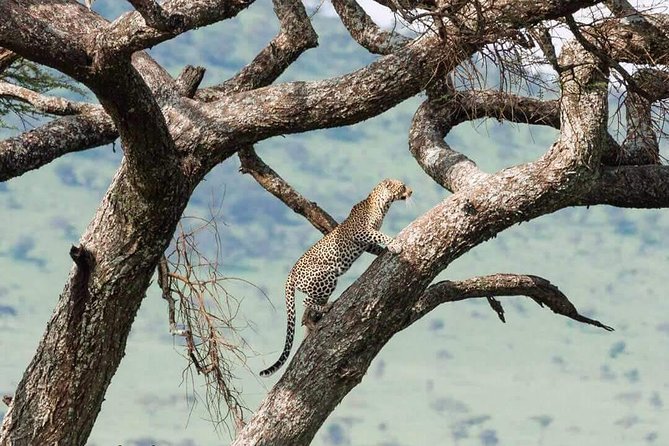
This safari gives you a legitimate chance to see Africa’s Big Five: lion, elephant, buffalo, rhino, and leopard. The Serengeti is especially strong for lions, cheetahs, and leopards, while Ngorongoro can make it easier to search for buffalo, elephant, lion, and rhino within a more contained area.
Still, I would not book solely on a promise of all five. Rhinos can be difficult to spot, leopards are elusive, and animal movement changes by season and day. A group on this route did see all five, while another saw one rhino. That is a good picture of safari reality: excellent odds for many animals, but no guarantee for any specific sighting.
The safari is just as valuable when the Big Five do not appear. Watching wildebeest and zebra move together, seeing young animals, or finding a cheetah in the open plains can be more memorable than checking off a list.
Who should book this safari?
This trip suits you if you have three days, want the classic Serengeti and Ngorongoro combination, and prefer a private vehicle with major costs bundled into one price. It is also a good fit if camping appeals to you but you do not want to carry tents, mattresses, and sleeping bags from home.
Families can benefit from the private setup, especially when a child or family member needs a slower pace or extra help. One group received additional care after a family member injured a foot before departure, including a pre-safari briefing at the hotel.
You should think twice if long road transfers are difficult for you, if you want luxury accommodation every night, or if your flight leaves immediately after the crater drive. The route is efficient, but it is not slow.
The operator has a perfect recommendation record from 23 ratings, with repeated praise for guides, food, organization, and wildlife viewing. That is encouraging, though you should still confirm the exact vehicle, campsites, lodge arrangements, and airport timing for your booking.
Should you book the $815 safari?
Book it if you want a compact, well-supported introduction to Tanzania’s two headline parks. The private vehicle, included park fees, supplied camping gear, meals, water, and guide service make the $815 price easier to justify than a package that adds costs one by one.
I would book this for the contrast between the vast Serengeti and the concentrated wildlife of Ngorongoro. I would also book it for the chance to work with guides such as Simba or Steve, while confirming availability in advance.
Skip it if you need a relaxed schedule or guaranteed lodge accommodation. For everyone else, this is a strong three-day choice, provided you arrive ready for early starts, long drives, simple camping, and the delightful uncertainty of wild animals.
FAQ
Where does the safari start?
The stated meeting point is Arusha Clock Tower at the Clocktower Roundabout in Arusha, Tanzania.
What time does the tour start?
The start time is 6:30 a.m.
Is hotel pickup available?
Yes. Hotel pickup from Arusha is available, and airport pickup and return are also listed as included services.
Where does the tour end?
The activity ends back at the meeting point in Arusha. The itinerary also says you will be driven to your hotel in Arusha after the Ngorongoro game drive.
How long is the safari?
The experience lasts approximately three days. The Ngorongoro Crater game drive on Day Three is listed as about seven hours.
Is this a private tour?
Yes. Only your group participates in the activity.
What languages are offered?
The tour is offered in English, German, Italian, French, and Spanish.
Are meals included?
Yes. The package lists three lunches, two dinners, and three breakfasts. Confirm the exact meal schedule because the accommodation details may vary.
Is camping equipment provided?
Yes. Tents, mattresses, and sleeping bags are included.
Are park fees and transport included?
Yes. All fees and taxes, private transportation, professional guides, game drives, and mineral water are included.
Is tipping included?
No. Tips are not included in the price.
Can I cancel for a full refund?
Yes, if you cancel at least 24 hours before the experience start time. Cancellations within 24 hours are not refunded, and changes within that period are not accepted.
Just added in Arusha
- Safari “Kifaru” – 5 days in the most famous Parks in the world★ 5.0 · 4 reviews
- Saadani Day Trip★ 5.0 · 13 reviews
- 3 Days Tanzania Short and Spicy★ 5.0 · 6 reviews
- 5 Day Tanzania Safari Camping Adventure Private Tour★ 5.0 · 2 reviews
- Day Trip to Ngorongoro Crater from Arusha★ 5.0 · 1 review
- SERENGETI NATIONAL PARK Tour★ 4.5 · 5 reviews
- 3 Days Serengeti Park & Ngorongoro Crater Adventure Safari★ 5.0 · 8 reviews
- 6 Days Tanzania Bush Experience Safari★ 5.0 · 6 reviews
Serengeti & Ngorongoro Safaris, compared.
Serengeti Balloon Safari and authentic bush breakfast
Read our review →
Balloon Safari & Bush Breakfast in Serengeti – Miracle Experience
Read our review →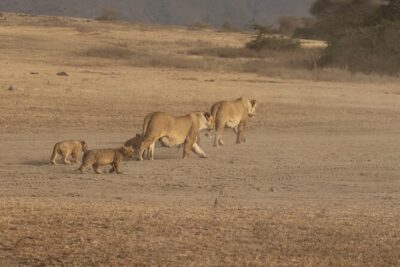
3 Days Serengeti & Ngorongoro Group Camping Safari
Read our review →
5-Day Highlights mid-Range Crater, Serengeti, Tarangire
Read our review →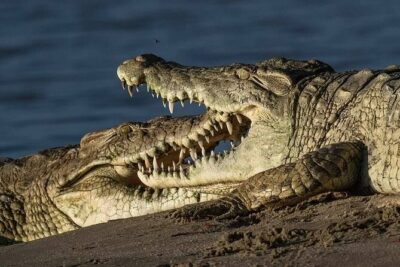
Private 6-Day Tarangire Manyara Crater and Serengeti with Mid-Range Lodges
Read our review →