Reviewed · PRIVATE
Jambiani Village Cultural Private Tour
Meet Zanzibar beyond the beach. This four-hour walking tour gives you a close look at daily life in Jambiani, a relaxed coastal village where local families, women-led seaweed farms, coconut skills, rope making, religion, and tourism all connect. I like the focus on practical activities rather than a quick drive past village sights, and I like that the tour supports local people directly through homes, farms, and personal meetings.
The other strong point is the private format. Your group walks at its own pace and can spend more time asking questions than it could on a large bus tour. The main consideration is the travel time: allow about two extra hours for transport to and from your hotel, and expect a moderate amount of walking in warm weather.
In This Review
- Key points at a glance
- Why Jambiani is worth your morning
- Walking through Jambiani’s village streets
- Inside a local home: coconut milk by hand
- Seaweed farms and women’s work on the coast
- Coconut-fiber rope and Swahili herbs
- A local lunch in a villager’s home
- What $167 per person really gets you
- Private touring and the pace of the day
- Who will enjoy this Jambiani experience
- How to make the most of the visit
- Should you book the Jambiani Village Cultural Private Tour?
- FAQ
- Where does the Jambiani Village Cultural Private Tour take place?
- What time does the tour start?
- How long does the tour last?
- Is hotel pickup available?
- Is this a private tour?
- What is included in the price?
- What activities are included?
- Can I cancel for a full refund?
Key points at a glance
- A walking tour through real Jambiani: See village streets, homes, daily work, culture, religion, and changing local architecture.
- Hands-on coconut making: Visit a local home and try turning coconut into milk while learning how widely the coconut is used.
- Women’s seaweed farming: Visit coastal seaweed farms and learn about an industry employing more than 15,000 people, mainly women.
- Traditional rope and plant skills: Try coconut-fiber rope making and learn about Swahili herbs.
- Local lunch included: Eat a meal prepared in a villager’s home, with bottled water and entrance fees covered.
- Private, flexible format: Only your group participates, with pickup offered and group discounts available.
Why Jambiani is worth your morning
Zanzibar is easy to admire from a resort balcony. It is harder to understand from there. Jambiani gives you a chance to see the working village behind the coast, where homes, family life, small-scale production, religion, and tourism sit side by side.
This is not a tour built around grand monuments. Its sights are ordinary by design: village roads, local houses, seaweed plots, handmade rope, and the people who keep these skills alive. That is the point. You are not simply looking at Zanzibar. You are learning how parts of it function.
The tour also gives attention to the role of women in village life. That matters here because seaweed farming is mainly carried out by women and has become an important source of work along the coast. You will hear how tourism can bring income into the community, but you also get to see the daily activities that existed before a visitor arrived.
I like this balance. The tour presents tourism as useful when it creates direct contact and direct income, rather than treating the village as a backdrop.
A few more options to weigh up in Zanzibar
- From Zanzibar: Mikumi Safari Day Trip with Flights and Meal
★ 4.7 · 1,470 reviews - Zanzibar: Quad Bike Adventure departing from Kendwa or Nungwi
★ 4.9 · 1,233 reviews - Zanzibar: Stone Town, Spice Tour, Prison Island with Lunch
★ 4.4 · 1,219 reviews
Walking through Jambiani’s village streets
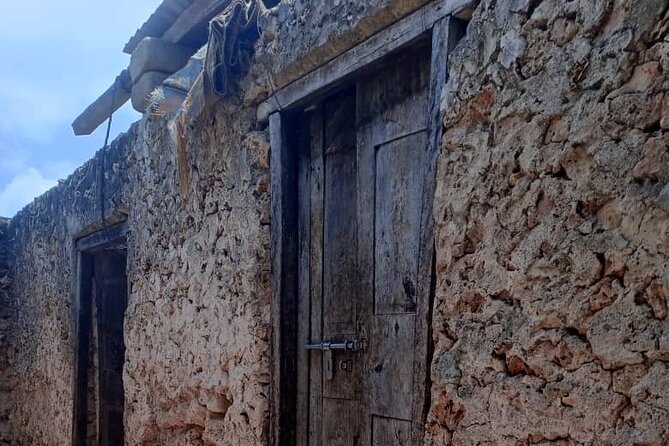
The tour begins at 9:00 a.m. in Jambiani, with a guided walk through the village. The streets lead you through a settlement shaped by different periods of local building and family life. The architecture is part of the story, even when no single building is famous.
Expect a close look at the way the village is arranged and how people use shared spaces. You will see daily routines taking place around you, with the guide explaining the links between local culture, religion, work, and family responsibilities.
The walk is also the best part of the tour for getting a feel for Jambiani. A vehicle can show you the coast, but walking lets you notice small details and pause when something needs explaining. Since this is a private outing, you can ask about customs or village life without trying to be heard over a large group.
There is a practical point here: this is a walking tour, not a sightseeing ride. The operator asks for a moderate physical fitness level. You should be comfortable walking for several hours in warm conditions, though the total duration is generally about four hours before the extra transport time.
Inside a local home: coconut milk by hand
One of the most useful stops is a visit to a local house to learn about coconut uses and try making coconut milk. This turns a familiar food into a lesson in local work.
Coconut is not presented as a decorative tropical symbol. You get to see how it is processed and how it can be used in household life. Making the milk yourself gives the stop a practical edge. You are not only hearing an explanation, you are taking part in a simple task.
This kind of activity works well for families, curious eaters, and anyone who prefers demonstrations with a clear purpose. It also creates a natural setting for questions about food, domestic life, and the role of the home in the village.
The visit requires respect and attention. You are entering someone’s home, not a museum. Listen carefully, ask before handling anything beyond the activity, and remember that the value of this stop comes from the personal exchange.
Seaweed farms and women’s work on the coast
The seaweed farm visit adds an important economic lesson. Seaweed farms dot the coastline and employ more than 15,000 local people, mainly women. The tour explains how production works and why it matters to the local economy.
You will see the farming area and learn about the work rather than simply photographing the coast. The activity connects the village to a wider market while remaining rooted in small-scale local labor. It also gives you a clearer picture of how women contribute to household income and community life.
This may be the most significant stop for anyone interested in responsible tourism. Your visit brings attention and payment to a local activity, but it also asks you to look at the work itself. That makes the experience more useful than a generic statement about helping communities.
Conditions at a working coastal farm may be basic. Do not expect a polished visitor center or a formal exhibition. The appeal is the direct setting and the chance to learn from people connected to the work.
A different kind of day out entirely:
- From Zanzibar: Day Selous Game Reserve Safari with Flights
★ 4.7 · 1,025 reviews - Zanzibar: Prison Island and Nakupenda Boat Trip with Lunch
★ 4.1 · 882 reviews - Skydive Zanzibar | Tandem Skydive
★ 5.0 · 877 reviews - Quad Adventures in Zanzibar: Nungwi / Kendwa
★ 4.9 · 640 reviews
Coconut-fiber rope and Swahili herbs
The rope-making session gives you another hands-on look at local skill. You learn how coconut fiber can be turned into rope, then get a chance to try the technique yourself.
It is a small activity, but it explains how local materials can serve practical needs. It also helps you appreciate the time and handwork behind an object that might otherwise seem simple. The experience is more satisfying when you accept that you may not produce a perfect length of rope on your first attempt.
The tour also introduces Swahili herbs. The available information does not specify which herbs you will see or whether they are used for cooking, healing, or both, so you should treat this as a general introduction rather than a fixed plant lesson.
A traditional healer and a weaver may be among the people you meet during the cultural exchange, depending on the day and local arrangements. The tour can therefore feel personal and varied, but individual meetings are not guaranteed as a set schedule.
A local lunch in a villager’s home
Lunch is included and comes from a local villager’s home. That is a welcome feature after a morning of walking and activities, and it keeps more of the meal’s value within the community.
The meal is part of the cultural experience, not simply a break between stops. Food offers an easy way to continue talking about household life, ingredients, and local routines. You also receive bottled water, which is useful in Zanzibar’s heat.
The exact menu is not provided, so I would not book this expecting a specific dish. If you have dietary restrictions, confirm them before you go. The tour information only confirms a local lunch, bottled water, and fees and taxes.
What $167 per person really gets you
At $167 per person, this is not a bargain-priced village walk. The value depends on how much you want a private, community-based outing rather than a basic beach or city tour.
Your price covers a guided cultural experience, a local lunch, bottled water, and all listed fees and taxes. You also receive a private tour, meaning only your group participates. That matters if you want to ask many questions, move at a comfortable pace, or keep the outing centered on your own interests.
The price is easier to justify for couples, families, or small groups that value personal contact and direct local participation. Group discounts may improve the cost for larger bookings. If you are mainly looking for a quick introduction to Jambiani, the price may feel high for a four-hour activity.
Remember to count the transport time. Pickup is offered, and the operator notes about two additional hours for transport to and from your hotel. The tour itself lasts about four hours, so this can take up much of your day.
Private touring and the pace of the day
The private setup is one of the tour’s best practical features. You are not sharing the walk with a large crowd, and only your group takes part. That can make home visits and personal conversations feel more natural.
A private tour does not mean you can skip every scheduled activity. The experience still follows the village walk, home visit, seaweed farm, rope making, herbs, and lunch. Its main advantage is the ability to ask questions and spend a little more time where your group is most interested.
The 9:00 a.m. start is sensible. It leaves time for the full program and avoids pushing the main activities too late in the day. Since the tour depends on good weather, the coastal portion may be changed or canceled if conditions are poor.
The operator provides confirmation at booking. You should also allow for the stated transport period when planning other activities, especially if you have an afternoon flight, a cruise departure, or a fixed hotel schedule.
Who will enjoy this Jambiani experience
I would recommend this tour to you if you want to meet local people, understand village work, and take part in simple traditional skills. It suits visitors who find a conversation or a working demonstration more rewarding than a list of monuments.
It is especially useful for:
- Couples looking for a private cultural outing
- Families who enjoy hands-on activities
- Visitors interested in women’s work and local economies
- Anyone who wants a break from resort life
- Small groups that can make use of group discounts
- Curious eaters who appreciate a local home meal
You may want to choose another activity if you dislike walking, prefer a tightly timed sightseeing schedule, or expect polished facilities at each stop. This is a village experience, and its setting is personal and practical rather than staged like a large attraction.
How to make the most of the visit
Wear comfortable clothing suitable for walking and warm weather. The tour requires moderate fitness, so practical shoes matter more than dressing for photographs.
Bring patience. The best parts of the outing are conversations and demonstrations, and those do not always move at the speed of a standard sightseeing program. Ask questions, but give people room to explain their work in their own way.
Keep your expectations clear. You are not signing up for a major historical site or a formal museum. You are signing up to learn how coconut is processed, how rope is made, how seaweed farming supports coastal families, and how village life is shaped by culture and religion.
It is also wise to leave space in your day. The activity lasts four to six hours, depending on the exact program, and transport can add about two hours. Free cancellation is available up to 24 hours before the start time, but changes made inside that period are not accepted. Poor weather may lead to another date or a full refund.
Should you book the Jambiani Village Cultural Private Tour?
Book it if you want an up-close look at Jambiani and value direct community contact. The strongest elements are the private format, the home visit, the seaweed farming lesson, the hands-on rope and coconut activities, and the included local lunch.
At $167 per person, it asks more than a simple group excursion. I think the cost makes the most sense when you are sharing it with people who enjoy asking questions and taking time with local skills. If your goal is to see a few coastal sights quickly, you can probably spend less elsewhere.
For a respectful, personal introduction to Swahili village life, this is a thoughtful choice. Just plan for walking, warm weather, transport time, and a day shaped by real community activities rather than a polished attraction.
FAQ
Where does the Jambiani Village Cultural Private Tour take place?
The tour takes place in Jambiani on the southeast coast of Zanzibar, Tanzania.
What time does the tour start?
The stated start time is 9:00 a.m.
How long does the tour last?
The main tour lasts about four hours, with the overall experience listed as approximately four to six hours. You should also allow about two additional hours for transport to and from your hotel.
Is hotel pickup available?
Pickup is offered. The tour information also notes additional transportation time to and from the hotel.
Is this a private tour?
Yes. Only your group participates in the activity.
What is included in the price?
The price includes a local lunch from a villager’s home, bottled water, and all fees and taxes.
What activities are included?
You walk through Jambiani, visit a local home to learn about coconut uses and make coconut milk, visit a seaweed farm, try coconut-fiber rope making, and learn about Swahili herbs.
Can I cancel for a full refund?
Yes. You can cancel at least 24 hours before the experience start time for a full refund. If poor weather causes cancellation, you will be offered another date or a full refund.
Just added in Zanzibar
- Zanzibar:Ngoma local culture workshop,The Knowledge of Ngoma★ 5.0 · 1 review
- ZANZIBAR:Mnemba island, Spice farm and Jozani Forest★ 5.0 · 1 review
- Zanzibar: Zipline Adventure At Masingini Forest★ 4.6 · 2 reviews
- Zanzibar Walking Tour: Unveiling the Secrets of Stonetown★ 4.8 · 11 reviews
- Zanzibar: Walking Tour★ 4.0 · 1 review
- Zanzibar: Walking Spice Farm with Local Cooking Class★ 4.4 · 9 reviews
- Zanzibar: Uzi Island Mangrove Kayak Tour with Guide★ 5.0 · 1 review
- Zanzibar: Unique Guided Mangrove Tour by SUP or Kayak★ 5.0 · 1 review
Private, compared.

3 Hours Private Stone Town walking Tour with Guide
Read our review →
Private 6-Day Tarangire Manyara Crater and Serengeti with Mid-Range Lodges
Read our review →
Full-Day Private Stone Town +Spice Farm and Prison Island Tour
Read our review →

5-Day Private Northern Tanzania Safari from Arusha
Read our review →