
Reviewed · STONE TOWN TOURS
Private Stone Town Walking Tour
Stone Town rewards slow walking. This private tour leads you through Zanzibar’s oldest quarter, where carved doors, mosques, churches, markets, and old sultanate buildings crowd into a compact maze. I like the private format, since your group can ask questions and adjust the pace, and I like the way the route joins major sights with ordinary streets. The main drawback is that the three-hour schedule can feel tight if you want long visits inside every building or time for serious shopping.
The tour costs $43 per person, includes a professional guide and bottled water, and begins at the Old Fort. Guide quality matters here, and the strongest praise goes to Said, Osman, Ousmane, and Mohammed for clear explanations, friendly manner, language skills, and willingness to tailor the walk. You will need to arrange your own hotel transfer, and two stops charge separate admission according to the tour details.
In This Review
- Key points to know before you book
- Why Stone Town works best on foot
- Starting at the Old Fort and the House of Wonders
- The former slave market and Anglican Cathedral
- St. Joseph’s Cathedral and Stone Town’s shared skyline
- Freddie Mercury’s Zanzibar connection
- The market, narrow lanes, and the city between landmarks
- The guide can make or break the walk
- Is $43 a fair price?
- Timing, meeting point, and practical planning
- Who should book this Stone Town walk?
- Should you book the Private Stone Town Walking Tour?
- FAQ
- How long does the Private Stone Town Walking Tour last?
- Where does the tour begin?
- Where does the tour end?
- Is the tour private?
- How much does the tour cost?
- Is bottled water included?
- Is a professional guide included?
- Is transportation from my hotel included?
- Is admission to the Freddie Mercury Museum included?
- Can I cancel for a full refund?
Key points to know before you book
- The route covers five major Stone Town sights, including the House of Wonders, Old Fort, former slave market, St. Joseph’s Cathedral, and Freddie Mercury Museum.
- Your group gets a private guide, not a shared walking party, so you can ask questions and spend more time on subjects that interest you.
- The former slave market gives the tour its emotional weight, with an exhibition, cathedral, and memorial that explain Zanzibar’s role in the East African slave trade.
- Guide quality is a major strength, especially if you request Said, who is praised for French and English service, patience, humor, and local advice.
- The tour mixes grand landmarks with daily life, including narrow lanes and the local market area.
- The $43 price is strongest for small groups, since the guide’s attention and flexible pace are more valuable when shared by only a few people.
Why Stone Town works best on foot
Stone Town is not a place you understand from a car window. Its lanes twist between old buildings, and the most interesting details are often above eye level: carved wooden doors, balconies, religious buildings, and walls shaped by African, Indian, Arab, and European influence.
The tour description places Stone Town’s roots as far back as the 7th century and identifies the old town as a UNESCO World Heritage site. The exact age of individual buildings varies, but the larger point is clear: this is a port city shaped by many cultures and centuries of trade.
You begin at the Old Fort on Mizingani Road. From there, the route links famous monuments with the smaller streets between them. That matters because Stone Town is more than a checklist of buildings. The spaces between the sights help you see how the old city functions as a living neighborhood.
The walk lasts about three hours. That is enough time for a useful first look, but not enough for leisurely museum visits, extended shopping, and long stops at every landmark. I would treat it as an orientation tour with serious historical content, not as a full day of unhurried exploration.
More Walking Tours in Zanzibar
- Stone Town Private Walking Tour
★ 5.0 · 371 reviews - Zanzibar: 3 Hours Private Stone Town walking Tour with Guide
★ 4.6 · 301 reviews - Zanzibar: Stone Town Historical Cultural Walking Guided Tour
★ 4.5 · 179 reviews
Starting at the Old Fort and the House of Wonders
The House of Wonders, or Beit-el-Ajaib, is one of the tour’s headline sights. Built in 1883 by Sultan Barghash, it was described as the largest house in East Africa at the time and became famous for features that were unusual in Zanzibar, including electricity, a piped water system, and an elevator.
Those details make the building more than a grand palace. They show the sultanate’s links with new technology, international trade, and political power. Ask your guide to explain how the building fit into the wider history of the Omani sultans and Zanzibar’s position in the Indian Ocean.
The planned stop is about 30 minutes, with no admission fee listed. That is a sensible amount of time for an introduction and exterior details. If you want a long museum-style visit, check what areas are open on your date and allow extra time outside the scheduled walk.
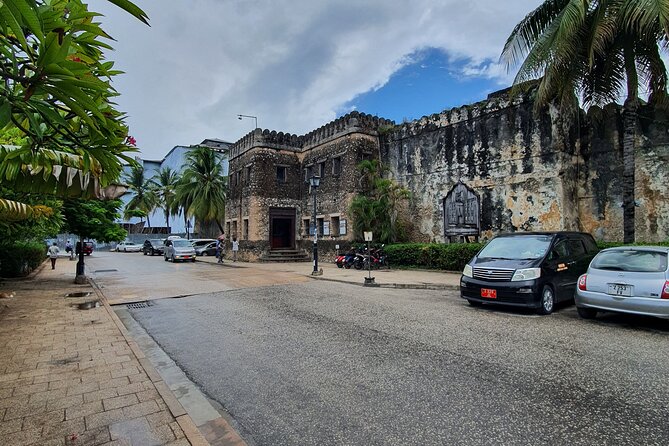
The Old Fort follows for another 30 minutes. It began as a Portuguese structure in the 17th century, was rebuilt and used by the Omanis in the 18th century, later served as a Zanzibar railway station, and now operates as a cultural center.
That sequence tells Zanzibar’s story in a compact way. Portuguese expansion, Omani rule, rail travel, and modern cultural events all left their mark here. The inner courts host festivals such as Sauti za Busara and the Zanzibar International Film Festival, so the fort remains part of the city’s present life rather than a frozen ruin.
There is no admission fee listed for the Old Fort. Its open inner spaces also make it a good place to pause, listen, and get your bearings before heading deeper into the old town.
The former slave market and Anglican Cathedral
The former slave market is the most important stop for many people, and it should not be rushed. The Anglican Cathedral of Christ Church was built on the site of what was described as the largest slave market in East Africa.
The stop lasts about 40 minutes. The tour includes the entrance fee to the slave market, though the individual stop information also says admission is not included, so confirm this detail when booking. That small inconsistency is worth checking before you arrive.
Inside the site, the exhibition explains the trade in enslaved people and the role Zanzibar played because of its location in the Indian Ocean. Between 1830 and 1873, an estimated 600,000 people were sold there, while many others passed through temporarily. These figures are difficult to absorb as numbers alone, so the physical site and the exhibition give the subject a human scale.
Outside the cathedral, a stone monument shows four people chained by the neck. It is a stark memorial, and the setting makes the history impossible to treat as a distant story. The cathedral itself was built after the market closed, linking a Christian place of worship with a site shaped by African, Arab, and European forces.
I would give this stop your full attention. It is not light sightseeing, but it is essential to understanding Zanzibar’s past and the connections between local rulers, European buyers, plantation economies, and Indian Ocean trade.
If you are traveling with children, the guide can help set the level of detail. One family found the private, flexible format useful with children aged 17, 14, and 8. The youngest may need a simpler explanation, short pauses, or a little more movement between the serious parts of the exhibition.
St. Joseph’s Cathedral and Stone Town’s shared skyline
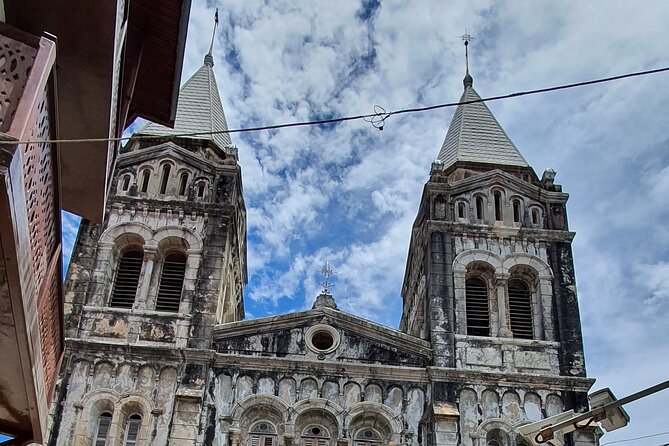
St. Joseph’s Roman Catholic Cathedral offers a different view of Zanzibar’s past. French missionaries built it between 1893 and 1898, and its plans were drawn by the same French architect associated with the cathedral in Marseille.
The twin spires are easy to spot from a distance and form one of Stone Town’s most recognizable roofline features. Inside, murals from the Old Testament, French tiles, and stained glass add detail to a building that might otherwise seem surprising in a predominantly Muslim city.
The scheduled visit is about 15 minutes and admission is free. That is enough for a quick look at the exterior and interior, but not a deep architectural study. The cathedral remains in regular use by the Catholic community, with several Sunday masses and occasional services during the week.
The short visit also helps make a larger point. In Stone Town, mosques, churches, and temples exist close together. The tour does not reduce Zanzibar to one culture or one faith. Instead, it shows how the city’s buildings reflect its mixed population and long connections across the Indian Ocean.
Dress and behavior should be respectful at religious sites. The tour information does not give a formal dress code, but modest clothing is a sensible choice when visiting active places of worship.
More Stone Town walking tours:
- Zanzibar: Stone Town, Spice Tour, Prison Island with Lunch
★ 4.4 · 1,219 reviews - Zanzibar: Prison Island, Stone Town, & Spice Farm Tour
★ 4.5 · 579 reviews - Zanzibar: Stone Town, Spice tour & Prison Island with Lunch
★ 4.6 · 453 reviews - Full-Day Private Stone Town +Spice Farm and Prison Island Tour
★ 4.5 · 216 reviews
Freddie Mercury’s Zanzibar connection

The Freddie Mercury Museum is the most modern and pop-culture-focused stop. The Queen singer was born in Zanzibar, and his former home is located in Stone Town.
The planned visit lasts about 20 minutes, and admission is not included. Confirm the current entrance cost before you go if the museum is a priority. The stop is especially appealing to music fans, but it also adds a personal connection to the city after the heavier historical sections.
I like this contrast. You move from sultans and colonial-era buildings to the story of a globally famous performer born on the island. It keeps the walk from feeling like a string of monuments with no connection to modern life.
Twenty minutes will give you a brief introduction rather than a long museum session. If you are a devoted Queen fan, you may want to ask the guide how much time is available and decide if another stop should be shortened.
The market, narrow lanes, and the city between landmarks
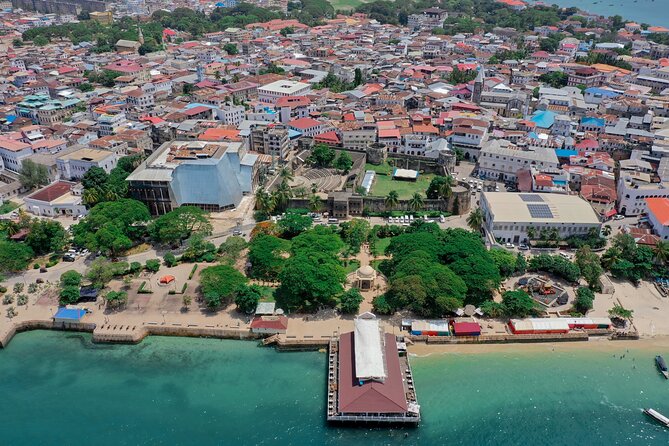
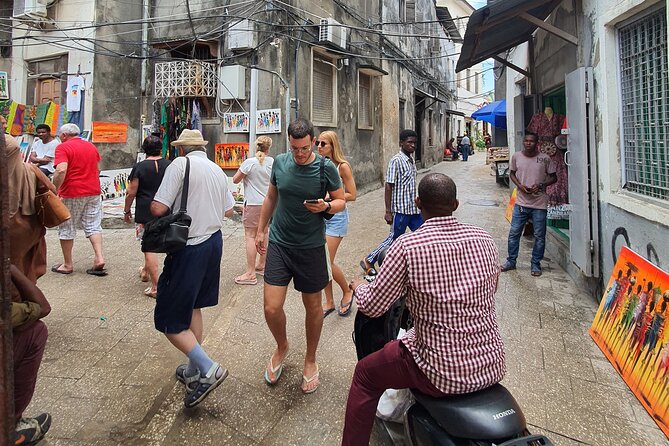
The formal stops are only part of the experience. The route also passes through Stone Town’s narrow streets and local market area, including the fish section according to the tour details. This is where the walk becomes more immediate and sensory.
You may see shopfronts, food stalls, local movement, and the practical side of a city that still works as a community. The fish market can be interesting, but it may also be intense for some people because of smells, noise, and the close quarters. That is part of the point, though. Stone Town is not a polished open-air museum.
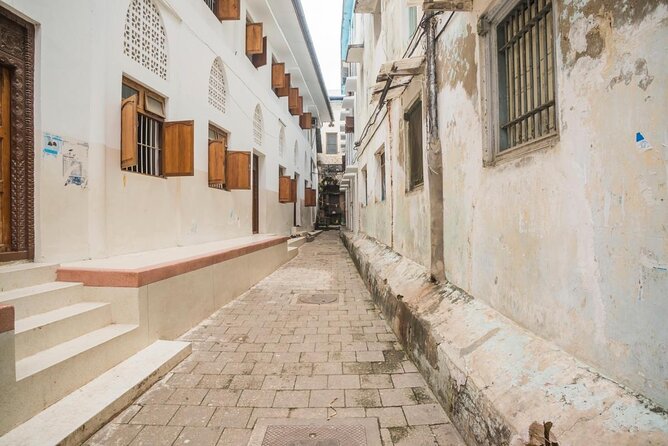
The tour highlights what is described as the narrowest street in the world. Treat that claim as a colorful local talking point rather than the main reason to book. The real pleasure is the maze itself, where a turn can reveal a carved doorway, a small religious building, or an unexpected view toward the waterfront.
Stone Town’s famous doors deserve attention. Their designs combine African, Indian, and Arabic influences, and they are among the clearest signs of the city’s trading past. Your guide can help you notice the details instead of simply walking past them.
Shopping can be part of the private experience. Said adjusted the pace for a family that wanted time to buy things, and another visitor was dropped at a restaurant after the walk. Those examples suggest useful flexibility, but you should state your priorities at the start rather than assume the standard route will include long shopping stops.
The guide can make or break the walk

A private walking tour depends heavily on the person leading it. The strongest feedback centers on guides who explain history clearly, answer questions, take photographs, and keep the mood friendly without treating serious subjects lightly.
Said receives the most specific praise. He is described as warm, patient, cheerful, and deeply familiar with Stone Town. He also speaks French very well, which is a real advantage for French-speaking visitors who want more than a basic translated tour.
Osman and Ousmane are also praised for clear historical explanations, fun facts, and an engaging manner. Mohammed is described as helpful during a combined Stone Town and Prison Island day, with the ability to adjust the plan to suit the group.
If you have a language preference, request it when booking. If you want more architecture, local life, religious history, shopping, or music history, say so at the beginning. The private setup gives you a better chance of shaping the conversation than a large shared group would.
The advertised rating is 5 out of 5, with 39 reviews and 100 percent recommending the experience. That is a strong record, but I would still judge the tour by your expectations. It works best when you want an informed introduction and personal attention, not when you want total freedom to wander alone.
Is $43 a fair price?
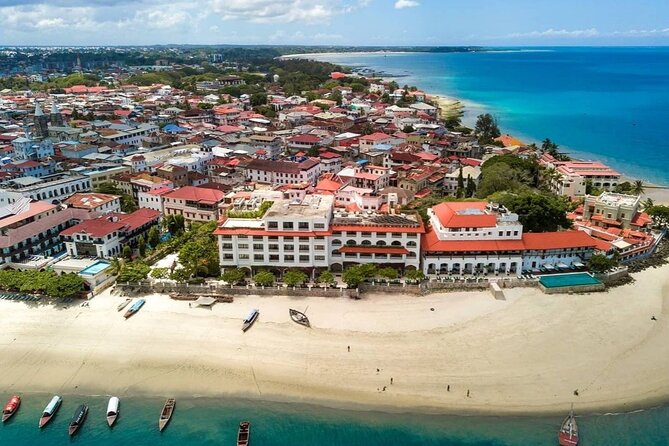
At $43 per person, the value depends on group size. For one or two people, the cost is higher than joining a basic group walk, but you are paying for a private guide, a three-hour route, bottled water, and a plan that can be adjusted to your interests.
For a family or small group, the price becomes easier to justify. You are not paying separately for each person to join a large party, and you can ask the guide to slow down, explain a difficult subject differently, or allow time for shopping.
The former slave market entrance fee is included in the tour details. The Freddie Mercury Museum admission is not included, and the stop information also lists the former slave market as not included, so verify the final inclusions before booking. Hotel transfers, personal purchases, and gratuities are also extra.
There is no need to tip before the walk begins. If the guide gives you useful historical context, handles your questions well, and helps you get more from Stone Town, a gratuity is appropriate but not required.
Timing, meeting point, and practical planning
The meeting point is the Old Fort on Mizingani Road, Zanzibar, and the walk ends back there. Hotel pickup and return are not included, so you need to arrange transport to the fort and from the fort afterward.
The tour is near public transportation, and most people can participate. It is still a walking experience through narrow streets, so comfortable footwear and water are sensible. One bottle of water is provided, but Zanzibar’s heat can make additional water useful.
The tour requires good weather. If poor weather causes cancellation, you are offered another date or a full refund. You can cancel for a full refund up to 24 hours before the start time, while cancellations or changes within 24 hours are not refunded or accepted.
Confirmation arrives at booking, and a mobile ticket is available. The activity is private, meaning only your group participates. That is helpful if you prefer to ask many questions, need a slower pace, or want a French-speaking guide.
Who should book this Stone Town walk?
I would choose this tour for a first visit to Zanzibar, especially if you want the major sights explained in a clear order. The route gives you architecture, religion, trade, slavery, music history, and local streets in one manageable morning or afternoon.
It also suits families and couples who value flexibility. The private format can make difficult history easier to discuss at your own pace, and it gives you a better chance of adding shopping or a restaurant stop if the schedule allows.
It may not suit you if you want a quiet photographic walk with minimal commentary. The former slave market is serious, the market area can feel intense, and the schedule does not leave unlimited time at each building.
Should you book the Private Stone Town Walking Tour?
Book it if you want a well-rounded first look at Stone Town and value a guide who can explain what you are seeing. The strongest reason to choose it is the private format, followed closely by the guides’ reported warmth, language ability, and willingness to tailor the experience.
Before paying, confirm the admission details for the former slave market and Freddie Mercury Museum, request your preferred guide if possible, and arrange your own transport to the Old Fort. If you do that, $43 per person is a fair price for a focused three-hour introduction to Zanzibar’s most important historic quarter.
FAQ
How long does the Private Stone Town Walking Tour last?
The tour lasts approximately three hours.
Where does the tour begin?
It begins at the Old Fort on Mizingani Road in Zanzibar, Tanzania.
Where does the tour end?
The activity ends back at the Old Fort meeting point.
Is the tour private?
Yes. Only your group participates in the activity.
How much does the tour cost?
The listed price is $43 per person.
Is bottled water included?
Yes. One bottle of water is included.
Is a professional guide included?
Yes. A professional tour guide is included.
Is transportation from my hotel included?
No. Transfers to and from your hotel are not included.
Is admission to the Freddie Mercury Museum included?
No. The Freddie Mercury Museum admission is listed as not included.
Can I cancel for a full refund?
Yes. You can cancel at least 24 hours before the start time for a full refund. Cancellations within 24 hours are not refunded.
Just added in Zanzibar
- Best of Zanzibar: Spice Tour & Stone Town Visit★ 4.4 · 5 reviews
- THE GREEN TOUR: Jozani Forest & Mangrove Kayaking Experience★ 4.7 · 6 reviews
- Stone Town: Private Walking Tour in the Heart of Zanzibar.★ 5.0 · 1 review
- The rock restaurant and blue Lagoon★ 5.0 · 1 review
- Tea House, Zanzibar Coffee House, Spice Tour with Lunch★ 5.0 · 1 review
- Swimming with sea turtles in salaam cave★ 5.0 · 1 review
- Swim with Turtles at The Lagoons Zanzibar & Stone Town Tour★ 4.8 · 4 reviews
- Stonetown & Prison island Cultural Tour★ 5.0 · 2 reviews
Stone Town Tours, compared.

Stone Town, Spice Tour, Prison Island with Lunch
Read our review →

Stone Town, Spice tour & Prison Island with Lunch
Read our review →
3 Hours Private Stone Town walking Tour with Guide
Read our review →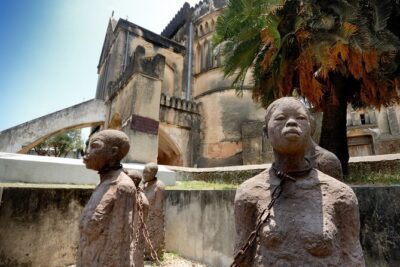
Full-Day Private Stone Town +Spice Farm and Prison Island Tour
Read our review →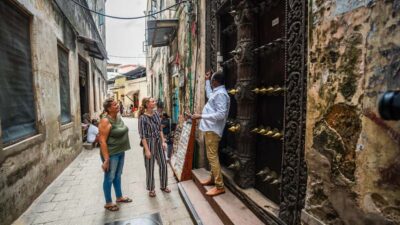
Stone Town Historical Cultural Walking Guided Tour
Read our review →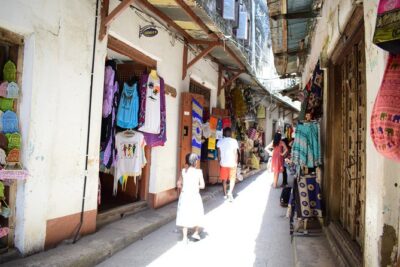
Browse the lists this tour appears in