
Reviewed · STONE TOWN TOURS
Private Tour in Stone Town: Discovering History and Culture
Stone Town tells Zanzibar’s story in three powerful stops. This private three-hour tour links the former slave market, the Old Fort, and Darajani Bazaar, giving you a focused look at the city’s African, Arab, Indian, and European influences.
I like the private format, since your group can explore without being folded into a large crowd. I also like that admission fees, bottled water, and private transportation are included. The main drawback is time: one hour at each stop can feel short, especially at the slave market, where the subject deserves quiet attention.
The tour begins at 9:00 a.m. and costs $80 per person. Mango Travel & Tours Ltd. has received praise for handling a full Zanzibar holiday from overseas booking through the end of the stay, but no guide’s name or detailed guiding style is provided here.
In This Review
- Key points to know before booking
- Why Stone Town deserves a dedicated morning
- The former slave market and Christ Church Cathedral
- Old Fort, or Ngome Kongwe, by the seafront
- Darajani Bazaar and everyday Stone Town
- What the $80 price includes
- Timing, pickup, and practical comfort
- What Mango Travel & Tours adds
- Who should book this experience?
- Should you book the private Stone Town tour?
- FAQ
- How much does the private Stone Town tour cost?
- How long does the tour last?
- What time does the tour begin?
- Is pickup available?
- Are admission fees included?
- Is lunch included?
Key points to know before booking
- The former slave market is the emotional center: Christ Church Cathedral was built where East Africa’s largest slave market once operated.
- You get a private vehicle: Pickup is offered, and private transportation is included in the price.
- The Old Fort brings a lighter change of pace: Its courtyard now holds shops and an open-air performance space.
- Darajani Bazaar feels local and practical: You can see spices, fruit, vegetables, fish, and meat, with time for a real buying experience.
- The tour is tightly timed: The advertised plan gives one hour to each of three stops, for about three hours overall.
- Lunch is not included: Plan to eat before or after the tour, unless you arrange it separately.
Why Stone Town deserves a dedicated morning
Stone Town is not simply a collection of old buildings. Its streets and buildings show how Zanzibar became a meeting point for coastal African, Arab, Indian, and European cultures over more than a thousand years.
The major surviving buildings date mainly from the 18th and 19th centuries. Their importance comes from the way they fit together. A cathedral, a fort, a palace, a market, and narrow town streets all sit within a compact area shaped by trade, religion, royal power, and human suffering.
I like this tour because it gives you three different ways to read the city. The first stop deals with slavery and memory. The second focuses on defense and royal-era Stone Town. The third turns to daily commerce, where Zanzibar’s history still appears in ordinary goods and local trade.
That mix is useful if you have only a short time in Zanzibar. You will not see every landmark, but you will get a clear introduction to the forces that shaped the old city.
More History Tours in Zanzibar
- Zanzibar: Stone Town Historical Cultural Walking Guided Tour
★ 4.5 · 179 reviews - Stone Town Historical Walking Tour
★ 5.0 · 143 reviews - Stone Town’s Hidden History: Private Guided Walking Tour
★ 4.6 · 94 reviews
The former slave market and Christ Church Cathedral
The first stop lasts about one hour and includes admission. It is also the most serious part of the morning.
Christ Church Anglican Cathedral was built on the site of the largest slave market in East Africa. The altar was placed at the exact location where enslaved people were whipped before sale. That detail gives the building a painful physical connection to the past rather than leaving slavery as an abstract chapter in a history book.
Inside, black cobblestones among the benches recall the dungeons that once occupied the basement. The design does not make the visit easy, and it should not. This is a place for attention and respect, not a quick photo stop.
Outside, a stone monument depicts four people chained by the neck. It recreates the way enslaved people were displayed to buyers. The image is stark, and the monument helps connect the cathedral site to the commercial system that once operated here.
Near the church, the exhibition on the East African slave market adds photographs, historical information, and visual material. Since admission is included, you can move from the cathedral to the exhibition without needing to budget for another ticket.
I value the way this stop places architecture beside evidence. The cathedral is an active religious building and a major historic site, but the market exhibition explains what occupied the ground before the church was built. You get both the later memorial and the earlier history.
There is one practical point to keep in mind. An hour is enough for a focused visit, but it may not feel generous if you read every display carefully. If this subject matters greatly to you, ask the guide at the start how the hour will be divided between the cathedral, monument, and exhibition.
The stop can also feel heavy. That is part of its value, but it is worth knowing before you arrive. The tour does not treat Stone Town as only a pretty old quarter. It asks you to confront the trade that helped make the city wealthy.
Old Fort, or Ngome Kongwe, by the seafront
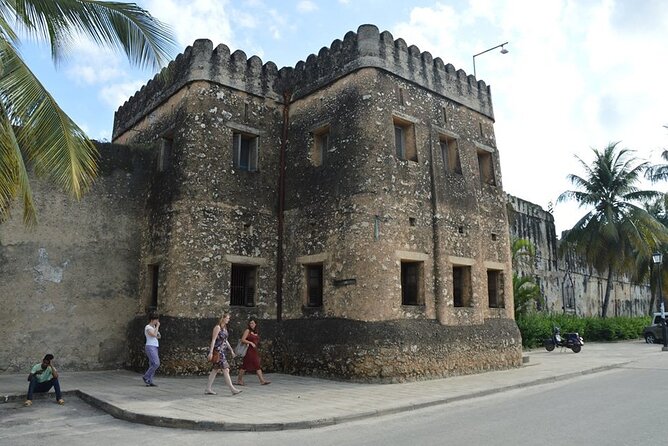
The second stop is the Old Fort, also called Ngome Kongwe or the Arab Fort. It lasts about one hour, with admission included.
This is the oldest building in Stone Town and one of the city’s best-known landmarks. It sits on the main seafront beside the House of Wonders, the former palace of the Sultan of Zanzibar, and faces Forodhani Gardens.
The fort was built on the site of an earlier Portuguese church. That single fact shows how control of Zanzibar changed over time. The structure you see today is not only a defensive building. It is a record of competing powers and changing uses in the city.
The courtyard now serves as a cultural center. You can find curio shops selling tourist merchandise, including tingatinga paintings, a style associated with East African art. An open-air amphitheater also hosts live dance and music performances, although the tour details do not promise a performance during your visit.
This stop gives the morning a useful change of mood. After the difficult material at the former slave market, the fort offers open space, seafront views, and a chance to understand Stone Town’s public life.
I would use the hour here to look beyond the souvenir stalls. Notice the scale of the walls, the position beside the water, and the relationship between the fort, the House of Wonders, and Forodhani Gardens. The setting explains why this was a strategic location.
The courtyard’s shops may appeal to you if you want a small painting or another souvenir, but shopping can also eat into your sightseeing time. Since the tour moves on after roughly an hour, decide ahead of time if you want to browse or concentrate on the fort itself.
The Old Fort is also a good place to ask questions about Zanzibar’s rulers and coastal trade. The supplied information does not identify a particular guide, so the amount of detail you receive will depend on the guide assigned to your group. A private tour gives you a better chance to ask for more explanation than a large group tour would.
Darajani Bazaar and everyday Stone Town
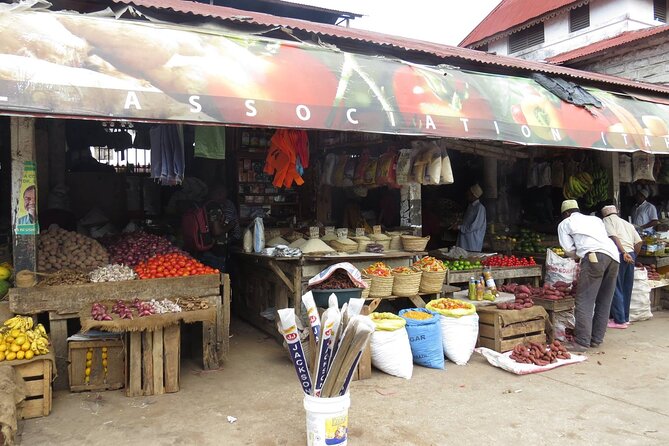
The third stop is Darajani Bazaar, also known as Estella Market or Mariketti Co. It is the main market in Stone Town, located on Darajani Road near Christ Church Cathedral.
The market’s main structure was built in 1904 by Bomanjee Maneckjee for Sultan Ali bin Hammoud. It was later extended and restored. That makes the market more than a place to buy food. Its building belongs to the city’s royal and commercial story.
Here, the focus shifts from monuments to daily life. Darajani sells spices, fruit, vegetables, fish, and meat at affordable local prices. The tour description specifically presents it as a place for a real buying experience, so this is the stop where you can take part rather than only look.
I like the market because it gives context to Zanzibar’s famous reputation for spices. Instead of seeing spices only in a gift shop, you can encounter them alongside fresh produce, fish, and meat. The market shows how the old city works for residents, not just how it appears to people sightseeing for a morning.
A market also asks more of you than a monument does. You need to watch where you step, keep track of your belongings, and follow local manners. The provided information does not specify which purchases are best or whether bargaining is expected, so ask your guide before buying anything.
One hour should let you walk through the main areas and make a purchase or two. It may not be enough for a slow market visit, particularly if you want to compare spices or watch the food trade closely. Still, ending here is sensible. The tour finishes with the most ordinary and immediate part of Stone Town.
More Stone Town walking tours:
- Zanzibar: Stone Town, Spice Tour, Prison Island with Lunch
★ 4.4 · 1,219 reviews - Zanzibar: Prison Island, Stone Town, & Spice Farm Tour
★ 4.5 · 579 reviews - Zanzibar: Stone Town, Spice tour & Prison Island with Lunch
★ 4.6 · 453 reviews - Stone Town Private Walking Tour
★ 5.0 · 371 reviews
What the $80 price includes
At $80 per person, this is not the cheapest way to walk through Stone Town. The value depends on what you want from the morning.
The price includes:
- Private transportation
- Pickup offered
- Bottled water
- All fees and taxes
- Admission tickets for the listed stops
Lunch is not included. That is not a problem for a three-hour tour, but you should plan around it. With a 9:00 a.m. start, the experience should finish around midday if it follows the advertised schedule.
The strongest value here is the private arrangement. You are paying for a dedicated experience rather than simply joining a standard group. If you are traveling with family or friends, the per-person price may make more sense, especially because transport and entrance costs are already covered.
The private format also matters at the former slave market. You may want to pause, ask a question, or move through the exhibition at a different pace from another group. A private booking cannot guarantee extra time, but it gives you a better setting for direct conversation.
If you mainly want an inexpensive orientation walk, $80 may feel high. If you want transportation, admission, and a focused introduction arranged in advance, the cost is easier to justify.
Timing, pickup, and practical comfort
The scheduled start time is 9:00 a.m. Pickup is offered, and the tour includes private transportation. The exact pickup location is not specified in the available details, so confirm it when you book.
The experience lasts approximately three hours. Each listed stop is allocated one hour:
- Former slave market and Anglican Cathedral: one hour
- Old Fort: one hour
- Darajani Bazaar: one hour
That clear structure helps you plan the rest of your day. You could pair the tour with lunch afterward or continue exploring Stone Town independently.
Bottled water is included, a small but useful touch in Zanzibar’s warm climate. Wear comfortable shoes, since the old city’s streets and market areas may require steady walking. The tour details do not state how much walking is involved or whether every section is easy for every mobility level, so ask before booking if that is important for you.
Service animals are allowed. The activity is also listed near public transportation, and most people can participate. Since this is a private activity, only your group takes part.
The tour’s schedule is simple, but the content is not. The first stop may need more emotional and reading time than the Old Fort. The market may reward curiosity more than speed. If you want a slower visit, ask whether the guide can adjust the order or timing.
What Mango Travel & Tours adds
Mango Travel & Tours Ltd. operates this experience. The available praise for the company is broad but positive, describing an experience that ran well from online booking abroad through the end of a Zanzibar stay.
That is useful if you are arranging a trip from outside Tanzania. It suggests attention to the full booking process, not only the sightseeing itself. At the same time, there is no detailed account of a named guide, language ability, or exact commentary style, so I would not assume a particular guide will lead every departure.
The private setup gives the company room to tailor the conversation to your interests. You can ask for more detail about slavery, the sultans, architecture, markets, or Zanzibar’s cultural links with Africa, Arabia, India, and Europe.
I would send any important questions before the tour. Ask where pickup will occur, how much time will be spent inside the slave market exhibition, and if there are any special arrangements for mobility needs. These questions are especially worthwhile because the tour is compact.
Who should book this experience?
I would recommend it to you if you have only one morning in Stone Town and want the main historical themes explained in a logical order.
It suits:
- First-time visitors to Zanzibar
- Small groups who prefer private transport
- Families or friends who want to stay together
- History-focused visitors who want to understand the former slave market
- Anyone who wants a market visit included alongside major monuments
- People who value admission and transport being arranged in advance
It may not suit you if you want a relaxed full-day walk, extensive shopping time, or a long meal included. The three-hour schedule is useful, but it leaves little room for wandering.
It is also not the right choice if you want to avoid difficult history. The former slave market is not a decorative stop. It is central to the experience and should be approached with care.
Should you book the private Stone Town tour?
Book it if you want a short, organized introduction to Stone Town with a private vehicle and three different views of the city: remembrance at Christ Church Cathedral, political history at the Old Fort, and daily commerce at Darajani Bazaar.
The $80 price is reasonable when your priorities include privacy, admission tickets, water, and transport. The main tradeoff is pace. You will see the key sites, but you will not have unlimited time at any of them.
For the best experience, arrive ready for a serious first stop, save shopping for the market, and ask your guide to explain the links between the buildings and Zanzibar’s wider trading past. Cancel at least 24 hours before the 9:00 a.m. start if your plans change, since that is the stated deadline for a full refund.
FAQ
How much does the private Stone Town tour cost?
The tour costs $80 per person.
How long does the tour last?
The tour lasts approximately three hours, with about one hour allocated to each of the three stops.
What time does the tour begin?
The scheduled start time is 9:00 a.m.
Is pickup available?
Yes. Pickup is offered, and private transportation is included.
Are admission fees included?
Yes. Admission tickets for the listed stops, along with all fees and taxes, are included.
Is lunch included?
No. Lunch is not included in the tour price.
Just added in Zanzibar
- Zanzibar:Ngoma local culture workshop,The Knowledge of Ngoma★ 5.0 · 1 review
- ZANZIBAR:Mnemba island, Spice farm and Jozani Forest★ 5.0 · 1 review
- Zanzibar: Zipline Adventure At Masingini Forest★ 4.6 · 2 reviews
- Zanzibar Walking Tour: Unveiling the Secrets of Stonetown★ 4.8 · 11 reviews
- Zanzibar: Walking Spice Farm with Local Cooking Class★ 4.4 · 9 reviews
- Zanzibar: Walking Tour★ 4.0 · 1 review
- Zanzibar: Uzi Island Mangrove Kayak Tour with Guide★ 5.0 · 1 review
- Zanzibar: Unique Guided Mangrove Tour by SUP or Kayak★ 5.0 · 1 review
Stone Town Tours, compared.

Stone Town, Spice Tour, Prison Island with Lunch
Read our review →

Stone Town, Spice tour & Prison Island with Lunch
Read our review →
3 Hours Private Stone Town walking Tour with Guide
Read our review →
Full-Day Private Stone Town +Spice Farm and Prison Island Tour
Read our review →
Stone Town Historical Cultural Walking Guided Tour
Read our review →
Browse the lists this tour appears in