
Reviewed · STONE TOWN TOURS
Private tour Stone Town,Spices,Prison from The Mora Zanzibar
Stone Town, spices, and giant tortoises make one full day. This private Zanzibar outing brings together the island’s strongest cultural sights in a single trip, from old sultanate buildings and carved doors to a working spice farm and a boat ride to Prison Island. I especially like the private van and guide, which keep the day flexible, and the included lunch, entry fees, bottled water, and boat ride, which make the $105 price easier to understand. The main drawback is pace: six to eight hours, walking on uneven streets, and boat transfers can feel tiring.
The schedule is not just a sightseeing checklist. Stone Town gives you Zanzibar’s political and trading story, the farm explains the island’s famous crops, and Prison Island adds wildlife and a short sea crossing. The tour is best for you if you want several major sights in one day without sharing a vehicle with a large group.
In This Review
- Key points to know before you book
- What the $105 price really covers
- Starting from The Mora and settling into the day
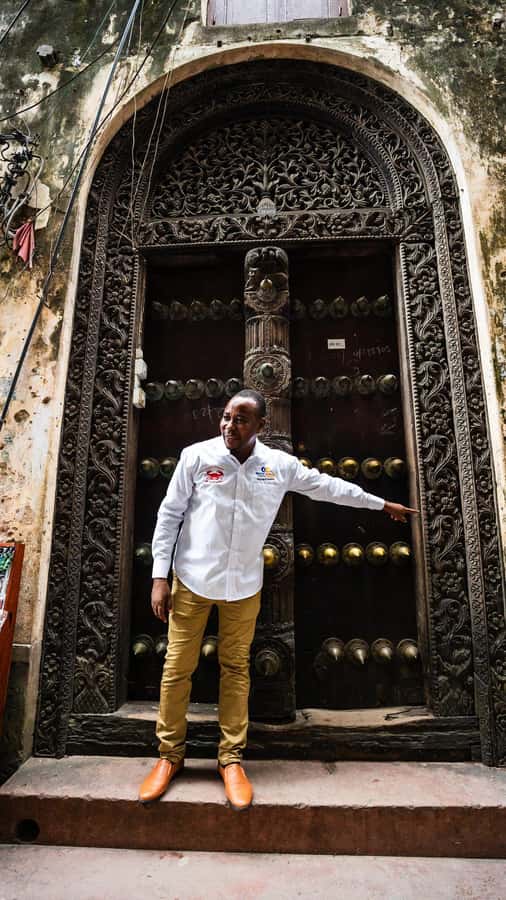
- Stone Town’s carved doors and royal buildings
- Facing Zanzibar’s painful slave-trade past
- The spice farm: smell, touch, and taste
- A Swahili lunch with the spice lesson
- The boat to Prison Island
- Meeting the Aldabra giant tortoises
- How the day’s order may work
- Comfort, age limits, and language choices
- Who will enjoy this Zanzibar day trip?
- Should you book this private tour?
- FAQ
- Where does the tour pick up and drop off?
- How long does the tour last?
- Is the tour private?
- What language is included?
- Is lunch included?
- Are the boat rides included?
- Is the tour suitable for wheelchair users or older people?
Key points to know before you book
- Private transport from The Mora: You are collected at the hotel reception and returned there after the tour.
- Three very different experiences: Expect a walking tour in Stone Town, a guided spice farm visit, and a boat trip to Prison Island.
- Aldabra tortoises up close: You can see, touch, and feed giant tortoises at the island sanctuary.
- Swahili lunch included: The farm visit includes a traditional meal using the crops and seasonings discussed during the tour.
- English guide included: Other languages can be arranged for an added fee, subject to availability.
- Allow six to eight hours: The day includes road transfers, walking, lunch, and two roughly 20-minute water crossings.
What the $105 price really covers

At $105 per person, this is not simply a hired car with a few stops. You receive hotel pickup and drop-off, an experienced driver, private guiding at the spice farm, private guiding in Stone Town, and a private guided visit to Prison Island.
The price also includes food, bottled water, entry tickets, the Prison Island fees, and the boat transportation. That matters because separate admission charges and transport costs can quickly make a supposedly cheaper day more expensive.
A $10 slave market entry fee is included as part of the package. Personal purchases are not covered, so leave room for shopping in Stone Town or buying spice products at the farm.
The private format is the strongest value here. You do not have to follow a large group through narrow lanes or wait while strangers finish shopping. You can ask more questions, stop for photos, and tell the guide if you need a short pause.
Still, $105 is a reasonable rather than bargain-basement price. The value depends on using all three parts of the day. If you only want Stone Town, a shorter city tour may suit you better. If you want a broad introduction to Zanzibar in one outing, the combination works well.
More Stone Town walking tours:
- Zanzibar: Stone Town, Spice Tour, Prison Island with Lunch
★ 4.4 · 1,219 reviews - Zanzibar: Prison Island, Stone Town, & Spice Farm Tour
★ 4.5 · 579 reviews - Zanzibar: Stone Town, Spice tour & Prison Island with Lunch
★ 4.6 · 453 reviews
Starting from The Mora and settling into the day
Pickup is at the reception of The Mora. You are asked to be ready five minutes before departure, which is sensible advice for a day with several timed connections.
The private van is useful from the start. Zanzibar’s attractions are spread out, and moving between the coast, the spice farm, Stone Town, and the boat departure point would be awkward by taxi. Your driver handles the road transfers while the guide takes over at the individual sights.
A past booking included a driver named Nassor, who drove the whole day and kept the guest informed. He also made a special call to arrange a German-speaking guide. That shows the service can respond to language needs, but you should request a non-English guide before booking and expect an added fee.
Because the day combines driving, walking, and a boat ride, wear practical clothing and shoes with a firm sole. The streets of Stone Town can be tight and uneven, while the farm walk may take you over unpaved ground.
Stone Town’s carved doors and royal buildings
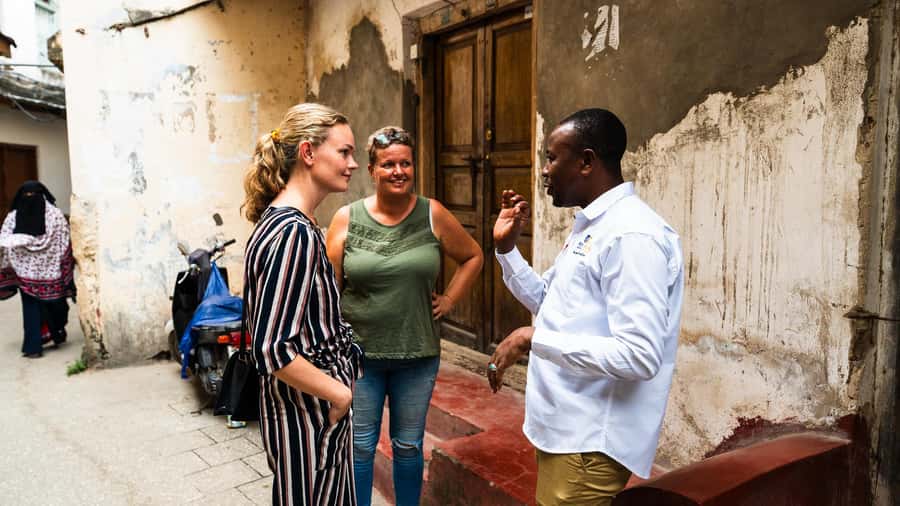
Stone Town is the emotional center of the tour. Its narrow lanes run between tall limestone houses, former palaces, old Arab mansions, shops, markets, and buildings shaped by centuries of contact between African, Arab, Indian, Persian, and European communities.
I like this part best when you treat it as a living town rather than a collection of photo stops. You will pass through streets where daily life continues around the old buildings. The contrasts are part of the appeal: carefully carved hardwood doors sit near busy market areas, and grand former residences share space with ordinary shops and homes.
The guide points out landmarks such as the Palace Museum, also known as the Sultan’s Palace, and the Old Fort. The Palace Museum helps explain Zanzibar’s ruling sultanate and the island’s place in Indian Ocean trade. The Old Fort, with its heavy defensive walls, gives you a sense of the strategic importance of Stone Town’s waterfront.
The city became a UNESCO World Heritage site in 2000. That designation reflects its unusual mix of architectural influences and its role in trade and exploration during the 19th century.
The most difficult part can be the narrow-street walking itself. You may need to move at a steady pace, and the old lanes are not designed for wheelchairs. The tour is specifically not suitable for wheelchair users.
Shopping comes after or around the walking tour, depending on the day’s arrangement. You have time to look at local goods and ask questions, but do not expect an unlimited shopping session. The day still has a farm visit and a boat departure to fit in.
Facing Zanzibar’s painful slave-trade past
Stone Town’s beauty has a painful side, and the slave market visit brings that into view. Zanzibar was an important center in the Indian Ocean slave trade, and the tour includes a guided look at this difficult part of the city’s past.
I consider this stop essential, even though it is not easy. It gives meaning to the wealth and power represented by the old palaces and merchant houses. A visit focused only on doors, forts, and royal buildings would leave out a major part of Zanzibar’s story.
The included $10 entry fee helps keep the cost predictable. Listen closely to the guide here, since the value comes from historical explanation rather than the physical site alone. This is a place for respectful attention, not a quick photograph.
A few more options to weigh up in Zanzibar
- From Zanzibar: Mikumi Safari Day Trip with Flights and Meal
★ 4.7 · 1,470 reviews - Zanzibar: Quad Bike Adventure departing from Kendwa or Nungwi
★ 4.9 · 1,233 reviews - From Zanzibar: Day Selous Game Reserve Safari with Flights
★ 4.7 · 1,025 reviews - Zanzibar: Prison Island and Nakupenda Boat Trip with Lunch
★ 4.1 · 882 reviews
The spice farm: smell, touch, and taste

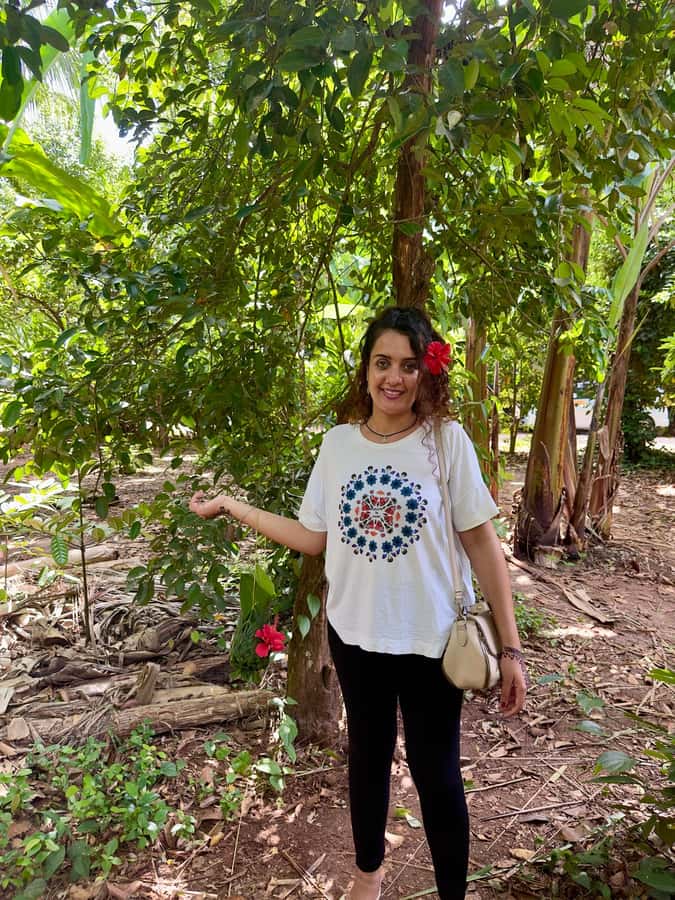
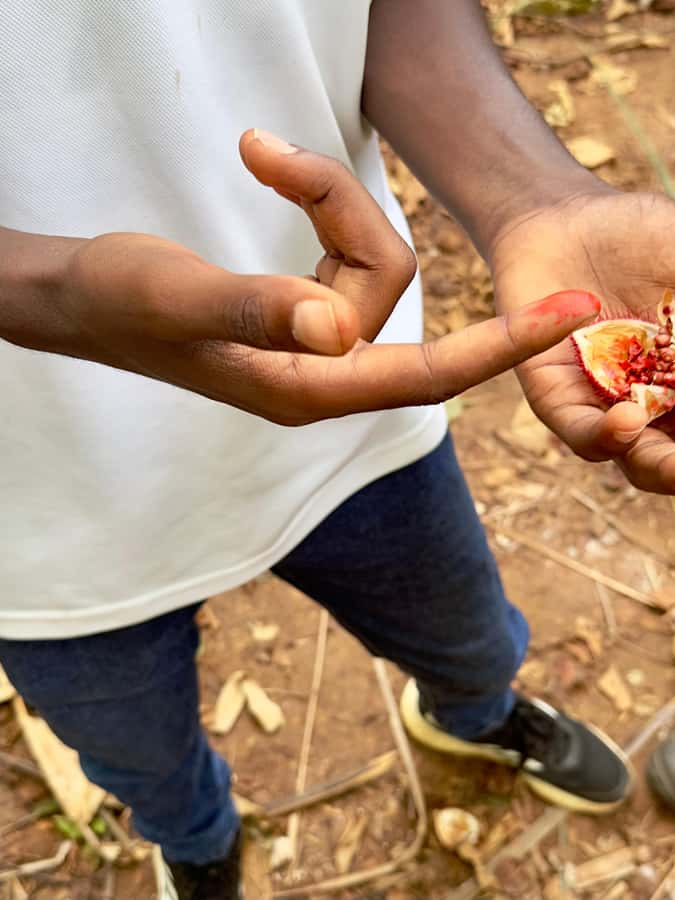
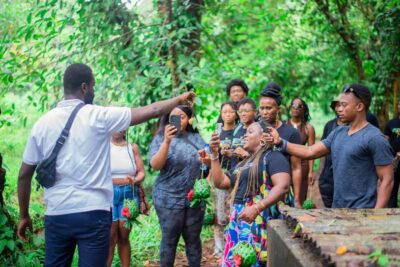
The farm visit takes about three hours, including the guided tour and lunch. It explains why Zanzibar is widely called Spice Island, with crops such as cloves, cinnamon, nutmeg, vanilla, cardamom, turmeric, black pepper, chili, and lemongrass.
This is more hands-on than a museum display. You can smell, touch, and taste many of the plants, while the guide explains how they grow and how people use them in cooking, medicine, and daily life.
You may also see tropical crops and fruits including coconut, papaya, cassava, and other plants grown on the island. The tour connects familiar kitchen ingredients with living plants, which is especially useful if you have only encountered spices in jars.
The story also reaches beyond Zanzibar. Portuguese traders introduced many spices and herbs to the island in the 16th century, bringing crops from their colonies in South America and India. The farm therefore helps explain both agriculture and the trade routes that shaped Zanzibar.
I like the farm because it gives the day a change of rhythm. After the tight streets of Stone Town, you have room to walk and focus on scent, texture, and food. The three-hour visit is long enough for a proper explanation instead of a rushed stop.
The farm is not a botanical research visit, and conditions can vary by season. You should expect a working agricultural setting rather than polished displays. The guide’s explanations make the difference, so use the private format to ask which plants are in season and how they are used locally.
A Swahili lunch with the spice lesson
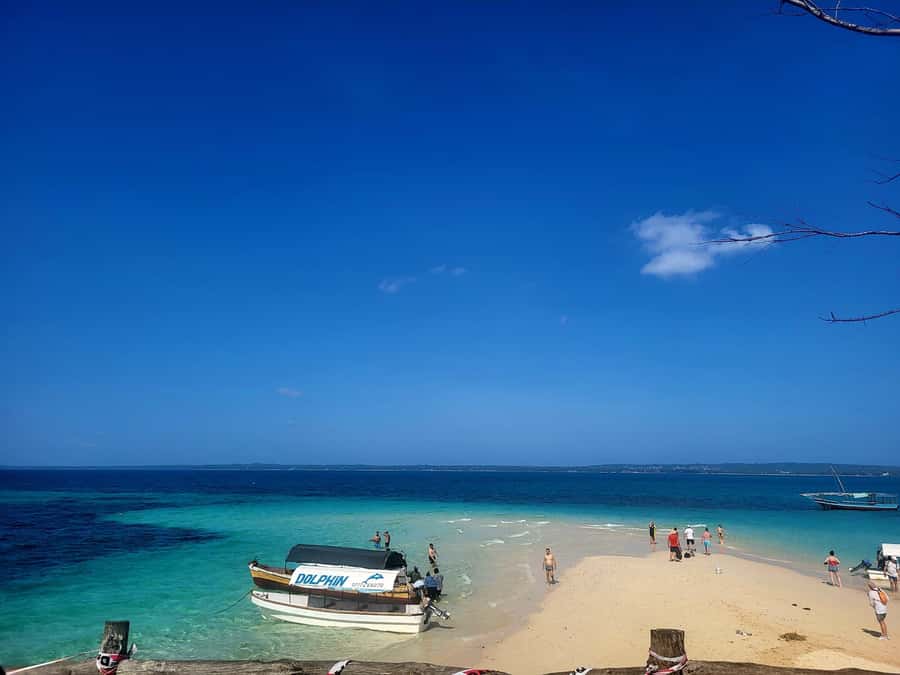
Lunch at the farm is included and is served in the traditional Swahili style. This is more than a convenient meal between stops. It lets you taste the role of spices in local cooking after seeing the plants themselves.
The supplied information does not give a fixed menu, so you should not book this expecting a particular dish. What you can count on is food being included as part of the farm visit, along with bottled water.
If you have allergies or dietary restrictions, tell the operator before the tour. The available details do not promise special menus, so advance notice is the sensible approach.
The boat to Prison Island
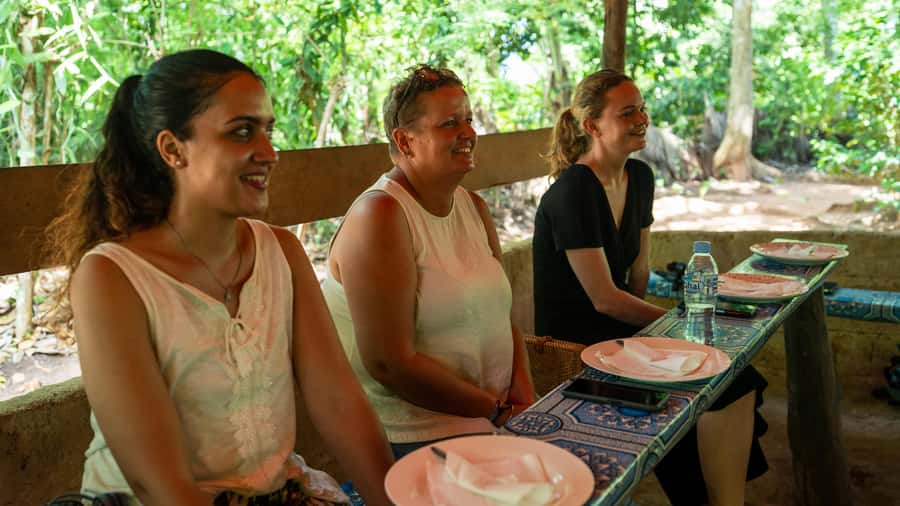
Prison Island, called Changuu in Swahili, is reached by boat from the Stone Town area. The water crossing takes about 20 minutes each way, and the boat transportation is included.
The ride adds a welcome break from the van and city walking. It also gives the day a clear change of setting, from stone lanes and plantations to a small offshore island.
The island’s name comes from its past use as a prison for rebellious slaves in the 1860s. The historical explanation is brief compared with the tortoise sanctuary, but it adds another layer to the stop. As in Stone Town, the island is not just a scenic backdrop.
Allow about an hour on Prison Island for the guided visit, photos, free time, and walking. The schedule is fairly compact, so this is not a long beach stay. You are going there mainly for the tortoises and the island’s history.
Boat conditions can affect comfort. The tour information does not promise a particular boat type or seating arrangement, so if you are uneasy on boats, ask for details before you commit. The water crossing is short, but it is still an important part of the day.
Meeting the Aldabra giant tortoises
The tortoise sanctuary is the island’s main attraction. These Aldabra giant tortoises were brought from the Seychelles, making them non-native animals in Zanzibar.
You can touch and feed them under the sanctuary’s arrangements. The largest animals weigh about 200 kilograms and can live for more than 100 years. The oldest resident is described as around 200 years old, which gives you a striking sense of how long these creatures can outlast the people who care for them.
This is a good stop for families and anyone who enjoys wildlife at close range. It is also a place to behave carefully. Follow the guide’s instructions when feeding or touching the animals, and keep in mind that large tortoises move slowly but are still powerful animals.
The visit is not a safari. You are seeing animals in a sanctuary, not searching for wildlife in the open countryside. That distinction helps set the right expectation.
How the day’s order may work
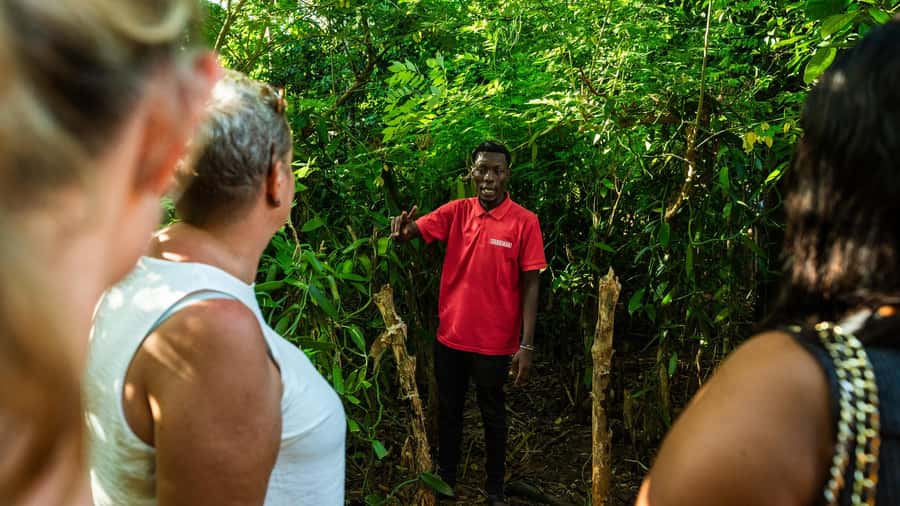
The supplied plan presents the stops in slightly different orders. One version begins with Stone Town, then goes to the spice farm and Prison Island. The detailed schedule places the farm before the city and island, while one completed private trip began at the spice farm, continued to Prison Island, and finished with Stone Town.
This likely depends on boat timing, traffic, and the guide’s plan for the day. Ask for the expected order when you confirm your start time. The important point is that all three main experiences are intended to fit into one six to eight-hour outing.
Finishing in Stone Town can be pleasant because you may have time for final photos or shopping before the return transfer. Starting there can make sense if the guide wants to cover the city while you are fresh. A private tour gives the operator some room to adjust.
Comfort, age limits, and language choices
This is an active day, though not an extreme one. You will walk for around two hours in Stone Town, spend about three hours at the farm, walk on Prison Island, and board a boat twice.
The booking information lists the tour as unsuitable for wheelchair users and for people over 70 years old. It also separately lists people over 95 as unsuitable. Since those age notes do not match perfectly, anyone with mobility or stamina concerns should contact the provider before paying.
The included live guide speaks English. Italian, French, Spanish, German, Dutch, Portuguese, and Arabic can be requested for an additional charge, with other languages available on request and subject to extra fees.
A German-speaking guide was successfully arranged for one private group, and both the guide and driver were praised for clear communication and helpful service. The driver, Nassor, was described as friendly and willing to chat, while the guide James gave time for photos and questions and checked that the guest was comfortable.
Those details matter because a private tour is only as good as the people leading it. Here, the available service record points to attentive drivers and guides, but language arrangements should be made in advance rather than left to chance.
Who will enjoy this Zanzibar day trip?
I would choose this tour if you want a broad first look at Zanzibar and prefer one coordinated day over several separate bookings. It suits couples, families with older children, and small private groups that value their own vehicle and guide.
It is also a strong choice if you want history and local food alongside a wildlife encounter. Stone Town supplies the architecture and difficult history, the farm offers a practical look at agriculture, and Prison Island adds a memorable animal stop.
I would hesitate if you dislike long days, boats, uneven walking, or tightly scheduled sightseeing. I would also choose a shorter experience if your main goal is slow shopping in Stone Town or a relaxed beach day.
The tour is private, but the day is still full. Private does not mean leisurely at every moment. It means you have more control and personal attention while covering several destinations.
Should you book this private tour?
Book it if you want three of Zanzibar’s signature experiences in one day and value having transport, meals, tickets, and guides arranged together. The $105 price is fair for a private group, especially with the boat ride and $10 slave market admission included.
Before booking, confirm the pickup time, the likely order of stops, your preferred guide language, and whether the walking and boat portions suit everyone in your party. If those points work for you, this is a practical and well-rounded introduction to Zanzibar, with enough history and local context to be more than a quick sightseeing run.
FAQ
Where does the tour pick up and drop off?
Pickup and drop-off are available at The Mora Zanzibar. You should wait at the hotel reception and be ready five minutes before departure.
How long does the tour last?
The full experience lasts about six to eight hours. This includes road transfers, guided visits, lunch, walking, and the boat rides to and from Prison Island.
Is the tour private?
Yes. The tour is arranged for a private group, with private guiding at the spice farm, Stone Town, and Prison Island.
What language is included?
English guiding is included. Italian, French, Spanish, German, Dutch, Portuguese, and Arabic can be requested for an extra fee, while other languages are available on request with additional charges.
Is lunch included?
Yes. A traditional Swahili lunch at the spice farm is included, along with bottled water.
Are the boat rides included?
Yes. Boat transportation to and from Prison Island is included, with each crossing taking about 20 minutes.
Is the tour suitable for wheelchair users or older people?
The tour is not suitable for wheelchair users. The booking information also lists it as unsuitable for people over 70 and separately for people over 95, so anyone with mobility or age-related concerns should confirm suitability with the provider before booking.
Just added in Zanzibar
- Best of Zanzibar: Spice Tour & Stone Town Visit★ 4.4 · 5 reviews
- Stone Town: Private Walking Tour in the Heart of Zanzibar.★ 5.0 · 1 review
- The rock restaurant and blue Lagoon★ 5.0 · 1 review
- THE GREEN TOUR: Jozani Forest & Mangrove Kayaking Experience★ 4.7 · 6 reviews
- Tea House, Zanzibar Coffee House, Spice Tour with Lunch★ 5.0 · 1 review
- Swimming with sea turtles in salaam cave★ 5.0 · 1 review
- Swim with Turtles at The Lagoons Zanzibar & Stone Town Tour★ 4.8 · 4 reviews
- Stonetown & Prison island Cultural Tour★ 5.0 · 2 reviews
Stone Town Tours, compared.
Stone Town, Spice Tour, Prison Island with Lunch
Read our review →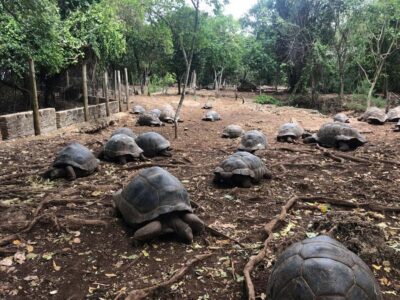
Stone Town, Spice tour & Prison Island with Lunch
Read our review →
3 Hours Private Stone Town walking Tour with Guide
Read our review →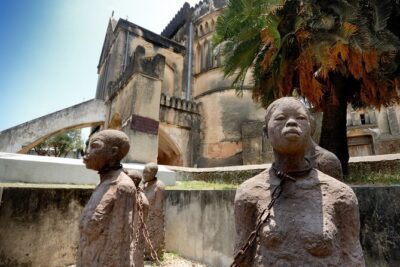
Full-Day Private Stone Town +Spice Farm and Prison Island Tour
Read our review →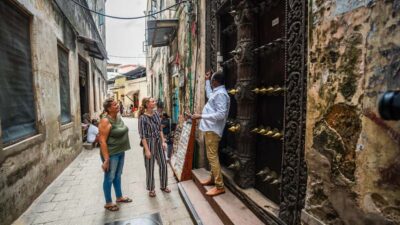
Stone Town Historical Cultural Walking Guided Tour
Read our review →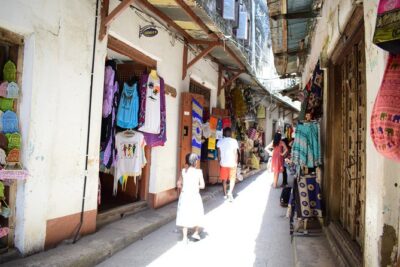
Browse the lists this tour appears in