
Reviewed · STONE TOWN TOURS
Stone Town Guided Historical Walking City Tour
Stone Town rewards slow looking. This three-hour private walk brings Zanzibar’s old quarter into focus through local markets and major landmarks, from Forodhani Gardens to the former slave market. I like the personal format, since your guide can answer questions and adjust the pace, and I also like the mix of grand buildings, narrow lanes, market life, and Zanzibar’s famous carved doors. The main caution is that several stops are viewed from outside or have extra admission charges, so the $32.90 price does not cover every interior.
I also like the tour’s practical flexibility. Guides such as Osman and Othman have been praised for clear explanations, patience, and a good sense of humor, while the operator has handled last-minute changes and hotel transfers well on some bookings. Still, punctuality has not been perfect in every case, and one-hour delays have been reported. Confirm your meeting point and start time before setting off.
In This Review
- Key points to know before you book
- Starting beside Forodhani Gardens
- The House of Wonders and Zanzibar’s royal past
- Exploring the Old Fort in 20 minutes
- Freddie Mercury’s Stone Town connection
- Stone Town’s narrow lanes and carved doors
- The former slave market and Anglican Cathedral
- Finishing at Darajani Market
- What $32.90 buys you
- Guide quality and possible service problems
- Walking comfort, timing, and who should book
- Should you book this Stone Town walk?
- FAQ
- How long is the Stone Town guided walking tour?
- How much does the tour cost?
- Is this a private tour?
- Where does the tour start?
- Where does the tour end?
- Is a mobile ticket available?
- Are admission tickets included?
- What places are visited?
- Can the tour be canceled for a full refund?
- What happens if bad weather cancels the tour?
Key points to know before you book

- Three hours on foot: The route covers major Stone Town sights, markets, historic streets, and the old slave market at a steady pace.
- Private experience: Only your group takes part, giving you more room for questions and possible adjustments.
- Several major sights are exterior visits: The House of Wonders and Freddie Mercury’s childhood home may be seen from outside, and entry fees are not included where admission is required.
- A serious history lesson: The former slave market and Anglican Cathedral area provide the tour’s most sobering stop.
- Darajani Market is the lively finish: Expect food stalls, spices, seafood, clothing, electronics, and plenty of local activity.
- Good value for a first visit, with caveats: At $32.90 per person, the cost is reasonable for a private guide, but less so if you want long interior visits or a slow, scholarly tour.
Starting beside Forodhani Gardens

The meeting point is at the People’s Palace Museum on Mizingani Road, beside the seafront area of Stone Town. This is a useful place to begin because several important sights sit close together, and Forodhani Gardens gives you an immediate sense of the town’s setting between historic buildings and the water.
The tour allows about 20 minutes here. During daylight, Forodhani Gardens is mainly a place to walk, pause, and watch local life. If your schedule brings you in the evening, the garden becomes the Forodhani Night Market, with food stalls and a much more social atmosphere.
That timing difference matters. A morning or afternoon walk gives you a calmer start and usually makes it easier to study the architecture. An evening visit offers more atmosphere, but the market setting can shift attention toward food and crowds. The tour description allows exploration until around 4:00 p.m. for a daytime visit, so check the exact departure time when booking.
More History Tours in Zanzibar
- Zanzibar: Stone Town Historical Cultural Walking Guided Tour
★ 4.5 · 179 reviews - Stone Town Historical Walking Tour
★ 5.0 · 143 reviews - Stone Town’s Hidden History: Private Guided Walking Tour
★ 4.6 · 94 reviews
The House of Wonders and Zanzibar’s royal past
The House of Wonders, known in Swahili as Bayt al-Ajā’ib, is one of Stone Town’s most recognizable buildings. It faces Forodhani Gardens and the sea, between the Old Fort and the former Sultan’s Palace.
Built for Sultan Barghash bin Said, the second Sultan of Zanzibar, it was one of six palaces constructed during his reign. The building’s height and position make it an important part of the town’s skyline, and your guide explains its place in Zanzibar’s royal and colonial-era story.
You have about 20 minutes here. Admission is not included, so do not assume the tour price covers entry inside. The supplied information focuses on the exterior and guide commentary, which means this stop works best if you want context and photographs rather than a long museum visit.
One practical issue is that historic buildings in Stone Town can be under repair. Access may change, and a building that appears on the route may not be open for entry on the day. That is not necessarily a flaw in the walking tour, but it is a reason to treat the route as a guided introduction rather than a guaranteed series of interior museum visits.
Exploring the Old Fort in 20 minutes
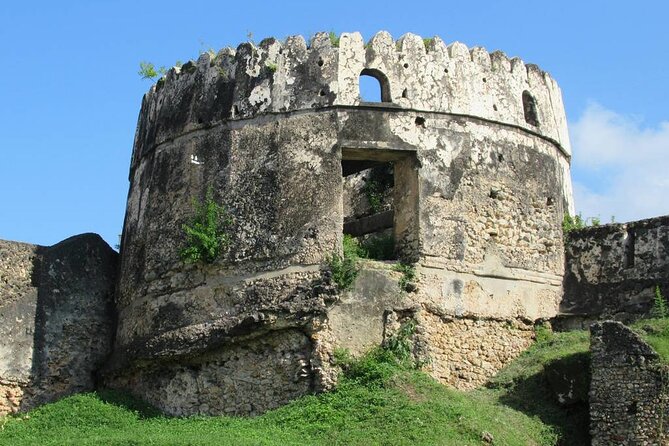
The Old Fort, or Ngome Kongwe, is included with admission and receives another 20-minute stop. Built by Omani Arabs after the Portuguese were expelled in 1699, the fort has served as a garrison, prison, and railway terminal.
Its railway connection is an easy detail to miss. From 1905 to 1928, the fort area served as a terminal for the Zanzibar railway to Bububu. That small fact helps you see Stone Town as more than a cluster of old walls. It was a working port town shaped by trade, military power, transport, and shifting rulers.
The fort is also a good contrast to the House of Wonders. The palace suggests royal display, while the fort is more defensive and practical. Your guide can connect the two sites, which is one reason I prefer taking this walk early in a Zanzibar stay. You begin to understand how the waterfront functioned before you wander farther into the lanes.
The time limit is worth noting. Twenty minutes is enough for a focused visit, but not for a leisurely exploration of every corner. If you like to photograph details or read every sign, you may want to ask your guide how much time is available before moving on.
Freddie Mercury’s Stone Town connection

The Freddie Mercury stop takes about 15 minutes. Farrokh Bulsara, later known as Freddie Mercury, was born in Zanzibar in 1946. His family lived in Stone Town while his father worked in the British colonial service.
The tour takes you to his childhood home, but the standard stop is an exterior view. Entry inside requires an additional fee. That distinction is important for music fans. You can connect the address with Mercury’s early life, but you should not expect the base price to include a full museum visit.
This is one of the tour’s most unusual stops because it links Stone Town to a global music figure without leaving the old quarter. It also adds a personal thread to a walk otherwise focused on political, religious, and commercial history.
I would treat this as a short orientation stop rather than the main reason to book. If Freddie Mercury is your priority, ask in advance about the extra admission and the amount of time available inside. If you are mainly interested in Zanzibar’s architecture and history, the exterior visit is a pleasant addition.
More Walking Tours in Zanzibar
- Stone Town Private Walking Tour
★ 5.0 · 371 reviews - Zanzibar: 3 Hours Private Stone Town walking Tour with Guide
★ 4.6 · 301 reviews - Stonetown: Food Markets and Street Food Walking Tour
★ 4.7 · 151 reviews - Zanzibar Stone Town Walking Tour
★ 5.0 · 145 reviews
Stone Town’s narrow lanes and carved doors
The central walking portion lasts about 45 minutes. Here you move through Stone Town’s narrow streets, passing old buildings, small shops, souvenir sellers, and the famous Zanzibar doors.
These doors deserve more than a quick photograph. Their size, decoration, and symbols reflect the wealth and identity of the people who commissioned them. Your guide explains the meaning behind the designs, giving you a better way to read the street rather than simply walk through it.
This part of the tour is also where the private format can help. You can stop to ask about a door, a shop, or a building that catches your eye. The route includes time for souvenirs and local items, but you are not required to buy anything. A little friendly bargaining may be part of the shopping experience, though the tour details do not promise set discounts or special access.
The pace can be a concern. One assessment described the walk as somewhat rushed, with some buildings left out, while another found the route informative and enjoyable. Stone Town is easy to underestimate. Forty-five minutes passes quickly, especially if you want photographs and explanations. Tell the guide early if architecture, shopping, or local life matters most to you.
The former slave market and Anglican Cathedral

The old slave market on Mkunazini Street is the most serious stop on the route. The visit takes about 20 minutes and is included in the tour price.
Here, your guide explains how enslaved people were bought and sold and how the trade affected Zanzibar and the wider region. This is not a light sightseeing stop. It asks you to confront a painful part of the island’s past, and the historical setting gives the discussion a physical focus that a general city walk cannot provide.
The site is now associated with the Anglican Cathedral, which adds another layer to the story. The tour does not simply point out an old building. It connects religion, trade, colonial power, and human suffering in one place.
Several people who found parts of the tour less satisfying still identified this area as the strongest section. That makes sense. The stop has a clear subject and emotional weight, while other parts of Stone Town can feel more open-ended. Listen closely here, and ask questions if you want to understand how the trade operated and what happened afterward.
Finishing at Darajani Market

Darajani Market, also called Estella Market or Marikiti Kuu, is the final stop and receives about 30 minutes. Built in 1904 by Bomanjee Maneckjee for Sultan Ali bin Hamud, it remains one of the main commercial centers in Stone Town.
This is where the tour shifts from monuments to ordinary business. You may see fresh seafood, meat, fruit, grains, spices, clothing, and electronics. The market is not arranged as a polished attraction. It is a working place, and that is exactly its value.
The smells and tight aisles can be intense, especially after several hours of walking. Keep your belongings secure and stay aware of people moving goods through the market. The tour does not include purchases, and there is no suggestion that shopping is required. You can simply observe, ask your guide about unfamiliar products, and get a clearer picture of daily life.
Ending here is a smart choice. The market gives the walk a practical finish after the grand palaces and heavy historical sites. You leave with a sense of how Stone Town functions today, not just how it looked under sultans and colonial rule.
What $32.90 buys you

The price is $32.90 per person. For a private three-hour walk with a licensed local guide, that is a fair mid-range price, especially if you are sharing the cost with one or more people. A private tour can be more useful than a cheaper group walk if you want to ask questions or shape the emphasis.
The value drops if you expect every major building to include interior admission. The House of Wonders does not include an admission ticket, and entry to the Freddie Mercury house costs extra. Other listed stops are included or free, but you should keep a little money available for optional entries and souvenirs.
You are paying mainly for explanation, navigation, and local perspective. Stone Town’s lanes can be confusing, and a guide helps connect places that might otherwise seem unrelated. If you are comfortable walking alone and reading about the city beforehand, you may decide the price feels high. If you want a structured first look at the old town, it is easier to justify.
The tour is booked, on average, about 109 days ahead. That suggests you should reserve early during busy travel periods, even though the operator has handled some last-minute arrangements successfully.
Guide quality and possible service problems
The strongest part of the experience is the guide. Osman has been praised for professional, patient explanations, while Othman has been described as exceptionally detailed and good-humored. Other feedback points to friendly guides who speak English and can adjust the tour to a group’s interests.
The guides are licensed locals and may speak several languages. That is useful in Stone Town, where a building’s importance can depend on details that are easy to miss. A good guide also makes the slave-market stop more thoughtful and helps explain the symbols on Zanzibar’s doors.
Communication through WhatsApp has been described as easy, and the operator has sometimes arranged hotel pickup, airport drop-off, or a change of date. Those services are not clearly part of this standard walking tour, so confirm any transport request and extra cost before you rely on it.
Punctuality is the main warning. Some bookings have gone smoothly, but delays of more than an hour have also been reported, including confusion over a guide’s transport and assignment. Confirm the guide’s name, meeting point, and phone contact on the day. The listed meeting point is the People’s Palace Museum, and the walk ends back there.
Walking comfort, timing, and who should book
Most people can take part, and the tour is near public transportation. It is still a walking tour through narrow streets, markets, and historic areas, so comfortable shoes and water are sensible choices. The provided details do not specify wheelchair access, a maximum walking distance, or a minimum age, so ask the operator if those points matter to you.
This tour suits a first-time visitor who wants a useful introduction without spending a full day in the old town. It also works well for a private family or couple’s outing, since only your group participates.
I would choose it if you want history, local markets, and landmarks in one compact outing. I would choose something else if your main goal is extensive museum time, a slow architectural study, or guaranteed punctual transfers. The route covers a lot, but it does so at a fairly brisk pace.
Free cancellation is available up to 24 hours before the start time for a full refund. Changes or cancellations inside that window are not accepted for a refund, and poor weather may lead to a different date or full refund.
Should you book this Stone Town walk?
Book it if you want a private introduction to Stone Town with a local guide, especially if the old slave market, Darajani Market, Zanzibar’s doors, and the Freddie Mercury connection all appeal to you. At $32.90, the tour offers solid value when the guide is punctual, clear, and engaged.
Before paying, confirm which buildings can be entered, the extra fee for Freddie Mercury’s house, and the exact meeting arrangements. If the guide arrives on time and gives the sites the attention they deserve, this is an efficient way to get your bearings and understand the city’s complicated past. If you prefer to wander slowly and stop often, ask for a gentler pace or consider exploring independently.
FAQ
How long is the Stone Town guided walking tour?
The tour lasts approximately three hours.
How much does the tour cost?
The listed price is $32.90 per person.
Is this a private tour?
Yes. Only your group participates in the activity.
Where does the tour start?
The meeting point is the People’s Palace Museum at R5QR+X6C, Mizingani Road, Zanzibar, Tanzania.
Where does the tour end?
The activity ends back at the meeting point.
Is a mobile ticket available?
Yes. The tour includes a mobile ticket.
Are admission tickets included?
Some admissions are included, including the Old Fort and former slave market stop. Admission to the House of Wonders is not included, and entry to the Freddie Mercury house requires an optional additional fee.
What places are visited?
The route includes Forodhani Gardens, the House of Wonders, the Old Fort, the Freddie Mercury Museum or childhood home exterior, Stone Town streets, the old slave market and Anglican Cathedral area, and Darajani Market.
Can the tour be canceled for a full refund?
Yes, if you cancel at least 24 hours before the experience start time. Cancellations made less than 24 hours before the start are not refunded.
What happens if bad weather cancels the tour?
If poor weather causes the activity to be canceled, you are offered a different date or a full refund.
More Stone Town Walking Tours
- Zanzibar: Stone Town, Spice Tour, Prison Island with Lunch
★ 4.4 · 1,219 reviews - Zanzibar: Prison Island, Stone Town, & Spice Farm Tour
★ 4.5 · 579 reviews - Zanzibar: Stone Town, Spice tour & Prison Island with Lunch
★ 4.6 · 453 reviews - Full-Day Private Stone Town +Spice Farm and Prison Island Tour
★ 4.5 · 216 reviews
Just added in Zanzibar
- Zanzibar:Ngoma local culture workshop,The Knowledge of Ngoma★ 5.0 · 1 review
- ZANZIBAR:Mnemba island, Spice farm and Jozani Forest★ 5.0 · 1 review
- Zanzibar: Zipline Adventure At Masingini Forest★ 4.6 · 2 reviews
- Zanzibar Walking Tour: Unveiling the Secrets of Stonetown★ 4.8 · 11 reviews
- Zanzibar: Walking Spice Farm with Local Cooking Class★ 4.4 · 9 reviews
- Zanzibar: Walking Tour★ 4.0 · 1 review
- Zanzibar: Uzi Island Mangrove Kayak Tour with Guide★ 5.0 · 1 review
- Zanzibar: Unique Guided Mangrove Tour by SUP or Kayak★ 5.0 · 1 review
Stone Town Tours, compared.

Stone Town, Spice Tour, Prison Island with Lunch
Read our review →

Stone Town, Spice tour & Prison Island with Lunch
Read our review →
3 Hours Private Stone Town walking Tour with Guide
Read our review →
Full-Day Private Stone Town +Spice Farm and Prison Island Tour
Read our review →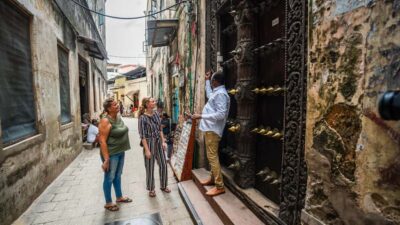
Stone Town Historical Cultural Walking Guided Tour
Read our review →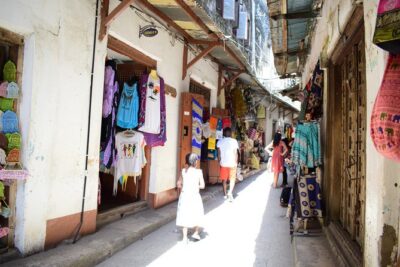
Browse the lists this tour appears in