
Reviewed · STONE TOWN TOURS
Stone Town Historical Walking Tour
History comes alive around every corner here. This private Stone Town walk brings together Zanzibar’s Arab, African, Indian, Persian, and European influences in a compact 2 to 3 hour route. I like the small private format, which lets your group set the pace, and I like the mix of major sights, from the Old Fort to Darajani Bazaar. The main drawback is that some entrance costs are unclear, so you should confirm the exact fees before setting out.
The tour begins and ends at Forodhani in Stone Town, with hotel pickup available from Stone Town hotels if you request it in advance. I also appreciate that the guide can adapt the walk to your interests. One review specifically praises Ahmed for adjusting the pace and explaining both Zanzibar’s past and the current challenges facing Zanzibarians.
In This Review
- Key points at a glance
- Why Stone Town makes such a good walking tour
- Meeting your guide at Forodhani
- Stone Town streets and carved doors
- The Old Fort and the end of Portuguese rule
- Forodhani Gardens and Zanzibar’s evening food
- Darajani Bazaar: the working heart of the route
- The Palace Museum and Zanzibar’s royal past
- Christ Church Cathedral and the slave market site
- Freddie Mercury’s Zanzibar connection
- What the $25 price really covers
- Who will get the most from this walk?
- Practical advice before you book
- Should you book the Stone Town Historical Walking Tour?
- FAQ
- How long does the Stone Town Historical Walking Tour last?
- Where does the tour start and end?
- Is hotel pickup available?
- Is transport from other parts of Zanzibar included?
- Is this a private tour?
- What is included in the price?
- Are food, drinks, and entrance fees included?
- Can I cancel for a full refund?
Key points at a glance
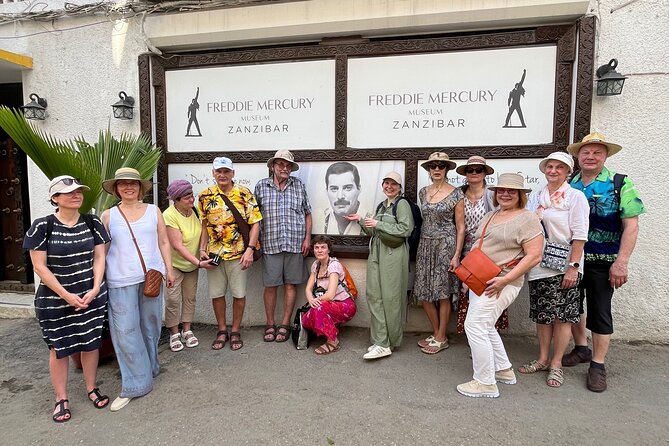
- A private walk through UNESCO-listed Stone Town: Your group gets its own professional guide rather than joining a large shared party.
- Seven central stops in about three hours: The route covers old streets, the Old Fort, Forodhani Gardens, Darajani Bazaar, the Palace Museum, Christ Church Cathedral, and the Freddie Mercury Museum.
- History with difficult chapters included: The walk addresses Portuguese and Omani rule, the slave trade, the sultanate, and Zanzibar’s changing identity.
- A strong food stop at Forodhani Gardens: The evening market is known for grilled seafood, samoosa, cassava, potatoes, and other Kiswahili dishes.
- Good value at $25 per person: The price includes the guide, though entrance fees, food, transport from outside Stone Town, and tips cost extra.
- Flexible cancellation: You can receive a full refund if you cancel at least 24 hours before the start time.
Why Stone Town makes such a good walking tour

Stone Town is the historic center of Zanzibar City, and its appeal comes from the way different cultures meet in a very small area. African, Arab, Indian, Persian, and European influences appear in the buildings, food, religion, music, and street life.
For more than a thousand years, Zanzibar served as a trading center for spices, silk, and enslaved people. That past gave Stone Town its unusual character, but it also left painful memories that deserve more than a quick photo stop. A good guide helps you connect the grand buildings with the people and events behind them.
The setting works especially well on foot. You move through narrow streets, old colonial buildings, carved doors, places of worship, markets, and waterfront spaces rather than seeing Stone Town through a vehicle window. The calls to prayer, the smell of the sea, and the scents of spices add to the sense of place.
The tour also offers a useful look at religious coexistence. Islam is central to daily life, but Christianity and Hinduism also form part of Zanzibar’s cultural mix. The route does not treat Stone Town as a collection of old buildings. It shows a living city shaped by several faiths and communities.
More History Tours in Zanzibar
- Zanzibar: Stone Town Historical Cultural Walking Guided Tour
★ 4.5 · 179 reviews - Stone Town Historical Walking Tour
★ 5.0 · 143 reviews - Stone Town’s Hidden History: Private Guided Walking Tour
★ 4.6 · 94 reviews
Meeting your guide at Forodhani
The official meeting point is Forodhani, near the waterfront in Stone Town. The activity ends back at this same meeting point, which makes the arrangement simple if you are already staying in the old town.
If you are staying at a Stone Town hotel, ask for pickup when booking and send a message in advance. Transport from other parts of Zanzibar is not included, and the tour starts in Stone Town. Public transportation is nearby, but no specific transfer service is part of the price.
Because the tour is private, only your group participates. That matters more than it may seem. A private walk can be easier for families, couples, and groups with different interests. You can spend more time on architecture, royal history, the slave trade, food, or Freddie Mercury instead of following a fixed group pace.
The advertised duration is 2 to 3 hours. The listed stop times add up to close to three hours, so plan on the longer end if you want time to listen, ask questions, and enter the paid sites. The route includes considerable walking through the old town, so comfortable shoes are sensible.
Stone Town streets and carved doors
The first part of the walk introduces Stone Town itself. This is where the guide can explain why the old city earned UNESCO World Heritage status and why its architecture looks unlike a purely African, Arab, or European town.
The old buildings and carved Zanzibari doors are a major visual feature. The doors reflect the island’s trading links and the wealth of families who lived here, while the narrow streets reveal how the town developed over time. You will also hear about Zanzibar’s long role in regional commerce.
This opening section is listed as roughly 30 minutes and has no admission charge. It is an important start because the later stops make more sense once you understand the city’s wider story.
I would pay attention to the guide’s explanation of modern life as well as the past. The most useful comment in the available feedback is that Ahmed discussed current struggles facing Zanzibarians, not only famous dates and buildings. That kind of context can turn a pleasant walk into a more honest portrait of the city.
The Old Fort and the end of Portuguese rule

The Old Fort, or Ngome Kongwe, receives about 40 minutes, making it the longest stop. It is described as the oldest building in Stone Town, with origins around 1560. The fort also helps explain the shift from Portuguese control to Omani rule.
The Portuguese held an important position in the region until the Yarub rulers pushed them out after taking Mombasa. Oman then took control in 1698, a change that shaped Zanzibar’s later political and commercial life.
The fort is valuable because it links local streets to wider Indian Ocean history. Zanzibar was never isolated. Ships, rulers, merchants, and labor systems connected the island with East Africa, Arabia, India, Persia, and Europe.
There is no admission charge listed for this stop. Your guide’s explanation is likely to be more important than simply walking around the stone walls. Ask questions about the Portuguese period and the Omani takeover if those subjects interest you, since the stop provides a natural place to put Zanzibar’s later history into context.
More Walking Tours in Zanzibar
- Stone Town Private Walking Tour
★ 5.0 · 371 reviews - Zanzibar: 3 Hours Private Stone Town walking Tour with Guide
★ 4.6 · 301 reviews - Stonetown: Food Markets and Street Food Walking Tour
★ 4.7 · 151 reviews - Zanzibar Stone Town Walking Tour
★ 5.0 · 145 reviews
Forodhani Gardens and Zanzibar’s evening food

Forodhani Gardens is both a public park and one of Stone Town’s best-known food areas. It becomes especially busy after sunset, when local people and visitors gather for a street food market.
The food list includes grilled seafood, samoosa, cassava, potatoes, and other Kiswahili and Zanzibari dishes. The tour does not include food or drinks, so bring extra cash if you want to eat. This is one of the easiest places on the route to connect history with daily life.
Timing matters here. The stop is listed as about 30 minutes, but the market is most active after sunset. If your tour takes place earlier, you may see the setting without the full evening food scene. The available information does not give a start time, so ask the operator when booking if tasting food at Forodhani is a priority.
I like this stop because it adds flavor to a route that could otherwise become heavy with forts, palaces, and difficult history. Just remember that the guide is not providing a meal. You pay for anything you choose to sample.
Darajani Bazaar: the working heart of the route

Darajani Bazaar offers a different view of Zanzibar. Instead of formal monuments, you get a market setting with fresh produce, spices, seafood, clothing, crafts, and traditional foods.
The visit lasts about 18 minutes, so this is a short introduction rather than a long shopping session. You can look at the displays, speak with vendors, and see the kinds of goods that support everyday life in Stone Town. The market is also a good place to notice how food and trade remain central to Zanzibar’s identity.
If you want to buy spices or crafts, keep the short stop in mind. You may need to decide quickly, and the tour may not leave enough time for careful comparison. A private guide can help you focus, but there is no promise of extended shopping time.
Darajani is an important counterpoint to the grander stops. It shows Stone Town as a working city, not just a historic district prepared for sightseeing.
The Palace Museum and Zanzibar’s royal past
The Palace Museum, also called the People’s Palace Museum, takes about 18 minutes. It was once a residence of the Sultan, and its displays cover Zanzibar’s royal past and cultural heritage.
This stop can help you understand the political world that shaped Stone Town after Omani influence grew on the island. Artifacts and exhibits give the royal story a physical setting, while references to traditional music or craft demonstrations suggest that the museum may offer more than static displays.
The time allocation is brief, so do not expect to see every exhibit in detail. If royal history is especially important to you, ask the guide which parts deserve your attention. The appeal here is not only the building itself. It is the chance to connect Zanzibar’s trading wealth with the rulers and households who benefited from it.
Christ Church Cathedral and the slave market site
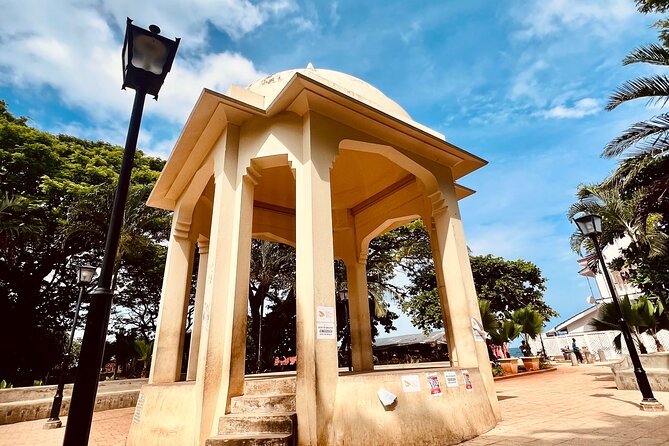
Christ Church Cathedral occupies the site of the former slave market, making it one of the most serious stops on the tour. The guide explains that people were sold there before the church was built.
This part of Stone Town cannot be reduced to a quick historical note. Zanzibar’s role in the slave trade is central to understanding the island’s prosperity, regional connections, and painful legacy. The cathedral places that history in a setting that encourages reflection.
Admission is not included at this stop. The tour information also states a $5 per person entrance fee, while the cathedral and Freddie Mercury Museum are separately marked as not included. Because those details may refer to different entry arrangements, confirm the current charges with Days Zanzibar Tourguides before booking.
Give this stop the attention it deserves. The route includes lighter subjects such as food and music, but the former slave market site provides the moral and historical weight of the walk.
Freddie Mercury’s Zanzibar connection
The Freddie Mercury Museum offers a change of subject without leaving Stone Town’s cultural story. Freddie Mercury was born in Zanzibar and later became globally famous as the lead singer of Queen.
The museum focuses on his life, career, Zanzibari background, personal belongings, memorabilia, and related artifacts. The stop is listed at about 18 minutes, so it is a compact visit rather than an extended museum tour.
Admission is not included. If music history is a major reason for choosing this walk, confirm the entry price and opening arrangements before you go. The tour does not promise a particular collection size or special exhibition.
Still, the stop adds a modern chapter to Stone Town. You move from sultans, colonial powers, and old trade routes to a twentieth-century figure whose life connected Zanzibar with the wider world.
What the $25 price really covers
At $25 per person, the tour is reasonably priced for a private guided walk. The main value comes from having a professional guide interpret the city while your own group controls the pace.
The price includes the guide and pickup from Stone Town hotels when requested in advance. It does not include food, drinks, tips, transport from elsewhere on the island, or personal expenses.
You should also budget for entrance charges. The information gives a $5 per person entrance fee and separately excludes admission at Christ Church Cathedral and the Freddie Mercury Museum. Since the exact structure is not fully clear, ask for a current breakdown before booking. The base price is attractive, but the final cost depends on which sites you enter and what you buy at Forodhani or Darajani.
The tour is recommended by 100 percent of the 40 people represented in the rating, with a five-star score. That is a strong signal, though it does not remove the need to check the fee details and timing.
Who will get the most from this walk?
I would choose this tour if you want a first look at Stone Town and prefer explanation over simply wandering. It suits couples, families, and private groups who want a flexible pace and a guide who can discuss both old events and present-day issues.
It is also a good fit if you want several themes in one outing: architecture, religion, trade, food, royal history, the slave trade, and popular music. The route gives you a broad introduction rather than concentrating on one subject.
You may want a different plan if you prefer long museum visits, extended market shopping, or a food tour built around tastings. The schedule moves through seven stops in roughly three hours, so the experience is wide-ranging but not slow.
Most people can participate, and the meeting point is near public transportation. Since the tour is on foot through Stone Town, ask the operator about the route if anyone in your group has specific mobility needs. That information is not detailed in the tour description.
Practical advice before you book
Send a message in advance if you want pickup from a Stone Town hotel. If you are staying outside Stone Town, arrange your own transport and allow enough time to reach Forodhani.
Ask two useful questions before confirming: What exactly does the $5 entrance fee cover, and will the tour reach Forodhani after sunset? The answers affect both your budget and the chance to see the food market at its busiest.
Bring money for food, drinks, admissions, and a tip. The tour accepts a mobile ticket, and confirmation is sent at booking. You can cancel for a full refund up to 24 hours before the start time, but cancellations or changes inside that window are not refunded or accepted.
Should you book the Stone Town Historical Walking Tour?
Book it if you want a private, affordable introduction to Stone Town with a broad historical range. The strongest feature is the human scale: a guide such as Ahmed can adjust the pace and connect famous sites with present-day Zanzibari life.
The route is not designed for deep museum study or a full evening food crawl. It is a fast-moving overview, and you will need to pay extra for admissions, food, and transport from outside Stone Town. Confirm those costs first.
For a first visit, I think the combination of the Old Fort, Darajani Bazaar, Christ Church Cathedral, Forodhani Gardens, and the Freddie Mercury Museum gives you a useful picture of Zanzibar’s past and present in a short time.
FAQ
How long does the Stone Town Historical Walking Tour last?
The tour lasts approximately 2 to 3 hours. The listed stops add up to close to three hours.
Where does the tour start and end?
The meeting point is Forodhani in Zanzibar, Tanzania. The activity ends back at the meeting point.
Is hotel pickup available?
Pickup is available from Stone Town hotels, but you must request it and send a message in advance.
Is transport from other parts of Zanzibar included?
No. Transfers from other parts of the island are not included, and the tour starts in Stone Town.
Is this a private tour?
Yes. Only your group participates in the activity.
What is included in the price?
The $25 price includes a professional tour guide. Pickup from Stone Town hotels is available when requested in advance.
Are food, drinks, and entrance fees included?
No. Food and drinks are not included. The tour information also excludes entrance fees and lists a $5 per person entrance charge. Christ Church Cathedral and the Freddie Mercury Museum are specifically marked as having admission not included.
Can I cancel for a full refund?
Yes. You can receive a full refund if you cancel at least 24 hours before the experience start time. Cancellations or changes made less than 24 hours before the start time are not accepted or refunded.
More Stone Town Walking Tours
- Zanzibar: Stone Town, Spice Tour, Prison Island with Lunch
★ 4.4 · 1,219 reviews - Zanzibar: Prison Island, Stone Town, & Spice Farm Tour
★ 4.5 · 579 reviews - Zanzibar: Stone Town, Spice tour & Prison Island with Lunch
★ 4.6 · 453 reviews - Full-Day Private Stone Town +Spice Farm and Prison Island Tour
★ 4.5 · 216 reviews
Just added in Zanzibar
- Best of Zanzibar: Spice Tour & Stone Town Visit★ 4.4 · 5 reviews
- THE GREEN TOUR: Jozani Forest & Mangrove Kayaking Experience★ 4.7 · 6 reviews
- Stone Town: Private Walking Tour in the Heart of Zanzibar.★ 5.0 · 1 review
- The rock restaurant and blue Lagoon★ 5.0 · 1 review
- Tea House, Zanzibar Coffee House, Spice Tour with Lunch★ 5.0 · 1 review
- Swimming with sea turtles in salaam cave★ 5.0 · 1 review
- Swim with Turtles at The Lagoons Zanzibar & Stone Town Tour★ 4.8 · 4 reviews
- Stonetown & Prison island Cultural Tour★ 5.0 · 2 reviews
Stone Town Tours, compared.

Stone Town, Spice Tour, Prison Island with Lunch
Read our review →

Stone Town, Spice tour & Prison Island with Lunch
Read our review →
3 Hours Private Stone Town walking Tour with Guide
Read our review →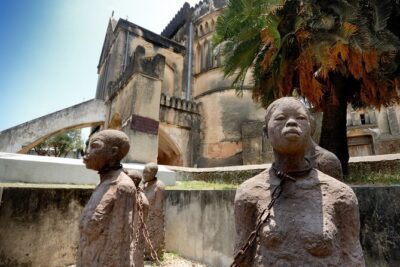
Full-Day Private Stone Town +Spice Farm and Prison Island Tour
Read our review →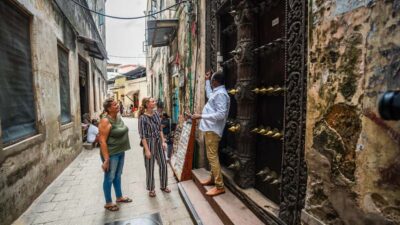
Stone Town Historical Cultural Walking Guided Tour
Read our review →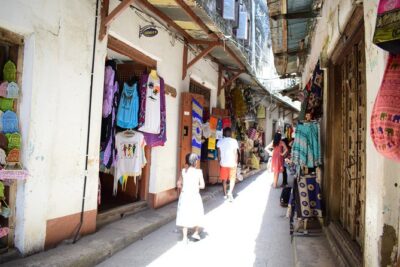
Browse the lists this tour appears in