

Reviewed · STONE TOWN TOURS
Stone Town Walking Tour with Hassan
Stone Town rewards curious walkers. This three-hour private tour with Hassan links Zanzibar’s grand palaces, markets, churches, mosques, and old trading streets into one clear story. I like the chance to see major sights such as the House of Wonders, Old Fort, Darajani Bazaar, and the former slave market in a single outing. I also like that Hassan explains more than buildings, including Zanzibar’s politics, history, and daily life.
The $25 price is fair for a private English-language guide and a bottle of water, especially if you want context instead of simply wandering past carved doors. The main consideration is that admission fees at several sights are extra, and you must arrange your own transport to Forodhani Gardens unless your hotel is in Stone Town.
In This Review
- Key points to know before you book
- Starting beside Forodhani Gardens
- The House of Wonders and the royal waterfront
- Freddie Mercury, a Zanzibar-born music legend
- St. Joseph’s Cathedral and the city’s religious layers
- Jaws Corner and the everyday city
- The former slave market and Anglican Cathedral
- Darajani Bazaar, where the route turns practical
- The Old Dispensary and Indian Ocean connections
- Malindi Mosque and the Old Customs House
- The People’s Palace and the end of the route
- What the $25 price really covers
- How the timing feels on foot
- Who will get the most from Hassan’s tour
- Should you book Stone Town Walking Tour with Hassan?
- FAQ
- How long is the Stone Town Walking Tour with Hassan?
- How much does the tour cost?
- Is this a private tour?
- Where does the tour start?
- Where does the tour end?
- Is hotel pickup included?
- What is included in the tour price?
- Are admission tickets included?
- Can I cancel the tour for a full refund?
Key points to know before you book
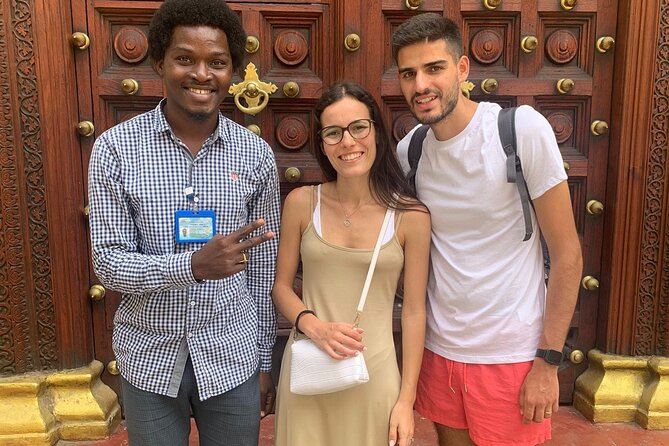
- Hassan keeps the history lively: His approach is informative without turning the walk into a lecture, with room for questions and flexible pacing.
- You cover a lot in three hours: The route includes 12 stops, from royal palaces and forts to markets, churches, mosques, and local meeting places.
- The tour is private: Only your group participates, which makes it easier to ask about Zanzibar’s culture, politics, and past.
- Several landmark admissions cost extra: The walking tour price does not cover every museum or interior visit.
- Start and finish at Forodhani: Hotel transport is not included, although a Stone Town hotel may be able to arrange pickup after advance contact.
- Good weather matters: You can cancel up to 24 hours before the start for a full refund, but changes within 24 hours are not accepted.
Starting beside Forodhani Gardens
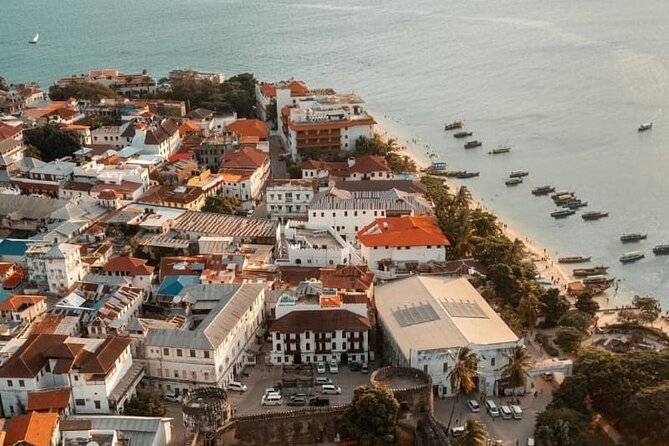
The tour begins at Forodhani in Stone Town and returns to the same meeting point. That is practical if you are already staying in the old town, but you will need to arrange your own ride from another part of Zanzibar.
Forodhani Gardens are a useful starting place because they sit beside several of Stone Town’s most important buildings. The public gardens were laid out in 1936 to mark the silver jubilee of Sultan Khalifa. Later in the day, the area becomes known for its night food market, where local people and tourists gather for a simple dinner.
The tour allocates about 17 minutes here. If your walk takes place before the evening market, you will see the setting rather than the full food scene. If you return later, Forodhani is an easy place to continue your evening, though this tour itself is focused on history rather than a food tasting.
More Walking Tours in Zanzibar
- Stone Town Private Walking Tour
★ 5.0 · 371 reviews - Zanzibar: 3 Hours Private Stone Town walking Tour with Guide
★ 4.6 · 301 reviews - Zanzibar: Stone Town Historical Cultural Walking Guided Tour
★ 4.5 · 179 reviews
The House of Wonders and the royal waterfront
The House of Wonders is one of Stone Town’s most recognizable buildings. Built by Sultan Barghash bin Said in the 19th century, it was once the tallest and largest building in town. Its position between the Old Fort and the palace museum gives it a commanding place along the waterfront.
You get about 10 minutes here, and admission is not included. That short stop is enough for an exterior introduction, but you should not assume the tour price covers entry inside. Hassan can help explain the building’s former role as a ceremonial palace and reception hall, giving you a better sense of how royal power shaped this part of town.
The neighboring Old Fort receives another 10-minute stop. The Portuguese built the original fort in the 16th century, and later Arab influence gave it the name Ngome Kongwe, or Old Fort. Today, it is used for Zanzibar festivals, so this is a good example of a defensive building that has taken on a public role.
Admission to the Old Fort is included. That makes the stop particularly useful for the price, since you get both an important historical site and time to see how an old military structure remains part of modern Stone Town life.
Freddie Mercury, a Zanzibar-born music legend
The Freddie Mercury Museum offers a sharp change of subject. Freddie Mercury was born in Zanzibar Town on September 5, 1946, and later became the lead singer and pianist of Queen. He died on November 24, 1991.
The stop lasts about seven minutes, and admission is not included. That is enough time for a brief look and an explanation of his connection to Zanzibar, but music fans may want to return separately if they hope to spend longer inside.
I like this stop because it prevents the tour from becoming only a sequence of royal buildings and colonial landmarks. It connects Stone Town with a global cultural figure while keeping the focus on his local birthplace.
St. Joseph’s Cathedral and the city’s religious layers
St. Joseph’s Roman Catholic Cathedral began construction in 1863. French missionaries from Réunion started the work, but building stopped after graves were found on the land. Construction resumed about 30 years later, and the first Mass was held at Christmas in 1898.
The stop is about seven minutes, with admission not included. That is a short visit, so you should expect an introduction rather than a long examination of the church.
Still, the cathedral matters because it shows how many religious traditions developed in Stone Town. The route later includes an Anglican cathedral and a mosque, allowing you to see Christian and Islamic buildings within the same compact historic center.
More Stone Town walking tours:
- Zanzibar: Stone Town, Spice Tour, Prison Island with Lunch
★ 4.4 · 1,219 reviews - Zanzibar: Prison Island, Stone Town, & Spice Farm Tour
★ 4.5 · 579 reviews - Zanzibar: Stone Town, Spice tour & Prison Island with Lunch
★ 4.6 · 453 reviews - Full-Day Private Stone Town +Spice Farm and Prison Island Tour
★ 4.5 · 216 reviews
Jaws Corner and the everyday city
Jaws Corner gets only about three minutes, but it may be one of the most useful stops for understanding present-day Stone Town. It is a meeting place where local people and tourists gather for coffee, conversation, and jokes.
There is no admission fee. The brief stop gives Hassan a chance to explain the social side of town, not just its official monuments. I especially like this kind of pause because it helps you notice how Stone Town works as a living neighborhood rather than a collection of preserved buildings.
The tour’s private format is valuable here. You can ask Hassan about local routines, politics, or life in Zanzibar without holding up a large group. His style is described as flexible and informative without becoming boring, which suits a stop built around ordinary social life.
The former slave market and Anglican Cathedral
The former slave market and Anglican Cathedral are among the most serious stops on the route. The site was once a market for enslaved people from different countries. It was closed around 1873 by Sultan Barghash, and an Anglican church was later built there by Edward Steere, the third Bishop of Zanzibar.
The visit lasts about 20 minutes, the longest stop on the walking route, though admission is not included. Allow time for the subject matter to feel heavy. This is not a quick photo stop, and Hassan’s historical explanation is especially important here.
Edward Steere served as bishop from 1874 to 1882. After he died of a heart attack in the building next door, he was buried behind the altar. That detail links the cathedral directly to the people who shaped its construction and early life.
This stop gives the tour moral weight. Zanzibar’s story includes royal power, trade, religion, and cultural exchange, but it also includes the human cost of the slave trade. A guide can help you understand that past without reducing it to a single display or a few dates.
Darajani Bazaar, where the route turns practical
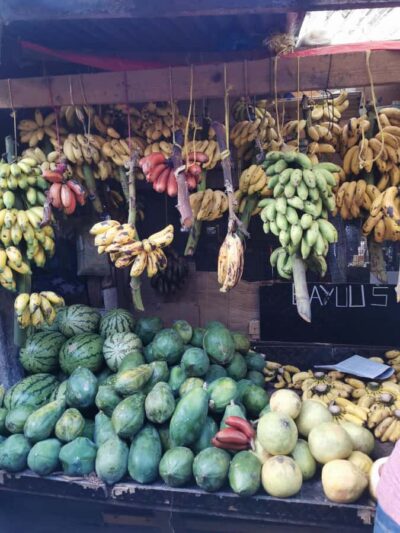
Darajani Bazaar is the largest of the central market buildings in Stone Town. British architect J. H. Sinclair designed it in an eclectic style, and it opened in August 1904.
The market once faced the creek and includes areas for fish, spices, meat, fruit, and vegetables. You get about 15 minutes here, with admission included. That may be enough to see the market’s structure and learn how it serves the city, but it is not a long shopping session.
I would treat this as a chance to observe rather than rush to buy. Markets are best understood through their smells, sounds, products, and daily purpose. Hassan’s explanation can make the building more than a busy stop on the route, showing how food and commerce continue to shape Stone Town.
The Old Dispensary and Indian Ocean connections

The Old Dispensary takes about 15 minutes, with admission not included. Tharia Topan commissioned its construction in 1887 as a charitable hospital for poor residents.
The building was unfinished when Topan died in 1891. His widow continued the work, but financial problems stopped construction again in 1893. After a family dispute, the building was sold, and the new owner completed it in 1894.
This story gives you a useful reminder that Stone Town was shaped by private families, charitable projects, business, and changing ownership. The building’s purpose also points to the wider Indian Ocean connections that influenced Zanzibar’s architecture and public life.
You will hear many dates and names during this tour. Hassan’s strength is making those details part of a larger story about people and institutions, rather than asking you to memorize them like an exam.
Malindi Mosque and the Old Customs House
Malindi Mosque, also called Ijumaa Mosque or Friday Mosque, was built in the 19th century. Compared with the tall minarets and domes found in some Islamic cities, Zanzibar’s older mosques are generally plain and restrained.
The mosque was fully renovated in 1994 in a modern Arabesque style. The stop lasts about nine minutes, and admission is not included. Dress and behavior should be respectful around any religious site, although the supplied tour details do not specify an interior access policy.
The Old Customs House receives about 18 minutes, with admission included. Built around 1865, it first served as the home of Zam Zam, daughter of Seyyid Said, the first Sultan of Zanzibar, and her husband, Sayyid Humud bin Ahmed of the Busaidy family.
After Humud died, Zam Zam moved out, and relatives retained the property. In 1928, customs officials moved from the Forodhani area to the new port, and the family home became the new Customs House until 1987.
This is a strong example of how buildings change purpose as the city changes. A private residence became a government workplace, and the structure now forms part of the story you walk through.
The People’s Palace and the end of the route
The People’s Palace Museum is the final major stop. Seyyid Said bin Sultan built the palace in the 1830s for members of the Sultan’s family. It was his second palace, after Mtoni Palace.
The building suffered heavy damage during the Anglo-Zanzibar War of 1896 and was reduced to about half its original size. It remained an Al Busaidy palace until the Zanzibar Revolution of 1964, when Sultan Jamshid was overthrown.
After the revolution, the building was renamed the People’s Palace and used as government offices. It officially opened as a palace museum in 1994. You get around 20 minutes here, but admission is not included.
This final stop brings together much of the tour’s central theme: royal rule, war, revolution, and changing public identity. If you like political history, this is one of the most rewarding parts of the walk. If you mainly want architecture, you will still find plenty to see, but Hassan’s explanation is what gives the palace its meaning.
What the $25 price really covers
At $25 per person, this is a reasonable price for a three-hour private tour with a certified English-speaking guide and bottled water. The private format matters more than it might at first appear. You can ask Hassan to explain a confusing point, spend less time at a stop that does not interest you, or ask about present-day Zanzibar as you walk.
The price does not include transport to or from Forodhani Gardens. It also does not cover admission at the House of Wonders, Freddie Mercury Museum, St. Joseph’s Cathedral, former slave market and Anglican Cathedral, Old Dispensary, Malindi Mosque, or People’s Palace Museum.
The Old Fort, Forodhani Gardens, Jaws Corner, Darajani Bazaar, and Old Customs House are listed with admission included or free. Since several interior visits cost extra, bring some additional money if you want to enter every available site.
How the timing feels on foot
The scheduled stop times add up to more than three hours, so the itinerary should be treated as an approximate framework rather than a rigid timetable. Walking between the sights, introductions, questions, and transitions all take time.
You cover 12 locations in a compact area. That is efficient, but it also means some stops last only three to ten minutes. I would book this tour when you want a strong first orientation to Stone Town, then return to the buildings that interest you most.
The route includes both indoor and outdoor stops. Good weather is required, and poor weather can lead to a new date or a full refund. Cancel at least 24 hours before the local start time for a full refund. Within 24 hours, you receive no refund, and late changes are not accepted.
Who will get the most from Hassan’s tour
I would choose this experience if you want a private introduction rather than a self-guided walk with a book or phone. It suits first-time visitors who want the main sights explained in a sensible order.
It is also a good match for anyone interested in several subjects at once: Omani rule, Portuguese influence, the slave trade, religious buildings, royal families, market life, Zanzibar’s revolution, and Freddie Mercury. Hassan’s willingness to discuss politics and everyday life adds value beyond the normal monument facts.
You may want a different plan if you dislike walking, want long museum visits, or prefer a food-focused experience. The route visits Forodhani Gardens and Darajani Bazaar, but it does not include a dedicated tasting session. It also moves at a brisk pace because so many places are included.
Should you book Stone Town Walking Tour with Hassan?
Book it if you want a clear, personal introduction to Stone Town in three hours. The best reasons are the private format, Hassan’s flexible way of explaining the city, and the wide range of stops included for $25.
Before booking, check the extra admission costs and arrange transport to Forodhani if you are staying outside Stone Town. I would also leave room in your schedule to revisit one or two favorite sites afterward, since several stops are brief.
If you want context, local conversation, and a useful first look at Zanzibar’s capital, this is a strong-value choice. If you want to linger inside every museum or explore at a slow photographic pace, book it as an orientation walk rather than your only Stone Town visit.
FAQ
How long is the Stone Town Walking Tour with Hassan?
The tour lasts approximately three hours.
How much does the tour cost?
The listed price is $25 per person.
Is this a private tour?
Yes. Only your group participates in the activity.
Where does the tour start?
The meeting point is Forodhani in Zanzibar, Tanzania.
Where does the tour end?
The tour ends back at the Forodhani meeting point.
Is hotel pickup included?
Transport from your hotel to the meeting point is not included. If your hotel is in Stone Town, you should send an advance message to ask about pickup.
What is included in the tour price?
The price includes a professional, certified English-speaking guide and one bottle of water.
Are admission tickets included?
Some admissions are included, including the Old Fort, Forodhani Gardens, Darajani Bazaar, and Old Customs House. Admission is not included at several other stops, including the House of Wonders and People’s Palace Museum.
Can I cancel the tour for a full refund?
Yes, if you cancel at least 24 hours before the experience start time. Cancellations or changes made within 24 hours are not accepted for a refund. If poor weather causes the tour to be canceled, you will be offered another date or a full refund.
Just added in Zanzibar
- Best of Zanzibar: Spice Tour & Stone Town Visit★ 4.4 · 5 reviews
- THE GREEN TOUR: Jozani Forest & Mangrove Kayaking Experience★ 4.7 · 6 reviews
- Stone Town: Private Walking Tour in the Heart of Zanzibar.★ 5.0 · 1 review
- The rock restaurant and blue Lagoon★ 5.0 · 1 review
- Tea House, Zanzibar Coffee House, Spice Tour with Lunch★ 5.0 · 1 review
- Swimming with sea turtles in salaam cave★ 5.0 · 1 review
- Swim with Turtles at The Lagoons Zanzibar & Stone Town Tour★ 4.8 · 4 reviews
- Stonetown & Prison island Cultural Tour★ 5.0 · 2 reviews
Stone Town Tours, compared.
Stone Town, Spice Tour, Prison Island with Lunch
Read our review →
Stone Town, Spice tour & Prison Island with Lunch
Read our review →
3 Hours Private Stone Town walking Tour with Guide
Read our review →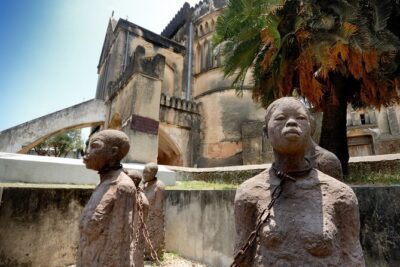
Full-Day Private Stone Town +Spice Farm and Prison Island Tour
Read our review →
Stone Town Historical Cultural Walking Guided Tour
Read our review →
Browse the lists this tour appears in