
Reviewed · SPICE FARM TOURS
Zanzibar: Spice Farm Tour with Traditional Cooking Class
Spice can tell Zanzibar’s story. This six-hour outing from Stone Town combines a rural farm visit with a hands-on Swahili cooking lesson, so you get more than a quick look at planted rows. I like the small family-run setting and the chance to make food with a local African cook. I also like that the farm visit explains how ginger, vanilla, coffee, cinnamon, and other spices are grown and prepared.
The main point to check is the timing. The advertised duration is six hours, but one recent couple finished in about three and a half hours. That shorter schedule suited them, while other visitors may prefer a fuller half-day. You also need cash if you plan to buy spices, and bargaining is expected.
In This Review
- Key things to know before you go
- Why Zanzibar’s spices matter
- Leaving Stone Town for the farm
- Walking through ginger, vanilla, coffee, and cinnamon
- The coconut climber and the younger palms
- Cooking with a local African mama
- Eating the Swahili meal together
- Buying spices and handling the shop stop
- Is six hours realistic?
- Value at $47 per person
- Who should book this outing?
- Should you book the Zanzibar spice farm tour?
- FAQ
- Where does the tour begin and end?
- How much does the tour cost?
- How long does the tour last?
- What spices can I see?
- Is transportation included?
- Is a guide included?
- Is food included?
- What should I bring?
- Can I cancel for a refund?
Key things to know before you go
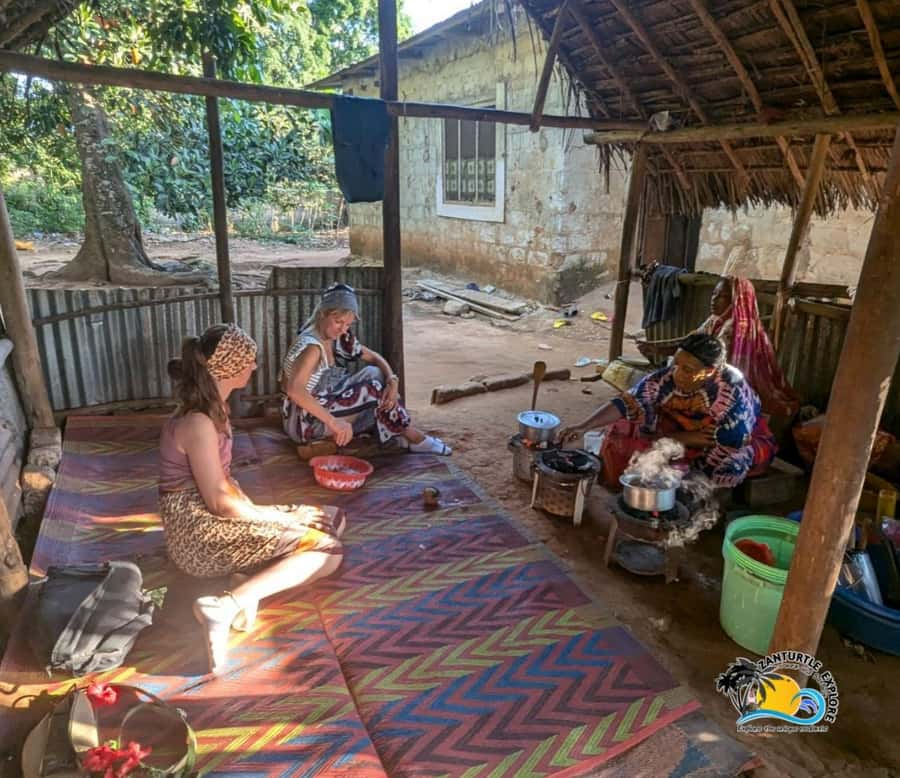
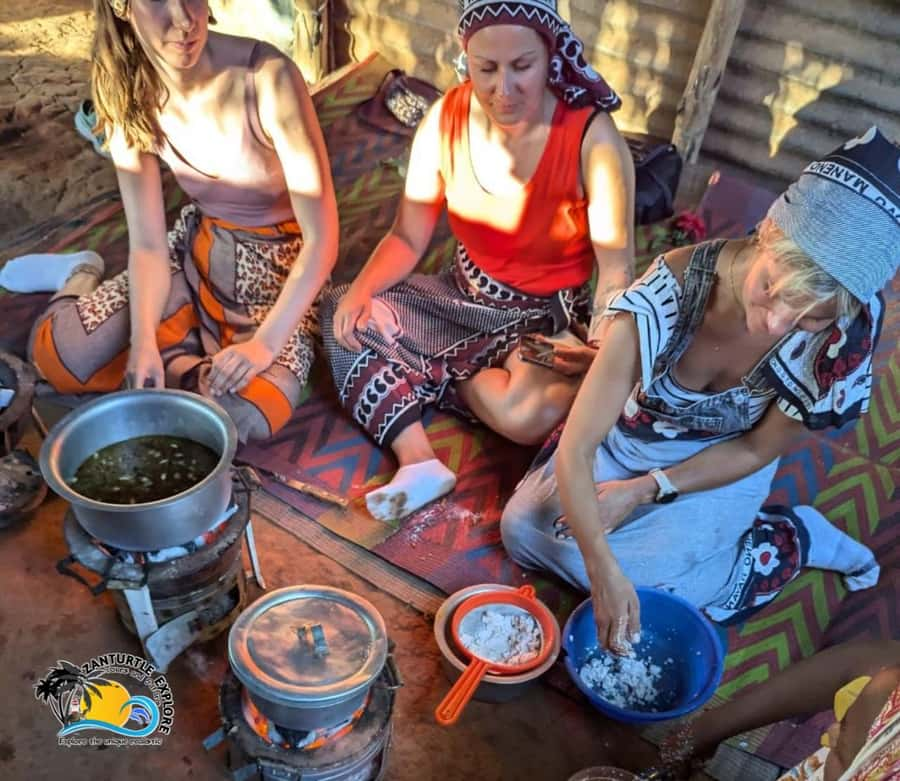
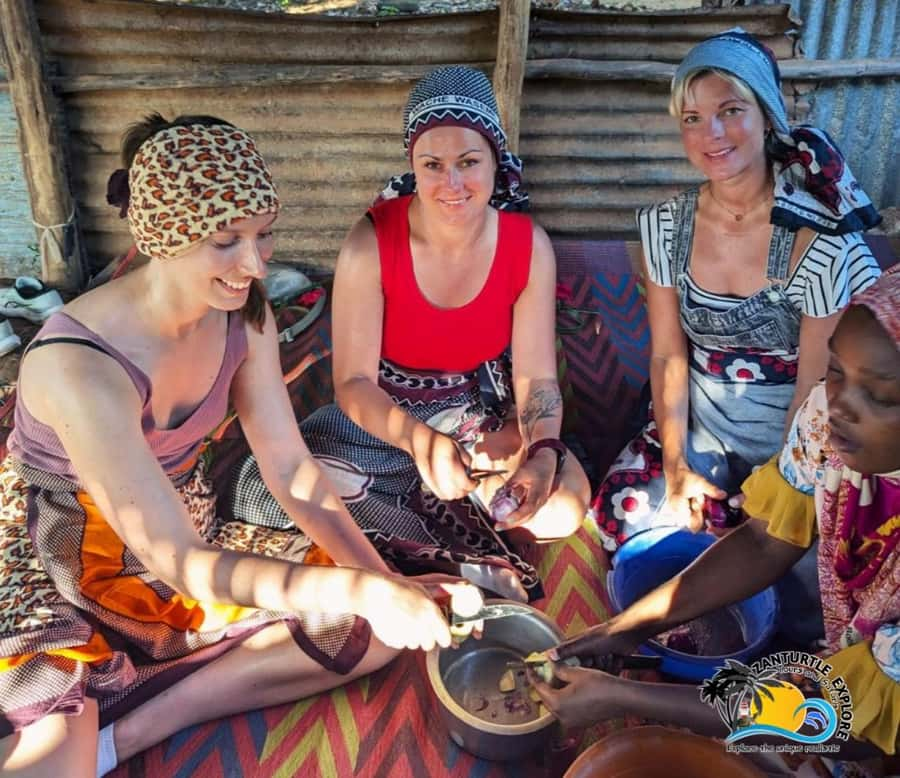
- You make a real Swahili meal: The cooking session includes cutting ingredients, preparing dishes, and making coconut milk by hand.
- The farm has more than one familiar spice: You can see cardamom, ginger, vanilla, coffee, nutmeg, cinnamon, and lemongrass, with explanations of planting and harvest times.
- A coconut climber adds a memorable local touch: You may watch a coconut climber, sometimes called a butterfly, work high in the palm trees.
- The tour begins and ends in Stone Town: Hotel pickup and drop-off are available around Stone Town hotels.
- Small groups can make a difference: Recent bookings included only two people, creating a relaxed setting for cooking and questions.
- The $47 price covers the main costs: Transport, entry, a guide, and bottled water are included, but personal spending is not.
Why Zanzibar’s spices matter
Zanzibar is often called Spice Island for good reason. Its name is tied to centuries of trade in prized crops such as cloves, cinnamon, nutmeg, vanilla, and cardamom. This tour gives you a simple way to connect those famous names with actual plants, roots, pods, bark, and leaves.
I find that useful because spices can seem abstract in a market or shop. At a farm, you can see what the plant looks like before it becomes a jar of powder. The guide explains how each crop is planted and how long it takes to become ready for use. That practical detail turns a general sightseeing stop into a lesson about work, weather, farming, and trade.
The setting is a small rural farm in the Unguja South Region. You will not be visiting a polished museum display. Instead, the appeal is the direct contact with plants and the chance to ask questions as you walk. The level of detail may depend on your guide and the pace of the day, but the supplied languages are English, French, Italian, and German.
More Cooking Classes in Zanzibar
- Zanzibar: Spice Farm Tour with Traditional Cooking Lesson
★ 4.8 · 77 reviews - Zanzibar Cooking Class & Spice Tour
★ 4.5 · 77 reviews - Half-Day Kuza Cave Swimming Adventure and Cooking Class
★ 4.5 · 44 reviews
Leaving Stone Town for the farm
Pickup and drop-off are available at hotels around Stone Town, and the route starts and finishes there. That makes the outing easy to fit into a Stone Town stay, especially if you want a day away from the old city’s narrow lanes and waterfront.
The transport is included in the $47 price, along with the farm entrance, tour guide, and bottled water. This matters because the cost is not just paying for access to a field. You are also paying for the transfer, interpretation, and cooking portion, which is a fair package if you value participation rather than a short photo stop.
The exact start time is flexible enough that one small group shifted its departure later. Do not assume every booking will work that way, but it is worth asking in advance if your Stone Town plans make the standard time awkward.
Wear comfortable shoes. You will be walking around a farm, and practical footwear is more useful than anything smart or delicate. Bring cash for personal needs and spice purchases. Alcohol and drugs are not allowed.
Walking through ginger, vanilla, coffee, and cinnamon
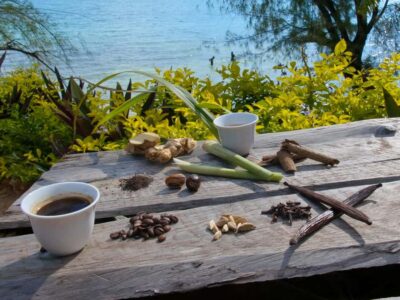
The farm visit is the heart of the outing. You will see several tropical spices and receive an explanation of how they are planted, cared for, and harvested. The named crops include cardamom, ginger, vanilla, coffee, nutmeg, cinnamon, and lemongrass.
Each one offers a different lesson. Ginger grows as a root, while cinnamon comes from bark. Vanilla is especially interesting because the familiar dark pod begins as a flower on a climbing plant. Coffee gives you another reminder that a morning drink starts as a crop, not as a café order.
The guide’s job is important here. A quick walk with no explanation would not justify much of the price. The useful part is learning when plants are ready, how they are handled, and how ingredients move from farm to kitchen. You should feel free to ask simple questions, such as which part of a plant is used or how long it takes to harvest.
The tour is described as visiting three physically distinct parts of the farm, though the supplied details do not specify exact names or boundaries for each area. Think of it as a guided look at different sections rather than a formal botanical garden route.
The coconut climber and the younger palms
One of the more unusual sights is the coconut climber, referred to locally as a butterfly. Watching someone climb a coconut palm gives the farm visit a human element that a plant list cannot provide.
You may also see young coconuts. That detail helps show the full cycle of the crop, from palm growth to the fruit used in local cooking. It is a small moment, but it gives the visit a stronger connection to everyday food.
The coconut portion also prepares you for the cooking class. Coconut is central to many Zanzibar dishes, and the cooking activity includes making coconut milk yourself. That is a worthwhile feature because it shows how a basic ingredient is produced before it reaches the pot.
More Spice Farm Tours in Zanzibar:
- Zanzibar: Stone Town, Spice Tour, Prison Island with Lunch
★ 4.4 · 1,219 reviews - Zanzibar: Prison Island, Stone Town, & Spice Farm Tour
★ 4.5 · 579 reviews - Zanzibar: Stone Town, Spice tour & Prison Island with Lunch
★ 4.6 · 453 reviews - Full-Day Private Stone Town +Spice Farm and Prison Island Tour
★ 4.5 · 216 reviews
Cooking with a local African mama
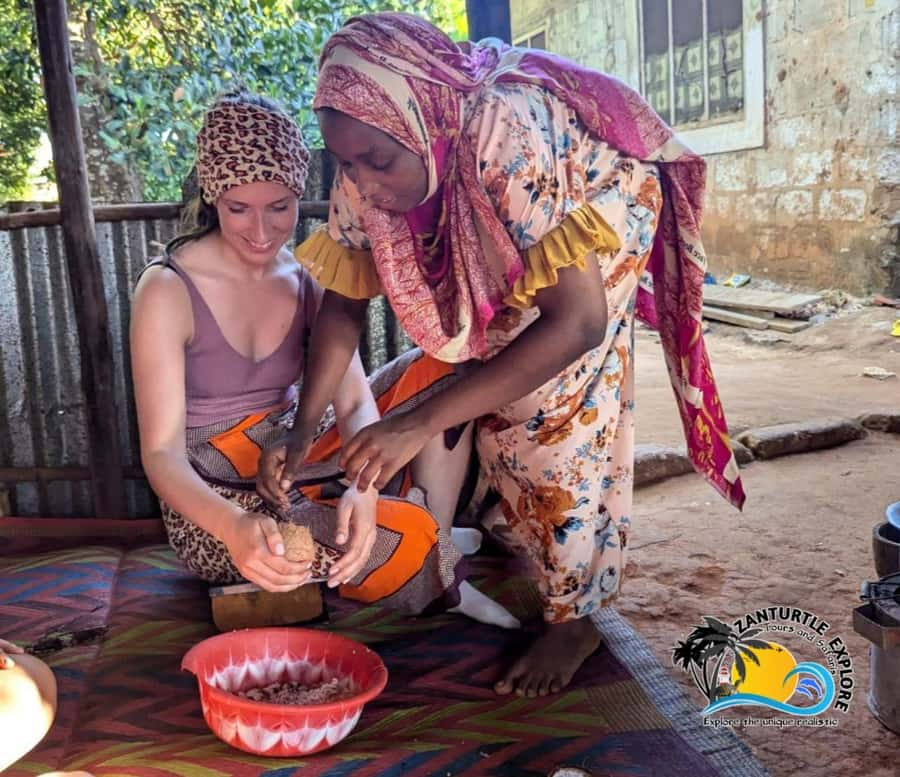
After the farm walk, you take part in a traditional cooking lesson with a local woman who acts as the chef. The ingredients and cooking materials are prepared for the session, and she explains how to use them properly.
This is not simply a demonstration where you sit and watch. Everyone in one recent small group received something to cut, so you should expect to take part in the basic preparation. The cooking style is informal and family-like, with the guide and the cook working alongside you.
The meal is based on original Zanzibar-style cuisine and the flavors of Swahili cooking. The exact dishes are not specified, so you should not book expecting one particular recipe. Instead, the value is in handling local ingredients and seeing how spices, coconut, and other items work together.
One especially useful detail is the homemade coconut milk. The group prepared it themselves, giving the class a clear connection between the farm and the plate. You are not just told that coconut is important. You get to help turn it into something used in the meal.
A small limitation is that a written recipe is not provided. If you enjoy recreating dishes at home, take notes during the class or ask permission to photograph the ingredients and preparation steps. That will make the lesson more useful after you return home.
Eating the Swahili meal together
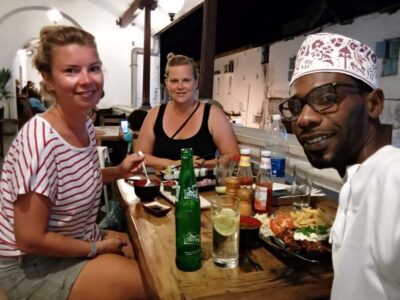
Once the food is ready, you sit down with the chef and eat the meal together. The conversation is part of the appeal. You can ask about the food, the spices, and the way the dishes are prepared, rather than treating lunch as a separate stop.
The meal received some of the strongest praise from the small groups who took the tour. It was described as extremely good, and the cooking itself was considered a highlight. That makes sense: food tastes different when you have just helped cut the ingredients and prepare the coconut milk.
The meal also gives the day a natural rhythm. First you see the plants, then you learn how ingredients are handled, and finally you taste the result. I prefer this order to a farm visit that ends with only a shop and no chance to eat.
Buying spices and handling the shop stop
You can buy spices on site, but bring cash and be ready to negotiate. The price you pay at the farm may not be fixed in the same way as the tour price, so ask clearly about the cost of each item before agreeing to buy.
Bargaining is part of the practical side of this stop. Keep it friendly, and do not feel pressured to purchase. The tour remains worthwhile without shopping, since transport, the farm visit, guide, cooking lesson, food, and water form the main package.
If you do buy something, check how it is packed before leaving. The provided information does not specify packaging or airport rules, so ask the seller what the product is and how it should be stored. That is particularly sensible for liquids, fresh items, or anything you plan to carry home.
Is six hours realistic?
The advertised duration is six hours, with availability depending on the starting time. In practice, the length can vary. One recent couple reported about three and a half hours, while still completing the cooking, farm walk, and shared meal.
That difference matters when planning your day. If you want a slow visit with plenty of questions and time around the farm, allow the full six-hour window. If the tour finishes earlier, you gain extra time in Stone Town, but you should not book another fixed activity too tightly afterward.
Small groups may also affect the pace. Recent outings included only two people, which allowed the cooking to feel personal and made it easier to adjust the departure time. Group size is not guaranteed, so ask the provider if a quiet, intimate class is important to you.
Value at $47 per person
At $47 per person, I consider this a good value if you want several activities in one outing. The fee includes Stone Town hotel transport, entry fees, a live guide, and bottled water. The cooking portion adds something that a standard spice farm walk would not provide.
The value is strongest for people who enjoy food and conversation. You are paying for access to a rural farm, but also for instruction, ingredients, a prepared meal, and a chance to speak with local people through the cooking process.
It is less compelling if you only want a fast photo stop or a tightly timed historical lecture. The farm is small, the itinerary may finish early, and the final shape of the day can depend on the pace of the group and local staff.
Free cancellation is available up to 24 hours before the outing for a full refund, and you can reserve now and pay later. Those terms help if your Zanzibar schedule is still changing, but confirm the conditions at booking.
Who should book this outing?
I would recommend it to couples, families, and food-focused visitors who prefer doing something with their hands. It also suits anyone curious about how common spices are grown and how they connect to Swahili cooking.
The tour works particularly well for a small private-feeling group. Recent pairs cooked with the guide and a member of the local family, rather than moving through a large crowd. That made the experience feel personal and flexible.
You may want to choose another activity if you need a guaranteed six-hour schedule, a formal recipe booklet, or a detailed historical tour with a fixed lecture format. The historical element is present through Zanzibar’s former trade and exploration, but the main focus is farming, cooking, and food.
Should you book the Zanzibar spice farm tour?
Book it if you want to understand Zanzibar through its ingredients. The best parts are the small farm setting, the broad range of spices, the coconut-making activity, and the shared meal prepared with a local cook.
Before booking, confirm the expected start time, group size, and likely duration. Bring comfortable shoes and cash, and remember that spice purchases require bargaining. If those points suit your plans, $47 buys a friendly, hands-on day that connects the farm to the table in a way a market visit cannot.
FAQ
Where does the tour begin and end?
The tour begins in Stone Town and returns to Stone Town. Pickup and drop-off transport is available around Stone Town hotels.
How much does the tour cost?
The listed price is $47 per person.
How long does the tour last?
The advertised duration is six hours. The actual day can be shorter, with one recent booking taking about three and a half hours.
What spices can I see?
The farm visit includes cardamom, ginger, vanilla, coffee, nutmeg, cinnamon, and lemongrass.
Is transportation included?
Yes. Pickup and drop-off around Stone Town hotels are included.
Is a guide included?
Yes. A live tour guide is included, with English, French, Italian, and German available.
Is food included?
The cooking class includes preparing a Zanzibar-style meal and eating it afterward with the chef.
What should I bring?
Bring comfortable shoes and cash. Cash is useful for personal needs and for buying spices at the farm.
Can I cancel for a refund?
You can cancel up to 24 hours in advance for a full refund. The tour also offers a reserve-now-and-pay-later option.
More Farms in Zanzibar
- Zanzibar: Stone Town & Spice Farm Tour with Lunch
★ 4.5 · 97 reviews - Zanzibar:Stone Town & Spice Farm Private Tour Lunch Included
★ 4.2 · 94 reviews - Zanzibar full day Jozani forest + Spice farm and stone town
★ 4.7 · 90 reviews - A Private Full Day Tour To Stone Town & Spice Farm
★ 5.0 · 53 reviews
Just added in Zanzibar
- Zanzibar:Ngoma local culture workshop,The Knowledge of Ngoma★ 5.0 · 1 review
- ZANZIBAR:Mnemba island, Spice farm and Jozani Forest★ 5.0 · 1 review
- Zanzibar: Zipline Adventure At Masingini Forest★ 4.6 · 2 reviews
- Zanzibar Walking Tour: Unveiling the Secrets of Stonetown★ 4.8 · 11 reviews
- Zanzibar: Walking Spice Farm with Local Cooking Class★ 4.4 · 9 reviews
- Zanzibar: Walking Tour★ 4.0 · 1 review
- Zanzibar: Unique Guided Mangrove Tour by SUP or Kayak★ 5.0 · 1 review
- Zanzibar: Uzi Island Mangrove Kayak Tour with Guide★ 5.0 · 1 review
Spice Farm Tours, compared.

Stone Town, Spice Tour, Prison Island with Lunch
Read our review →

Stone Town, Spice tour & Prison Island with Lunch
Read our review →
Full-Day Private Stone Town +Spice Farm and Prison Island Tour
Read our review →

The Swahili Spice Experience – Spice Tour + Culinary Journey
Read our review →Browse the lists this tour appears in