
Reviewed · SPICE FARM TOURS
Zanzibar: Spice Farm Tour with Traditional Cooking Class
Zanzibar smells wonderful. This five-hour outing in Unguja South combines a guided spice farm walk with a hands-on Swahili cooking class, so you do more than look at plants. I like the chance to taste fresh tropical fruit and harvest ingredients, and I like that the meal is prepared with traditional tools and methods. The main drawback is that the farm can feel more like a tourism-focused garden than a working plantation, with repeated requests for tips and purchases along the way.
The $61 price includes hotel pickup and drop-off from Stone Town, entrance and conservation fees, the guide, farm walk, ingredients, cooking equipment, lunch, drinks, fruit, music, and dance. The cooking class is the strongest part for many visitors, while the spice walk gives you the background needed to understand how Zanzibar flavors reach the plate.
In This Review
- Key points at a glance
- From Stone Town to Jambo Spice Farm Dole
- The spice walk: smell first, then learn
- Tropical fruit tasting adds a sweet break
- Harvesting your ingredients before class
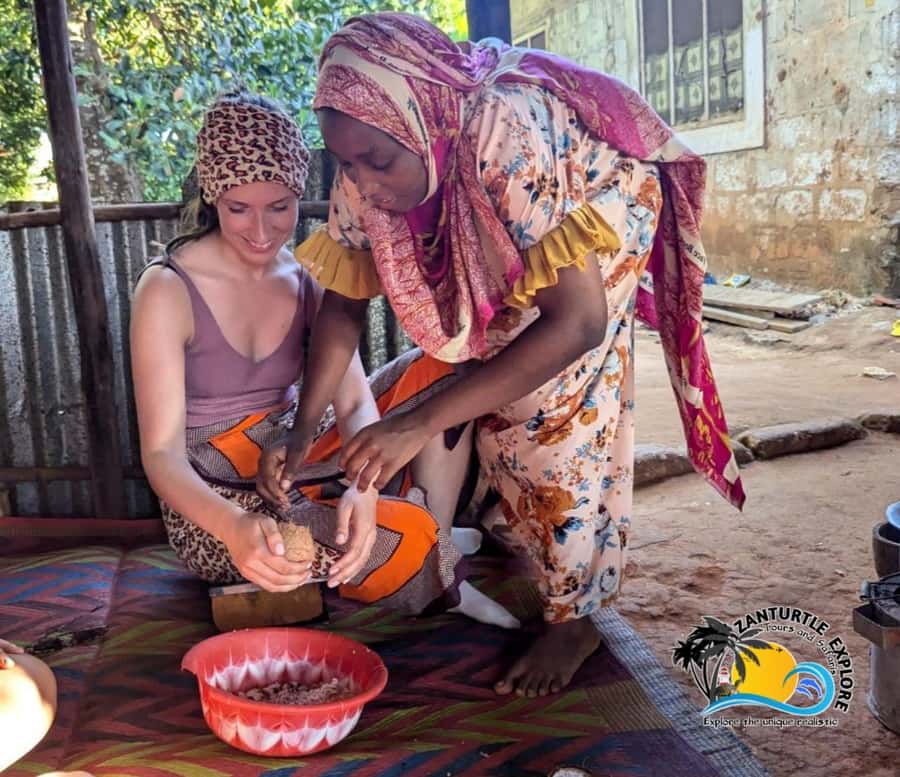
- The Swahili cooking class is the main event
- Music, dance, and the less polished edges
- Is $61 a fair price?
- Who will enjoy this experience most?
- What to bring and how to prepare
- Should you book the spice farm and cooking class?
- FAQ
- How long does the Zanzibar spice farm tour last?
- Where does pickup take place?
- Is hotel drop-off included?
- How long is the drive to the spice farm?
- What spices are covered during the tour?
- Do I get to cook during the experience?
- Is lunch included?
- Which languages are available?
- Is the tour private?
- What should I bring?
Key points at a glance
- A five-hour food-focused outing: Allow about one hour each way between Stone Town and Jambo Spice Farm Dole, leaving roughly three hours for the farm and meal.
- Spices you can smell and taste: Cinnamon, vanilla, nutmeg, lemongrass, cloves, ylang-ylang, cumin, ginger, pepper, tamarind, and chili are among the plants discussed.
- A real cooking role: You harvest vegetables and spices, then help prepare a traditional Swahili meal with a local chef.
- Fresh fruit is part of the fun: Mangoes, passion fruit, avocado, papaya, local grapefruit, bananas, and pineapple may be sampled.
- Private pickup is included: The operator collects you from your Zanzibar hotel and returns you there, with Stone Town listed as a pickup and drop-off point.
- Bring patience and small cash: Toilets have received poor marks, and tipping is commonly expected at several points during the day.
From Stone Town to Jambo Spice Farm Dole
The day begins with hotel pickup in Stone Town or another Zanzibar hotel. You provide the hotel name and room number, then meet the representative in the lobby or reception area. The drive to Jambo Spice Farm Dole takes about an hour in the supplied van.
That transfer matters when you judge the value. Five hours sounds generous, but around two of those hours are spent on the road. You still get a useful half-day experience, though this is not an all-day farm visit with hours of free time.
Pickup and return have been praised for being smooth, which removes one of the usual headaches of arranging transport on Zanzibar. A private group also gives you more room to ask questions than a large coach tour, although the farm itself may have several groups moving along the same paths.
Wear clothes that can handle a little dust, plant contact, and cooking. Comfortable shoes are important because the visit involves walking on farm paths. A hat, sunscreen, water, insect repellent, and a camera all make sense.
More Cooking Classes in Zanzibar
- Zanzibar Cooking Class & Spice Tour
★ 4.5 · 77 reviews - Zanzibar: Spice Farm Tour with Traditional Cooking Lesson
★ 4.8 · 77 reviews - Half-Day Kuza Cave Swimming Adventure and Cooking Class
★ 4.5 · 44 reviews
The spice walk: smell first, then learn
The farm tour begins with a walk around the grounds led by a trained guide. The best guides turn the visit into a guessing game, asking you to identify a plant by its scent or appearance before explaining what it is. This simple approach keeps the walk active rather than turning it into a long botanical lecture.
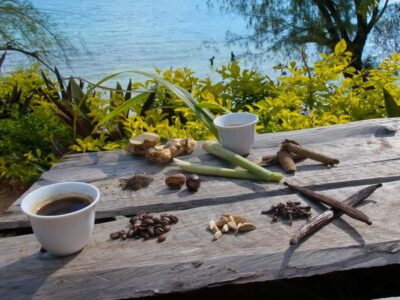
You may handle and smell familiar kitchen staples in their natural form. Cinnamon, for example, is not just a brown stick in a jar. Vanilla, nutmeg, cloves, ginger, pepper, lemongrass, and chili each look quite different before they reach a market stall or kitchen shelf.
The guide also explains how spices are used in Zanzibar food and for medicinal purposes. That context gives the walk a practical point. You begin to see why spices matter so much in local cooking, rather than treating them as a list of exotic plants.
The selection is broad. Along with cinnamon, vanilla, nutmeg, lemongrass, cloves, and ylang-ylang, the tour covers cumin, ginger, pepper, tamarind, chili, and other herbs and spices. The exact order and depth of the explanations can vary, but the activity is built around taste, smell, and touch.
Keep your expectations sensible. Some visitors have found the site small and arranged mainly for short visits, with tangled paths and many groups passing through. If you picture a huge commercial plantation stretching to the horizon, you may be disappointed. Think of it as an accessible spice garden designed to show visitors the plants and their uses.
That does not make the walk useless. It makes it compact and easy to follow. You can learn a lot in a short time, especially if your guide invites questions. The experience works best for someone curious about food, not someone hoping to spend the day studying agricultural production.
Tropical fruit tasting adds a sweet break
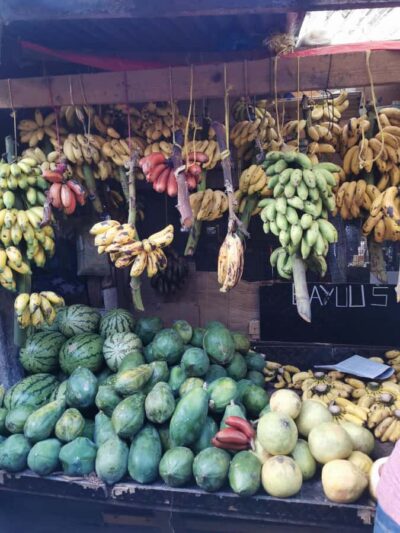
The fruit tasting is one of the pleasant pauses during the visit. Depending on what is available, you may sample mangoes, passion fruit, avocado, papaya, local grapefruit, bananas, pineapple, and other tropical fruit.
This part helps balance the spice-heavy material. You get a chance to taste ingredients at their freshest, and the guide or farm staff can explain how some are eaten or used in local cooking.
The fruit is also a good reason to bring water and pace yourself. The farm walk and cooking session are active, and the tropical heat can make even a short walk feel longer. Sunscreen and a hat are not decorative extras here.
There is also an opportunity to buy spices and fruit. That can be useful if you want to take home cinnamon, vanilla, or another Zanzibar flavor, but set your spending limit before you arrive. The day already includes the tour price, and optional purchases can add up quickly.
Harvesting your ingredients before class
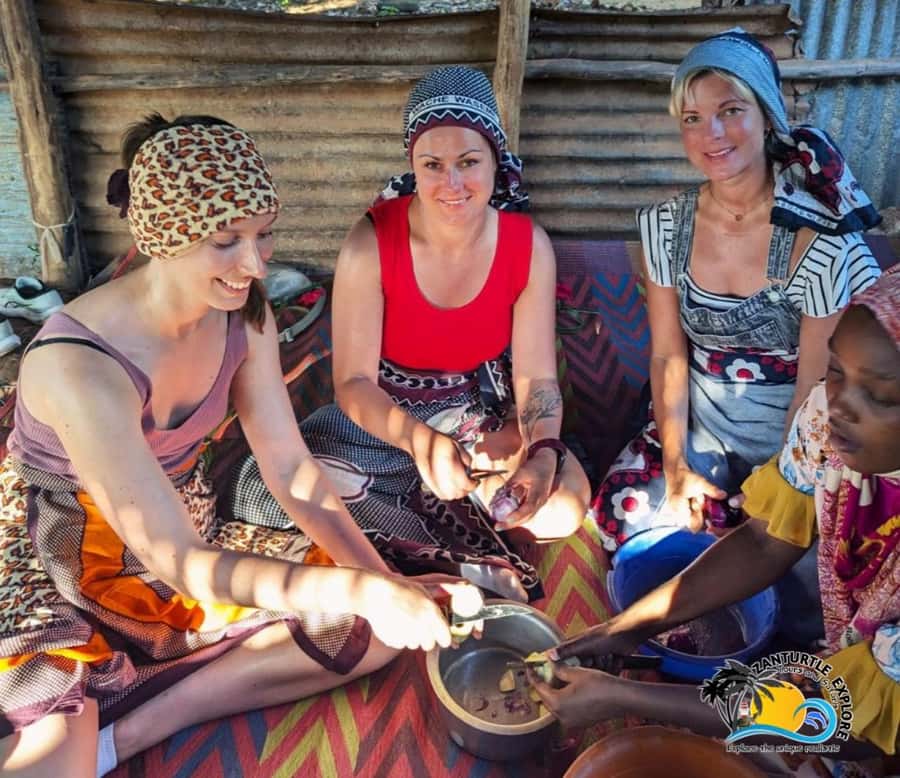
After the farm walk, you help harvest vegetables and spices for the cooking session. This is a small but important step. Instead of receiving a plate of ingredients with no explanation, you see where some of them come from and take part in collecting them.
The harvest also links the two halves of the experience. The farm walk is not just a separate sightseeing stop, and the cooking class is not simply a restaurant meal. You move from plant to preparation, then from preparation to lunch.
Families may find this part especially appealing. A three-year-old child was included in the harvesting and cooking activities during one visit, with the local women involving the child in the kitchen. Young children will still need supervision, but the hands-on format gives them something to do.
You should expect to participate rather than stand back with a camera. Comfortable clothing is best, and you may want to wash your hands before cooking. The supplied information does not give a detailed menu, so do not book this expecting a specific dish unless you arrange that request in advance.
More Spice Farm Tours in Zanzibar:
- Zanzibar: Stone Town, Spice Tour, Prison Island with Lunch
★ 4.4 · 1,219 reviews - Zanzibar: Prison Island, Stone Town, & Spice Farm Tour
★ 4.5 · 579 reviews - Zanzibar: Stone Town, Spice tour & Prison Island with Lunch
★ 4.6 · 453 reviews - Full-Day Private Stone Town +Spice Farm and Prison Island Tour
★ 4.5 · 216 reviews
The Swahili cooking class is the main event
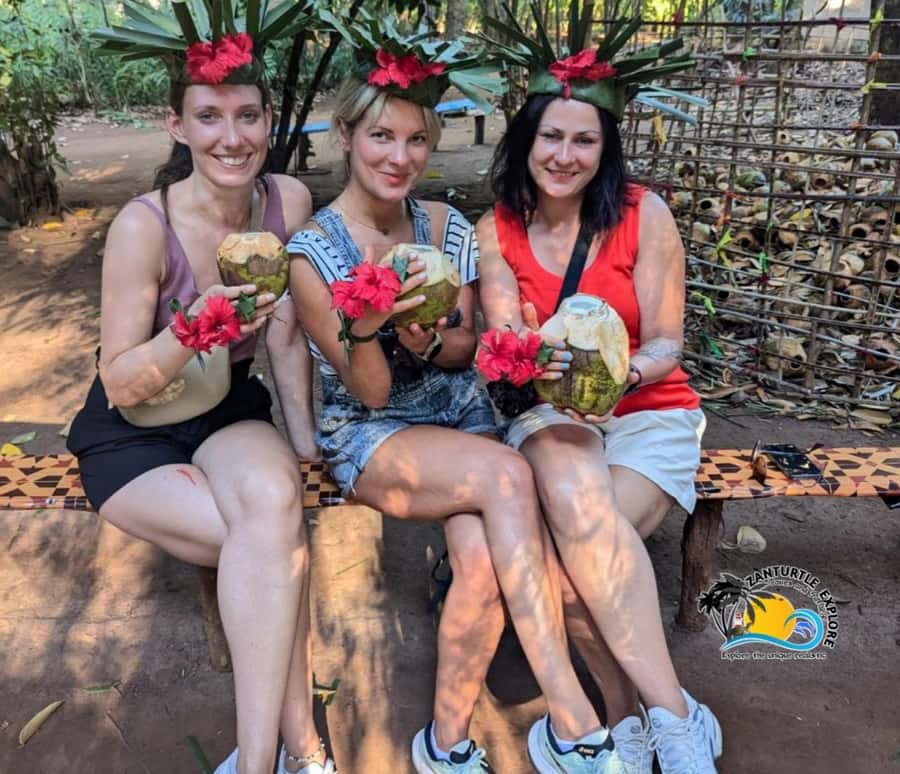
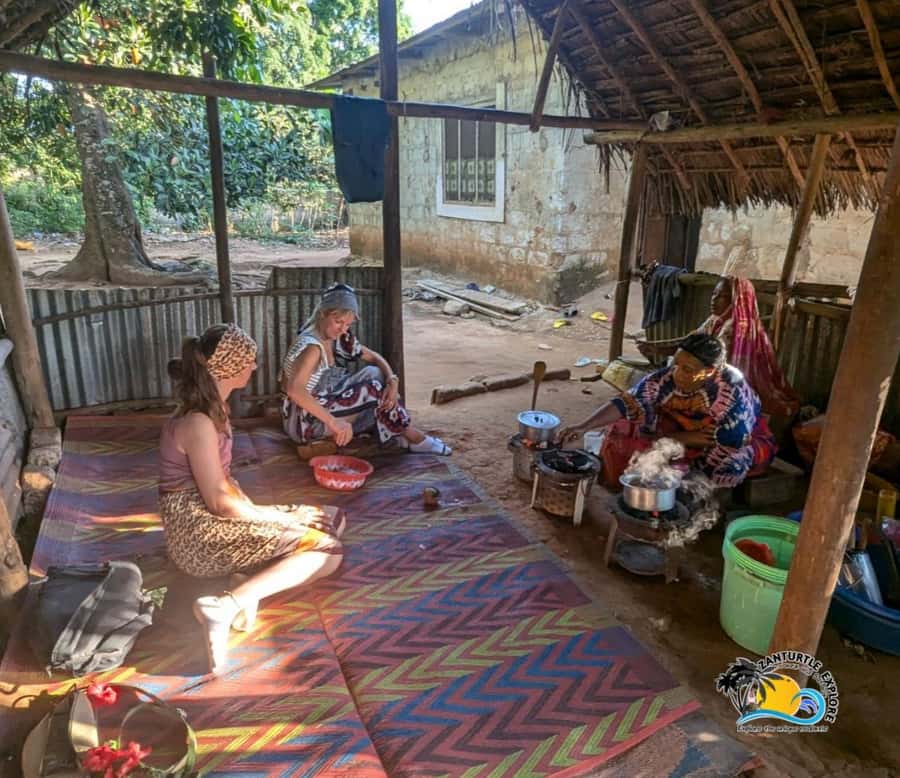
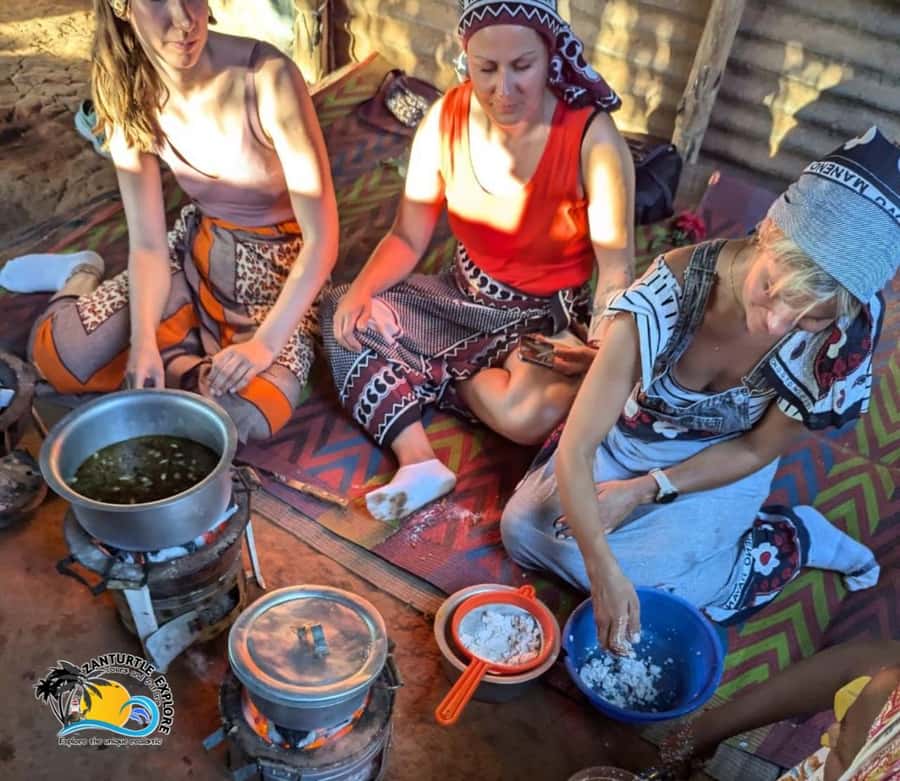
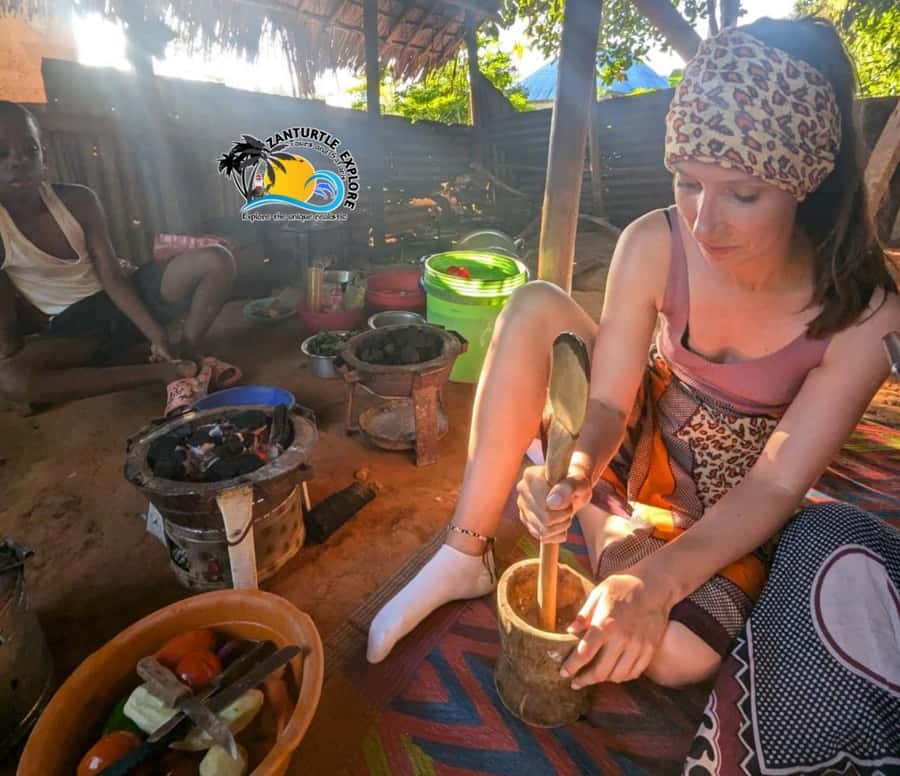
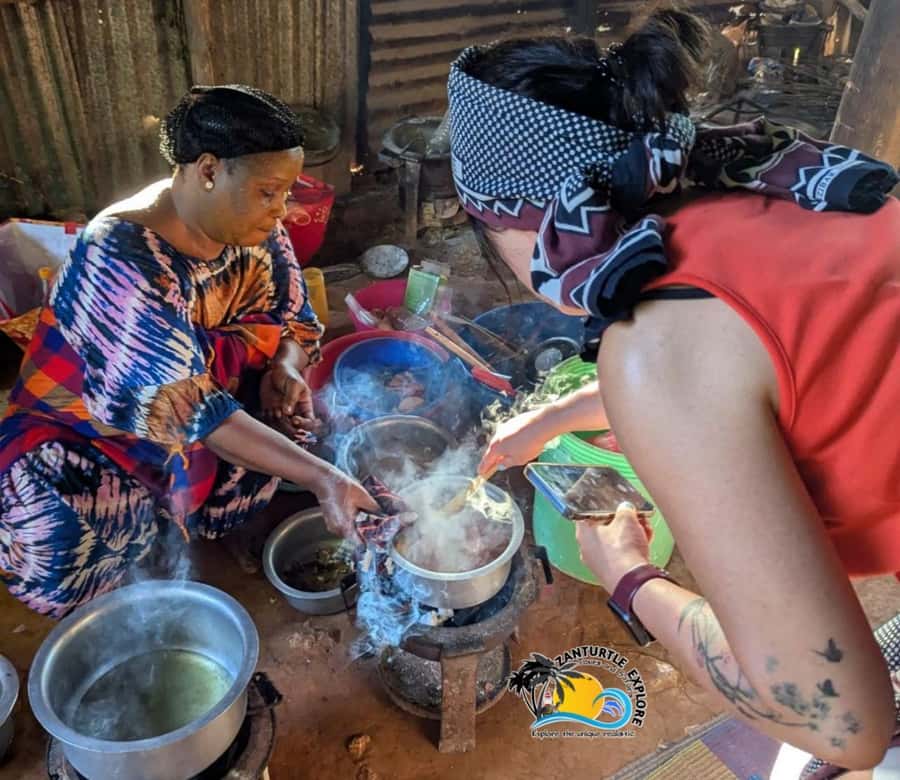
The cooking class takes place at Jambo Spice Farm Dole with a local chef and cooking teachers. You use traditional cooking techniques and equipment modeled on older coastal cooking methods. The apparatus gives the class some character and helps show how food was prepared before modern kitchen tools became common.
The class is intended to be practical. You help make a traditional Swahili meal, then sit down to eat what you prepared. That makes the lunch more satisfying than a standard included meal because you have handled the ingredients and followed the process.
Aïcha has been singled out as a warm cooking partner who shared the meal and made the class feel personal. A guide who speaks your language can also make a large difference. Arabic, English, French, German, Italian, Polish, Russian, and Spanish are listed as available languages, though you should select or request your preferred language when booking.
The class receives the highest praise in the available feedback. It is described as enjoyable, tasty, and a highlight of the day. I can see why. Cooking gives you a direct connection to Zanzibar food, and the meal provides a clear payoff after the farm walk.
The teaching style may not always feel equally engaging. At times, the women preparing the food have seemed focused on demonstrating rather than talking with participants. Some visitors have also felt that a private class can be less social than a shared session.
That is a matter of preference. A private group suits you if you want control over the pace and the chance to ask questions without competing for attention. A shared class might suit you better if you want conversation and a livelier exchange with other people. The private format is part of the advertised experience, so ask about the setup if social cooking is important to you.
Music, dance, and the less polished edges
Traditional music and dance are included, adding a cultural element beyond food and plants. These touches can make the visit feel more like a hosted community experience than a simple farm tour.
The setting is not polished at every point. Toilets have been described as terrible, so you should use facilities before leaving Stone Town and keep your expectations modest. This is a practical concern, especially for families and anyone who needs regular access to clean facilities.
Tipping is another issue to plan for. Requests for tips have occurred after the coconut presentation, from assistants, cooking staff, the driver, people making leaf decorations, and others connected with the visit. Some people found this tiring and felt unsure why so many separate contributions were expected after paying for the tour.
You can avoid awkwardness by carrying small Tanzanian shilling notes and deciding in advance what you are comfortable giving. One visitor tipped several people with 1,000-shilling notes and gave 10,000 shillings in total. You are not required to tip beyond your own choice, but a prepared approach helps you stay polite without feeling pressured.
The same applies to buying spices, fruit, or handmade items. Enjoy the shopping if you want souvenirs, but remember that these are optional extras, not measures of whether you have had a good day.
Is $61 a fair price?

At $61 per person, this is not the cheapest way to spend five hours in Zanzibar. It becomes better value when you count what is bundled in: hotel transport, entrance and conservation fees, a private group, a guide, harvesting, the spice walk, the cooking equipment, ingredients, fruit, drinks, lunch, music, and dance.
The one-hour drive each way also has value because you do not need to negotiate a taxi or arrange separate transport to the farm. For a first visit to Zanzibar, that simplicity can justify part of the cost.
The price makes the most sense if you will take part in the cooking and enjoy the food. If you only want a quick look at spices, you may find the tour expensive for a small farm and short walk. If the meal, fruit tasting, and cultural activities matter to you, the package is easier to defend.
Remember that tips and shopping are not fully covered by the admission price. Keep an additional amount available, but do not confuse optional payments with compulsory fees.
Who will enjoy this experience most?
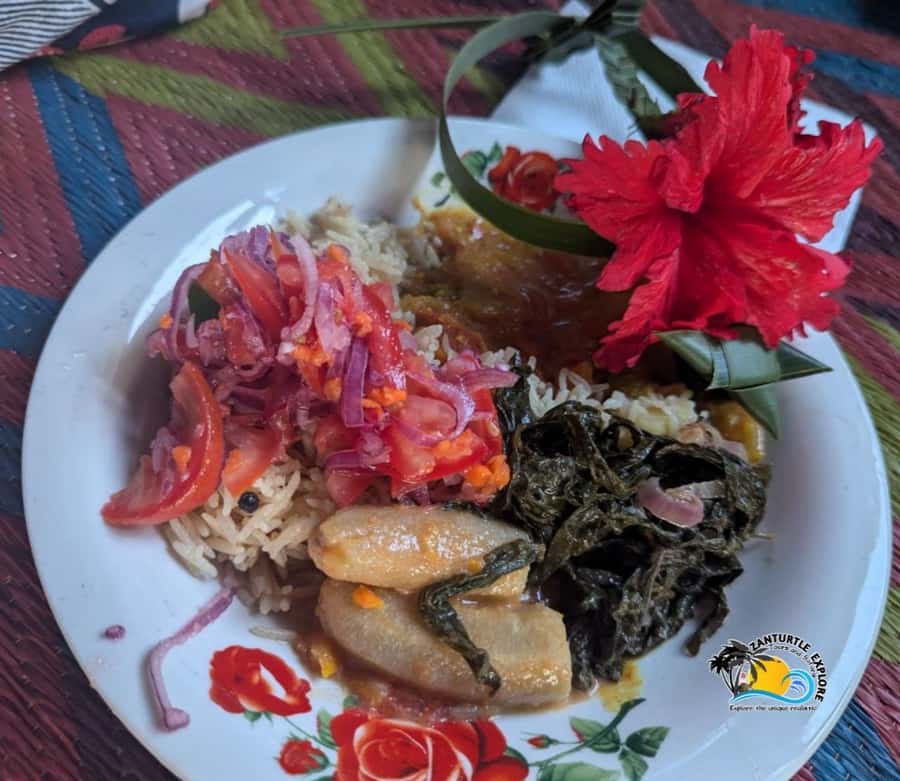
I would recommend this tour to you if food is one of the main reasons you travel. You get to smell spices at the plant, collect ingredients, cook with a local chef, and eat the finished meal. That is more memorable than simply passing through a market and buying a packet of seasoning.
It also suits families, couples, and small private groups who prefer an easy activity with transport included. Children can take part in the harvesting and kitchen work, though you should be ready to help them manage the heat, walking, and unfamiliar surroundings.
Language support is another advantage. If you are more comfortable asking questions in a language other than English, the listed options cover a wide range of European languages as well as Arabic.
I would be more cautious if you want a large working plantation, high-end facilities, or a quiet visit without sales pitches. The farm may feel compact and busy, the toilets are a weak point, and repeated tip requests can affect your enjoyment.
Book with free cancellation up to 24 hours before the activity if your plans are uncertain. You can also reserve now and pay later, which gives you some flexibility while arranging your Zanzibar schedule.
What to bring and how to prepare
Bring comfortable walking shoes, a hat, sunscreen, water, insect repellent, and a camera. Wear clothing that is suitable for both walking and food preparation.
Tell the operator about special requests before confirming your reservation. The booking information specifically allows you to submit requests, so mention dietary needs or other concerns early, rather than waiting until you reach the kitchen.
Give the driver your correct hotel name and room number, and meet in the lobby or reception area. Pickup is offered from hotels in Zanzibar, with Stone Town listed as a main option.
Do not plan another time-sensitive activity immediately after the stated five hours. The drive takes about an hour each way, and road conditions or pickup timing can affect the return.
Should you book the spice farm and cooking class?
Book it if you want to cook, not just look. The best parts are the hands-on harvesting, the wide range of spices, the tropical fruit, and the traditional Swahili meal you prepare and eat yourself. The cooking class, especially with a friendly teacher such as Aïcha, gives the day its strongest sense of place.
Skip it if your ideal farm visit means a large working plantation, spotless facilities, or no pressure to tip or shop. For everyone else, $61 is a reasonable package price for a private, transport-inclusive food experience, provided you arrive ready for a compact tourist farm and bring a little patience.
FAQ
How long does the Zanzibar spice farm tour last?
The activity lasts five hours, including the visit to Jambo Spice Farm Dole, the cooking class, lunch, and transportation time.
Where does pickup take place?
Pickup is available from hotels in Zanzibar. Stone Town is listed as a pickup location, and the operator meets you in the hotel lobby or reception area.
Is hotel drop-off included?
Yes. Hotel pickup and drop-off are included, with Stone Town and Zanzibar listed as drop-off options.
How long is the drive to the spice farm?
The van journey takes about one hour each way between Stone Town and Jambo Spice Farm Dole.
What spices are covered during the tour?
The tour may cover cinnamon, vanilla, nutmeg, lemongrass, cloves, ylang-ylang, cumin, ginger, pepper, tamarind, chili, and other spices and herbs.
Do I get to cook during the experience?
Yes. You harvest vegetables and spices, then take part in a cooking class with a local chef using traditional techniques and cooking equipment.
Is lunch included?
Yes. Lunch, drinks, and tropical fruit are included, and you eat the Swahili meal prepared during the class.
Which languages are available?
The listed guide languages are Arabic, English, French, German, Italian, Polish, Russian, and Spanish.
Is the tour private?
Yes. The activity is offered as a private group experience.
What should I bring?
Bring comfortable shoes, a hat, sunscreen, water, insect repellent, and a camera. Wear clothing suitable for walking and cooking.
More Farms in Zanzibar
- Zanzibar: Stone Town & Spice Farm Tour with Lunch
★ 4.5 · 97 reviews - Zanzibar:Stone Town & Spice Farm Private Tour Lunch Included
★ 4.2 · 94 reviews - Zanzibar full day Jozani forest + Spice farm and stone town
★ 4.7 · 90 reviews - A Private Full Day Tour To Stone Town & Spice Farm
★ 5.0 · 53 reviews
Just added in Zanzibar
- Best of Zanzibar: Spice Tour & Stone Town Visit★ 4.4 · 5 reviews
- THE GREEN TOUR: Jozani Forest & Mangrove Kayaking Experience★ 4.7 · 6 reviews
- Stone Town: Private Walking Tour in the Heart of Zanzibar.★ 5.0 · 1 review
- The rock restaurant and blue Lagoon★ 5.0 · 1 review
- Tea House, Zanzibar Coffee House, Spice Tour with Lunch★ 5.0 · 1 review
- Swimming with sea turtles in salaam cave★ 5.0 · 1 review
- Swim with Turtles at The Lagoons Zanzibar & Stone Town Tour★ 4.8 · 4 reviews
- Stonetown & Prison island Cultural Tour★ 5.0 · 2 reviews
Spice Farm Tours, compared.
Stone Town, Spice Tour, Prison Island with Lunch
Read our review →

Stone Town, Spice tour & Prison Island with Lunch
Read our review →
Full-Day Private Stone Town +Spice Farm and Prison Island Tour
Read our review →

The Swahili Spice Experience – Spice Tour + Culinary Journey
Read our review →Browse the lists this tour appears in