
Reviewed · STONE TOWN TOURS
Zanzibar: Stone Town Walking Tour with Guide
Stone Town rewards slow steps. This three-hour walk brings you through coral-stone lanes too narrow for cars, linking mosques, churches, temples, markets, and old sultanate buildings. I like the way the tour connects Zanzibar’s Arabic, African, Indian, and European influences, and I like that guides such as Abu, Abou, Jack, and Bobby have made the past easier to understand through stories and local detail. The main drawback is the heat, plus the possibility of shopping stops that may feel more commercial than cultural.
For $30 per person, this is a fair introduction to Zanzibar’s old city, especially if you are staying in or near Stone Town. Three hours is enough for the major sights without turning the morning into a marching contest. Just remember that lunch and drinks cost extra, and comfortable shoes, modest clothing, water, and a hat will make the walk much more pleasant.
In This Review
- Key things to know before walking Stone Town
- Why Stone Town makes such a good first walk
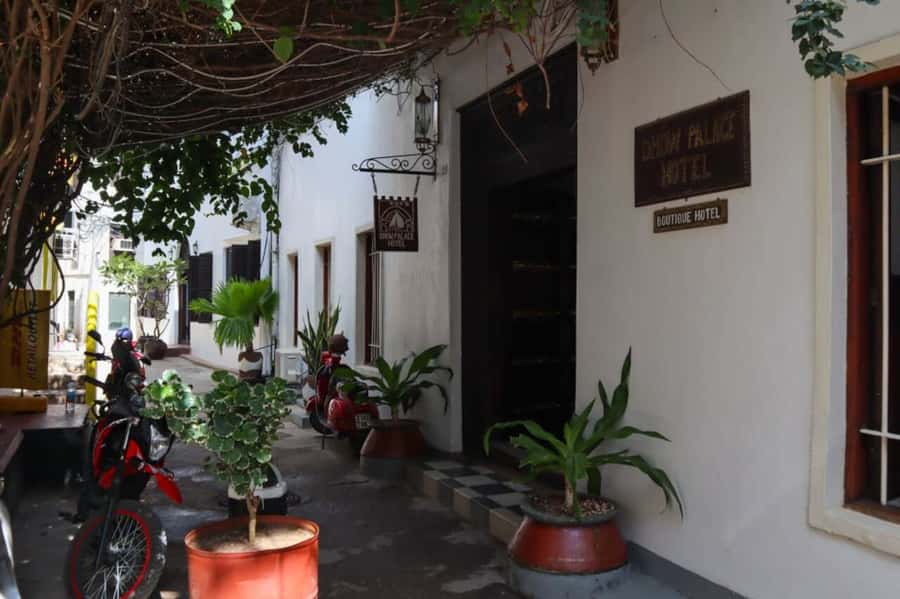
- Starting among the coral-stone streets
- Old Slave Market and Anglican Cathedral
- Freddie Mercury Museum and modern Zanzibar
- Old Fort and the changing face of power
- Darajani Market, where Stone Town gets practical
- Sultan’s Palace, House of Wonders, and the wider old city
- The guide is the heart of the experience
- Food, coffee, and the extra-cost question
- Heat, footwear, and the pace of three hours
- Who should book this Stone Town walk?
- Should you book it?
- FAQ
- How long does the Stone Town walking tour last?
- How much does the tour cost?
- Is hotel pickup included?
- Which places are visited?
- Is lunch included?
- Which languages are available?
- Is a small group available?
- What should I bring?
- Can I bring luggage?
- Can I cancel the booking?
Key things to know before walking Stone Town
- The route covers the essential landmarks: You visit the Old Slave Market and Anglican Cathedral, Freddie Mercury Museum, Old Fort, Darajani Market, Sultan’s Palace, House of Wonders, and other historic streets.
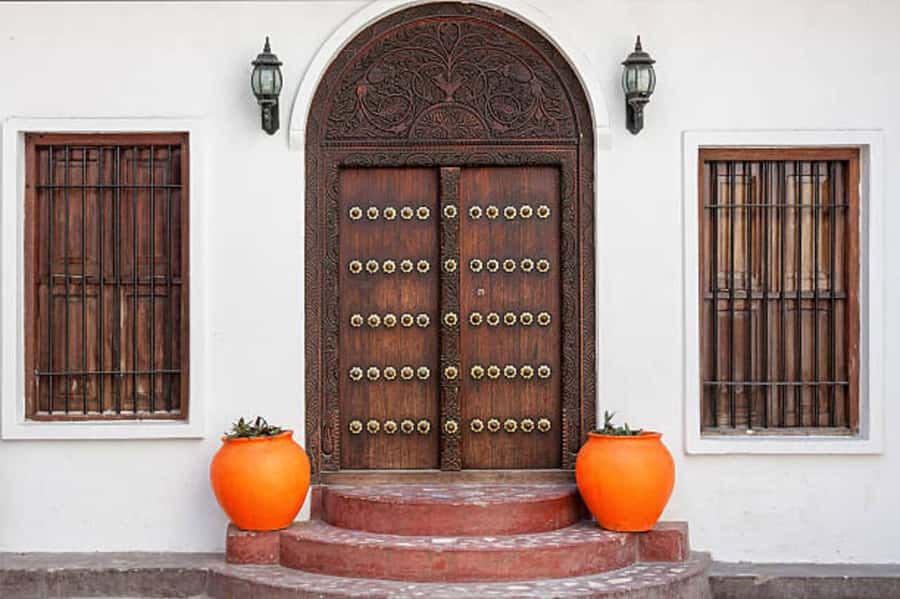
- The narrow lanes are the main event: Stone Town is best understood on foot, where a guide can point out carved doors, places of worship, old buildings, and daily life that you could easily pass alone.
- The guide makes a major difference: Abu, also called Abou in some bookings, is often praised for his warmth, clear English, humor, and command of Zanzibar’s past and present.
- The tour is short but active: Expect three hours of walking, standing, photo stops, sightseeing, and possible shopping.
- Pickup is included: Selected hotels in Zanzibar can arrange pickup and drop-off, with a request to wait in the lobby 10 minutes before departure.
- It suits first-time visitors: The route gives you a useful framework for exploring Stone Town independently afterward.
Why Stone Town makes such a good first walk
Stone Town is the cultural and historical heart of Zanzibar City. Its old center was built largely from coral stone during the 19th and 20th centuries, and UNESCO declared it a World Heritage Site in 2000.
That sounds formal on paper. On foot, it feels much more immediate. You turn from a lane lined with weathered walls and find a mosque. A few steps later, there may be a church or Hindu temple. Indian, Arabic, African, and European influences sit close together, not in separate museum rooms but in the same working city.
I like this tour because it gives those layers some order. Without a guide, you can admire the old doors and faded buildings, but you may not understand why Stone Town looks the way it does or how Zanzibar’s location shaped its role in trade, religion, politics, and culture.
The route also shows you present-day Stone Town rather than presenting the city as a frozen historic display. You pass shops, markets, places of worship, homes, and busy streets. That mix is part of the appeal, although it means you should expect a real city with uneven surfaces, distractions, and occasional pressure to browse or buy.
More Walking Tours in Zanzibar
- Stone Town Private Walking Tour
★ 5.0 · 371 reviews - Zanzibar: 3 Hours Private Stone Town walking Tour with Guide
★ 4.6 · 301 reviews - Zanzibar: Stone Town Historical Cultural Walking Guided Tour
★ 4.5 · 179 reviews
Starting among the coral-stone streets
The walk begins in Stone Town, with hotel pickup available when you select that option. Pickup details can vary by accommodation, so wait in the hotel lobby 10 minutes before the agreed time.
Once on foot, the guide leads you into streets that are often too narrow for cars. This is where the tour earns its keep. A local guide can steer you through the maze while explaining what you are seeing, rather than leaving you with a pleasant but confusing collection of photographs.
The narrow lanes also reward patience. You may pause for a carved doorway, a building facade, a small place of worship, or an ordinary scene that says more about modern Stone Town than a formal monument does.
The route includes time for photographs, sightseeing, and shopping. If you see something you want to examine, ask the guide to pause. Clare, who took the walk with Abu, found the route flexible enough for closer looks, and that is useful advice: this should not feel like a race from one landmark to the next.
Old Slave Market and Anglican Cathedral

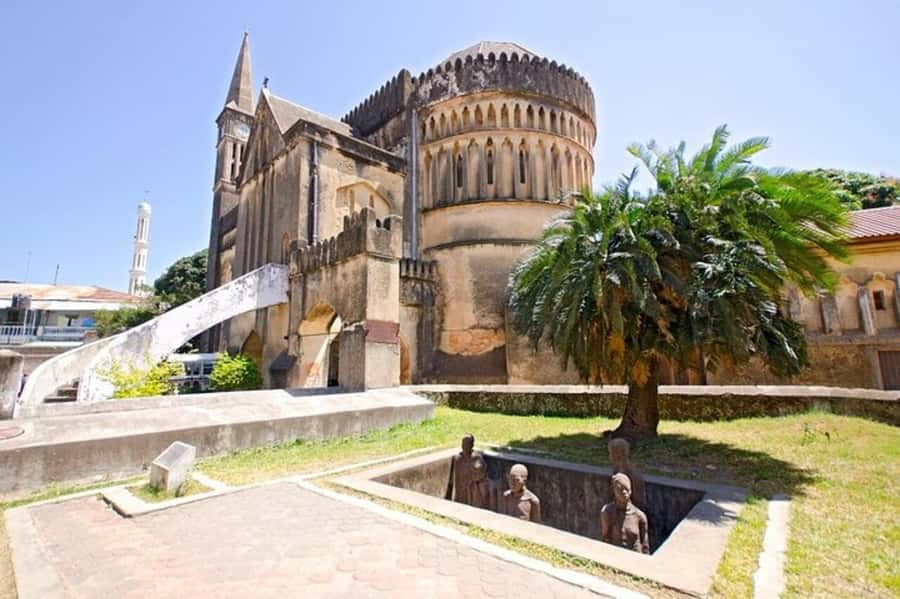
The former slave market is one of the most serious stops on the walk. The site connects Zanzibar to the history of the East African slave trade and the painful human cost behind the island’s commercial success.
The Anglican Cathedral now occupies part of the former market area. Its presence makes the stop especially powerful because it reflects a later effort to mark and confront that past. Your guide can help explain the site instead of leaving you to guess at its meaning from the architecture alone.
This is not a light sightseeing stop. You may want to slow down here and listen carefully. The site is important precisely because it asks you to consider the people and events behind Zanzibar’s grand buildings, trading links, and historic wealth.
The tour is not advertised as a specialist slavery-history program, so anyone seeking a long academic treatment should allow extra time elsewhere. For a three-hour city introduction, though, including the Old Slave Market gives the walk needed seriousness.
Freddie Mercury Museum and modern Zanzibar
The Freddie Mercury Museum provides a different kind of history. Freddie Mercury was born in Zanzibar, and the museum links the island to one of the best-known musicians of the 20th century.
The stop is listed as a visit and photo opportunity. It is likely to appeal most if you already have an interest in Mercury or want a quick cultural change after the heavier subject of the former slave market.
I appreciate its place in the route because it prevents Stone Town from being treated only as an old architectural quarter. Zanzibar has modern cultural connections too, and the museum offers a reminder that the city’s story did not end with the sultans or colonial-era buildings.
Do not expect this three-hour walking tour to provide a long museum visit at every stop. The museum is one part of a wider route, so the guide may keep the visit brief enough to cover the other landmarks.
More Stone Town walking tours:
- Zanzibar: Stone Town, Spice Tour, Prison Island with Lunch
★ 4.4 · 1,219 reviews - Zanzibar: Prison Island, Stone Town, & Spice Farm Tour
★ 4.5 · 579 reviews - Zanzibar: Stone Town, Spice tour & Prison Island with Lunch
★ 4.6 · 453 reviews - Full-Day Private Stone Town +Spice Farm and Prison Island Tour
★ 4.5 · 216 reviews
Old Fort and the changing face of power

The Old Fort is one of Stone Town’s major landmarks. Its heavy walls and central location offer a clear contrast to the tight residential lanes around it.
This is a good place to pause and consider how Stone Town changed hands and purpose over time. The fort represents defense and authority, while nearby streets show trade, religion, craft, food, and domestic life.
The guide’s role here is to make the building part of a larger story. A fort can look like a photogenic block of stone when viewed alone. It becomes more useful when you understand how it relates to the town around it.
The itinerary allows a photo stop and guided visit, so bring a camera if you want architectural pictures. There may also be time to look around independently, but the exact pace depends on your guide, the group, and how much time has been spent at earlier stops.
Darajani Market, where Stone Town gets practical

Darajani Market is where the tour shifts from monuments to daily commerce. Markets are often the best places to understand how a city functions, and this stop gives you a look at the food, goods, movement, and social activity of Stone Town.
Your guide can help you move through the market and explain what you are seeing. That matters because markets can feel confusing when you do not know which paths are public, what products are being sold, or how to stop for a photograph without getting in the way.
Keep your belongings close and use common courtesy. The provided information specifically advises against bringing large bags or luggage, which makes sense on tight streets and in a market.
Darajani is also where the tour may feel least polished. That is not a criticism. It is a working market, not a staged attraction. Expect noise, crowds, strong smells, and a less predictable rhythm than at a fort or museum.
Sultan’s Palace, House of Wonders, and the wider old city
The walk also includes the Sultan’s Palace and House of Wonders as part of its wider sightseeing program. These buildings help explain Zanzibar’s political past and the importance of the sultanate in Stone Town.
The House of Wonders is one of the city’s best-known historic structures, while the palace offers another view of royal life and administration. The condition, access, and amount of time available at each building can vary, so think of these as guided city sights rather than guaranteed long indoor tours.
That distinction is important when comparing this experience with a museum-focused visit. You are paying for a guided walk through the old city, not a series of extended admissions to every building.
I like this arrangement for a first visit. You see the landmarks, learn why they matter, and can then decide which one deserves a longer return visit.
The guide is the heart of the experience
The strongest feature of this walk is the person leading it. Abu, also referred to as Abou, receives especially warm praise for being friendly, patient, entertaining, and well informed about both historic and modern Stone Town.
Several details make his style sound memorable. He has answered questions, adjusted the pace, helped families with a four-year-old and stroller, and even included singing during one walk. Another guest received a short Swahili lesson and a taste of typical bread, small touches that turn a standard route into a more personal meeting.
Other guides named in the feedback include Jack and Bobby. Jack was praised for leading a useful walk in hot February weather, while Bobby helped a family understand the city and suggested nearby dinner choices.
Guides can change, of course, so you should not book solely on the assumption that you will receive Abu. Still, the repeated praise for the guiding style is a good sign. Look for a guide who answers questions, moves at your pace, and explains daily life as well as dates and buildings.
Language support is available in English, German, and French. A small group may be available, which is worth choosing if you want more chances to ask questions and less time waiting for a large party.
Food, coffee, and the extra-cost question
Lunch may be included in the agreed plan at a restaurant or local house, but the general inclusions list says meals and drinks are not included. Treat food as an optional extra and confirm the arrangement before you go.
That point matters because the experience description presents lunch as something that can be arranged, while the stated exclusions place meals and drinks outside the $30 price. Ask before departure so you know if you should budget for lunch or bring money for a drink.
One walk included a rooftop coffee stop, described as a welcome bonus. It is a pleasant idea after walking narrow streets in the sun, but it should not be treated as a guaranteed part of every departure.
At $30, the tour offers good value if you want a guided overview with hotel pickup and drop-off, a licensed guide, and stops at the city’s key historic sites. It is less attractive if you prefer to wander alone, plan to spend hours inside museums, or dislike any shopping element.
One four-star account raised a fair concern: some stops seemed designed partly to encourage spending. If you want souvenirs, this may suit you. If not, say so politely and make clear that your priority is the history and city walk.
Heat, footwear, and the pace of three hours
Three hours sounds modest, but Stone Town’s streets require more effort than a flat museum visit. Wear comfortable shoes. Coral-stone lanes can be uneven, and you will spend much of the time walking or standing.
Heat is another practical issue. A February walk was described as very hot, though still worthwhile. Bring water, protect yourself from the sun, and choose a cooler starting time when availability allows.
The tour is not suitable for babies under one year, people over 95, people with back problems, or pregnant women. Families with older children may manage well, but the narrow streets and walking pace should be considered carefully.
Do not bring alcohol, drugs, luggage, or large bags. Bring a camera, but keep it ready rather than stopping in the middle of a tight lane.
Who should book this Stone Town walk?
I would choose this tour for a first morning or afternoon in Zanzibar, especially if you are staying in Stone Town or want a quick introduction before exploring alone.
It suits you if:
- You want the main landmarks explained in one compact walk.
- You enjoy history but also want to see markets and ordinary city life.
- You prefer a local guide to navigating alone.
- You are comfortable walking in heat and on uneven streets.
- You want hotel pickup and a possible small-group setting.
- You are interested in Arabic, African, Indian, and European influences meeting in one city.
I would choose something else if you need a wheelchair-friendly route, cannot walk for three hours, want a private museum tour, or strongly dislike shopping stops. The route is broad rather than deeply focused, so serious history fans may want extra time at the former slave market or palace area.
The published rating is 4.7 from 76 reviews, and the praise centers on the guides, clear explanations, flexible pace, and strong overview of Stone Town. The most useful pattern is not simply that people enjoyed the walk. It is that guides helped visitors make sense of streets they would have struggled to understand alone.
Should you book it?
Book this Stone Town walking tour if you want a well-priced orientation to Zanzibar’s old city, with the major landmarks, market life, and difficult history brought together by a local guide.
Choose it early in your stay if possible. The walk can help you recognize places you later want to revisit, find your way through the lanes, and decide where to spend more time.
Before paying, confirm the pickup point, guide language, lunch arrangement, and whether a small group is available. If you do that and arrive ready for heat, walking, and a few possible shopping suggestions, this is a sensible three-hour introduction to Stone Town.
FAQ
How long does the Stone Town walking tour last?
The tour lasts three hours.
How much does the tour cost?
The listed price is $30 per person.
Is hotel pickup included?
Hotel pickup and drop-off are included when you select the applicable pickup option. You should wait in your hotel lobby 10 minutes before the scheduled pickup time.
Which places are visited?
The route includes Stone Town’s old streets, the Old Slave Market and Anglican Cathedral, Freddie Mercury Museum, Old Fort, Darajani Market, Sultan’s Palace, and the House of Wonders.
Is lunch included?
Meals and drinks are not included in the listed price. Lunch at a restaurant or local house may be arranged in advance, so confirm the plan before the tour.
Which languages are available?
Live guiding is available in English, German, and French.
Is a small group available?
A small-group option is available.
What should I bring?
Bring a camera and comfortable shoes. Water and sun protection are also sensible for a three-hour walk in hot conditions.
Can I bring luggage?
No. Luggage and large bags are not allowed on the activity.
Can I cancel the booking?
You can cancel up to 24 hours in advance for a full refund. The activity also offers reserve now and pay later, so you do not need to pay at the time of booking.
Just added in Zanzibar
- Best of Zanzibar: Spice Tour & Stone Town Visit★ 4.4 · 5 reviews
- THE GREEN TOUR: Jozani Forest & Mangrove Kayaking Experience★ 4.7 · 6 reviews
- Stone Town: Private Walking Tour in the Heart of Zanzibar.★ 5.0 · 1 review
- The rock restaurant and blue Lagoon★ 5.0 · 1 review
- Tea House, Zanzibar Coffee House, Spice Tour with Lunch★ 5.0 · 1 review
- Swimming with sea turtles in salaam cave★ 5.0 · 1 review
- Swim with Turtles at The Lagoons Zanzibar & Stone Town Tour★ 4.8 · 4 reviews
- Stonetown & Prison island Cultural Tour★ 5.0 · 2 reviews
Stone Town Tours, compared.

Stone Town, Spice Tour, Prison Island with Lunch
Read our review →

Stone Town, Spice tour & Prison Island with Lunch
Read our review →
3 Hours Private Stone Town walking Tour with Guide
Read our review →
Full-Day Private Stone Town +Spice Farm and Prison Island Tour
Read our review →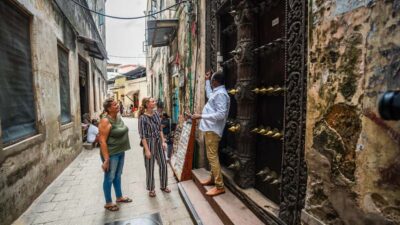
Stone Town Historical Cultural Walking Guided Tour
Read our review →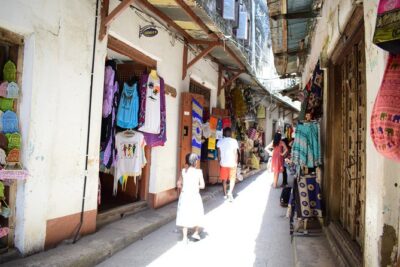
Browse the lists this tour appears in