
Reviewed · 4-DAY EXPERIENCES
4 days Private Safari Tour Tanzania
Wild animals, three famous parks. This four-day private safari gives you a quick but substantial taste of Tanzania’s northern circuit, linking Tarangire, Serengeti, and the Ngorongoro Crater. I especially like the private format, which keeps the vehicle and daily rhythm limited to your own group, and the route’s variety, from baobab country to open Serengeti plains and a crater floor crowded with wildlife.
I also like that the price includes meals, drinking water, soft drinks, park fees, and a professional guide. That makes budgeting easier than it first appears. The main drawback is the pace: you cover a lot of ground in four days, and the long transfers leave little room for rest or extra time in any one park.
In This Review
- Key points at a glance
- A fast route through Tanzania’s northern circuit
- Day 1: Tarangire and the Great Rift Wall
- Day 2: From Karatu to the Seronera plains
- Day 3: Serengeti wildlife and Olduvai Gorge
- Day 4: Inside the Ngorongoro Crater
- What the $2,500 price includes
- Guide service and customer care
- Who should book this safari?
- FAQ
- Where does the safari start?
- Where does the safari end?
- How long is the safari?
- Which parks and conservation areas are included?
- Is this a private tour?
- What meals are included?
- Are drinks included?
- What languages can the guide speak?
- What is not included in the price?
- Can I cancel for a full refund?
- Should you book it?
Key points at a glance
- Three major safari areas in four days: Tarangire, Serengeti, and the Ngorongoro Conservation Area.
- Private tour for your group only: You do not share the activity with other booking groups.
- Seronera puts you near central Serengeti wildlife: The river helps draw animals to this part of the park.
- Olduvai Gorge adds human history: The stop connects your safari with major discoveries in human evolution.
- The price includes the basics that add up: Park fees, four breakfasts, four lunches, four dinners, water, soft drinks, and guide services.
- Strong praise for care and communication: Latipher is specifically praised for quick replies and helpful planning, while the company’s guides are described as friendly and reassuring.
A fast route through Tanzania’s northern circuit
This is the sort of trip I would consider when time is tight but a city stay alone will not do. Starting in Arusha at 7:00 a.m., you move through three of Tanzania’s best-known wildlife areas before returning to the original meeting point.
The route is well chosen. Tarangire offers a different feel from the Serengeti, with the Great Rift Wall as a dramatic backdrop and a good range of familiar African animals. Serengeti then opens into huge grass plains and the famous Seronera area. Ngorongoro finishes the trip with a concentrated wildlife viewing day inside an ancient volcanic crater.
The private setup matters here. Safari days can be long, with early starts and hours on rough park roads. Having only your group in the vehicle gives you more control over conversation, stops, and the general mood. The available guide service is listed in English, Spanish, and French, which is useful if language affects how comfortably you can ask questions.
Still, this is not a slow safari. Day 1 is a full game drive, Day 2 includes a substantial journey into the Serengeti, Day 3 combines an early drive, a transfer, and Olduvai Gorge, and Day 4 begins with another early start. You gain range, but you give up leisure.
A few more options to weigh up in Arusha
- Balloon Safari & Bush Breakfast in Serengeti – Miracle Experience
★ 5.0 · 1,646 reviews - Tanzania Classic – 7 Days
★ 5.0 · 1,151 reviews - 4 Days Group Camping Safari
★ 5.0 · 1,101 reviews
Day 1: Tarangire and the Great Rift Wall
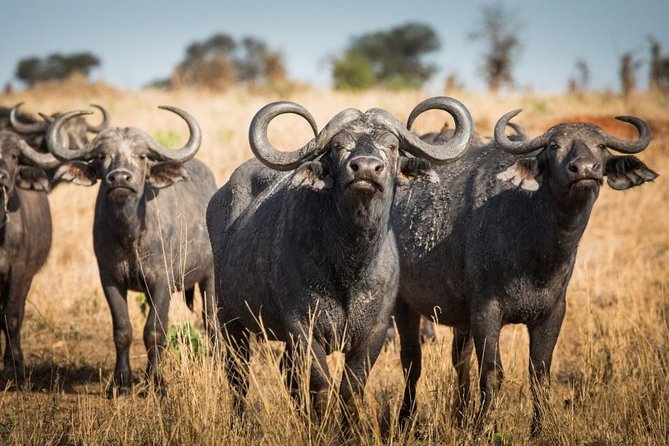
After breakfast, you head to Tarangire National Park for a full-day game drive of about six hours. The park is known here for buffalo, giraffe, zebra, and other species, framed by the Great Rift Wall.
I like Tarangire as the opening act because it gives you an immediate introduction to safari viewing without waiting until the Serengeti. The scenery is a key part of the appeal. Instead of only watching animals, you get a sense of Tanzania’s changing terrain, with the Rift Wall providing a strong visual backdrop.
A six-hour drive gives you enough time to look carefully rather than treating the park as a quick photo stop. Giraffe and zebra are relatively easy animals to appreciate from a moving vehicle, while buffalo offer a more powerful sight when seen in groups. The description also promises many other species, though exact sightings can never be guaranteed.
The practical point is simple: bring patience. A park day is not a parade of animals appearing on command. Your guide’s skill in reading the setting and your willingness to watch ordinary moments are part of the experience. A grazing herd, a giraffe framed against the Rift, or a quiet stretch of road can be as memorable as a dramatic predator sighting.
Because this is a private tour, you can ask for explanations as the day develops. That is especially useful during your first game drive, when you are learning how to spot movement, judge distance, and understand why animals gather in certain places.
Day 2: From Karatu to the Seronera plains
After breakfast, you leave for the Serengeti by way of the high farmland around Karatu and the Ngorongoro Conservation Area. The route then drops toward the central Serengeti, where the open plains stretch toward the horizon.
This is one of the most scenic travel days, but also one of the longest-feeling ones. You are not simply being moved between parks. The route shows how quickly Tanzania changes from cultivated highland country to open wild country.
The destination is the Seronera area, a central part of the Serengeti with a river that provides an important water source. That water helps attract wildlife, making the area a good place to look for a broad mix of species.
You are scheduled to arrive in time for lunch, followed by an afternoon game drive. That arrangement gives you a useful first look at the Serengeti without spending the entire day in transit. The afternoon light can also make the plains especially striking, though your exact experience will depend on the season and animal movements.
Dinner and overnight accommodation are planned at Seronera Lodge. The lodge location is valuable because you are already within the central park area rather than ending the day outside the park. That saves some backtracking and puts you in position for the early game drive on Day 3.
The tradeoff is the amount of road time. The itinerary describes this portion as about six hours, and the wider route can feel demanding when combined with the park drive. If you prefer a trip with long pauses, this schedule may feel too compressed. If you want to reach the Serengeti quickly and use limited vacation days well, the same pace is a strength.
Day 3: Serengeti wildlife and Olduvai Gorge
Day 3 begins with an early morning game drive in the Serengeti. That timing gives you another chance to see the park before the day’s transfer to the Ngorongoro Conservation Area.
An early drive is a sensible choice on a short safari. You get a second opportunity in the Seronera area, and you are not relying on one afternoon to provide all your Serengeti sightings. The most useful mindset is to treat this as a fresh search rather than an extension of the previous day. Wildlife locations change, and the same route can look different from one morning to the next.
After the drive, the route heads toward Ngorongoro. Along the way, you stop at Olduvai Gorge, a major archaeological site connected with the work of Louis and Mary Leakey. Discoveries there included the skulls called Nutcracker Man and Handy Man, which are important to the study of human evolution.
This stop gives the safari a welcome change of subject. You move from animal behavior to the much longer human story of East Africa. It also helps explain why the Ngorongoro area matters beyond its scenery and wildlife.
The provided schedule describes the Olduvai portion as a short stop, so you should not expect a full museum visit or a long academic program. Its value is in the location and the basic connection to the Leakeys’ discoveries. If you are interested in archaeology, ask your guide how much time is available and what interpretation is included.
Late afternoon brings a transfer to Ngorongoro Rhino Lodge, where dinner and overnight accommodation are planned. This is another transfer-heavy day, and it may be the most tiring part of the trip. You have already had an early game drive, then a long move toward the crater. Even so, sleeping near Ngorongoro prepares you for the next morning’s descent.
A different kind of day out entirely:
- 5 Days Group Camping Safari
★ 5.0 · 730 reviews - Materuni Waterfalls, coffee tour & Kikuletwa Hot Springs
★ 5.0 · 643 reviews - 3 Days Serengeti & Ngorongoro Group Camping Safari
★ 5.0 · 574 reviews - 7-Day Premium Luxury Tanzania Safari All-Inclusive
★ 5.0 · 426 reviews
Day 4: Inside the Ngorongoro Crater
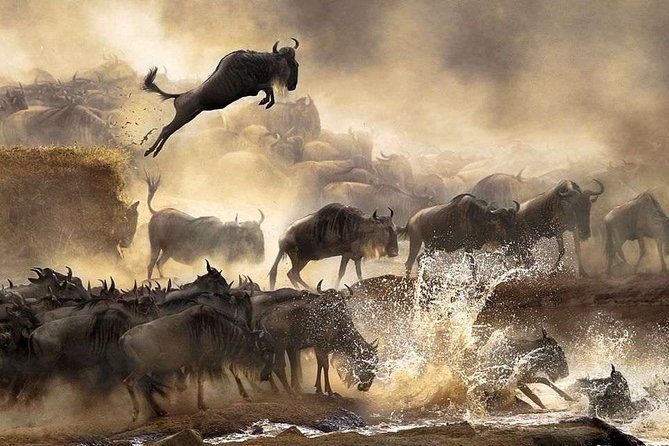
After an early breakfast, you descend more than 600 meters into the Ngorongoro Crater for a wildlife drive. The crater has a year-round water supply and grazing areas, which support large numbers of animals in a compact setting.
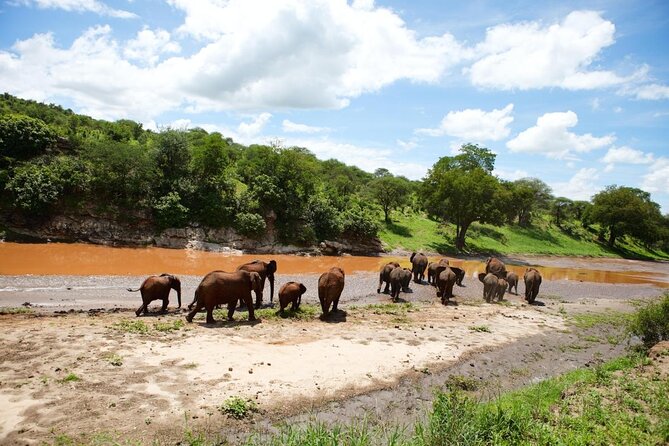
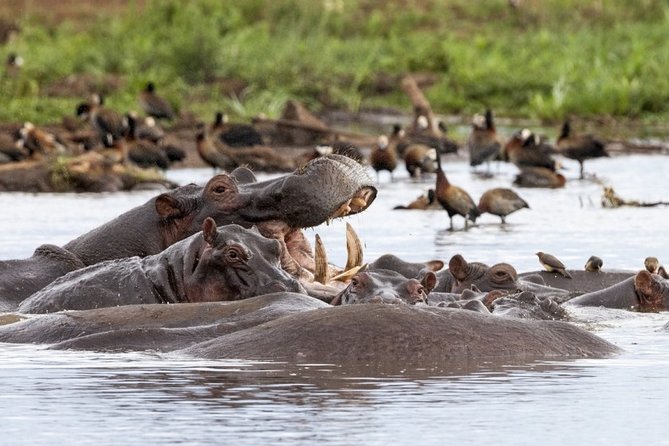
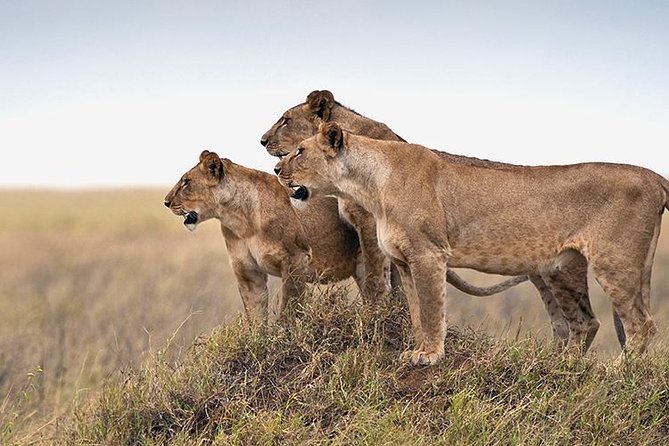
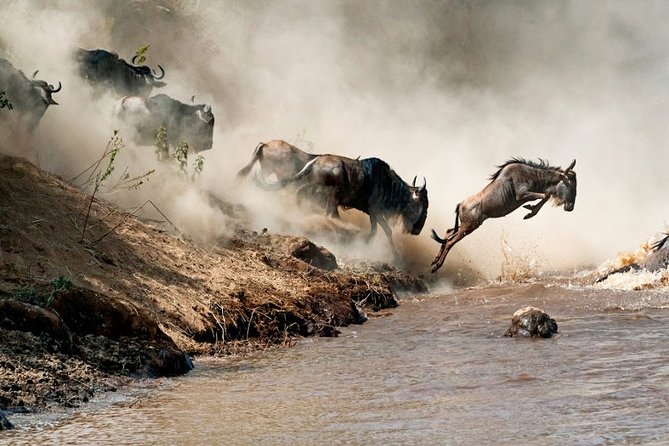
This is the trip’s most concentrated wildlife day. You may look for wildebeest, zebra, buffalo, eland, warthog, hippo, and African elephants. The area also supports predators such as lions, hyenas, jackals, cheetahs, and leopards.
That list is impressive, but it should be read as a range of possible species, not a promise that every animal will appear. Leopards in particular can be hard to spot, and even experienced guides need luck and sharp eyes. The private format helps because you can ask your guide to explain what to look for, but nature still sets the schedule.
A planned stop at Lake Magadi adds another point of interest. This large, shallow alkaline lake lies in the southwestern part of the crater and is one of the area’s main features. It gives the day a clear geographic focus instead of making the drive only about checking animals off a list.
The six-hour crater visit is a good length for a short safari. You have enough time to see several parts of the crater floor, yet you are not spending another full day on the road. At the end of the activity, you return to the meeting point in Arusha, according to the stated arrangements.
The crater’s compact setting can make wildlife viewing feel particularly rewarding. At the same time, it may feel busier or more structured than a remote stretch of the Serengeti. If you want wide-open solitude above all else, the Serengeti plains may be your favorite part. If you want many possible species within one dramatic setting, Ngorongoro is likely to make the strongest impression.
What the $2,500 price includes
At $2,500 per person, this is not a budget excursion. The right question is what the price covers and how much planning it removes.
The package includes all fees and taxes, a professional driver and guide, drinking water, soft drinks, four breakfasts, four lunches, and four dinners. It also includes the listed lodge stays, including Seronera Lodge and Ngorongoro Rhino Lodge.
Those inclusions are important. Food during a safari can be difficult to arrange independently, and park fees can add a large amount to a multi-park route. Having meals and drinks built in makes the headline price easier to assess. You should still confirm the exact accommodation plan and room arrangements before paying, since the supplied details name two lodges but do not describe room categories or standards.
The package does not include international flights, travel insurance, visas, or tips for the driver-guide and safari cook. Set aside money for those items. Tips are not technically part of the tour price, but they are a normal practical consideration on a guided safari.
The strongest value comes from the private vehicle and the route. You are paying to cover three major areas in a short period, with a guide handling the movement between them. If you were trying to arrange park access, meals, lodging, and transport separately, the planning burden would be much greater.
Guide service and customer care
The company is Moraka Africa Safaris. The most specific praise concerns communication and personal care. Latipher is credited with handling a last-minute Tanzania plan, replying quickly, and remaining available with extra information. That is useful when your schedule changes or you need reassurance before arrival.
The guide team is also described as friendly, caring, and unique in its approach. Another customer specifically felt safe and well looked after and reported seeing the Big Five on a separate Rift Valley safari with the company. That sighting is not a guarantee for this four-day route, but it does show the kind of wildlife experience the company aims to provide.
The driver-guide may speak English, Spanish, and French. On safari, language is more than a convenience. You need to understand daily timing, safety instructions, animal behavior, and changes to the route. Ask at booking which language your assigned guide will use.
Because this is a private activity, your group alone participates. That can be a major advantage for families, couples, or friends who want a shared schedule. It also means the overall quality depends heavily on the assigned guide and vehicle, so it is sensible to confirm those details before departure.
Who should book this safari?
I would recommend this trip to you if you have only four days available and want the classic northern circuit rather than a single-park visit. It suits first-time safari visitors who want variety, a private setting, and included meals without building the whole route themselves.
It also suits people who value direct communication. The praise for Latipher’s quick replies is worth noting if you are arranging a last-minute trip or need help understanding the logistics.
You should think twice if you dislike early starts, long transfers, or a tightly packed schedule. This is a sampler of three major areas, not a leisurely stay in one park. You will spend a meaningful amount of time traveling between wildlife areas.
The route may also suit you if you want more than animal sightings. Tarangire brings dramatic Rift scenery, the Serengeti provides vast open plains, Olduvai Gorge connects the trip to human evolution, and Ngorongoro brings geology, water, grazing animals, and predators into one setting.
Booking includes free cancellation if you cancel at least 24 hours before the 7:00 a.m. start time. Within 24 hours, the amount paid is not refunded, and late changes are not accepted.
FAQ
Where does the safari start?
The safari starts in Arusha, Tanzania, at 7:00 a.m.
Where does the safari end?
The activity ends back at the original meeting point in Arusha.
How long is the safari?
The tour lasts approximately four days.
Which parks and conservation areas are included?
The route includes Tarangire National Park, Serengeti National Park, and the Ngorongoro Conservation Area, including the Ngorongoro Crater.
Is this a private tour?
Yes. Only your group participates in the activity.
What meals are included?
The package includes four breakfasts, four lunches, and four dinners.
Are drinks included?
Drinking water and soft drinks are included.
What languages can the guide speak?
The professional driver-guide service is listed as available in English, Spanish, and French.
What is not included in the price?
International flights, travel insurance, visas, and tips for the driver-guide and safari cook are not included.
Can I cancel for a full refund?
Yes, if you cancel at least 24 hours before the experience start time. Cancellations within 24 hours are not refunded.
Should you book it?
Book this safari if you want a private, tightly planned introduction to Tanzania’s northern circuit and you accept the long days needed to fit three major areas into four days. The included food, drinks, fees, guide, and lodge stays give the $2,500 price real substance, while the company’s praised communication adds confidence during planning.
I would choose it for a first Tanzania safari with limited time, especially if Tarangire, the Serengeti, and Ngorongoro are all on your must-see list. I would look for a longer itinerary if you want slower mornings, more time in each park, or a better chance to settle into the rhythm of the Serengeti.
Just added in Arusha
- Safari “Kifaru” – 5 days in the most famous Parks in the world★ 5.0 · 4 reviews
- Saadani Day Trip★ 5.0 · 13 reviews
- 3 Days Tanzania Short and Spicy★ 5.0 · 6 reviews
- 5 Day Tanzania Safari Camping Adventure Private Tour★ 5.0 · 2 reviews
- Day Trip to Ngorongoro Crater from Arusha★ 5.0 · 1 review
- SERENGETI NATIONAL PARK Tour★ 4.5 · 5 reviews
- 3 Days Serengeti Park & Ngorongoro Crater Adventure Safari★ 5.0 · 8 reviews
- 6 Days Tanzania Bush Experience Safari★ 5.0 · 6 reviews
4-Day Experiences, compared.
4 Days Join Group tour Tarangire Serengeti and Ngorongoro crater
Read our review →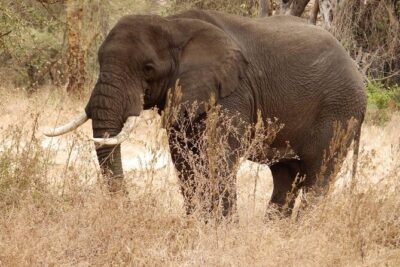
4-Day Safari from Arusha: Tarangire, Serengeti and Ngorongoro
Read our review →

4 Days Tarangire, Serengeti and Ngorongoro Mid-Range Group Safari
Read our review →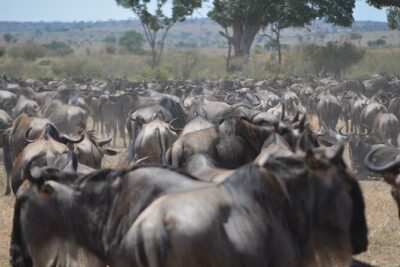
4 Days Tanzania Lodge Safari With Two Nights at Serengeti
Read our review →
Browse the lists this tour appears in