
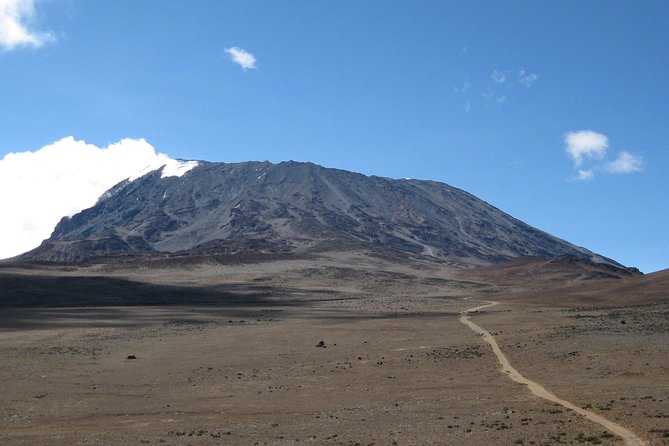
Reviewed · MARANGU ROUTE CLIMBS
5 Days Marangu Route Kilimanjaro Trekking
A hut bed makes Africa’s highest summit more approachable. This five-day Marangu Route trek combines sleeping huts at every camp with a direct path through rainforest, moorland, and volcanic high country. I like the communal huts, solar lights, mattresses, and pillows, and I like the chance to see Maundi Crater, colobus monkeys, giant lobelias, and the peaks of Mawenzi and Kibo. The main drawback is the short schedule: four nights give you little time to adjust to altitude.
I also like that the package includes guides, park fees, water, transfers, and meals, although the meal details should be confirmed because breakfast, lunch, and dinner are marked optional. Guide William and assistant guide Tuliza are named as part of the team, and their calm advice and encouragement helped one group reach the summit. Good fitness is essential, especially for the midnight climb from Kibo to Uhuru Peak.
In This Review
- Key points to know before booking
- Why the Marangu Route feels different
- Day 1: Rainforest, Mandara Hut, and Maundi Crater
- Day 2: Moorland views from Mandara to Horombo
- Day 3: The saddle, Kibo, and a moonlike camp
- Day 4: The midnight push to Uhuru Peak
- Day 5: A wet forest descent to Marangu Gate
- What the $1,700 price includes
- Who should choose this five-day climb
- Practical preparation for the trail
- Should you book the Marangu Route?
- FAQ
- How long is the Marangu Route trek?
- Where does the trek start?
- Where do I sleep on the Marangu Route?
- Is the six-day version available?
- What time does the summit climb begin?
- Do I need a headlamp?
- What is included in the price?
- Is this a private tour?
- Can I cancel for a full refund?
Key points to know before booking
- Huts instead of tents: You sleep in communal mountain huts with bunk beds, sponge mattresses, pillows, and solar lights.
- The shortest Marangu schedule: The five-day plan reaches Horombo, Kibo, Uhuru Peak, and the park gate without an extra acclimatization day.
- A long summit night: The climb usually begins between midnight and 2 am, with a headlamp, warm layers, and slow pacing required.
- Maundi Crater side trip: This optional outing near Mandara offers views toward northern Tanzania and Kenya.
- Strong guide support: William and Tuliza are specifically named for their friendly, professional help and summit advice.
- $1,700 per person: The price includes major operating costs and transfers, but confirm exactly which meals are included before paying.
Why the Marangu Route feels different
Kilimanjaro has several routes, but Marangu is the only one here described with huts at every overnight stop. That changes the feel of the climb. You are not sleeping in a tent, and you do not need to set up camp after a long day on the trail.
The huts are communal, so privacy is limited. Bunks have sponge mattresses and pillows, while solar lights provide basic illumination. That is a real comfort at altitude, but it is not a private mountain lodge. You should expect shared sleeping quarters and a simple camp setting.
The route is often called the Coca-Cola Route because it is considered the easiest and shortest path to the summit. That nickname can mislead you. Marangu is less demanding in terms of route length and camping comfort, but reaching Uhuru Peak still requires a very hard high-altitude climb.
The five-day plan is compact. A six-day version is available, with the extra night spent resting at Horombo or visiting the small peak of Mawenzi. I would give serious thought to that extra day if you have limited trekking experience or want better acclimatization.
More Marangu Route climbs:
- Private Full Day Hiking Experience to Marangu Route
★ 5.0 · 61 reviews - From Arusha/Moshi: Kilimanjaro Hike Marangu Route Day Trip
★ 4.5 · 54 reviews - Mount Kilimanjaro Day Hike Through Marangu Route to Mandara Hut
★ 5.0 · 37 reviews
Day 1: Rainforest, Mandara Hut, and Maundi Crater
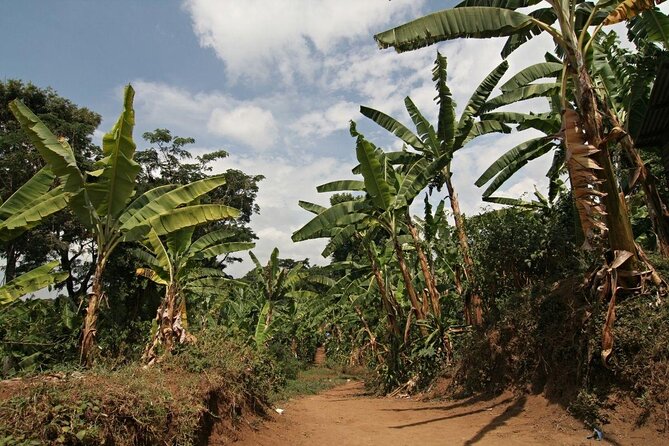
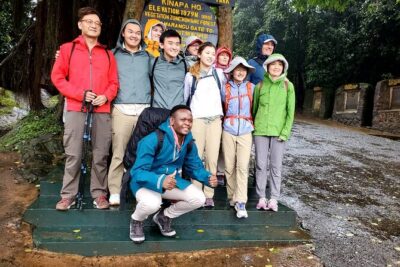
The day begins with breakfast and a briefing, followed by a drive of about one hour to the Kilimanjaro National Park gate. Registration takes place there before you start walking from about 1,860 meters to Mandara at 2,700 meters.
The first section runs through rainforest. This is one of the most enjoyable parts of the route because the scenery changes quickly and the trail feels sheltered beneath tall trees. Keep an eye out for towering eucalyptus trees, birdlife, and colobus monkeys. The forest gives you a gentle visual introduction to the mountain before the open upper zones arrive.
The stated walking time is about eight hours. That is a full first day, especially when you add the drive, registration, and briefing. You will want sturdy footwear and rain protection because forest trails can become wet.
Near Mandara, a side trip to Maundi Crater offers a worthwhile view over the surrounding area, including northern Tanzania and Kenya. I like this addition because it gives you more than a straight march to camp. It also helps you see where the mountain sits within the region.
The night is spent at Mandara encampment. This is your first chance to use the communal hut system, with bunk beds, mattresses, pillows, and solar lighting.
Day 2: Moorland views from Mandara to Horombo
On the second morning, the forest gives way to open moorland. You climb from 2,700 meters to about 3,700 meters at Horombo, with another walking day listed at roughly eight hours.
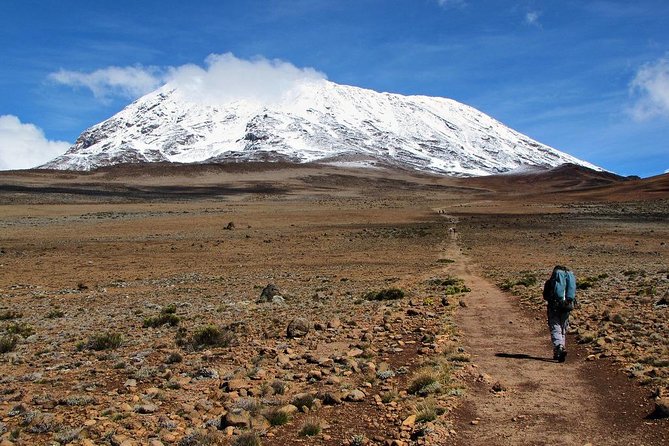
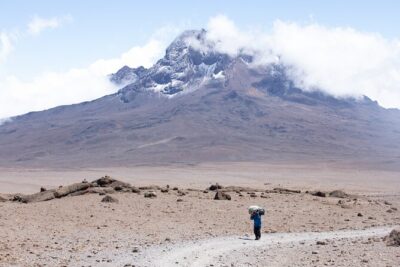
The open ground allows broad views of Mawenzi and Kibo. Mawenzi has a sharp, broken profile, while Kibo is the main summit cone. Seeing both peaks together helps you understand the mountain’s shape and the route ahead.
Plant life becomes a highlight here. Giant lobelias and groundsels give the moorland a strange, high-altitude character. These plants make the trail feel very different from the rainforest below, and they are worth noticing rather than rushing past.
This is also the day when altitude may begin to affect you. Headache, tiredness, and shortness of breath can make a steady pace feel harder than expected. The route description itself warns that you may start to feel the altitude, so do not treat this day as an ordinary hike.
I would follow the guides’ pace and keep your effort even. The common mountain advice pole pole, meaning slowly, matters most here. The five-day plan gives you no spare acclimatization day before the summit push, so conserving energy is part of your preparation.
Horombo is another hut camp. The huts reduce the burden of carrying or sleeping in camping equipment, but the altitude still demands respect. Comfort does not remove the physical effects of climbing higher.
Day 3: The saddle, Kibo, and a moonlike camp
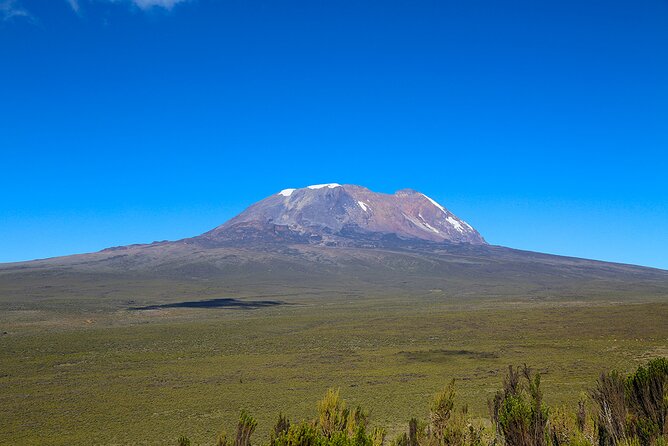
Day three takes you from Horombo at 3,700 meters to Kibo at about 4,700 meters. The listed walking time is again eight hours, and this is the day when the surroundings become stark.
You pass the last watering point and cross the broad saddle between Mawenzi and Kibo. The upper heathland gradually fades, followed by nearly bare ground described as a moonscape. There is little visual softness here. The reward is the feeling that you have reached the mountain’s high volcanic zone.
Kibo is the final preparation point before the summit attempt. Dinner comes before rest, and you need to organize your clothing, headlamp, water, and other equipment before trying to sleep.
This schedule is demanding because you reach high camp after three long days, then wake around midnight or as late as 2 am for the summit climb. The hut is a welcome feature, but a bed does not guarantee good sleep at 4,700 meters.
The extra sixth day would be most useful before this stage. Spending more time at Horombo can help you adjust before the move to Kibo. The supplied plan also allows the extra day for a climb toward Mawenzi, but I would view that as an option only if your guide agrees that your condition and altitude response are suitable.
More treks in Arusha:
- 8-Day Small-group Lemosho Kilimanjaro Summit Trekking
★ 5.0 · 186 reviews - Mountain Kilimanjaro Day Hike
★ 5.0 · 102 reviews - 4 Days Mount Meru Trekking
★ 5.0 · 55 reviews - 4 days Best experience Kilimanjaro Hike, Serengeti &Ngorongoro
★ 5.0 · 54 reviews
Day 4: The midnight push to Uhuru Peak
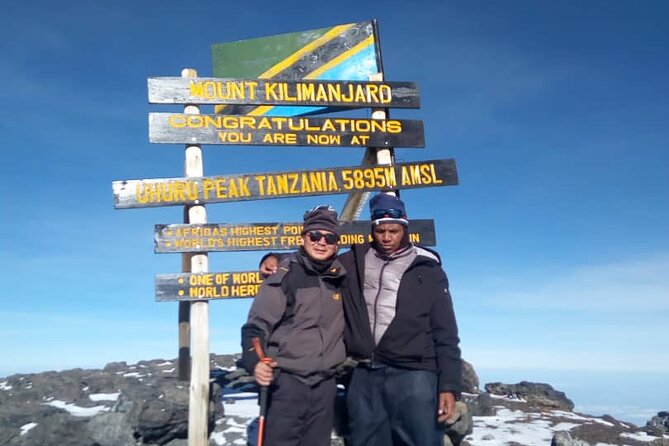
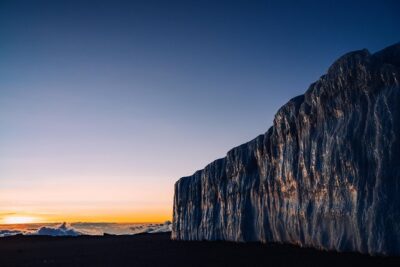
Summit day is the hardest part of the trek. You leave between midnight and 2 am, climbing steep scree or snow toward Gilman’s Point on the crater rim. From there, the route continues to Uhuru Peak, the highest point in Africa.
You need a headlamp or flashlight because the first part takes place in darkness. It will be very cold before the descent begins, so warm layers are not optional. Keep rain gear and extra clothing handy as well, since conditions can change and the route description specifically emphasizes the cold.
The climb contains many switchbacks. Progress may feel slow, and the advice to go pole pole is practical rather than decorative. A positive attitude helps, but pacing, rest, and attention to how you feel matter just as much.
Gilman’s Point is an important marker, but Uhuru Peak is the main goal. At the summit, you have time for photographs and views before beginning the long descent. The route description promises striking views, but you should remember that cloud, cold, tiredness, or poor weather can affect what you see.
After the summit, you descend to Kibo for lunch and rest, then continue to Horombo. This makes day four an extremely long and tiring day even though it is listed as about eight hours. The uphill climb and the descent both take work, and your legs may feel the strain by the time you reach the hut.
The named guides are an important part of this stage. William and assistant guide Tuliza were praised for friendly, professional support and useful advice for reaching the summit. That kind of practical encouragement matters most when you are cold, tired, and moving slowly.
Day 5: A wet forest descent to Marangu Gate
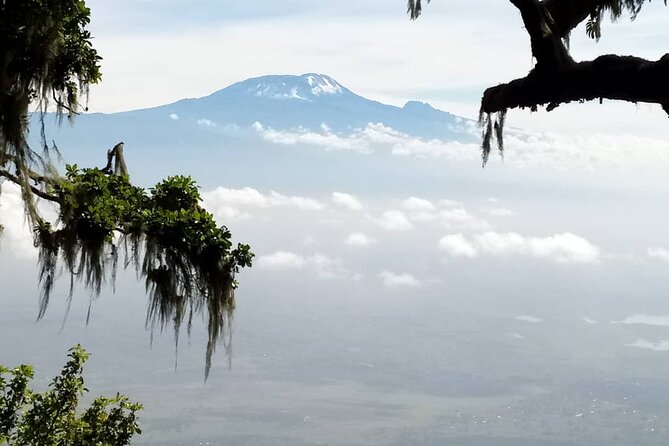
After breakfast at Horombo, you descend through moorland to Mandara Hut and then continue through the forest to the Marangu park gate. The elevation drops from about 3,700 meters to 1,700 meters, with roughly eight hours of walking listed.
The descent may sound easy after the summit, but it still requires care. Lower forest paths can be wet and muddy. Gaiters and trekking poles are specifically recommended, and they make sense for keeping mud out of your boots and helping with footing.
You will probably need fewer layers at the lower elevations. Shorts and a T-shirt may be enough, but keep rain gear and warmer clothing within reach rather than buried in your luggage. Mountain weather and forest conditions can shift during the day.
A vehicle waits at Marangu gate for the approximately one-hour drive back to your hotel in Moshi. Arrival and departure transfers are included, which simplifies the start and finish of the trek. The experience is based in Arusha, while the final transfer described here returns you to Moshi, so confirm your hotel location and transfer plan before booking.
What the $1,700 price includes
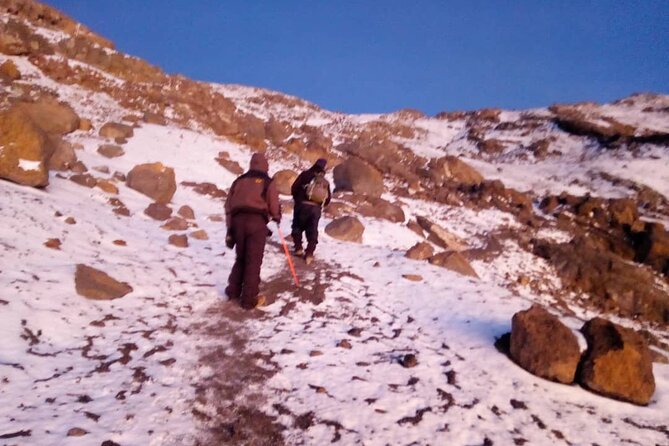
At $1,700 per person, this is not a low-cost day excursion. It covers a five-day mountain operation with professional guides, park fees and taxes, purified drinking water, sleeping mattresses, and arrival and departure transfers.
Those inclusions have real value. Kilimanjaro access involves park charges, trained mountain staff, transport, overnight arrangements, and food planning. The hut system also means you are paying for a route with fixed sleeping facilities rather than a basic tent-based setup.
The meal information needs clarification. Breakfast, lunch, and dinner appear in the inclusions but are marked optional, so ask the operator exactly what your price covers. Find out if all meals are included, if only some are supplied, and what you need to bring yourself.
Tips are not included. Tanzania visas are also excluded, and you should budget for both separately. The package has free cancellation up to 24 hours before the experience starts, with a full refund if you cancel on time. Changes made inside that 24-hour window are not accepted, and poor weather can lead to a new date or a full refund.
Who should choose this five-day climb
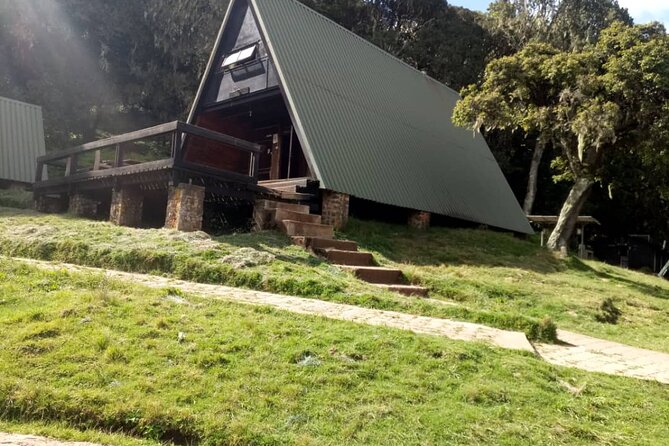
I would recommend this route to you if hut sleeping is a major priority, you want a direct Kilimanjaro route, and you have strong physical fitness. It suits people who prefer a communal bunk to a tent and who value a shorter schedule.
It may also suit first-time high-altitude trekkers who want the simplest route structure. The word easiest should not be confused with easy, though. The summit day is cold, steep, dark, and tiring, and the five-day schedule leaves less time for your body to adjust.
I would choose the six-day version if your schedule allows it. The extra night at Horombo gives you more time at altitude and may make the overall experience less rushed. The five-day plan can work, but it demands a good pace, careful preparation, and honest attention to your condition.
This is a private activity, so only your group participates. That can make the experience feel more personal than a large shared departure, though the huts themselves remain communal.
Practical preparation for the trail
Pack warm layers for the summit, rain gear for the forest, and a headlamp for the midnight start. Gaiters and trekking poles are especially useful on the muddy lower trail and the steep descent from the upper mountain.
You should also plan for long walking days. Every day is listed at about eight hours, and the summit day combines a night start, a high climb, a descent to Kibo, and a continued walk to Horombo.
Drink the supplied purified water regularly and follow the guides’ pace. Do not try to prove your strength by walking fast. The route’s greatest challenge is altitude, not simply distance.
The huts provide mattresses and pillows, but you should still be ready for basic communal conditions. Solar lights are useful, yet you should carry a small personal light because the summit climb begins in darkness.
Should you book the Marangu Route?
Book this trek if you want Kilimanjaro with hut accommodation, included transfers, professional guide support, and a clear five-day route. I especially like the mix of rainforest, Maundi Crater, giant high-altitude plants, the Mawenzi and Kibo views, and the practical comfort of a bed each night.
Before paying, confirm the meal package, your pickup and hotel arrangements, and whether you can switch to six days for better acclimatization. If you are fit, prepared for cold and mud, and comfortable with communal huts, the $1,700 price can offer solid value.
If you want a slower climb, more private sleeping arrangements, or a relaxed summit schedule, this five-day version may feel too compressed. For everyone else, Marangu gives you a straightforward path to Uhuru Peak, provided you respect the altitude and take the mountain slowly.
FAQ
How long is the Marangu Route trek?
The experience lasts approximately five days, with about eight hours of walking listed for each day.
Where does the trek start?
The trek begins after breakfast and a briefing, followed by a drive of about one hour to the Kilimanjaro National Park gate.
Where do I sleep on the Marangu Route?
You sleep in communal huts at each campsite. The bunks have sponge mattresses and pillows, and the huts have solar lights.
Is the six-day version available?
Yes. The route can be done in six days, with the extra day spent resting at Horombo or climbing the small peak of Mawenzi.
What time does the summit climb begin?
The summit climb starts very early, usually between midnight and 2 am.
Do I need a headlamp?
Yes. The first part of the summit climb takes place in darkness, so you need a headlamp or flashlight.
What is included in the price?
The package includes professional mountain guides, fees and taxes, purified drinking water, sleeping mattresses, and arrival and departure transfers. Breakfast, lunch, and dinner are listed as optional, so confirm the meal arrangements before booking.
Is this a private tour?
Yes. Only your group participates in the activity.
Can I cancel for a full refund?
Yes, if you cancel at least 24 hours before the start time. Cancellations made less than 24 hours before the start are not refunded. If poor weather causes cancellation, you are offered another date or a full refund.
Just added in Arusha
- Safari “Kifaru” – 5 days in the most famous Parks in the world★ 5.0 · 4 reviews
- Saadani Day Trip★ 5.0 · 13 reviews
- 3 Days Tanzania Short and Spicy★ 5.0 · 6 reviews
- 5 Day Tanzania Safari Camping Adventure Private Tour★ 5.0 · 2 reviews
- Day Trip to Ngorongoro Crater from Arusha★ 5.0 · 1 review
- SERENGETI NATIONAL PARK Tour★ 4.5 · 5 reviews
- 3 Days Serengeti Park & Ngorongoro Crater Adventure Safari★ 5.0 · 8 reviews
- 6 Days Tanzania Bush Experience Safari★ 5.0 · 6 reviews
Marangu Route Climbs, compared.
Private Full Day Hiking Experience to Marangu Route
Read our review →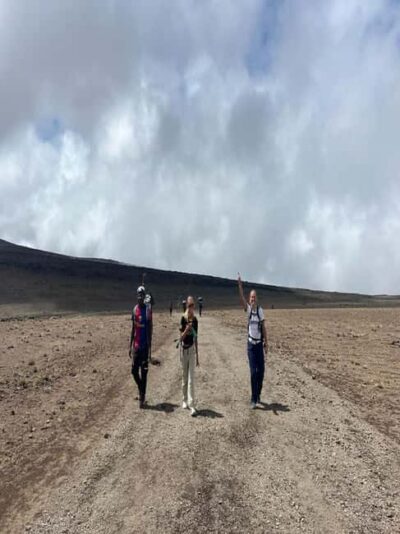
From Arusha/Moshi: Kilimanjaro Hike Marangu Route Day Trip
Read our review →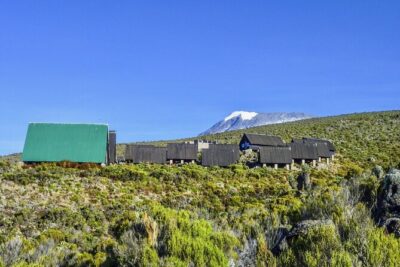
Mount Kilimanjaro Day Hike Through Marangu Route to Mandara Hut
Read our review →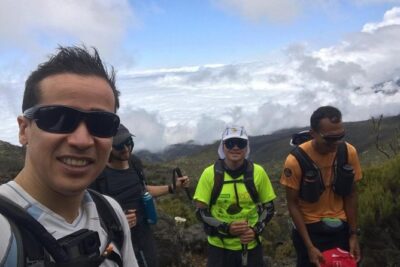
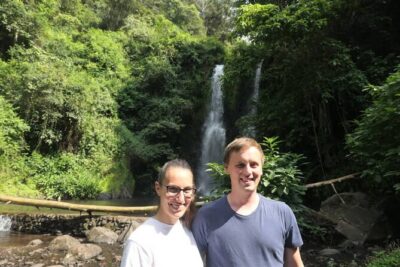
Marangu waterfall & Coffee making Cultural Tour | BURIGI CHATO SAFARIS CO LTD
Read our review →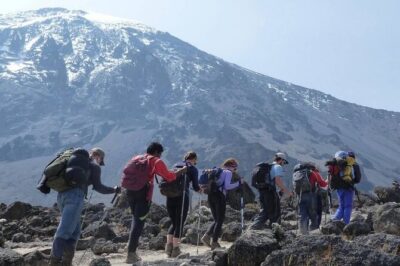
Climb Kilimanjaro – Marangu Route 8 Day Program
Read our review →Browse the lists this tour appears in