
Reviewed · MARANGU ROUTE CLIMBS
Kilimanjaro Private Climbing in 6 Days Marangu Route
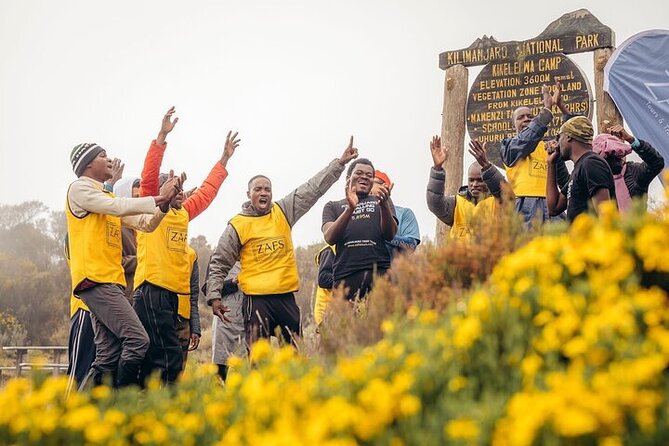
The mountain saves its hardest test for sunrise. This private six-day climb from Moshi takes you through Kilimanjaro’s rainforest, heathland, moorland, and high volcanic slopes before the demanding push to Uhuru Peak. I like the extra acclimatization day at Horombo Huts, and I like that the climb includes qualified guides, daily health checks, emergency oxygen, meals, water, park fees, and hut stays. The main caution is simple: the Marangu Route uses huts instead of tents, but it is still a serious high-altitude climb with a long summit day and no guarantee that you will reach the top.
I also appreciate the practical support built into the trip. ZAFS Tours uses guides with at least eight years of mountain experience and Wilderness First Responder certification, while the stated staff-to-climber ratio averages 4:1. The price of $2,000 per person covers a large share of the costly essentials, though you still need trekking gear, insurance valid up to 6,000 meters, snacks, tips, flights, and a visa.
In This Review
- Five details that matter before you book
- Why the Marangu Route suits some climbers
- Day 1: Marangu Gate to Mandara Huts through rainforest
- Day 2: Heathland, giant plants, and the Horombo Huts
- Day 3: A useful pause at Horombo
- Day 4: Across the saddle to Kibo Hut
- Day 5: The 14-hour push to Uhuru Peak
- Day 6: Descent, certificates, and the return to Moshi
- Food, water, and the human side of the climb
- What the $2,000 price really covers
- Who should choose this private climb?
- Should you book the six-day Marangu climb?
- FAQ
- Where does the Kilimanjaro climb start?
- How long does the experience last?
- Is this a private tour?
- What route does the climb use?
- Is airport pickup included?
- Are meals included?
- Is accommodation included before and after the climb?
- Is trekking insurance required?
- Can I cancel for a full refund?
Five details that matter before you book
- The Horombo acclimatization day is a real advantage: You spend two nights there and can hike toward Mawenzi and Zebra Rocks instead of gaining height every day.
- The summit day lasts about 14 hours: Expect a midnight to 2 a.m. start, heavy scree, cold, possible snow, Gillman’s Point, and the final ascent to Uhuru Peak.
- You sleep in mountain huts: Mandara, Horombo, and Kibo use wooden or hut-style accommodation, which means less camping gear but shared basic conditions.
- Safety is taken seriously: Guides carry first-aid equipment and emergency oxygen, and the team performs daily health checks.
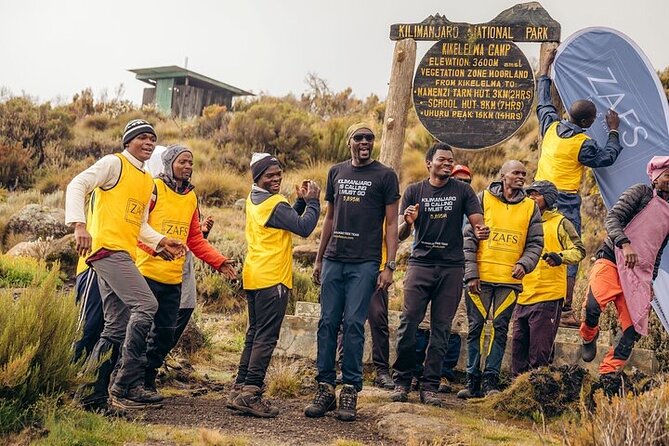
- The team receives strong praise for food and encouragement: Specific feedback highlights guides Alex and Moshi, generous meals, porters delivering duffel bags on time, and steady support when climbers were exhausted.
- The route changes character every day: You move from wet rainforest to open moorland, then across a stark high-altitude saddle before the summit.
Why the Marangu Route suits some climbers
Marangu is often called the hut route because you sleep in wooden huts rather than tents. That makes it appealing if you prefer a bed-like bunk and fixed shelters at night. It does not make the climb easy. The route still reaches the same high summit, and the altitude remains the main challenge.
The six-day schedule is more sensible than a rushed five-day version because it includes a second night at Horombo Huts. That extra day gives you time to rest or make a short acclimatization walk toward Mawenzi Base Camp. For a first major mountain climb, this pause matters more than a fancy room or a quick itinerary.
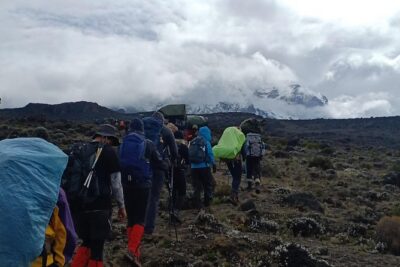
The route also gives you a clear visual progression. On the first day, the trail is wet and enclosed by rainforest. By the second day, the trees thin out and giant lobelias and groundsels appear. Later, vegetation gives way to open moorland and then a broad, nearly barren saddle between Mawenzi and Kibo.
You should have moderate physical fitness before arriving. The walking is not described as technical climbing, but the summit night combines darkness, cold, altitude, steep uphill travel, and a very long day. A private trip helps because your group can receive direct attention, but it cannot remove the physical demands.
More Marangu Route climbs:
- Kilimanjaro climb, Marangu route (6-day)
★ 5.0 · 72 reviews - Climbing Kilimanjaro – Marangu Route
★ 5.0 · 65 reviews - Kilimanjaro Climbing 5 days Marangu route
★ 5.0 · 22 reviews
Day 1: Marangu Gate to Mandara Huts through rainforest
The climb begins with a roughly 60-minute drive from Moshi to the Marangu village and Kilimanjaro National Park Gate. Park permits must be issued before you start walking, so expect some waiting while crews prepare equipment and paperwork.
That gate is part of the experience. You see the operation of a major mountain route, with guides, porters, and climbing groups getting organized. Your guide can point out local plants, wildlife, and the changing forest around you as the trail rises.
The first walking section takes about four hours. The rainforest is attractive, but the path may be muddy and slippery, especially in wet weather. Bring proper rain gear even if Moshi is warm and dry. Waterproof footwear, trekking poles, and gaiters become useful here and again during the final descent.
Mandara Huts are wooden A-frame shelters in a forest clearing. The hut arrangement is one of Marangu’s practical benefits, although you should still expect basic mountain accommodation rather than hotel comfort. After a short first day, you have a chance to eat, settle in, and prepare for the next climb.
Day 2: Heathland, giant plants, and the Horombo Huts
After breakfast, the route leaves the rainforest behind. The trail continues upward through heathland, where the famous giant lobelias and groundsels give the day a distinctive Kilimanjaro feel.
You walk for about seven hours, with a lunch stop along the way. One of the rewards is the view toward Mawenzi, the rugged secondary peak that helps define the mountain’s profile. The vegetation becomes lower and more open as you gain height.
Horombo Huts sit beneath the Kibo Summit viewpoint. Arrival is listed for late afternoon, and temperatures begin to fall, so keep warm layers accessible rather than buried in your duffel bag.
This is a day when a slow pace pays off. Your guide’s job is not simply to point out the trail. The team also monitors how you are coping with altitude, and daily health checks are part of the support plan. Tell your guide if you feel unwell. Trying to hide symptoms helps nobody, least of all you.
Day 3: A useful pause at Horombo
Day three is the strongest reason to choose this six-day version of the route. You spend a second night at Horombo rather than moving higher immediately.
You can rest at the huts, or take a roughly four-hour walk toward Mawenzi Base Camp. The recommended route passes Zebra Rocks, a notable formation used as an acclimatization objective. The walk lets you gain some height and then return to sleep lower at Horombo, which is useful preparation for the summit attempt.
This day also helps you learn how altitude affects your body. You can observe the mountain weather, test your clothing, and decide how much water and food you need during longer walking days. Do not treat the day as wasted time. On Kilimanjaro, patience is part of the strategy.
The drawback is that a rest day can feel frustrating if you want constant progress. Still, cutting it out would make the schedule shorter, not easier. I would keep it.
A few more options to weigh up in Moshi
- Kilimanjaro climb by Lemosho Route (7-day)
★ 5.0 · 651 reviews - Safari Serengeti And Ngorongoro
★ 5.0 · 288 reviews - Kilimanjaro climb, Machame Route (7-day)
★ 5.0 · 262 reviews - Kilimanjaro Climbing Lemosho Route 8 Days.
★ 5.0 · 186 reviews
Day 4: Across the saddle to Kibo Hut
After breakfast, the route passes through thinning heathland and enters a stark high-altitude zone. The trail crosses the broad saddle between Mawenzi and Kibo, a surprisingly large open area where the vegetation fades and the mountain feels much more exposed.
You stop for lunch along the way. This is a good moment to look ahead at Kibo, since the summit climb begins only a few hours after you arrive at Kibo Hut. The route description notes that the last available water point is at 4,130 meters, so you need to pay close attention to your water supply from there onward.
The day takes about seven hours. At Kibo Hut, the summit is still 1,195 meters above you. That number does not sound enormous on paper, but at altitude it is a demanding ascent, especially after several days of walking.
You are expected to go to bed early because the summit start comes between midnight and 2 a.m. Keep your headlamp, warm clothing, gloves, water, and snacks ready before lying down. Snacks are not included, so buy or pack them in advance. The operator provides meals and drinking water on the mountain, but your preferred quick-energy foods remain your responsibility.
Day 5: The 14-hour push to Uhuru Peak
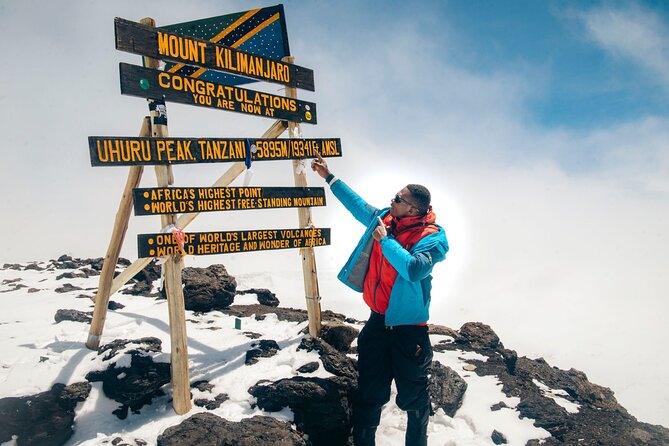
Summit day is the toughest section by a wide margin. The early start is designed to put you on the upper mountain near sunrise, but it also means walking when you would normally be asleep.
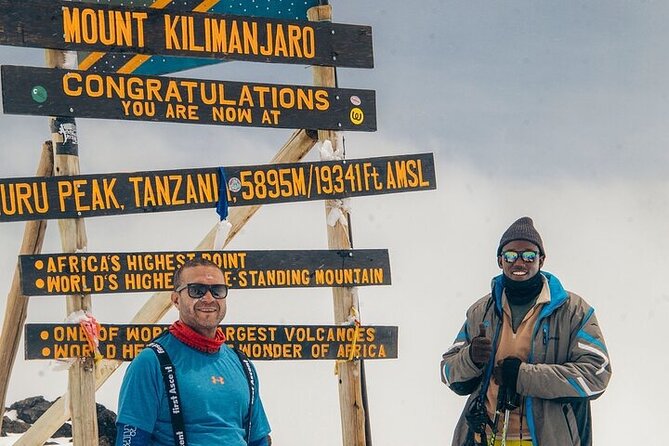
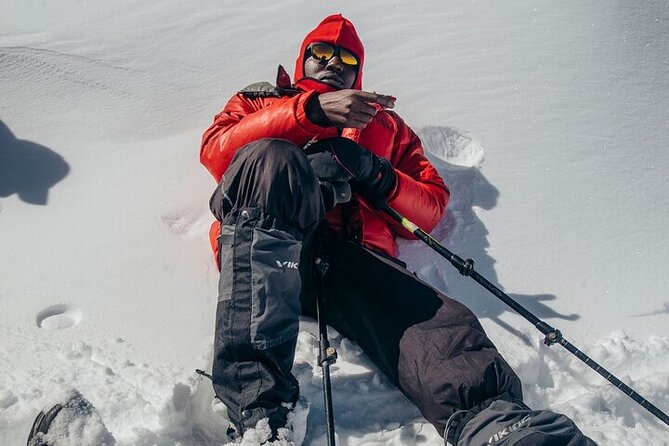
The route climbs in switchbacks over heavy scree and may include snow. You continue toward Gillman’s Point on the crater rim, where a short rest can bring one of the trip’s great rewards: sunrise above Kilimanjaro. Faster climbers may see the sunrise from the summit, but you should not rush simply to copy someone else’s timing.
From Gillman’s Point, the route continues for about another hour toward Uhuru Peak. The supplied itinerary is cut off after a reference to snow, but it clearly identifies this as the summit push and lists the day at approximately 14 hours. You should be ready for a very long day, not just a quick photograph at the top.
This is where patient guiding matters most. The strongest feedback about ZAFS Tours focuses on encouragement, kindness, and careful support. Climbers specifically praised Alex and Moshi for their patience, while other comments describe guides who adjusted to individual ability and kept morale up when people were tired.
Porters carry group equipment and duffel bags, while guides support the walking and summit effort. Some feedback also praises porters for helping exhausted climbers after the summit. That support can make a real difference, but you should still carry only what you need and remain responsible for your personal essentials.
Day 6: Descent, certificates, and the return to Moshi
After breakfast and a team appreciation ceremony, you begin the descent. The route stops at Mandara Huts for lunch before continuing toward the Marangu Park Gate.
The final seven-hour day is not automatically easy. Descending can be hard on tired knees, and the lower trail may be wet, muddy, and steep. Gaiters and trekking poles are recommended for good reason. As you lose altitude, the air becomes warmer, but the footing may become less reliable.
At the park gate, you receive a certificate documenting your summit ascent. A vehicle then takes you back to your Moshi hotel, with the drive listed at about 60 minutes.
The farewell ceremony is a small but meaningful touch. A supported climb depends on many people, including guides, cooks, and porters. You should plan tips for the crew and give them directly as appropriate. Tips are not included in the advertised price.
Food, water, and the human side of the climb
Food receives some of the strongest praise attached to this experience. Several comments describe meals as delicious, filling, and better than expected on a mountain. One person was particularly surprised by the quality of the food, while others credited it with providing the energy needed for long walking days.
The package includes all meals and drinking water on the mountain. Snacks are excluded, so bring personal favorites that you know you can eat when tired or cold. This is especially important on summit night, when a small snack can be easier to manage than a full meal.
The support ratio averages four staff members for each climber. That includes guides, cooks, and porters, though the exact team can vary. The company says its guides have at least eight years of experience and Wilderness First Responder certification. Emergency oxygen and a first-aid kit are also included.
Daily health checks are a strong feature. They do not replace travel insurance or personal judgment, but they create regular opportunities to discuss symptoms and altitude concerns with your guide. You must carry insurance that covers trekking up to 6,000 meters.
What the $2,000 price really covers
At $2,000 per person, this is not a cheap holiday, but the price includes many major costs. You get two nights of hotel accommodation on a bed-and-breakfast basis, one before and one after the climb. Airport pickup and drop-off, mountain transfers, park entry, hut fees, climbing fees, rescue fees, meals, water, first aid, emergency oxygen, staff support, and a summit certificate are included.
Those inclusions make the package easier to budget. You are not separately paying for national park access or hut nights during the climb. The private format also means only your group participates, which gives you more direct contact with the guides than a large mixed group may provide.
You still need to budget for international flights, visas, meals and drinks away from the mountain, personal trekking gear, snacks, insurance, and tips. The phrase fully supported does not mean fully equipped. Ask what can be rented or checked before departure, especially if you do not own cold-weather mountain gear.
The airport details deserve a quick confirmation. The meeting information lists Kilimanjaro Airport and a start time of 12:00 a.m., which may simply reflect a system default rather than your actual pickup hour. Confirm the precise airport transfer and hotel schedule before flying.
Who should choose this private climb?
I would recommend this trip to a fit first-time high-altitude climber who wants hut accommodation, private guiding, and a slower schedule with an acclimatization day. It also suits couples, families with appropriate fitness, and friends who want the group to remain private.
It is a good match if you value support more than luxury. The strongest praise centers on friendly guides, good food, porters, clear communication, and encouragement during difficult sections. The experience is not suitable for someone seeking a relaxed walking holiday or a guaranteed summit.
You should be comfortable with long days, basic huts, cold temperatures, muddy trails, and a midnight start. Proper rain gear, trekking poles, gaiters, personal snacks, and high-altitude insurance are not optional details to ignore.
Should you book the six-day Marangu climb?
I would book this tour if you want the convenience of huts and a private team, and if you prefer six days to a rushed schedule. The second night at Horombo is the feature I value most because it gives your body more time to adjust before Kibo and the summit night.
The combination of experienced guides, health checks, emergency oxygen, mountain meals, water, rescue fees, and transfers gives the $2,000 price solid value. The repeated praise for guides, food, porters, and encouragement adds confidence, though no operator can erase the risks of altitude or guarantee Uhuru Peak.
Book it if you are prepared to train, insure yourself properly, carry the right clothing, and respect your guide’s health advice. Cancel free up to 24 hours before the scheduled start for a full refund, but remember that late cancellations are not refundable and changes inside 24 hours are not accepted.
FAQ
Where does the Kilimanjaro climb start?
The meeting point is listed as Kilimanjaro Airport and Kilimanjaro National Park in Tanzania. The climb itself begins after a drive from Moshi to the Marangu Gate.
How long does the experience last?
The climb lasts approximately six days. The listed walking times range from about four to 14 hours depending on the day.
Is this a private tour?
Yes. Only your group participates in the private tour or activity.
What route does the climb use?
The climb follows the Marangu Route, with nights at Mandara Huts, Horombo Huts, and Kibo Hut before the summit attempt.
Is airport pickup included?
Yes. Airport pickup and drop-off are included, along with transfers to and from the mountain.
Are meals included?
All meals and drinking water on the mountain are included. Meals and drinks away from the mountain, as well as personal snacks, are not included.
Is accommodation included before and after the climb?
Yes. Two hotel nights are included on a bed-and-breakfast basis, one before and one after the climb.
Is trekking insurance required?
Yes. You must have insurance that covers trekking up to 6,000 meters.
Can I cancel for a full refund?
You can cancel at least 24 hours before the experience start time for a full refund. Cancellations and changes made less than 24 hours before the start are not accepted or refunded.
Just added in Moshi
- Zanzibar: Stone Town tour and Nakupenda beach with Lunch★ 5.0 · 1 review
- Mt Kilimanjaro 6 days Marangu route hike★ 5.0 · 3 reviews
- machame route★ 5.0 · 16 reviews
- day trip lake manyara★ 5.0 · 2 reviews
- Private Cycle to Kilimanjaro Bike Park Safari★ 5.0 · 6 reviews
- West Kilimanjaro cycling Adventures★ 4.5 · 8 reviews
- Wildlife Extravaganza: Manyara, Tarangire & Ngorongoro in 3 Days★ 5.0 · 3 reviews
- 3 Days Private E-Bike Tour in West Kilimanjaro★ 5.0 · 3 reviews
Marangu Route Climbs, compared.


Private Full Day Hiking Experience to Marangu Route
Read our review →
From Arusha/Moshi: Kilimanjaro Hike Marangu Route Day Trip
Read our review →
Mount Kilimanjaro Day Hike Through Marangu Route to Mandara Hut
Read our review →
Best Kilimanjaro Adventures 6 Days Marangu Route Experience
Read our review →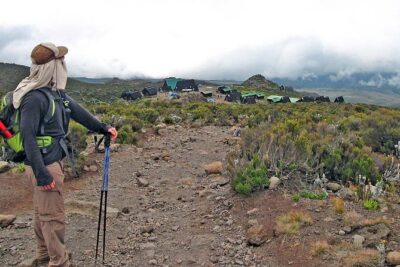
Browse the lists this tour appears in