
Reviewed · MARANGU ROUTE CLIMBS
Best Kilimanjaro Adventures 6 Days Marangu Route Experience
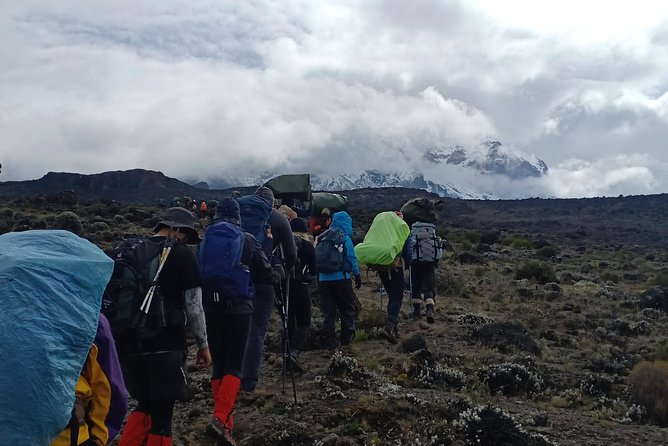
Africa’s highest summit rewards slow, steady walking. This six-day Marangu Route trek from Moshi gives you a clear acclimatization day, hut accommodation, meals, purified water, and a full mountain crew. I especially like the Maundi Crater walk on day one and the extra hike toward Mawenzi Hut on day three, both useful additions to a route that can otherwise feel rushed.
I also like the practical comfort of sleeping in huts with mattresses rather than tents, plus the strong emphasis on guides, porters, cooks, and fresh food. The main caution is price clarity: the listed cost is $1,000 per person, but Kilimanjaro National Park fees and tax are excluded, so you should confirm the final amount before booking.
Kilinge Adventures has a 4.9 rating from 18 reviews and a 94 percent recommendation rate. Guide names praised in past climbs include Erick, Gewa, Victor, Stephano, and Thomas. That personal support matters on summit night, when altitude and fatigue can make simple decisions feel surprisingly hard.
In This Review
- Key points to know before booking
- Why the Marangu Route works for a six-day climb
- Day one: Marangu Gate to Mandara Hut
- Day two: Mandara to Horombo through moorland
- Day three: the Mawenzi Hut acclimatization walk
- Day four: Horombo to Kibo across the Saddle
- Day five: Gillman’s Point and the push to Uhuru Peak
- Day six: descending through Kilimanjaro’s cloud forest
- Food, water, huts, and the mountain crew
- Is $1,000 a good value?
- Who should choose this Kilimanjaro trek?
- Practical details before you confirm
- Should you book the six-day Marangu Route?
- FAQ
- How long is the Marangu Route experience?
- Where does the trek start?
- Are meals and drinking water included?
- Is accommodation included?
- Are Kilimanjaro National Park fees included in the price?
- What happens if bad weather cancels the climb?
Key points to know before booking
- Six days on the Marangu Route: You walk through rainforest, moorland, alpine desert, and the high slopes around Kibo.
- Huts instead of tents: Mandara, Horombo, and Kibo provide sleeping huts with mattresses, though Horombo can be crowded.
- A real acclimatization day: The hike toward Mawenzi Hut gives your body more time at altitude before the summit push.
- Midnight summit attempt: Day five includes the long climb to Gillman’s Point and the gradual ridge walk toward Uhuru Peak.
- Meals and mountain staff included: Six breakfasts, six lunches, five dinners, purified water, guides, porters, and a cook are covered.
- Park costs are extra: National Park fees and tax are not included in the advertised price, and tips are also your responsibility.
Why the Marangu Route works for a six-day climb
Marangu is often called the hut route, and that is its main appeal. You sleep in simple A-frame buildings with beds and mattresses, which can feel easier than camping after a long day on the mountain.
The route also has a gradual rhythm. You begin in thick forest, move into open moorland, cross the high Saddle between Mawenzi and Kibo, then make the final push to the crater rim. That change in scenery gives each day a different character.
The trade-off is popularity. Horombo Huts can accommodate up to 100 hikers, along with guides, porters, and cooks. You should expect shared facilities and a busy mountain atmosphere rather than solitude.
The six-day version is preferable to a shorter Marangu schedule because it includes a dedicated acclimatization day at Horombo. Altitude is the great judge on Kilimanjaro. Extra time higher up does not guarantee a summit, but it gives you a better chance to adjust before the hardest night.
More Marangu Route climbs:
- Kilimanjaro climb, Marangu route (6-day)
★ 5.0 · 72 reviews - Climbing Kilimanjaro – Marangu Route
★ 5.0 · 65 reviews - Kilimanjaro Climbing 5 days Marangu route
★ 5.0 · 22 reviews
Day one: Marangu Gate to Mandara Hut
The day begins with transport from Moshi or Arusha toward Marangu Gate. The stated meeting time is 8:30 a.m., while the day-by-day plan says to leave at 8 a.m., so confirm the exact pickup time with Kilinge Adventures.
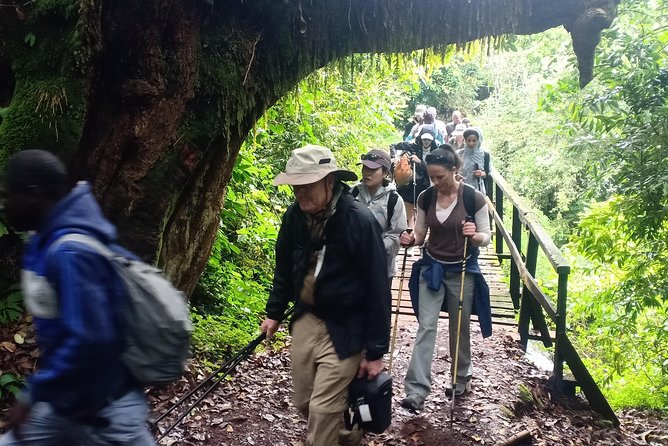
At the gate, you complete registration before entering Kilimanjaro National Park. This can take time, especially with a large party. The walking begins in rainforest, where the trail is narrow and shaded for much of the day.
Lunch comes around the halfway point. The included food is described as fresh, nutritious, and served in generous portions, with clean purified drinking water provided. That is not a small matter. A steady supply of food and water helps you keep pace, especially when you are still learning how your body responds to a full day of uphill walking.
Mandara Hut arrives after the forest walk. The hut complex uses A-frame buildings and can accommodate up to 70 people. There are sleeping huts and a dining area, with mattresses provided.
I would not simply eat and crawl into bed. If your energy and weather allow, take the short walk to Maundi Crater. The views toward Taveta in the east and Mawenzi Peak to the northwest can be excellent when the clouds clear. It is a modest outing with a good payoff, and it helps you get your bearings before the higher days.
Day two: Mandara to Horombo through moorland
After breakfast, the route leaves the forest behind. The vegetation becomes shorter and more unusual, with the rocky, open feel of Kilimanjaro’s moorland.
This is a five-hour walking day according to the schedule. You stop for a picnic lunch at Kambi ya Taabu, then continue toward Horombo Hut. On a clear day, Mawenzi and Kibo appear ahead, giving you the first strong sense of the mountain’s scale.
Horombo is often considered the most pleasant hut area on the route, but pleasant does not mean quiet. The small A-frame buildings hold up to eight people each, and the wider camp can accommodate roughly 100 hikers, plus the mountain staff who support them.
The afternoon is for rest. Use it well. You might be tempted to explore, but the goal is to keep your energy for the summit attempt. Eat, drink, organize your layers, and sleep if you can.
This is also a good point to pay attention to how your guide manages the group. Kilinge Adventures has received strong praise for calm, encouraging support, with guides such as Gewa and Erick named positively by past climbers. You should expect your guide to set the walking pace and respond to signs of altitude trouble. Ask questions early rather than trying to prove toughness.
Day three: the Mawenzi Hut acclimatization walk
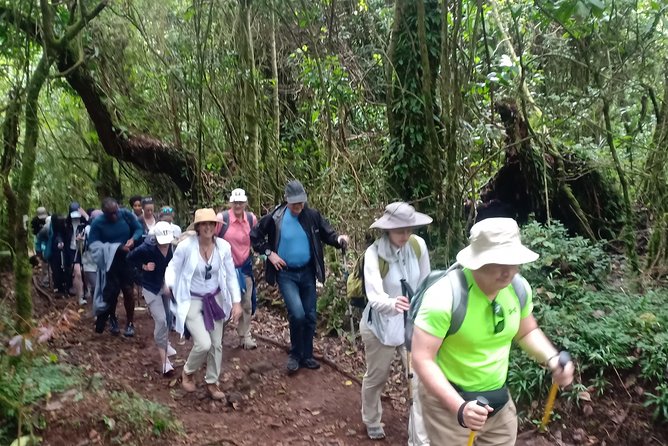
Day three is the most important planning choice in this itinerary. You remain based at Horombo but hike toward Mawenzi Hut, returning later for lunch and another night at Horombo.
The schedule gives this outing about five hours. It takes you higher, exposes you to the thinner air, and gives your body more time to adapt before Kibo. The views toward Kibo are another reward.
This day can feel odd because you work hard without moving to a new sleeping place. That is exactly why it helps. You gain altitude during the day, then return to a lower hut to rest. For a six-day climb, this is a sensible use of time.
Do not treat the acclimatization walk as an optional sightseeing stroll. Its value lies in the extra time at altitude. Keep your pace controlled and follow the guide’s instructions. If your body feels poor, tell the guide rather than pushing on for pride.
The extra day also gives you a chance to learn how the company operates. Past trips have praised the organization of meals, luggage, transport, and staff support. Names such as Thomas, Victor, and Stephano appear in accounts of climbs where encouragement made a real difference. You may not have those exact guides, so confirm your assigned team before departure.
A few more options to weigh up in Moshi
- Kilimanjaro climb by Lemosho Route (7-day)
★ 5.0 · 651 reviews - Safari Serengeti And Ngorongoro
★ 5.0 · 288 reviews - Kilimanjaro climb, Machame Route (7-day)
★ 5.0 · 262 reviews - Kilimanjaro Climbing Lemosho Route 8 Days.
★ 5.0 · 186 reviews
Day four: Horombo to Kibo across the Saddle
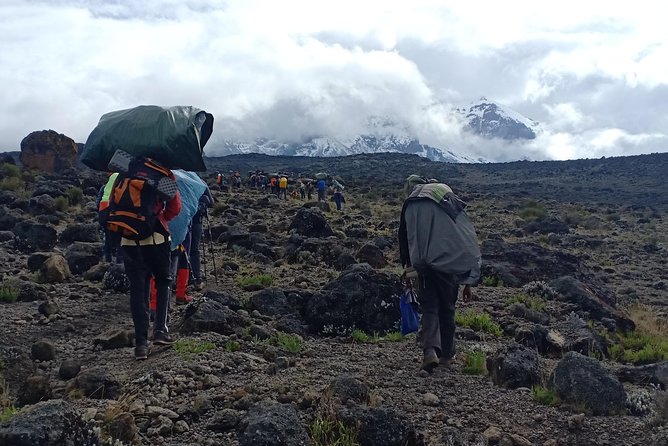
After breakfast, you leave Horombo and climb through moorland into alpine desert. The change can be stark. Near Maua River, you still pass a small mountain stream, but beyond it the ground flattens and vegetation fades.
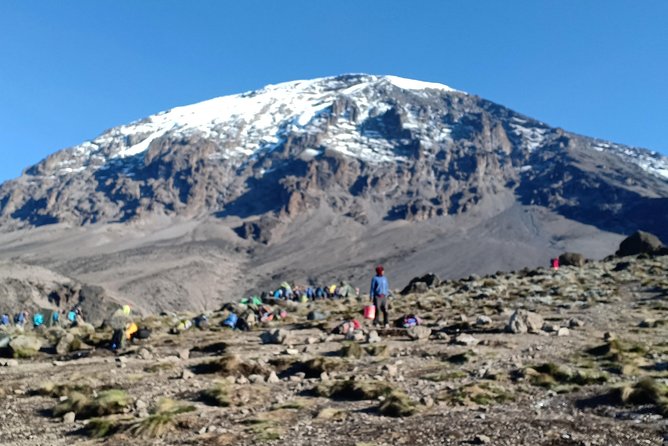
Lunch is planned at Middle Red Hill. Afterward, the route climbs steadily for around two hours across the Saddle toward Kibo Hut. The scenery is spare, with little plant life, but the views toward Kibo and Mawenzi remain impressive.
This is an eight-hour day, and the long approach is part of the test. Kibo Hut is around 4,700 meters above sea level, though the supplied itinerary does not state its elevation. You arrive at about 3 p.m. and spend the rest of the afternoon preparing for the midnight start.
Kibo is not a place to waste energy. Eat your dinner, arrange your clothing, fill what you need for the climb, and rest. The hut is basic, and sleep may be broken by nerves, noise, or altitude. That is normal for a summit-eve night.
The route across the Saddle can also feel mentally demanding. The ground is open and exposed, with few visual distractions. You can see the high slopes ahead, but the summit still looks far away. A patient guide and a slow group pace are valuable here.
Day five: Gillman’s Point and the push to Uhuru Peak
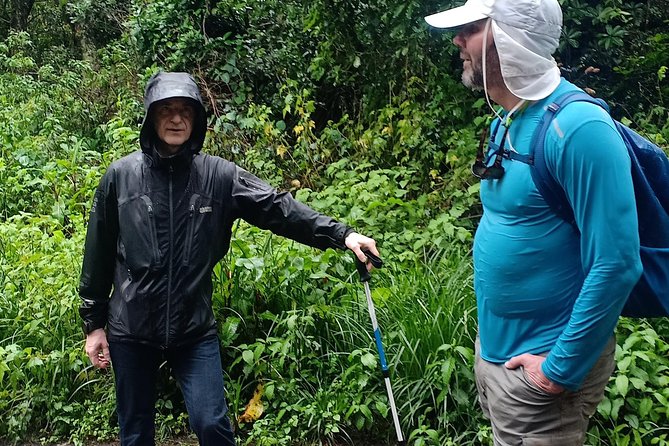
Summit day begins around midnight. This is the longest and hardest part of the trek, listed at about 11 hours.
The first major goal is Gillman’s Point on the crater rim, reached after roughly five hours of uphill walking. The route includes rocky switchbacks. William’s Point, at about 5,000 meters, comes roughly two hours from Kibo Hut, followed by another stretch before the switchbacks begin in earnest.
Gillman’s Point sits at 5,681 meters. Reaching it is a serious achievement, but it is not the summit. From there, you continue along the crater rim toward Uhuru Peak.
The ridge walk to Uhuru is described as a gradual climb and technically not as difficult as the earlier switchbacks. The problem is altitude. At that height, every step can feel slow, and the cold, darkness, and fatigue add pressure.
This is where the guide team earns its keep. Past climbers have singled out patient, cheerful, focused support from guides including Gewa, Erick, and Thomas. One group of 16 reportedly reached the summit with the full team assisting them. That does not mean every person will summit, but it shows why attentive pacing and encouragement matter.
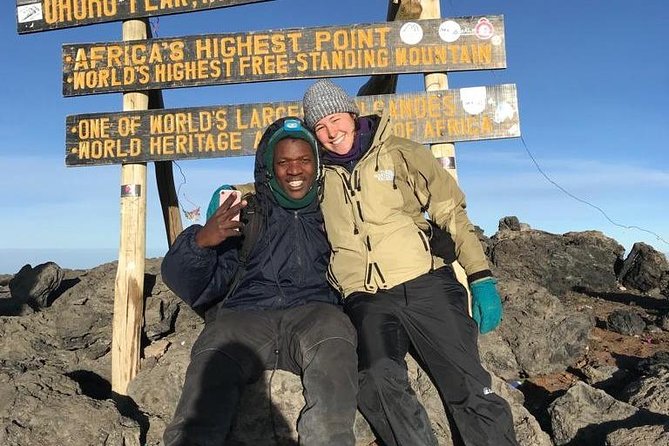
If you reach Uhuru Peak, you are standing at 5,895 meters, the highest point in Africa. The itinerary identifies it as the roof of Africa, but the experience is less about a quick photo than the hours of effort required to get there.
The supplied schedule does not provide every detail of the descent and rest arrangements after the summit. Ask the operator exactly how the remainder of day five is handled, including where you sleep and how much walking remains. That answer is important because summit day can be much longer than expected.
Day six: descending through Kilimanjaro’s cloud forest
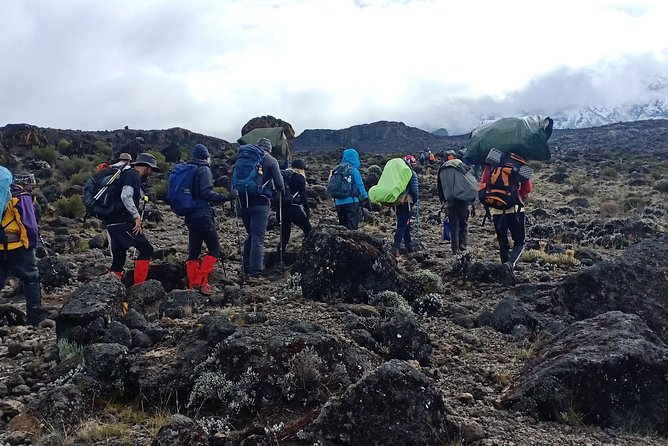
After breakfast, you finish the trek with a descent to Marangu Gate. The walk takes about six hours and returns through the cloud forest.
Going downhill sounds easy after the summit, but tired legs can make it demanding. The trail may be slippery, so watch your footing and use care, especially if rain has passed through.
At Marangu Gate, vehicles wait to return you to Moshi or Arusha. You can also buy T-shirts and soft drinks there, a simple but welcome end to the mountain days.
The return ride is included in the experience description through the promised vehicle pickup and transfer arrangement, but confirm the exact drop-off location. If you have a flight or onward safari, leave plenty of margin rather than booking a tight connection.
Food, water, huts, and the mountain crew
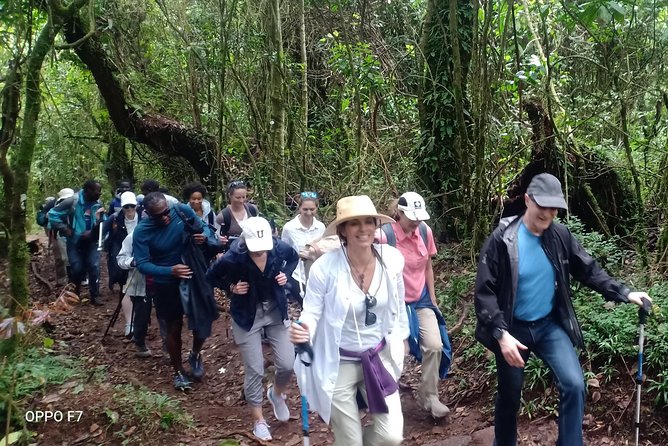
The package includes six breakfasts, six lunches, and five dinners. It also covers purified drinking water, sleeping mattresses, hut accommodation, a cook, guides, porters, and porter and cook salaries.
That combination gives the trip much of its practical value. You are not arranging meals at each hut or carrying every item alone. You can focus on walking, hydration, rest, and listening to your guide.
The company also states that porters receive fair and ethical treatment. I would still ask what that means in practice, including porter loads, wages, tipping guidance, and how equipment is distributed. Ethical claims are worth checking with clear questions.
Food is a repeated point of praise in the supplied material, along with help from cooks and waiters. Elia and Richard were named as part of one highly praised crew, while other groups praised the wider support team. Staff make a real difference when you are tired, cold, and facing another climb.
Is $1,000 a good value?
At $1,000 per person, the trip looks competitive for a six-day guided Kilimanjaro climb with hut accommodation, meals, water, porters, a cook, and transport to and from the gate.
But the advertised amount does not include Kilimanjaro National Park fees and tax. Those costs can materially change the final bill, so I would ask for a complete price before paying. Also budget for tips and personal items, both excluded.
The package is strongest for someone who wants a straightforward organized climb rather than a stripped-down independent attempt. You receive the core mountain services in one arrangement, and the six-day plan includes a proper acclimatization day.
The group limit is listed as 100 people. That is a maximum, not a promise that your group will contain 100, but it tells you this is not necessarily a private climb. Ask about the expected group size and guide-to-climber ratio.
Who should choose this Kilimanjaro trek?
I would consider this route if you want huts, a familiar trail, organized meals, and a longer schedule with acclimatization built in. It suits people who value human support and do not mind sharing mountain facilities.
It may also suit less experienced hikers, since the itinerary provides a steady progression and a professional crew. Still, this is a high-altitude trek with long walking days. The phrase most travelers can participate in should not be read as a promise that the climb will feel easy.
You should also be comfortable with simple accommodation, early starts, changing weather, and a demanding summit night. If you want quiet camps and a more remote feel, the busy Horombo area may disappoint.
Kilinge Adventures appears particularly strong in personal support. Guides and staff are praised for patience, organization, encouragement, and good humor. Those are not decorative extras on Kilimanjaro. They can shape your whole experience.
Practical details before you confirm
Pickup is offered, with Moshi and Arusha named as starting points. The meeting time is listed as 8:30 a.m., while the first day says to leave at 8 a.m., so get the final time in writing.
A mobile ticket is provided, and booking confirmation is issued at the time of booking. The activity is near public transportation, although the main transfers are arranged through the tour.
Free cancellation applies when you cancel at least 24 hours before the local start time. Cancellations or changes made inside that window are not refunded or accepted. If poor weather forces cancellation, you are offered another date or a full refund.
Should you book the six-day Marangu Route?
I would book this trek if the operator gives you a clear final price that includes every park charge, explains the expected group size, and confirms the guide team and summit-day plan.
The best reasons to choose it are the hut accommodation, the extra acclimatization day, the included food and water, and the repeated praise for guides and porters. The main reasons to pause are the busy Horombo camp and the fact that the $1,000 price excludes park fees and tax.
Ask those questions before you go, then prepare for a serious climb rather than a simple holiday walk. If you want a supported Kilimanjaro experience with a practical six-day pace, Kilinge Adventures offers a strong starting point.
FAQ
How long is the Marangu Route experience?
The trek lasts approximately six days. The itinerary includes five nights of dinner service, six breakfasts, six lunches, and a final descent to Marangu Gate on day six.
Where does the trek start?
The experience begins with pickup from Moshi or Arusha, followed by transport to Marangu Gate. The meeting time is listed as 8:30 a.m., while the first day schedule says 8 a.m., so confirm the exact time.
Are meals and drinking water included?
Yes. The package includes six breakfasts, six lunches, five dinners, fresh food, and clean purified drinking water.
Is accommodation included?
Yes. All nights are spent in Kilimanjaro huts, and sleeping mattresses are included. Mandara, Horombo, and Kibo are named in the itinerary.
Are Kilimanjaro National Park fees included in the price?
No. Kilimanjaro National Park fees and tax are listed as excluded. Tips and personal items are also not included.
What happens if bad weather cancels the climb?
If the experience is canceled because of poor weather, you are offered a different date or a full refund. You can cancel for a full refund if you do so at least 24 hours before the local start time.
Just added in Moshi
- Zanzibar: Stone Town tour and Nakupenda beach with Lunch★ 5.0 · 1 review
- day trip lake manyara★ 5.0 · 2 reviews
- Mt Kilimanjaro 6 days Marangu route hike★ 5.0 · 3 reviews
- machame route★ 5.0 · 16 reviews
- Private Cycle to Kilimanjaro Bike Park Safari★ 5.0 · 6 reviews
- West Kilimanjaro cycling Adventures★ 4.5 · 8 reviews
- Wildlife Extravaganza: Manyara, Tarangire & Ngorongoro in 3 Days★ 5.0 · 3 reviews
- 3 Days Private E-Bike Tour in West Kilimanjaro★ 5.0 · 3 reviews
Marangu Route Climbs, compared.


Private Full Day Hiking Experience to Marangu Route
Read our review →
From Arusha/Moshi: Kilimanjaro Hike Marangu Route Day Trip
Read our review →
Mount Kilimanjaro Day Hike Through Marangu Route to Mandara Hut
Read our review →
Kilimanjaro Private Climbing in 6 Days Marangu Route
Read our review →
Browse the lists this tour appears in