
Reviewed · WALKING TOURS
7 Days Tanzania Luxury Safari Experience & Coffee Walking Tour
The Serengeti earns its fame honestly. This seven-day private safari combines Tarangire, Lake Manyara, Serengeti, and Ngorongoro Crater with a slower coffee walk in Karatu, giving you both major wildlife stops and a look at daily work beyond the safari vehicle. I like the small size, limited to four people, and I like that meals, park fees, a 4×4 Toyota Land Cruiser, and a driver-guide are included. The main drawback is the amount of time spent on the road, especially on the long transfer into the Serengeti.
I also appreciate the personal touch. The company’s manager, Philemon, is praised for prompt replies and dependable arrangements, including airport pickup on some trips. Still, this is not a soft, easygoing holiday every day. Early starts, rough park tracks, six to eight hours in the vehicle, and basic travel conditions are part of the deal.
In This Review
- What makes this safari worth considering
- A seven-day route with a useful mix of wildlife and local life
- Day 1: Tarangire brings the elephants and baobabs
- Day 2: Lake Manyara mixes birds, monkeys, and open views
- Day 3: The long road into the Serengeti
- Day 4: A full Serengeti game-viewing day
- Day 5: From Serengeti views to a Karatu coffee walk
- Day 6: Ngorongoro Crater packs wildlife into one day
- Day 7: A practical return to Arusha
- Guides, group size, and the feel of the trip
- Who will get the most from this $4,011 safari
- Should you book this Tanzania safari?
- FAQ
- How long is the Tanzania safari?
- What is the price per person?
- How many people can join the private tour?
- Where does the tour start?
- Is pickup available?
- Which national parks are included?
- Is the coffee plantation walk included?
- Are meals included?
- What is not included in the price?
What makes this safari worth considering
- Four-person maximum: A small private group gives you more room in the vehicle and makes it easier to discuss wildlife sightings with your guide.
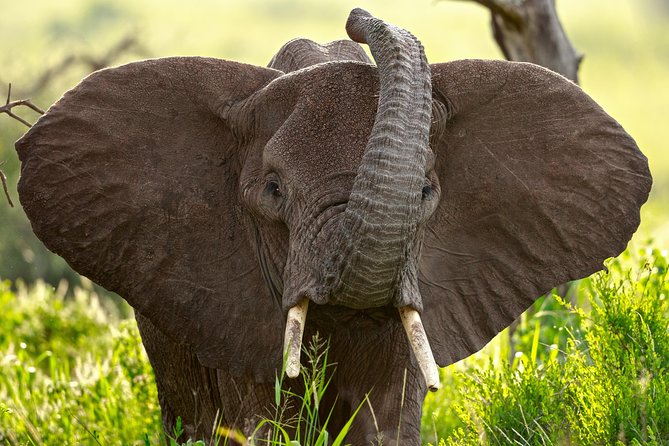
- Tarangire’s elephants and baobabs: The first game drive brings you close to one of northern Tanzania’s best elephant areas.
- Two full Serengeti days: You get more than a quick pass through the famous park, with time to search for big cats and migrating herds.
- Coffee walk in Karatu: A plantation visit lets you leave the vehicle and learn how coffee is grown and processed.
- Ngorongoro Crater game drive: The crater offers a concentrated wildlife day, including the possibility of seeing several of Africa’s best-known animals.
- Meals and core safari costs included: The price covers park fees, taxes, daily meals, soft drinks, and tea or coffee, but not flights, insurance, alcohol, tips, or optional activities.
A seven-day route with a useful mix of wildlife and local life
At $4,011 per person, this is a serious investment. The value comes from the route, the private format, and the fact that many large costs are already bundled into the price.
You are not simply paying for a hotel-to-hotel transfer. The package includes a 4×4 Toyota Land Cruiser, driver-guide, park admissions, seven breakfasts, seven lunches, six dinners, soft drinks, tea, and coffee. Those inclusions matter in Tanzania, where park fees and long-distance vehicle use can quickly add up.
You should also understand what the price does not cover. International and domestic flights, a visa, travel and medical insurance, tips, alcohol, laundry, a Maasai visit, and a hot-air balloon flight are extra. An air-conditioned vehicle is also not listed among the included features, so ask for exact vehicle details before paying if cooling is important to you.
This is a private activity, not a shared minibus tour. The advertised group limit is four people, a useful advantage on game drives. You can spend more time looking at an animal instead of negotiating with a large group about when to move on.
More Walking Tours in Arusha
- Arusha Guided Walking City Tour, Culture, Lifestyle & History
★ 5.0 · 150 reviews - 4 Days lodge safari Tarangire , Ngorongoro crater & Walking
★ 5.0 · 39 reviews - Tanzania – Arusha NP – Private Guided 4×4 Safari – Game Drive & Walking
★ 5.0 · 30 reviews
Day 1: Tarangire brings the elephants and baobabs
Your morning begins with a safari briefing in Arusha. The drive to Tarangire takes about two hours, followed by roughly five hours in the park.
Tarangire is a strong first stop because it gives you a quick sense of Tanzania’s scale and wildlife variety. Giant baobabs rise from bush savannah, while seasonal marshes draw animals during drier periods. Elephants are the park’s great attraction, and this is one of the better places on the route to see them at close range.
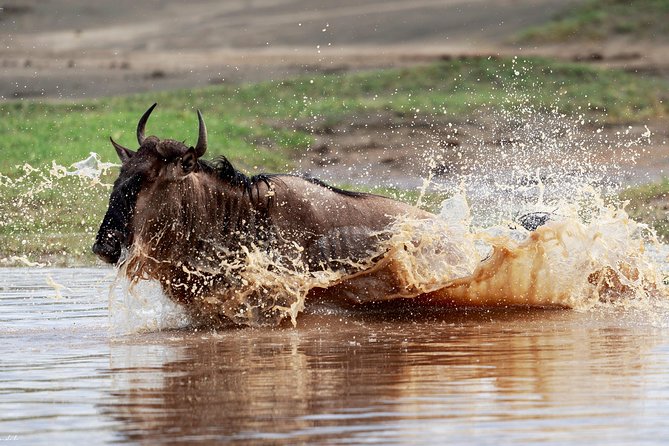
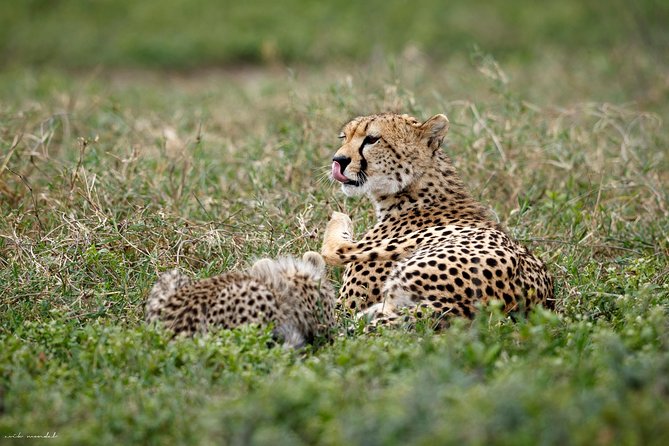
You may also encounter buffaloes, zebras, wildebeests, lions, and other predators. Leopards appear from time to time, but cheetahs are rarely seen here. That distinction is useful. A safari is not a menu where every animal can be ordered, and a good guide should help you enjoy what is present rather than promise what is not.
The open roof of the safari vehicle gives you a clear view of the trees, animals, and sky. It also means you should prepare for sun, dust, and changing temperatures. After the afternoon drive, you spend the night at Tarangire Osupuko Lodge.
The Arusha Cultural Heritage Centre is also part of the opening schedule, with about 30 minutes set aside to see carvings, gemstones, clothing, artifacts, books, and material connected with Tanzania’s more than 120 tribes. This is a short stop rather than a full cultural program, but it adds useful context before the days become mostly about wildlife.
Day 2: Lake Manyara mixes birds, monkeys, and open views
After breakfast, you travel from the Tarangire area to Lake Manyara National Park. The day includes about six hours in the park and ends at Eileen’s Trees Inn.
Lake Manyara works as a contrast to Tarangire. Its alkaline lake attracts waterfowl, and the park is known for more than 400 bird species. Flamingos may gather here during suitable seasonal conditions, along with other water birds.
The park also shifts between forest, grassy plains, and lake shore. You might see giraffes, hippos, wildebeests, and impalas, as well as noisy monkeys and baboons. The primate activity can be as entertaining as the larger mammals, especially when the forest edges come alive with movement.
This is a good day for anyone who likes variety. It is also a day when patience helps. Bird sightings depend on conditions, and the lake’s appearance can change with the season. If your main goal is big cats, Lake Manyara may feel less dramatic than the Serengeti. If you enjoy birds, trees, and mixed habitats, it adds welcome range to the route.
Day 3: The long road into the Serengeti
Day three begins early. The drive to Serengeti National Park takes much of the day, with about eight hours assigned to the park and route.
The distance is part of the experience, but it is also the itinerary’s biggest physical challenge. You spend a long stretch in the vehicle, and park roads can be tiring. The reward is the gradual change in scenery as the plains open out toward the horizon.
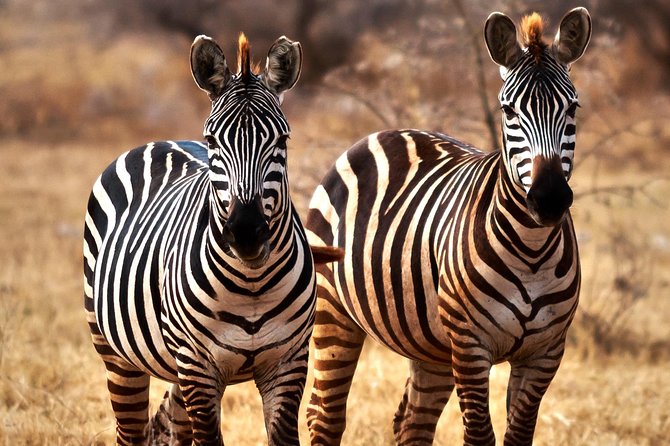
Serengeti means endless plains in the local language, and the name becomes clear once the broad grasslands begin to stretch far beyond the road. The park covers about 6,900 square miles, or 18,000 square kilometers. That size explains both its power and its unpredictability. You have room for vast herds, but no guarantee that the animals will be right beside your vehicle.
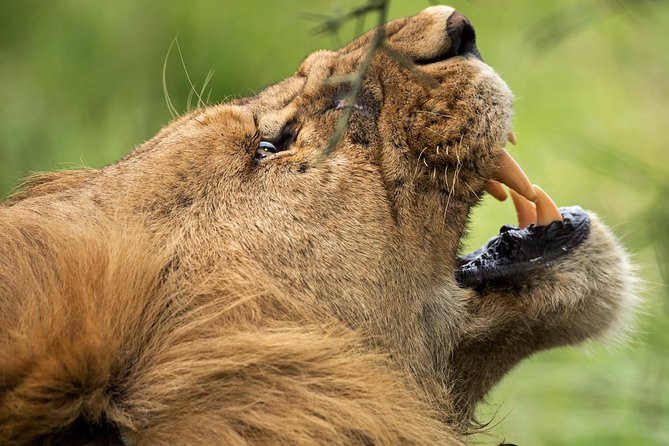
The Serengeti supports around two million wildebeests, hundreds of thousands of zebras, and many antelope species. It is also the central setting for the Great Migration. Lions, leopards, cheetahs, and other predators make it the main event for many safari visitors.
You spend the night at Embalakai Tented Camp. A tented camp keeps you close to the natural setting, but you should not expect a city hotel experience. The appeal is the setting and the sense of being near the park, while the tradeoff is a more outdoors-focused stay.
A few more options to weigh up in Arusha
- Materuni Waterfalls, coffee tour & Kikuletwa Hot Springs
★ 5.0 · 643 reviews - Materuni waterfalls coffee tour & Chemka hot springs Day trip
★ 5.0 · 131 reviews - Maasai village visit, Materuni waterfalls & coffee experience
★ 4.5 · 95 reviews - Materuni Waterfalls & Coffee Tour from Moshi
★ 5.0 · 92 reviews
Day 4: A full Serengeti game-viewing day
Day four is devoted to the Serengeti, again for about eight hours. This extra day is one of the strongest parts of the schedule.
A rushed Serengeti visit can leave you with little more than a scenic drive and a few distant animals. A full day gives your guide time to adjust the search area. The herds move according to rainfall, and the route changes from year to year.
The migration generally moves from northern hills toward southern plains during the shorter rains in November and December. After the longer rains from April to June, the herds return north. These are broad patterns, not fixed appointments. Your guide will look for the animals based on current conditions.
Predators often follow the herds. Lions are a regular target, while leopards may be found resting in acacia trees and cheetahs may appear in more open areas. You should keep expectations sensible. Even in a celebrated wildlife park, some days bring spectacular sightings and others bring tracks, birds, scenery, and long stretches of quiet.
You return to Embalakai Tented Camp for another full-board night. Having two nights in the same camp is helpful because it avoids another packing routine after a demanding game drive.
Day 5: From Serengeti views to a Karatu coffee walk
The fifth day begins with more game viewing on the way to the Serengeti gate. You then leave the park in the early afternoon and continue toward the Ngorongoro Conservation Area.
The first view of Ngorongoro Crater comes from the rim. The giant caldera below is one of the route’s great visual moments. You do not yet drive into it, but the overlook gives you a sense of the enormous volcanic basin that will receive your attention the next morning.
You then continue to Karatu in the Ngorongoro highlands. This change of pace is welcome. Instead of spending the entire day watching from the vehicle, you walk around a coffee plantation and learn about cultivation and processing.
I like this addition because it connects the scenery to local work. Coffee is one of Tanzania’s important industries, and the walk gives you a practical look at what happens before a cup reaches your breakfast table. It is not a substitute for a full village or cultural program, but it offers a grounded experience after several days focused on animals.
That night is at Hhando Coffee Lodge, with full board included. You return there after the crater drive as well, which gives the final two nights a little more stability.
Day 6: Ngorongoro Crater packs wildlife into one day
You leave early after breakfast and return to the Ngorongoro Conservation Area. The route then drops into the crater for about six hours of game viewing, including a picnic lunch.
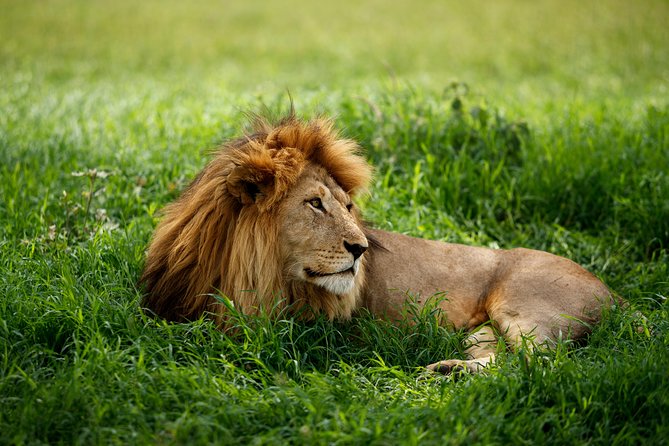
Ngorongoro is a collapsed volcano with a large concentration of wildlife. More than 25,000 mammals live in the crater area, including lion, elephant, buffalo, rhino, and leopard. Spotted hyenas and more than 500 bird species add to the variety.
The crater’s appeal is density. You have a better chance of seeing several different types of animal in one day than in a place where herds range across enormous distances. The enclosed setting also gives the day a distinct visual character, with the crater walls rising around the wildlife area.
The presence of rare wild dogs is noted, but you should treat that as a possibility, not a promise. The same applies to rhinos and leopards. Wildlife remains wild, and the guide can only improve your chances through timing and search skills.
A six-hour game drive is still a long outing, especially after several previous days in the vehicle. The early start is worthwhile for wildlife activity, but you should be ready for dust, uneven roads, and a full day outdoors. You return to Hhando Coffee Lodge for a second night.
Day 7: A practical return to Arusha
After a leisurely breakfast, you drive back to Arusha, arriving around midday. The return takes about four hours, and drop-off is available in the city center or at the airport.
That timing is convenient if you are continuing your trip from Arusha, but I would still avoid scheduling a tight onward connection without checking the exact transfer plan. Road conditions and safari timing can change, and the tour information does not promise a precise arrival minute.
The meeting point is Aardvark Expeditions Limited on Swahili Street in Arusha, with an advertised start time of 8:30 a.m. Pickup is offered, which can be useful if you are arriving in the city or arranging an airport transfer.
Guides, group size, and the feel of the trip
The guide is central to the quality of any safari. The company’s manager, Philemon, receives especially strong praise for quick answers, clear planning, and dependable service. That matters before departure, when questions about airport pickup, meals, park timing, and optional extras can otherwise become stressful.
The advertised group size of no more than four is another major advantage. You get a more personal setting than a large shared vehicle, and your guide can hear what you want to focus on. If one person wants birds and another wants big cats, there is at least some room for discussion.
The vehicle is a 4×4 Toyota Land Cruiser, with soft drinks, tea, and coffee supplied. The open roof is useful for viewing animals, but pack sun protection and clothing for dust and cooler mornings. The tour is private, yet it is not luxurious in the polished resort sense every night. Its luxury comes more from personal service, private transport, included meals, and close access to Tanzania’s parks.
Who will get the most from this $4,011 safari
I would recommend this trip to you if you want a broad first safari in northern Tanzania and prefer a private group. You see the major parks in one week, with two Serengeti days and a separate coffee experience to break up the game drives.
It also suits families and multigenerational groups, provided everyone can handle long drives and early starts. The company has experience operating safari trips for large family groups using several vehicles, and the strong praise centers on courteous guides, airport pickup, and careful service.
This route may not suit you if you want slow mornings, luxury hotels every night, or a trip built around one park. You also need to accept that the Great Migration follows rain, not a fixed calendar. If you want a hot-air balloon ride, a Maasai visit, alcohol, laundry, or flights included, you will need to budget separately.
Cancellation is free when you cancel at least 24 hours before the local start time. Last-minute cancellations and changes inside that window are not accepted.
Should you book this Tanzania safari?
Book it if you want Tanzania’s classic northern circuit in a small private group, with the major park fees and meals already handled. The strongest reasons are the two Serengeti days, the concentrated wildlife of Ngorongoro, Tarangire’s elephants, and the coffee walk that adds local industry to the usual safari program.
Think twice if the $4,011 price stretches your budget or if six to eight hours in a vehicle sounds exhausting. Before booking, ask about the exact accommodation setup, vehicle cooling, airport pickup details, and the likely route for your travel dates.
For the right person, this is a well-rounded introduction to Tanzania: big animals, huge open plains, a volcanic crater, baobabs, birds, coffee, and a guide-led journey that keeps the group small.
FAQ
How long is the Tanzania safari?
The experience lasts approximately seven days, beginning in Arusha and ending with a return to Arusha around midday on day seven.
What is the price per person?
The listed price is $4,011 per person.
How many people can join the private tour?
The private group is limited to no more than four travelers.
Where does the tour start?
The meeting point is Aardvark Expeditions Limited on Swahili Street in Arusha, Tanzania. The advertised start time is 8:30 a.m.
Is pickup available?
Yes. Pickup is offered, and the final drop-off is in central Arusha or at the airport.
Which national parks are included?
The route includes Tarangire National Park, Lake Manyara National Park, Serengeti National Park, and the Ngorongoro Conservation Area, including a game drive in Ngorongoro Crater.
Is the coffee plantation walk included?
Yes. On day five, you walk around a coffee plantation in the Karatu area and learn about coffee cultivation and processing.
Are meals included?
Yes. The package includes seven breakfasts, seven lunches, and six dinners. Soft drinks, tea, and coffee are also included.
What is not included in the price?
Flights, visa costs, travel and medical insurance, tips, alcohol, laundry, a Maasai visit, and a hot-air balloon activity are not included. An air-conditioned vehicle is also not listed as an included feature.
Just added in Arusha
- Safari “Kifaru” – 5 days in the most famous Parks in the world★ 5.0 · 4 reviews
- Saadani Day Trip★ 5.0 · 13 reviews
- 3 Days Tanzania Short and Spicy★ 5.0 · 6 reviews
- 5 Day Tanzania Safari Camping Adventure Private Tour★ 5.0 · 2 reviews
- Day Trip to Ngorongoro Crater from Arusha★ 5.0 · 1 review
- SERENGETI NATIONAL PARK Tour★ 4.5 · 5 reviews
- 3 Days Serengeti Park & Ngorongoro Crater Adventure Safari★ 5.0 · 8 reviews
- 6 Days Tanzania Bush Experience Safari★ 5.0 · 6 reviews
Walking Tours, compared.

3 Hours Private Stone Town walking Tour with Guide
Read our review →
Stone Town Historical Cultural Walking Guided Tour
Read our review →
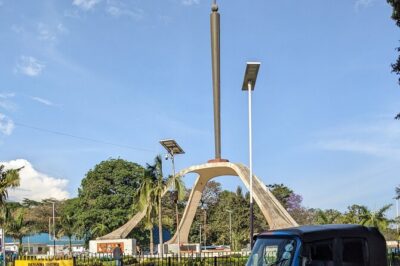
Arusha Guided Walking City Tour, Culture, Lifestyle & History
Read our review →

Browse the lists this tour appears in