
Reviewed · WALKING TOURS
Walking City Tour in Zanzibar Island
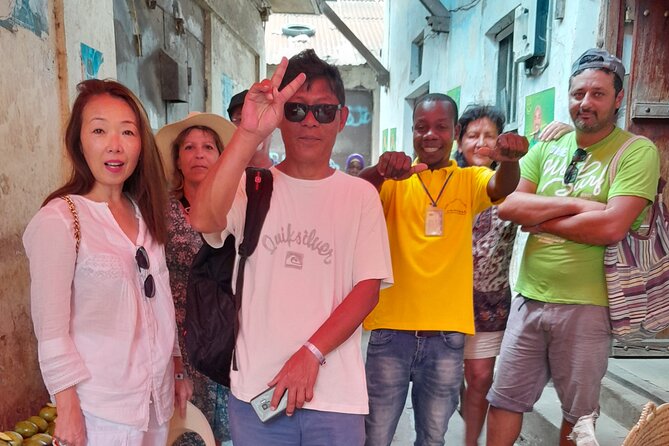
Stone Town rewards curious walkers. This private 2.5-hour tour takes you through Zanzibar’s old quarter with a local guide who can explain its African, Arab, Indian, Persian, and European influences as you go. I like the private format, which lets you ask questions and adjust the pace. I also like the focus on places with real local meaning, from the old slave market to Darajani Bazaar.
The main consideration is time. Stone Town contains more than 2,000 limestone buildings spread across about 50 hectares, so 2.5 hours gives you a useful introduction rather than a complete look at the city. The Freddie Mercury Museum also costs extra, and personal expenses are not included.
Juma Amir Tour Guide Zanzibar leads the experience, and the tour has earned a 5 out of 5 rating from 123 ratings. One useful detail is the guide’s flexibility: solo visitor Caroline found Juma Amir helpful when she had already seen some planned stops and wanted to visit other historic places instead. That makes this a good choice if you prefer a conversation and a tailored route over a fixed group walk.
In This Review
- Key points to know before you book
- Starting at Forodhani and finding Stone Town’s rhythm
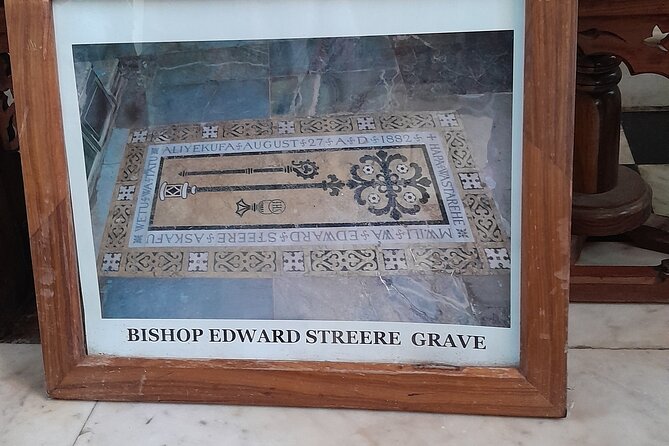
- The Anglican Cathedral and the old slave market
- Freddie Mercury’s birthplace and the extra admission
- Darajani Bazaar, where Stone Town shops
- The Old Fort and Stone Town’s defensive past
- Tippu Tip’s house and an uncomfortable chapter
- The carved doors and buildings between stops
- Why the private format matters
- Is $33 a fair price?
- Timing, booking, and practical details
- Who should book this Stone Town walk?
- Should you book it?
- FAQ
- Where does the Walking City Tour in Zanzibar Island start?
- Where does the tour end?
- How long does the tour last?
- Is this a private tour?
- What is included in the tour price?
- Is Freddie Mercury Museum admission included?
- Does the tour visit the old slave market?
- What other places does the walking tour visit?
- Is the tour available every day?
- Can I cancel for a refund?
Key points to know before you book
- Private walking tour: Only your group participates, so you can ask questions freely and request a different pace.
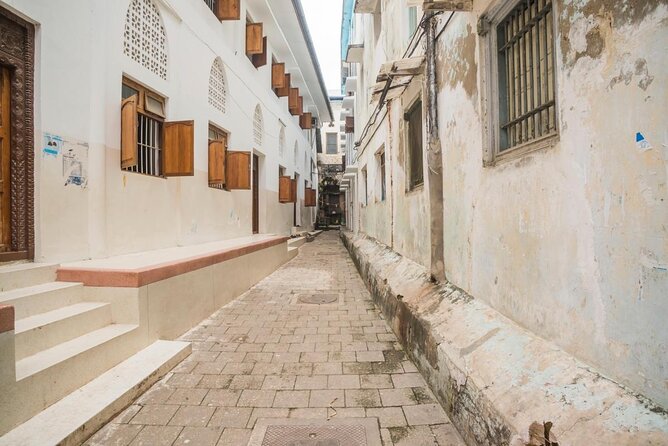
- Stone Town’s layered past: The route brings together African, Arab, Indian, Persian, and European design and culture.
- A serious stop at the old slave market: Entrance to the former market and Anglican Cathedral is included.
- Freddie Mercury connection: You can visit the singer’s birthplace, but museum admission is not included.
- Market and fort included: Darajani Bazaar and the Old Fort add everyday local life and military history to the walk.
- Good value at $33: Bottled water, a professional local guide, and the old slave market entrance fee are included.
Starting at Forodhani and finding Stone Town’s rhythm
The meeting point is Cape Town Fish Market at The Forodhani of Zanzibar. From there, you enter Stone Town on foot and begin working through its narrow lanes.
A guide matters here. The streets can feel confusing, especially when several lanes look alike and buildings sit close together. With a private guide, you do not need to spend your limited time checking directions. You can focus on carved doors, old facades, street life, and the stories behind the buildings.
Stone Town became a UNESCO World Heritage Site in 2000. Its importance comes from the way different cultures shaped one compact urban center. African traditions meet Arab and Indian trade connections, Persian influence, and European colonial rule. You see that mixture in the buildings, doors, religious sites, markets, and public spaces.
I would not expect a polished open-air museum. Stone Town is a living part of Zanzibar, with people moving through the same lanes for work, shopping, worship, and daily errands. That gives the walk its character, but it also means you should expect uneven pacing and a few crowded sections around the market.
More Walking Tours in Zanzibar
- Stone Town Private Walking Tour
★ 5.0 · 371 reviews - Zanzibar: 3 Hours Private Stone Town walking Tour with Guide
★ 4.6 · 301 reviews - Zanzibar: Stone Town Historical Cultural Walking Guided Tour
★ 4.5 · 179 reviews
The Anglican Cathedral and the old slave market
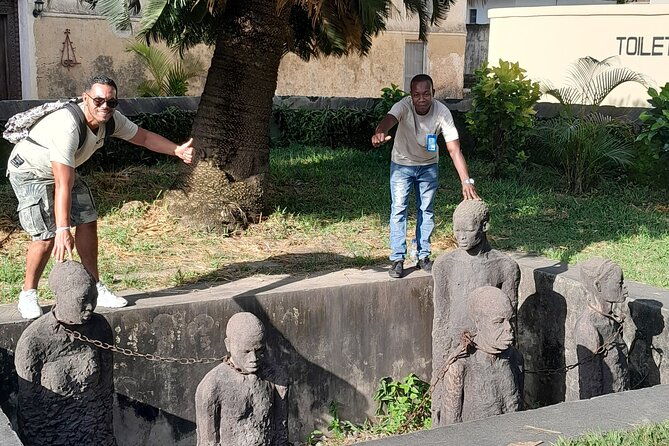
This is the most emotionally serious part of the walk. The Anglican Cathedral occupies the site of Zanzibar’s former slave market, and the entrance fee is included in the tour price.
The visit connects the city’s architecture with the East African slave trade. Zanzibar was an important point in a network that moved enslaved people through the region. The cathedral’s presence on the former market site makes the history impossible to separate from the building itself.
Allow yourself time to listen here. The stop is scheduled for about 30 minutes, which is enough for an introduction and questions, though you may find the subject deserves longer. The guide can help place the site within Stone Town’s wider story instead of treating it as just another photo stop.
This is also where a private tour has an advantage. You can ask about the history in plain terms, pause when you need to, and discuss the architecture without worrying about holding up a large group. For many people, this will be the most meaningful stop of the afternoon.
Freddie Mercury’s birthplace and the extra admission
The next stop is the Freddie Mercury Museum, located at the house where the singer was born. The visit lasts about 15 minutes.
The appeal is not simply taking a picture outside. The stop gives you a small connection to Freddie Mercury’s family background and early life in Zanzibar. It adds a modern cultural note to a tour otherwise centered on much older buildings and events.
Museum admission is not included, so you should plan for an additional personal cost if you want to enter. The supplied details do not state the admission price, so check it before booking if this stop is important to you.
The short timing suggests that this is a compact visit rather than a long museum session. If you are a major Queen fan, you may want to ask Juma Amir how much time the route can allow here. Since the tour is private, the guide may be able to adjust the balance, although no specific extension is guaranteed.
Darajani Bazaar, where Stone Town shops

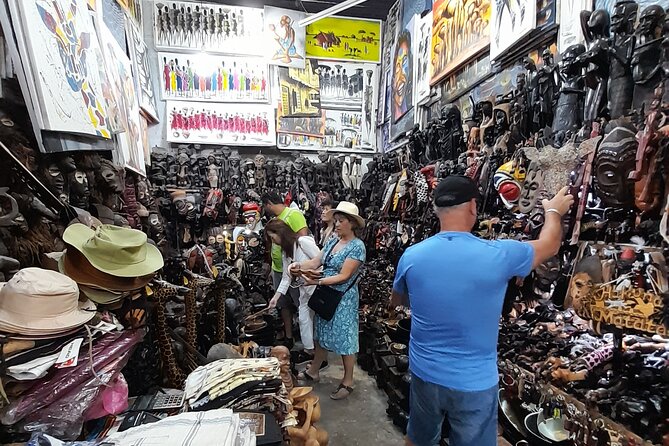
Darajani Bazaar is the practical heart of the route. This is where you see Stone Town as a place of commerce, not just a historic district.
The guide explains why the market is called Darajani and how it fits local culture and trade. That context makes the stop more useful than simply walking past stalls. You get a sense of how the market has served the community and why it remains important.
The visit is planned for about 15 minutes. That is enough for an introduction, but it is not a long shopping session. If you want to buy textiles or other goods, tell the guide early so you can use the time well.
The market may feel busy, close, and noisy. That is part of its appeal, but it may not suit you if you want a quiet walk with long stops. Keep your belongings secure and stay close to your guide in the tighter lanes. The tour description does not promise shopping assistance or bargaining, so consider the bazaar mainly a cultural stop unless you arrange otherwise.
A different kind of day out entirely:
- From Zanzibar: Mikumi Safari Day Trip with Flights and Meal
★ 4.7 · 1,470 reviews - Zanzibar: Quad Bike Adventure departing from Kendwa or Nungwi
★ 4.9 · 1,233 reviews - Zanzibar: Stone Town, Spice Tour, Prison Island with Lunch
★ 4.4 · 1,219 reviews - From Zanzibar: Day Selous Game Reserve Safari with Flights
★ 4.7 · 1,025 reviews
The Old Fort and Stone Town’s defensive past

The Old Fort, also called Ngome Kongwe, provides another change of mood. This large historic structure reflects the military side of Zanzibar’s past and gives the guide a chance to explain who built it and why.
The stop lasts about 15 minutes and has no separate admission fee. That makes it an easy inclusion in a short walking tour. You can see the fort, hear its basic story, and continue without paying another entrance charge.
Do not expect a long archaeological visit. The time is designed for an overview, not a detailed study of every wall and courtyard. If forts are a major interest, you may want to ask questions while you are there, since the private format lets you shape the conversation.
The Old Fort also helps you see that Stone Town’s story is not only about trade and domestic life. Its buildings reflect defense, political power, religion, and changing control of the island.
Tippu Tip’s house and an uncomfortable chapter
The final listed stop is Tippu Tip’s House. Tippu Tip, also known as Hemed bin Mohammed, was a prominent slave trader involved in capturing people from villages across East Africa and moving them to Zanzibar within the regional slave trade network.
The stop lasts about 15 minutes and is included. Its value is historical rather than visual. The house gives the guide a place to discuss the people and networks tied to the slave trade, including the role of powerful individuals in that system.
This part of the tour may feel difficult, and it should. A good visit does not soften the subject into a decorative tale. Ask direct questions if you want to understand how Tippu Tip operated and how Zanzibar fit into the larger trade.
Taken with the Anglican Cathedral, this stop gives the tour a stronger historical spine. You are not simply seeing attractive doors and old buildings. You are also confronting the wealth, power, and human suffering that shaped Stone Town.
The carved doors and buildings between stops
The named sites are only part of the experience. Much of the pleasure comes while walking between them.
Stone Town is known for its Zanzibari doors, many with detailed carving and distinctive designs. These doors reflect the cultural influences that shaped the city. Your guide can point out details you might otherwise pass without noticing.
The buildings are packed into narrow streets, creating a strong sense of place even when you are not standing in front of a famous landmark. Over 2,000 limestone structures occupy the historic area, so the route offers plenty to observe between formal stops.
I like this kind of city tour because it gives you a framework for later exploring on your own. After the walk, you should have a better sense of where the Old Fort, market, cathedral, and waterfront sit in relation to one another. You will also have names and stories to guide further visits.
The drawback is that the walk can feel dense. Stone Town offers little open space along many lanes, and the route includes several historical subjects that require concentration. Wear comfortable shoes and expect to walk continuously for much of the 2.5 hours.
Why the private format matters
The private arrangement is the clearest reason to choose this tour over a cheaper group walk. Only your party participates, so you can ask about architecture, religion, trade, music, or local customs without competing for the guide’s attention.
You can also signal what interests you most. One solo woman had already visited some of the planned places, and Juma Amir adjusted the experience to show her other historic sites. That flexibility is especially useful if you have limited time in Zanzibar or have already explored part of Stone Town.
The tour also suits solo visitors who want company without joining a large group. Caroline specifically found the afternoon and evening experience safe with Juma Amir. That does not guarantee the same experience for every person, but it is a useful sign for solo visitors considering a guided walk.
The private format does not mean every request can be added. The tour remains about 2.5 hours, and the available details do not promise hotel pickup, transport, extended museum time, or extra stops. Think of the flexibility as a chance to shape the conversation and make reasonable adjustments, not as an unlimited custom itinerary.
Is $33 a fair price?
At $33 per person, this is a solid value if you want a guide rather than a self-guided stroll. The price includes bottled water, a professional local guide, and admission to the old slave market and Anglican Cathedral.
You are paying for local explanation as much as for walking time. Stone Town’s streets can be confusing, and many of the most important details are not obvious from the outside. A guide can connect the buildings to Zanzibar’s cultural and political past, which is where the tour earns its price.
The value is weaker if you only want photographs of the main sights. You can see some exterior landmarks independently, and the tour does not include every admission cost. The Freddie Mercury Museum is extra, and personal expenses are not covered.
For a private 2.5-hour tour, $33 is reasonable, particularly for solo visitors or small groups who want a personal conversation. Larger groups should compare the total cost with a shared walking tour, but the private service may still be worth it if you value flexible pacing.
Timing, booking, and practical details
The tour is listed as available Monday through Sunday, from 12:00 AM to 11:59 PM, for the stated operating period. Those hours are unusually broad, so confirm your preferred start time when booking rather than assuming every hour is equally practical.
The activity begins and ends at Cape Town Fish Market at The Forodhani of Zanzibar. It does not include transport to another part of the island. The meeting point is near public transportation, which helps if you are already staying or spending time near Stone Town.
Confirmation arrives at booking, and the ticket is mobile. The tour is private, and most people can participate. Since the walk includes narrow streets, a market, and historic sites, comfortable footwear and a modest approach to clothing are sensible choices, though the supplied details do not list a formal dress code.
Free cancellation is available up to 24 hours before the local start time for a full refund. Cancellations or changes made within 24 hours are not refunded or accepted.
Who should book this Stone Town walk?
I would choose this experience if you want a first look at Stone Town with a local guide and a clear historical focus. It works particularly well for solo visitors, couples, families, and small groups who want to ask questions without a crowd.
It is also a good fit if you care about more than postcard views. The old slave market, Tippu Tip’s house, and the cathedral bring difficult but important subjects into the visit. Darajani Bazaar and the Zanzibari doors add daily life and design.
You may want another option if you dislike walking, want a long museum visit, or prefer a relaxed route with very few stops. The 2.5-hour schedule moves through several sites, and the Freddie Mercury Museum requires extra payment.
Should you book it?
Book this tour if you want a private introduction to Stone Town’s history, especially the old slave market, local trade, and Zanzibar’s mixed cultural influences. The $33 price is fair for a private guide, bottled water, and included cathedral entrance.
I would book it early if your dates are fixed, since it is typically reserved about 10 days ahead. Ask Juma Amir about your priorities before the walk, particularly if you have already visited some landmarks or want more time at the Freddie Mercury Museum.
Skip it if your main goal is independent wandering or extended shopping. For most first-time visitors to Stone Town, though, this is a practical way to get your bearings, understand the city’s difficult past, and begin exploring with purpose.
FAQ
Where does the Walking City Tour in Zanzibar Island start?
It starts at Cape Town Fish Market at The Forodhani of Zanzibar in Zanzibar, Tanzania.
Where does the tour end?
The activity ends back at the meeting point.
How long does the tour last?
The tour lasts approximately 2 hours and 30 minutes.
Is this a private tour?
Yes. Only your group participates in the activity.
What is included in the tour price?
The price includes bottled water, a professional tour guide in Zanzibar, and entrance fees for the old slave market.
Is Freddie Mercury Museum admission included?
No. Admission to the Freddie Mercury Museum is not included.
Does the tour visit the old slave market?
Yes. The route includes the old slave market and Anglican Cathedral, with entrance included.
What other places does the walking tour visit?
The route includes Stone Town, Freddie Mercury Museum, Darajani Bazaar, the Old Fort, and Tippu Tip’s House.
Is the tour available every day?
The listed operating schedule runs Monday through Sunday, with hours shown from 12:00 AM to 11:59 PM. Confirm the exact start time when booking.
Can I cancel for a refund?
Yes. You can cancel at least 24 hours before the local start time for a full refund. Cancellations within 24 hours are not refunded.
Just added in Zanzibar
- Best of Zanzibar: Spice Tour & Stone Town Visit★ 4.4 · 5 reviews
- Stone Town: Private Walking Tour in the Heart of Zanzibar.★ 5.0 · 1 review
- The rock restaurant and blue Lagoon★ 5.0 · 1 review
- THE GREEN TOUR: Jozani Forest & Mangrove Kayaking Experience★ 4.7 · 6 reviews
- Tea House, Zanzibar Coffee House, Spice Tour with Lunch★ 5.0 · 1 review
- Swimming with sea turtles in salaam cave★ 5.0 · 1 review
- Swim with Turtles at The Lagoons Zanzibar & Stone Town Tour★ 4.8 · 4 reviews
- Stonetown & Prison island Cultural Tour★ 5.0 · 2 reviews
Walking Tours, compared.


3 Hours Private Stone Town walking Tour with Guide
Read our review →
Stone Town Historical Cultural Walking Guided Tour
Read our review →

Arusha Guided Walking City Tour, Culture, Lifestyle & History
Read our review →

Browse the lists this tour appears in