
Reviewed · WALKING TOURS
Arusha Guided Walking City Tour, Culture, Lifestyle & History
Arusha rewards curious walkers. This four-hour city tour brings you into local markets, museums, and everyday streets, with guide Israel often praised for his clear English, warmth, and strong grasp of Tanzanian history. I like the mix of cultural stops and practical city orientation, and I like that hotel pickup near central Arusha is offered. One thing to know: despite its name, this is not always a walking-only experience. Recent tour arrangements have included a tuk-tuk or car between sights, with walking in the central areas.
At $26 per person, the tour offers good value if you want a broad first look at Arusha rather than a single museum visit. The Tanzanite museum and African art gallery are included, while the Old Boma Museum costs an extra $6 per adult. Bring cash for souvenirs, and allow some flexibility because the advertised duration can range from two and a half to six hours depending on the day.
In This Review
- Key points to know before you book
- Why this Arusha city tour is worth your time
- Old Boma Museum: start with Arusha’s foundations
- Tanzanite Experience: a close look at Tanzania’s famous stone
- Arusha Clock Tower: the city’s natural meeting point
- Maasai Market: shopping with room for curiosity
- Cultural Heritage Centre: art, history, and a larger shop
- How much walking should you expect?
- What the $26 price really covers
- Who will enjoy this tour most?
- Booking, cancellation, and practical questions
- Should you book the Arusha Guided Walking City Tour?
- FAQ
- How long is the Arusha Guided Walking City Tour?
- What is included in the tour price?
- Is the Old Boma Museum admission included?
- Does the tour involve only walking?
- Is hotel pickup available?
- How many people can join the tour?
- Are food and drinks included?
- Can I cancel for a full refund?
Key points to know before you book
- Israel is the guide most often praised: He is described as friendly, easy to understand, energetic, and proud of Tanzania.
- The route mixes walking and short rides: You may walk through central Arusha but use a tuk-tuk or car to reach some stops.
- Old Boma Museum adds colonial and natural history context: Admission costs $6 per adult and is not included.
- Tanzanite gets proper attention: The included museum explains mining, cutting, polishing, local stories, and the gemstone trade.
- Shopping is part of the experience: The Maasai market and Cultural Heritage Centre offer clothing, jewelry, crafts, and art, but purchases are your responsibility.
- The group can reach 19 people: That is manageable, though a private or very small group would allow more time for questions.
Why this Arusha city tour is worth your time
Arusha is often treated as a staging point for safari and Kilimanjaro trips. That is a mistake. The city has its own story, with colonial buildings, government offices, markets, galleries, religious and cultural influences, and a daily rhythm that you cannot understand from a safari vehicle.
This tour gives you a useful introduction in about four hours. You move through central Arusha with a local guide, stopping at landmarks and shopping areas while learning how the city developed. The route covers more ground than a simple stroll, which explains the occasional use of a tuk-tuk or car.
I would choose this experience early in a stay. It helps you recognize the Clock Tower, understand the city center, and get a feel for local shopping before you spend your final afternoon searching for souvenirs. It also gives you a chance to ask a Tanzanian guide about culture and daily life in a direct, relaxed setting.
The strongest part of the experience appears to be the guide. Israel is repeatedly praised for his English, detailed explanations, friendly manner, and ability to make busy streets feel less intimidating. One solo woman described feeling comfortable with his help, while another guest said his command of Tanzanian history was stronger than that of anyone else encountered during the trip.
That kind of personal guidance matters in Arusha. You are not simply checking off landmarks. You are hearing the meaning behind them and getting help as you move through markets and central streets.
More History Tours in Arusha
- Materuni Waterfalls & Coffee making Cultural Tour | BURIGI CHATO SAFARIS LTD
★ 5.0 · 15 reviews - Arusha: City Walking Tour Historic and Modern Highlights
★ 4.5 · 12 reviews - Marangu waterfall & Coffee making Cultural Tour | BURIGI CHATO SAFARIS CO LTD
★ 5.0 · 12 reviews
Old Boma Museum: start with Arusha’s foundations
The first major stop is the Old Boma Museum, also called the National Natural History Museum. It is described as the oldest building in Arusha, constructed by the Germans during the colonial period as a fort. Today, it operates as a government museum with permanent and temporary displays.
The tour route passes several important city buildings before arriving here, including the East African Community headquarters, the Arusha International Conference Centre, and a large public hospital. Even if these are viewed from outside, they help place Arusha within the wider political and regional story of East Africa.
Inside the Boma, three permanent subjects are highlighted:
- Human evolution, with replica fossils, tools, and an explanation of evolution theory
- The history of the Boma and Arusha from 1884 to 1919
- Ecology and wildlife photography
The human evolution display is especially relevant if you are heading to northern Tanzania. It connects the city visit to the wider East African setting, including ancient footprints and early tools found in the region. The display uses replicas, so do not expect a full archaeological collection, but it offers useful context.
The Boma stop lasts about 45 minutes. Admission is not included, and the stated adult fee is $6. I consider that a reasonable extra cost if you want more than a quick orientation. If you are mainly interested in shopping and modern city life, you may prefer to spend that money elsewhere.
Tanzanite Experience: a close look at Tanzania’s famous stone
Tanzanite is mined only in Tanzania, and this museum explains why the blue-violet stone is so closely tied to the country. The tour presents it as exceptionally rare, even rarer than diamonds because of its limited source.
The museum visit covers the work behind the finished jewelry. You learn about mining, cutting, and polishing, along with the stories and myths linked to Tanzanite. That process is useful because it turns a polished souvenir into something you can understand before deciding if you want to buy one.
The museum includes a shop, with stones and jewelry listed from about $100 to $3,000 or more. Prices depend on the size, quality, and type of item. I would treat this as an education and shopping stop, not as a reason to feel pressured into a purchase. The tour includes the museum visit, but any item you buy is extra.
The scheduled time is about 30 minutes. That is enough for a short explanation and a look at the displays, but not necessarily enough for a long, detailed jewelry consultation. If you are seriously considering a purchase, ask the guide how much time the group has before you begin comparing pieces.
Arusha Clock Tower: the city’s natural meeting point
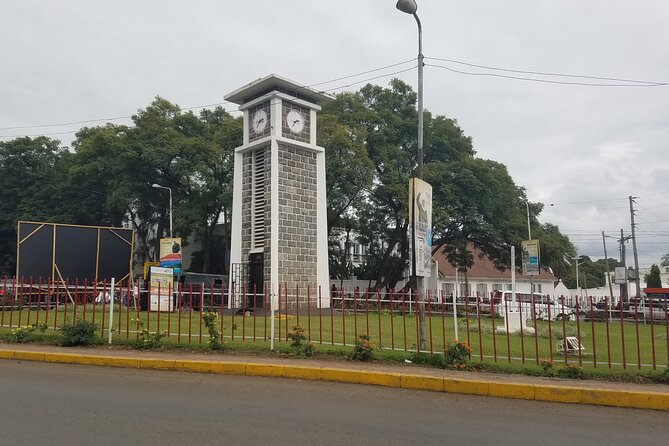
The Clock Tower is one of Arusha’s best-known landmarks and a common meeting point in the city. It was built by Galanos, a Greek millionaire who came to Tanganyika in the early twentieth century.
The tour also explains a popular geographic story about the tower. It is believed to sit between Cairo and Cape Town and to mark a central point between Tanzania, Kenya, and Uganda. Treat this as local lore rather than a precise scientific measurement, but it is an entertaining way to understand the tower’s symbolic importance.
The stop lasts about 15 minutes. That is short, but the Clock Tower works well as a marker between longer visits. From here, the route continues toward one of the oldest hotels and schools in the city, both built during the colonial period.
This is also where the practical nature of the tour becomes clear. You are learning the layout of central Arusha, not just hearing dates. The Clock Tower gives you a fixed point you can recognize later if you return to the center on your own.
More Walking Tours in Arusha
- 4 Days lodge safari Tarangire , Ngorongoro crater & Walking
★ 5.0 · 39 reviews - Tanzania – Arusha NP – Private Guided 4×4 Safari – Game Drive & Walking
★ 5.0 · 30 reviews - Street Food and Community Walking Tour
★ 5.0 · 12 reviews - Coffee walk day trip
★ 5.0 · 10 reviews
Maasai Market: shopping with room for curiosity

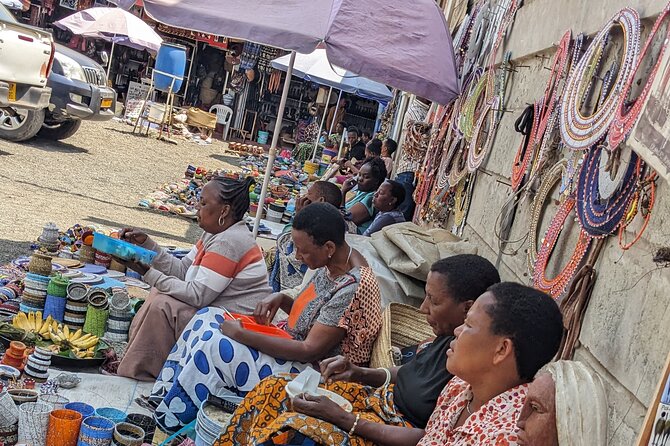
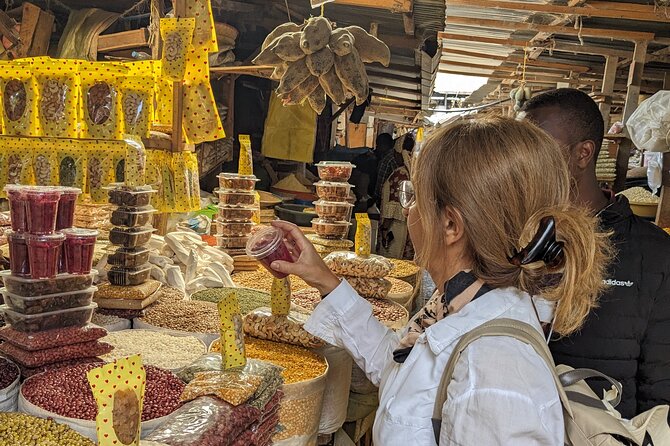
The Maasai Market is the liveliest shopping stop on the route. It is an open-air market with colorful clothing, jewelry, bags, artwork, Maasai blankets, shoes, sandals, pots, pans, safari T-shirts, fabric, and Tanzania jerseys.
I like having a guide here because shopping in a busy market can be tiring when you do not know what you are seeing or how to move around. Israel has been praised for guiding people through markets and crowded streets in a way that helps them feel at ease.
The scheduled visit lasts about 25 minutes. That gives you time to browse, but not unlimited time for careful comparison. If you already know you want fabric, jewelry, or a Maasai-style blanket, decide early whether you want to shop during the group visit or return later.
Bring cash. Souvenir money is not included, and the tour information specifically advises you to carry cash for purchases. Food and drinks are also not included, so do not assume the market stop functions as a meal break.
Remember that the market is a shopping area, not a formal museum. Quality and prices may vary. Look closely, compare items, and buy what you genuinely like rather than rushing because the group is ready to leave.
Cultural Heritage Centre: art, history, and a larger shop
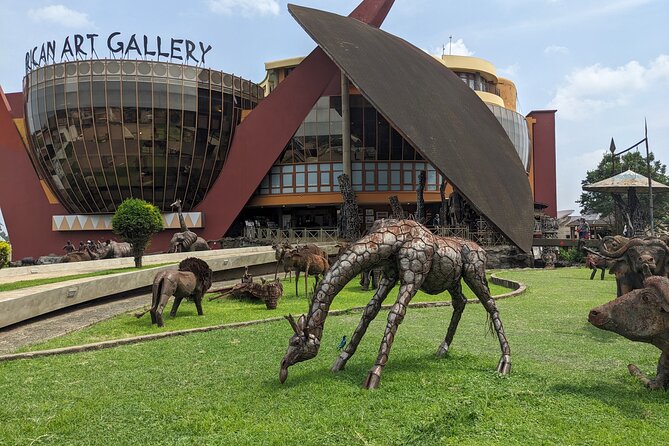
The Cultural Heritage Centre is described as one of Africa’s largest art galleries. It presents art from Tanzania and other African countries, with a shop nearby for souvenirs.
This stop gives the tour a different feel from the Maasai Market. The market offers quick browsing among many small items, while the Cultural Heritage Centre provides a larger, more organized setting for African art and crafts. You might find paintings, sculpture, jewelry, and other pieces, although the exact selection can change.
The visit lasts about 40 minutes. That is enough to look around and decide if you want to buy something, but art shoppers may want more time. The tour includes the gallery and cultural center costs, but not anything you purchase.
This is a useful stop for people who want a more substantial souvenir than a T-shirt or necklace. It also helps show that Tanzanian art is not limited to one style or one ethnic tradition. You can view work from several parts of the country and from elsewhere in Africa.
How much walking should you expect?
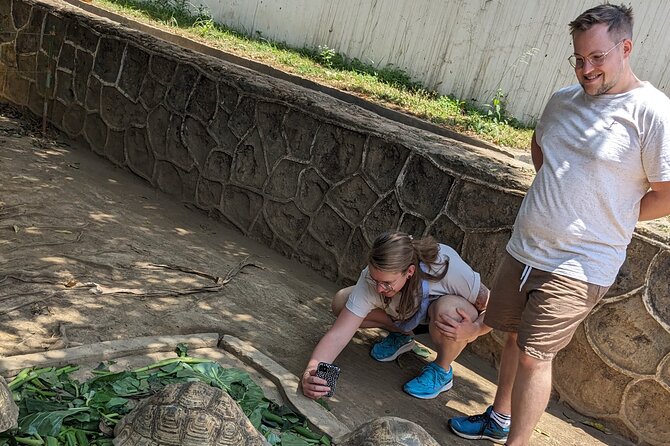
The title suggests a walking tour, but the experience can include both walking and short vehicle transfers. One arrangement used a tuk-tuk from a hotel to the first sight, while other sections involved walking from one central location to another.
That is a benefit if you want to cover several sights without spending all four hours on foot. It may disappoint you if your main goal is a long, uninterrupted walk through Arusha.
The listed duration is approximately four hours, though the included information gives a wider range of two and a half to six hours. Timing can depend on pickup, traffic, museum pace, shopping interest, and the number of questions in the group.
Pickup and drop-off are offered for hotels near the city center. The tour is also near public transportation, and most people can participate. Groups may include up to 19 people, so expect a shared experience rather than a private guide at the $26 price.
Wear comfortable shoes and carry water, even though food and drinks are not included. The route includes streets, markets, and museum visits, so comfort matters more than dressing for a formal attraction.
What the $26 price really covers
At $26, this is a low-cost way to see several sides of Arusha in one outing. The price includes a professional local guide, the Tanzanite museum, the African art gallery and Cultural Heritage Centre costs, plus pickup and drop-off for qualifying central hotels.
The Old Boma fee is separate at $6 per adult. Food, drinks, accommodation, tips, souvenirs, and any additional tour after the city visit are also excluded.
The value is strongest if you visit every included stop and make good use of the guide’s explanations. Paying separately for the Boma is worthwhile if you enjoy museums and regional history. If you are focused on markets, you can still have a good afternoon without spending much beyond the tour fee.
Tips are optional and depend on your satisfaction. Given the repeated praise for Israel’s communication and personal approach, you may want to budget a tip if the guide gives you the kind of thoughtful help described in the tour information.
The booking pattern suggests this experience is often reserved about 30 days ahead. That does not guarantee it will sell out, but booking early is sensible if your Arusha schedule is tight.
Who will enjoy this tour most?
I would recommend it to a first-time visitor who wants orientation, cultural background, and shopping in one compact experience. It suits people who are staying in Arusha before a safari and want to understand the city instead of simply passing through it.
It is also a good match for solo visitors. Israel’s calm help in markets and on busy streets can make the city easier to approach, especially if you are unfamiliar with Tanzania.
You will probably enjoy it if you like:
- Local history explained by a resident guide
- Museums with archaeology, colonial history, ecology, and wildlife themes
- Tanzanite and African art
- Market browsing and souvenir shopping
- A mix of walking and short rides
- A small to medium shared group
I would be more cautious if you want a private, slow-paced walking tour with long stops at every site. A group of up to 19 people and a flexible schedule can limit individual time. The mixed transport format also means the outing is better described as a city sightseeing tour with walking sections.
Booking, cancellation, and practical questions
You receive confirmation at booking. Free cancellation is available if you cancel at least 24 hours before the local start time. Cancellations or changes made within 24 hours are not refunded or accepted.
Pickup is offered only for hotels near the city center, so confirm your location before booking. Since the tour is near public transportation, reaching the meeting point may be possible if your accommodation falls outside the pickup area, but the supplied details do not promise a transfer from every part of Arusha.
Should you book the Arusha Guided Walking City Tour?
Book it if you want a friendly local introduction to Arusha, especially before a safari or Kilimanjaro trip. The strongest reasons are the range of stops, the included Tanzanite and art visits, and the guide service associated with Israel, whose clear English and approachable style receive the most praise.
Think twice if you want a pure walking route, a private group, or a full day devoted to one museum or market. For most visitors, though, $26 buys a useful blend of city landmarks, history, shopping, and cultural context. Pay the small extra fee for the Boma if its human evolution and colonial displays interest you, carry cash, and leave room in your schedule for the route to run longer than four hours.
FAQ
How long is the Arusha Guided Walking City Tour?
The tour is advertised at approximately four hours. The included information also gives a possible guided duration of two and a half to six hours, depending on the arrangements and pace of the day.
What is included in the tour price?
The price includes a professional local guide, the Tanzanite museum, African Art Gallery and Cultural Heritage Centre costs, and pickup and drop-off for hotels near central Arusha.
Is the Old Boma Museum admission included?
No. The Natural History Museum, also called the German Boma, costs $6 per adult and is not included in the tour price.
Does the tour involve only walking?
No. The experience can combine walking with transport between locations. Some arrangements use a tuk-tuk or car to reach sights, followed by walking between central stops.
Is hotel pickup available?
Yes, pickup and drop-off are offered for hotels near the city center. The tour is also near public transportation.
How many people can join the tour?
The maximum group size is 19 people.
Are food and drinks included?
No. Food and drinks are not included, so you should plan separately for anything you want to eat or drink during the outing.
Can I cancel for a full refund?
Yes, if you cancel at least 24 hours before the experience start time. Cancellations or changes made less than 24 hours before the start time are not refunded or accepted.
Just added in Arusha
- Safari “Kifaru” – 5 days in the most famous Parks in the world★ 5.0 · 4 reviews
- 3 Days Tanzania Short and Spicy★ 5.0 · 6 reviews
- 5 Day Tanzania Safari Camping Adventure Private Tour★ 5.0 · 2 reviews
- Saadani Day Trip★ 5.0 · 13 reviews
- Day Trip to Ngorongoro Crater from Arusha★ 5.0 · 1 review
- SERENGETI NATIONAL PARK Tour★ 4.5 · 5 reviews
- 3 Days Serengeti Park & Ngorongoro Crater Adventure Safari★ 5.0 · 8 reviews
- 6 Days Tanzania Bush Experience Safari★ 5.0 · 6 reviews
Walking Tours, compared.

3 Hours Private Stone Town walking Tour with Guide
Read our review →
Stone Town Historical Cultural Walking Guided Tour
Read our review →

Browse the lists this tour appears in