
Reviewed · CITY TOURS
Dar es salaam Private City Tour with Professional Guide
Dar es Salaam rewards curious eyes. This private city tour brings together colonial landmarks and everyday markets, with a professional guide to explain what you are seeing. I like the private vehicle, included lunch, and the chance to move from the Askari Monument and old churches to Kariakoo Market and a seafood market in one long day. The main drawback is the pace: nine or ten hours and eight major stops can feel full, especially in hot weather or heavy traffic.
I also like that the tour does not stop with the usual monuments. The Village Museum, Mwenge Woodcarvers Market, and Ferry Fish Market give you a closer look at local life and craft traditions. Guide Emmanuel is specifically praised for being warm and helpful, though the exact guide assigned to your group should be confirmed before booking.
In This Review
- Key points to know before booking
- What this Dar es Salaam day is really about
- Starting near the harbor at the Ferry Fish Market
- Tanzania’s past at the National Museum
- Colonial-era landmarks around Samora Avenue
- Kariakoo Market, where Dar shops for almost everything
- Mwenge Woodcarvers Market and the value of buying local art
- A quiet pause at Dar es Salaam War Cemetery
- Traditional homes at the Village Museum
- Lunch, transport, and the real value of $180
- Who should book this private city tour
- Should you book it?
- FAQ
- Where does the tour take place?
- What time does the tour start?
- How long does the tour last?
- Is pickup offered?
- Is the tour private?
- What is included in the price?
- Are entrance fees included?
- How much does the tour cost?
- Can most people participate?
- What is the cancellation policy?
Key points to know before booking
- A full nine to ten hours in a private vehicle: Pickup, air conditioning, and private transport make a long city day easier.
- Markets are central to the experience: Kariakoo Market and the Ferry Fish Market offer the strongest look at daily commerce and coastal food.
- Seven listed stops plus the opening city segment: You cover churches, monuments, museums, a cemetery, crafts, and traditional homes.
- Lunch, drinks, water, and entrance fees are included: That makes the $180 per-person cost easier to assess.
- A guide shapes the day: The tour is most useful if you ask questions about colonial rule, religion, trade, art, and Tanzania’s many communities.
What this Dar es Salaam day is really about
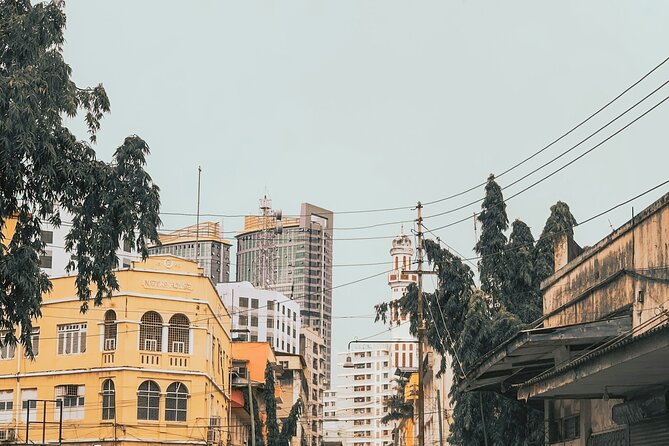
Dar es Salaam is not a city you understand from a bus window alone. Its story comes through the contrast between harbor-front monuments, Christian churches built during the German colonial period, crowded commercial streets, handmade art, and food arriving straight from the Indian Ocean.
This tour gives you that contrast in a single day. You begin around the city center and harbor, move through museums and markets, then head toward Kijitonyama and Mwenge. The route covers a lot of ground, so private transport matters. You are not tied to a large group or waiting for strangers at every stop.
The start time is 8:30 a.m., and the day lasts about nine to ten hours. That is a serious outing, not a light morning walk. I would choose it when you want a broad first look at Dar es Salaam rather than a slow visit to only two or three places.
The tour includes bottled water, soda, lunch, alcoholic beverages, entrance fees, an air-conditioned vehicle, private transportation, and a professional guide. Since the price is $180 per person, the value depends partly on your group size and how much you value convenience. For a private group, the cost can make sense because transport, guiding, meals, and admissions are bundled together. For someone who prefers independent exploring, it is a costly way to cover places that can be visited separately.
A few more options to weigh up in Dar es Salaam
- Dar es Salaam: City Tour
★ 4.7 · 159 reviews - Dar es Salaam City Center: Walking Tour
★ 4.8 · 102 reviews - Dar es Salaam City Tour – Everyday
★ 5.0 · 64 reviews
Starting near the harbor at the Ferry Fish Market
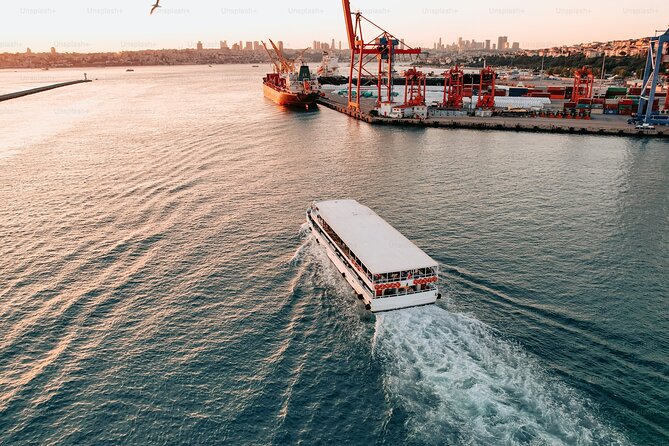
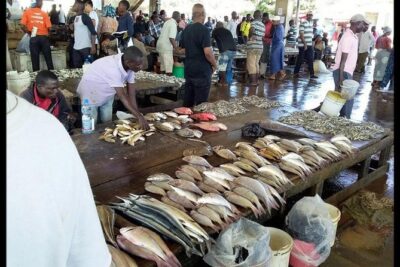
The Ferry Fish Market is a good opening image of coastal Dar es Salaam. Near Kivukoni Front and the main ferry terminal, it is tied to the working waterfront rather than set up purely for sightseeing.
You can expect fishermen bringing in their catch and vendors handling seafood such as prawns, octopus, red snapper, and tuna. The setting is busy, with haggling, preparation, and the smell of fish and grilling around you. This is one of the stops where the city feels most immediate.
You have about 30 minutes here, with no admission fee. That is enough to look around and take in the activity, but not enough for a leisurely food tour. If you are interested in seafood, ask your guide how the market works and which catches are common along the coast.
This stop may not suit you if you dislike strong smells, wet market conditions, or crowded trading areas. Still, I would not skip it. It connects Dar es Salaam to the Indian Ocean in a way that a formal museum cannot.
Tanzania’s past at the National Museum
The National Museum of Tanzania gives the day a more orderly framework. Founded in 1934, it contains archaeological material, ethnographic displays, historical objects, and exhibits on colonial and independence periods.
The best-known item is the Zinjanthropus skull, a hominid fossil dated at 1.75 million years old. That single object gives the museum a major place in the story of human origins. You will also find traditional objects from Tanzania’s communities and displays related to art and culture.
The visit lasts about 40 minutes, and admission is included. That is enough for a focused introduction, but you should not expect to see every display in detail. Ask your guide to point out the objects most relevant to Tanzania’s past and present. A short guided visit is more useful when you know which rooms deserve your attention.
The museum also has quiet gardens and sits close to other central landmarks. After the noise of the fish market, the change of pace is welcome. I especially like this pairing: first you see the city’s working food economy, then you get context for the country’s long human story.
Colonial-era landmarks around Samora Avenue
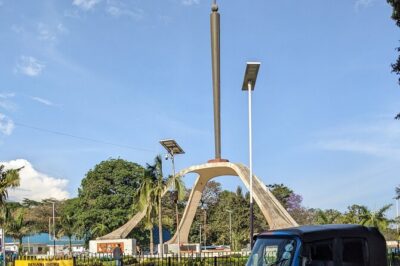
The Askari Monument is a brief but meaningful stop. Unveiled in 1927, the bronze soldier honors African askaris who fought alongside British forces during World War I.
The soldier holds a rifle with the bayonet pointed downward, a symbol of peace. An inscription in English and Swahili honors the soldiers’ bravery and sacrifice. The monument sits in a roundabout on Samora Avenue, so you view it from the surrounding streets rather than enter a large enclosed site.
This is a place where your guide adds real value. The monument is not simply an old statue. It opens questions about African military service, British colonial power, and how public memorials frame the past. You have no stated admission fee and no listed fixed time, so the stop is likely short.
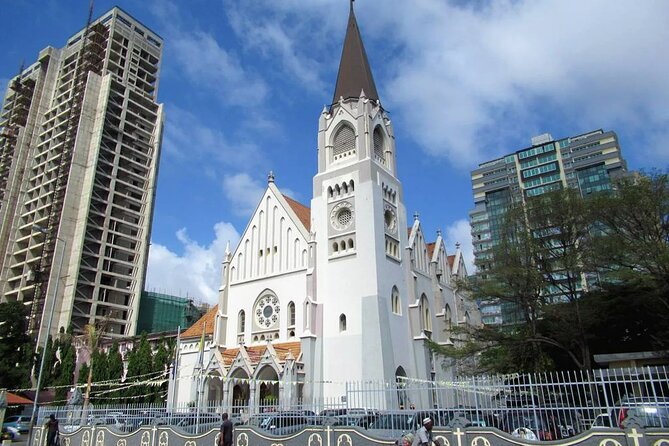
St. Joseph’s Cathedral offers a different piece of the colonial city. German missionaries built it between 1897 and 1902, and its Gothic design includes tall spires, arched windows, stained glass, and religious artwork.
The cathedral remains the seat of the Roman Catholic Archdiocese of Dar es Salaam. Its location near the harbor on Sokoine Drive makes it easy to combine with the Askari Monument and Azania Front Lutheran Church.
You spend about 30 minutes here, with admission included. Keep the visit respectful because this is an active place of worship. The interior provides a quiet break from traffic and street noise, while the architecture gives you a clear sense of the city’s German colonial imprint.
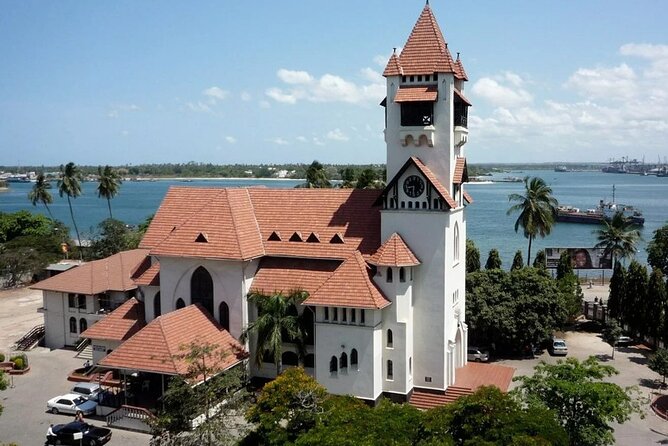
Azania Front Lutheran Church is another German-built landmark, dating from 1898. Its red brick, Gothic form, and tall spire make it easy to recognize near Kivukoni Front.
The name Azania comes from an ancient Greek term for the East African coast. That small detail links the church to a much older idea of the region as a meeting place along the Indian Ocean.
Again, you have about 30 minutes and admission is included. The church is still used for worship, so timing and access may depend on services. Its position overlooking the harbor makes it a useful photography stop, but the more important point is the contrast between Lutheran and Catholic institutions in the same historic area.
A different kind of day out entirely:
- MIKUMI NATIONAL PARK – 3 Days
★ 4.5 · 63 reviews - 2 nights 3 days safari to mikumi national park
★ 5.0 · 62 reviews - 2 Days 1 Night Mikumi National Park from Dar es salaam
★ 5.0 · 60 reviews - The Best/Top Rated Cultural City Tour in Dar es Salaam
★ 5.0 · 57 reviews
Kariakoo Market, where Dar shops for almost everything
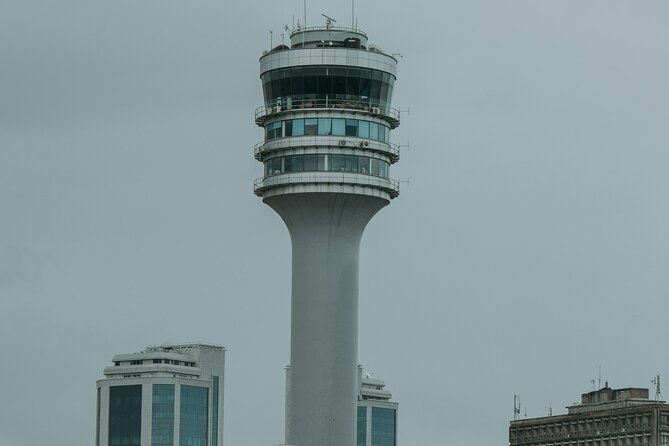
Kariakoo Market is likely to be the most intense stop of the day. It is a large commercial district filled with fresh produce, spices, seafood, clothing, electronics, and household goods.
The market’s name comes from the World War I-era Carrier Corps, known locally as Kariakoo. That detail shows how even a shopping district can carry a layer of military and colonial history.
You should expect tight alleys, noise, smells, bargaining, and plenty of movement. This is not a polished shopping center. It is a place of everyday trade, and that is exactly why it matters. You see how people buy food, clothing, and practical goods in the city rather than only visiting sites prepared for tourists.
Keep your belongings secure and stay close to your guide. The supplied information does not give a fixed visit length here, so ask how much time is planned. The market can easily absorb more time than expected, but the rest of the day has several scheduled attractions.
I would not choose Kariakoo if you want a calm, carefully arranged shopping experience. I would choose it if you want to see Dar es Salaam working at full speed and do not mind sensory overload.
Mwenge Woodcarvers Market and the value of buying local art
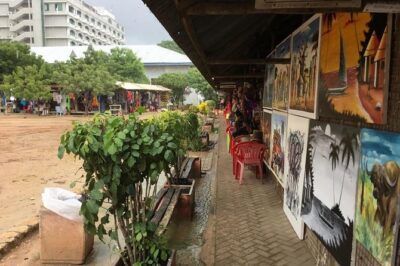
Mwenge Woodcarvers Market shifts the mood from daily necessities to handmade objects. Located in the Mwenge area, it is known for wooden sculptures, masks, carvings, household decorations, and other craft pieces.
The market gives local artisans a place to show their work and gives you a chance to buy something made in Tanzania rather than a generic imported souvenir. The pieces vary in style, size, and finish, so take time to compare them.
You have about 40 minutes, and there is no admission fee. Bargaining is expected. Approach it as a social part of the purchase, not as a contest to force the lowest possible price. If you find a carving you like, ask about the wood, the maker, and how it was produced. Your guide may help with communication and context.
The limitation is that 40 minutes can pass quickly if you want to compare many stalls. It is also easy to buy more than you planned. Decide what size and type of item you want before you arrive, especially if you have limited luggage space.
A quiet pause at Dar es Salaam War Cemetery
The World War II Cemetery in Makumbusho provides a strong change of tone. Maintained by the Commonwealth War Graves Commission, it contains more than 1,500 Commonwealth servicemen, including British, South African, and East African troops, along with a small number of non-Commonwealth soldiers.
The neatly maintained grounds and rows of white headstones create a quiet place for reflection. After the noise of Kariakoo and the bargaining at Mwenge, this pause can feel especially important.
The visit lasts about 30 minutes and admission is free. I would treat the cemetery as a memorial, not simply another photo stop. Ask your guide about the East African connection to World War II and the people remembered here.
This stop may be less appealing if you want a day focused only on food, shopping, and architecture. Yet it adds necessary weight to the tour. Dar es Salaam’s past includes military service and loss, not only trade and colonial buildings.
Traditional homes at the Village Museum
The Village Museum in Kijitonyama is an open-air cultural site about 10 kilometers from the city center. It presents replicas of traditional homes connected to more than 20 Tanzanian ethnic groups, including the Chagga, Maasai, Sukuma, and Zaramo.
The buildings use traditional materials and methods, and each style shows how homes can reflect climate, work, family life, and available resources. This makes the stop more useful than a row of disconnected displays. You can compare forms of domestic life across Tanzania without leaving Dar es Salaam.
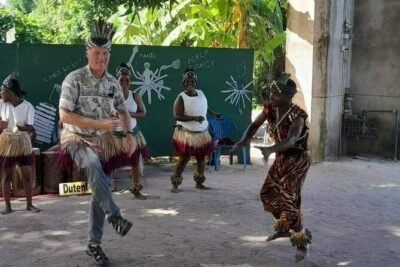
The scheduled visit is about 40 minutes, with admission included. The museum also offers traditional dances, music, crafts demonstrations, and other cultural performances, though the supplied tour details do not guarantee that a performance will take place during your visit. Ask your guide what is happening that day.
I like this stop because it broadens the tour beyond the city’s colonial buildings. Dar es Salaam is a meeting point for people from many parts of Tanzania, and the Village Museum gives you a way to see that national variety in one setting.
Lunch, transport, and the real value of $180
The tour costs $180 per person. That price is easiest to justify when you want a private day with a guide, air conditioning, lunch, bottled water, soda, alcoholic beverages, admission fees, and private transport all handled together.
The vehicle is important because the route stretches from the harbor and central city to Kariakoo, Mwenge, Makumbusho, and Kijitonyama. A private car also gives your group more control over questions, timing, and comfort than a large shared excursion.
Still, the day is not cheap. If you are traveling alone, the per-person price may feel high. If several people share the private activity, the value improves because the guide and vehicle serve only your group.
Lunch is included, but the details of the meal are not specified. If you have allergies, dietary restrictions, or strong preferences, tell the operator before the morning begins. Alcoholic beverages are also listed as included, but you do not need to drink to enjoy the tour. Bottled water is particularly useful in a nine to ten-hour outing.
The five written ratings supplied for the experience are all at the top score, with praise focused on friendly operators, helpful drivers, good food, and guides who explain the city well. Emmanuel is singled out as warm and helpful. That gives the tour a positive service profile, though no guide can erase traffic, heat, or the crowded conditions at Kariakoo.
Who should book this private city tour
I would recommend this tour to first-time visitors who want a broad orientation to Dar es Salaam in one day. It suits couples, families, and small groups who value a private vehicle and prefer having one person connect the stops.
It is also a good fit if you care about more than famous buildings. The route includes working markets, religious sites, traditional architecture, military memorials, crafts, and seafood. You get a useful range of subjects to discuss with your guide.
You may want another plan if you prefer a slow pace, long museum visits, or unstructured time for shopping. The schedule is packed, and traffic can affect how long you actually spend at each stop.
Most people can participate, service animals are allowed, and the tour is near public transportation. Pickup is offered, and confirmation arrives at booking. Free cancellation is available until 24 hours before the 8:30 a.m. start time. Cancellations or changes made later do not qualify for a refund.
Should you book it?
Book this tour if you want one private day that explains both Dar es Salaam’s public landmarks and ordinary life. The strongest reasons are the mix of markets and museums, the included transport and meals, and the chance to ask a guide about the city as you move through it.
I would book with realistic expectations. This is a packed introduction, not a relaxed walking tour. The heat, traffic, fish market smells, and Kariakoo crowds are part of the experience. If that sounds like your kind of city day, the tour offers a useful and unusually broad first look at Dar es Salaam.
FAQ
Where does the tour take place?
The tour takes place in Dar es Salaam, Tanzania, with stops around the harbor, central city, Kariakoo, Mwenge, Makumbusho, and Kijitonyama.
What time does the tour start?
The listed start time is 8:30 a.m.
How long does the tour last?
The experience lasts approximately nine to ten hours.
Is pickup offered?
Yes, pickup is offered.
Is the tour private?
Yes. Only your group participates in the private activity.
What is included in the price?
The price includes bottled water, alcoholic beverages, lunch, soda, an air-conditioned vehicle, private transportation, all fees and taxes, and a professional guide.
Are entrance fees included?
Yes. The listed admission fees for the National Museum, St. Joseph’s Cathedral, Azania Front Lutheran Church, and Village Museum are included.
How much does the tour cost?
The listed price is $180 per person.
Can most people participate?
Yes. The tour information says most people can participate, and service animals are allowed.
What is the cancellation policy?
You can cancel up to 24 hours before the experience starts for a full refund. Cancellations or changes made less than 24 hours before the start time are not accepted for a refund.
Just added in Dar es Salaam
- Zanzibar: 3 Days to Mikumi and Chizua Waterfalls★ 3.5 · 5 reviews
- 3 Days and 2 Nights Mikumi Private Safari Adventure★ 5.0 · 2 reviews
- UDZUNGWA NATIONAL PARK AND WATERFALLS – 3 Days★ 4.5 · 2 reviews
- Explore Dar es Salaam: Full-Day Private City Tour★ 5.0 · 18 reviews
- Stone Town & Spice Tour★ 4.5 · 2 reviews
- Trip to the old City of Bagamoyo★ 5.0 · 1 review
- 2 Day Wildlife Experience and Masai Culture Mikumi Park★ 5.0 · 5 reviews
- Sunrise Beach Walk with Picnic Breakfast Activity★ 5.0 · 3 reviews
City Tours, compared.
Arusha Guided Walking City Tour, Culture, Lifestyle & History
Read our review →
The Best/Top Rated Cultural City Tour in Dar es Salaam
Read our review →
Browse the lists this tour appears in