
Reviewed · MAASAI VILLAGE VISITS
Maasai World
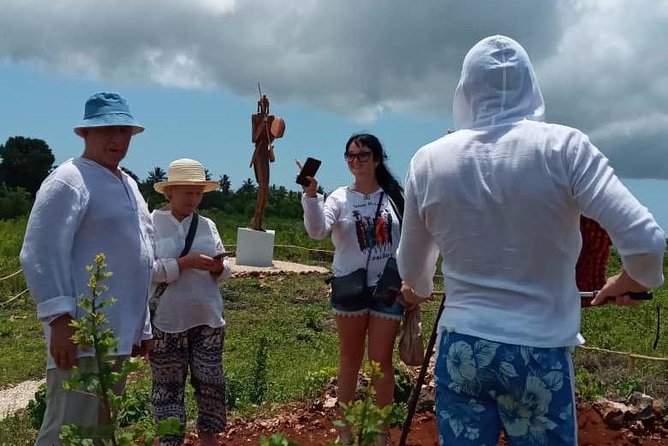
Culture comes alive with a bow in hand. Maasai World gives you a compact, hands-on look at Maasai customs in Zanzibar, from traditional clothing and tools to village life, dancing, and a bow-and-arrow activity. I like the chance to ask Maasai people direct questions, and I like that the visit is private to your group rather than folded into a large crowd. The main thing to consider is the short two-hour format, which offers a lively introduction rather than a complete study of Maasai society.
I also like the simple price: $20 per person buys an experience with several parts, not just a display room. Guide David has been praised for explaining both the past and present of Maasai life in clear terms, including subjects that may challenge Western assumptions. You should also know that this is in Mpandeni, not a central Zanzibar attraction, so you will need to plan your way there.
In This Review
- Key things to know before visiting
- What Maasai World offers in Zanzibar
- Arriving at the Mpandeni meeting point
- Beginning with Maasai history, clothing, and tools
- Touring the authentic Maasai village
- Joining the Maasai dance
- Trying the bow-and-arrow activity
- Asking direct questions about Maasai life
- How the two-hour schedule works
- Is $20 good value?
- Who will enjoy Maasai World most?
- Booking, timing, and cancellation advice
- My advice on making the call
- FAQ
- Where is Maasai World located?
- How long does the Maasai World experience last?
- What time is Maasai World open?
- How much does admission cost?
- Does the experience include a bow-and-arrow activity?
- Will I visit a Maasai village?
- Is this a private activity?
- Can I cancel for a refund?
Key things to know before visiting
- A two-hour private visit: Your group takes part together, with the activity ending back at the meeting point.
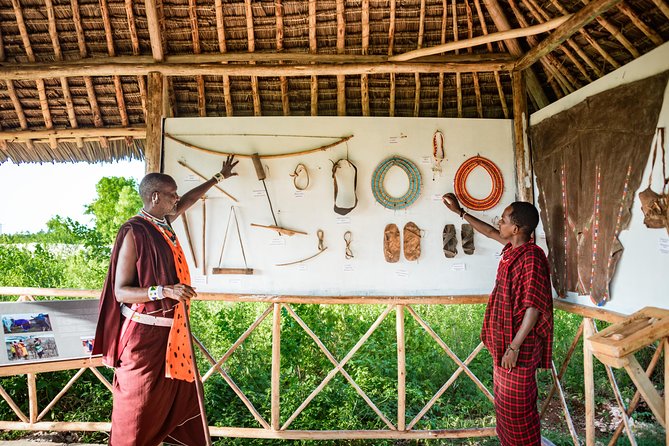
- Maasai culture through objects: Traditional clothes, tools, and ways of living form the core of the visit.
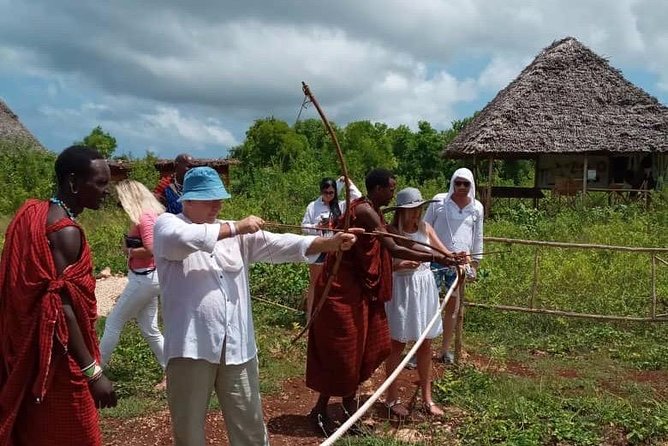
- Hands-on archery: You get the chance to handle a traditional bow and arrow rather than only watch a demonstration.
- Dance and village life: The visit includes Maasai dancing and a tour through an authentic Maasai village.
- Direct questions are welcome: Guide David has been praised for discussing history, present-day life, and customs frankly.
- Book ahead if your dates matter: The experience is often reserved about 33 days in advance, and online prebooking guarantees your admission.
What Maasai World offers in Zanzibar
Maasai World is designed as a cultural visit, not a safari or a long museum tour. In about two hours, you move through several connected parts of Maasai life: history, clothing, tools, customs, village routines, music, dance, and archery.
That range is the reason I see value in the visit. A short display of clothing can feel flat if it is separated from daily life. Here, the objects are tied to explanations about how Maasai people have lived and how their society has changed over time.
The setting in Zanzibar also gives the experience a particular character. You are learning about Maasai culture while visiting Tanzania, but you are not being taken to the Maasai heartlands of northern Tanzania. It is best to view Maasai World as an introduction and cultural encounter, not as a substitute for visiting Maasai communities elsewhere in the country.
That distinction matters. If you want a focused, accessible way to learn about Maasai traditions during a Zanzibar holiday, the format works well. If you expect a full anthropological program or an extended stay in a rural community, two hours will feel limited.
More Maasai Village Visits in Zanzibar:
- 5 Days Camping Tarangire, Serengeti & Ngorongoro crater & Visiting Maasai
★ 5.0 · 229 reviews - Maasai village visit, Materuni waterfalls & coffee experience
★ 4.5 · 95 reviews - 5 Days Camping Tarangire, Serengeti & Ngorongoro crater & Visiting Maasai
★ 5.0 · 58 reviews
Arriving at the Mpandeni meeting point

The stated starting point is Maasai World at 58H2+2CP, Mpandeni, Tanzania. The activity begins and ends there, so this is not a walking tour that drops you in another part of the island.
Maasai World is open daily from 10:00 a.m. to 7:00 p.m. The broad opening window gives you useful flexibility. You can choose a time that fits around a beach day, another Zanzibar visit, or your evening plans.
The practical issue is getting to Mpandeni. The experience is near public transportation, but no transfer service is specified. I would confirm your route before setting out, especially if you are staying some distance away. A mobile ticket makes entry simpler, but it does not remove the need to allow time for the journey.
The booking pattern is also worth noting. The experience is booked, on average, 33 days ahead. That does not prove every date sells out, but it is a good reason to reserve early if you have fixed holiday dates.
Beginning with Maasai history, clothing, and tools
The visit starts with an introduction to Maasai history, culture, tools, and clothing. These details give you a base for understanding the demonstrations and activities that follow.
Traditional clothing can tell you a great deal about identity and daily life, especially when someone explains how it is used rather than simply placing it behind glass. The same is true of tools. Their importance becomes clearer when you connect them with work, movement, food, protection, or household routines.
The experience is particularly suited to visitors who like to ask questions. You can ask about local customs and present-day life, and the guide is expected to explain rather than rush you from one stop to the next. David has received especially warm praise for presenting both historical development and current Maasai life.
One useful feature is the frankness of the discussion. Some customs may be difficult for people from Western countries to understand at first. A good cultural visit does not edit out every uncomfortable subject, and David has been praised for addressing such matters openly.
Still, keep your expectations sensible. The supplied details do not provide a full list of objects or specific customs covered. What you get is a guided introduction shaped by questions, conversation, and the items on display.
Touring the authentic Maasai village
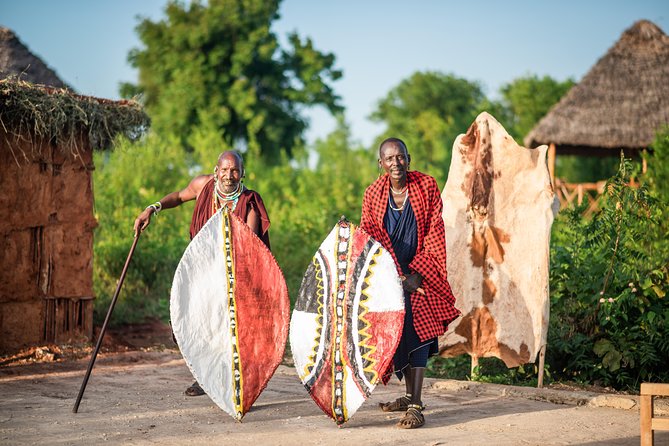
The village tour is likely to be the part that turns general information into something easier to picture. Rather than hearing only about Maasai life in the abstract, you move through a setting presented as an authentic Maasai village and learn about their way of living.
This part should help you connect the earlier discussion of tools and clothing with everyday routines. You can ask why certain objects matter and how particular customs fit into community life. The value comes from the link between the physical setting and the explanations you receive.
I would approach the word authentic with care. It signals that the visit aims to present Maasai life through a village setting, but the available information does not describe the construction, size, or exact layout of the village. You should not assume that it recreates every aspect of a remote rural settlement.
Even so, a village setting can make a short cultural program more memorable. You are not only listening to facts. You are looking at the spaces and objects being discussed, which gives the information a clearer shape.
The private format helps here. Only your group takes part, so your questions are less likely to disappear into a large crowd. A group of ten journalists and professional friends found the program engaging enough that some of them arranged another visit for a later Zanzibar trip. That suggests the format can work for both first-time visitors and people who want to bring friends or colleagues.
A few more options to weigh up in Zanzibar
- From Zanzibar: Mikumi Safari Day Trip with Flights and Meal
★ 4.7 · 1,470 reviews - Zanzibar: Quad Bike Adventure departing from Kendwa or Nungwi
★ 4.9 · 1,233 reviews - Zanzibar: Stone Town, Spice Tour, Prison Island with Lunch
★ 4.4 · 1,219 reviews - From Zanzibar: Day Selous Game Reserve Safari with Flights
★ 4.7 · 1,025 reviews
Joining the Maasai dance
Dance is included in the program, adding a social and entertaining element to the historical explanations. This matters because cultural learning does not have to be stiff. A dance segment gives the visit movement and lets you experience a form of expression rather than simply reading about it.
You may also be invited to take part. The description specifically includes dancing with the Maasai, so expect this to be more interactive than a performance viewed from a distance.
That said, the available details do not specify the length of the dance, the exact style, or how much participation is expected. If you prefer to watch, you can ask your guide what the activity involves. Most people can participate in the overall experience, but it is still sensible to tell the guide if you have any physical limits.
The dance works best when you treat it as an invitation, not a test. You do not need to perform perfectly. The point is to share a small social moment and gain another way to understand how communal activities fit into cultural life.
Trying the bow-and-arrow activity
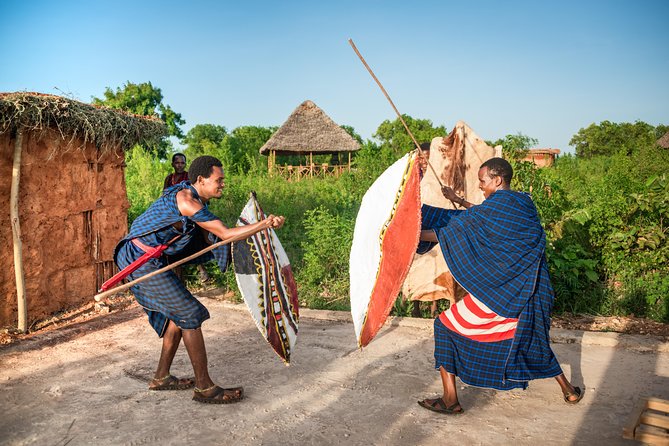
The bow-and-arrow session is the clearest hands-on feature at Maasai World. You get the chance to try a traditional bow and arrow, which gives the visit a practical edge that a standard cultural talk often lacks.
I like activities such as this when they are handled with care. You learn about an object, then feel how it works in your own hands. Even a brief attempt can help you understand that a tool is not just a symbol. It has weight, balance, purpose, and a skill behind it.
The supplied information does not state how many attempts you receive, whether targets are used, or how the activity is supervised. For that reason, you should see it as a short cultural activity rather than a formal archery lesson.
It is also one of the reasons families and mixed-age groups may enjoy the visit. Children and adults can both take an interest in the practical side, while the guide supplies the cultural context. Service animals are allowed, and most people can participate, according to the activity information.
Asking direct questions about Maasai life
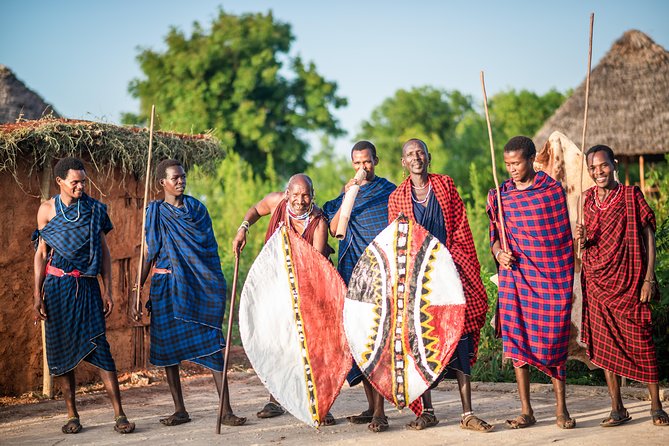
The question-and-answer element may be the most valuable part for curious visitors. You can ask Maasai people about customs, heritage, tools, clothing, and present-day life instead of relying only on general information from a display.
David has been singled out for explaining how Maasai society has changed over time. That makes the visit more useful than a presentation that treats Maasai culture as frozen in the past. You should listen for the connection between tradition and current life, since that is where many cultural tours become either thoughtful or shallow.
The experience also leaves room for questions that may not fit neatly into a prepared talk. If you have wondered about family customs, work, clothing, community life, or the meaning of particular practices, this is the moment to ask respectfully.
The right attitude is important. You are not being given a simple picture designed only to entertain. Some information may be hard to digest if you are approaching it from a Western point of view. That is not necessarily a fault. It can be a useful reminder that cultural practices need to be understood in their own setting before they are judged.
How the two-hour schedule works
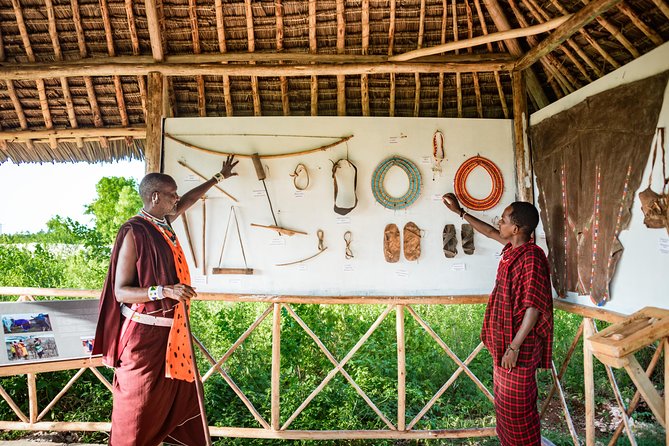
The full visit lasts about two hours. That is enough time for a guided overview and several activities, but not enough for every subject to receive equal attention.
A likely flow is:
- Introduction to Maasai history and present-day culture
- Explanation of traditional tools and clothing
- Tour through the village setting
- Maasai dance and possible participation
- Bow-and-arrow activity
- Questions and discussion before returning to the meeting point
The exact order may vary, and the supplied details do not give a timed itinerary. You should allow the whole two-hour period rather than assuming you can leave after a quick look at the objects.
The compact schedule is useful if your Zanzibar plans are full. You can fit it into a morning or afternoon without giving up an entire day. The tradeoff is that the program may feel brisk if you want long conversations on every topic.
Because the activity is private to your group, the pace may be more adaptable than in a large public tour. You can use that advantage by arriving with a few questions ready. A private format is only as useful as the questions you bring to it.
Is $20 good value?
At $20 per person, Maasai World offers several elements in one visit: a cultural explanation, a village tour, interaction with Maasai people, dancing, and archery. I consider that a fair price for a two-hour private activity, especially if you value direct conversation more than a polished stage show.
The price also buys convenience. Prebooking guarantees your admission, and the mobile ticket means you do not need to manage a paper voucher. Since the activity can be booked well ahead, that certainty may be useful during a busy Zanzibar itinerary.
The value depends on what you want. If you are mainly looking for a photograph and a quick performance, you may not make full use of the cultural discussion. If you enjoy asking questions and trying activities, the range is stronger.
There are a few costs not covered by the stated price. No transportation is listed, so you must account for your own way to Mpandeni. The experience also does not mention meals, drinks, or any extra services. I would judge the $20 admission on its own and plan transport separately.
Who will enjoy Maasai World most?
I would recommend this experience to you if you want a clear introduction to Maasai culture during a Zanzibar stay. It suits people who prefer personal contact, simple explanations, and a few hands-on activities over a long formal museum visit.
It should also work well for:
- Families looking for an activity with both learning and participation
- Couples who want something beyond beaches and historic town visits
- Small private groups that enjoy discussing culture together
- Visitors interested in African history and present-day traditions
- People who like to ask questions rather than simply follow a script
- Anyone who wants a short experience that fits into a larger itinerary
You may want to choose another activity if your main goal is wildlife viewing, a full-day village visit, or a detailed academic study of Maasai society. Maasai World introduces the subject in a lively way, but two hours naturally limits how much ground it can cover.
The description says most people can participate, and service animals are allowed. If you have specific mobility or participation needs, contact the provider before booking, since the available information does not describe every surface or activity in detail.
Booking, timing, and cancellation advice
The experience runs Monday through Sunday from 10:00 a.m. to 7:00 p.m. Booking online gives you a mobile ticket and secures your admission. Since the average booking lead time is about 33 days, I would reserve as soon as your Zanzibar dates are firm.
You can cancel for a full refund if you do so at least 24 hours before the local start time. Cancellations made within 24 hours are not refunded, and changes inside that same period are not accepted.
That policy is fairly straightforward, but pay attention to the local-time cutoff. If your plans depend on weather, transport, or another activity, leave yourself enough room to change plans before the 24-hour deadline.
My advice on making the call
Book Maasai World if you want a short, friendly, participatory introduction to Maasai culture, especially if direct questions and cultural exchange matter to you. The combination of village life, traditional clothing and tools, dance, and archery gives the $20 price real substance.
I would be less keen if you expect an extensive village stay or a highly detailed historical tour. The two-hour limit means you will receive a broad look rather than a complete picture.
For most visitors with an open afternoon and a reliable route to Mpandeni, this is an easy cultural addition to a Zanzibar itinerary. Reserve ahead, arrive ready to ask respectful questions, and treat the bow, dance, and village tour as doors into a wider conversation rather than isolated entertainment.
FAQ
Where is Maasai World located?
Maasai World is located at 58H2+2CP, Mpandeni, Tanzania, in Zanzibar.
How long does the Maasai World experience last?
The experience lasts approximately two hours.
What time is Maasai World open?
Maasai World is open daily, Monday through Sunday, from 10:00 a.m. to 7:00 p.m.
How much does admission cost?
The listed price is $20 per person.
Does the experience include a bow-and-arrow activity?
Yes. You get the chance to try a traditional bow and arrow.
Will I visit a Maasai village?
Yes. The program includes a tour through an authentic Maasai village and an introduction to Maasai ways of living.
Is this a private activity?
Yes. Only your group participates in the private tour or activity.
Can I cancel for a refund?
Yes. You can receive a full refund if you cancel at least 24 hours before the experience start time. Cancellations within 24 hours are not refunded.
Just added in Zanzibar
- Best of Zanzibar: Spice Tour & Stone Town Visit★ 4.4 · 5 reviews
- THE GREEN TOUR: Jozani Forest & Mangrove Kayaking Experience★ 4.7 · 6 reviews
- Stone Town: Private Walking Tour in the Heart of Zanzibar.★ 5.0 · 1 review
- The rock restaurant and blue Lagoon★ 5.0 · 1 review
- Tea House, Zanzibar Coffee House, Spice Tour with Lunch★ 5.0 · 1 review
- Swimming with sea turtles in salaam cave★ 5.0 · 1 review
- Swim with Turtles at The Lagoons Zanzibar & Stone Town Tour★ 4.8 · 4 reviews
- Stonetown & Prison island Cultural Tour★ 5.0 · 2 reviews
Maasai Village Visits, compared.

5 Days Camping Tarangire, Serengeti & Ngorongoro crater & Visiting Maasai
Read our review →
Maasai village visit, Materuni waterfalls & coffee experience
Read our review →5 Days Camping Tarangire, Serengeti & Ngorongoro crater & Visiting Maasai
Read our review →
Maasai village visit and Chemka hot-springs with hot lunch.
Read our review →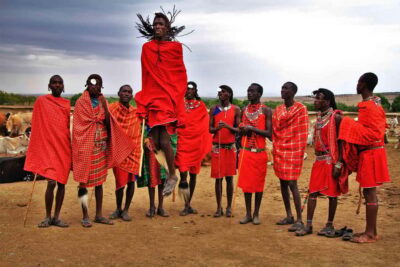

Kilimanjaro: Maasai Village Visit, Waterfalls, & Coffee Tour
Read our review →

5- Days Best Mid-range Safari and Maasai Village experience
Read our review →Browse the lists this tour appears in