
Reviewed · FARMS
Microfinance family farm tour – all proceeds to charity
Poverty solutions become clearer at a family farm. This private two-to-three-hour visit near Arusha connects you with Mama Max, a Tanzanian farmer who built several small businesses with training and microfinance from The Small Things. I like the personal scale of the visit, and I like that the money supports community work rather than a standard sightseeing operation. The main consideration is that this is not a polished attraction: you will walk on uneven or hilly ground, and the visit depends on an open, respectful exchange with a local family.
The experience also offers a useful look at child protection. You hear how The Small Things works to keep children with their families instead of relying on orphanages, but you should not expect direct contact with children at Happy Family Children’s Village. That boundary is a strength, though anyone hoping for a children-focused visit may need to adjust expectations.
In This Review
- Key points to know before booking
- Why this farm visit offers more than a quick cultural stop
- Starting at Happy Family Children’s Village
- Walking or driving to Mama Max’s home
- Meeting Mama Max over chai and coffee
- Seeing the farm businesses grow step by step
- The story behind The Small Things
- Cost, duration, and practical value
- Who will enjoy this Arusha experience most
- Should you book the Microfinance Family Farm Tour?
- FAQ
- How long does the Microfinance Family Farm Tour last?
- Where does the tour begin and end?
- Is food included?
- Can I walk to Mama Max’s house?
- Will I meet children at Happy Family Children’s Village?
- Can I cancel for a full refund?
Key points to know before booking
- Mama Max’s farm is the heart of the visit: See how banana trees, coffee, chickens, goats, and cows became part of a family business over time.
- Your $35 supports charity: The tour is linked to The Small Things, a community nonprofit working with children, families, and local enterprise.
- You choose the pace between sites: Walk from Happy Family Children’s Village to Mama Max’s house, or ask for a drive.
- Chai and local coffee are included: Tea, coffee, and a snack make the farm visit feel social rather than purely instructional.
- The tour avoids direct child contact: You receive an overview of the organization’s work while respecting its child protection rules.
- It is private and flexible: Only your group participates, and lunch can be added for $5.
Why this farm visit offers more than a quick cultural stop
Many Arusha excursions focus on wildlife, Maasai culture, or dramatic scenery. This one takes a quieter route. You spend time learning how a family can build stability through small, connected business steps.
Mama Max’s story gives the idea a human face. Her farm did not appear fully formed after one large investment. The work grew from one activity to another: banana trees, coffee, chickens, goats, and cows. That progression matters because microfinance is often discussed in broad terms. Here, you can see what it may mean at household level.
The purpose is also wider than helping one farmer. The Small Things developed its business program after seeing what could happen to children who left institutional care and returned to villages with little support. The organization’s approach is to help families become stronger so children can remain at home.
You will not be asked to inspect a project from a distance and leave with a souvenir. Instead, you hear about a local nonprofit, walk or drive to a nearby home, drink something together, and see the practical work behind a family’s income.
That makes the visit a good match for you if you want your time in Tanzania to include social and economic context, not only sightseeing.
A few more options to weigh up in Arusha
- From Arusha: Coffee Farm and Mangalia Waterfalls Tour
★ 4.9 · 48 reviews - Zanzibar: Prison Island, Stone Town, & Spice Farm Tour
★ 4.5 · 579 reviews - Full-Day Private Stone Town +Spice Farm and Prison Island Tour
★ 4.5 · 216 reviews
Starting at Happy Family Children’s Village
The tour begins at Happy Family Children’s Village on an unnamed road in Nkoaranga, near Arusha. The first portion lasts about 30 minutes and introduces The Small Things’ work with children, families, and communities.
The setting includes a visitor hut with views toward Lake Duluti. This gives you a calm place to get oriented before the farm visit. You can ask how the nonprofit’s programs work and how business development fits into family support.
The child protection rule is important. You should not expect direct contact with children. That may disappoint anyone who arrives expecting a traditional orphanage visit, but it reflects a more careful approach. The focus stays on the organization’s work, not on turning children into part of a tourist experience.
I would pay close attention here to the explanation of why family support matters. The central question is not simply how to care for children in an institution. It is how to help families avoid separation in the first place. The tour’s strongest ideas begin at this point, before you reach the farm.
The visitor hut also gives the opening section a practical shape. You are not rushed straight into a household visit without context. You first learn why Mama Max’s work matters and how the nonprofit’s financial and business programs connect with family welfare.
Walking or driving to Mama Max’s home
After the introduction, you travel to Mama Max’s house in Nkoaranga. You can walk or drive, depending on your preference.
Walking gives the transition more meaning. You have time to hear how business training and microfinance can help families keep children at home, and you see the area at ground level. The route may include uneven or hilly ground, so walking is best for you if you are comfortable on irregular surfaces.
Driving is the sensible choice if you have limited mobility, if the weather is difficult, or if you simply want to save your energy for the farm. The tour information does not promise a particular vehicle type or driving distance, so ask about the option when arranging your visit.
This part is not presented as a major sightseeing section. Its value lies in the conversation. You move from an organization’s general mission to one woman’s household and business experience.
Because this is a private tour, you can ask questions that may not fit easily into a large group. You might want to ask how the different farm activities developed, what kind of training Mama Max received, or how she now helps younger women. The available information describes her as a mentor to young women who once held the kind of position she had earlier in life.
That detail gives the visit a second layer. Mama Max is not only benefiting from a program. She is now helping pass its lessons along.
Meeting Mama Max over chai and coffee
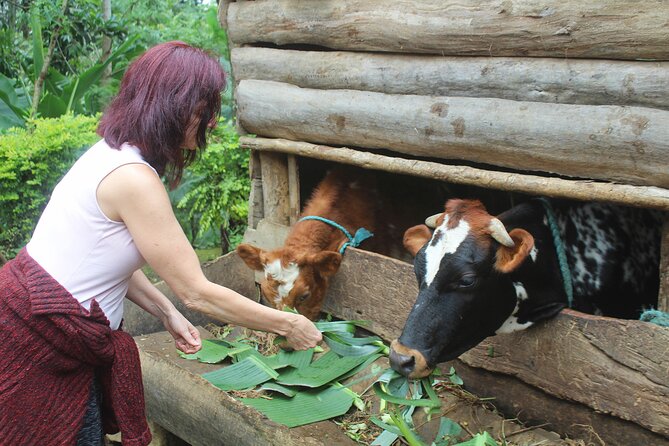
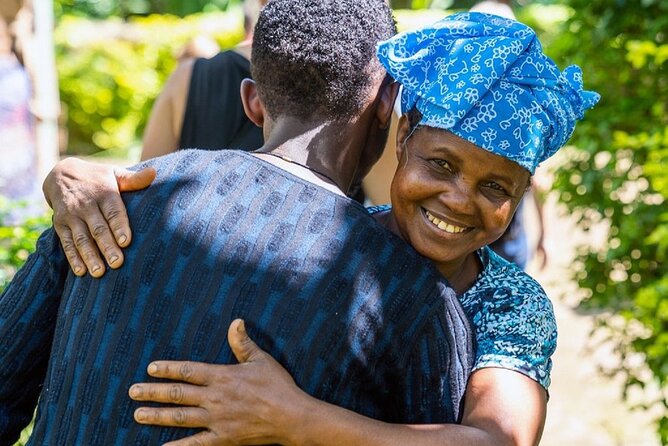
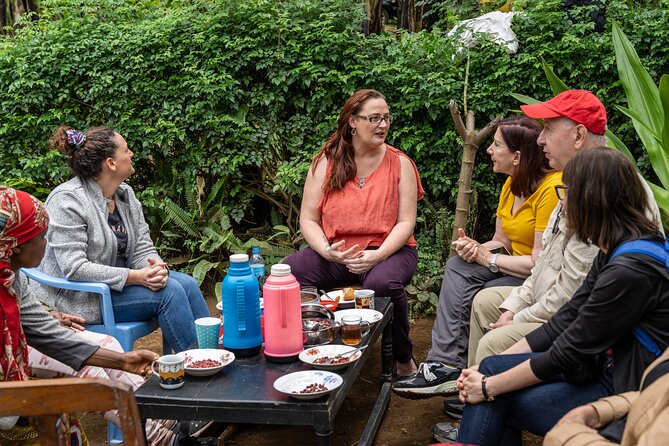
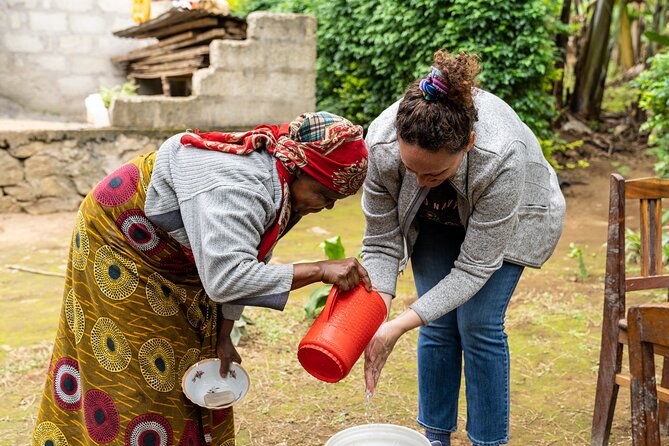
At the house, Mama Max welcomes you with traditional chai tea and locally grown coffee. Tea and a snack are provided on every tour, so you do not need to treat the visit as a full meal.
The food and drink matter because they slow the experience down. You are not simply shown a farm and sent back to town. Sitting together creates room for questions and conversation, and it lets the household feel like a home rather than a display.
You may also be offered lunch for an extra $5. That is a modest addition if you want the visit to fill more of your day, but lunch is not included in the base price. Since the tour lasts around two to three hours, most people can probably treat the included snack as sufficient unless they are planning to stay longer or have no other meal arranged.
The local coffee is a particularly fitting part of the visit. Coffee is one of the crops connected with Mama Max’s expanding set of businesses, so you are not drinking an unrelated refreshment. The cup helps connect the conversation to the work you are seeing.
Keep your expectations grounded. This is a household visit, not a restaurant meal or a staged cooking class. The appeal comes from meeting the person behind the work and hearing how the farm supports her family.
A different kind of day out entirely:
- Balloon Safari & Bush Breakfast in Serengeti – Miracle Experience
★ 5.0 · 1,646 reviews - Tanzania Classic – 7 Days
★ 5.0 · 1,151 reviews - 4 Days Group Camping Safari
★ 5.0 · 1,101 reviews - 5 Days Group Camping Safari
★ 5.0 · 730 reviews
Seeing the farm businesses grow step by step
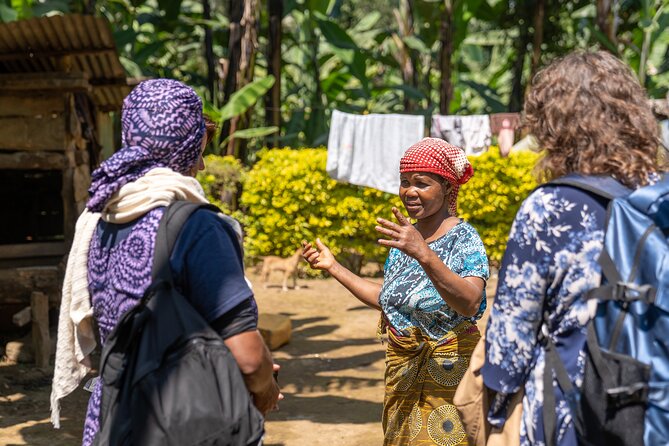
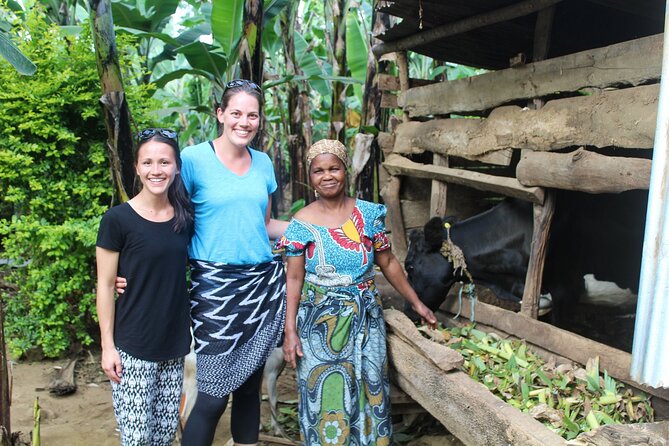
Mama Max enjoys showing how one successful activity helped support the next. The examples provided include banana trees, coffee, chickens, goats, and cows.
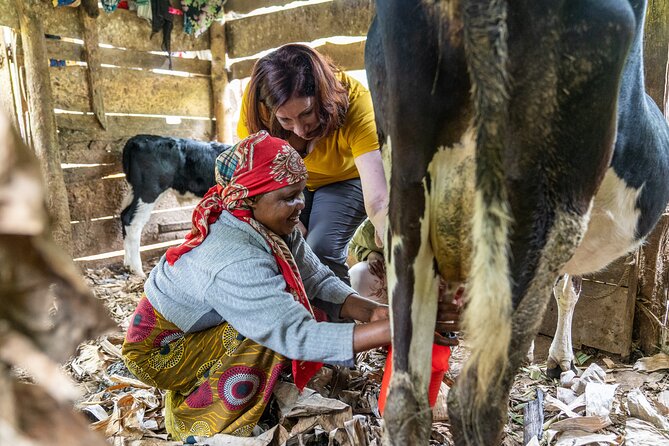
You may see the farm through simple tasks rather than a formal demonstration. If you want to take part, you can help cut vegetation for the animals, check chicken nests for eggs, and milk the cow. These activities are optional, which is useful. You can participate actively, or you can observe and ask questions.
The chores also show why the tour feels different from a general cultural presentation. You are not only hearing that farming requires work. You can see the daily tasks involved in feeding animals and managing a household enterprise.
Still, do not expect every activity to take place on every visit. The description says you can help if you like, but conditions at a working farm can vary. The availability of animals, chores, and demonstrations may depend on the day.
For you, the best approach is to treat these tasks as a chance to connect, not as a checklist. Checking for eggs may sound small, but it gives you a direct sense of how several modest income sources can fit together. A cow, a chicken coop, coffee plants, and banana trees each play a different role.
This is also where the $35 price begins to make sense. You are paying for a private cultural experience, local guiding, and access to a community program, while the proceeds go to charity. It is not the cheapest possible way to spend a few hours in Arusha, but it offers more purpose than a standard farm photo stop.
The story behind The Small Things
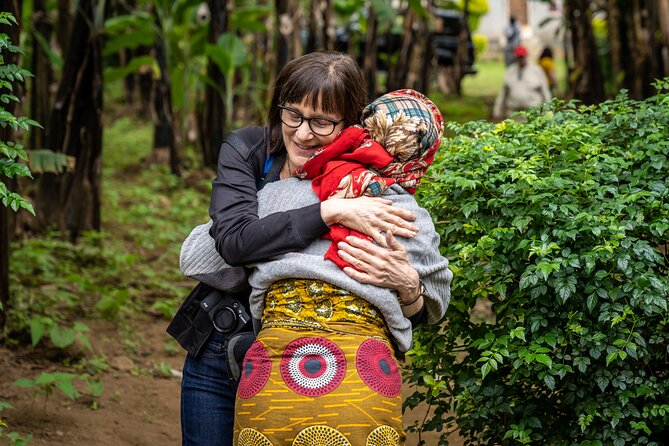
The nonprofit’s work is an important part of the visit, not a footnote. The Small Things began after concern about what happened to children connected with orphanages once they returned to their villages.
The organization’s response was to seek better ways to support children, families, and communities. The tour does not ask you to focus only on charity as a handout. It shows how training, microfinance, and business development can help parents create more secure homes.
You will not be given every detail in advance, and that is part of the conversation. The organization’s approach is explained on site, where you can ask questions and connect the general program to Mama Max’s experience.
I appreciate that the tour frames poverty through capability as well as hardship. Mama Max is presented as someone who worked her way forward, built several enterprises, and now mentors other women. That does not erase the difficulties she faced, but it avoids reducing her to a sad story for visitors to consume.
The two named guides associated with the experience, Reuben and Andrew, have been praised for explaining both the nonprofit and other social enterprises. If one of them leads your visit, you can expect the tour to include more than a basic farm walk. Ask them to explain how the program decides what support a family needs and how training links to long-term independence.
Cost, duration, and practical value
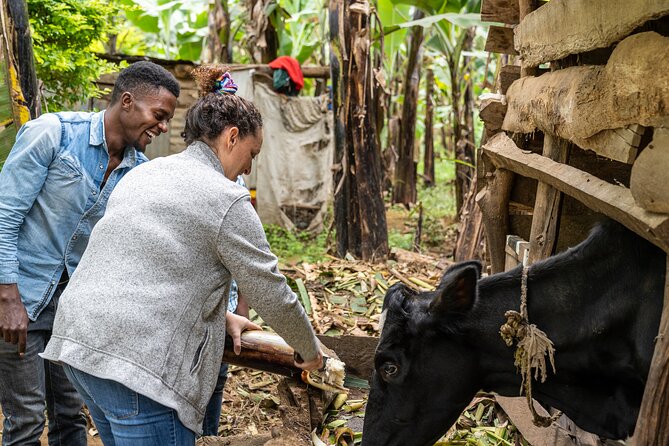
The price is $35 per person. For a private two-to-three-hour experience with pickup offered, a snack, tea, coffee, and charitable proceeds, that is a fair price, especially if you value direct community contact and local social context.
Group discounts are available, so the cost may work better for a family or small group. The activity is private, meaning only your group participates. That gives you more freedom to ask questions and choose between walking and driving.
Mobile tickets are accepted, and confirmation is provided when you book. The meeting point is Happy Family Children’s Village in Nkoaranga, and the tour returns there at the end.
You should plan for basic outdoor conditions. Most people can take part, but you need to manage uneven or hilly ground if you choose to walk. Service animals are allowed.
Pickup is offered, but the supplied details do not specify the exact pickup area, time, or vehicle arrangements. Confirm those details before you set your day around the tour. The same applies to lunch. It costs an extra $5, but you should arrange it ahead of time rather than assume it will be available without notice.
Free cancellation is allowed up to 24 hours before the start time for a full refund. Changes or cancellations inside that period are not accepted for a refund, with cut-off times based on local time.
Who will enjoy this Arusha experience most
I would recommend this tour to you if you want:
- A human-scale visit outside the usual safari circuit
- A better understanding of microfinance and family business
- A private activity with room for questions
- A respectful look at nonprofit work without direct child contact
- A gentle cultural encounter involving food, farming, and conversation
- A way to spend money that supports The Small Things
It is especially suitable for adults, families with older children, students, and anyone interested in social enterprise. The practical farm chores can make the visit more engaging for children, but the nonprofit discussion may be the part that holds the most meaning for adults.
You may want to skip it if you need a highly structured attraction with guaranteed demonstrations, polished facilities, or a full meal included. It is also not the best choice if uneven ground is a serious problem and you cannot arrange the driving option.
The tour is not designed as direct access to children. If your aim is to meet children at a care center, this experience will not provide that. Its purpose is to show a more responsible model focused on families and community support.
Should you book the Microfinance Family Farm Tour?
Book it if you want your Arusha stay to include a thoughtful local encounter, not just another scenic stop. Mama Max’s farm gives practical shape to the idea of microfinance, while The Small Things provides the wider explanation of how business support can help families stay together.
The strongest reasons to go are the private format, the chance to speak with Mama Max, the optional farm tasks, and the fact that the $35 proceeds support charity. The main trade-offs are the simple setting, uneven ground, limited duration, and the lack of direct contact with children.
If you are comfortable with those limits, this is a meaningful addition to a safari itinerary. Bring questions, wear sensible shoes, and choose walking or driving based on your comfort. You will leave with a clearer sense of how small enterprises can grow into a family support system, and why local solutions deserve more attention than quick charity fixes.
FAQ
How long does the Microfinance Family Farm Tour last?
The tour lasts approximately two to three hours. About 30 minutes is spent at The Small Things site, followed by around two hours at Mama Max’s home and farm.
Where does the tour begin and end?
The tour begins at Happy Family Children’s Village on Unnamed Road in Nkoaranga, Tanzania. It ends back at the same meeting point.
Is food included?
Tea and a snack are included on all tours. Lunch is available for an additional $5 USD.
Can I walk to Mama Max’s house?
Yes. You can walk or drive from the starting site to Mama Max’s home, depending on your preference. Walking requires the ability to manage uneven or hilly ground.
Will I meet children at Happy Family Children’s Village?
No direct contact with children should be expected. The visit includes an overview of The Small Things’ work, while child protection rules are respected.
Can I cancel for a full refund?
Yes, if you cancel at least 24 hours before the experience’s start time. Cancellations or changes made less than 24 hours before the start are not refunded.
Just added in Arusha
- Zanzibar: Prison island half day tour★ 5.0 · 3 reviews
- Zanzibar: 4-Day Tarangire, Serengeti & Ngorongoro Safari★ 5.0 · 1 review
- Walking Safari Arusha National Park★ 5.0 · 1 review
- Two Days Shared Safari to Tarangire & Ngorongoro Crater★ 5.0 · 2 reviews
- 8 Days Serengeti Migration safari★ 5.0 · 11 reviews
- tarangire, ngorongoro & lake manyara park 3 days private tour★ 5.0 · 11 reviews
- tarangire & ngorongoro 2 days tour★ 5.0 · 14 reviews
- mount meru 4 days hike★ 5.0 · 2 reviews
Farms, compared.
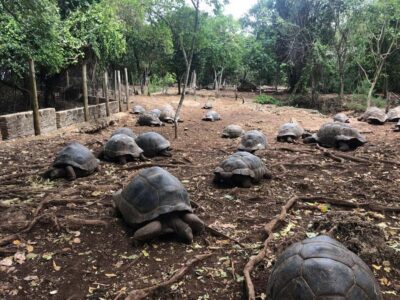
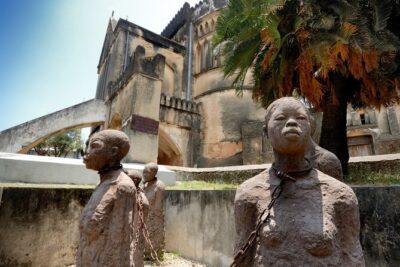
Full-Day Private Stone Town +Spice Farm and Prison Island Tour
Read our review →
Stone Town & Spice Farm Private Tour Lunch Included
Read our review →
Zanzibar full day Jozani forest + Spice farm and stone town
Read our review →
Arusha or Moshi : Hot Spring, Waterfall & Coffee Farm Tour
Read our review →
Browse the lists this tour appears in