

Reviewed · CITY TOURS
Private Insightful City Tour of Dar es Salaam
Dar es Salaam gets interesting fast. This private tour pairs Kariakoo Market and Kivukoni Fish Market with city landmarks, giving you a close look at trade, faith, and colonial-era change. I like the personal format and the chance to ask questions in clear, fluent communication. I also like that the guide can adjust the focus to your interests. The main drawback is timing: the advertised one to two hours seems short for all the listed stops.
You should expect a lively city walk, not a polished sightseeing circuit. The markets are the heart of the experience, with strong smells, tight activity, and plenty to watch. Bring patience, modest clothing, and comfortable shoes, since the tour calls for moderate physical fitness and may involve walking through crowded areas.
In This Review
- Key points to know before booking
- Why this short Dar es Salaam tour works
- Kariakoo Market: Dar es Salaam’s commercial engine
- Kivukoni Fish Market: following the catch from water to city
- St. Joseph’s Cathedral and the German connection
- The Askari Monument and memories of war
- The 1898 ocean-facing sanctuary
- A private guide changes the feel of the visit
- What the $55.26 price buys you
- Timing, walking, and practical comfort
- Who should book this experience?
- Cancellation and booking advice
- Should you book the Dar es Salaam city tour?
- FAQ
- Where does the Dar es Salaam city tour start?
- Where does the tour end?
- How long does the tour last?
- Is pickup included?
- Is this a private tour?
- What markets are visited?
- Which historic landmarks are included?
- Are drinks included?
- Can I cancel for a full refund?
Key points to know before booking
- Kariakoo Market gives you a direct look at Dar es Salaam’s daily commerce, from shopping to the movement of people and goods.
- Kivukoni Fish Market connects the city to its fishermen, boats, transport, and fish trade.
- The private format lets you shape the conversation, rather than follow a fixed group script.
- St. Joseph’s Cathedral adds German colonial-era history to a tour otherwise focused on street life and trade.
- The Askari Monument and the 1898 sanctuary offer short but useful city-center context, though the exact time at each is not specified.
- Pickup costs an extra $10, while the meeting point is Bustani ya Posta in central Dar es Salaam.
Why this short Dar es Salaam tour works
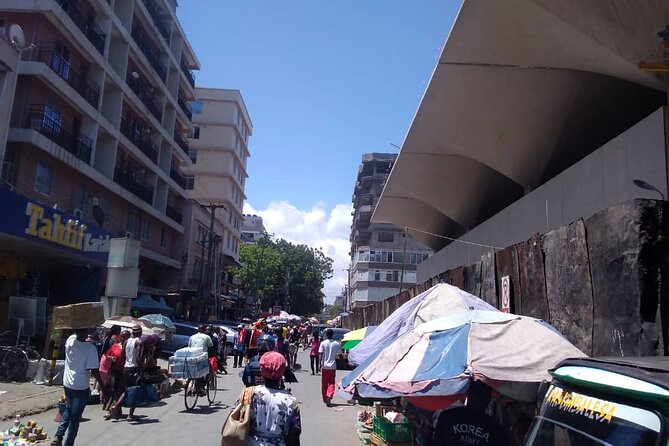
Dar es Salaam can feel spread out and hard to read at first. A private local guide helps connect the pieces. Instead of seeing only beaches, hotels, or major roads, you get a look at the places where residents shop, sell, worship, work, and remember the past.
I especially like the pairing of Kariakoo Market and Kivukoni Fish Market. They show two different sides of the city. Kariakoo is a major commercial center, while Kivukoni focuses more closely on fishing, transport, and the business of bringing food from the water to the city.
The historic stops add useful contrast. St. Joseph’s Cathedral brings in German building history and Christian life. The Askari Monument points to African troops and carriers who served the British Army during the First World War. The final landmark sanctuary, built in 1898 and facing the ocean near judiciary buildings, gives you another piece of the city’s early colonial story.
This is not a tour for checking off grand monuments at a fast pace. It is better suited to you if you want a guide who can explain what you are seeing and respond to your questions.
A few more options to weigh up in Dar es Salaam
- Dar es Salaam: City Tour
★ 4.7 · 159 reviews - Dar es Salaam City Center: Walking Tour
★ 4.8 · 102 reviews - Dar es Salaam City Tour – Everyday
★ 5.0 · 64 reviews
Kariakoo Market: Dar es Salaam’s commercial engine
The first major stop is Kariakoo Market, described as one of the biggest markets in East Africa. The appeal is simple: you see the city at work. You are not looking at a display arranged for sightseeing. You are entering a place built around buying, selling, movement, and everyday needs.
Allow about 45 minutes here. That is enough time to get a strong first impression, look at the activity, and ask your guide about the market’s past and present. It is not enough time to understand every corner, so you should treat the stop as an introduction rather than a full shopping expedition.
Expect color, smells, noise, and people moving with purpose. The market can feel intense, especially if you are more used to quiet historic districts. That is also its value. Your guide can help explain what is happening around you instead of leaving you to guess.
I like that the tour presents Kariakoo as more than a place to buy things. The market carries a story about Dar es Salaam’s growth and its role as a trading city. You learn how commerce shapes the center, and you get a better sense of the city beyond its waterfront hotels.
The practical challenge is crowding. Keep your belongings secure and stay aware of where the guide is. The tour description does not promise a dedicated shopping list or a particular set of products, so come for the atmosphere and explanation first.
Kivukoni Fish Market: following the catch from water to city
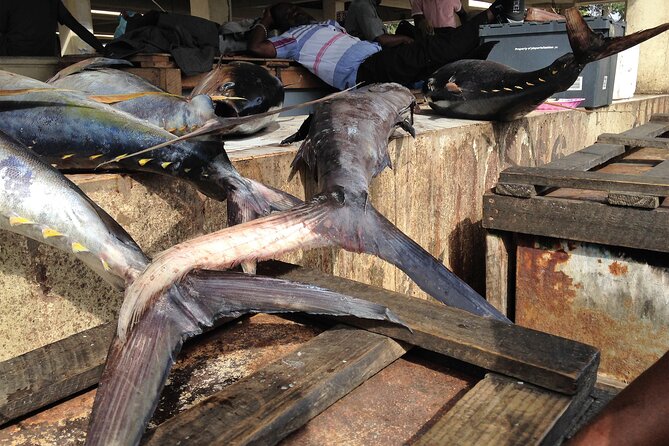
Kivukoni Fish Market shifts the focus from general commerce to the fishing economy. Here you learn about fishermen’s daily work, the ways they travel, and how fish moves through the local trade.
The planned stop is about 45 minutes, with travel time already included in the overall tour duration. That wording matters because the two markets alone account for about 90 minutes. If the total tour is advertised as one to two hours, you should confirm the exact schedule before setting other plans.
This stop is valuable because it links Dar es Salaam to the sea in a practical way. You are not simply looking at boats or a harbor view. You are learning about transport, fishing, and the trade that supports the market.
The setting may be busy and strongly scented. That is part of the experience, but it may not suit you if you want a quiet or carefully staged outing. I would choose this tour precisely because it does not soften the city’s working side.
The guide’s role matters here. Fish markets move quickly, and a local explanation can help you understand what you are seeing. The private setup also gives you room to ask about fishermen, transport, buying, or the wider role of the waterfront.
One review praised the fish market as amazing for its colors, smells, activity, and people. That is a useful warning and an invitation at the same time. You will probably remember this stop because it feels immediate and real, not because it is comfortable.
St. Joseph’s Cathedral and the German connection
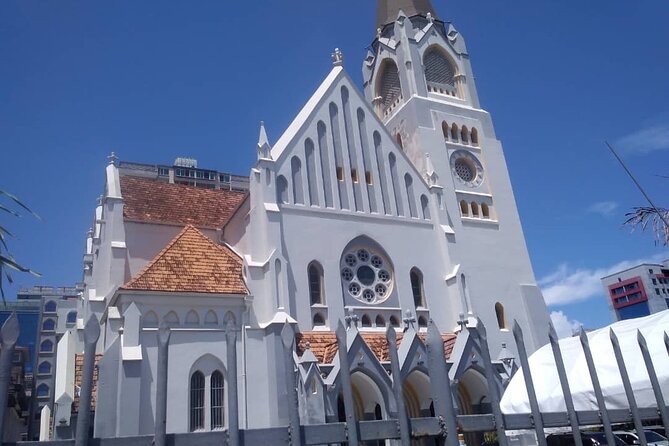
St. Joseph’s Cathedral of the Archdiocese of Dar es Salaam offers a sharp change of pace. Dating from the early 1900s, it was built by the Germans and faces the Dar es Salaam Port of Zanzibar.
The planned visit is about 20 minutes. That makes it a compact stop, but the building gives the guide a chance to explain another period in the city’s past. After the markets, the cathedral’s architecture and religious setting can feel calm and formal.
I would not expect a long guided church visit at this duration. Instead, think of it as a brief look at a landmark and the story around it. The tour information does not specify interior access, religious services, or architectural details, so your experience may depend on the conditions on the day.
The cathedral works well in the route because it prevents the tour from becoming only a market walk. You see how trade, religion, European rule, and port activity all meet in central Dar es Salaam.
For respectful sightseeing, dress modestly and follow any instructions at the church. The tour calls for moderate physical fitness, but no special mobility details are provided. If you need a slower pace, raise that when booking your private tour.
A different kind of day out entirely:
- MIKUMI NATIONAL PARK – 3 Days
★ 4.5 · 63 reviews - 2 nights 3 days safari to mikumi national park
★ 5.0 · 62 reviews - 2 Days 1 Night Mikumi National Park from Dar es salaam
★ 5.0 · 60 reviews - The Best/Top Rated Cultural City Tour in Dar es Salaam
★ 5.0 · 57 reviews
The Askari Monument and memories of war
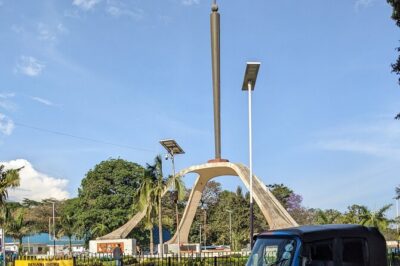
Another stop focuses on the Askari Monument. It commemorates African troops and carriers who served the British Army during the First World War.
The monument also carries a change-of-power story. Before it was erected, a monument to a German soldier reportedly occupied the spot. That earlier monument was removed after the British took control, giving the Askari Monument a symbolic role beyond its physical size.
This is the kind of stop that benefits from a guide. On your own, you might see a statue and take a photograph. With context, you can think about African service, European control, and the way public monuments change when political power changes hands.
The schedule does not give a separate time for the Askari Monument. That is another reason to ask how the guide plans to divide the visit. If the tour is truly limited to one or two hours, the stop may be brief.
Still, even a short explanation can improve your understanding of central Dar es Salaam. The monument is a reminder that the city’s history is not only about buildings. It is also about people recruited, carried, fought, and remembered under foreign armies.
The 1898 ocean-facing sanctuary
The final described landmark is a sanctuary built in 1898. It faces the ocean and is surrounded by Dar es Salaam’s judiciary buildings.
The name is not specified in the tour details, so I would confirm it with the operator if this stop is important to you. What is clear is its age, waterfront position, and connection to the early institutional center of the city.
This stop seems designed for a short explanation rather than a long visit. It adds another religious and civic layer after the cathedral and monument. You can ask how the sanctuary fits into the city’s development and why the surrounding judiciary buildings matter.
The setting should give you a useful sense of central Dar es Salaam’s layout. You are not visiting isolated sights. You are seeing religious buildings, public institutions, markets, and the port in the same urban area.
Because the stop has no listed duration, do not assume it will receive the same attention as Kariakoo or Kivukoni. If you want more time at historic buildings than at markets, say so early. The private format makes that request more realistic than it would be on a large group excursion.
A private guide changes the feel of the visit
Only your group participates, which is one of the tour’s strongest features. You can ask questions without worrying about holding up a busload of people, and the guide can respond to your particular interests.
The communication is another asset. The experience promises fluent communication with the guide, making it easier to ask about history, local life, or what you are seeing in the markets. That matters in places where a quick explanation can change your whole reading of a scene.
One review described the guide as happy to accommodate personal interests and strongly invested in the city. That is exactly what you want from a short private tour. With limited time, a guide who listens can help you spend your minutes where they matter most.
The tour can also adapt to conditions. One booking became a walking and tuk-tuk tour because of rain. That does not mean tuk-tuk transport is guaranteed, but it shows some practical flexibility when weather affects the original plan.
You should still ask questions before the start. Confirm the walking distance, the exact stop order, and whether the unnamed historic landmarks are included in the time you have. Clear expectations will help you judge the $55.26 price fairly.
What the $55.26 price buys you
At $55.26 per person, this is not the cheapest way to spend a couple of hours in Dar es Salaam. The value comes from the private guide, local interpretation, and access to several different parts of the city in one compact outing.
Admission to the listed stops is free, so you are paying mainly for the guide’s time and the private arrangement. Bottled water and a soft drink are included, a small but welcome touch in a warm city.
The price makes more sense if you are traveling as a small group and want the flexibility of a private visit. It is less compelling if you only want to look at landmarks from outside or if you are comfortable exploring markets without explanation.
The tour’s average booking lead time is 31 days. That suggests you should plan ahead, especially if your schedule in Dar es Salaam is tight. The operating hours are listed as 9:00 a.m. to 6:00 p.m., Monday through Sunday, from February 26, 2023 through June 17, 2026.
Pickup is offered for an additional $10. The standard meeting point is Bustani ya Posta in Dar es Salaam, and the tour returns there. If you are staying elsewhere, compare the extra pickup charge with the time and cost of reaching the meeting point yourself.
Timing, walking, and practical comfort
The advertised duration is approximately one to two hours. Yet the listed times are 45 minutes at Kariakoo, 45 minutes at Kivukoni, and 20 minutes at St. Joseph’s Cathedral, before adding the Askari Monument and the 1898 sanctuary.
That adds up to more than the shorter end of the advertised range. I would contact Chuh Chuh Tours before booking if you have a flight, cruise departure, restaurant reservation, or another fixed appointment afterward.
The tour requires a moderate level of physical fitness. Comfortable shoes are sensible, and you should be ready for walking through active market areas. The information does not provide details about seating, step-free access, restroom stops, or a maximum walking distance.
Water and a soda are included, but carry what you normally need for the day. Dress for warm conditions and choose clothing suitable for entering religious places. Since weather has affected the format before, a rain plan is worth confirming.
Your mobile ticket should be available after booking, and confirmation is issued at the time of booking. The tour operates near public transportation, which makes the central meeting point useful if you are not paying for pickup.
Who should book this experience?
I would choose this tour if you want to understand Dar es Salaam through its working places. The markets are the main attraction, and you should be comfortable with crowds, strong smells, and ordinary city activity.
It also suits first-time visitors who want a short orientation with historical context. The combination of markets, cathedral, monument, and sanctuary gives you several reference points for later exploring.
The private format is useful for couples, families, friends, or solo visitors who want to ask many questions. It may also help if your interests are specific, since the guide can accommodate them.
I would be more cautious if you want a slow architectural tour, a long museum visit, or a precisely timed schedule. The tour covers a lot, and the listed timing needs clarification. You may get a better experience by treating it as a flexible introduction rather than a tightly measured two-hour route.
Cancellation and booking advice
You can cancel for a full refund up to 24 hours before the experience begins. Cancellations or changes made less than 24 hours before the start time are not accepted for a refund, and the cut-off follows local time.
When booking, confirm four points: the actual total duration, the time given to the Askari Monument and sanctuary, the pickup arrangement, and the meeting instructions at Bustani ya Posta. Those details matter more here than small extras.
Should you book the Dar es Salaam city tour?
Book it if Kariakoo Market and Kivukoni Fish Market sound more appealing than a standard monument circuit. The best part is the access to daily city life, backed by a private guide who can explain what you are seeing and adjust to your interests.
The $55.26 price is reasonable for a private experience with drinks included, though it is not a bargain if you only want a quick walk past landmarks. The extra $10 pickup fee is fair for convenience, but you can meet at Bustani ya Posta instead.
My biggest reservation is the schedule. The listed stop times already approach two hours before the unnamed stops are counted. Confirm the timing, then book if you want a direct, market-centered introduction to Dar es Salaam rather than a polished sightseeing show.
FAQ
Where does the Dar es Salaam city tour start?
The tour starts at Bustani ya Posta in Dar es Salaam, Tanzania.
Where does the tour end?
The activity ends back at the meeting point.
How long does the tour last?
The approximate duration is listed as one to two hours. The individual stop times total longer than one hour, so confirm the exact schedule with the operator.
Is pickup included?
Pickup is offered for an additional $10. The standard meeting point is Bustani ya Posta.
Is this a private tour?
Yes. Only your group participates in the activity.
What markets are visited?
The tour visits Kariakoo Market and Kivukoni Fish Market.
Which historic landmarks are included?
The route includes St. Joseph’s Cathedral of the Archdiocese of Dar es Salaam, the Askari Monument, and an ocean-facing sanctuary built in 1898.
Are drinks included?
Yes. Bottled water and a soda or soft drink are included.
Can I cancel for a full refund?
Yes, if you cancel at least 24 hours before the experience start time. Cancellations or changes made less than 24 hours before the start time are not refunded.
Just added in Dar es Salaam
- Zanzibar: 3 Days to Mikumi and Chizua Waterfalls★ 3.5 · 5 reviews
- 3 Days and 2 Nights Mikumi Private Safari Adventure★ 5.0 · 2 reviews
- UDZUNGWA NATIONAL PARK AND WATERFALLS – 3 Days★ 4.5 · 2 reviews
- Explore Dar es Salaam: Full-Day Private City Tour★ 5.0 · 18 reviews
- Stone Town & Spice Tour★ 4.5 · 2 reviews
- Trip to the old City of Bagamoyo★ 5.0 · 1 review
- 2 Day Wildlife Experience and Masai Culture Mikumi Park★ 5.0 · 5 reviews
- Sunrise Beach Walk with Picnic Breakfast Activity★ 5.0 · 3 reviews
City Tours, compared.
Arusha Guided Walking City Tour, Culture, Lifestyle & History
Read our review →
The Best/Top Rated Cultural City Tour in Dar es Salaam
Read our review →
Browse the lists this tour appears in