
Reviewed · WILDEBEEST MIGRATION SAFARIS
Tanzania safari with guide in Italian, the great Migration of the Serengeti
The wildest show has no schedule. This eight-day northern Tanzania safari links Lake Manyara, Ngorongoro Crater, the Serengeti, Lake Natron, and Tarangire in one ambitious circuit, with a small group of no more than six people and an Italian-speaking guide. The central prize is the Great Migration, when huge herds of wildebeest and zebras move through the Serengeti in search of grass and water.
I like the small six-person maximum, which gives you more room in the 4×4 and makes it easier to ask questions or position yourself for wildlife viewing. I also like the range of habitats, from crater floor and open savanna to alkaline lake and baobab country. The main consideration is the pace. You cover a lot of ground, and several days include long drives on rough tracks.
The price is $4,100 per person, including full board, park fees, transfers, water, an AMREF insurance service, and the safari vehicle. That is a serious sum, but the package covers many of the expensive parts of a Tanzanian safari. Your final value depends heavily on the accommodation standard, which should be confirmed before booking because the specific lodges and tented camps are not listed.
In This Review
- Key points to know before booking
- Eight days through northern Tanzania
- Day 1: Arriving in Arusha
- Day 2: Lake Manyara’s forest, lake, and birds
- Day 3: Ngorongoro Crater and a remarkable concentration of wildlife
- Day 4: Entering the Serengeti through Seronera
- Day 5: The Mara River and the migration
- Day 6: From northern Serengeti to Lake Natron
- Day 7: Walking near Natron, then elephants at Tarangire
- Day 8: One last game drive and return to Arusha
- What the $4,100 price includes
- The Italian guide and small-group advantage
- Who should choose this safari?
- Practical details to settle before departure
- Should you book it?
- FAQ
- How long is the safari?
- Where does the safari begin?
- What parks and areas are included?
- Is the safari conducted in Italian?
- How many people can join the safari?
- Is the Great Migration guaranteed?
- What is included in the $4,100 price?
- What is not included?
Key points to know before booking
- Italian-speaking safari guides: Guides named by the company include Jo, Naftal, Omari, Mussa, Michael, Kahim, and Martini. Their language skills and personal attention are a major part of the appeal for Italian-speaking visitors.
- Migration focus from July through October: The itinerary targets the northern Serengeti and Mara River during the period when wildebeest and zebras may be moving through this region.
- Maximum of six people: This is a genuinely small shared safari, not a large coach tour.
- Five major wildlife areas: You visit Lake Manyara, Ngorongoro Crater, Serengeti, Lake Natron, and Tarangire.
- Full board included: Breakfast, lunch, and dinner are included for the stated seven nights, along with water on board.
- A demanding route: The schedule includes early starts, game drives of up to eight hours, and rugged roads near Lake Natron.
Eight days through northern Tanzania
This route is designed as a grand northern circuit rather than a slow stay in one park. You see several of Tanzania’s best-known areas, and each one has a different character. That variety is the strongest reason to choose this itinerary.
The trade-off is time in the vehicle. Safari roads can be bumpy, and moving between parks means some days are partly devoted to driving. I would choose this plan if you want a broad first look at northern Tanzania and especially hope to see the Serengeti migration. If you prefer long hours in one area, a shorter route with more nights in the Serengeti may suit you better.
More Serengeti and Ngorongoro safaris:
- Balloon Safari & Bush Breakfast in Serengeti – Miracle Experience
★ 5.0 · 1,646 reviews - 3 Days Serengeti & Ngorongoro Group Camping Safari
★ 5.0 · 574 reviews - 5-Day Highlights mid-Range Crater, Serengeti, Tarangire
★ 5.0 · 296 reviews
Day 1: Arriving in Arusha
Your safari begins with arrival at Kilimanjaro International Airport or Arusha Airport. Entry formalities are handled before you meet the guide and transfer to Arusha, a journey listed at about one hour.
This is a useful, uncomplicated start. You do not need to arrange your own airport transfer or find a driver after a long international flight. The schedule does not describe sightseeing in Arusha, so think of this as an arrival and orientation day.
You will need to arrange your own international or local flights and entry visa. Your booking information should include your mobile number, passport details, and arrival and departure flight data. Confirmation is issued within 48 hours, subject to availability.
Day 2: Lake Manyara’s forest, lake, and birds
Lake Manyara National Park is compact, but its setting produces a surprising mix of habitats. The park lies beneath the Rift Valley escarpment and includes groundwater forest, open savanna, wet areas, and the lake itself. The lake occupies about 200 square kilometers of the park’s 330 square kilometers.
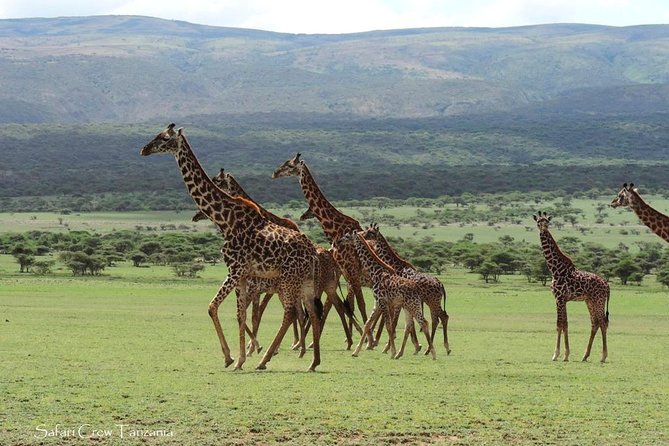
I like this as an opening game drive because it gives you a quick introduction to several sides of Tanzania. Large troops of baboons and other monkeys are a common feature of the park’s wildlife, while elephants and giraffes may appear in the more open areas. Birdlife is a major attraction, with about 380 recorded species.
Flamingos are seasonal here. Large pink flocks are associated with Lake Manyara from December through March, while many move toward Lake Natron between June and October. If flamingos are high on your list, check the travel dates carefully instead of assuming the lake will be covered in pink birds.
The day allows about eight hours for the safari. That sounds generous, but it includes the time needed to enter the park and move between wildlife areas. Park fees are included, so you can focus on the outing rather than paying at each gate.
Day 3: Ngorongoro Crater and a remarkable concentration of wildlife
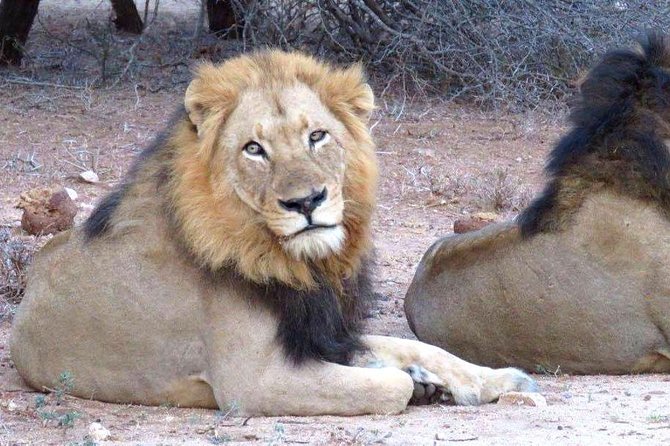
The Ngorongoro Crater is one of the most unusual places on the route. It is the collapsed top of an ancient volcano, forming a broad caldera about 16 to 20 kilometers across. The crater rim rises roughly 600 meters above the floor, creating a natural bowl of grassland and wet areas.
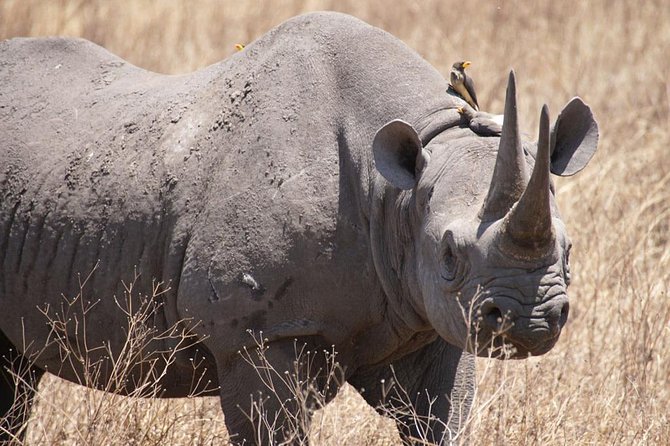
More than 25,000 large animals live inside the crater. You may find most of the region’s typical species here, with one important exception: giraffes generally do not enter because the steep slopes and available food do not suit them.
This is one of the best days for seeing many different animals in a relatively contained area. The crater’s shape helps make wildlife viewing feel concentrated, although it also means the area can feel busy at popular viewpoints and roads. The itinerary allows about seven hours for the visit, including the descent, game drive, and return toward the crater rim.
The crater rim reaches about 2,300 meters above sea level. That altitude matters in practical terms. You may notice cooler conditions there than on the plains, so pack a warm layer even if your main image of Tanzania is hot savanna.
More migration safaris:
- 8 Days Great Wildebeest Calving Migration Safari from Arusha
★ 5.0 · 254 reviews - 10-Day Serengeti Wildebeest Migration Safari from Arusha
★ 5.0 · 218 reviews - 8 Day Spectacular Migration Serengeti mid -Range Tanzania Safari
★ 5.0 · 161 reviews - 9-Day Serengeti Migration Footsteps Tanzania Safari
★ 5.0 · 96 reviews
Day 4: Entering the Serengeti through Seronera
The Serengeti is the heart of this safari. The national park covers about 15,000 square kilometers, while the wider ecosystem extends beyond its boundaries into areas including the Ngorongoro Plains and northern Tanzania.
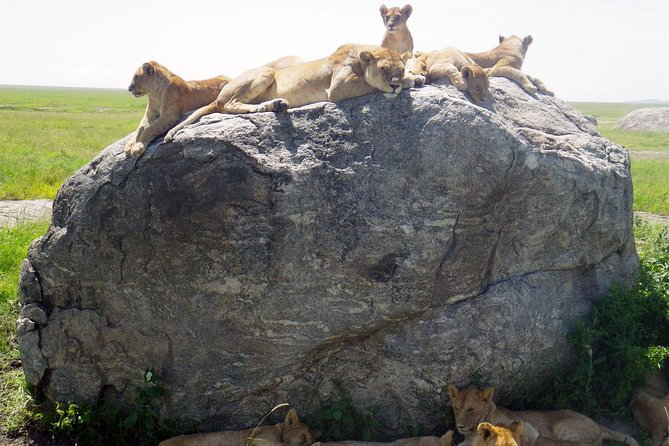
The Seronera area is a useful central base for wildlife viewing. The ecosystem supports enormous numbers of wildebeest, zebras, Thomson’s gazelles, lions, leopards, cheetahs, elephants, giraffes, impalas, hippos, crocodiles, and more than 400 bird species. Exact sightings can never be promised, but the scale of the habitat gives your guide plenty of ground to work with.
The day is planned as an eight-hour game drive. You should expect a full day in the 4×4, with long stretches of open country and frequent stops when wildlife appears. This is where the small group matters. With no more than six people, everyone has a better chance of seeing out, taking photographs, and sharing the guide’s explanations.
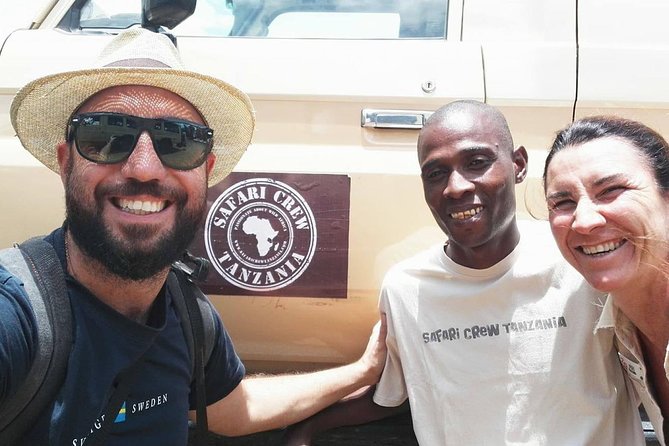
A skilled guide is especially useful in the Serengeti. Guides such as Jo, Mussa, Michael, and Kahim have been praised for their animal knowledge, punctuality, good humor, and ability to adapt the day to the group. The company also has Italian-speaking guides including Naftal and Martini. Ask for an Italian-speaking guide by name or confirm the language in writing before paying, since availability is subject to change.
Day 5: The Mara River and the migration
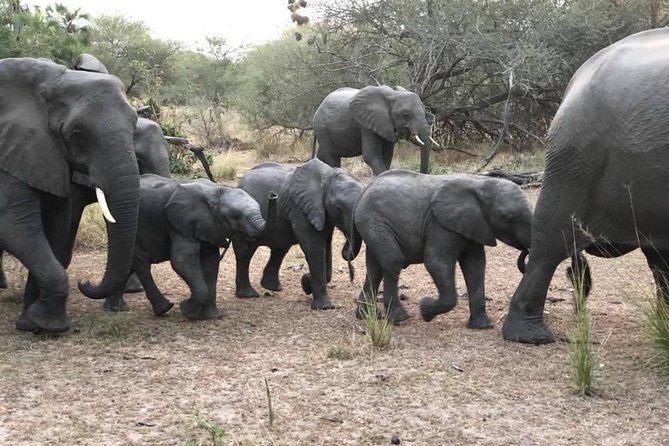
The itinerary places the Mara River at the center of Day 5. From July through October, the northern Serengeti can become a key area for the Great Migration, as wildebeest and zebras search for fresh grazing and water.
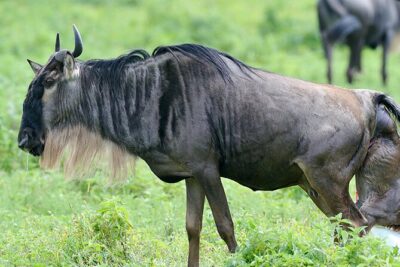
The numbers are hard to grasp. The wider movement involves roughly 1.5 million wildebeest and about half a million zebras. It is not a single procession that arrives on a fixed date. Herds spread across a huge ecosystem, and their movements depend on rain, grass, water, and the behavior of the animals themselves.
That point is important. This safari gives you a strong chance to be in the right broad region during the classic migration season, but no operator can guarantee a river crossing. You might see vast herds, animals gathering near water, or crossings that happen quickly and at a distance. You might also spend time waiting while nothing happens. That uncertainty is part of a wildlife safari, not a flaw in the itinerary.
The planned eight-hour day gives the guide time to search. Bring patience, spare camera batteries, and a willingness to enjoy ordinary zebra, antelope, birds, and the open Serengeti even if the most famous scene does not appear.
Day 6: From northern Serengeti to Lake Natron
Day 6 begins with a final game drive in the northeastern Serengeti. You then leave the park on an approximately 50-kilometer rough track toward Lake Natron. The road is described as difficult, but the views are a major part of the day.
Lake Natron occupies a Rift Valley depression and measures about 50 kilometers long by 25 kilometers wide. Its strongly alkaline water supports cyanobacteria, which feed large numbers of flamingos, particularly during the dry season from June through October.
The setting here is very different from the Serengeti. You move into a rugged volcanic region with lava, dry ground, and sharp geological forms. It is a good choice if you want more than a standard big-five circuit. The drawback is comfort. The road can be rough, and the listed four-hour visit does not include every hour spent reaching the area.
The itinerary also includes Ol Doinyo Lengai, a sacred volcano for the Maasai and the only volcano in the world known for natro-carbonatitic lava. Its summit is nearly 3,000 meters high. Trekking to the top is not currently organized because eruptions in 2007 and 2008 made the route much harder and removed the small resting areas that once existed.
Instead, the afternoon includes a walk in the Engare area. The plan does not give a detailed description of the full walk, so ask about distance, terrain, and footwear before departure. This part of the trip is best for people who enjoy geology, unusual scenery, and a change from sitting in the vehicle.
Day 7: Walking near Natron, then elephants at Tarangire
The morning brings a walking excursion along the shores of Lake Natron through an almost lunar setting. The route then crosses a scenic valley flanked by volcanic peaks before continuing toward Mto wa Mbu and Tarangire National Park.
Tarangire gives you another sharp change of scenery. Covering about 2,600 square kilometers, it is known for giant baobabs, large elephant herds, and the Tarangire River. During the dry season, the river and Silale Marsh can become vital water sources, drawing animals into the park.
You might see lions, leopards, buffaloes, wildebeest, zebras, antelopes, and gazelles, along with roughly 500 bird species. Tarangire is often a rewarding final park because its wildlife viewing feels different from the open Serengeti. The baobabs also give photographs a strong sense of place.
The afternoon game drive is listed at four hours. That is a more manageable stretch after the long northern route, though you will still have traveled from Natron earlier in the day. If elephants and birdlife matter as much to you as the migration, this final park adds real value rather than serving as a simple stop on the way back to Arusha.
Day 8: One last game drive and return to Arusha
The final morning begins with an early game drive in Tarangire. Early hours are often the best fit for a safari schedule, since the day is cooler and animals may be active, though the tour details do not promise particular sightings.
After the drive, you return to Arusha for lunch and airport transfer. The listed duration is about four hours, but your actual departure timing will depend on the flight details you provide. I would avoid booking a tightly timed onward flight unless the operator confirms the transfer schedule.
What the $4,100 price includes
At $4,100 per person, this is not a budget safari. Still, the price includes the core costs that can quickly add up in Tanzania:
- 4×4 safari transport
- Full board
- Park fees
- Airport and other transfers
- Water on board
- AMREF insurance
- All stated taxes and fees
- Breakfast on eight days
- Lunch and dinner on seven days
The maximum group size of six improves the value. You are sharing the vehicle, but not with a large crowd, and the Italian guide can give the group more direct attention.
Drinks at the lodges, personal extras, visas, and flights are not included. The accommodation category is not specified. That is the biggest pricing question I would ask before booking. The company has arranged both lodges and tented camps for past trips, and the quality, location, and meal plan of those properties will shape how comfortable the safari feels.
Full board is convenient, especially on long park days. You do not need to budget separately for most meals, but you should set aside money for drinks and personal purchases.
The Italian guide and small-group advantage
Language can make a real difference on safari. You are not only asking what animal you are looking at. You are asking why it is behaving that way, how the park works, what the Maasai connection to Ol Doinyo Lengai means, and how the migration responds to rain and grass.
The company has used guides named Jo, Naftal, Omari, Mussa, Michael, Kahim, and Martini. Italian-speaking guides are specifically part of the offer, and Naftal has been described as speaking excellent Italian. Confirm the assigned guide before departure, especially if detailed explanation in Italian is central to your choice.
A small group also helps with the rhythm of the day. You can spend less time waiting for people to board a large vehicle, and there should be less competition for window space. You still need to accept shared decisions about meal stops, photo breaks, and how long to watch an animal.
Who should choose this safari?
I would recommend it to you if you want:
- A first safari covering the best-known parks of northern Tanzania
- A serious attempt to see the Serengeti migration in the July to October season
- An Italian-speaking guide
- A small shared group rather than a large vehicle
- Full board and organized transfers
- A mix of wildlife, geology, volcanic scenery, and walking
- A route that includes unusual Lake Natron, not just the standard parks
I would hesitate if you want a slow holiday with little time on the road. Lake Natron adds character, but it also adds rough travel. The itinerary is active, and the eight days are packed.
Families may find the small group useful. Past trips have included children aged nine and eleven, and the company has adapted safari plans for families and teenagers. Still, the long drives and walking sections mean you should discuss your family’s needs before confirming.
Practical details to settle before departure
Pickup is offered, and airport transfers are included. The experience uses paper tickets, and confirmation is subject to availability.
Most people can participate, and the tour is near public transportation, although the safari itself depends on the supplied 4×4 and remote park roads. Ask for the accommodation names, exact pickup time, guide language, and final airport transfer time before you go.
The cancellation terms are strict close to departure. You receive a full refund when canceling at least six full days before the start time. Cancellations two to six days before departure receive 50 percent, while cancellations less than two days before departure are not refunded. A minimum group size is required, and if the operator cancels for that reason, you can choose another date or receive a full refund.
Should you book it?
Book this safari if you want the big northern Tanzania experience in one well-organized route, especially with Italian support and a maximum of six people. The strongest parts are the migration focus, the range of parks, the included costs, and the personal service associated with guides such as Naftal, Mussa, Michael, and Jo.
Before paying, confirm two things: the exact accommodation standard and the current availability of an Italian-speaking guide. If those details suit you, the $4,100 price can be fair for eight days of park fees, meals, transfers, transport, and guiding. If you want guaranteed river crossings or a gentle schedule, choose a slower Serengeti plan instead.
FAQ
How long is the safari?
The safari lasts approximately eight days.
Where does the safari begin?
It begins with pickup at Kilimanjaro International Airport or Arusha Airport, followed by transfer to Arusha.
What parks and areas are included?
The route includes Lake Manyara, Ngorongoro Crater, Serengeti National Park, the Mara River area, Lake Natron, Ol Doinyo Lengai, Engare, and Tarangire National Park.
Is the safari conducted in Italian?
The experience is offered with a guide in Italian. Italian-speaking guides named by the company include Naftal and Martini, but guide assignment is subject to availability.
How many people can join the safari?
The maximum group size is six participants.
Is the Great Migration guaranteed?
No. The itinerary visits the northern Serengeti and Mara River during the July to October migration period, but animal movements depend on rain, water, and grazing conditions. A specific crossing cannot be guaranteed.
What is included in the $4,100 price?
The price includes the 4×4 safari circuit, full board, park fees, transfers, AMREF insurance, water on board, all stated taxes and fees, breakfast for eight days, and lunch and dinner for seven days.
What is not included?
International and local flights, the entry visa, lodge drinks, and personal extras are not included.
Just added in Arusha
- Safari “Kifaru” – 5 days in the most famous Parks in the world★ 5.0 · 4 reviews
- Saadani Day Trip★ 5.0 · 13 reviews
- 3 Days Tanzania Short and Spicy★ 5.0 · 6 reviews
- 5 Day Tanzania Safari Camping Adventure Private Tour★ 5.0 · 2 reviews
- Day Trip to Ngorongoro Crater from Arusha★ 5.0 · 1 review
- SERENGETI NATIONAL PARK Tour★ 4.5 · 5 reviews
- 3 Days Serengeti Park & Ngorongoro Crater Adventure Safari★ 5.0 · 8 reviews
- 6 Days Tanzania Bush Experience Safari★ 5.0 · 6 reviews
Wildebeest Migration Safaris, compared.
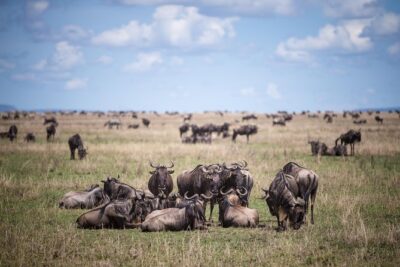
8 Days Great Wildebeest Calving Migration Safari from Arusha
Read our review →
10-Day Serengeti Wildebeest Migration Safari from Arusha
Read our review →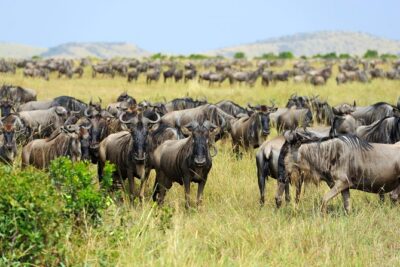
8 Day Spectacular Migration Serengeti mid -Range Tanzania Safari
Read our review →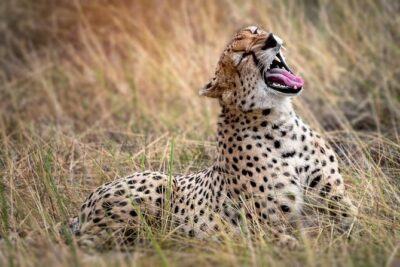
9-Day Serengeti Migration Footsteps Tanzania Safari
Read our review →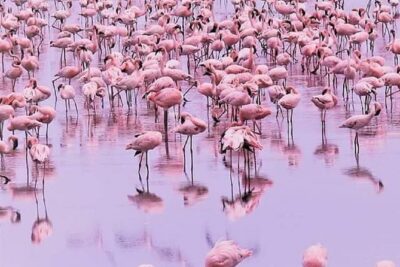

Private 6-Day Great Migration Ndutu Serengeti Safari Tour
Read our review →
4 Day Great Migration Safari Serengeti & Ngorongoro Crater
Read our review →Browse the lists this tour appears in