
Reviewed · WILDEBEEST MIGRATION SAFARIS
7 days great migration safari
Flamingos, lions, and crater views await. This seven-day private safari links Tanzania’s famous wildlife areas with places many shorter routes skip, including Lake Natron and Lake Eyasi. I especially like the mix of classic game viewing and local culture, plus the fact that your own group travels with a private guide rather than joining a large vehicle.
I also like the practical all-in structure: accommodation, meals, park fees, airport transfers, transport, camping equipment, and binoculars are included. The main point to consider is the price, $4,514 per person, and the amount of time spent on rough, winding roads. This is a serious safari, not a gentle resort holiday.
In This Review
- Key things to know before booking
- Why this route is more interesting than a standard safari
- Day 1: Lake Natron and the pink shores of a soda lake
- Day 2: Entering northern Serengeti through Lobo
- Day 3: A full wildlife day around Lobo
- Day 4: From northern plains to Seronera Valley
- Day 5: Leaving Serengeti for Ngorongoro
- Day 6: Descending into Ngorongoro Crater
- Day 7: Lake Eyasi and a different side of Tanzania
- Guides, vehicles, and the value of a private trip
- Is $4,514 per person a fair price?
- Who should book this safari?
- Should you book the 7 Days Great Migration Safari?
- FAQ
- How long is the safari?
- Where does the safari begin?
- What time does the safari start?
- Is this a private safari?
- Which places does the safari visit?
- Are meals included?
- Are airport transfers included?
- Are international flights included?
- Can I cancel for a full refund?
Key things to know before booking
- Lake Natron adds a rare off-route start: You visit a soda lake beside the Rift Valley Escarpment Wall, with flamingos and the sacred Ol’doinyo Lengai volcano in view.
- Northern Serengeti brings seasonal migration chances: From October to December, wildebeest may be moving back toward the southern plains, while the permanent springs around Lobo support resident wildlife all year.
- The safari is fully private: Only your group participates, giving you more say in viewing time, photography stops, and the pace of the day.
- Ngorongoro offers one of Tanzania’s strongest wildlife days: The crater floor is home to large numbers of animals and provides one of the better chances to seek black rhinoceros.
- Lake Eyasi changes the tone of the trip: Visits with Hadzabe and Datoga communities provide a cultural experience that is quite different from a standard park game drive.
- Strong guide service is a major part of the value: Estomih, Simon, Christian, Isaac, Jonathan, and Innocent are among the guides praised for animal-spotting, safety, patience, and clear explanations.
Why this route is more interesting than a standard safari
Many Tanzania safaris focus on the usual triangle of Serengeti, Ngorongoro, and Tarangire. This route takes a different line. It begins at Lake Natron, heads into northern Serengeti, travels south through the Seronera Valley, then reaches Ngorongoro and Lake Eyasi.
That gives you several types of scenery and wildlife viewing in one week. You get pink shores filled with flamingos, open plains dotted with kopjes, a volcanic crater packed with animals, and a visit to communities whose traditions are closely tied to hunting, gathering, and pastoral life.
The route also has a useful rhythm. The first two days are largely about reaching remote wildlife areas. Days three through six provide the main game viewing. The final day shifts toward culture before returning to Arusha.
The word migration needs a little care here. Animal movement changes with rain, food, and timing. The schedule specifically points to October through December for possible wildebeest movement back toward the southern plains, while the dry season can bring large herds into northern Serengeti. You should book this trip for the wider safari experience, not for a guaranteed river crossing or a guaranteed view of a particular animal.
More migration safaris:
- 8 Days Great Wildebeest Calving Migration Safari from Arusha
★ 5.0 · 254 reviews - 10-Day Serengeti Wildebeest Migration Safari from Arusha
★ 5.0 · 218 reviews - 8 Day Spectacular Migration Serengeti mid -Range Tanzania Safari
★ 5.0 · 161 reviews
Day 1: Lake Natron and the pink shores of a soda lake
Pickup is offered from the airport on the first day or from your lodge or hotel after breakfast. The drive follows the Rift Valley Escarpment northward through Maasai country. Along the way, Ol’doinyo Lengai, the holy mountain of the Maasai, appears in the distance.
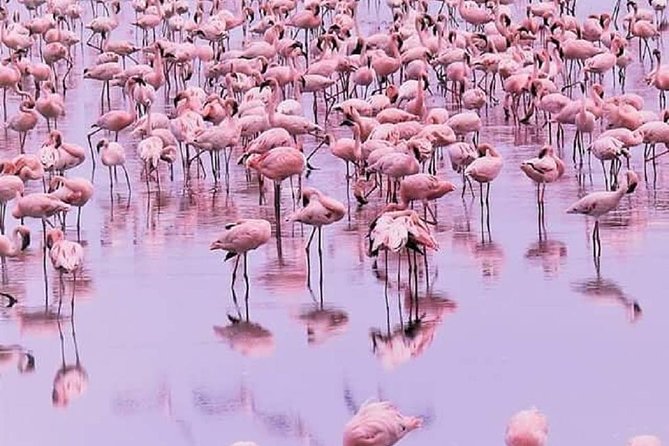
The destination is Ngare Sero, a small Maasai village near Lake Natron. A guided bush walk takes you toward the lake, where the alkaline water can shimmer pink with breeding flamingos. The sight is unusual and gives this safari a stronger sense of place than a route made up only of famous national parks.
You may also choose to walk to a nearby waterfall and take a refreshing bath. That option matters after a long drive, though you should confirm the day’s plan with your guide before setting out. The exact balance between the lake walk and waterfall visit may depend on conditions and timing.
Breakfast, a picnic lunch, and dinner are included. The listed accommodation is Lake Natron Tented Camp. Camping equipment is also included in the package, although the itinerary names tented accommodation for this night and lodges for later nights.
This is a long opening day, and the road is part of the experience. If you want to reach the Serengeti as quickly as possible, Lake Natron may feel like a detour. If you prefer unusual scenery, fewer standard stops, and a closer look at the Rift Valley region, it is one of the best reasons to choose this route.
Day 2: Entering northern Serengeti through Lobo
The second day begins with an early departure. The vehicle climbs through several winding turns, and you get a final view over Lake Natron before leaving the Rift Valley behind.
The route continues through Wasso toward northern Serengeti, entering at Klein’s Gate around midday. From there, you begin a game drive in the Lobo area before reaching Lobo Wildlife Lodge.
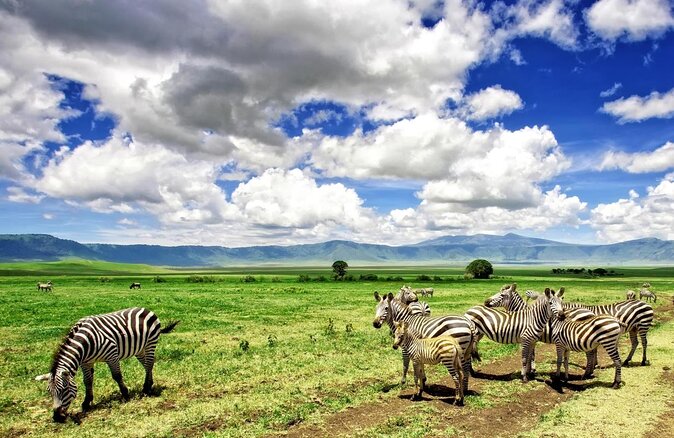
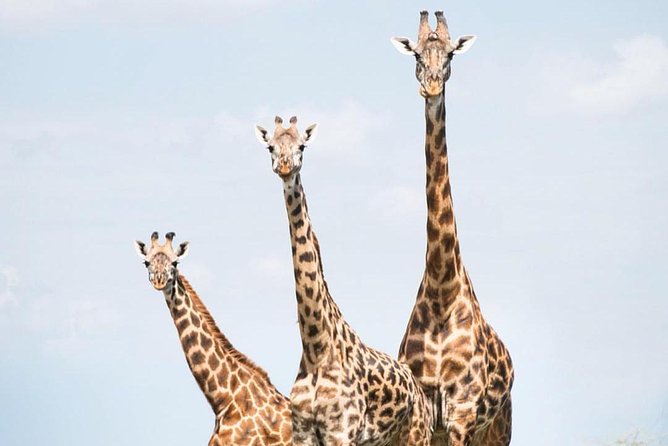
Lobo is a smart base because permanent springs help support animals throughout the year. The area includes open grass plains and kopjes, those rocky outcrops that often provide good lookout points for wildlife. Possible sightings include leopard, lion, buffalo, elephant, giraffe, and zebra.
The timing can be especially interesting from October through December, when large wildebeest herds may be moving back toward the southern plains. Still, animal movements are never scheduled like a train. Your guide’s skill in reading recent sightings and choosing roads will matter more than a promise printed in a brochure.
Breakfast, a picnic lunch, and dinner are included. The combination of an early start, a long transfer, and a first game drive makes this another full day. You should be ready for dust, bumps, and plenty of time in the vehicle.
Day 3: A full wildlife day around Lobo
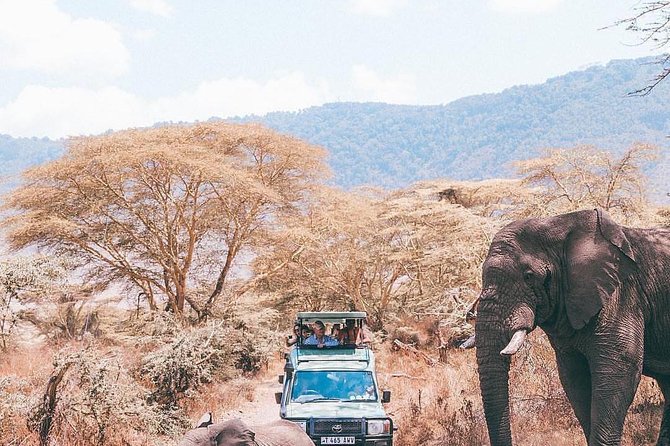
Day three is the first day with no major transfer between regions. That makes it valuable. You can spend the day exploring northern Serengeti, where the plains are described as less explored and especially attractive during the dry season.
The main draw is the migratory herds of wildebeest and zebra. Northern Serengeti also supports resident wildlife, so the day does not depend entirely on the migration. Lion, elephant, hippo, giraffe, crocodile, and the rare oribi antelope may all be seen.
This is the kind of day when a private vehicle helps. You can spend more time at a sighting if your group is interested, and you can ask your guide to focus on birds, smaller antelope, predators, or photography. The included binoculars are useful here, especially when animals are far across open ground.
You return to Lobo Wildlife Lodge for the night. Breakfast, picnic lunch, and dinner are included again.
The practical drawback is that northern Serengeti is remote. Reaching this area takes road time, and you may spend hours driving between sightings. That remoteness is also the reason the area can feel more spacious than heavily visited parts of the park.
A few more options to weigh up in Arusha
- Balloon Safari & Bush Breakfast in Serengeti – Miracle Experience
★ 5.0 · 1,646 reviews - Tanzania Classic – 7 Days
★ 5.0 · 1,151 reviews - 4 Days Group Camping Safari
★ 5.0 · 1,101 reviews - 5 Days Group Camping Safari
★ 5.0 · 730 reviews
Day 4: From northern plains to Seronera Valley
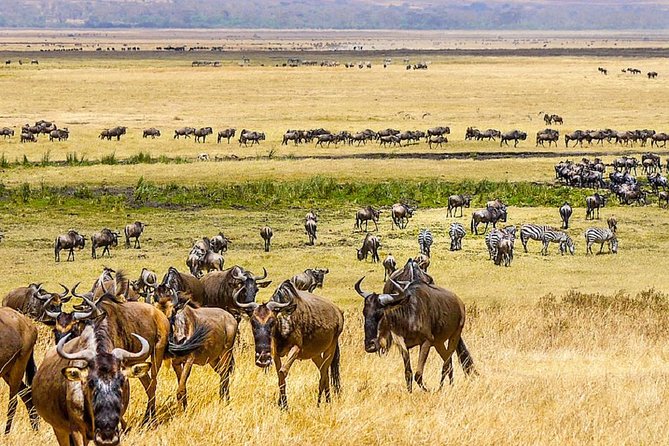
The fourth day shifts south toward central Serengeti. The schedule allows for a relaxed morning drive, followed by a long wildlife day in the Seronera Valley.
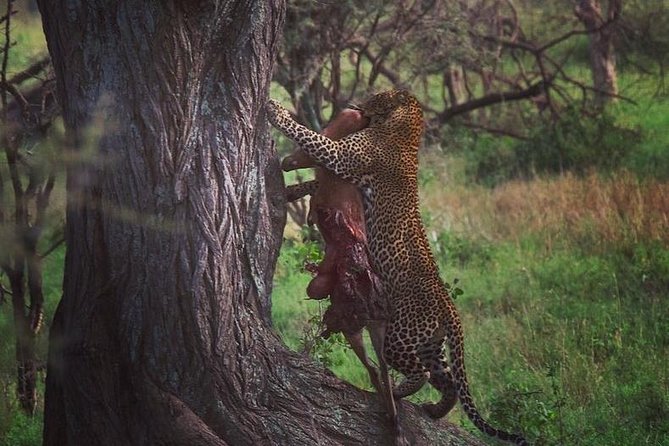
Seronera is known for year-round animal viewing and a strong concentration of predators. You might look for cheetahs, hyenas, leopards, and lions, along with buffaloes, giraffes, hippos, impalas, topi, warthogs, and zebras.
The itinerary also includes a useful bit of field education. Your guide can help you tell a Grant gazelle from a Thomson gazelle. Both have a white rump, but the Thomson gazelle has a thin black stripe beneath the paler brown band, a fully black tail, and a different pattern around the rump. Small details like this turn a drive into a lesson rather than a simple animal checklist.
The day lasts about 12 hours, so you should expect a long stretch in the safari vehicle. That may sound tiring, but it gives you time to follow changing animal activity. You stay focused on the game drive instead of packing and unpacking again.
Day 5: Leaving Serengeti for Ngorongoro
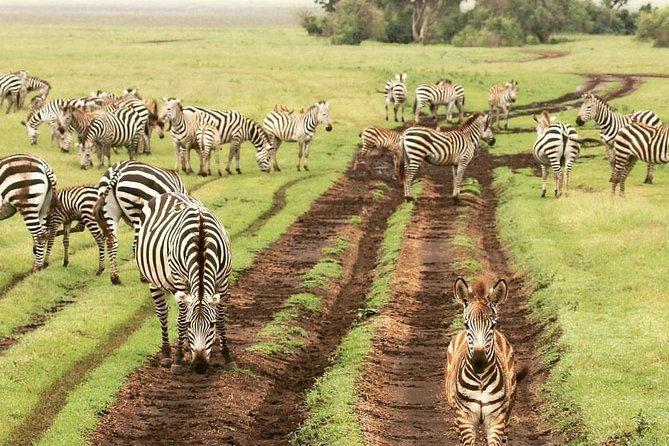
Day five begins with another Serengeti game drive before continuing to the Ngorongoro Conservation Area. The route gives you one more chance to see animals in the park before the setting changes from open plains to crater country.
Ngorongoro Conservation Area covers 8,292 square kilometres and contains nine craters. It is not simply a scenic stop on the way to the main crater. Maasai communities live within the conservation area, where people and wildlife share the same broad region.
Your accommodation is on the crater rim, giving you a view into the crater. That is one of the most memorable settings on the trip, but rim locations can also be cool and exposed. Pack a warm layer for early mornings and evenings, even if Arusha was hot when you began.
This is another roughly 12-hour day, with a game drive and a major transfer. Breakfast, picnic lunch, and dinner are included, and the Ngorongoro entry fee is covered.
The value here comes from combining two very different protected areas. Serengeti gives you broad plains and seasonal animal movement. Ngorongoro gives you a compact wildlife area surrounded by steep crater walls.
Day 6: Descending into Ngorongoro Crater
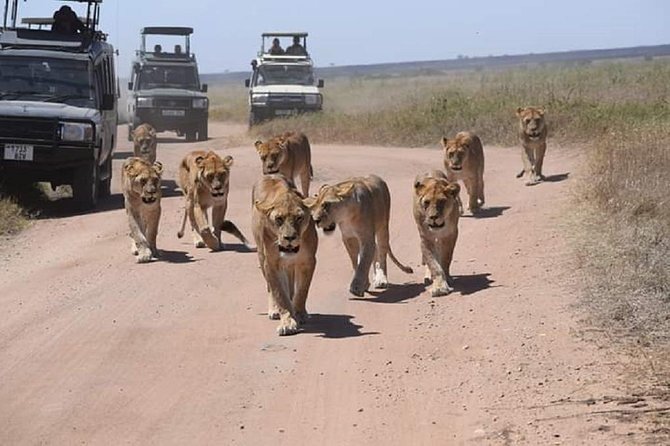
After breakfast, the route follows the crater rim to Seneto Gate. From there, the vehicle descends by an adventurous path onto the crater floor. The first view can be dramatic, with the enclosed floor spreading below you.
Ngorongoro has reliable water, which helps support a large number of animals. Wildebeest and zebra numbers tend to increase during the dry season, while eland, elephant, and waterbuck numbers increase during the wet season.
The focus is the Big Five: buffalo, elephant, leopard, lion, and black rhinoceros. The crater is one of only two places in Tanzania where the highly threatened black rhinoceros can still be observed, according to the tour information. A sighting is never guaranteed, but the chance gives this day real weight.
The schedule lists Lake Eyasi as the stop heading, but the detailed activity for this day is the Ngorongoro Crater game drive. The following day covers Lake Eyasi before the return to Arusha. If you are planning flights or extra hotel nights, ask the operator to confirm the exact overnight arrangement and timing.
This is another 12-hour day. You should expect an early start, long viewing periods, and a return to accommodation after a full day outside.
Day 7: Lake Eyasi and a different side of Tanzania
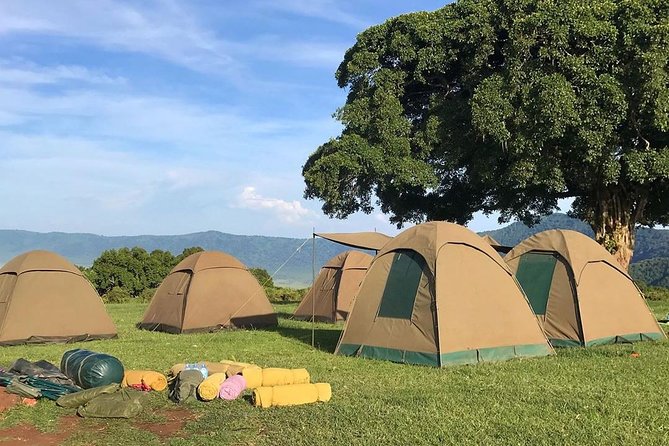
The final day heads to Lake Eyasi in the southwest corner of the Ngorongoro Conservation Area. The lake is fed by the Sibiti and Baray Rivers and provides a setting that feels quite different from the major parks.
The surrounding region is home to the Hadzabe and Datoga communities. The Hadzabe continue a hunting and gathering way of life, while the Datoga are pastoralists. A village visit may include time in family homes, conversations about daily life, traditional dances, and participation in local activities.
This is not another wildlife checklist. It gives you a chance to think about how people live in and around the same broad natural region as Tanzania’s famous animals. You should approach the visit with respect, listen carefully, and let the local hosts set the tone.
The day lasts about nine hours and ends in Arusha. Airport transfer is included, but you should confirm whether your flight departs late enough for the full day. If your international flight is earlier, an extra night or a modified final day may be needed.
Guides, vehicles, and the value of a private trip
The strongest praise attached to this safari concerns the guides. Estomih is repeatedly praised for wildlife and plant knowledge, patience, energy, and personal care. Simon, also called Safari Monster, is praised for animal-spotting, safety, and photography help. Christian is noted for working hard to find elusive animals, while Isaac is praised for locating wildlife during a quieter season.
Jonathan is described as clear and professional when explaining animals and the natural environment. Innocent is praised for being gentle, careful, and effective at finding the animals people hope to see.
Your assigned guide is not specified in advance, so you should not book on the assumption that one particular person will lead your trip. The larger point is that guiding is a major part of the experience. A good guide does more than drive. The guide reads animal behavior, explains what you see, helps with camera angles, and keeps the day safe and comfortable.
Private transport means only your group participates. That is valuable for families, couples, and older visitors who want a flexible pace. The downside is simple: the price per person is usually harder to spread across a large group. Group discounts may be available, so ask about them if you are booking with friends or family.
Is $4,514 per person a fair price?
At $4,514 per person, this is not a budget safari. The price includes private transport, a professional driver-guide, all listed accommodation, park and activity fees, airport transfers, camping equipment, binoculars, breakfast for seven days, lunch for seven days, and six dinners.
International flights are not included. Tips, personal items, and an onboard restroom are also excluded. Those details matter when you compare the cost with a cheaper-looking package.
I see the value in the route rather than just the number of nights. You are paying for a private seven-day trip covering Lake Natron, northern and central Serengeti, Ngorongoro, and Lake Eyasi. You also avoid planning separate transfers, permits, meals, and accommodation in remote areas.
The best value comes if you care about variety, private guiding, and a full route. If your only goal is to see the migration at a specific river crossing, a shorter trip timed tightly around one region may suit you better.
Who should book this safari?
I would recommend it for someone visiting Tanzania for the first time who wants major wildlife areas plus two less standard stops. It also suits families and small private groups that value a flexible vehicle and a guide focused on their interests.
It may work well for older couples too, since past feedback praises the organization and personal care. Still, you should be comfortable with long drives, winding roads, full game-drive days, and basic safari conditions.
This trip is less suitable if you dislike early starts, rough roads, or changing accommodation. It is also not ideal if your schedule allows no room for long transfers or if you want a luxury-only holiday.
The booking terms are reasonably helpful: cancellation is free up to 24 hours before the start time for a full refund. Poor weather or failure to meet the minimum number of participants may lead to a new date, another experience, or a full refund.
Should you book the 7 Days Great Migration Safari?
Book it if you want a broad Tanzania safari with real variety. Lake Natron and Lake Eyasi give the journey more character than a parks-only route, while Serengeti and Ngorongoro deliver the classic wildlife viewing.
Before paying, confirm the exact guide, accommodation sequence, airport timing on day seven, and the migration location for your dates. If those details fit your plans, the private format and all-in inclusions make the $4,514 price easier to justify.
FAQ
How long is the safari?
The experience lasts approximately seven days.
Where does the safari begin?
The safari is based in Arusha, Tanzania. Pickup is offered from the airport on day one or from your lodge or hotel after breakfast.
What time does the safari start?
The listed start time is 7:30 am.
Is this a private safari?
Yes. Only your group participates in the activity.
Which places does the safari visit?
The route includes Lake Natron, Serengeti National Park, the Ngorongoro Conservation Area and Crater, Lake Eyasi, and Arusha.
Are meals included?
Yes. Breakfast is included for seven days, lunch for seven days, and dinner for six days.
Are airport transfers included?
Yes. Roundtrip airport transfer is included.
Are international flights included?
No. Flights from and to your home country are not included.
Can I cancel for a full refund?
Yes, if you cancel at least 24 hours before the experience start time. Cancellations made less than 24 hours before the start time are not refunded.
Just added in Arusha
- Safari “Kifaru” – 5 days in the most famous Parks in the world★ 5.0 · 4 reviews
- Saadani Day Trip★ 5.0 · 13 reviews
- 3 Days Tanzania Short and Spicy★ 5.0 · 6 reviews
- 5 Day Tanzania Safari Camping Adventure Private Tour★ 5.0 · 2 reviews
- Day Trip to Ngorongoro Crater from Arusha★ 5.0 · 1 review
- SERENGETI NATIONAL PARK Tour★ 4.5 · 5 reviews
- 3 Days Serengeti Park & Ngorongoro Crater Adventure Safari★ 5.0 · 8 reviews
- 6 Days Tanzania Bush Experience Safari★ 5.0 · 6 reviews
Wildebeest Migration Safaris, compared.
8 Days Great Wildebeest Calving Migration Safari from Arusha
Read our review →
10-Day Serengeti Wildebeest Migration Safari from Arusha
Read our review →
8 Day Spectacular Migration Serengeti mid -Range Tanzania Safari
Read our review →
9-Day Serengeti Migration Footsteps Tanzania Safari
Read our review →
Private 6-Day Great Migration Ndutu Serengeti Safari Tour
Read our review →
4 Day Great Migration Safari Serengeti & Ngorongoro Crater
Read our review →
6 Days Tanzania Budget Camping Safari with Migration
Read our review →Browse the lists this tour appears in