
Reviewed · SERENGETI & NGORONGORO SAFARIS
4 Days Tarangire, Serengeti and Ngorongoro Crater Camping Safari
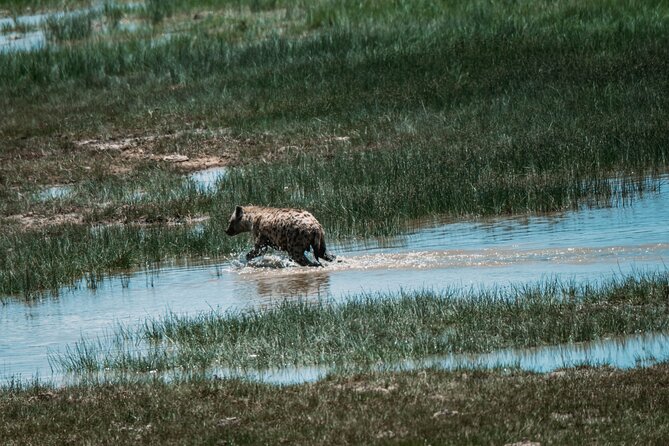
Wildlife comes thick and fast here. This four-day safari links Tarangire, Serengeti, and Ngorongoro Crater in one busy but rewarding circuit from Arusha. I like the strong mix of scenery and wildlife, from elephant country beneath baobabs to the Serengeti plains and the crater floor, and I like that airport transfers, park fees, meals, water, and guiding are included. The main tradeoff is time: long drives and short stays mean you cover a lot of ground, but you will spend less time relaxing at camp.
At $1,100 per person, this is a good-value way to reach three of Tanzania’s headline parks without arranging every permit, meal, transfer, and vehicle separately. The small maximum of four people should make the vehicle more comfortable and the safari more personal. Still, confirm the exact sleeping arrangements before booking, since the trip is sold as a camping safari but includes a night at Fig Big Tree Lodge and a night on the Ngorongoro rim.
In This Review
- Key points at a glance
- Why this four-day route works
- Day 1: Elephants and baobabs in Tarangire
- Day 2: The long road to the Serengeti
- Day 3: Sunrise in the Serengeti, night on the crater rim
- Day 4: Six hours on the Ngorongoro Crater floor
- What the $1,100 price really covers
- The guide and support can shape the trip
- Camping comfort and what to confirm
- Who should book this safari?
- Booking, timing, and cancellation advice
- Should you book the four-day safari?
- FAQ
- Where does the safari start?
- Which parks does the tour visit?
- How long is the Ngorongoro Crater game drive?
- Are park fees included?
- Are meals and drinking water included?
- What is the cancellation policy?
Key points at a glance
- Three major parks in four days: You visit Tarangire, spend nearly two days around the Serengeti, and finish with a six-hour crater drive.
- A compact group of up to four: A small party can mean more room in the vehicle and easier communication with your guide.
- A strong budget package: Park fees, transport, guide, drinking water, four lunches, three dinners, and four breakfasts are included.
- Noel is a key contact: Noel handles coordination and airport transfers, while Gilbert has helped with advance planning and Said has guided some departures.
- Wildlife focus from the first day: Tarangire is known for elephants, Serengeti for the Great Wildebeest Migration and big cats, and Ngorongoro for dense wildlife sightings.
- Expect early starts and long road sections: The journey to Naabi Gate alone takes about three to four and a half hours from the lodge area.
Why this four-day route works

This safari is built around three very different wildlife settings. Tarangire gives you big elephants and giant baobabs. The Serengeti gives you open plains, kopjes, and the chance to search for the Big Five. Ngorongoro offers a compact wildlife area where animals are often easier to spot within the crater.
That variety is the chief reason to choose this trip. You are not spending four days in one park hoping conditions line up. Instead, you get several chances at memorable sightings, with each park bringing a different character.
The route also makes sense geographically. You leave Arusha for Tarangire, continue toward the Serengeti, then return through Ngorongoro. The price includes the practical pieces that can quickly add up on a safari: park entry, transport, meals, water, and a professional driver-guide.
The pace is the catch. Day 2 includes a long road transfer to Naabi Gate, and Day 3 combines a sunrise drive, an early lunch, and the journey to Ngorongoro. If you want a slow camp-based holiday, this schedule may feel rushed. If you want to see Tanzania’s greatest safari names in a short window, it is a sensible plan.
More Serengeti and Ngorongoro safaris:
- Balloon Safari & Bush Breakfast in Serengeti – Miracle Experience
★ 5.0 · 1,646 reviews - 3 Days Serengeti & Ngorongoro Group Camping Safari
★ 5.0 · 574 reviews - 5-Day Highlights mid-Range Crater, Serengeti, Tarangire
★ 5.0 · 296 reviews
Day 1: Elephants and baobabs in Tarangire
The trip begins after breakfast, with a 7:00 am start and a stop in Arusha for last-minute purchases. That small pause is useful. You can deal with forgotten snacks or personal supplies before leaving town, rather than trying to find them once the safari gets moving.
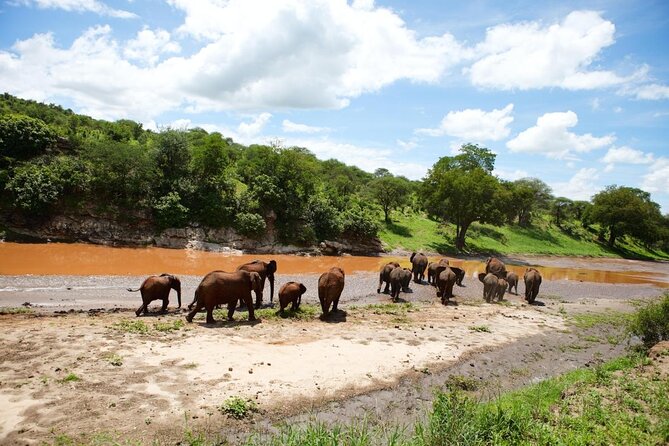
From Arusha, you continue to Tarangire National Park for a game drive and picnic lunch. The park is particularly known for its large elephant population and dramatic baobab trees. Its seasonal wildlife movement can include up to 3,000 elephants, 25,000 wildebeest, and 30,000 zebras.
That does not mean you will see every one of those animals on your particular day. It does explain why Tarangire earns its place on this route. The park has its own identity, rather than serving as a quick warm-up before the Serengeti.
I especially like the contrast between the animals and the trees here. Elephants moving below baobabs make for some of the safari’s most distinctive photographs, while the park’s open areas give you a good setting for watching herds. Your guide and driver are central to the quality of this day, since the experience depends on finding wildlife and explaining what you are seeing.
Lunch is served as a picnic inside the park. This keeps you close to the action, but it also means you should be comfortable eating outdoors and staying on a firm schedule.
Dinner and overnight accommodation are listed at Fig Big Tree Lodge. Because the product is described as camping, ask before departure if your night is in a permanent lodge room, a tented unit, or another arrangement. That detail matters if you are choosing the trip for the camping experience itself.
Day 2: The long road to the Serengeti
You leave early after breakfast for Serengeti National Park. The drive to Naabi Gate is listed at roughly three to four and a half hours and about 238 kilometers. That is a substantial road section, so think of this day as part transfer and part safari.
You stop at Naabi Picnic Site for lunch before entering the park for an afternoon and evening game drive. The timing gives you a useful first look at the Serengeti, though it does not provide the same amount of exploration as a full day already inside the park.
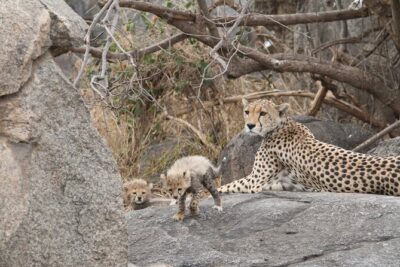
The Serengeti is famous for the Great Wildebeest Migration, but the park’s appeal is broader than one seasonal event. The route highlights lions, rhinos, elephants, buffalo, and leopards, along with hippopotamuses, Thomson’s gazelles, kori bustards, and kopjes.
Kopjes are rocky outcrops scattered across the plains. They break up the wide views and can make good wildlife watching points, especially when animals use rocks for shade or higher ground. The huge open spaces are part of the experience, but they also mean sightings can be spread out and depend heavily on your guide’s judgment.
The afternoon and evening drive is a strong use of the available hours. You get a chance to search for predators during a cooler part of the day and watch the plains change as the light softens. Still, you should not expect the same coverage as a longer Serengeti stay. The itinerary gives you nearly two days in the region, but part of that time is spent arriving and later leaving.
Day 3: Sunrise in the Serengeti, night on the crater rim
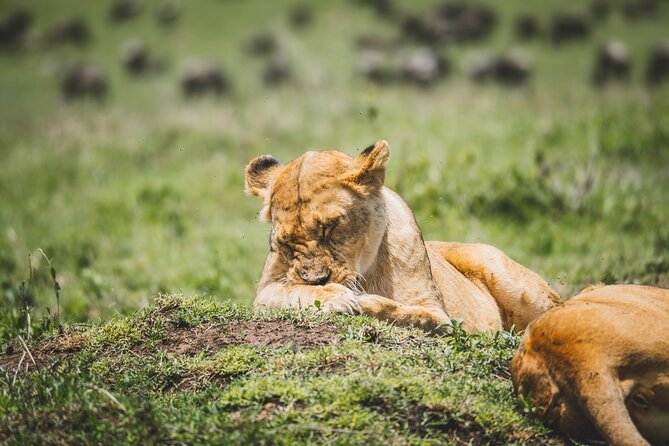
Day 3 begins with an early morning game drive in the Serengeti. The sunrise timing is valuable because it gives you one more serious wildlife search before the route turns toward Ngorongoro.
After the drive and an early lunch, you travel toward the crater. The guide is expected to explain the wildlife and natural scenery along the way, which helps turn a long transfer into part of the safari rather than dead time.
The night is spent on the Ngorongoro Crater rim. This is a useful overnight position because it puts you near the next morning’s main activity. It also breaks up the return journey and gives you a different setting from the open Serengeti plains.
The schedule is demanding. You have an early start, a meal at an unusual hour, and a road transfer on the same day. Pack patience and keep your day bag organized. You will want water, a light layer, personal medicine, and anything you need close at hand rather than buried in luggage.
The high point is the change in scenery. You move from the wide Serengeti to the elevated crater area, preparing for a much more concentrated wildlife experience the next day.
More Tarangire safaris:
- Private 6-Day Tarangire Manyara Crater and Serengeti with Mid-Range Lodges
★ 5.0 · 238 reviews - 5 Days Camping Tarangire, Serengeti & Ngorongoro crater & Visiting Maasai
★ 5.0 · 229 reviews - 4 Days Join Group tour Tarangire Serengeti and Ngorongoro crater
★ 5.0 · 219 reviews - 4-Day Safari from Arusha: Tarangire, Serengeti and Ngorongoro
★ 5.0 · 173 reviews
Day 4: Six hours on the Ngorongoro Crater floor
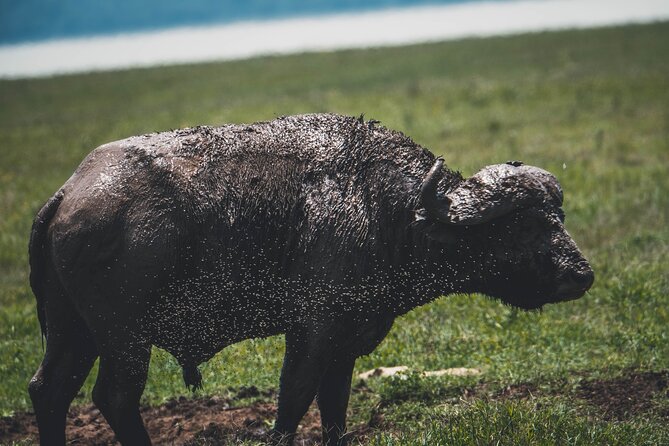
After breakfast, you descend to the crater floor for a game drive with a picnic lunch. The stated crater visit lasts six hours, giving you a substantial block of time in one of Tanzania’s most famous wildlife areas.
Ngorongoro is often called Africa’s Garden of Eden because the crater floor supports a high concentration of animals in a contained setting. The itinerary presents it as one of the best places on the route for spotting all five of the Big Five: lion, leopard, elephant, buffalo, and rhino.
No safari can promise every animal, but Ngorongoro gives you a strong final opportunity. The compact setting can make wildlife searching feel more focused than in the immense Serengeti. You may also appreciate how quickly the surroundings change as you move between open areas and wetter sections of the crater floor.
The picnic lunch keeps you in the park for the full activity period. After the game drive, you return to Arusha in the evening. That makes Day 4 a full day rather than a simple checkout and transfer, but it also means you may arrive tired.
If you have an evening flight, do not assume the timing will work without checking carefully. The tour includes airport pickup and drop-off, but the stated return is to Arusha town in the evening. Your flight time and the actual driving conditions need to fit that schedule.
What the $1,100 price really covers

The price is strongest because many expensive safari basics are bundled together. You receive:
- Airport pickup and drop-off
- Transport for the safari
- A professional driver-guide
- Park fees
- All listed activities
- Drinking water on all days
- Four breakfasts
- Four lunches
- Three dinners
For a four-day route through three major parks, that is a useful package. You are paying for access, transport, food, and the logistical work of moving between protected areas. You also avoid having to arrange park permits and transfers on your own.
The price does not include international flights, visas, travel insurance, or tips for the driver-guide and safari cook. Budget for those separately. Tips are described as optional, but you should still plan for them if the service meets your expectations.
The word budget is important here. This is not positioned as a private luxury safari with long stays and polished lodge service. It is a practical route for seeing major parks at a lower price. The value is best for someone who cares more about wildlife access and a compact itinerary than about spacious rooms or unhurried mornings.
The guide and support can shape the trip

Safari logistics matter more than they do on an ordinary sightseeing tour. Park gates, meal times, road distances, and wildlife sightings all depend on good coordination.
Noel is the main coordinator named in the tour information. He handles arrangements such as airport pickup and drop-off, and his support has been praised for keeping the trip organized from start to finish. Gilbert has helped with planning by email, which is useful if you have questions before arriving. Said is also named as an outstanding guide on some departures, particularly for driving, wildlife knowledge, and arranging close-up viewing opportunities.
Your actual guide may differ, so treat those names as examples rather than a guarantee. Still, they show the kind of support you should expect from the operator: advance contact, airport assistance, and a guide who does more than simply steer the vehicle.
The group limit of four is another plus. A small group can make it easier to ask questions, discuss where to stop, and avoid the cramped feeling that sometimes comes with large safari vehicles. The supplied information does not promise a private vehicle, so ask whether your party shares with anyone else.
Camping comfort and what to confirm
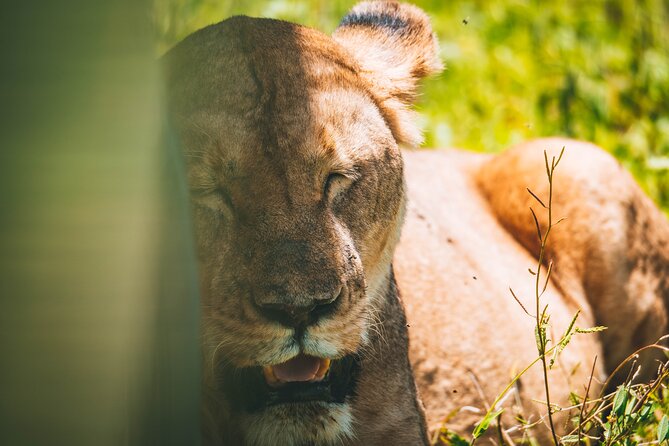
This is sold as a camping safari, but the stated overnight details deserve a direct question before payment. Night one is at Fig Big Tree Lodge, and night two is on the Ngorongoro Crater rim. The information does not give the exact campsite names, tent type, bedding, bathroom setup, or whether a safari cook travels with you.
That does not make the trip a poor choice. It simply means you should know what you are buying. A lodge night and a rim night may offer a different level of comfort from basic public camping, while the word camping can mean several things in Tanzania.
Ask these questions before departure:
- Is the Fig Big Tree overnight in a lodge room or a tent?
- What type of accommodation is used on the crater rim?
- Is a safari cook included?
- Are tents, bedding, and camping equipment supplied?
- Is the vehicle shared, and what is the final group size?
The package lists three dinners and four breakfasts, so meals are covered for the stated schedule. Drinking water is included on all days, which is a useful practical benefit during long drives and game drives.
Who should book this safari?
I would point this tour toward first-time safari visitors who want Tanzania’s biggest names in a short trip. It also suits people watching their budget, couples who prefer a small group, and anyone arriving through Arusha who wants airport transfers handled in the same package.
It may suit you if your priorities are:
- Seeing elephants in Tarangire
- Reaching the Serengeti without arranging park logistics yourself
- Having two separate Serengeti wildlife periods, including sunrise
- Trying for Big Five sightings in Ngorongoro
- Keeping the group to no more than four people
- Receiving meals, water, park fees, and transport in one price
I would think twice if you dislike long road journeys, early breakfasts, outdoor picnics, or changing accommodation. Four days is enough for a strong first safari taste, but not enough for leisurely exploration of every park.
The tour information says most people can participate, service animals are allowed, and the starting point is near public transportation. Those details may help with basic planning, but the long drives and outdoor format still make personal stamina worth considering.
Booking, timing, and cancellation advice
The scheduled start is 7:00 am, and confirmation is provided at booking. Pickup is offered, including airport pickup and drop-off, which is helpful if your safari connects with an arrival or departure in Arusha.
Free cancellation is available if you cancel at least 24 hours before the local start time. Cancellations or changes made inside that 24-hour window are not accepted for a refund, so check your flight and arrival plans before committing.
I would also contact the operator before the trip with your preferred pickup point, dietary needs, accommodation questions, and the name of your guide if that has already been assigned. Clear answers are especially important because this is a fast-moving itinerary.
Should you book the four-day safari?
Book it if you want a compact, good-value safari with three major parks, included park fees and meals, airport transfers, and a group capped at four people. Tarangire’s elephants, Serengeti’s open plains, and Ngorongoro’s concentrated wildlife make a powerful combination.
Skip it if you want a slow pace, guaranteed luxury accommodation, or several full days in one park. Before paying, confirm the camping arrangements and shared-vehicle details. If those match your expectations, this is a smart way to fit Tanzania’s essential safari circuit into four demanding and memorable days.
FAQ
Where does the safari start?
The safari starts in Arusha, Tanzania, at 7:00 am. Airport pickup and drop-off are included.
Which parks does the tour visit?
The tour visits Tarangire National Park, Serengeti National Park, and Ngorongoro Crater.
How long is the Ngorongoro Crater game drive?
The Ngorongoro Crater activity is listed as a six-hour game drive with a picnic lunch.
Are park fees included?
Yes. Park fees are included in the tour price, along with transportation, activities, and a professional driver-guide.
Are meals and drinking water included?
Yes. The package includes four breakfasts, four lunches, three dinners, and drinking water on all days.
What is the cancellation policy?
You can cancel for a full refund if you cancel at least 24 hours before the experience start time. Cancellations or changes made less than 24 hours before the start are not accepted for a refund.
More Camping Safaris in Arusha
- 4 Days Group Camping Safari
★ 5.0 · 1,101 reviews - 5 Days Group Camping Safari
★ 5.0 · 730 reviews - 2 Days Tarangire and Ngorongoro Group Camping Safari
★ 5.0 · 146 reviews - 6 Days Tanzania Budget Camping Safari
★ 5.0 · 145 reviews
Just added in Arusha
- Safari “Kifaru” – 5 days in the most famous Parks in the world★ 5.0 · 4 reviews
- Saadani Day Trip★ 5.0 · 13 reviews
- 3 Days Tanzania Short and Spicy★ 5.0 · 6 reviews
- 5 Day Tanzania Safari Camping Adventure Private Tour★ 5.0 · 2 reviews
- Day Trip to Ngorongoro Crater from Arusha★ 5.0 · 1 review
- SERENGETI NATIONAL PARK Tour★ 4.5 · 5 reviews
- 3 Days Serengeti Park & Ngorongoro Crater Adventure Safari★ 5.0 · 8 reviews
- 6 Days Tanzania Bush Experience Safari★ 5.0 · 6 reviews
Serengeti & Ngorongoro Safaris, compared.
Serengeti Balloon Safari and authentic bush breakfast
Read our review →
Balloon Safari & Bush Breakfast in Serengeti – Miracle Experience
Read our review →
3 Days Serengeti & Ngorongoro Group Camping Safari
Read our review →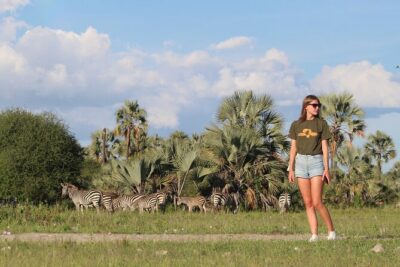
5-Day Highlights mid-Range Crater, Serengeti, Tarangire
Read our review →

Private 6-Day Tarangire Manyara Crater and Serengeti with Mid-Range Lodges
Read our review →
5 Days Camping Tarangire, Serengeti & Ngorongoro crater & Visiting Maasai
Read our review →Browse the lists this tour appears in