
Reviewed · CAMPING SAFARIS
6 Days Tanzania Budget Camping Safari
Africa gets real at sunrise. This six-day safari packs four major wildlife areas, a village visit, and long game drives into one busy circuit from Arusha. I especially like the small group limit of six people and the chance to spend a night inside Serengeti at Seronera campsite. The price also includes meals, water, guide services, accommodation, hotel transfers, and even emergency air rescue coverage.
The main caution is the pace. You will cover a lot of ground, and several days involve early breakfasts, rough roads, and long hours in the safari vehicle. The accommodation plan also needs confirmation, since the details refer to both lodge stays and camping nights, while the package says six nights are supplied.
In This Review
- Key things to know before booking
- A busy six-day route through northern Tanzania
- Day 1: Elephants and baobabs in Tarangire
- Day 2: The long road to Serengeti
- Day 3: A full day in central Serengeti
- Day 4: Sunrise departure and the road to Ngorongoro
- Day 5: Ngorongoro Crater and Mto wa Mbu
- Day 6: Lake Manyara before returning to Arusha
- Camping, lodges, and what budget really means
- Group size, transport, and the value of support
- Who should book this safari
- Should you book the 6 Days Tanzania Budget Camping Safari?
- FAQ
- How long is the safari?
- What is the price?
- Which national parks are included?
- Is hotel pickup available?
- How many people can join the safari?
- Is accommodation included?
- Are meals included?
- Is the Great Migration guaranteed?
- Can I cancel for a full refund?
Key things to know before booking
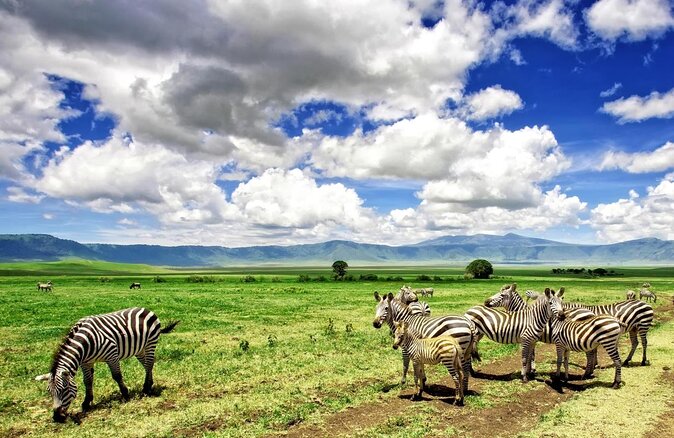
- Serengeti gets two game-drive days: You reach central Serengeti on Day 2, then have a full day to search for lions, cheetahs, leopards, elephants, and the moving wildebeest herds.
- The group is capped at six people: That matters in a safari vehicle, where window space and sight lines can shape your experience.
- Camping is mixed with lodge accommodation: Jambo Lodge and campsite stays are included, with Seronera and Simba listed along the route.
- The itinerary covers four major parks: Tarangire, Serengeti, Ngorongoro Crater, and Lake Manyara, plus a cultural visit in Mto wa Mbu.
- Migration timing changes the experience: June through September offers the best chance of seeing major movement, while January through March is calving season.
- Guide quality is central to the trip: Guides named Nuru, Robert, Mohamed, and Florian have been praised for finding wildlife, explaining what you see, and adjusting the route when possible.
A busy six-day route through northern Tanzania
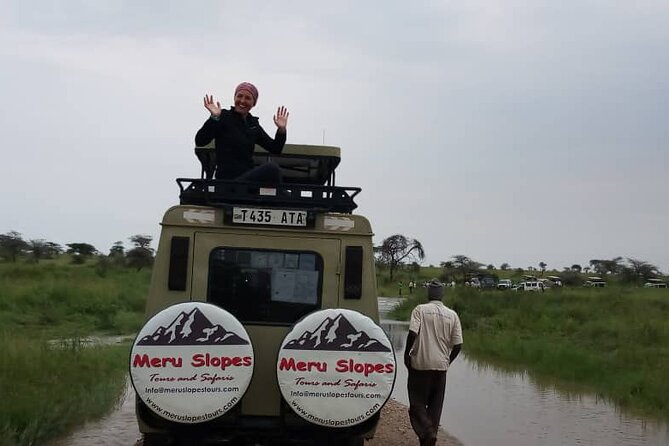
At $1,600 per person, this is a strong value for a safari that includes four famous wildlife areas. You get a professional driver-guide, meals, accommodation, hotel pickup and drop-off, unlimited mineral water, Wi-Fi in the safari vehicle, coffee and tea, taxes, and AMREF Flying Doctors emergency rescue coverage.
That price does not include flights, alcoholic drinks, or anything outside the stated program. The package lists seven breakfasts and seven lunches, along with six dinners, even though the trip is described as six days. I would ask the operator to confirm the exact meal count and accommodation nights before paying. The details also say six nights are supplied and include two hotel nights in Arusha, while the daily schedule places you at lodges and campsites along the route.
The basic shape is clear, though: Tarangire first, Serengeti next, Ngorongoro after that, then Mto wa Mbu and Lake Manyara before returning to Arusha. You are not lingering in one park for a week. You are collecting a broad sample of northern Tanzania, which is exactly why this works well for a first safari.
More Camping Safaris in Arusha:
- 4 Days Group Camping Safari
★ 5.0 · 1,101 reviews - 5 Days Group Camping Safari
★ 5.0 · 730 reviews - 3 Days Serengeti & Ngorongoro Group Camping Safari
★ 5.0 · 574 reviews
Day 1: Elephants and baobabs in Tarangire
Pickup is scheduled from your Arusha hotel at 8 a.m. Tarangire National Park is about 115 kilometers from Arusha, with roughly three hours of driving before the game drive begins. The park covers about 2,800 square kilometers and takes its name from the Tarangire River, the key water source for wildlife in the area.
The park is especially known for large elephant groups and broad baobab trees. You might also see lions, leopards, pythons climbing trees, and other animals during the full-day drive. The combination of elephants, dry-country scenery, and giant baobabs gives Tarangire a character different from the open grasslands of Serengeti.
The schedule allows about eight hours for this first day. That includes road time, park time, and the evening move to Jambo Lodge for dinner and sleep. It is a full start, but a sensible one. Tarangire is close enough to Arusha to avoid using your first day only for transport.
A small drawback is that your arrival time depends on the road from Arusha and the pace of park entry. If you want every possible minute inside Tarangire, ask how the three-hour drive and lunch arrangements are handled. The day is marketed as a full game drive, but the actual wildlife time can vary.
Day 2: The long road to Serengeti
After breakfast, you pack your luggage into the safari vehicle and begin the long journey toward Serengeti. Lunch is taken inside the vehicle, and the route includes views of the Rift Valley and Ngorongoro Crater.
You are expected to reach central Serengeti around 3 p.m., followed by an evening game drive and sunset viewing. Dinner and overnight accommodation are at Seronera campsite inside Serengeti National Park.
This is one of the most important nights on the route. Staying inside the park reduces the need to leave before or after the main wildlife areas, and you get the feeling of being surrounded by the park rather than simply visiting it for a few hours. The camping setting also brings you closer to the sounds and rhythms of the bush, though you should be ready for basic facilities rather than lodge luxury.
Day 2 is also the first real endurance test. The schedule allows about ten hours, and part of that is spent driving over long distances. You will need patience, especially if you are hoping to reach Serengeti at the stated afternoon time.
The reward is the Serengeti itself: huge open plains, large herbivore movements, and predators following them. The wildebeest migration involves roughly 1.5 million wildebeest and other herbivores, but the herds do not follow a fixed calendar. A guide can search for the action, yet no safari company can promise a river crossing or a particular animal.
Day 3: A full day in central Serengeti
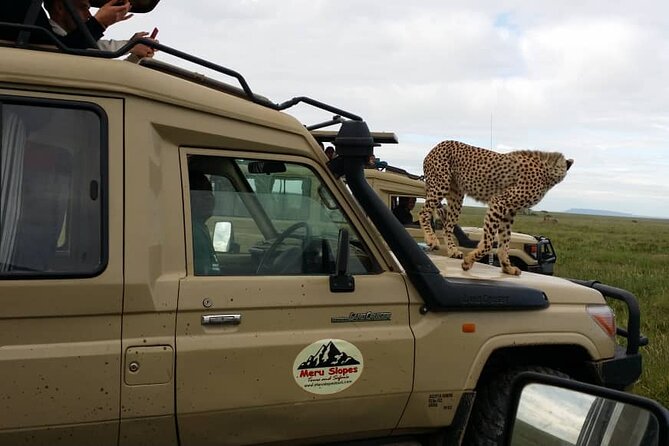
Day 3 gives you the most useful wildlife time of the trip. You rise early, eat breakfast, and spend the day on game drives in Serengeti, with the guide choosing key areas based on recent animal sightings and road conditions.
This is where a strong guide matters most. Guides such as Nuru, Robert, Mohamed, and Florian have received high praise for spotting wildlife, sharing information, and taking time for photographs. Mohamed, also known as Moody, has been described as well connected with other guides, which can help the vehicle learn where animals have recently been seen. Nuru has been praised for combining a friendly manner with sharp animal spotting.
Those are useful qualities in Serengeti. Wildlife may be far from the road, partly hidden in grass, or visible for only a few minutes. A patient guide who listens when you want to stop can make the day much better than a rushed drive from one sighting to the next.
The stated migration windows are worth taking seriously. June through September gives you the best chance of seeing major herd movement. January through March is the calving period, when young animals arrive and predators often remain close. From July through September, the guide may take you toward northern Serengeti for a possible Mara River crossing.
Possible is the key word. The migration is controlled by rain, grazing, and animal instinct, not by a tour schedule. You may see great herds outside the famous crossing dates, while a visit during peak season can still miss the river action.
A few more options to weigh up in Arusha
- Balloon Safari & Bush Breakfast in Serengeti – Miracle Experience
★ 5.0 · 1,646 reviews - Tanzania Classic – 7 Days
★ 5.0 · 1,151 reviews - Materuni Waterfalls, coffee tour & Kikuletwa Hot Springs
★ 5.0 · 643 reviews - 7-Day Premium Luxury Tanzania Safari All-Inclusive
★ 5.0 · 426 reviews
Day 4: Sunrise departure and the road to Ngorongoro
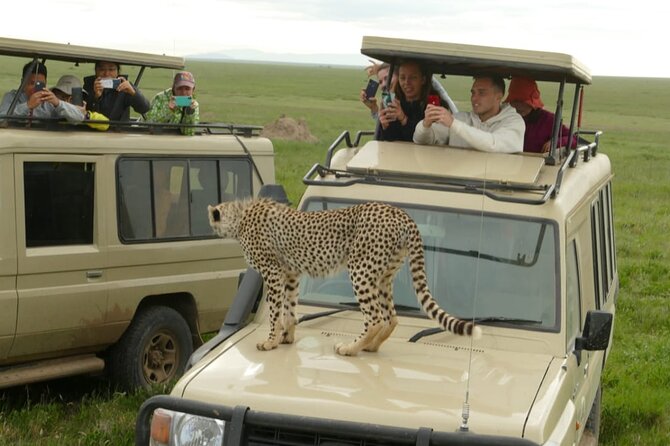
Day 4 begins around 5:45 a.m. with breakfast, followed by an early game drive in Serengeti until about 11:30 a.m. You return to camp for a hot lunch, pack your bags, and continue through the park toward Ngorongoro Conservation Area.
The plan combines more Serengeti wildlife time with a transfer to Simba campsite near Ngorongoro. Dinner and overnight accommodation follow there.
This is another ten-hour day, and it will feel long. Still, the early start is worthwhile. Sunrise game drives can offer cooler conditions and active animals, while the afternoon drive gives you one last chance to see Serengeti before leaving.
The route also gives you a gradual change in scenery. Serengeti’s open plains give way to the higher Ngorongoro area, where the next morning’s crater descent provides a very different kind of wildlife viewing. Do not expect a leisurely transfer. This is a working safari day, with the vehicle serving as both your game-viewing platform and your transport.
Day 5: Ngorongoro Crater and Mto wa Mbu
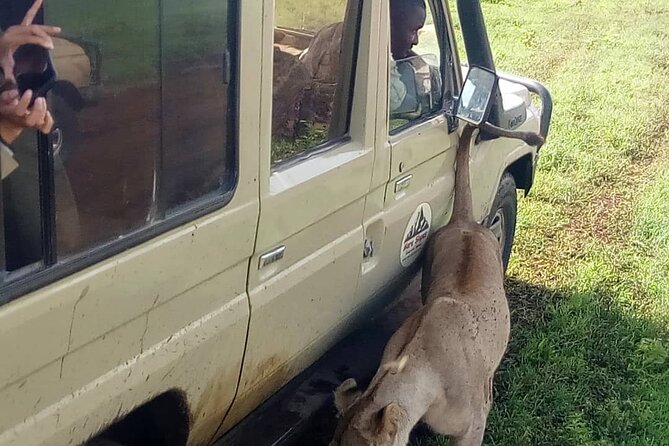
You wake around 5:30 a.m., eat breakfast, and descend into Ngorongoro Crater. The crater floor is famous for its high concentration of animals, and the program allows six to seven hours of game driving there.
You may see the Big Five, including the black rhino, along with many bird species. Flamingos may gather around the crater lakes, adding color to an already dramatic setting. Lunch is taken inside the crater, so you can continue watching the surroundings rather than losing time on a long restaurant stop.
Ngorongoro is often the best place on this itinerary for concentrated wildlife viewing. The crater’s enclosed setting can make animal sightings feel more reliable than in the much larger Serengeti. That does not mean guaranteed sightings, but it does mean you spend less time crossing empty ground.
After the crater, you pass through the campsite to collect your luggage, then continue to Jambo Lodge for dinner and overnight accommodation. The schedule also includes a walking visit in Mto wa Mbu, a lively community near Lake Manyara.
Mto wa Mbu adds an important human side to the safari. You can walk through banana plantations, see local projects, taste Tanzanian food, and learn about daily life through the village’s cultural program. This is not just another wildlife stop. It gives you a chance to meet local people and understand the area beyond park gates.
The timing is the tricky part. The crater drive lasts six to seven hours, then you have transfers and a village walk. If you prefer a slower cultural visit, ask if the Mto wa Mbu portion can be adjusted. As written, it is a worthwhile addition, but Day 5 is crowded.
Day 6: Lake Manyara before returning to Arusha
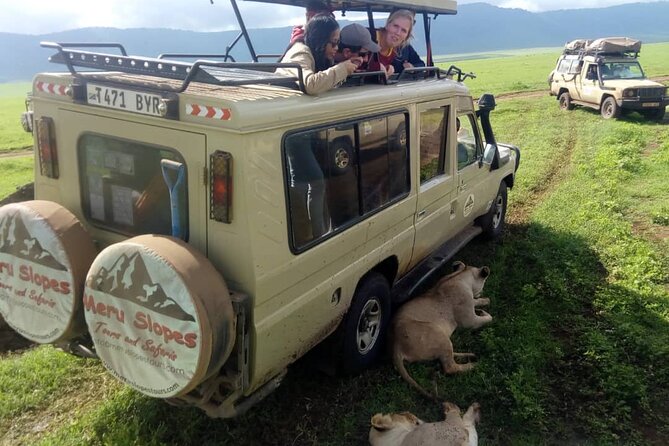
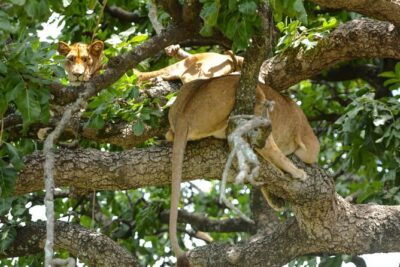
After breakfast, you head to Lake Manyara National Park for a full-day game drive. The park is known for tree-climbing lions, flamingos drawn by algae in the lake, and a hot spring.
Lake Manyara is smaller than Serengeti and has a different feel. Water, forest, and birdlife shape the experience, so it works well as a final park after the wide plains and crater floor. The chance to see lions in trees is one of the park’s signature attractions, though wildlife sightings always depend on the day.
The schedule also includes a visit to a Maasai boma, where you can learn about Maasai life, traditions, and culture. That cultural stop broadens the trip in the same way Mto wa Mbu does, though you should confirm exactly when it takes place because the day already includes a full game drive and the return drive to Arusha.
The day is listed at about eight hours, followed by the drive back to Arusha. The included details say dinner and overnight accommodation in Arusha are supplied, and the activity ends back at the Arusha meeting point. Confirm the final night if you have an early flight, since the package wording and daily schedule do not line up perfectly.
Camping, lodges, and what budget really means
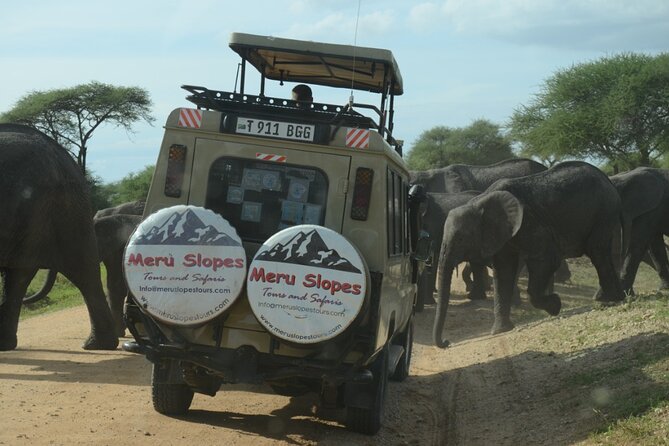
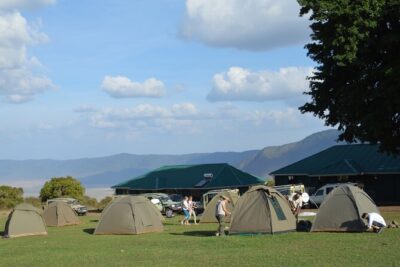
This is a budget safari, not a luxury lodge circuit. That is good news if you want to put your money into park time rather than polished rooms. You may sleep in a tent for some nights and use a lodge such as Jambo Lodge for others. One arrangement described for this trip type included three lodge nights and three nights in tents, but you should confirm your own exact plan.
The camping element is part of the appeal. It keeps costs down and places you near the parks, but you should pack for simple conditions and long days. The package includes meals, coffee or tea, mineral water, and a safari cook or food service arrangement, according to the supplied details.
Several past accounts praised the food, clean basic accommodation, and the care taken by the crew. A cook named Gideon and another named Saleem were singled out in different trip accounts, while guide and contact staff such as Jerome, Gift, and Fidelis were praised for organization, transfers, and help with unexpected problems.
Those details matter because a budget safari depends heavily on the people running it. A clean tent, a hot meal, and a guide who responds to your needs can make a basic trip feel very comfortable. Wi-Fi in the safari jeep is a useful extra, though you should treat it as a convenience rather than the main reason to book.
Group size, transport, and the value of support
The maximum group size is six people. That is a good limit for a safari vehicle. You have a better chance of seeing out both sides, taking photographs, and asking questions without competing with a large busload of people.
Pickup and drop-off are available from your accommodation, and the stated meeting point is Arusha Tourist Inn on Sokoine Road. The itinerary also includes return transport to Arusha. Children must be accompanied by an adult, and most people can participate.
The AMREF Flying Doctors emergency rescue cover is a meaningful inclusion. You hope never to use it, but remote parks are far from ordinary medical services, so this type of support adds practical value. Taxes, handling charges, and park admission charges shown in the schedule are also included.
The $1,600 price becomes especially attractive if you use the included hotel nights, meals, water, transfers, and park access. It is less of a bargain if you expect private rooms, short drives, or a quiet schedule. The best value comes from seeing a large part of northern Tanzania in one trip while sharing the vehicle with no more than five other people.
Who should book this safari
I would choose this trip if you want the classic northern Tanzania route and have six days available. It suits first-time safari visitors who want Tarangire, Serengeti, Ngorongoro, and Lake Manyara without arranging separate transport, meals, camps, and park entries.
It is also a good fit if you enjoy early mornings, simple accommodation, and the possibility of seeing wildlife rather than needing guaranteed sightings. The village and Maasai cultural visits make it more varied than a park-only itinerary.
I would think twice if you dislike long drives, camping, early starts, or changing accommodation. The schedule is ambitious, and the Serengeti transfer days can be tiring. If you want more time in northern Serengeti for the Mara River crossing, a longer safari would give you better odds than trying to force that sighting into this six-day route.
Should you book the 6 Days Tanzania Budget Camping Safari?
Yes, if value and variety are your priorities. This trip gives you four major parks, two days focused on Serengeti, a crater visit, village and Maasai cultural experiences, full meal coverage, and a small group at a reasonable package price.
Before booking, ask for the exact lodge and tent schedule, confirm whether the final Arusha night is included, and explain which animals or migration events matter most to you. If you accept the long drives and basic camping, this is a well-rounded introduction to Tanzania with a strong support system and guides who have earned praise for their wildlife spotting and personal care.
FAQ
How long is the safari?
The safari lasts approximately six days.
What is the price?
The listed price is $1,600 per person.
Which national parks are included?
The route includes Tarangire National Park, Serengeti National Park, Ngorongoro Conservation Area and Crater, and Lake Manyara National Park.
Is hotel pickup available?
Yes. Pickup and drop-off from your accommodation are available, and the stated meeting point is Arusha Tourist Inn on Sokoine Road.
How many people can join the safari?
The maximum group size is six people.
Is accommodation included?
Yes. The package includes six nights of accommodation. The schedule names Jambo Lodge, Seronera campsite, and Simba campsite, and the package also includes two hotel nights in Arusha. Confirm the exact night-by-night arrangement before booking.
Are meals included?
Yes. Meals are supplied according to the itinerary, including breakfast, lunch, and dinner. Coffee and tea are also included.
Is the Great Migration guaranteed?
No. Migration timing changes each year. The best chance of seeing major movement is listed as June through September, with calving generally from January through March. A Mara River crossing is possible in northern Serengeti from July through September, but it cannot be promised.
Can I cancel for a full refund?
Yes, if you cancel at least 24 hours before the experience start time. Cancellations made less than 24 hours in advance are not refunded. If poor weather causes the operator to cancel, you can choose a different date or receive a full refund.
Just added in Arusha
- Safari “Kifaru” – 5 days in the most famous Parks in the world★ 5.0 · 4 reviews
- Saadani Day Trip★ 5.0 · 13 reviews
- 3 Days Tanzania Short and Spicy★ 5.0 · 6 reviews
- 5 Day Tanzania Safari Camping Adventure Private Tour★ 5.0 · 2 reviews
- Day Trip to Ngorongoro Crater from Arusha★ 5.0 · 1 review
- SERENGETI NATIONAL PARK Tour★ 4.5 · 5 reviews
- 3 Days Serengeti Park & Ngorongoro Crater Adventure Safari★ 5.0 · 8 reviews
- 6 Days Tanzania Bush Experience Safari★ 5.0 · 6 reviews
Camping Safaris, compared.
3 Days Serengeti & Ngorongoro Group Camping Safari
Read our review →
2 Days Tarangire and Ngorongoro Group Camping Safari
Read our review →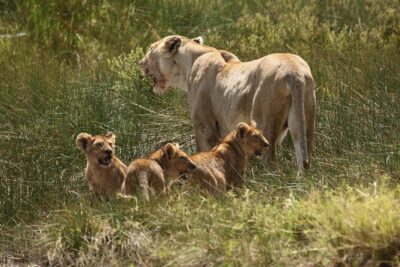
3 Days Tarangire, Ngorongoro & Lake Manyara Group Camping Safari
Read our review →
5-Day private Camping Safari Tour in Tanzania
Read our review →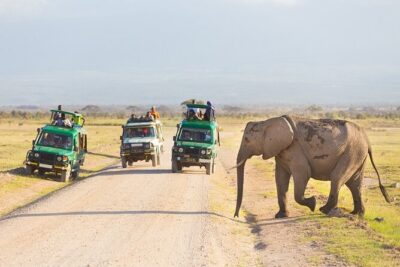
4 Days Group Joining Camping Safari to Tarangire Serengeti Ngorongoro Crater
Read our review →Browse the lists this tour appears in