
Reviewed · WILDEBEEST MIGRATION SAFARIS
5 Days Tanzania Safari Great Wildebeest Migration
The wild moves north. This five-day Tanzania safari follows the Great Wildebeest Migration through Tarangire, Serengeti, and Ngorongoro, with long game drives, simple camping, and a chance to search for animals near the Mara River. The route covers some of northern Tanzania’s best-known parks without padding the schedule with city stops.
I like the private group format, since your party travels together rather than joining a large mixed vehicle. I also like the practical package: park fees, camping equipment, sleeping bags, meals, drinking water, and an English, Spanish, or French-speaking guide are included. The main drawback is the pace. Several days involve long drives, early starts, and basic camping, and a wildlife migration can never be guaranteed on a fixed date.
In This Review
- Key points to know before booking
- Why this five-day route works
- Day 1: Tarangire National Park from Arusha
- Day 2: Crossing toward the Serengeti
- Day 3: Sunrise in the Serengeti and the Mara River search
- Day 4: From northern Serengeti back toward Ngorongoro
- Day 5: Ngorongoro Crater and the return to Arusha
- Camping, food, and the daily routine
- Guide languages and private group travel
- What the migration focus really means
- Who should book this safari?
- Should you book the $1,990 package?
- FAQ
- Where does the safari start?
- Where does the safari end?
- How long is the experience?
- Is this a private tour?
- Which parks are included?
- How much does the safari cost?
- Is the Great Wildebeest Migration guaranteed?
- What languages can the guide speak?
- Are meals included?
- What is not included?
Key points to know before booking
- Tarangire opens the trip with a full day of game viewing, just two to two and a half hours from Arusha.
- The Serengeti receives three days of attention, including a northward search for migrating animals near the Mara River.
- Ngorongoro Crater provides a strong final wildlife stop, with a crater-floor game drive and picnic lunch.
- Camping keeps the price at $1,990 per person, while meals, water, park fees, and equipment are covered.
- Early mornings matter, especially on the sunrise drive in the Serengeti and the early descent into Ngorongoro Crater.
- The trip ends back in Arusha, making it easy to use as a stand-alone safari before or after other Tanzania plans.
Why this five-day route works
This is a compact safari with a clear purpose: see a broad range of northern Tanzania and spend enough time in the Serengeti to look for the migration. You begin with Tarangire, move through the Ngorongoro Conservation Area, spend three days around the Serengeti, then return to Ngorongoro for a crater visit.
That order makes sense. Tarangire gives you an early wildlife day without a long first transfer. The Serengeti then gets the largest share of your time, which is important because the animals are constantly moving and sightings depend on location, weather, and the season. Ngorongoro finishes the trip with a concentrated wildlife experience in a contained natural setting.
At $1,990 per person, this is not a shoestring outing, but it covers many costs that can quickly add up on safari. You get all park fees, activities, accommodation, camping equipment, a sleeping bag, meals, drinking water, and a private vehicle with a professional guide. You still need to budget for tips, personal purchases, international flights, and a visa.
The price makes the most sense if you want a ready-to-go package and do not want to arrange each park, campsite, meal, and transfer separately. It makes less sense if you want lodge comfort, a slower schedule, or a high degree of flexibility.
More migration safaris:
- 8 Days Great Wildebeest Calving Migration Safari from Arusha
★ 5.0 · 254 reviews - 10-Day Serengeti Wildebeest Migration Safari from Arusha
★ 5.0 · 218 reviews - 8 Day Spectacular Migration Serengeti mid -Range Tanzania Safari
★ 5.0 · 161 reviews
Day 1: Tarangire National Park from Arusha
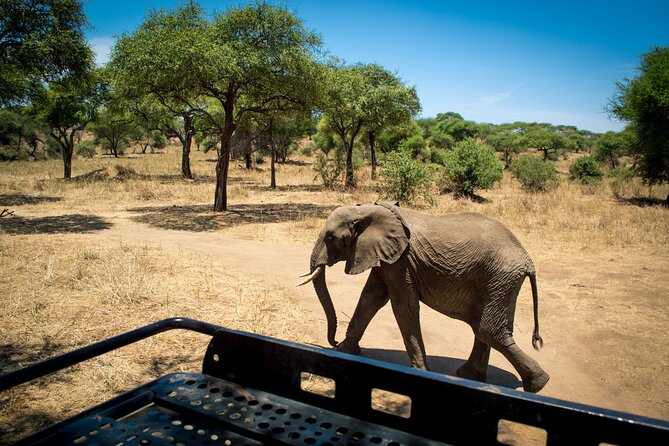
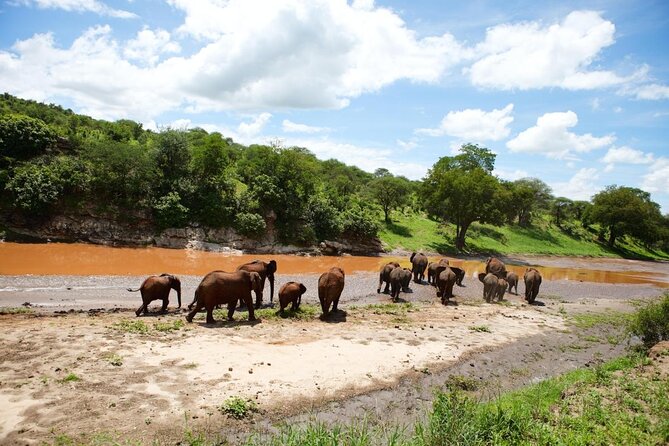
The first morning starts at 8:00 a.m. in Arusha. The drive to Tarangire takes about two to two and a half hours, covering roughly 120 kilometers. That is a friendly opening day by safari standards, since you are not asked to spend half the morning in the vehicle before reaching the first park.
At the entrance, you have about 10 minutes for a bathroom stop while your guide completes the required park formalities. After that, the day is given to morning and afternoon game drives, with lunch included. You leave the park in the early evening and continue to the campsite for dinner and the night.
Tarangire is a useful first stop because it gives you a proper introduction to safari rhythm: vehicle time, quiet observation, a midday meal, and another wildlife search later in the day. The supplied details do not promise particular animals, so I would treat each sighting as a bonus rather than arrive with a fixed checklist.
The day is listed at about seven hours, but the exact feel depends on time spent driving, entering the park, and watching animals. You should wear practical clothes, keep water close, and expect dust and heat. A simple breakfast and early departure are not part of this first day, but the next morning begins the longer transfer toward the Serengeti.
Day 2: Crossing toward the Serengeti
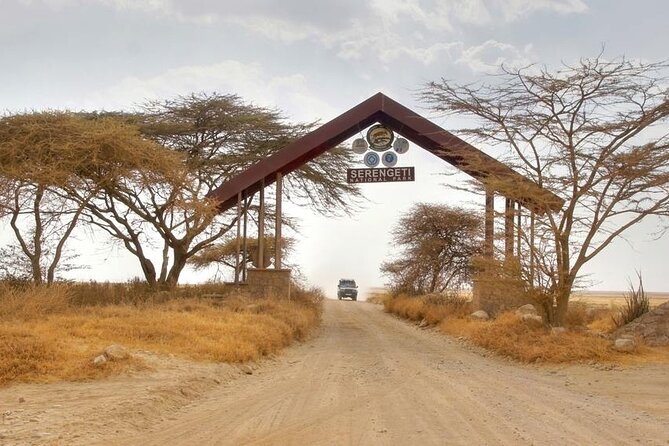
Day two starts after a hot breakfast. The drive to the Serengeti entrance takes around four and a half to five hours, with the route covering about 250 kilometers. That is a substantial transfer, so this day is less about constant game viewing and more about reaching the main stage of the safari.
You pass through the Ngorongoro Conservation Area and have a chance to see the Ngorongoro Crater from the route. This is an important distinction: you do not descend into the crater on day two. The dedicated crater-floor visit comes at the end of the trip.
The Serengeti entrance is at Naabi Gate. After lunch, the afternoon game drive begins and continues until evening, followed by dinner and camping. The day is described as about seven hours, although the transfer, park entry, and stops can shape the actual timing.
I like this arrangement because it avoids using one of the three Serengeti days for a separate crater visit. Still, you should know what you are signing up for: the road between Arusha and the Serengeti is part of the experience, but it can feel long. If you prefer short transfers and long hours at camp, this route may test your patience.
The reward is that you reach the Serengeti with the next two days available for focused game drives. That matters on a migration safari, where one location can be quiet while another is active.
Day 3: Sunrise in the Serengeti and the Mara River search
Day three is the most clearly migration-focused part of the trip. The morning game drive begins around 6:30 a.m., after a simple breakfast of coffee, tea, and snacks. You stay out until roughly 10:00 a.m., then return to camp for a full breakfast.
That split breakfast plan is practical. The early hours are set aside for wildlife activity and cooler conditions, while the later meal gives you a proper break. You should be ready for the early start, though. A safari vehicle is not a place to sleep comfortably, and missing the first drive would mean losing one of the day’s best scheduled opportunities.
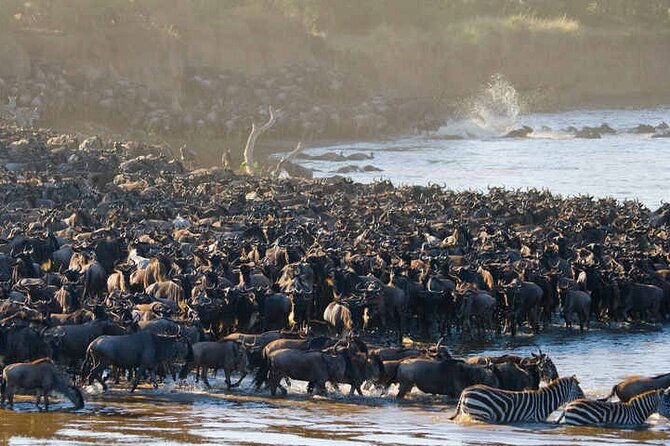
After breakfast, you continue through the Serengeti toward the north, following the route of the migrating animals. The goal is to reach the Mara River area and try to spot the migration. The wording matters: this is a search, not a promised river crossing.
The Great Wildebeest Migration moves through the wider Serengeti and Masai Mara ecosystem, which includes Tanzania and Kenya. This five-day program keeps its focus on Tanzania. Depending on timing and animal movement, you might see groups of wildebeest, zebra, and antelope in different parts of the route, but the exact location cannot be fixed in advance.
The day lasts about eight hours and ends with dinner and another night at camp. The long time in the park is a real strength. You have more than a quick afternoon look, and your guide can adjust the search within the day. The tradeoff is another full day in a vehicle, with limited private space and a schedule shaped by wildlife rather than the clock.
A few more options to weigh up in Arusha
- Balloon Safari & Bush Breakfast in Serengeti – Miracle Experience
★ 5.0 · 1,646 reviews - Tanzania Classic – 7 Days
★ 5.0 · 1,151 reviews - 4 Days Group Camping Safari
★ 5.0 · 1,101 reviews - 5 Days Group Camping Safari
★ 5.0 · 730 reviews
Day 4: From northern Serengeti back toward Ngorongoro
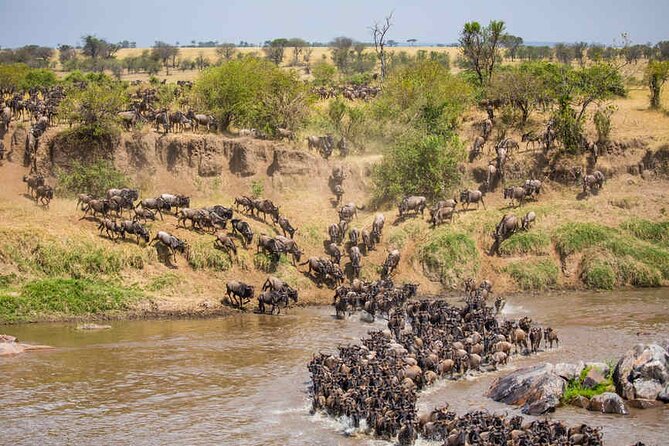
On day four, you continue game drives in the northern Serengeti before turning back toward central Serengeti. In the afternoon, the route heads into the Ngorongoro Conservation Area. You spend the night at Simba Campsite, a few hundred meters from the crater rim.
This day joins two different experiences. The northern Serengeti continues the migration search, while the move toward Ngorongoro prepares you for the final morning. It also reduces the amount of backtracking required on day five.
The day is listed at about seven hours. That includes game viewing and the transfer toward camp, so you should not expect another full, uninterrupted day in the north. If your main goal is the migration, this is the point where the route begins to pull you away from the animals and toward the crater.
The campsite location is especially useful. Staying near the rim means you are already close to the descent point in the morning. Camping here also keeps the trip within its basic, outdoors-focused style. You get equipment and a sleeping bag, but this is not a lodge-based safari with private rooms and hotel facilities.
Day 5: Ngorongoro Crater and the return to Arusha
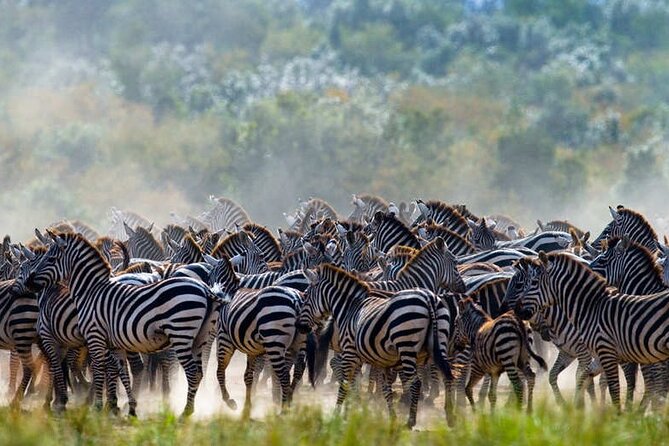
The final day begins with an early breakfast, followed by a descent into Ngorongoro Crater for a game drive. You carry a picnic lunch and spend the day on the crater floor before driving back to Arusha in the afternoon.
Ngorongoro offers a different type of wildlife viewing from the Serengeti. The crater has permanent water and grazing supplies, so its animal population remains in the area throughout the seasons. That makes the crater a strong final stop even when the migration is elsewhere.
The plan provides an up-close look at the residents of this World Heritage Site. It is a concentrated wildlife day, with less emphasis on following a moving herd and more emphasis on finding the animals that live in the crater. The park admission is included on this day, along with the other stated park fees across the trip.
The day lasts about six hours. You still need to allow for the drive back to Arusha, and the exact arrival time is not supplied. I would avoid scheduling a tight evening flight or an important same-day connection unless you have confirmed the timing directly with the provider.
The crater visit also helps balance the migration focus. If the wildebeest are not near the Mara River during your dates, Ngorongoro still gives you a strong wildlife experience before you leave.
Camping, food, and the daily routine
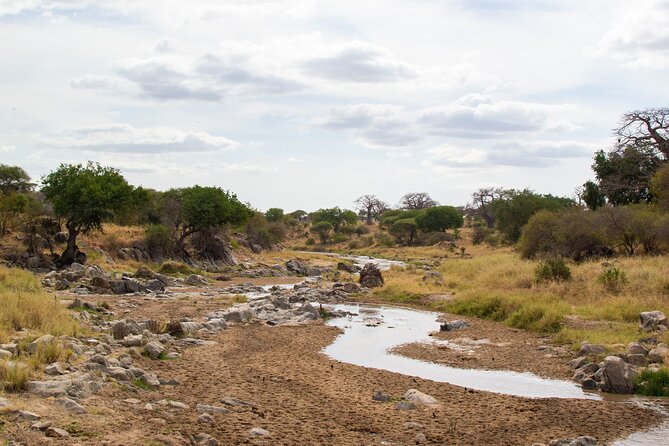
This is a camping safari, not a soft hotel tour. Accommodation, camping gear, and a sleeping bag are included, along with breakfast, lunch, dinner, and drinking water. The package specifies five breakfasts, five lunches, and four dinners, which matches a four-night trip ending after the final drive.
Meals are a major part of safari comfort. The available feedback praises the food and the way the expedition was arranged, and one account specifically credits both the guide and cook for making the experience work well. That does not turn camping into a lodge stay, but it does suggest that meal planning is treated as part of the service rather than an afterthought.
You should expect a simple daily routine: breakfast, game drive, lunch or a return to camp, another drive, then dinner and sleep. On day three, the schedule is especially early, with coffee, tea, and snacks before the sunrise drive and a full breakfast afterward.
Pack for comfort rather than fashion. Useful priorities include clothing that handles dust, shoes suitable for camp, sun protection, and a small day bag for water and personal items. The supplied information does not specify the tent setup or bathroom arrangements, so ask those questions before paying if camp comfort is important to you.
Guide languages and private group travel
The safari includes a professional driver and guide who can operate in English, Spanish, or French. That is helpful if you want explanations and daily instructions in one of those languages. No individual guide or cook is named, so you should not book expecting a particular person.
The activity is private, meaning only your group participates. This can make a big difference on game drives. You are not negotiating every stop with strangers, and your party can discuss how much time to spend at a sighting. The available feedback also praises the company’s professionalism, patience in explaining arrangements, and reliability.
Private does not mean leisurely. The route, park rules, road conditions, and animal movement still shape the day. You will share the vehicle with your own group, but you cannot ask the Serengeti to put the migration on a timetable.
The tour offers pickup in Arusha and ends back at the meeting point. Public transportation is nearby, and most people can participate. Service animals are allowed. Those details are useful, but the key practical point is that you need to be ready in Arusha at the start and have your post-safari plans arranged around a return whose exact hour is not stated.
What the migration focus really means
The title may suggest a guaranteed spectacle, but responsible safari planning requires a little caution. The migration is a huge, moving cycle involving more than a million wildebeest, along with zebra and antelope. The animals move clockwise through the Serengeti and Masai Mara ecosystem, with different periods for calving, courtship, and mating.
This route spends three days in the Serengeti and reaches toward the Mara River, which gives you a reasonable amount of time for a search. Still, a river crossing is never certain. Animals may be elsewhere, conditions may change, or the herds may be spread out rather than gathered at one dramatic point.
I like that the trip includes Tarangire and Ngorongoro instead of betting everything on one migration sighting. You get a wider safari even if the herds are not exactly where you hoped. If the migration is your only goal, ask the provider how the route is timed for your travel dates before booking.
Who should book this safari?
I would recommend this trip to you if you want a focused first safari, prefer a private group, and are comfortable with camping and long driving days. It suits people who value national parks, guided game drives, and a set package more than hotel comfort or a slow pace.
It is also a good fit if you want the major northern Tanzania stops in one short trip. Tarangire, Serengeti, and Ngorongoro each offer a different setting and purpose, and the route avoids spending the whole five days in one park.
I would be cautious if you need a specific migration sighting, dislike early mornings, or want guaranteed lodge-level accommodation. The route includes basic camping, long transfers, and a wildlife search rather than a scripted show. Families and older participants should also consider their own comfort with several hours in a safari vehicle, even though most people can participate.
The tour has free cancellation up to 24 hours before the start time for a full refund. Within 24 hours, changes and cancellations are not accepted and the payment is not refunded. International flights, visas, personal expenses, and tips for the guide and safari cook are separate costs.
Should you book the $1,990 package?
Book it if you want a private, all-in-one camping safari with three Serengeti days and a final Ngorongoro visit. The included park fees, meals, water, equipment, sleeping bag, and guide service make the price easier to judge, and the route gives you a solid range of northern Tanzania rather than a single-park sample.
Before booking, ask about the expected camping setup, the planned dates for the northern Serengeti, and how the team handles changes in animal location. Also leave breathing room after the return to Arusha.
For the right person, this is a sensible balance of price, coverage, and wildlife time. You trade lodge comfort and guaranteed migration drama for a genuine search across some of Tanzania’s most important parks.
FAQ
Where does the safari start?
The safari starts in Arusha, Tanzania, with pickup offered.
Where does the safari end?
The activity ends back at the meeting point in Arusha.
How long is the experience?
The safari lasts approximately five days and includes four nights.
Is this a private tour?
Yes. Only your group participates in the activity.
Which parks are included?
The route includes Tarangire National Park, Serengeti National Park, and Ngorongoro Crater.
How much does the safari cost?
The listed price is $1,990 per person.
Is the Great Wildebeest Migration guaranteed?
No. The itinerary includes a search for migrating animals near the Mara River, but wildlife movement and sightings cannot be guaranteed.
What languages can the guide speak?
The professional guide service is offered in English, Spanish, or French.
Are meals included?
Yes. The package includes five breakfasts, five lunches, four dinners, and drinking water.
What is not included?
Tips for the driver guide and safari cook, personal expenses, international flights, and visas are not included.
Just added in Arusha
- Safari “Kifaru” – 5 days in the most famous Parks in the world★ 5.0 · 4 reviews
- Saadani Day Trip★ 5.0 · 13 reviews
- 3 Days Tanzania Short and Spicy★ 5.0 · 6 reviews
- 5 Day Tanzania Safari Camping Adventure Private Tour★ 5.0 · 2 reviews
- Day Trip to Ngorongoro Crater from Arusha★ 5.0 · 1 review
- SERENGETI NATIONAL PARK Tour★ 4.5 · 5 reviews
- 3 Days Serengeti Park & Ngorongoro Crater Adventure Safari★ 5.0 · 8 reviews
- 6 Days Tanzania Bush Experience Safari★ 5.0 · 6 reviews
Wildebeest Migration Safaris, compared.
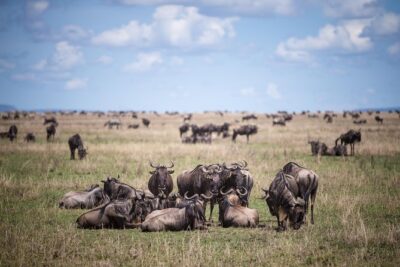
8 Days Great Wildebeest Calving Migration Safari from Arusha
Read our review →
10-Day Serengeti Wildebeest Migration Safari from Arusha
Read our review →
8 Day Spectacular Migration Serengeti mid -Range Tanzania Safari
Read our review →
9-Day Serengeti Migration Footsteps Tanzania Safari
Read our review →
Private 6-Day Great Migration Ndutu Serengeti Safari Tour
Read our review →
4 Day Great Migration Safari Serengeti & Ngorongoro Crater
Read our review →Browse the lists this tour appears in