
Reviewed · MACHAME ROUTE CLIMBS
6 Days Mount Kilimanjaro Machame Route Climb
Kilimanjaro saves its hardest test for midnight. This six-day Machame Route climb pairs fine forest walking with high moorland, the Shira Plateau, Barranco Wall, and a final push to the 5,895-meter summit. I like the scenic route and the careful acclimatization day, and I also like the small group limit of eight people. The main drawback is the schedule: summit night begins between midnight and 2 a.m., followed by a long descent, so you need real stamina.
The price is $2,000 per person and includes camping equipment, park fees, meals, drinking water, soft drinks, and a professional guide. Pre-trip email and WhatsApp communication is described as efficient and helpful, with airport pickup also arranged for an arriving climber. Do note that tips, visas, international flights, and travel insurance are extra.
In This Review
- Key points before you book
- Why the Machame Route is worth six days
- Day one: from Machame Gate into the rainforest
- Day two: leaving the trees for Shira Camp
- Day three: Lava Tower and the Barranco acclimatization plan
- Day four: Barranco Wall and Barafu Camp
- Day five: the midnight push to 5,895 meters
- Day six: muddy trails and Mweka Gate
- What the $2,000 price includes
- Guides, communication, and group size
- What to pack for mud, cold, and summit night
- Who should choose this climb?
- Should you book the six-day Machame climb?
- FAQ
- Where does the climb start?
- Where does the climb finish?
- How long is the Machame Route climb?
- What is the highest point reached?
- How many people can join the group?
- Is pickup available?
- Are meals included?
- Is camping equipment included?
- Are tips included in the price?
- What is the cancellation policy?
Key points before you book
- Machame’s scenic route: Walk from rainforest to moorland, the Shira Plateau, southern ice fields, and the summit ridge.
- A useful acclimatization day: Day three climbs toward Lava Tower before dropping to Barranco Camp, helping your body adjust to altitude.
- A demanding summit schedule: You leave Barafu Camp around midnight to 2 a.m. and may reach the summit after several hours in darkness.
- Small groups matter: The maximum of eight hikers should make communication and group support easier.
- Camping is part of the deal: The price includes camping equipment, meals, drinking water, and soft drinks.
- Plan for mud and cold: Gaiters and trekking poles are especially useful in the rainforest and on the final descent.
Why the Machame Route is worth six days
The Machame Route is often called the Whisky Route. The nickname sounds playful, but the walk is not a casual stroll. You spend six days moving from 1,811 meters at the park gate to 5,895 meters at Uhuru Peak, then descend to 1,633 meters at Mweka Gate.
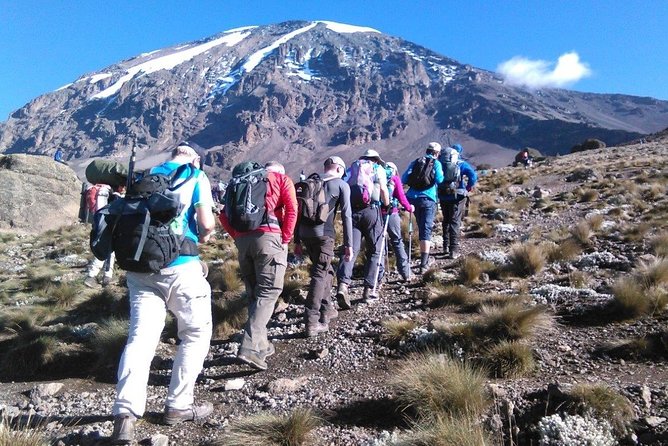
What makes this route appealing is its variety. You begin in thick rainforest, where trails can be wet and slippery. Higher up, trees give way to open moorland and wide views across the Shira Plateau. The route then crosses the southern side of Kilimanjaro, passing below the glaciated slopes before joining the summit route from Barafu.
I like the way the plan uses a gradual approach instead of racing upward. Day three gains only 147 meters in sleeping altitude, yet takes you much higher during the day before bringing you down to Barranco Camp. That is useful mountain planning, not wasted time.
Still, six days is a fairly brisk schedule for a high-altitude climb. The manageable trail inclines do not remove the risk of altitude sickness or exhaustion. You should arrive ready for long walking days, early starts, basic camping, and a summit night that tests both legs and patience.
More Kilimanjaro climbs:
- Mount Kilimanjaro Day Hike Through Marangu Route to Mandara Hut
★ 5.0 · 37 reviews - Mount Kilimanjaro Day Hike
★ 4.5 · 23 reviews - 7 Day Kilimanjaro Climb Lemosho Route & 2 Day Safari
★ 5.0 · 16 reviews
Day one: from Machame Gate into the rainforest
Your day begins at 7 a.m. in Arusha, with a drive of about 45 minutes through the village of Machame to Kilimanjaro National Park. At the gate, permits need to be issued before you start walking. This waiting period is part of the mountain routine, as crews prepare loads and sort out the day’s work.
The first day runs from 1,811 meters to 3,021 meters and takes about six hours. The trail passes through rainforest, with winding paths, thick plant life, and information from your guide about local flora, fauna, and wildlife.
This is a beautiful opening, but it can also be messy. At lower elevations, rain and damp ground make the path muddy and slippery. Gaiters and trekking poles are not optional luxuries here if the weather has been wet. Good boots help, but gaiters keep mud and water from working down into your socks.
Your first night is at about 3,021 meters. That is a meaningful gain in altitude on the opening day, so resist the urge to race. A slow, steady pace gives you a better start than burning energy for the sake of arriving early.
Day two: leaving the trees for Shira Camp
After breakfast, the route leaves the rainforest and enters more open ground. The trail climbs across a valley and follows a steep, rocky ridge before turning west toward a river gorge.
The day’s altitude gain is 818 meters, from 3,021 to 3,839 meters. Walking time is listed at about six hours. You will notice cooler temperatures as the forest falls behind, and the character of the trail changes from damp woodland walking to exposed rocky terrain.
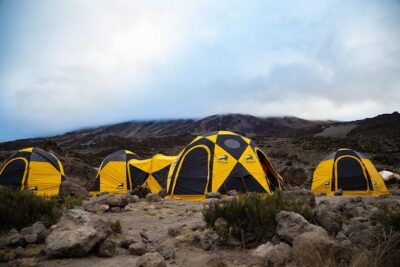
Shira Camp is important because it marks your arrival on the Shira Plateau. The open setting gives you a different view of Kilimanjaro, and the cooler air makes the campsite feel far removed from the warmth of Arusha.
This day may feel harder than the first. The combination of climbing, rough ground, and thinner air can slow you down. Keep your water close, follow your guide’s pace, and use the evening to eat and rest rather than trying to push through fatigue.
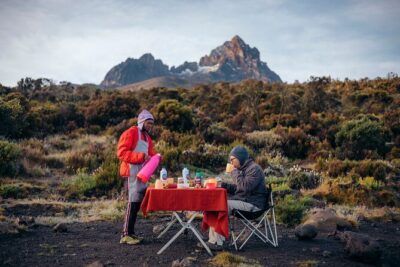
The included meals add value here. At this altitude, you do not want to depend on finding food along the route. Breakfast, lunch, and dinner are listed as included, though the wording also marks them as optional, so confirm the exact meal arrangement before you pay.
Day three: Lava Tower and the Barranco acclimatization plan
Day three is the cleverest part of this route plan. You start at Shira Camp, around 3,839 meters, and finish at Barranco Camp, around 3,986 meters. The sleeping elevation rises by only 147 meters, but the route takes you up toward Lava Tower at about 4,650 meters.
You first climb east along a ridge and pass a junction for Kibo Peak. The route then turns southeast toward Lava Tower, also called Shark’s Tooth. A second junction leads toward Arrow Glacier, after which you descend to Barranco Camp.
This is a long, useful day because your body gets time at a higher altitude without forcing you to sleep there. That pattern, climbing high and sleeping lower, is one of the most valuable features of the six-day plan.
The scenery also becomes more severe and spare. The lush forest is long gone, replaced by high mountain ground, rock, and open views. Conditions can feel cold around Lava Tower, then more comfortable as you lose height toward Barranco.
Do not treat the modest sleeping gain as an easy day. You still spend about six hours walking, and the temporary climb to 4,650 meters can expose any early problems with altitude. Tell your guide if you feel unwell. A strong guide should prefer an honest conversation to a silent struggle.
More Machame Route climbs:
- 7-Day Machame Kilimanjaro Summit Tour from Arusha
★ 5.0 · 125 reviews - 6 Days: Hiking Kilimanjaro via Machame Route
★ 5.0 · 24 reviews - 6-Day Guided Tour in Machame Route Mt Kilimanjaro
★ 5.0 · 17 reviews - KILIMANJARO MACHAME ROUTE, (Climb 7days)
★ 5.0 · 16 reviews
Day four: Barranco Wall and Barafu Camp
Breakfast is followed by one of the route’s most memorable sections, the Barranco Wall. The trail climbs over this steep rocky feature before continuing to Karanga Valley and the junction with the Mweka Trail.
You do not need technical climbing equipment for the route as described, but the wall can feel adventurous. It requires careful footwork and attention to where you place your hands and boots. This is also where the strength and efficiency of the mountain crew become especially visible, as they move over the rough section with practiced ease.
From Karanga, you continue upward to Barafu Camp at about 4,662 meters. The day begins around 3,986 meters and includes intermediate points at about 4,034 meters before the final rise. Total walking time is about six hours.
Barafu means ice, and the camp’s name gives you a fair warning about the conditions. You are high, exposed, and preparing for the hardest part of the climb. The route has now completed the South Circuit, giving you views of the summit from different angles.
Dinner comes early, followed by rest. This is not the evening for a long chat or a large celebration. Organize your clothing, headlamp, water, snacks, and trekking poles before you lie down. The more you prepare in advance, the less you need to think at midnight.
Day five: the midnight push to 5,895 meters
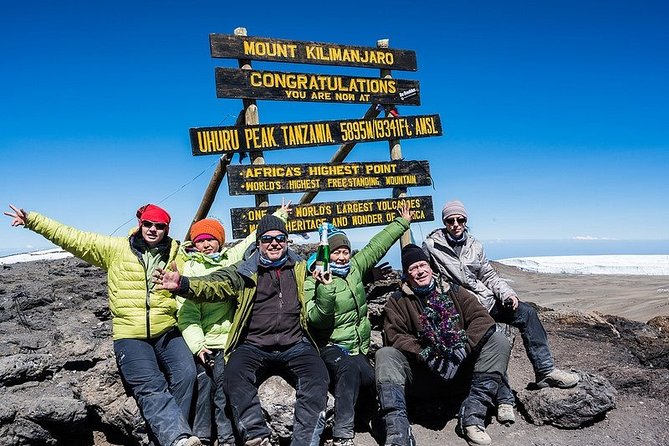
Summit day is the main reason to respect the six-day schedule. You start between midnight and 2 a.m., leaving Barafu Camp at about 4,662 meters and climbing toward Uhuru Peak at 5,895 meters.
The first section is cold and dark. The route passes between the Rebmann and Ratzel glaciers, then climbs in switchbacks toward Stella Point on the crater rim. The surface includes heavy scree, which can make each step slide backward. Your guide will set the pace, and you should keep it slow enough to protect your breathing.
Stella Point brings a major reward: sunrise over the high mountain. You may pause briefly there before continuing along the crater rim to the summit. The final section still requires effort, even after you have already climbed for hours.
The total ascent from Barafu is about 1,233 meters. After reaching the summit, you descend all the way to about 3,106 meters, losing roughly 2,789 meters during the day. That makes day five much more than a summit photograph. It is a long, draining cycle of climbing, celebrating, and descending.
I would judge this day by your overall condition, not only by summit ambition. The guide has a central safety role, and you should report symptoms such as severe headache, confusion, unusual weakness, or breathing trouble. Reaching the summit matters, but getting down safely matters more.
After the summit, you return toward Barafu before continuing to the lower camp area at about 3,106 meters. The temperature should feel warmer as you lose height, but your legs may be tired enough to make the descent surprisingly tough.
Day six: muddy trails and Mweka Gate
The final morning begins with breakfast and a ceremony of appreciation and team bonding with the crew. This is a nice human finish to a demanding week. Porters, cooks, guides, and hikers have shared a small traveling community, and a formal goodbye gives the group a chance to recognize that work.
The final descent runs from about 3,106 meters to Mweka Gate at 1,633 meters. Walking time is listed at roughly six hours. The lower trail becomes warmer, wetter, muddier, and steeper, so the gaiters and trekking poles you used on day one become useful again.
At Mweka Gate, you receive summit certificates. A vehicle then meets you at Mweka village for the drive back to your hotel in Moshi, about 30 minutes away, or onward to Arusha.
This last day is easy to underestimate. Downhill walking can punish knees and feet after the summit effort, and slippery mud calls for short, careful steps. Keep a dry change of clothes accessible rather than buried in your main luggage.
What the $2,000 price includes
At $2,000 per person, the trip is not a budget day hike. You are paying for a six-day national park climb with camping equipment, park fees and taxes, guide services, meals, drinking water, and soft drinks.
The value depends on what is actually covered by the operator’s meal plan and equipment package. The details list breakfast, lunch, and dinner, but each is marked as optional, so ask for a written confirmation. Also ask what camping equipment is supplied and what personal gear you must bring.
The small group limit of eight is a plus. A smaller party can make it easier to hear instructions, keep a common pace, and discuss altitude concerns. It may also make the experience feel less like a procession on a popular route.
Extra costs include tips for the driver, guide, and safari cook, plus visas, international flights, and travel insurance. Budget for these from the start. Travel insurance is especially important for an expensive high-altitude trip, even though the coverage details are not specified here.
Drinking water and soft drinks are included, which reduces the need to arrange every basic refreshment yourself. Pickup is offered, and airport pickup has been described as part of the arrival support. Confirm the exact pickup point and whether your arrival transfer is included in the final price.
Guides, communication, and group size
The service provides a professional driver and guide who can speak English, Spanish, and French. That language range can be helpful when a group includes people with different first languages.
The pre-climb communication is one of the strongest practical features described for this experience. Email and WhatsApp contact was reported as efficient and helpful, with airport pickup and a briefing about the hike arranged before the climb began. Clear communication matters on Kilimanjaro because small questions about transfers, clothing, meals, and start times can become stressful if left until the last minute.
You should still ask direct questions before departure. Confirm your hotel pickup, meal inclusions, equipment, crew size, tipping expectations, and what happens if altitude or weather stops you from continuing. The more exact the answers, the easier it is to judge the price.
What to pack for mud, cold, and summit night
The provided advice is refreshingly practical: bring gaiters and trekking poles. Use them on the muddy rainforest trail and again during the wet descent from Mweka.
You also need clothing suitable for changing conditions. The route moves from warm, damp forest to colder high camps, then to a freezing midnight summit start. Your daypack should hold water, snacks, a warm layer, rain protection, and anything your guide tells you to keep close.
A headlamp is essential for the pre-dawn climb, though the supplied details do not confirm whether one is provided. Ask before you leave home. The same applies to sleeping bags and other personal camping gear, since only camping equipment in general is listed as included.
Pack with the descent in mind, too. A clean shirt, dry socks, and warmer low-altitude clothing can make the final return to Moshi feel like a genuine reward.
Who should choose this climb?
This route suits you if you want Kilimanjaro’s most varied scenery and are comfortable with camping. It is a good match for hikers who prefer a longer route with an acclimatization day rather than a faster, more direct ascent.
It also suits small groups and people who value close contact with a guide. The maximum of eight allows a more personal feel than a large expedition, while the English, Spanish, and French language support may help mixed-language groups.
You should think twice if you dislike muddy trails, rough camps, early starts, or uncertain weather. The summit day is especially demanding, and six days does not guarantee that altitude will be kind to you. Anyone with medical concerns should seek professional advice before booking, as the provided information does not describe a medical screening process.
The booking terms are simple: free cancellation is available up to 24 hours before the local start time. Cancellations or changes inside that window are not accepted for a refund.
Should you book the six-day Machame climb?
I would choose this experience for its route variety, practical acclimatization pattern, small group size, and clear pre-trip communication. The walk from rainforest to Shira Plateau, Lava Tower, Barranco Wall, and the summit gives you a fuller picture of Kilimanjaro than a short ascent route.
I would book only after confirming the optional meal wording, the camping gear package, pickup details, and tipping expectations. If you are fit, prepared for a midnight summit attempt, and happy with basic mountain camping, the $2,000 price can be good value. If you need a gentler altitude schedule or dislike strenuous descents, look for a longer Kilimanjaro itinerary instead.
FAQ
Where does the climb start?
The meeting point is in Arusha, Tanzania, with a listed start time of 7 a.m.
Where does the climb finish?
The activity ends back at the meeting point after transport from Mweka village to Moshi or Arusha.
How long is the Machame Route climb?
The climb lasts approximately six days.
What is the highest point reached?
The summit elevation is listed as 5,895 meters, or 19,341 feet.
How many people can join the group?
The activity has a maximum group size of eight travelers.
Is pickup available?
Yes, pickup is offered. Airport pickup is also described as part of the arrival support, so confirm the exact arrangements before booking.
Are meals included?
Breakfast, lunch, and dinner are listed, but each is marked as optional. Confirm the precise meal package with the operator.
Is camping equipment included?
Yes, camping equipment is listed among the inclusions.
Are tips included in the price?
No. Tips and gratitude for the driver, guide, and safari cook are not included.
What is the cancellation policy?
You can cancel at least 24 hours before the local start time for a full refund. Cancellations or changes made less than 24 hours before the start are not accepted.
Just added in Arusha
- Safari “Kifaru” – 5 days in the most famous Parks in the world★ 5.0 · 4 reviews
- Saadani Day Trip★ 5.0 · 13 reviews
- 3 Days Tanzania Short and Spicy★ 5.0 · 6 reviews
- 5 Day Tanzania Safari Camping Adventure Private Tour★ 5.0 · 2 reviews
- Day Trip to Ngorongoro Crater from Arusha★ 5.0 · 1 review
- SERENGETI NATIONAL PARK Tour★ 4.5 · 5 reviews
- 3 Days Serengeti Park & Ngorongoro Crater Adventure Safari★ 5.0 · 8 reviews
- 6 Days Tanzania Bush Experience Safari★ 5.0 · 6 reviews
Machame Route Climbs, compared.
Climbing Kilimanjaro through 7 days Machame Route
Read our review →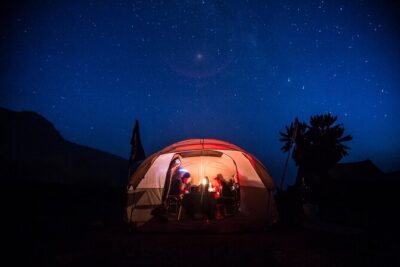
7-Day Machame Kilimanjaro Summit Tour from Arusha
Read our review →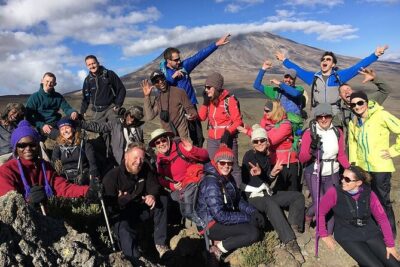
7 Days Kilimanjaro via Machame route affordable price
Read our review →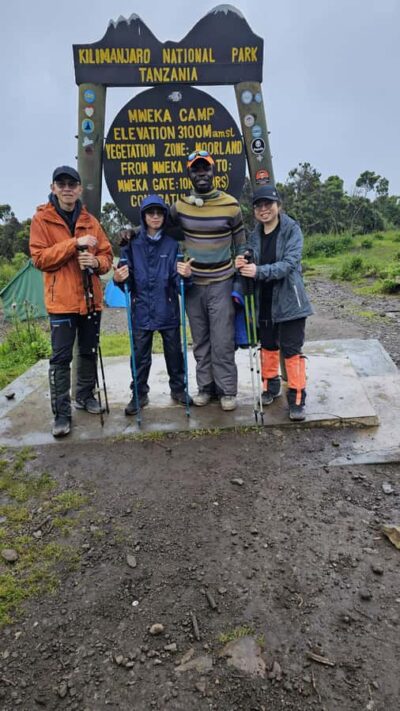
#1. Best Kilimanjaro Day hike Tour-Machame Route-ISMANI
Read our review →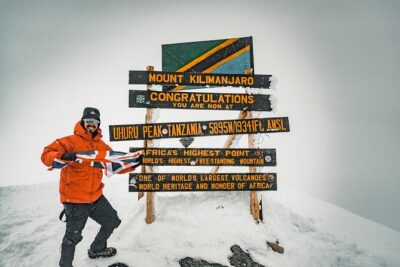
The Best of Machame Route in 6 Days: Your World’s Summit Guide
Read our review →Browse the lists this tour appears in