
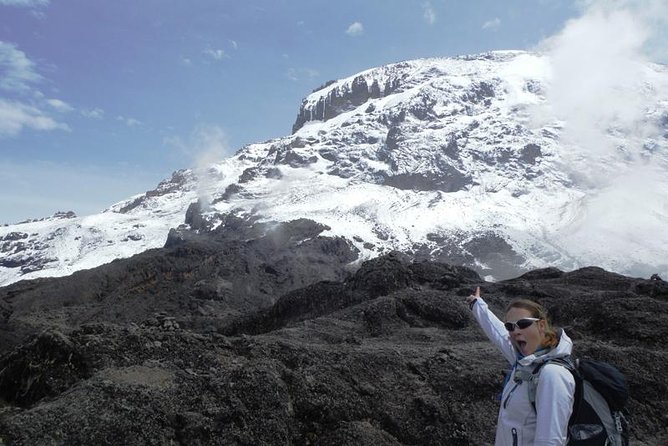
Reviewed · MACHAME ROUTE CLIMBS
7 Days Kilimanjaro Climb Machame Route
Africa’s highest summit demands patience.
This seven-day climb follows Kilimanjaro’s Machame Route, a scenic but demanding path through rainforest, heath, moorland, alpine desert, and arctic terrain. I like the extra acclimatization day compared with the shorter six-day version, and I like that the price includes park fees, camping gear, meals, guides, porters, airport transfers, and hotel nights before and after the climb.
The trade-off is comfort. Machame is tent-only, and summit night is long, cold, and physically punishing. This is not a casual mountain walk, and you should arrive physically fit with some trekking experience.
In This Review
- Key Points Before You Book
- Why Machame Is Called the Whiskey Route
- The Night Before: Hotel Support in Moshi
- Day 1: Machame Gate to Machame Camp
- Day 2: Machame Camp to Shira 2 Camp
- Day 3: Shira 2, Lava Tower, and Barranco
- Day 4: The Barranco Wall to Karanga Camp
- Day 5: Karanga Camp to Barafu Camp
- Day 6: Barafu Camp to Uhuru Peak
- Day 7: Mweka Camp to the Gate
- Camping, Food, and Crew Support
- What the $2,564.11 Price Really Covers
- Who Should Choose This Climb
- Final Verdict: Is the Seven-Day Machame Route Worth It?
- FAQ
- How long does the Kilimanjaro Machame climb take?
- Where does the climb begin?
- Is accommodation provided before and after the climb?
- Do I sleep in huts on the Machame Route?
- Are meals and water included?
- Is the tour private?
- What is not included in the price?
Key Points Before You Book
- Seven days gives your body more time to adjust: The route reaches high ground gradually before summit night, with the same-day climb to Lava Tower followed by a descent to Barranco.
- Machame offers changing habitats and wide views: You move from dense rainforest to open heath, alpine desert, and the arctic summit zone.
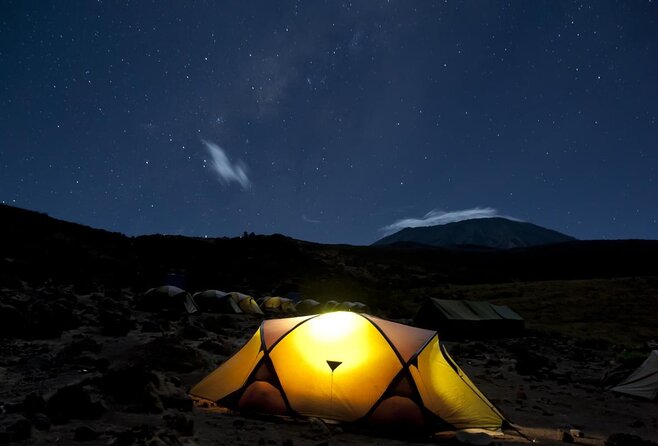
- The route is tent-only: Three-season tents, sleeping mats, meals, filtered water, cooks, guides, and porters are included.
- Summit night starts just after midnight: You climb from Barafu Camp to Uhuru Peak in darkness, usually reaching Stella Point in time for sunrise.
- The private format gives your group personal attention: Only your own party takes part, with mountain guides assigned by Youth Adventures and Safaris.
- The $2,564.11 price covers a lot: Flights and crew tips are not included, and a portable flush toilet costs an extra $65 per toilet and tent.
Why Machame Is Called the Whiskey Route
Machame is one of Kilimanjaro’s best-known routes, and its nickname tells you something useful. It is commonly compared with the Marangu Route, sometimes called the Coca-Cola Route because it offers a more gradual climb and hut accommodation.
Machame is the tougher option. You sleep in tents, tackle steeper sections, and follow a route that rises and falls across the southern side of the mountain. The reward is a greater range of scenery and better acclimatization than a fast, direct ascent.
The full route covers about 62 kilometers from gate to gate. That distance does not sound extreme on paper, but altitude changes the calculation. At the summit, you are walking at more than 19,000 feet, where every step costs more effort and breathing becomes harder.
The seven-day version is the sensible choice for many people. A six-day Machame climb is possible, but the extra night allows a slower schedule and more time at useful heights. I would choose seven days unless your schedule makes the shorter version essential.
More Kilimanjaro climbs:
- Mount Kilimanjaro Day Hike Through Marangu Route to Mandara Hut
★ 5.0 · 37 reviews - Mount Kilimanjaro Day Hike
★ 4.5 · 23 reviews - 7 Day Kilimanjaro Climb Lemosho Route & 2 Day Safari
★ 5.0 · 16 reviews
The Night Before: Hotel Support in Moshi
The package includes accommodation before and after the mountain trek in Moshi, along with breakfast. The tour information also includes two-way private airport transfers, which is helpful after a long international flight or before an early departure.
The meeting point is listed in Arusha, while the mountain transport and hotel arrangements are based around Moshi. Confirm the exact pickup point and hotel before you travel, especially if you plan to spend time in Arusha first.
The pre-climb night has a practical purpose. You can meet the team, receive a briefing, check your clothing and equipment, and avoid starting the mountain portion immediately after landing. Daniel, identified in the supplied feedback as a company director, was praised for keeping in close contact before departure. Godfrey was also named as a managing director who helped organize a climb for one group.
That kind of communication matters. Kilimanjaro trips involve airport timing, hotel transfers, gear questions, food arrangements, and changing weather. You want clear answers before you reach the gate.
Day 1: Machame Gate to Machame Camp
The first mountain day begins with breakfast, a briefing, and roughly an hour of driving from Moshi to Machame village. The guides and porters organize the gear and food there, while you receive packed lunch and mineral water before the hike begins.
At Machame Gate, registration comes first. Then the trail enters dense rainforest on the southern side of Kilimanjaro. This is one of the most enjoyable sections because the air is humid, the trees are large, and the mountain feels far removed from town.
The scheduled walk takes about seven hours to Machame Camp, also referred to in the itinerary as Machame Hut. The name can be misleading: accommodation on this route is in tents, not mountain huts.
Expect a full opening day. The distance is not listed in the schedule, but the walking time and rainforest climb make sturdy footwear and a steady pace important. Rain is possible in the forest, and wet clothing on the first day can become a problem later. Keep rain protection accessible rather than buried in your duffel.
Day 2: Machame Camp to Shira 2 Camp
The forest begins to thin as the trail climbs toward a rocky ridge. You leave the glades behind and enter heath and open moorland, where the views widen and the air becomes cooler.
The walk to Shira 2 Camp covers about 5 kilometers and takes four to six hours. Elevation rises from approximately 9,350 feet to 12,500 feet. That is a substantial gain in one day, but the shorter distance helps keep the pace manageable.
The Shira Plateau is one of the route’s special features. It gives you a sense of the mountain’s scale and puts you in a more exposed setting after the sheltered forest. You also cross a large river gorge before reaching camp.
This is a good day to practice the pace your guide sets. Do not race because the distance looks short. On Kilimanjaro, slow and steady is not a slogan for a wall calendar. It is a useful survival tactic.
More Machame Route climbs:
- 7-Day Machame Kilimanjaro Summit Tour from Arusha
★ 5.0 · 125 reviews - 6 Days: Hiking Kilimanjaro via Machame Route
★ 5.0 · 24 reviews - 6-Day Guided Tour in Machame Route Mt Kilimanjaro
★ 5.0 · 17 reviews - KILIMANJARO MACHAME ROUTE, (Climb 7days)
★ 5.0 · 16 reviews
Day 3: Shira 2, Lava Tower, and Barranco
Day three is designed around acclimatization. From Shira 2, you climb toward Lava Tower, a volcanic rock formation about 300 feet tall, reaching roughly 15,190 feet before descending to Barranco Camp at about 13,044 feet.
The climb to Lava Tower covers 7 kilometers and takes four to five hours. The habitat changes to alpine desert, with more rock, less vegetation, and harsher exposure. After a break, you descend 3 kilometers to Barranco, usually taking another two to three hours.
You begin and finish the day at roughly similar elevations, but spending time high before sleeping lower helps your body adjust. This is one of the strongest reasons to select the seven-day itinerary.
Barranco Camp also prepares you for the next morning’s challenge. You can see the Great Barranco Wall, a steep cliff that looks more alarming from camp than it feels once you move carefully upward. Still, altitude and tired legs make the day demanding, even though the route is not technical climbing.
Day 4: The Barranco Wall to Karanga Camp
The day starts by descending into a ravine at the base of the Great Barranco Wall. Then comes the climb, about 900 feet up a steep but non-technical cliff.
You should expect hands-on movement in places, but the supplied route details do not describe ropes or technical climbing. Follow the guide’s instructions, keep your pace controlled, and leave room for people ahead of you on narrower sections.
Above the wall, the trail rolls through hills and valleys before dropping into the Karanga Valley. A final steep climb brings you to Karanga Camp, which sits at about 13,106 feet.
This is a shorter day and another useful acclimatization stage. It may not feel easy, but the reduced walking time gives you a chance to rest before the higher Barafu Camp. Use the afternoon to eat, drink, organize summit clothing, and protect your energy.
Day 5: Karanga Camp to Barafu Camp
The trail leaves Karanga and reaches the junction with the Mweka Trail. From there, you climb through a rocky section toward Barafu Camp, at about 15,331 feet.
The listed distance is 4 kilometers. That sounds modest, but the altitude makes this a serious approach day. Barafu is the final base before the summit, and the terrain is more exposed and austere than the forest below.
The southern circuit is completed here. One benefit of this route is that you see the mountain from several angles instead of simply going up and down the same path. Peaks including Mawenzi and Kibo can be seen from camp when conditions allow.
Do not treat this as a sightseeing afternoon. You are preparing for the hardest part of the climb. Dinner is included, and the evening should be devoted to rest. Pack your summit clothing and snacks before you lie down, because the next start is shortly after midnight.
Day 6: Barafu Camp to Uhuru Peak
Summit day begins just past midnight. You climb in darkness through cold and wind, taking short, frequent breaks as you ascend toward Stella Point at about 18,900 feet.
The scheduled climb from Barafu to Uhuru Peak takes seven to eight hours. The route reaches the arctic zone, and this is where fitness, pacing, warm layers, and mental discipline matter most. The air is thin, so you should expect the pace to be slow.
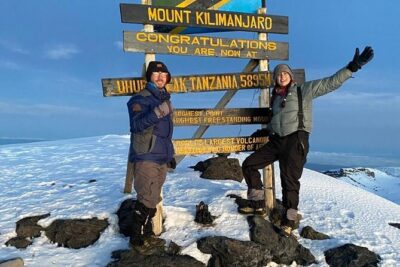
At Stella Point, sunrise over Mawenzi Peak can provide one of the great visual rewards of the trip. From there, you continue along the crater rim toward Uhuru Peak, the highest point on Kilimanjaro, at approximately 19,341 feet.
Summiting is not guaranteed. Altitude sickness, weather, exhaustion, and individual response to the height can all change the plan. A private guide can provide closer attention, but no guide can remove the mountain’s physical demands.
After the summit, you descend to Barafu for lunch and continue to Mweka Camp at about 10,065 feet. The descent from Uhuru covers around 12 kilometers and returns you to rainforest habitat. It can be hard on the knees, especially after the long climb up. Trekking poles are specifically recommended in the trip details, and I would take that advice seriously.
This is an exceptionally long day. Reaching the summit is only half of it. You still have to descend, eat, and reach camp, so save energy and do not linger too long at the top.
Day 7: Mweka Camp to the Gate
The final morning is a 10-kilometer descent from Mweka Camp to Mweka Gate, with three to four hours of scheduled walking. The lower trail can be muddy and wet, particularly after rain.
At the gate, you collect summit certificates before continuing for about another hour to Mweka Village. The company vehicle then transfers you back to the Moshi hotel.
This final day is less dramatic than summit morning, but it completes the route in a practical way. You leave the high mountain behind, return equipment, and have a proper place to wash and rest after several nights in a tent.
Camping, Food, and Crew Support
Machame is not a hut route. The package includes three-season mountain tents and double-layered sleeping mats, but you should clarify what personal sleeping bag arrangements are provided before departure. The listed equipment does not specifically include a sleeping bag.
Three meals are provided each day on the mountain, along with filtered water. The wider package also lists breakfast, lunch, dinner, snacks, bottled water, coffee, and tea. Confirm how bottled water fits with the filtered-water arrangement so you know what you need to carry.
Professional mountain guides, cooks, and porters are included. Their work is central to the trip. They carry supplies, prepare meals, set up camp, and help keep the schedule moving while you focus on walking.
The strongest praise directed at Youth Adventures and Safaris centers on organization, communication, hotel arrangements, and mountain support. John is named as one lead guide, while Daniel was repeatedly associated with personal communication and summit assistance. One solo climber described the experience as highly personalized, and another group praised the company’s handling of accommodation and a combined safari itinerary.
Crew tips are not included. Set aside money for this important cost and ask the operator for current tipping guidance. Personal items, laundry, flights, and services not listed in the package are also extra.
A portable flush toilet with a toilet tent costs an additional $65 per toilet and tent. That may be worth considering if privacy and comfort are important to you, but it is not part of the standard price.
What the $2,564.11 Price Really Covers
At $2,564.11 per person, this is a major purchase, but the package is not just a guided walk. It includes national park fees, camping fees, rescue fees, 18 percent VAT, mountain transport, a private airport transfer in both directions, hotel nights before and after the trek, camping equipment, food, filtered water, and the full mountain crew.
Those inclusions reduce the number of separate costs you need to arrange. The value is strongest if you want a private trip with one company handling the ground operation from airport pickup through your return to Moshi.
Still, compare the fine print before paying. Flights, tips, laundry, personal equipment, and the portable toilet are excluded. Ask about the exact hotel, sleeping bag provision, group size within your private party, and the current crew tipping recommendation.
The private format is useful for couples, families, or a solo climber who wants the pace and attention centered on one group. It may cost more than joining a large departure, but the personal communication and flexible support can be worthwhile on a climb where physical condition changes from day to day.
Who Should Choose This Climb
I would recommend this route to someone who is physically fit, comfortable with several hours of walking, and prepared for tent camping. Previous trekking experience is helpful, though the supplied information describes moderate physical fitness as the minimum for the climb toward Lava Tower.
This is a poor match if you want hut accommodation, short walking days, or a relaxed holiday with a little mountain scenery on the side. The phrase Whiskey Route is not marketing fluff. Machame has steep sections, altitude, rocky ground, cold conditions, and a very long summit day.
It is a good match if you value scenery and route variety. The five climatic zones give the climb a strong sense of progression, from rainforest monkeys and old-growth trees to open moorland and the stark summit zone. One day hike description also mentions birds and large trees in the lower forest, so the route offers more than a race to the top.
The supplied feedback gives the operator a perfect 5 rating from 15 reviews and a 100 percent recommendation figure. That is encouraging, particularly because the praise covers repeated themes: prompt communication, successful summits, organized operations, good accommodation, and attentive guides. It is not a promise that every climb will reach the summit, but it suggests a company with a strong record in the experience described.
Final Verdict: Is the Seven-Day Machame Route Worth It?
Book this climb if you want a private, fully supported Kilimanjaro attempt with strong scenery and an acclimatization-friendly seven-day schedule. The included fees, crew, meals, equipment, transfers, and hotel nights make the $2,564.11 price easier to justify than a basic headline cost might suggest.
Before booking, confirm the sleeping bag arrangements, hotel details, pickup location, crew tipping guidance, and any personal gear requirements. Also be honest about your fitness. This is a serious high-altitude climb, not a standard sightseeing excursion.
For the right person, the seven-day version offers the best balance in this itinerary: enough time to adjust, a varied route, and a private team to guide you through the hardest night. If you want a gentler ascent with huts, choose a different route. If you want the classic tent-based challenge and can accept the discomfort, Machame is a strong choice.
FAQ
How long does the Kilimanjaro Machame climb take?
The experience lasts approximately six to seven days, with this itinerary using seven days and six nights for better acclimatization.
Where does the climb begin?
The mountain trek begins at Machame Gate in Kilimanjaro National Park. The listed meeting point is in Arusha, and transport is provided to and from the mountain gate.
Is accommodation provided before and after the climb?
Yes. The package includes pre-trek and post-trek accommodation at a hotel in Moshi.
Do I sleep in huts on the Machame Route?
No. Accommodation on the mountain is in tents. Three-season mountain tents and double-layered sleeping mats are included.
Are meals and water included?
Yes. Three meals daily are provided while you are on the mountain. The package also includes filtered water throughout the trek, plus snacks, bottled water, coffee, and tea.
Is the tour private?
Yes. This is a private activity, and only your group participates.
What is not included in the price?
Flights, tips for the mountain crew, personal items, laundry, and services not specifically listed are excluded. A portable flush toilet with a toilet tent costs an additional $65 per toilet and tent.
Just added in Arusha
- Safari “Kifaru” – 5 days in the most famous Parks in the world★ 5.0 · 4 reviews
- Saadani Day Trip★ 5.0 · 13 reviews
- 3 Days Tanzania Short and Spicy★ 5.0 · 6 reviews
- 5 Day Tanzania Safari Camping Adventure Private Tour★ 5.0 · 2 reviews
- Day Trip to Ngorongoro Crater from Arusha★ 5.0 · 1 review
- SERENGETI NATIONAL PARK Tour★ 4.5 · 5 reviews
- 3 Days Serengeti Park & Ngorongoro Crater Adventure Safari★ 5.0 · 8 reviews
- 6 Days Tanzania Bush Experience Safari★ 5.0 · 6 reviews
Machame Route Climbs, compared.
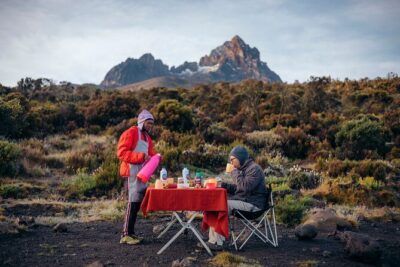
Climbing Kilimanjaro through 7 days Machame Route
Read our review →
7-Day Machame Kilimanjaro Summit Tour from Arusha
Read our review →
7 Days Kilimanjaro via Machame route affordable price
Read our review →
#1. Best Kilimanjaro Day hike Tour-Machame Route-ISMANI
Read our review →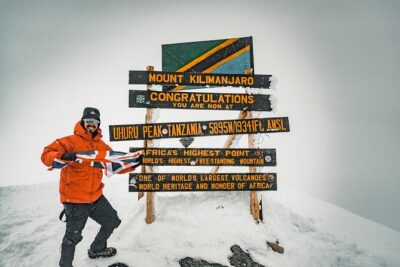
The Best of Machame Route in 6 Days: Your World’s Summit Guide
Read our review →Browse the lists this tour appears in