
Reviewed · MACHAME ROUTE CLIMBS
7 Days Kilimanjaro trek via Machame route
Kilimanjaro saves its hardest miles for the dark. This seven-day Machame Route trek gives you varied scenery, careful acclimatization, and a private group supported by guides, cooks, and porters. I like the route’s west-side approach and the way it passes from cloud forest to alpine desert before the final climb to Uhuru Peak. The main caution is the altitude and the tough summit night, not the technical climbing.
I also like the practical setup: private waterproof sleeping tents, a dining tent with tables and chairs, purified water, meals, park fees, rescue fees, and airport transfers are included in the $2,800 price. The Machame Route is popular, so the trail and camps can feel busy, even though your booking is private. Also, clarify the start time before booking: the daily plan says a 9am departure from Arusha, while the meeting information gives 7:30pm.
In This Review
- Key points to know before choosing this climb
- Why the Machame Route is a good seven-day choice
- Day 1: coffee country to Machame Camp
- Day 2: Shira Plateau and the first big views
- Day 3: high point near Lava Tower, then Barranco
- Day 4: the Barranco Wall and Karanga Valley
- Day 5: alpine desert to Barafu Camp
- Day 6: the midnight push to Uhuru Peak
- Day 7: forest descent and the ride back to Arusha
- What the $2,800 price really covers
- Food, tents, guides, and the human side
- Who should book this Kilimanjaro climb
- Should you book it?
- FAQ
- How long is the Kilimanjaro trek?
- What route does the trek use?
- Is the trek private?
- What time does the trek begin?
- Are meals included?
- Are park and rescue fees included?
- Is drinking water provided?
- What is not included?
Key points to know before choosing this climb
- Six nights on the mountain: You camp at Machame, Shira, Barranco, Karanga, Barafu, and Mweka before returning through the forest.
- Strong acclimatization design: Day three climbs high to about 4,530 meters, then drops to Barranco Camp, helping your body adjust.
- Barranco Wall is the route’s hands-on moment: Expect a roughly 90-minute scramble where you may use your hands.
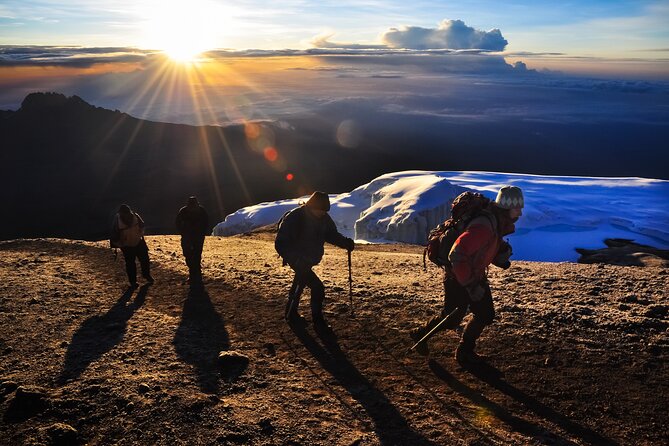
- Summit night begins around midnight: The climb to Stella Point takes about six hours, followed by the gradual ridge walk to Uhuru Peak.
- The support team is central to the experience: Guides, cooks, and porters stay with you, and past climbers especially praised Gasto James for encouragement, singing, and steady pacing.
- The price covers the costly essentials: Park and rescue fees, meals, tents, water, transfers, and mountain staff are included, but personal climbing equipment, tips, and visas are extra.
Why the Machame Route is a good seven-day choice
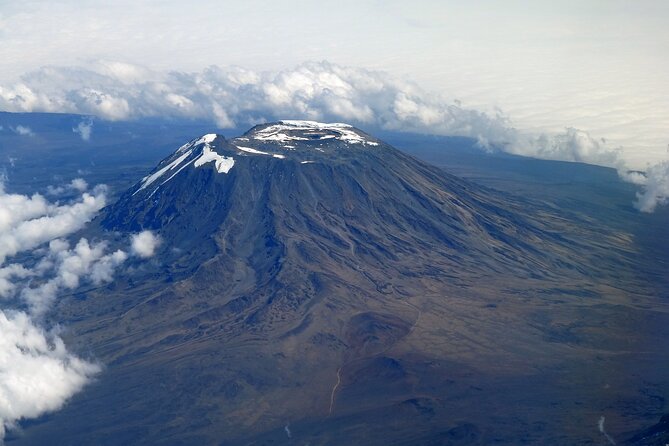
The Machame Route is often called the Whiskey Route, though you will not find a drinks menu on the mountain. Its appeal is simple: you approach Kilimanjaro from the west, gain height in stages, and see several distinct plant zones along the way.
The first days are not just a march toward the summit. They give you time to watch the mountain change. You begin among coffee farms and village roads near Arusha, enter a mossy cloud forest, cross high moorland, and later walk through bare alpine ground with Kibo and Mawenzi as your landmarks.
This route is popular because it combines scenery with a sensible acclimatization pattern. The tradeoff is that popularity brings more people to the trail and camps. If you want a quieter mountain experience, this may not be your first choice. If you want a well-used route with established camps and a clear progression, it makes good sense.
The operator has been arranging climbs on Kilimanjaro and Mount Meru for almost twenty years. That long operating history matters most in the small mountain details: organizing porters at the gate, preparing camp before you arrive, supplying meals and water, and managing the difficult final ascent.
More Kilimanjaro climbs:
- Mount Kilimanjaro Day Hike Through Marangu Route to Mandara Hut
★ 5.0 · 37 reviews - Mount Kilimanjaro Day Hike
★ 4.5 · 23 reviews - 7 Day Kilimanjaro Climb Lemosho Route & 2 Day Safari
★ 5.0 · 16 reviews
Day 1: coffee country to Machame Camp
The planned departure from Arusha is 9am, with a drive of about 90 minutes to Machame Gate. The road passes coffee farms and villages, giving you a useful glimpse of the settled foothills before the trek begins.
At the gate, you wait while the climb is registered and the guides, cooks, and porters arrange the loads. This can feel slow, but it is part of the required start process. Use the time to check your daypack, fill your water, and make sure the items you need during the walk are easy to reach.
The hike to Machame Camp takes about six hours. The first section runs through Kilimanjaro’s cloud forest, where moss-covered trees give the trail a slightly mysterious feel. As you climb, the forest opens into heather, tall grass, and wildflowers.
On a clear day, you may catch views of Kibo Peak, your final destination. That early sight is useful motivation, but the day is still a full hike. The camp team goes ahead to prepare the tents, so you arrive to a more organized camp rather than having to set up your own shelter.
Day 2: Shira Plateau and the first big views
Day two also takes about six hours and includes several uphill sections. Carry plenty of drinking water, particularly if the sky is clear and the sun is strong. The route offers views down toward the plains and forests, with Kibo and Mawenzi rising above you.
The plant life changes quickly with altitude. Trees become smaller, and you begin to see Kilimanjaro’s distinctive high-altitude plants, including Senecio kilimanjari and Lobelia deckenii. For me, this is one of the route’s best features: you can feel the mountain’s climate changing beneath your boots.
After lunch, you climb onto the Shira Plateau. This broad high area was formed when Kibo’s lava flows filled the Shira crater. Shira Camp gives you views toward Kibo to the west and Mount Meru to the east, assuming the weather cooperates.
The main challenge today is not distance but adjustment. You are sleeping higher than the night before, and the uphill sections can feel demanding. Walk slowly and drink regularly. The local phrase pole pole, meaning slowly, is more than a slogan here. It is the correct pace.
Day 3: high point near Lava Tower, then Barranco
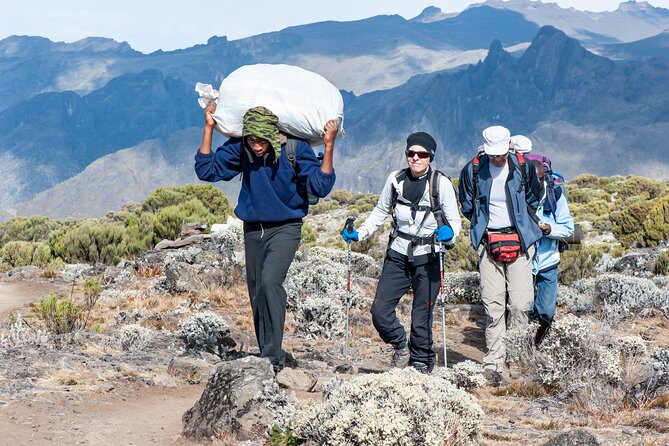
Day three is the key acclimatization day. It lasts about seven hours and is designed around climbing high before sleeping lower. Although the final elevation gain is only about 110 meters, you reach roughly 4,530 meters by early afternoon after gaining around 690 meters, then descend to Barranco Camp.
You begin by walking east across the Shira Plateau. Soon the route reaches the junction connecting the Shira and Lemosho approaches, then continues through increasingly bare ground. After lunch, you reach the highest point of the day before descending quickly toward Barranco.
A faster group can take a detour through Lava Tower, a 300-foot lava formation. This option adds a higher point and can support acclimatization, but the day is already demanding. Follow your guide’s advice rather than treating the detour as a challenge to prove yourself.
Barranco Camp is a favorite among the mountain staff, and it is easy to understand why. The camp sits below the Barranco Wall, creating a dramatic setting for the next morning. You may arrive tired, but the change from the open plateau to this more enclosed mountain setting makes the evening feel special.
More Machame Route climbs:
- 7-Day Machame Kilimanjaro Summit Tour from Arusha
★ 5.0 · 125 reviews - 6 Days: Hiking Kilimanjaro via Machame Route
★ 5.0 · 24 reviews - 6-Day Guided Tour in Machame Route Mt Kilimanjaro
★ 5.0 · 17 reviews - KILIMANJARO MACHAME ROUTE, (Climb 7days)
★ 5.0 · 16 reviews
Day 4: the Barranco Wall and Karanga Valley
The fourth day takes about seven hours and begins with the most hands-on section of the route: the Barranco Wall. The climb lasts roughly an hour and a half. In places, you may need to use your hands, but this is described as a scramble rather than a technical rock climb.
The wall can look intimidating from camp. Guides help you find the route, and the slow pace allows you to focus on balance and footing. If you dislike exposed or awkward uphill scrambling, this is the section to consider carefully. It is short compared with the full trek, but it is more physical than a normal walking trail.
Once over the wall, the trail becomes fairly level before dropping steeply into the green Karanga River Valley. That descent can be hard on tired legs, especially after the morning climb.
The day is shorter in feel than summit day, but you should not treat it as easy. The repeated uphill and downhill movement keeps working your body, while the rising altitude continues to test your breathing.
Day 5: alpine desert to Barafu Camp
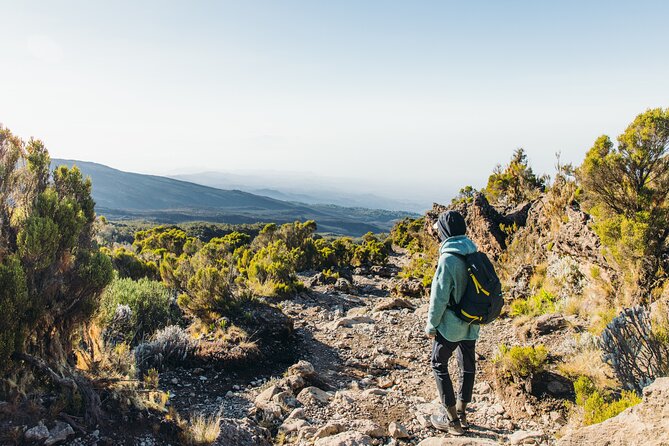
The route to Barafu Camp takes about seven hours. Vegetation becomes sparse, and the surroundings turn into alpine desert. This change gives the day a stark character, with little to soften the bare rock and high mountain air.
Along the way, you see several of Kibo’s glaciers and pass the junction where the Mweka descent route meets the Machame trail. The route also passes near the Heim, Kersten, and Decken Glaciers. These features are a reminder that the summit is close, even though the hardest part is still ahead.
Barafu Camp offers views toward both Kibo and Mawenzi. It is also the launch point for your summit attempt, so the camp has a practical purpose rather than being just another overnight stop.
You are expected to eat dinner and try to sleep soon afterward because the wake-up comes before midnight. That early start is one of the biggest demands of the itinerary. Rest may be difficult at altitude, so keep your evening simple, organize your headlamp and warm layers, and avoid wasting energy.
Day 6: the midnight push to Uhuru Peak
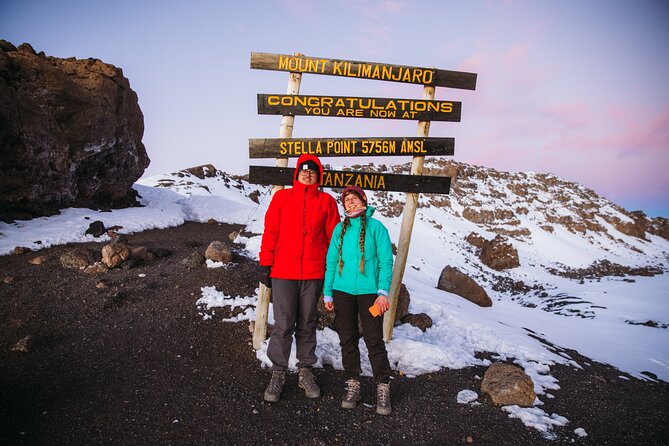
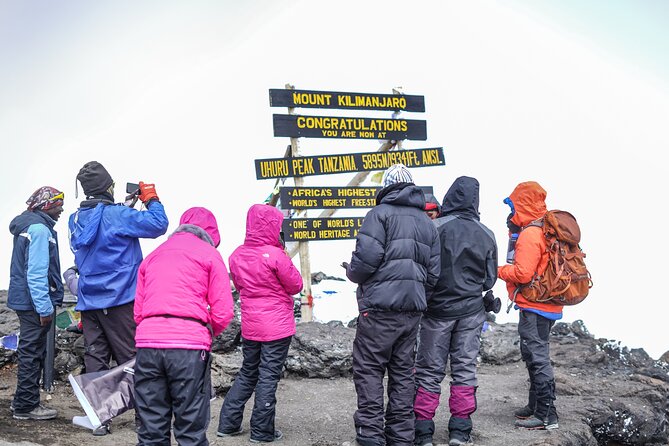
Summit day begins around midnight. For approximately six hours, you climb by headlamp toward Stella Point on the crater rim. This is the steepest and most tiring part of the trek, and the altitude makes every step feel slower.
The climb to Stella Point is the major physical test. You may be moving in darkness, on steep ground, after limited sleep. The support of the guide team becomes especially important here. Gasto James is repeatedly praised for calm encouragement, expert mountain leadership, singing, and keeping groups moving pole pole when the effort becomes painful.
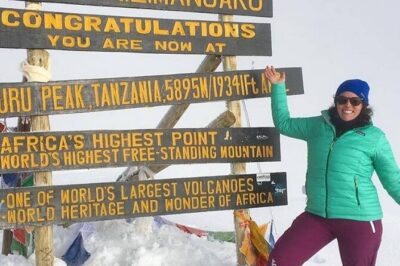
At Stella Point, the route changes character. The walk along the crater rim to Uhuru Peak is a gradual climb and takes about an hour. It is not as steep, but altitude still makes it tiring. The summit is Africa’s highest point, and the moment is likely to feel emotional after the long night.
Allow time for photos with your guide and group, then begin the descent. You can see the mountain, crater, clouds, and glaciers on the way down, assuming visibility is good. The descent returns you to Barafu Camp before continuing toward Mweka Camp, making this a very long day even though the listed hiking time is about six hours.
The schedule requires stamina. Reaching Uhuru Peak is not the end of the day. You still need to descend safely and conserve enough energy for the trail to Mweka Camp.
Day 7: forest descent and the ride back to Arusha
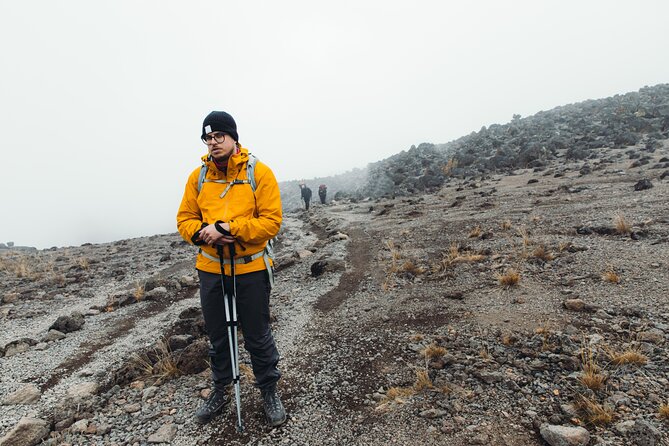
After breakfast, you finish the trek by walking through the forest to Mweka Gate. The hike is listed at about six hours, and the trail can be slippery after rain.
This final forest section offers a gentler setting after the bare slopes near Barafu. It is still a descent, however, and tired knees can make downhill walking surprisingly difficult. Trekking poles would be useful, though personal equipment is not included and must be arranged separately.
Vehicles meet you at the lower Mweka Gate station for the return to Arusha. The journey closes a full week that began in coffee country and passed through several mountain zones before returning to the forest.
What the $2,800 price really covers
At $2,800 per person, this is not a budget walk, but the package includes many of the expenses that can make a Kilimanjaro climb costly. Park fees and rescue fees are included, as are six nights of private, waterproof mountain tents and a mess tent with tables and chairs.
You also receive breakfast on all seven days, lunch on all seven days, dinner on six days, and clean purified drinking water while on the mountain. Airport transfers are included as well. Professional guides, cooks, and porters provide the working structure of the climb.
I would compare the price by checking exactly what competing operators include. A lower headline price may leave park charges, transfers, meals, or support equipment outside the package. Here, the included services make the cost easier to understand.
You still need to budget for personal climbing gear, tips, and visa fees. The description does not list individual gear items, so ask for a packing list before you pay. Also confirm the airport transfer arrangements and the apparent start-time difference between 9am and 7:30pm.
Food, tents, guides, and the human side
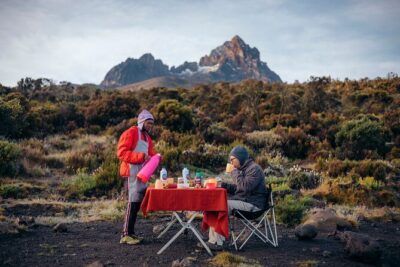
The camping arrangement is more comfortable than a basic tent-only setup. Your sleeping tent is private, waterproof, and described as high quality, while the mess tent gives you a place to sit at a table for meals and time at camp.
Food is one of the most praised parts of the experience. The mountain cooks are credited with preparing meals that helped keep the group going, while the wider team is repeatedly described as attentive and supportive.
Gasto James receives particular praise for creating a positive atmosphere, sharing stories about Tanzanian culture and Maya, and helping people who struggled on the way up. Singing during the early morning push toward Stella Point became a memorable part of the climb for some groups.
That personal support is important, but it is not a substitute for fitness or preparation. The guides can set the pace, monitor how you are doing, and help you make sound decisions. You still need to arrive ready for long uphill and downhill days, cold conditions, and a night ascent.
Who should book this Kilimanjaro climb
I would choose this trek if you want a private seven-day climb with strong support and a route that changes scenery often. It suits someone with moderate physical fitness who is willing to walk slowly, accept basic mountain camping, and prepare properly for altitude.
It is a good match for friends, couples, or families booking as one group. The private format means only your party participates, while the popular trail gives you a more social mountain setting than a remote route.
I would think twice if you want solitude, dislike camping, or prefer a short summit day. The Machame Route is popular, the Barranco Wall requires a scramble, and summit morning begins around midnight. Those are not small details.
Free cancellation is available if you cancel at least 24 hours before the experience starts. Within 24 hours, the payment is not refunded, and changes are not accepted.
Should you book it?
Yes, if your goal is a well-supported Kilimanjaro attempt with varied scenery and a clear acclimatization plan. The included park fees, rescue fees, meals, water, transfers, private tents, and dining tent give the $2,800 price solid value.
Before booking, confirm the start time, request the personal gear list, and ask how tips are handled. If you can manage the long days and the midnight summit push, this route offers a strong balance of scenery, structure, and human support. The repeated praise for Gasto James and his team points to the experience’s biggest strength: you are not simply given a trail map and sent uphill.
FAQ
How long is the Kilimanjaro trek?
The experience lasts approximately seven days, with six days of trekking on the mountain followed by the final descent and return to Arusha.
What route does the trek use?
It uses the Machame Route, approaching Kilimanjaro from the west and passing through Machame, Shira, Barranco, Karanga, Barafu, and Mweka.
Is the trek private?
Yes. This is a private activity, so only your group participates.
What time does the trek begin?
The day one itinerary says you leave Arusha at 9am. The meeting information lists a 7:30pm start time, so you should clarify the correct time with Mountain Warriors Tours and Safaris before departure.
Are meals included?
Yes. Breakfast is included for seven days, lunch for seven days, and dinner for six days while you are on the mountain.
Are park and rescue fees included?
Yes. All park fees and rescue fees are included in the stated price.
Is drinking water provided?
Yes. Clean, purified drinking water is included while you are on the mountain.
What is not included?
Personal climbing gear, tipping, and visa fees are not included.
More Treks in Arusha
- 8-Day Small-group Lemosho Kilimanjaro Summit Trekking
★ 5.0 · 186 reviews - Mountain Kilimanjaro Day Hike
★ 5.0 · 102 reviews - Private Full Day Hiking Experience to Marangu Route
★ 5.0 · 61 reviews - 4 Days Mount Meru Trekking
★ 5.0 · 55 reviews
Just added in Arusha
- Safari “Kifaru” – 5 days in the most famous Parks in the world★ 5.0 · 4 reviews
- 3 Days Tanzania Short and Spicy★ 5.0 · 6 reviews
- 5 Day Tanzania Safari Camping Adventure Private Tour★ 5.0 · 2 reviews
- Saadani Day Trip★ 5.0 · 13 reviews
- Day Trip to Ngorongoro Crater from Arusha★ 5.0 · 1 review
- SERENGETI NATIONAL PARK Tour★ 4.5 · 5 reviews
- 3 Days Serengeti Park & Ngorongoro Crater Adventure Safari★ 5.0 · 8 reviews
- 6 Days Tanzania Bush Experience Safari★ 5.0 · 6 reviews
Machame Route Climbs, compared.
Climbing Kilimanjaro through 7 days Machame Route
Read our review →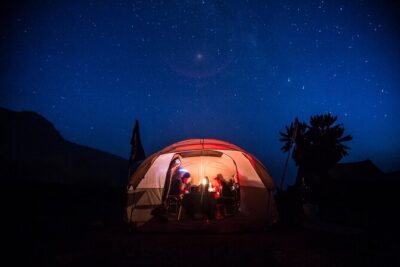
7-Day Machame Kilimanjaro Summit Tour from Arusha
Read our review →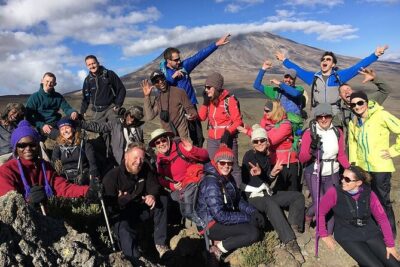
7 Days Kilimanjaro via Machame route affordable price
Read our review →
#1. Best Kilimanjaro Day hike Tour-Machame Route-ISMANI
Read our review →
The Best of Machame Route in 6 Days: Your World’s Summit Guide
Read our review →Browse the lists this tour appears in