
Reviewed · MACHAME ROUTE CLIMBS
7 Days Mount Kilimanjaro Machame Route
The mountain saves its hardest lesson for midnight. This 7-day Machame Route earns its strong reputation by giving you extra time to adjust to altitude, then a shorter day before the summit push. I especially like the Barranco to Karanga split, and I like that the route crosses several distinct habitats, from rain forest to Arctic terrain. The main drawback is simple: summit day is still a punishing, sleep-deprived effort.
This is a serious trek, not a walk with a dramatic backdrop. You need moderate physical fitness, patience, warm clothing, and a willingness to move slowly for several days. The group size is capped at 15, and Moorland Safari and Trekking has drawn praise for its helpful organization, flexible planning, and strong guide team, including Nasr, Chris, and Alfred.
In This Review
- Key points to know before booking
- Why seven days is the sensible Machame schedule
- Day 1: Machame Gate to the rain forest
- Day 2: Heather and moorland on the way to Shira
- Day 3: Lava Tower, the Shark’s Tooth, and Barranco
- Day 4: Barranco Wall and the short Karanga day
- Day 5: Karanga to Barafu, the final camp before the summit
- Day 6: Stella Point, the summit push, and a very long descent
- Day 7: Mweka descent and the return to Arusha
- What the $2,520 price means
- Who should choose this Machame trek?
- Should you book it?
- FAQ
- Where does the Kilimanjaro trek start?
- How long is the Machame Route experience?
- How much does the trek cost?
- What is the maximum group size?
- What level of fitness is required?
- What time does the summit attempt begin?
- How high is the Kilimanjaro summit?
- Where does the trek end?
- Can I cancel for a full refund?
Key points to know before booking
- The extra acclimatization day matters: Karanga gives you a short day before the summit attempt, when rest is especially valuable.
- You cross five major habitats: Rain forest, moorland, semi-desert, alpine desert, and Arctic terrain create a changing mountain experience.
- Day 3 is the altitude-training day: You climb toward Lava Tower, reaching about 16,000 feet, then sleep lower at Barranco.
- Summit morning starts around midnight to 2 a.m.: Expect heavy scree, cold, darkness, and a long descent after reaching the crater rim.
- The group is limited to 15 people: That is small enough to keep the trek more personal, though the exact guide-to-climber ratio is not given.
- The price is $2,520 per person: Its value depends on what you need from the operator, but the seven-day schedule is more sensible than cutting the route short.
Why seven days is the sensible Machame schedule
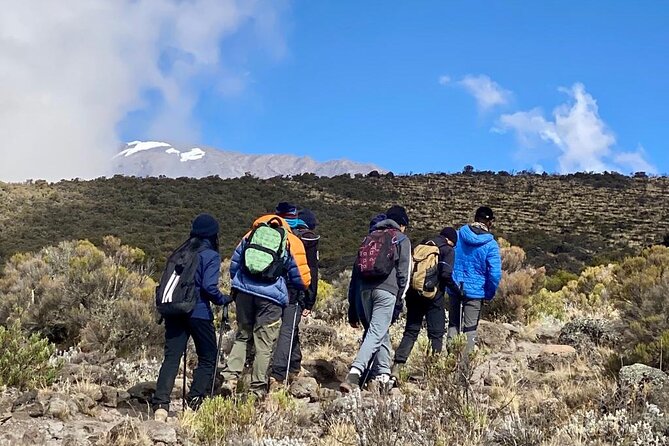
The Machame Route is often chosen for its scenery and changing terrain, but the real strength of this seven-day version is its pacing. The route does not rush you from Barranco to Barafu in one long day. Instead, it uses Karanga as an overnight stop, breaking the climb into manageable stages.
That choice becomes important before the summit. You leave Barafu around midnight, sometimes as early as 12 a.m. and no later than about 2 a.m. A short day at Karanga gives you a better chance to rest before that effort. It does not make the summit easy, but it avoids piling one exhausting day directly onto another.
You will still face a major altitude gain, cold conditions, and a long descent. The itinerary lists the summit day as seven to eight hours uphill, followed by four to six hours down. The numbers explain why the extra day is useful.
The route also uses the South Circuit, which gives you views of Kibo and Mawenzi from different angles. You are not simply following one narrow line toward the summit. The scenery changes steadily, and each day has a different feel.
More Kilimanjaro climbs:
- Mount Kilimanjaro Day Hike Through Marangu Route to Mandara Hut
★ 5.0 · 37 reviews - Mount Kilimanjaro Day Hike
★ 4.5 · 23 reviews - 7 Day Kilimanjaro Climb Lemosho Route & 2 Day Safari
★ 5.0 · 16 reviews
Day 1: Machame Gate to the rain forest
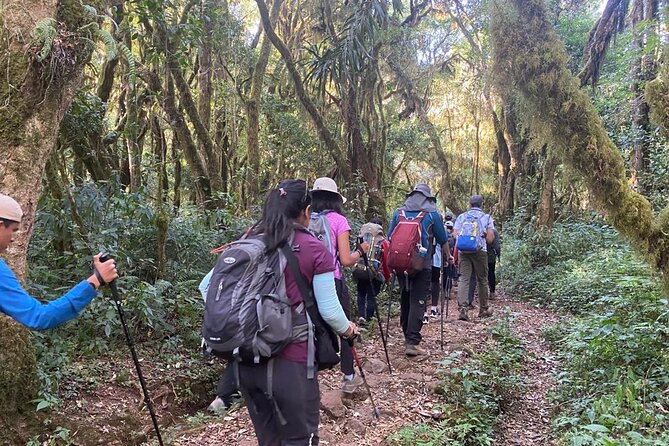
The day begins with a drive from Arusha to Kilimanjaro National Park Gate, passing through Machame village on the mountain’s lower slopes. The first walking stage climbs from about 5,400 feet to 9,400 feet over 11 kilometers, taking roughly five to seven hours.
The trail winds through rain forest toward Machame Camp. This is a pleasant opening, but do not mistake it for an easy stroll. Lower sections can be muddy and slippery, especially where the trail holds water. Gaiters and trekking poles are practical choices here, not fancy extras.
I like this first day because the forest gives you a gradual introduction to the mountain. You are moving uphill, but the altitude is not yet extreme. The drawback is that the footing may be messy, and your clothing can feel too warm in the lower forest before the route grows cooler.
You sleep at about 9,400 feet. That first night is your introduction to camping at altitude, so use the evening to organize your gear and prepare for the next morning.
Day 2: Heather and moorland on the way to Shira
After breakfast, the forest begins to thin. The route climbs through moorland, gaining from 9,400 feet to 12,500 feet over five kilometers. Hiking time is about four to six hours.
The path crosses a small valley, then follows a steep, rocky ridge covered with heather. Later, it turns west toward a river gorge and the Shira campsite. Compared with Day 1, the route is shorter but steeper in places.
This is where the trek begins to feel like a high mountain journey rather than a forest hike. You get broader views and less shelter from the weather. The shorter distance helps, but the altitude gain can affect your breathing and sleep.
Your best tactic is to keep a slow, steady pace. This is not the place to prove how fast you can climb. A patient rhythm gives you more energy for the days ahead.
Day 3: Lava Tower, the Shark’s Tooth, and Barranco
Day 3 is one of the most useful parts of the route for acclimatization. You climb from the Shira Plateau toward the east, pass the junction leading toward Kibo, and continue southeast toward Lava Tower, known here as the Shark’s Tooth.
The day covers about 10 kilometers and takes six to eight hours. The route reaches roughly 13,000 feet, with a junction toward Arrow Glacier at about 16,000 feet, before descending to Barranco Camp at approximately 13,000 feet.
Notice the pattern: climb high, then sleep lower. Even though you finish at roughly the same elevation where you began, the body gets valuable exposure to thinner air. This is not wasted mileage. It is one of the reasons the seven-day schedule is worth considering.
The semi-desert setting feels stark and open. There is less forest cover, and the mountain’s scale becomes clearer. The hard part is the up-and-down movement. You gain height, lose some of it, and may wonder why the route is making you work twice. The answer is acclimatization.
More Machame Route climbs:
- 7-Day Machame Kilimanjaro Summit Tour from Arusha
★ 5.0 · 125 reviews - 6 Days: Hiking Kilimanjaro via Machame Route
★ 5.0 · 24 reviews - 6-Day Guided Tour in Machame Route Mt Kilimanjaro
★ 5.0 · 17 reviews - KILIMANJARO MACHAME ROUTE, (Climb 7days)
★ 5.0 · 16 reviews
Day 4: Barranco Wall and the short Karanga day
After breakfast, you leave Barranco and climb along a steep ridge beside the Barranco Wall. The route then continues to Karanga Valley Camp, covering five kilometers in about four to five hours.
This is a short day, with the campsite listed at about 13,100 feet. That may sound like a small change from Barranco, and it is. That is precisely the point.
The Barranco Wall is a notable physical feature of the route, and this section is steeper than the distance suggests. You should expect a hands-on climb in places, though the provided itinerary does not give technical details. Move carefully, follow the guide’s pace, and keep your pack tidy.
Karanga is the schedule’s breathing space. You still gain altitude, but you are not asked to cover a large distance. I consider this the day that gives the route its practical edge. You can eat, rest, check your layers, and prepare for the higher camp at Barafu.
Day 5: Karanga to Barafu, the final camp before the summit
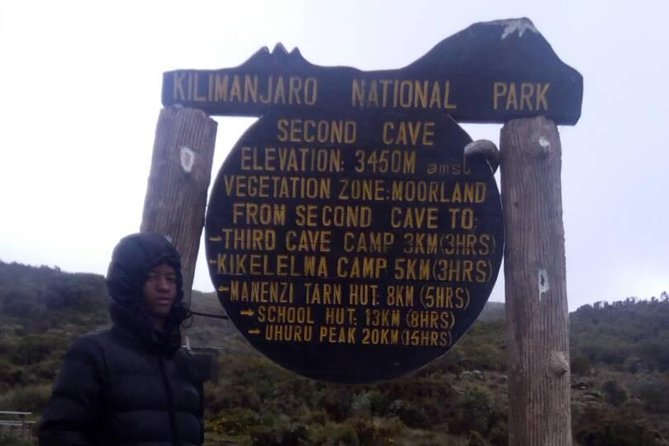
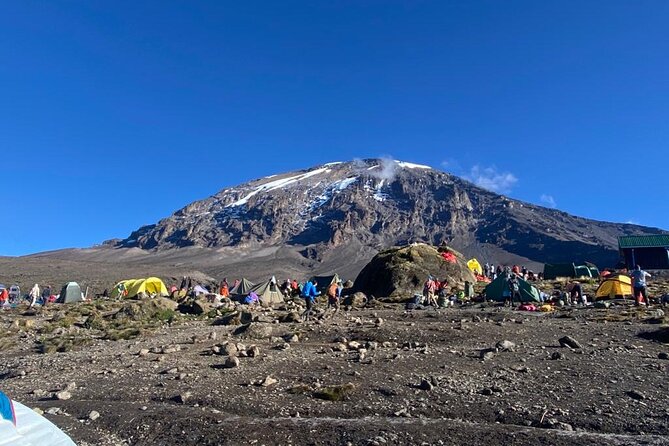
From Karanga, you climb four kilometers to Barafu Hut Camp, gaining from about 13,100 feet to 15,300 feet. The walk takes approximately four to five hours.
You pass the junction connecting with the Mweka Trail. By this point, you have completed the South Circuit, which has shown Kibo from several angles. Mawenzi and Kibo are both visible from Barafu, giving you a clear sense of the two major peaks in this part of the mountain.
Barafu is not a day for sightseeing at a relaxed pace. You arrive, rest, eat dinner, and prepare for the summit attempt. Since the climb begins around midnight to 2 a.m., your afternoon and evening matter. Keep your essential clothing, water, and headlamp close at hand if those items are part of your personal kit.
The short approach from Karanga helps here. A longer walk into Barafu would leave you with less time to rest before the hardest stage.
Day 6: Stella Point, the summit push, and a very long descent
This is the day that tests your legs and your judgment. The ascent from Barafu begins in darkness, usually between midnight and 2 a.m. You climb northwest between the Rebmann and Ratzel glaciers, moving through heavy scree toward Stella Point on the crater rim.
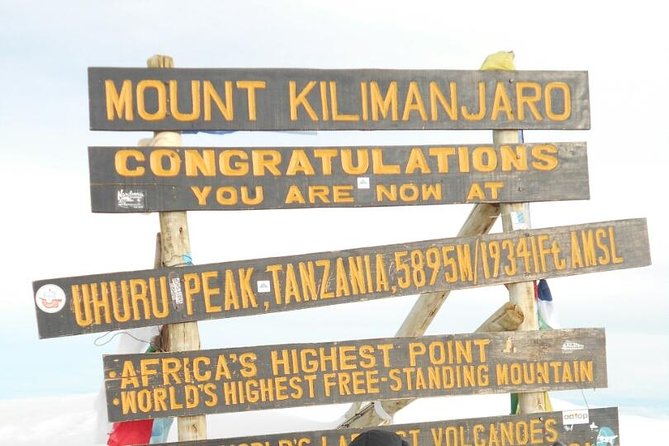
The listed ascent is five kilometers, with seven to eight hours of uphill walking. Stella Point sits at about 18,600 feet. If the weather permits, sunrise from the rim can be the great visual reward of the climb.
From there, the route continues toward the summit at 19,345 feet. The information provided does not give a precise time or distance for the final stretch from Stella Point, so you should treat the full summit morning as variable. Cold, altitude, scree, and fatigue can all affect the pace.
The physical challenge does not end at the summit. The itinerary lists a 12-kilometer descent taking four to six hours, ending around 10,000 feet. That makes this a very long day, even if the downhill sections initially feel easier.
This is where honest preparation matters. You may be excited, tired, cold, or all three at once. The guides’ role becomes especially important, and the available feedback gives positive attention to Chris, described as a team leader, and Alfred, described as an extremely competent guide. Nasr is also praised for being helpful, flexible, organized, and welcoming in the planning process.
The praise is encouraging, but it does not remove the need for personal preparation. No guide can carry your fitness or make altitude symptoms disappear. You should be ready to follow a slow pace and accept that the mountain sets the timetable.
Day 7: Mweka descent and the return to Arusha
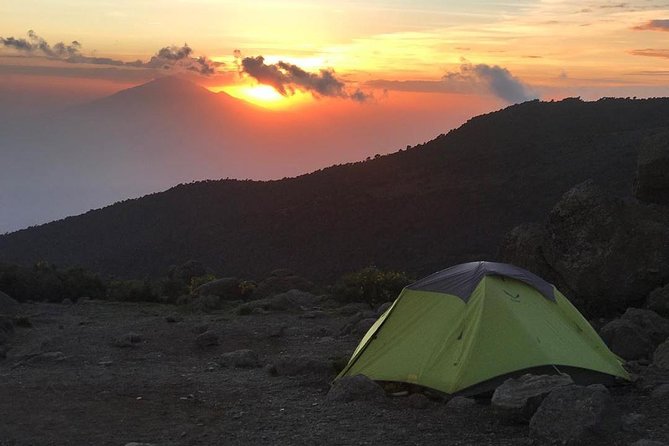
After the summit day, you continue down through rain forest from about 10,000 feet to the Mweka Park Gate at 5,400 feet. The 10-kilometer descent takes about three to four hours.
At the gate, you receive summit certificates. From there, you continue for another hour to Mweka Village, where a vehicle takes you back to your hotel in Arusha.
The lower trail can be wet and muddy. Gaiters and trekking poles are useful again, while shorts and a T-shirt may be comfortable at the warmer elevation. Keep your rain gear and warmer layers accessible, since mountain weather can change before you reach the village.
This final stage is a welcome release after the summit effort, but tired legs can make even a downhill trail demanding. Watch your footing and do not rush simply because the finish is close.
What the $2,520 price means
At $2,520 per person, this is a substantial purchase. The strongest value comes from the seven-day structure, not from speed. You are paying for a route plan that gives you an additional night and a shorter pre-summit day, both of which can matter greatly at altitude.
The trip includes park admission tickets according to the daily itinerary. Pickup is offered, and transport returns you to your hotel in Arusha after the Mweka descent. The provided details do not spell out every inclusion, such as meals, equipment, permits beyond the listed admission, or porter arrangements, so you should confirm those points before paying.
A maximum group size of 15 is a useful middle ground. It is not a private climb, but it is limited enough to avoid the feel of a huge procession. Ask the operator how many guides and support staff will accompany your group, since that detail is not provided.
Moorland Safari and Trekking receives an overall rating of 5 from two submitted reviews. That is a very small sample, so I would treat it as a positive signal rather than proof of a perfect operation. The consistent praise centers on organization, flexibility, a welcoming approach, and strong guide support.
Who should choose this Machame trek?
I would recommend it to a fit first-time Kilimanjaro climber who wants a sensible pace and a full route experience. The seven-day plan is also a good match if you prefer an extra acclimatization day over the lowest possible price or shortest schedule.
You should be comfortable with five to eight hours of walking on several days, plus the much longer summit day. Moderate physical fitness is required, but you also need mental stamina. The summit starts while most people are asleep, and the descent comes after the main climb, not on a fresh morning.
This is not the right choice if you want a casual mountain holiday, a quick viewpoint walk, or a trip with guaranteed comfort. The campsite elevations, cold Arctic conditions, mud, scree, and early summit start are central parts of the experience.
Should you book it?
I would book this version if you want the Machame Route and can manage the cost. The Barranco to Karanga split is the key advantage, giving you a short day before Barafu and the midnight summit attempt.
Before booking, confirm exactly what the $2,520 covers, ask about the guide and support-team setup, and make sure you understand the summit-day schedule. Free cancellation is available up to 24 hours before the local start time, but changes or cancellations inside that window are not accepted.
Choose it for the pacing, the varied terrain, and the reported care from Moorland Safari and Trekking’s team. Skip it only if your fitness, budget, or comfort with a long high-altitude summit day is uncertain.
FAQ
Where does the Kilimanjaro trek start?
The activity starts in Arusha, Tanzania. Pickup is offered, and the first day includes transport to Mount Kilimanjaro National Park Gate.
How long is the Machame Route experience?
The experience lasts approximately seven days.
How much does the trek cost?
The listed price is $2,520 per person.
What is the maximum group size?
The group can include a maximum of 15 people.
What level of fitness is required?
You should have a moderate level of physical fitness. The route includes several days of uphill walking and a demanding summit day.
What time does the summit attempt begin?
The summit ascent begins very early, generally between midnight and 2 a.m.
How high is the Kilimanjaro summit?
The summit is listed at 19,345 feet.
Where does the trek end?
The walking route ends at Mweka Village after the descent to Mweka Park Gate. A vehicle then takes you back to your hotel in Arusha.
Can I cancel for a full refund?
Yes. You can cancel at least 24 hours before the experience start time for a full refund. Cancellations or changes made less than 24 hours before the start time are not accepted.
Just added in Arusha
- Safari “Kifaru” – 5 days in the most famous Parks in the world★ 5.0 · 4 reviews
- Saadani Day Trip★ 5.0 · 13 reviews
- 3 Days Tanzania Short and Spicy★ 5.0 · 6 reviews
- 5 Day Tanzania Safari Camping Adventure Private Tour★ 5.0 · 2 reviews
- Day Trip to Ngorongoro Crater from Arusha★ 5.0 · 1 review
- SERENGETI NATIONAL PARK Tour★ 4.5 · 5 reviews
- 3 Days Serengeti Park & Ngorongoro Crater Adventure Safari★ 5.0 · 8 reviews
- 6 Days Tanzania Bush Experience Safari★ 5.0 · 6 reviews
Machame Route Climbs, compared.
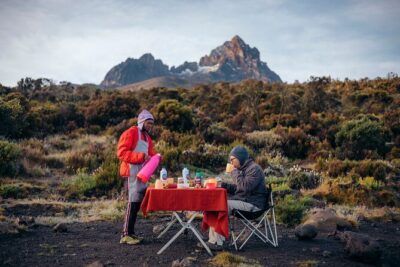
Climbing Kilimanjaro through 7 days Machame Route
Read our review →
7-Day Machame Kilimanjaro Summit Tour from Arusha
Read our review →
7 Days Kilimanjaro via Machame route affordable price
Read our review →
#1. Best Kilimanjaro Day hike Tour-Machame Route-ISMANI
Read our review →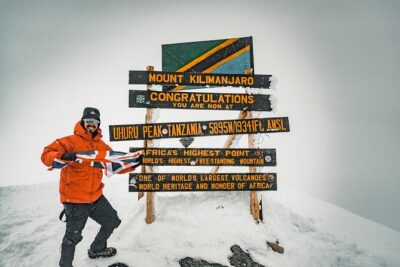
The Best of Machame Route in 6 Days: Your World’s Summit Guide
Read our review →Browse the lists this tour appears in